Overview
- Process theology is a tradition in twentieth-century philosophy of religion, rooted in Alfred North Whitehead’s 1929 metaphysics and developed most rigorously by Charles Hartshorne, that conceives God as dipolar — possessing both an abstract, eternal, unchanging nature and a concrete, temporal, relational nature that genuinely receives and is affected by every event in the world.
- Against classical theism’s portrait of God as immutable, impassible, and timelessly eternal, process theists argue that a perfect being must be the supremely related being, the “most and best moved mover,” whose love is intelligible only if creaturely joys and sufferings make a real difference to the divine experience.
- The position generates distinctive doctrines — persuasive rather than coercive divine power, panentheism, denial of unilateral creation ex nihilo, and a free-process theodicy — and faces sustained objections from classical theists such as William Lane Craig and John Feinberg, who argue that process theism cannot secure divine sovereignty, foreknowledge, or genuine transcendence.
Process theology is a tradition in twentieth-century philosophy of religion that conceives God not as the immutable, impassible, timelessly eternal deity of classical theism but as a dipolar reality whose abstract essence is necessary and unchanging while whose concrete experience is genuinely temporal, relational, and affected by every event in the created world. The position takes its metaphysical foundation from Alfred North Whitehead’s Process and Reality (1929) and its most rigorous theological development from Charles Hartshorne, whose Man’s Vision of God (1941) and The Divine Relativity (1948) reformulated the classical attributes around the conviction that genuine love, knowledge, and perfection require real responsiveness to others.1, 2, 3, 5 John B. Cobb, David Ray Griffin, Marjorie Suchocki, and David Pailin extended Hartshorne’s philosophical framework into a constructive theological program that addressed Christology, ecclesiology, the problem of evil, and the relation of theology to the natural sciences.4, 7, 8, 9
The central thesis of process theism is that the being whom theistic religion calls God is best understood as the supremely related being — a being whose perfection consists not in immunity from change but in maximal openness to value, maximal sensitivity to creaturely experience, and maximal capacity to integrate that experience into a unified, ever-growing divine life. Hartshorne expressed this by amending Aristotle’s formula of the unmoved mover, calling God instead “the most and best moved mover,” and by describing God as “the self-surpassing surpasser of all.”2, 10 This article presents the historical development of the position, the metaphysical machinery on which it rests, the formal arguments offered in its support, and the major objections raised by classical theists who hold that the resulting deity is too small, too dependent, and too compromised to be the God of theistic worship.
Historical development
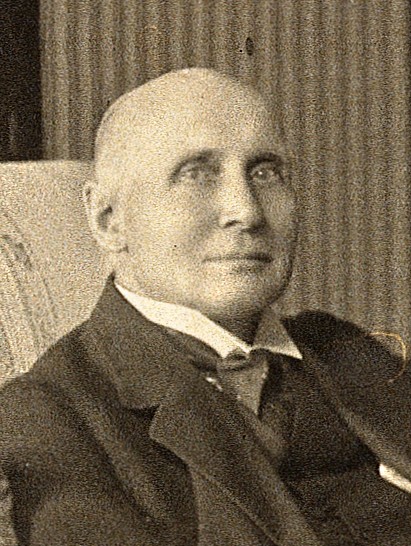
Process theology has two principal sources. The first is Alfred North Whitehead (1861–1947), the British mathematician and philosopher who, after collaborating with Bertrand Russell on Principia Mathematica, turned in his sixties to the construction of a comprehensive metaphysical system. Whitehead delivered the Gifford Lectures at the University of Edinburgh in 1927 and 1928, publishing the revised text in 1929 as Process and Reality: An Essay in Cosmology. The book proposed that the ultimate constituents of reality are not enduring substances but momentary “actual occasions” or “actual entities” — brief experiential events that arise, integrate the data of their predecessors, contribute themselves to the next moment, and perish. Whitehead held that this account applied universally, from subatomic events to human experiences, and that God should be understood as one (uniquely structured) actual entity within the same metaphysical scheme rather than as an exception to it.1, 11
.jpg)
The second source is Charles Hartshorne (1897–2000), an American philosopher who earned all three Harvard degrees in four years and served as Whitehead’s teaching assistant during Whitehead’s years at Harvard in the late 1920s. Hartshorne taught at the University of Chicago from 1928 to 1955, then at Emory University and the University of Texas at Austin, publishing his last article at age 96 and continuing to lecture until 98.6 Whereas Whitehead arrived at his account of God almost incidentally, as a corollary of his cosmology, Hartshorne placed the doctrine of God at the center of his life’s work, devoting more than a dozen books to a sustained reformulation of the divine attributes through what he called “neoclassical” or “dipolar” theism. Man’s Vision of God and the Logic of Theism (1941) catalogued the logically possible doctrines of God; The Divine Relativity (1948), based on Hartshorne’s Terry Lectures at Yale, argued that genuine relations must be ascribed to God; and The Logic of Perfection (1962) developed a modal-logical version of the ontological argument and a formal proof of dipolar theism’s superiority to its rivals.3, 2, 12
The constructive theological development of these ideas was led from the Claremont School of Theology, where John B. Cobb (1925–2024) and David Ray Griffin founded the Center for Process Studies in 1973. Their joint volume Process Theology: An Introductory Exposition (1976) became the standard introduction to the field, applying Whiteheadian and Hartshornean categories to Christology, ecclesiology, eschatology, ethics, and the problem of evil.4 Marjorie Suchocki’s God Christ Church (1982; revised 1989) integrated process categories with feminist theological concerns, while Griffin’s God, Power, and Evil: A Process Theodicy (1976) provided the most sustained treatment of the problem of evil from within the tradition.7, 9 In Britain, David Pailin’s God and the Processes of Reality (1989) defended a process conception of divine agency against both classical theism and naturalism.8 C. Robert Mesle’s Process Theology: A Basic Introduction (1993) made the position accessible to non-specialist readers and helped extend its influence beyond academic philosophy of religion.16
Metaphysical foundations in Whitehead
The doctrine of God in process theology cannot be understood apart from the metaphysical scheme of Process and Reality, in which God is one actual entity among others, distinguished by structure rather than by exemption from the categories that govern all becoming. Whitehead held that the universe is composed of “actual occasions” — momentary events of experience that arise through a process he called “concrescence,” in which the data of past occasions are taken up (“prehended”), unified, and brought to a determinate satisfaction before perishing into the next moment’s data. Every actual occasion has both a physical pole, by which it prehends past actualities, and a mental pole, by which it prehends pure possibilities (“eternal objects”) and integrates them into novel patterns of experience.1, 11
Within this scheme, God is the one actual entity who does not perish, who is everlasting rather than momentary, and whose two poles are inverted relative to those of finite occasions. Where finite occasions begin with physical prehension of the past and proceed to mental prehension of possibilities, God begins with the conceptual envisagement of all possibilities (the primordial nature) and proceeds to the physical reception of actualities (the consequent nature).1, 5 Whitehead summarised the structural symmetry between God and world in a celebrated passage: “It is as true to say that God is permanent and the World fluent, as that the World is permanent and God is fluent. It is as true to say that God is one and the World many, as that the World is one and God many. It is as true to say that, in comparison with the World, God is actual eminently, as that, in comparison with God, the World is actual eminently.”1, 5
The primordial nature of God is God’s eternal envisagement of every possibility — the whole realm of eternal objects ordered into a graded valuation that supplies each emerging occasion with an “initial aim,” a customised possibility for its own becoming. This pole is unchanging, free of all temporal sequence, and unaffected by the world; it is what Whitehead called the “unlimited conceptual realisation of the absolute wealth of potentiality.”1
The consequent nature of God is God’s prehension of every actuality as it arises — the divine reception of every joy and every suffering of every creature into the unity of the divine experience. Whitehead characterised this pole as “the realisation of the actual world in the unity of his nature, and through the transformation of his wisdom” and as the basis for his famous description of God as “the great companion — the fellow-sufferer who understands.”1, 5 The consequent nature is genuinely temporal: it grows as the world grows, and it bears the marks of every actual occasion that has ever occurred.
Hartshorne’s dipolar theism
Hartshorne refined and clarified Whitehead’s account, replacing the somewhat opaque language of primordial and consequent natures with a sharper distinction between the abstract and concrete poles of God. The abstract pole consists of those features of God that never vary — God’s self-identity, God’s essential perfections such as omniscience and omnibenevolence, God’s necessary existence. The concrete pole consists of God’s actual states of experience at successive moments — God’s knowledge of this particular state of the world, God’s sympathetic feeling of these particular creaturely experiences. The abstract pole is necessary, eternal, and unchanging; the concrete pole is contingent, temporal, and ever-growing.2, 10, 6
This distinction allowed Hartshorne to defuse what he called the “monopolar prejudice” of classical theism: the assumption that one side of every metaphysical contrast (necessary over contingent, infinite over finite, immutable over mutable, absolute over relative) must be assigned exclusively to God while the contrasting side is excluded as a defect.2, 10 Hartshorne argued that both poles of these contrasts express genuine values, and that a maximally great being must possess both — necessity in its essence and contingency in its concrete states, immutability in its character and mutability in its experience, infinity in its scope of relation and finitude (in some respects) in its determinate actualisations. The mistake of classical theism, on Hartshorne’s diagnosis, was to take half of each contrast as a perfection and the other half as a defect, when in fact both halves are needed for a coherent account of the most perfect possible being.2, 6
Hartshorne supplemented the abstract/concrete distinction with a further division among existence (that God is), essence (what God necessarily is, e.g., omniscient), and actuality (the particular concrete states in which God is currently knowing, loving, or feeling). God’s existence and essence are necessary; God’s actuality is contingent because it depends on which contingent world God is in fact knowing. This three-level scheme is central to Hartshorne’s claim that God can be necessary in some respects and contingent in others without contradiction.10, 6
Process theism compared with classical theism
The dipolar account of God can be most clearly understood by setting it side by side with the classical theistic account that it explicitly contests. The following table summarises the principal points of contrast as process theists themselves draw them.
Classical theism and process theism on the divine attributes2, 4, 5
| Attribute | Classical theism | Process theism |
|---|---|---|
| Relation to time | Timelessly eternal; outside temporal sequence | Everlasting and temporal in the concrete pole; eternal in the abstract pole |
| Mutability | Immutable in every respect | Immutable in essence; mutable in concrete experience |
| Impassibility | Wholly impassible; unaffected by creatures | Supremely passible; affected by every creaturely experience |
| Power | Omnipotent in the strong sense; can unilaterally determine any state of affairs | Persuasive rather than coercive; cannot override creaturely freedom |
| Knowledge of the future | Exhaustive foreknowledge of all contingent future events | Knows future as range of genuine possibilities; the not-yet is not yet a fact to be known |
| Relation to the world | Wholly independent; the world adds nothing to God | Panentheistic; the world is in God and contributes to the divine experience |
| Creation | Ex nihilo; absolute production of all finite reality from nothing | Ordering of an antecedent realm of finite actuality; creation out of chaos |
| Composition | Absolutely simple; no real distinctions in God | Dipolar; abstract and concrete poles are really distinguishable |
Process theists present these contrasts not as concessions or limitations but as substantive religious gains. Hartshorne argued that genuine love requires both benevolence and feeling: a God who is wholly impassible cannot, in any intelligible sense, suffer with the suffering or rejoice with the joyful, and the worship language of theistic religion — which routinely ascribes such relations to God — is rendered either equivocal or false on the classical account.2, 10 Cobb and Griffin similarly argued that the classical doctrine of impassibility, taken seriously, implies that God is indifferent to the holocaust as much as to a child’s laughter, since neither can affect a being immune to all influence from the world.4
The formal argument from divine love
Hartshorne offered several converging arguments for the dipolar conception, of which the argument from the requirements of genuine love is the most rhetorically central. It can be put in numbered form as follows.
P1. If God is the most perfect possible being, then God possesses every property whose possession is a perfection.
P2. Loving knowledge of others is a perfection.
P3. Loving knowledge of others requires that the knower be genuinely affected by what the others undergo — that the joys and sufferings of the beloved make a real difference to the lover’s experience.
P4. A being that is wholly impassible cannot be genuinely affected by what others undergo.
C1. Therefore, a wholly impassible being cannot possess loving knowledge of others.
C2. Therefore, a wholly impassible being is not the most perfect possible being.
C3. Therefore, the most perfect possible being is not wholly impassible: it must have a pole of its nature in which it is genuinely affected by creaturely experience.
The argument is logically valid: if the premises are true, the conclusion follows. The key contested premises are P3 and P4. Classical theists typically deny P3 by arguing that God’s knowledge of creaturely experience can be exhaustive without being causally affected by it — that God’s timeless act of knowing comprehends every fact about every creature without thereby being changed. Process theists respond that this notion of “knowing without being affected” is unintelligible when applied to genuinely loving knowledge: to know that someone suffers in the way a loving parent knows is not the same thing as to register a proposition about the suffering, and the difference is precisely that the parent is moved by what the child undergoes.2, 10
A second supporting argument, sometimes called the argument from relativity of knowledge, runs as follows. If God knows contingent facts about the world, and if those facts could have been otherwise, then God’s knowledge of those facts could have been otherwise. But what could have been otherwise is contingent, not necessary. Therefore, God’s knowledge of contingent facts is contingent. But if any of God’s knowledge is contingent, then some aspect of God is contingent — in tension with the classical claim that God is necessary in every respect.2, 10, 5 Hartshorne treated this as a particularly weighty consideration in favor of dipolar theism: only a God whose concrete actuality varies with the world being known can satisfy both omniscience and the contingency of the world.
Divine power and persuasion
Process theology’s reconception of divine power is at least as distinctive as its reconception of divine knowledge. Where classical theism affirms that God can unilaterally bring about any logically possible state of affairs, process theists hold that God’s power is intrinsically persuasive rather than coercive. The reason is metaphysical, not merely a matter of God’s self-restraint. On the Whiteheadian account, every actual occasion is partly self-creative: it integrates the data supplied by its past, including the “initial aim” offered by God, but it determines its own final “subjective form” through its own concrescence. To override that self-determination would not be to exercise power over the occasion; it would be to substitute a different occasion entirely. Genuine creaturely freedom is therefore not a gift God could withhold but a structural feature of any actual entity whatsoever.1, 4, 5
Cobb and Griffin develop the implications of this view for the religious life. God acts in every moment by supplying each actual occasion with an initial aim toward greater intensity, harmony, and value — a possibility for what that occasion can become at its best. The occasion may actualise that aim, modify it, or refuse it, and the divine response is not a sanction or coercion but the supply of new aims at the next moment. Divine power, on this picture, is the universal lure toward value rather than the universal cause of events.4 Hartshorne, drawing on analogies from human social power, argued that the highest form of power is precisely the power that elicits free response rather than the power that compels obedience — that a parent who could only coerce would be exercising less power, not more, than one who could persuade.2, 10
The problem of evil and process theodicy
The reconception of divine power yields what is widely regarded as process theology’s most distinctive contribution to the philosophy of religion: a theodicy that does not require the contortions classical theism must perform when it confronts horrendous evils. Griffin’s God, Power, and Evil (1976) traces the problem of evil through major Western thinkers from Augustine to Whitehead and argues that every classical solution founders on the same difficulty: if God could have prevented an evil and freely chose not to, then God’s goodness in failing to prevent it stands in need of justification, and the best classical answer — that God permitted the evil for the sake of a greater good — either fails to apply to the worst evils or else implies that those evils are, at the level of God’s eternal plan, not really evils at all.7
The process answer dissolves the problem differently. Because God’s power is intrinsically persuasive, God could not have prevented (for example) the Holocaust simply by deciding to prevent it. To prevent it, God would have had to override the self-determination of every actual occasion involved — perpetrators, victims, and bystanders — which on Whiteheadian metaphysics is not a possibility but a contradiction. God’s role in such evils is to have offered, at every moment, an initial aim toward something better, and to have absorbed, in the consequent nature, every pain and every loss into the divine experience, where it is preserved everlastingly and integrated into whatever harmony is possible.7, 4
Griffin acknowledged that this answer requires giving up the classical conception of omnipotence, and he argued that this is precisely the right concession to make. A God whose omnipotence is so robust that it could have prevented Auschwitz but did not is, on Griffin’s view, a God whose goodness is bought at the cost of moral intelligibility. A God who genuinely could not have unilaterally prevented Auschwitz, and who suffered with every victim and continues to do so, is a God whose goodness is not in question but whose power must be understood differently from how classical theism has understood it.7 Critics counter that the trade is too costly — that a God who cannot prevent the worst evils is not the God of the biblical witness or of theistic worship — but the structural cleanness of the process solution has made it influential well beyond the boundaries of self-identified process theologians.
Creation, panentheism, and the world in God
Process theology rejects the doctrine of creation ex nihilo in its strict form — the claim that God produced all finite reality out of absolute nothingness — and replaces it with a doctrine of creation out of chaos. Griffin argued, on both philosophical and historical grounds, that the strict ex nihilo doctrine is a post-biblical development that entered Christian theology through Hellenistic philosophical influences in the second century, and that the opening of Genesis is more naturally read as describing the bringing of order out of a pre-existing formless deep.7, 4 On the process account, there has always been something other than God — some realm of finite actuality — and what God does in “creating” is to lure that realm toward greater complexity, intensity, and value. There is no temporal moment before which God existed alone.5, 4
The relation of God to the world that results is panentheism: the doctrine that the world is “in” God without being identical with God. Hartshorne developed this position more fully than any other philosopher of his century, distinguishing it carefully from pantheism (which identifies God and world) on one side and from classical theism (which holds the world wholly external to God) on the other. On Hartshorne’s panentheism, God includes the world the way a person’s experience includes the experiences of the cells of the person’s body — a controversial analogy that he developed at length and qualified in important ways. God prehends every creaturely experience and integrates it into the divine experience, but God’s abstract essence is not exhausted by any particular state of the world; God remains, in every concrete state, more than the sum of what God includes.2, 6, 10
Pailin extended this account in God and the Processes of Reality by emphasising that divine agency must be conceived as a “ubiquitous providential call forward,” an inclusive lure that grounds the creative advance of the world without overriding the freedom of any of its constituents. On Pailin’s reading, the process God is neither an absent watchmaker nor an interventionist sovereign but the everywhere-active source of the possibilities by which any moment can become more than its predecessors.8 Suchocki similarly emphasised the relational character of the process God, arguing that the categories of relation, mutuality, and interdependence on which process theology insists are precisely the categories that feminist theology had independently identified as distorted by classical theism’s emphasis on hierarchical sovereignty.9
Major objections from classical theists
Classical theists have raised a series of objections to process theology, which can be sorted into four broad families.
The objection from sovereignty holds that the process God is too small to be the God of theistic religion. William Lane Craig has argued that a being whose power is limited to persuasion, who cannot guarantee the eventual triumph of good over evil, and who depends on creaturely cooperation for the achievement of any divine aim is not the God of biblical theism but a finite deity in the older sense — a powerful being among other beings rather than the absolute source of all reality.14 John Feinberg presses the same line in No One Like Him, arguing that process theism’s reformulation of omnipotence so dilutes the concept that nothing recognisable as the classical attribute remains, and that a God whose providence cannot be relied upon to bring history to its consummation is not the God to whom biblical worship is addressed.13
The objection from foreknowledge holds that process theology cannot accommodate omniscience in any robust sense. If God knows the future only as a range of possibilities, then God does not know whether you will, in fact, choose A or B; God knows only that you might do either. Classical theists argue that this is not omniscience at all but a kind of cosmic guesswork dignified by the name of knowledge. Craig has argued at length that classical foreknowledge can be reconciled with libertarian creaturely freedom by means of the doctrine of middle knowledge, and that the process appeal to ignorance of the future is therefore unnecessary as well as religiously unsatisfying.14 Process theists respond that there is no fact of the matter about a genuinely contingent future event until that event occurs, and that omniscience consists in knowing all that can be known, not in knowing that which is not yet a determinate fact.10, 5
The objection from aseity holds that process theology compromises divine independence. If the world is in God, and if every creaturely experience contributes something new to the divine actuality, then God in some sense depends on the world for being the concrete being God is. Classical theists from Augustine onward have insisted that God is a se — existing from and through Godself alone, dependent on nothing for what God is — and process theology’s denial of this is, on the classical view, a denial of one of the most basic religious convictions about God.13, 15 Hartshorne replied that the dipolar distinction allows process theism to preserve aseity at the level of God’s essence while allowing genuine relation at the level of God’s actuality — God’s being God does not depend on the world, even though God’s being in this concrete state rather than another does.2, 10
The objection from biblical fidelity, advanced especially by evangelical critics such as Royce Gruenler, holds that process theology cannot do justice to the biblical portrait of God’s sovereign action in history. Gruenler, who himself spent some years as a process theist before returning to a more classical position, argued in The Inexhaustible God (1983) that the process God lacks the personal agency, the historical force, and the eschatological assurance that biblical narrative ascribes to its God, and that the gains in metaphysical coherence are bought at the cost of religious adequacy.15 Process theists respond that biblical narrative itself contains substantial passibility-language about God — God grieves, repents, is moved by the cries of the oppressed — and that classical theism has had to discount that language as anthropomorphic in ways that process theism does not require.4, 9
Responses and contemporary developments
Process theists have responded to these objections by sharpening the dipolar distinction and by clarifying what is and is not given up. On the worry about sovereignty, process theists distinguish between the unilateral kind of power that classical theism ascribes to God and a more relational kind of power that is genuinely effective in eliciting free response. They argue that the former is not a coherent perfection at all — that the very idea of unilaterally determining a free response is contradictory — and that the latter is in fact the highest kind of power available to any being.2, 4
On the worry about foreknowledge, process theists have allied themselves at points with the open theism movement, which arose largely independently in the late twentieth century and reaches similar conclusions about divine knowledge of the future without committing to the full Whiteheadian metaphysical scheme. The two positions agree that the future is genuinely open and that God’s knowledge of it consists in knowing the range of possibilities rather than the actuality of a not-yet-determined fact. They differ over panentheism (open theism typically retains creation ex nihilo and a more classical conception of God’s relation to the world) and over the metaphysical machinery used to support the shared conclusions about divine temporality.5
On the worry about aseity, Hartshorne’s three-level distinction (existence, essence, actuality) has remained the principal resource. Process theists argue that God’s necessary existence and essential nature are not threatened by the contingency of God’s actual states, any more than a person’s being a person is threatened by the fact that the person is now thinking of one thing rather than another.10, 6 The reply does not satisfy critics who hold that any contingency in God is too much, but it shows that the process position is not committed to the cruder form of dependence sometimes attributed to it.
Contemporary process theology has continued to develop in several directions. Cobb and Griffin’s work on the relation of process theology to ecology and to interreligious dialogue has been influential, particularly through the Center for Process Studies at Claremont and its journal Process Studies. Suchocki and other feminist process theologians have argued that the relational and mutualist categories of process metaphysics provide resources for theological reformations that classical theism has resisted.9, 4 Mesle’s introductory work has helped extend the audience for process ideas beyond academic philosophy of religion.16 The Stanford Encyclopedia of Philosophy entry on process theism, written by Donald Viney and most recently revised in 2022, remains the standard reference treatment of the position in analytic philosophy of religion.5
Contemporary assessment
Process theology occupies an unusual position in contemporary philosophy of religion. It is the most fully developed alternative to classical theism on offer, with a metaphysical foundation, a theological program, a literature, and an institutional base that few rival positions can match. At the same time, it has not displaced classical theism in the mainstream of analytic philosophy of religion, where defenders of the classical attributes remain numerous and where the technical machinery of Whiteheadian metaphysics is often regarded as more cumbersome than the problems it is designed to solve. Open theism, which adopts many of process theology’s practical conclusions about divine temporality and limited foreknowledge while retaining a more classical conception of creation and divine independence, has in some respects supplanted process theology as the principal contemporary alternative to strict classical theism in evangelical and mainline Protestant circles.5, 14
Whether process theology’s arguments for dipolar theism are sound is a question on which philosophers continue to disagree. The argument from divine love is logically valid, but its force depends on whether the contested premise — that loving knowledge of others requires being affected by what the others undergo — can be defended against the classical claim that God’s timeless knowledge somehow comprehends every fact about creaturely experience without itself being modified. The argument from the relativity of knowledge is more technically difficult to evade, since the contingency of contingent truths seems to require the contingency of the knowledge of those truths, but classical theists have proposed a variety of ways to square divine necessity with knowledge of contingent facts, including the doctrine of middle knowledge and various accounts of timeless knowledge.14, 13
What is not in dispute is that process theology has reframed the conversation about the divine attributes in twentieth- and twenty-first-century philosophy of religion. The questions it raises — whether immutability and impassibility are compatible with genuine love, whether omnipotence as classically conceived can be reconciled with creaturely freedom, whether the world makes any difference to God — are now part of the standard agenda of philosophical theology, asked and answered (in one direction or another) by classical theists, open theists, and process theists alike. Whatever one’s verdict on the dipolar account, the discipline as a whole has been forced to take its questions seriously, and the contemporary literature on the divine attributes is unintelligible without reference to the tradition that Whitehead inaugurated and Hartshorne formalised.5, 10, 6