Overview
- Secular ethics encompasses a family of philosophical frameworks — including utilitarianism, Kantian deontology, virtue ethics, contractualism, and moral naturalism — that ground moral judgement in reason, empathy, and human welfare rather than divine authority or religious revelation.
- Philosophical responses to the claim that morality requires God include the Euthyphro dilemma, which challenges divine command theory, and Erik Wielenberg’s robust normative realism, which argues that brute ethical facts can exist without a theistic foundation.
- Empirical research on highly secular societies — particularly in Scandinavia — indicates that low religiosity correlates with strong social outcomes including low crime, high trust, and robust civic institutions, undermining the claim that widespread secularism leads to moral collapse.
Secular ethics refers to any system of moral principles and values that is grounded in human reason, empirical observation, or naturalistic philosophy rather than in divine revelation, religious authority, or supernatural belief. The term encompasses a broad range of philosophical traditions — including utilitarianism, Kantian deontology, virtue ethics, contractualism, moral naturalism, and secular humanism — united by the shared premise that moral knowledge is accessible through ordinary human capacities without recourse to theology. Secular ethical frameworks do not necessarily deny the existence of God; rather, they hold that the justification for moral claims can and should be independent of any particular religious commitment.10, 15
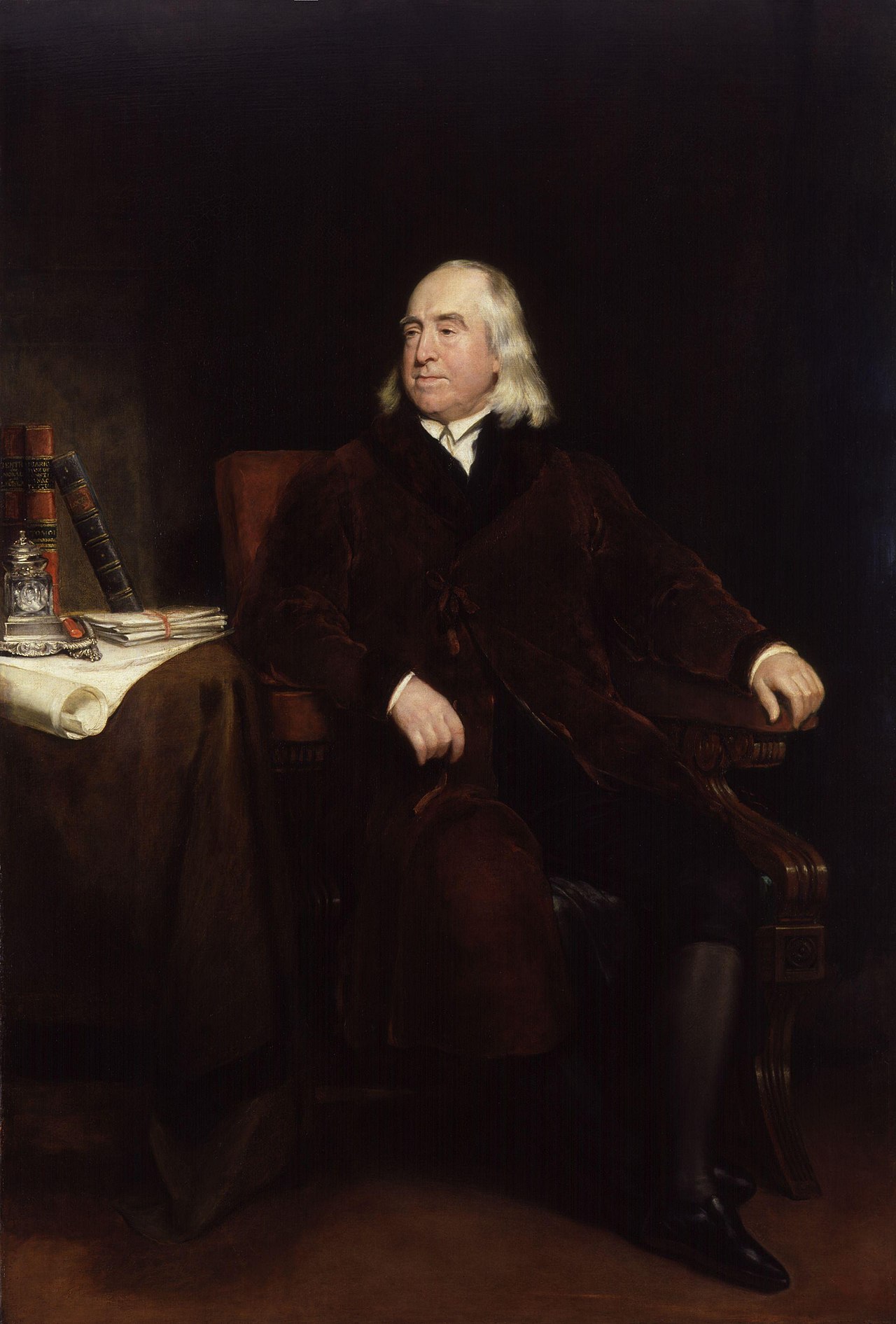

The philosophical exploration of morality without divine grounding has roots in ancient Greek philosophy, particularly in the work of Aristotle and the Epicurean and Stoic schools, and was developed in the Enlightenment by thinkers including David Hume, Immanuel Kant, and Jeremy Bentham. In the contemporary period, secular ethics has become the dominant framework in academic moral philosophy, while also occupying a central role in debates with religious apologists who contend that objective morality cannot be sustained without a theistic foundation. The moral argument for God’s existence — the claim that moral facts require a divine lawgiver — has prompted extensive philosophical responses from secular thinkers, ranging from the ancient Euthyphro dilemma to Erik Wielenberg’s contemporary robust normative realism.9, 20
Utilitarianism
Utilitarianism is the ethical theory that the morally right action is the one that produces the greatest amount of well-being for the greatest number of individuals. The theory was systematically developed by Jeremy Bentham in An Introduction to the Principles of Morals and Legislation (1789), where he proposed the “principle of utility” — the idea that actions should be evaluated solely by their consequences for human happiness and suffering. Bentham articulated a hedonistic calculus intended to quantify pleasure and pain along dimensions including intensity, duration, certainty, and extent, providing what he took to be a rigorous and secular basis for moral judgement that dispensed entirely with appeals to divine law or natural rights.1
John Stuart Mill refined and humanised Bentham’s framework in Utilitarianism (1863). Mill argued that pleasures differ not only in quantity but in quality, famously claiming that it is “better to be Socrates dissatisfied than a fool satisfied.” Mill defended utilitarianism against the charge that it was a doctrine fit only for swine by insisting that the higher pleasures of the intellect, imagination, and moral sentiment are intrinsically more valuable than bodily pleasures. He also grounded the binding force of morality not in divine sanction but in the “social feelings of mankind” — the natural human desire for unity with fellow creatures, which education and social institutions can cultivate.2
In the twentieth and twenty-first centuries, Peter Singer has developed a rigorous form of preference utilitarianism that applies consequentialist reasoning to questions of animal welfare, global poverty, and effective altruism. Singer’s Practical Ethics (1979; 3rd ed. 2011) argues that the principle of equal consideration of interests — the idea that the suffering of any sentient being counts equally regardless of species, nationality, or social status — follows from reason alone and requires no theological premises. Singer’s work has been among the most influential demonstrations that a secular ethical framework can generate substantive, demanding, and counterintuitive moral conclusions without any appeal to religious authority.3
Kantian deontology
Immanuel Kant’s moral philosophy, developed principally in the Groundwork of the Metaphysics of Morals (1785), offers a deontological framework in which moral obligations are derived from the structure of rational agency itself, not from consequences or divine commands. The centrepiece of Kant’s ethics is the categorical imperative — a principle that any rational being can discover through reason alone. In its first formulation, the categorical imperative commands: “Act only according to that maxim through which you can at the same time will that it become a universal law.” The test is purely formal: an action is morally permissible if and only if the principle behind it could be consistently universalised without contradiction.4
Kant’s second formulation of the categorical imperative — “treat humanity, whether in your own person or in that of another, always as an end and never merely as a means” — grounds the inherent dignity of persons in their capacity for rational autonomy. This principle has been enormously influential in secular ethics, providing the philosophical foundation for modern conceptions of human rights, informed consent, and the prohibition of exploitation. Crucially, Kant insisted that moral obligation is binding because it is rational, not because it is commanded by God. Although Kant personally believed in God and argued in the Critique of Practical Reason that practical reason postulates God as guarantor of the highest good, he was emphatic that the moral law itself is autonomous — it would be binding on any rational being whether or not God exists.4, 19
Christine Korsgaard, in The Sources of Normativity (1996), extended the Kantian project by arguing that the authority of moral claims derives from the reflective structure of human consciousness. Moral agents must endorse principles of action from a reflective standpoint, and this reflective endorsement is the source of normativity. Korsgaard’s constructivism locates moral authority in the activity of practical reasoning itself, explicitly rejecting both theological voluntarism and metaphysical moral realism as unnecessary accounts of how moral claims bind us.19
Virtue ethics
Virtue ethics, rooted in the work of Aristotle, evaluates moral character rather than the rightness of individual actions. In the Nicomachean Ethics (c. 340 BCE), Aristotle argued that the good life consists in the exercise of the virtues — stable character traits such as courage, temperance, justice, and practical wisdom (phronesis) — which enable a person to flourish (eudaimonia). For Aristotle, virtues are developed through habituation and practice within a community; they are not given by divine decree but are discovered through observation of what conduces to the characteristic excellence of human beings as rational social animals.5
The modern revival of virtue ethics, catalysed by Alasdair MacIntyre’s After Virtue (1981), arose in part from dissatisfaction with both utilitarian and deontological frameworks. MacIntyre argued that the Enlightenment project of grounding morality in pure reason had failed and that moral concepts become intelligible only within traditions of practice and community. Although MacIntyre himself eventually embraced Thomistic Catholicism, his revival of virtue-centred thinking inspired many secular philosophers — including Philippa Foot, Rosalind Hursthouse, and Martha Nussbaum — to develop naturalistic accounts of virtue grounded in the biology and sociology of human flourishing rather than in theology. These neo-Aristotelian approaches hold that facts about human nature, needs, and social life provide a sufficient basis for identifying the virtues and the good life, without any appeal to supernatural authority.6
Contractualism
Contractualist ethics grounds moral principles in agreements that rational agents would accept under specified conditions of fairness. John Rawls, in A Theory of Justice (1971; rev. 1999), proposed the “original position” — a thought experiment in which rational agents choose principles of justice from behind a “veil of ignorance” that prevents them from knowing their own social position, talents, or conception of the good. Rawls argued that agents in this position would choose two principles: first, equal basic liberties for all; and second, the “difference principle,” which permits social and economic inequalities only insofar as they benefit the least advantaged members of society. The entire framework is explicitly secular: Rawls insisted that principles of justice must be justifiable to all citizens on grounds they can share, independent of any particular religious or metaphysical doctrine.7
T. M. Scanlon’s contractualism, developed in What We Owe to Each Other (1998), offers a distinct version of the contractualist approach. Scanlon proposes that an action is wrong if it would be disallowed by any set of principles that no one could reasonably reject. The standard of “reasonable rejection” is not utilitarian — it does not aggregate welfare across individuals — but rather asks whether any individual would have sufficient grounds to object to a proposed principle. Scanlon’s framework is thoroughly secular: it derives the authority of moral claims from the value of standing in relations of mutual recognition and justification with other rational beings, not from any theological source.8
Moral naturalism
Moral naturalism is the metaethical position that moral properties are identical with or reducible to natural properties — that is, properties discoverable by the empirical sciences. On this view, moral facts are a species of natural facts, and moral knowledge is continuous with scientific knowledge. Naturalists hold that claims such as “cruelty is wrong” can be true in a robust, mind-independent sense, and that their truth is grounded in natural features of the world such as the capacity for suffering, human needs, or the conditions of social cooperation, rather than in the commands of a supernatural being.15
Michael Huemer’s moral intuitionism, defended in Moral Realism: A Defence (2005), argues that we have direct, non-inferential awareness of certain moral truths — such as that gratuitous suffering is bad — in the same way that we have direct perceptual awareness of physical objects. Huemer contends that the reliability of moral intuitions provides prima facie justification for moral beliefs, and that this justification does not depend on any theological explanation. David Enoch’s Taking Morality Seriously (2011) similarly defends robust moral realism — the view that there are objective moral truths independent of human attitudes — while arguing that the best explanation for our capacity to track these truths is a “pre-established harmony” between our moral faculties and the moral facts, which does not require a theistic explanation.15, 16
Sam Harris, in The Moral Landscape (2010), proposed a more ambitious naturalism in which science can, in principle, determine human values by identifying the conditions that maximise the well-being of conscious creatures. Harris argued that moral questions have objectively correct answers rooted in facts about brain states and human flourishing, and that the claim that science cannot address moral questions rests on a false distinction between facts and values. While Harris’s thesis has been influential in popular discourse, it has been widely criticised by professional philosophers for understating the is–ought problem and for effectively presupposing a utilitarian framework rather than deriving it from scientific premises alone.17
Evolutionary ethics
Evolutionary ethics examines the biological origins of moral intuitions and behaviours, drawing on evidence from primatology, evolutionary psychology, and comparative ethology. The central insight of this research programme is that many of the capacities underlying moral judgement — including empathy, reciprocity, a sense of fairness, and sensitivity to cheaters — have deep evolutionary roots and are shared, in rudimentary form, with other social mammals, particularly the great apes.13, 14
Frans de Waal’s research on chimpanzees and bonobos, summarised in Primates and Philosophers (2006), has documented behaviours in non-human primates that closely parallel human moral capacities: consolation of distressed group members, enforcement of social norms, sharing of food, and retaliation against perceived unfairness. De Waal argues that these behaviours constitute “building blocks” of morality and that human moral systems are elaborations of capacities that evolved through natural selection because they enhanced survival and reproduction in social groups. The implication is that morality has a natural history and did not require a supernatural origin; the basic emotional and cognitive machinery for moral behaviour predates religion, language, and abstract philosophical reasoning.14
Richard Joyce, in The Evolution of Morality (2006), provides a more philosophically nuanced treatment. Joyce argues that natural selection has endowed humans with a disposition to make moral judgements — to experience certain actions as “required” or “forbidden” in a categorically binding way — because such dispositions enhanced cooperation and social cohesion. However, Joyce draws a sharp distinction between the evolutionary explanation of why we make moral judgements and the philosophical question of whether those judgements are true. An evolutionary account of moral belief can explain why humans universally engage in moral reasoning without establishing that any particular moral belief is objectively correct. This observation has generated significant debate about whether evolutionary debunking arguments undermine moral realism, whether theistic or secular.13, 18
Secular humanism
Secular humanism is a philosophical and ethical stance that affirms the value and agency of human beings and grounds moral judgement in human welfare, reason, and compassion rather than in religious doctrine. As an organised movement, secular humanism emerged in the twentieth century through documents such as the first Humanist Manifesto (1933) and subsequent declarations, which articulated a commitment to human rights, democratic governance, scientific inquiry, and the ethical treatment of all persons without reference to supernatural authority.22
Secular humanism is not itself a single ethical theory but rather a broad orientation that draws on multiple secular traditions — utilitarian concern for welfare, Kantian respect for persons, Aristotelian attention to flourishing, and contractualist commitment to fairness — unified by the conviction that human beings can construct meaningful, just, and compassionate societies through their own moral and intellectual resources. Secular humanists typically hold that moral progress is possible and real: the abolition of slavery, the extension of voting rights, the prohibition of torture, and the recognition of gender equality are achievements of human moral reasoning, not divine interventions. Critics have objected that secular humanism lacks the metaphysical resources to ground objective moral obligation; defenders respond that the convergence of multiple independent secular frameworks on core moral principles (prohibitions on cruelty, commitments to fairness, respect for autonomy) provides a robust foundation that does not require theological supplementation.10, 22
The Euthyphro dilemma
One of the oldest and most influential challenges to the view that morality requires God is the Euthyphro dilemma, originating in Plato’s dialogue Euthyphro (c. 399–395 BCE). Socrates asks the priest Euthyphro: “Is the pious loved by the gods because it is pious, or is it pious because it is loved by the gods?” Translated into monotheistic terms, the dilemma becomes: is something good because God commands it, or does God command it because it is good?12
If the first horn is taken — that things are good solely because God commands them — then morality becomes arbitrary. God could have commanded cruelty, and cruelty would then be “good.” The content of morality has no independent rational basis; it is simply whatever God happens to will. This is the central vulnerability of divine command theory. If the second horn is taken — that God commands things because they are independently good — then there exists a standard of goodness external to and independent of God’s will, which implies that morality does not depend on God for its existence. Either way, the claim that God is necessary for morality appears undermined.12, 20
Theistic philosophers have proposed several responses, most notably the view that goodness is grounded in God’s nature rather than God’s will — that God does not arbitrarily choose what is good but necessarily wills in accordance with his own perfectly good nature. Secular philosophers have generally found this response unsatisfying, arguing that it either relocates the arbitrariness (why is God’s nature good rather than some other nature?) or concedes the central point (that goodness is conceptually independent of divine commands).9, 20
Moral realism without theism
A significant strand of contemporary secular ethics defends moral realism — the view that there are objective moral truths that hold independently of what any individual or culture believes — without grounding those truths in a theistic framework. This position directly challenges the moral argument for God’s existence, which typically premises that objective moral values and duties cannot exist without a transcendent moral lawgiver.15, 16
Erik Wielenberg’s Robust Ethics: The Metaphysics and Epistemology of Godless Normative Realism (2014) is the most systematic recent defence of secular moral realism. Wielenberg argues that certain ethical facts — such as that pain is intrinsically bad, or that persons have dignity — are brute facts that do not require further explanation, just as certain logical and mathematical truths are brute facts that hold necessarily without being grounded in any external cause. He contends that the relationship between natural properties (such as being a sentient creature capable of suffering) and moral properties (such as having a right not to be tortured) is one of necessary supervenience: the moral properties obtain in virtue of the natural properties, and no theological intermediary is needed to establish the connection.9
Wielenberg further argues that the theist’s own position faces a parallel grounding problem. If moral properties are grounded in God’s nature, then the relationship between God’s nature and moral goodness is itself either a brute fact or requires further explanation — generating the same kind of explanatory regress that the theist accuses the secularist of facing. This “parity argument” suggests that neither the theist nor the secular moral realist can avoid positing at least some unexplained moral foundations, and that the secularist’s position is therefore no worse off than the theist’s in this respect.9, 10
Michael Huemer’s ethical intuitionism complements Wielenberg’s approach by arguing that basic moral truths are self-evident to any competent moral reasoner in the same way that basic logical truths are self-evident. Just as one does not need God to explain why the law of non-contradiction holds, one does not need God to explain why gratuitous suffering is bad. The objectivity of moral truth, on this view, is grounded in the nature of moral properties themselves, not in any external authority, whether human or divine.15
The is–ought problem
Any secular ethics must contend with David Hume’s observation, in A Treatise of Human Nature (1739), that one cannot logically derive an “ought” statement from a set of “is” statements — that factual claims about the world do not, by themselves, entail moral conclusions. This is–ought gap (sometimes called Hume’s guillotine) poses a challenge for any attempt to ground morality in empirical facts about human nature, evolution, or social consequences: the observation that cooperation enhances survival, for instance, does not by itself establish that one ought to cooperate.13
Secular ethicists have responded to the is–ought problem in several ways. Moral naturalists argue that the gap can be bridged because moral properties just are natural properties, properly understood — that “good” refers to a cluster of natural features (welfare, flourishing, satisfaction of interests) rather than to some non-natural entity. Kantians bypass the problem by grounding morality in the formal requirements of rational agency rather than in empirical facts. Constructivists hold that moral principles are constituted by the activity of practical reasoning under conditions of fairness, so that the “ought” emerges from the structure of rational deliberation rather than being derived from external facts. And moral intuitionists hold that basic moral truths are known directly and non-inferentially, making the question of deriving them from factual premises beside the point.15, 16, 19
It is worth noting that the is–ought problem is not uniquely a challenge for secular ethics. Theistic ethics faces an analogous difficulty: the bare fact that God commands something does not, without further premises, entail that one ought to obey — a point made forcefully by defenders of the Euthyphro dilemma. The question of how to move from description to prescription is a general problem in metaethics, not one that specifically undermines secular approaches.12, 20
The moral argument and secular responses
The moral argument for God’s existence contends that objective moral values and duties are best explained by the existence of a personal, transcendent moral lawgiver. In its most widely discussed contemporary form, defended by William Lane Craig, the argument runs: (1) if God does not exist, objective moral values and duties do not exist; (2) objective moral values and duties do exist; (3) therefore, God exists. The first premise is the philosophical crux: it asserts that without a theistic foundation, morality lacks the resources to be genuinely objective and binding.20
Secular philosophers have challenged the first premise on multiple grounds. Moral realists such as Wielenberg, Huemer, and Enoch argue that objective moral truths can exist as brute facts or necessary truths without any theological grounding, just as mathematical truths exist without requiring a divine mathematician.9, 15, 16 Kantians argue that the binding force of moral obligation derives from rational agency itself and is independent of any external authority.4 Contractualists argue that principles of justice and moral obligation are constructed through rational agreement under conditions of fairness and do not require a lawgiver to be objectively valid.7, 8 And evolutionary ethicists, while not necessarily defending moral realism, argue that the human capacity for moral judgement has a natural explanation that makes theological explanations superfluous.13, 14
A further line of response appeals to the Euthyphro dilemma to argue that divine command theory does not actually succeed in grounding morality even on its own terms. If morality is grounded in God’s nature, then the theist must explain what makes God’s nature good — a question that either leads to an infinite regress or terminates in a brute moral fact of exactly the kind that the secular realist posits. The debate thus turns, in significant part, on whether the theist or the secularist can offer a more satisfying account of the ultimate stopping point for moral explanation.9, 12
“Without God everything is permitted”
The claim that morality collapses without God is often expressed through the aphorism “without God, everything is permitted,” widely attributed to Dostoevsky’s The Brothers Karamazov (1880). In the novel, the character Ivan Karamazov explores the implication that if there is no God and no immortality, then there is no moral law and “everything is lawful.” The line has been adopted by Christian apologists as an argument that secular worldviews inevitably lead to moral nihilism or relativism.21
Secular philosophers have responded that this argument conflates several distinct claims. First, it conflates the motivation for moral behaviour with the justification for moral claims. Even if belief in God were psychologically necessary for some individuals to behave morally (a contested empirical claim), this would not show that God is logically necessary for morality to exist. Second, the argument assumes that without ultimate cosmic accountability (divine judgement, an afterlife), moral behaviour is irrational — but Kantians, contractualists, and virtue ethicists all provide accounts of why moral behaviour is rational for its own sake, independently of any reward or punishment. Third, the historical record does not support the prediction: explicitly secular individuals and societies are not, as a matter of empirical fact, characterised by moral chaos or nihilism.10, 11
The claim that secular ethics inevitably reduces to moral relativism — the view that moral truths vary from culture to culture and that no moral framework is objectively superior to another — is a related apologetic objection. However, the major secular ethical traditions discussed in this article are explicitly anti-relativist. Utilitarianism holds that the principle of utility is objectively true; Kantianism holds that the categorical imperative is universally binding; moral realism holds that moral facts obtain independently of cultural attitudes. The existence of secular moral relativists does not demonstrate that secularism entails relativism, any more than the existence of religiously motivated violence demonstrates that religion entails violence.15, 16
Empirical evidence from secular societies
A significant body of empirical research has examined the relationship between secularity and social outcomes, providing evidence that directly bears on the claim that morality requires religious belief. Phil Zuckerman’s Society without God (2008), based on extensive fieldwork in Denmark and Sweden — two of the least religious nations in the world — found that these highly secular societies are characterised by low crime rates, high levels of interpersonal trust, strong social safety nets, low corruption, high educational attainment, and robust civic institutions. Zuckerman concluded that the widespread assumption that a society without religion would descend into moral anarchy is empirically unsupported.11
Gregory Paul’s cross-national analysis (2005), published in the Journal of Religion & Society, compared social health indicators across prosperous democracies and found that higher rates of religiosity — particularly in the United States — correlated with higher rates of homicide, incarceration, sexually transmitted infection, teen pregnancy, and income inequality relative to more secular nations such as Denmark, Sweden, Norway, Japan, and the Netherlands. Paul cautioned that correlation does not establish causation, but argued that the data are inconsistent with the hypothesis that greater religiosity produces superior social outcomes.24
A 2015 study by Jean Decety and colleagues, published in Current Biology, examined the relationship between religiosity and children’s altruistic behaviour across six countries. The study found that children from non-religious households were, on average, more generous in sharing resources with anonymous peers than children from religious households, and that children from religious households were more punitive in their moral judgements. While the study’s methodology was debated, its findings added to a growing body of evidence challenging the assumption that religiosity is a necessary or even reliable predictor of prosocial behaviour.23
These empirical findings do not, by themselves, settle the philosophical question of whether morality requires God as a metaphysical foundation. It is logically possible that objective moral truths depend on God’s existence even if many people who disbelieve in God behave morally. However, the data do undermine the practical version of the moral argument — the claim that societies cannot sustain moral order without widespread religious belief — and they demonstrate that secular moral frameworks are capable of grounding functional, compassionate, and just social institutions.11, 24
Wielenberg’s robust ethics
Erik Wielenberg’s work represents perhaps the most developed contemporary defence of a fully secular moral ontology. In Value and Virtue in a Godless Universe (2005) and Robust Ethics (2014), Wielenberg argues that objective moral truths exist as necessary, brute ethical facts — facts that obtain in every possible world and do not require an external explanation, whether theistic or naturalistic. On Wielenberg’s account, the wrongness of torturing innocents for fun is not made true by God’s command, human agreement, or evolutionary history; it is simply and necessarily true, in the same way that the truths of logic and mathematics are necessarily true.9, 10
Wielenberg addresses the epistemological challenge — how humans can have reliable access to objective moral truths in a godless universe — by arguing that the connection between natural properties and moral properties is one of metaphysical necessity. The property of being a sentient creature capable of suffering necessarily gives rise to the property of being a creature whose suffering matters morally. Because this connection holds necessarily, any cognitive process that reliably tracks the relevant natural properties will also reliably track the corresponding moral properties. Wielenberg calls this the “making” relation: natural properties make moral properties obtain, not causally but constitutively.9
Wielenberg also engages directly with the argument from moral knowledge — the theistic contention that our capacity for reliable moral knowledge is best explained by God’s having designed our moral faculties to track moral truth. He argues that this “moral knowledge” argument faces a parallel problem: even if God designed our faculties, the question of why God’s moral knowledge is reliable either terminates in a brute fact (God just does know the moral truth) or generates a further regress. The secularist who posits brute moral truths trackable by evolved cognitive faculties is in no worse explanatory position than the theist who posits a God whose moral knowledge is itself unexplained.9, 10
Ongoing debates
Several unresolved questions continue to shape the field of secular ethics. Sharon Street’s evolutionary debunking argument (2006) poses a challenge to moral realism in both its theistic and secular forms: if natural selection shaped our moral intuitions to promote survival rather than to track moral truth, then there is no reason to think our moral beliefs are reliable. Street argues that this undermines the realist’s claim to objective moral knowledge, favouring instead a constructivist or anti-realist account of morality. Wielenberg and Enoch have responded that the correlation between fitness-enhancing moral beliefs and objectively true moral beliefs may not be coincidental — it may be that the very facts about human welfare that ground moral truth are also the facts that made certain moral dispositions adaptive — but the debate remains active.9, 16, 18
The question of whether secular moral realism can account for the normativity of morality — the sense in which moral claims are not merely true but binding, authoritative, and action-guiding — remains a central point of contention in debates between theistic and secular metaethicists. Theistic philosophers argue that only a personal moral lawgiver can underwrite the peculiar authority of moral obligation; secular philosophers respond that the authority of moral claims derives from rational agency (Kant), from the structure of interpersonal justification (Scanlon), or from the intrinsic normativity of moral properties themselves (Wielenberg, Enoch). Neither side claims to have achieved a definitive resolution, and the exchange between moral realism and theism continues to generate significant philosophical literature.9, 16, 19, 20
What is clear from the breadth of the philosophical landscape is that the claim that morality cannot exist without God is not a self-evident truth but a substantive philosophical thesis that faces serious and well-developed challenges from multiple secular traditions. Whether morality ultimately requires a theistic foundation, can stand on its own as a domain of necessary truths, or is best understood as a human construction remains one of the most actively debated questions in contemporary philosophy.9, 15, 20
References
Living without God: New Directions for Atheists, Agnostics, Secularists, and the Undecided
Cross-national correlations of quantifiable societal health with popular religiosity and secularism in the prosperous democracies