Overview
- Substance dualism holds that mind and body are two fundamentally distinct kinds of substance — Descartes’s res cogitans (thinking substance) and res extensa (extended substance) — making consciousness ontologically irreducible to physical matter and providing a philosophical framework for the existence of an immaterial soul that survives bodily death
- The interaction problem, raised most forcefully by Princess Elisabeth of Bohemia in 1643, asks how an immaterial mind with no spatial location or physical properties can causally interact with a material body governed by physical laws — a challenge that has driven many philosophers toward property dualism, epiphenomenalism, or various forms of physicalism
- Modern neuroscience has complicated substance dualism by documenting tight correlations between brain states and mental states — brain lesions abolish specific cognitive capacities, anesthesia eliminates consciousness, and split-brain surgery divides the unity of experience — though defenders such as Richard Swinburne argue that correlation does not entail identity and that the qualitative character of consciousness remains irreducible to neural activity
Substance dualism is the metaphysical thesis that reality contains two fundamentally distinct kinds of substance: mental substance (mind, soul, or consciousness) and physical substance (matter, body, or extension). The view is most closely associated with René Descartes, who argued in the Meditations on First Philosophy (1641) that the thinking self — the res cogitans — is a substance entirely different in nature from the extended, spatial body — the res extensa. On this account, a human being is a composite of two substances: an immaterial mind that thinks, wills, and perceives, and a material body that occupies space, has shape, and obeys the laws of physics.1 Substance dualism stands in contrast to the various forms of physicalism (which deny the existence of non-physical substance), property dualism (which accepts only one substance but attributes irreducibly mental properties to it), and idealism (which denies the independent existence of physical substance). The position has profound implications for philosophy of mind, philosophy of religion, and the sciences of consciousness, and it remains a live option in contemporary philosophy despite facing severe objections.5, 16
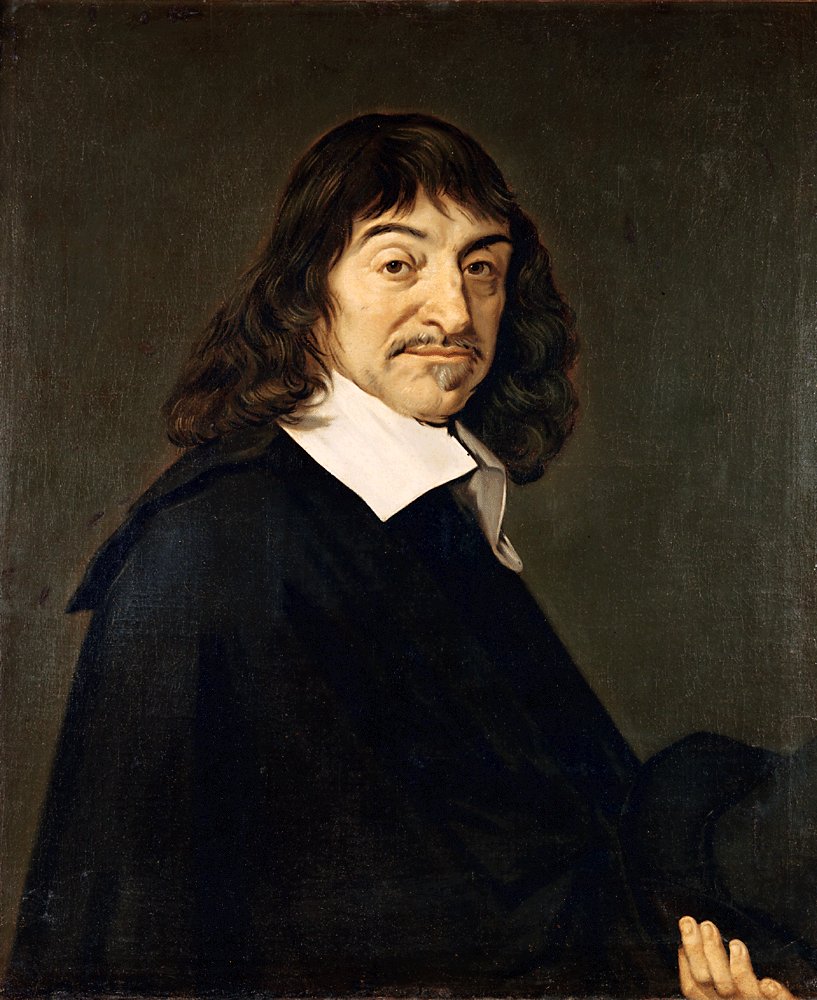

Cartesian dualism
Descartes arrived at substance dualism through a method of radical doubt. In the Meditations, he systematically doubted all beliefs that could possibly be false — the deliverances of the senses, the existence of the external world, even the truths of mathematics. What he could not doubt was the existence of the doubter: the very act of doubting proved the existence of a thinking thing. The famous cogito ergo sum (“I think, therefore I am”) established the self as a thinking substance whose existence is known with certainty, prior to and independent of any knowledge of the physical world.1, 12
From the certainty of the thinking self, Descartes argued that mind and body must be distinct substances. His principal argument relied on the conceivability of their separation: he could clearly and distinctly conceive of himself as a thinking, non-extended thing existing without a body, and he could conceive of a body existing without thought. Since God (whose existence Descartes took himself to have proved) would not create a world in which clear and distinct conceptions are systematically misleading, the real distinction between mind and body follows from the conceivability of their separation.1 The two substances differ in their essential attributes: the essence of mind is thought (cogitatio), while the essence of body is extension (extensio). Mind has no spatial properties — it has no shape, size, or location — and body has no mental properties. They are, in Descartes’s scheme, as different as two things can possibly be.1, 12
Descartes held that mind and body, though distinct, interact causally in the human being. Mental events cause physical events (willing to raise my arm causes my arm to rise) and physical events cause mental events (damage to bodily tissue causes the experience of pain). He suggested that the point of interaction was the pineal gland, a small structure in the center of the brain that he believed was the “seat of the soul,” partly because it is the only major brain structure not duplicated in both hemispheres. This proposal was never regarded as satisfactory, even by Descartes’s contemporaries, and it gave rise to the problem that has dominated discussion of substance dualism ever since: the interaction problem.1, 9
The interaction problem
The most influential objection to substance dualism was raised by Princess Elisabeth of Bohemia in her correspondence with Descartes beginning in May 1643. Elisabeth asked Descartes to explain “how the soul of a human being (it being only a thinking substance) can determine the bodily spirits, in order to bring about voluntary actions.” Her point was that causal interaction between substances requires some point of contact, and contact requires spatial properties — but the mind, on Descartes’s own account, has no spatial properties whatsoever. How can something with no extension, no surface, and no location push, pull, or influence something that is defined entirely by its spatial properties?8
Descartes’s replies to Elisabeth were widely regarded as evasive. He suggested that the union of mind and body is a primitive notion, not reducible to either of his two fundamental categories, and that it is known through ordinary experience rather than through intellectual analysis. This amounts to conceding that the interaction of mind and body cannot be explained within his own philosophical framework — it must simply be accepted as a brute fact. Elisabeth was not persuaded, and the exchange has become one of the most celebrated philosophical correspondences in the Western tradition.8, 12
The interaction problem has generated several responses within the broadly dualist tradition. Occasionalism, developed by Nicolas Malebranche, denied that mind and body interact directly: instead, God intervenes on every occasion, causing the appropriate bodily movement when the mind wills and the appropriate mental experience when the body is affected. Leibniz proposed pre-established harmony, according to which mind and body run in parallel like two synchronized clocks, without any causal connection between them. Both solutions preserve the ontological distinctness of mind and body but at the cost of denying genuine interaction — and both require continuous or pre-arranged divine action, which many philosophers have found implausible.5, 16
Property dualism as alternative
The difficulties of substance dualism have led many philosophers to adopt property dualism as a more defensible position. Property dualism accepts that there is only one kind of substance — physical substance — but holds that this substance has two fundamentally different kinds of properties: physical properties (mass, charge, spatial extension) and mental properties (qualia, intentionality, phenomenal consciousness). The brain is a physical object, but when it reaches sufficient complexity, it instantiates mental properties that are not reducible to its physical properties. Mental properties are real, causally efficacious, and ontologically distinct from physical properties, even though they are always associated with physical substrates.7, 13
David Chalmers has defended a form of property dualism according to which consciousness is a fundamental feature of the natural world, not derivable from physical properties by any combination of functional or structural analysis. On Chalmers’s view, there are psychophysical laws — laws connecting physical processes in the brain to phenomenal experiences — that are basic laws of nature, not reducible to physics. This avoids the interaction problem of substance dualism because mental properties are properties of the brain (a physical object), not properties of a separate immaterial substance. The causal closure of the physical domain is not violated because the bearer of mental properties is itself physical.7
Jaegwon Kim has argued, however, that property dualism faces its own severe difficulties. If mental properties are genuinely distinct from physical properties, then every physical event that has a mental cause also has a sufficient physical cause (since the physical domain is causally closed). This means that mental causation is either redundant (overdetermined by the physical cause) or epiphenomenal (causally inert). Kim concluded that non-reductive physicalism and property dualism are unstable positions that must either collapse into reductive physicalism or accept the causal impotence of the mental.3
Neuroscience challenges
The development of neuroscience has presented substantial empirical challenges to substance dualism. The central difficulty is the pervasive correlation between brain states and mental states: damage to specific brain regions produces specific cognitive deficits, chemical interventions alter mood and perception, and general anesthesia eliminates consciousness entirely. If the mind were a separate substance, capable of thought and experience independently of the body, these tight correlations would be surprising. The dualist must explain why an immaterial mind that can in principle exist without a body is so completely dependent on the brain’s structural and chemical integrity.6, 10
Brain lesion studies provide some of the most striking evidence. Damage to Broca’s area impairs speech production; damage to the fusiform gyrus produces prosopagnosia (the inability to recognize faces); damage to the hippocampus destroys the ability to form new memories. In each case, a specific mental capacity is abolished by a specific physical injury to the brain. The implication, on the physicalist reading, is that these mental capacities are functions of the brain regions in question — they are what those brain regions do, not effects transmitted from an immaterial mind through the brain as an intermediary.6
Split-brain research has posed a distinctive challenge to the dualist commitment to the unity of consciousness. When the corpus callosum (the bundle of nerve fibers connecting the two cerebral hemispheres) is severed, as in the treatment of severe epilepsy, the two hemispheres appear to function as independent centers of awareness. Roger Sperry and Michael Gazzaniga demonstrated that information presented to one hemisphere is inaccessible to the other, and that the two hemispheres can hold conflicting beliefs and intentions simultaneously. If consciousness is the activity of a single immaterial soul, the division of consciousness by a physical operation is difficult to explain. The substance dualist must argue either that the soul is somehow divided by a surgical cut, or that the appearance of divided consciousness is misleading.14
Patricia Churchland has argued that the cumulative weight of neuroscientific evidence makes substance dualism untenable. The progress of neuroscience has consistently moved in one direction: toward the identification of mental functions with brain functions. Every mental capacity that has been studied in detail has been found to depend on specific neural structures and processes. While no single experiment decisively refutes substance dualism, the overall trajectory of neuroscience — the systematic mapping of mental functions onto brain architecture — makes the hypothesis of an immaterial mind increasingly superfluous.6
Ryle and the ghost in the machine
Gilbert Ryle’s The Concept of Mind (1949) mounted a different kind of attack on substance dualism. Ryle argued that Cartesian dualism rests on a “category mistake” — the error of treating mental concepts as though they refer to a hidden inner substance when they actually describe patterns of behavior, dispositions, and capacities. To say that someone “knows French” is not to report a fact about an immaterial substance inside their head; it is to say that they are disposed to speak, read, write, and understand French in the appropriate circumstances. Ryle called Descartes’s view the “ghost in the machine” — the myth that behind the observable behavior of the body there lurks a spectral inner agent that is the real person.2
Ryle’s critique was enormously influential in mid-twentieth-century philosophy, contributing to the rise of logical behaviorism and later functionalism. But his dispositional analysis of mental concepts has itself been widely criticized. Ryle’s account seems unable to accommodate the qualitative character of conscious experience — the fact that pain hurts, that red looks a particular way, that there is “something it is like” to be conscious. These subjective qualities resist analysis in terms of behavioral dispositions, and their resistance is part of what has kept dualism (in both substance and property forms) alive in contemporary philosophy.7, 13
Implications for philosophy of religion
Substance dualism has deep connections to philosophy of religion, particularly to doctrines of the soul, personal identity, and life after death. If the mind is an immaterial substance distinct from the body, then the destruction of the body does not entail the destruction of the mind. The soul can, in principle, survive the death of the body and continue to exist as a conscious, personal entity. This metaphysical possibility underwrites traditional theistic beliefs in an afterlife, divine judgment, and the intermediate state between death and resurrection. Without substance dualism (or something functionally equivalent to it), the soul’s survival of death requires a different metaphysical account — such as divine recreation of the person, constitution theory, or an expanded understanding of resurrection that does not presuppose an immaterial soul.4, 11
Richard Swinburne has been the most prominent modern defender of substance dualism within philosophy of religion. In The Evolution of the Soul (1997), Swinburne argues that persons are essentially souls — immaterial substances that have mental properties and are contingently connected to physical bodies. He defends a modal argument for dualism: it is logically possible that I could exist without my body, and logical possibility reflects metaphysical possibility, so I am not identical to my body. Swinburne connects this to his broader theistic project by arguing that the existence of souls — immaterial substances with the capacity for consciousness, rationality, and free will — is more probable on the hypothesis that the universe was created by God (who is himself a conscious, immaterial being) than on the hypothesis of naturalism.4, 11
J. P. Moreland has similarly argued that the existence of consciousness provides evidence for theism, and that substance dualism is the correct account of the relationship between mind and body. Moreland holds that the argument from consciousness — the argument that the existence of subjective experience is more probable on theism than on naturalism — is strengthened if substance dualism is true, because substance dualism makes the emergence of consciousness from matter not merely unexplained but inexplicable in purely physical terms. If minds are immaterial substances, they cannot have been produced by physical processes alone, and their existence points to a non-physical source.15
Critics point out that the connection between substance dualism and the afterlife is not as straightforward as it may appear. Even if the soul can survive the death of the body, it does not follow that it does survive; the metaphysical possibility of survival does not establish the actuality of survival without additional theological or philosophical argument. Moreover, some Christian theologians have argued that the biblical doctrine of resurrection does not require an immaterial soul — resurrection is the re-creation of the whole person, body and soul together, by divine power. The question of whether substance dualism is required for religious belief, or merely compatible with it, remains a matter of active debate among philosophers and theologians.4, 5