Overview
- The hard problem of consciousness — why and how physical processes in the brain give rise to subjective, qualitative experience — has generated a family of theistic arguments holding that consciousness is more probable on theism than on naturalism, since a conscious God provides a natural explanation for the existence of minds while a purely physical universe provides no obvious reason for subjective experience to exist at all.
- J. P. Moreland and Richard Swinburne argue that the existence of consciousness constitutes evidence for God because mental properties (intentionality, qualia, unity of experience, free will) resist reduction to physical properties and are better explained by a fundamentally mental ultimate reality, while physicalist philosophers such as Daniel Dennett and the Churchlands argue that consciousness will ultimately be explained by neuroscience without residue.
- The debate intersects with several related arguments, including Frank Jackson’s knowledge argument (Mary’s Room), David Chalmers’s zombie argument against physicalism, Alvin Plantinga’s evolutionary argument against naturalism (which contends that if naturalism and evolution are both true, then our cognitive faculties are unreliable), and the classical interaction problem for substance dualism — each of which bears on whether a theistic or naturalistic framework better accounts for the place of mind in nature.
The philosophy of mind examines the nature of consciousness, mental states, and their relationship to the physical world. Since the mid-twentieth century, the question of how subjective experience arises from (or relates to) physical processes has become one of the central problems in philosophy, and the answers proposed carry significant implications for the rationality of theistic and naturalistic worldviews. If consciousness is a fundamental feature of reality that resists reduction to physics, this may constitute evidence for a theistic metaphysics in which mind is more basic than matter; if consciousness is fully explicable in physical terms, one significant argument for theism loses its force.1, 2
The debate draws on contributions from analytic philosophy, neuroscience, cognitive science, and philosophical theology. David Chalmers’s formulation of the “hard problem” of consciousness in 1995 sharpened the issue by distinguishing between explaining the functional and behavioral correlates of mental states (the “easy problems”) and explaining why there is subjective experience at all — why there is “something it is like” to be conscious.13 The hard problem has become a focal point for arguments both for and against the existence of God.
The hard problem of consciousness
Chalmers introduced the term “hard problem” to distinguish the genuinely difficult philosophical question about consciousness from the many empirical questions that neuroscience is progressively answering. The easy problems include explaining how the brain discriminates stimuli, integrates information, reports mental states, and controls behavior — all of which can in principle be solved by identifying the relevant neural mechanisms and computational processes.13 The hard problem is different in kind: even after every functional and neural correlate of consciousness has been identified, the question remains of why these physical processes are accompanied by subjective experience. Why does the firing of C-fibers feel like something? Why is there an inner qualitative character to seeing red, tasting coffee, or feeling pain?1, 13
Chalmers argued that the hard problem reveals an “explanatory gap” between physical descriptions and experiential reality. Physical theories describe structure and function — the arrangement of particles, the transmission of signals, the transformation of inputs to outputs — but structure and function, however completely described, do not logically entail the existence of experience.1 A complete physical description of the brain would specify everything about what it does but would not, by itself, explain why there is something it is like to undergo those processes. This gap has been taken by theistic philosophers as evidence that a purely physical account of reality is incomplete.
The argument from consciousness
J. P. Moreland has developed the most detailed version of the argument from consciousness for God’s existence. In Consciousness and the Existence of God, Moreland argues that the existence of consciousness — with its properties of intentionality (aboutness), qualia (subjective qualitative character), unity, and privileged first-person access — is best explained by theism.2 The argument proceeds by contending that these mental properties are ontologically distinct from physical properties and that their emergence from a purely physical universe would be deeply surprising, whereas their existence in a universe created by a conscious God would be expected.
P1. Genuinely mental properties (consciousness, intentionality, qualia) exist.
P2. The existence of genuinely mental properties is vastly more probable given theism than given naturalism.
P3. Therefore, the existence of genuinely mental properties constitutes strong evidence for theism over naturalism.
Moreland defends P2 on the grounds that naturalism, committed as it is to the causal closure of the physical world, has no resources to explain why consciousness exists or why it has the specific character it does.2 On theism, by contrast, the ultimate reality is a conscious being (God), and the existence of finite conscious beings follows naturally from the creative activity of an essentially mental ultimate reality. If the fundamental nature of reality is mental, the emergence of minds is unsurprising; if the fundamental nature of reality is physical, the emergence of minds from matter is a brute, unexplained fact.
Richard Swinburne advances a related argument in The Existence of God, where he treats consciousness as one of several phenomena (alongside the existence of the universe, its order, fine-tuning, and morality) that are more probable on theism than on naturalism.3 In The Evolution of the Soul, Swinburne argues more specifically that the soul is a non-physical substance that interacts with the brain, and that the psycho-physical laws governing this interaction are additional contingent features of the universe that require explanation — an explanation theism provides and naturalism does not.9
Physicalism and its varieties
Physicalism holds that everything that exists is physical or supervenes on the physical, and that consciousness is therefore ultimately a physical phenomenon. The position comes in several varieties, each of which offers a different account of how mental properties relate to physical properties.7
Identity theory, associated with U. T. Place, J. J. C. Smart, and David Armstrong, holds that mental states are identical to brain states. Pain is not merely correlated with C-fiber firing; it is C-fiber firing, in the same way that water is H2O. Functionalism, developed by Hilary Putnam and Jerry Fodor, defines mental states by their causal roles rather than their physical composition: pain is whatever plays the functional role of being caused by tissue damage and causing avoidance behavior, regardless of whether it is realized in neurons, silicon, or some other substrate.7 Eliminative materialism, advanced by Paul and Patricia Churchland, argues that our ordinary mental vocabulary (“beliefs,” “desires,” “consciousness”) is part of an outdated “folk psychology” that will eventually be replaced by a mature neuroscience, much as “phlogiston” was replaced by oxygen theory in chemistry.8
Daniel Dennett’s Consciousness Explained presents an influential functionalist account, arguing that what we call consciousness is not a single unified phenomenon but a collection of parallel processes in the brain that produce the illusion of a unified experiential field.4 Dennett rejects the assumption that there must be “something it is like” to be conscious over and above the functional and dispositional properties of brain states, arguing that the hard problem is an artifact of confused intuitions rather than a genuine explanatory gap. David Papineau’s Thinking About Consciousness similarly argues that the explanatory gap is an illusion generated by the distinctive phenomenal concepts we use to think about experience, not by any real gap in the physical story.10
The knowledge argument
Frank Jackson’s knowledge argument, presented in “Epiphenomenal Qualia” (1982), is one of the most discussed thought experiments in philosophy of mind. Jackson imagines Mary, a brilliant neuroscientist who has spent her entire life in a black-and-white room. She knows every physical fact about color vision — the wavelengths of light, the neural processes in the visual cortex, the behavioral responses to different colors — but she has never experienced color herself.6 When she finally leaves the room and sees a red tomato for the first time, Jackson argued, she learns something new: what it is like to see red. If she learns something new, then her prior knowledge of all the physical facts was not complete knowledge, and physicalism is false.
P1. Mary knows all the physical facts about color vision while in the black-and-white room.
P2. Upon seeing color for the first time, Mary learns something new (what it is like to see red).
P3. If physicalism is true, then knowing all the physical facts entails knowing all the facts.
C. Therefore, physicalism is false; there are non-physical facts about conscious experience.
Physicalist responses to the knowledge argument fall into several categories. The ability hypothesis, proposed by David Lewis and Laurence Nemirow, holds that Mary does not learn a new fact but acquires a new ability — the ability to recognize, imagine, and remember the experience of red. The acquaintance hypothesis holds that Mary gains direct acquaintance with a property she previously knew only by description, without this implying that the property is non-physical. Dennett has argued that the thought experiment is misleading: if Mary genuinely knew every physical fact about color vision, she would already know what it is like to see red, because that knowledge is implicit in the physical facts.4 Jackson himself later retracted the argument, concluding that the physicalist responses are more persuasive than he originally believed, though the argument continues to be widely discussed.7
Theistic philosophers have used the knowledge argument to support the claim that consciousness involves genuinely non-physical properties. If there are facts about conscious experience that are not entailed by physical facts, this provides evidence that the physical world is not all there is — and theism, which posits a non-physical God as the ultimate reality, offers a natural framework for accommodating such non-physical facts.2, 14
The zombie argument
Chalmers’s zombie argument provides a different route to the conclusion that consciousness is not physically reducible. A philosophical zombie is a being that is physically identical to a conscious human being — molecule for molecule, process for process — but that has no subjective experience whatsoever. There is “nothing it is like” to be a zombie; it processes information and produces behavior indistinguishable from a conscious person, but the lights are off inside.1
Chalmers argues that zombies are conceivable — there is no logical contradiction in the description of a physically identical being that lacks consciousness — and that what is conceivable is metaphysically possible. If zombies are metaphysically possible, then consciousness is not necessitated by physical properties alone, and physicalism is false: there must be additional, non-physical facts that account for why we are conscious and zombies are not.1
Physicalists have challenged both premises. Dennett rejects the conceivability claim, arguing that the concept of a zombie is incoherent once consciousness is properly understood in functional terms: a being that is functionally identical to a conscious being is a conscious being, because consciousness just is the relevant set of functional states.4 Others, following Saul Kripke, accept that zombies are conceivable but deny that conceivability entails metaphysical possibility — just as it is conceivable that water is not H2O (one can coherently imagine this without contradiction), but water is necessarily H2O and therefore a world in which water is not H2O is metaphysically impossible.7
Intentionality and mental causation
Franz Brentano argued in 1874 that intentionality — the capacity of mental states to be about or directed toward objects and states of affairs — is the defining characteristic of the mental. A belief is about something; a desire is for something; a perception is of something. Physical objects, by contrast, are not intrinsically about anything: a rock is not about anything, and a pattern of neural firing is not, considered purely as a physical event, about anything either.7, 12
John Searle’s Chinese Room argument (1980) targeted computational theories of mind by arguing that syntax (the formal manipulation of symbols) is insufficient for semantics (meaning, understanding, intentionality). A person in a room who follows rules for manipulating Chinese characters can produce outputs indistinguishable from those of a Chinese speaker, but the person does not understand Chinese — the formal operations do not, by themselves, generate meaning.12 If intentionality cannot be reduced to computation, this is a challenge for physicalist accounts that identify mental states with computational processes.
Theistic philosophers have used the irreducibility of intentionality to argue that mind must be a fundamental feature of reality rather than an emergent product of mindless physical processes. If the ultimate reality is a mind (God), then the existence of derivative minds with genuine intentionality is explicable; if the ultimate reality is mindless matter, the emergence of intentionality from non-intentional physical processes remains unexplained.2, 15 Thomas Nagel, who is not a theist, has argued in Mind and Cosmos that the existence of consciousness, cognition, and value is so difficult to accommodate within a materialist framework that the materialist neo-Darwinian conception of nature is “almost certainly false,” though he does not endorse theism as the alternative.15
Plantinga’s evolutionary argument against naturalism
Alvin Plantinga’s evolutionary argument against naturalism (EAAN) occupies a distinctive position in the philosophy of mind debate. Rather than arguing directly that consciousness requires a theistic explanation, Plantinga argues that the conjunction of naturalism and evolution is self-defeating: if our cognitive faculties are the product of unguided natural selection, then they were shaped by reproductive fitness rather than truth-tracking, and we have no reason to trust that our beliefs (including the belief in naturalism) are true.5
P1. If naturalism and evolution are both true, then the probability that our cognitive faculties are reliable is low or inscrutable.
P2. If the probability that our cognitive faculties are reliable is low or inscrutable, then we have a defeater for any belief produced by those faculties — including the belief in naturalism.
C. Therefore, naturalism and evolution, taken together, provide a defeater for naturalism itself.
The key premise is P1. Plantinga argues that natural selection tracks survival-enhancing behavior, not true belief. An organism’s beliefs might be true, or they might be false but paired with adaptive behavior (a creature might flee a predator because it falsely believes the predator is a playmate and it desires to play tag, running away as effectively as if it correctly believed the predator was dangerous).5 If false beliefs can be just as adaptive as true ones, then natural selection provides no assurance that our evolved cognitive faculties reliably produce true beliefs.
Critics have challenged P1 by arguing that truth-tracking does confer a survival advantage: organisms that form true beliefs about the location of predators, food sources, and mates will, on average, survive and reproduce more successfully than organisms with systematically false beliefs.11 Fitelson and Sober, among others, have argued that Plantinga’s scenario of adaptive false belief, while logically possible, is far less probable than the scenario of adaptive true belief, because true beliefs provide more reliable guidance for behavior across a wide range of environments.11 The debate continues in the literature collected in Naturalism Defeated?, which assembles both sympathetic and critical responses to the EAAN.11
The interaction problem
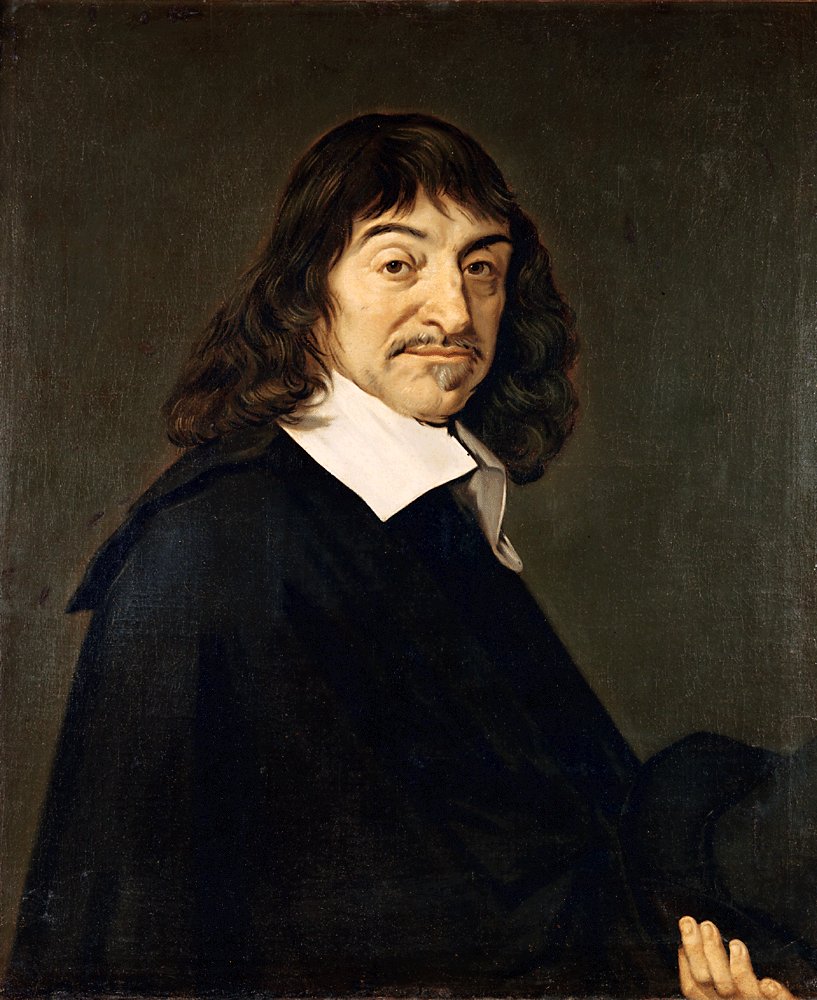

Substance dualism — the view that mind and body are distinct substances, as classically defended by Descartes — faces a longstanding and persistent challenge: the interaction problem. If the mind is a non-physical substance and the body is a physical substance, how do they causally interact? When a person decides to raise an arm, how does a non-physical mental event cause a physical event in the motor cortex? When a nail pierces the skin, how does a physical event cause a non-physical experience of pain?7
The problem has two dimensions. The first is conceptual: causal interaction between physical objects is understood in terms of energy transfer, force, and spatial contact, but a non-physical mind has no energy, exerts no force, and occupies no spatial location.7 How can something without physical properties influence something that has only physical properties? The second dimension is empirical: neuroscience has mapped extensive correlations between brain states and mental states and has identified no point at which non-physical causation enters the causal chain. The causal closure of the physical world — the principle that every physical event has a sufficient physical cause — appears well-supported by neuroscience and physics, and dualist interaction would violate it.8
Swinburne responds to the interaction problem by arguing that causal closure is an empirical thesis, not a necessary truth, and that the psycho-physical correlations discovered by neuroscience are precisely what dualism predicts: the non-physical soul interacts with the brain through regular, lawlike connections that are contingent features of the created order.9 Moreland and the contributors to The Blackwell Companion to Substance Dualism have developed additional responses, arguing that the demand for a mechanism of mind-body interaction applies a standard appropriate to physical-physical causation to a domain (mental-physical causation) where different standards may be appropriate.14 If we lack an account of how one billiard ball transfers energy to another at the most fundamental physical level, the demand for a mechanism of mental-physical causation is not uniquely embarrassing for dualism.
Positions on consciousness
Major positions on consciousness and their implications7, 14
| Position | Core claim | Implication for theism | Key proponents |
|---|---|---|---|
| Substance dualism | Mind and body are distinct substances | Compatible with and often motivated by theism | Swinburne, Moreland |
| Property dualism | Mental properties are non-physical but depend on physical substances | Neutral; consistent with theism or naturalism | Chalmers |
| Identity theory | Mental states are identical to brain states | Favors naturalism; no non-physical mental properties | Smart, Armstrong |
| Functionalism | Mental states defined by causal roles, not composition | Neutral; compatible with theism if God designs functional systems | Putnam, Fodor |
| Eliminative materialism | Folk psychology will be replaced by neuroscience | Strongly favors naturalism; denies mental ontology | P. Churchland, P. S. Churchland |
| Panpsychism | Consciousness is a fundamental feature of all matter | Ambiguous; some forms compatible with theism | Chalmers, Goff, Strawson |
| Idealism | Mind is more fundamental than matter | Strongly compatible with theism | Berkeley, Adams |
Naturalistic responses
Naturalist philosophers have offered several lines of response to the argument from consciousness. The most direct is the promissory materialism of the Churchlands: while current neuroscience cannot fully explain consciousness, this reflects the immaturity of the science rather than a genuine explanatory gap. Just as the once-mysterious phenomena of life, heredity, and disease were eventually explained in physical terms (biology, genetics, and germ theory), consciousness will eventually be explained by a completed neuroscience.8
Dennett argues that the hard problem is a pseudo-problem generated by a persistent Cartesian intuition that consciousness is a unified, inner theater of experience. Once this intuition is abandoned and consciousness is understood as a collection of parallel, competing information-processing streams in the brain, the hard problem dissolves.4 Papineau takes a different approach, granting that there is a conceptual gap between physical and phenomenal descriptions but arguing that this gap is purely epistemic (a feature of how we think about consciousness) rather than ontological (a feature of what consciousness is).10
Against the EAAN specifically, naturalists have argued that evolutionary epistemology provides good reason to trust our cognitive faculties: organisms whose beliefs track reality systematically outcompete those whose beliefs do not, and the extraordinary success of science — a product of human cognition — is itself evidence of cognitive reliability.11 Plantinga responds that this success is equally well explained by theism (God designed our cognitive faculties to be reliable) and that the naturalist who appeals to scientific success is reasoning in a circle: using the products of cognitive faculties to argue that those faculties are reliable.5
The explanatory gap and current debate
The current state of the philosophy of mind is characterized by deep disagreement about whether the explanatory gap between physical and experiential descriptions constitutes a genuine ontological gap or merely an epistemic one. Property dualists and theistic substance dualists hold that the gap is real: there are facts about consciousness that are not entailed by and cannot be reduced to physical facts.1, 14 Physicalists hold that the gap is apparent: the impression of irreducibility will dissolve once we have a better understanding of the brain or a better set of concepts for thinking about consciousness.4, 10
Thomas Nagel’s Mind and Cosmos (2012) brought renewed attention to the question by arguing, from a secular philosophical perspective, that the materialist conception of nature cannot account for consciousness, cognition, or value.15 Nagel proposed that the laws of nature must include teleological principles — principles that make the emergence of consciousness and reason not accidental but expected — though he explicitly declined to endorse theism as the source of such principles. Nagel’s position has been welcomed by theistic philosophers as an acknowledgment from within secular philosophy that materialism faces a genuine explanatory crisis, and criticized by naturalist philosophers as a retreat from the empirical success of the physical sciences.
The implications for the theism-naturalism debate remain contested. If the hard problem is genuine and consciousness cannot be reduced to physical processes, this does not by itself establish theism; it establishes only that physicalism is incomplete, and various non-theistic alternatives (property dualism, panpsychism, neutral monism) might fill the gap. If the hard problem is ultimately dissolved by advances in neuroscience or conceptual analysis, the argument from consciousness loses its force. The debate continues to generate significant work in both analytic philosophy of religion and the philosophy of mind, with neither side able to claim a settled resolution.2, 7, 15
References
Mind and Cosmos: Why the Materialist Neo-Darwinian Conception of Nature Is Almost Certainly False