Overview
- The conflict thesis — the claim that science and religion are fundamentally and inevitably at war — was popularised by John William Draper (1874) and Andrew Dickson White (1896), both of whom presented the history of science as a struggle of rational inquiry against religious dogma.
- Modern historians of science have thoroughly debunked the thesis, demonstrating that the “warfare” narrative relies on fabricated episodes (the flat earth myth), distorted accounts (the Galileo affair was political and personal, not a simple clash of science versus faith), and systematic omission of the many devout scientists who founded modern disciplines.
- Despite its rejection by virtually all professional historians of science, the conflict thesis persists in popular culture, textbooks, and public discourse, shaping widespread assumptions about the relationship between science and religion that are not supported by the historical evidence.
The conflict thesis is the claim that science and religion are fundamentally and inevitably opposed — that the history of science is a story of rational inquiry struggling against and eventually overcoming religious dogma. This narrative was given its most influential formulations in two late-nineteenth-century works: John William Draper’s History of the Conflict Between Religion and Science (1874) and Andrew Dickson White’s A History of the Warfare of Science with Theology in Christendom (1896).1, 2 Although the thesis was widely accepted in popular culture and remains embedded in many popular accounts of the history of science, it has been thoroughly rejected by modern historians of science, who have shown that the actual relationship between science and religion has been far more complex, varied, and often cooperative than the warfare metaphor suggests.3, 4

Origins of the thesis
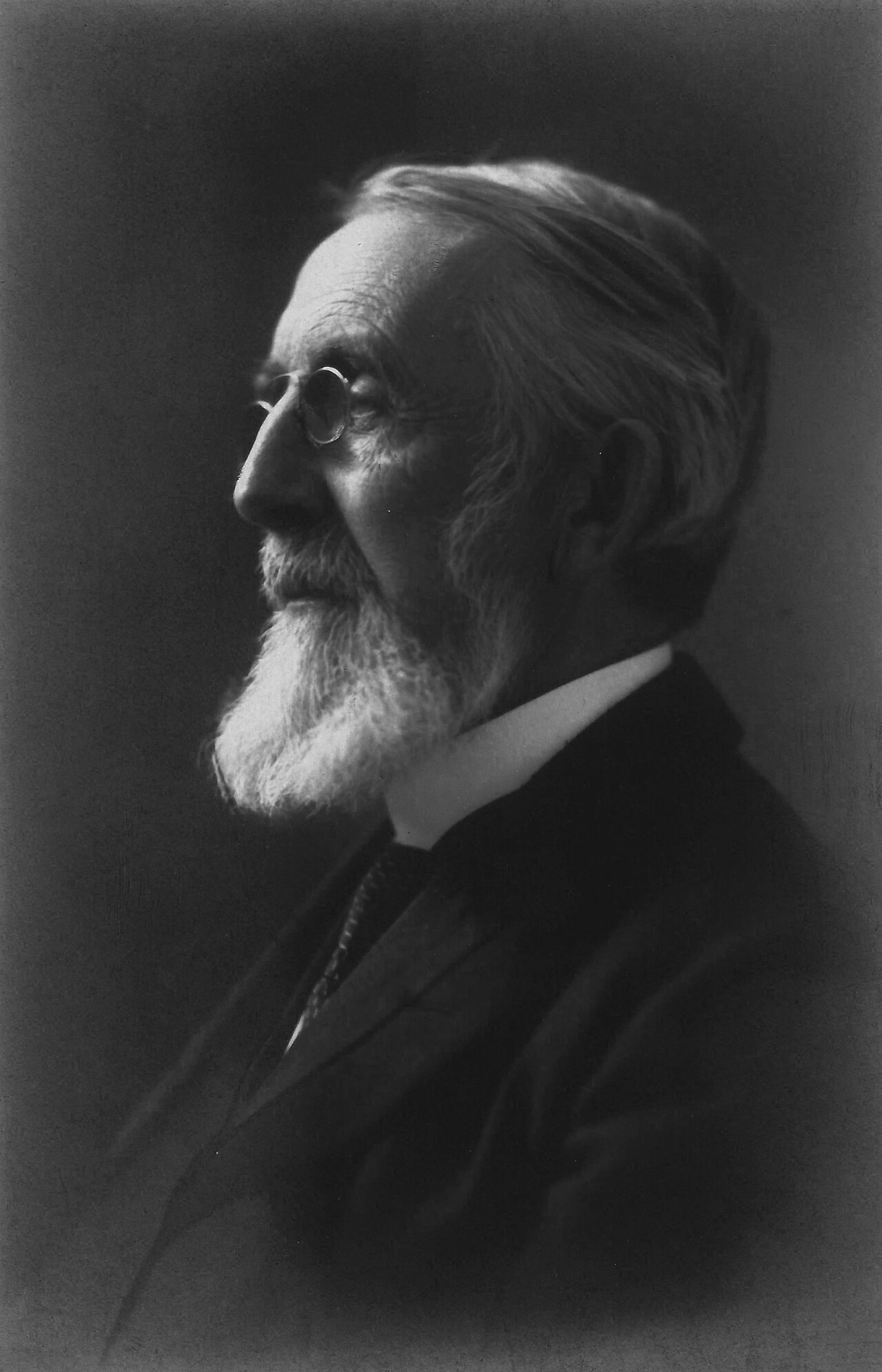
John William Draper, a British-American chemist and historian, published his History of the Conflict Between Religion and Science in 1874 as part of the International Scientific Series. Draper framed the entire history of Western civilisation as a struggle between two incompatible forces: science, representing reason, progress, and the advancement of human knowledge, and religion — particularly Roman Catholicism — representing dogma, superstition, and the suppression of free inquiry. Draper’s work was shaped by the anti-Catholic sentiment prevalent in Victorian-era Protestant culture, and his attack was aimed primarily at the Catholic Church rather than at Christianity in general. The book was enormously popular, going through fifty printings and being translated into ten languages.1, 3
Andrew Dickson White, the first president of Cornell University, expanded the narrative in his two-volume A History of the Warfare of Science with Theology in Christendom (1896). White cast his net wider than Draper, arguing that the conflict was not merely with Catholicism but with “dogmatic theology” in all its forms. White presented a sweeping narrative of theological obstruction of scientific progress, from ancient astronomy through medieval medicine to modern geology and biology. His purpose was partly polemical: White had founded Cornell as a nonsectarian university and had faced religious criticism for doing so, and his historical work served to defend the principle of secular education against theological interference.2, 4
Both Draper and White wrote with genuine grievances — there were real instances of theological resistance to scientific ideas — but their works systematically exaggerated the extent and consistency of that resistance, fabricated or distorted key episodes, and omitted evidence that contradicted their thesis. The resulting narrative was more polemic than history, and it has not survived critical scrutiny.3, 4
Debunked episodes
Several of the most iconic episodes in the conflict narrative have been shown by historians to be distorted or entirely fabricated.
The flat earth myth. One of the most persistent claims in the conflict narrative is that the medieval Church taught that the earth was flat, and that Columbus heroically defied this dogma. This is false. Virtually every educated person in medieval Europe knew that the earth was spherical. The ancient Greek demonstration of the earth’s sphericity, transmitted through the works of Aristotle, Ptolemy, and Pliny, was never lost during the medieval period. The Venerable Bede (eighth century), Thomas Aquinas (thirteenth century), and Dante (fourteenth century) all described the earth as a sphere. The flat-earth myth was largely invented in the nineteenth century, partly by Washington Irving’s fictionalised account of Columbus (1828) and partly by Draper and White themselves, who propagated it as evidence of medieval theological ignorance. The historian Jeffrey Burton Russell has documented in detail that “no educated person in the history of Western Civilization from the third century B.C. onward believed that the earth was flat.”5, 3
The Galileo affair. The trial and house arrest of Galileo Galilei in 1633 is the single most cited episode in the conflict narrative, and it is routinely presented as a straightforward case of religious authority suppressing scientific truth. The actual history is considerably more complex. Galileo had powerful allies within the Church, including Pope Urban VIII, who had initially encouraged his work. His conflict with the Inquisition involved personal, political, and institutional factors as much as theological ones: Galileo alienated his former patron the Pope by placing the Pope’s arguments in the mouth of a character named “Simplicio” (the simpleton) in his Dialogue Concerning the Two Chief World Systems. The Church’s position was not that heliocentrism was necessarily false but that it had not been demonstrated with sufficient certainty to warrant reinterpreting Scripture, a position that was scientifically defensible at the time given the state of the evidence.6, 7 None of this excuses the Church’s actions — the suppression of Galileo’s work was a genuine wrong — but the affair was a complex political and personal conflict, not a simple parable of science versus religion.3
The devout founders of modern science
The conflict thesis is further undermined by the religious commitments of many of the scientists who created the modern scientific enterprise. The thesis predicts that religious belief should be an obstacle to scientific progress; the historical record shows, on the contrary, that many of the most consequential figures in the history of science were devoutly religious and understood their scientific work as an expression of, not a challenge to, their faith.
Isaac Newton, whose Principia Mathematica (1687) laid the foundations of classical mechanics, wrote more about theology than about physics and regarded his scientific work as revealing the rational order imposed on the universe by its creator.8 Michael Faraday, whose experimental discoveries in electromagnetism transformed physics and eventually gave rise to electric power generation, was a devout member of the Sandemanian church and saw his investigation of natural forces as an act of worship.9 James Clerk Maxwell, whose equations unified electricity, magnetism, and light, was a committed Presbyterian who viewed the mathematical elegance of nature as evidence of divine design.10 Lord Kelvin (William Thomson), who formulated the second law of thermodynamics, was an active Anglican who saw no conflict between his scientific work and his Christian convictions.
In the twentieth century, Georges Lemaître, a Belgian Catholic priest and physicist, proposed what became known as the Big Bang theory — the hypothesis that the universe expanded from an initial “primeval atom.” When Pope Pius XII attempted to claim the Big Bang as scientific confirmation of the biblical creation narrative, Lemaître himself objected, arguing that the scientific theory should not be conflated with the theological doctrine and that each operated in its own domain.11 Lemaître’s position illustrates the distinction between science and theology that the conflict thesis obscures: the two can coexist in the same mind precisely because they address different questions.
The complexity model
Modern historians of science have replaced the conflict thesis with a far more nuanced picture of the relationship between science and religion. John Hedley Brooke, in his landmark Science and Religion: Some Historical Perspectives (1991), argued that the relationship has been characterised not by a single pattern — whether conflict, harmony, or separation — but by a wide variety of interactions that depended on specific historical, cultural, and personal circumstances. In some contexts, religious institutions supported and funded scientific inquiry; in others, they resisted particular conclusions; in still others, science and religion operated independently of each other.4
Peter Harrison has argued in The Territories of Science and Religion (2015) that the very categories of “science” and “religion” as they are understood today are modern constructions that did not exist in the forms now assumed before the nineteenth century. Applying them retroactively to earlier periods — asking whether “medieval religion” conflicted with “medieval science” — imposes a framework on the past that distorts the way people at the time actually understood their own activities. What we now call “science” was, for much of Western history, called “natural philosophy” and was pursued within a theological framework, not in opposition to one.14
Rodney Stark has gone further, arguing that the Christian theological commitment to a rational creator who made an intelligible universe was one of the cultural preconditions for the emergence of modern science in Western Europe. The conviction that nature is orderly, law-governed, and accessible to human reason — convictions rooted in the Christian doctrine of creation — provided the intellectual motivation for the systematic investigation of nature that became modern science.13 This is not to say that Christianity caused science in any simple sense, but it undermines the conflict thesis’s claim that religious belief was primarily an obstacle to scientific progress.
Persistence in popular culture
Despite its rejection by professional historians, the conflict thesis remains deeply embedded in popular culture. It shapes the assumptions of many popular science writers, textbook authors, and public commentators. It is invoked, often implicitly, whenever the relationship between science and religion is framed as a zero-sum competition in which advances in scientific understanding automatically diminish the territory of religious belief.3, 12
Ronald Numbers, one of the leading historians of science and religion, has observed that the conflict thesis is “the greatest myth in the history of science and religion” and that its persistence in the popular imagination represents a failure of historical education rather than a reflection of historical reality. Numbers notes that neither Draper nor White was a historian by training, and that their works were polemical interventions in contemporary debates rather than dispassionate works of historical scholarship.3
The thesis persists for several reasons. It offers a simple, dramatic narrative that is easy to communicate and easy to remember. It flatters the assumptions of those who see themselves as defenders of reason against superstition. And it is reinforced by genuine contemporary conflicts — over evolution education, stem-cell research, and climate change — that seem to confirm the warfare metaphor even though they represent specific political and cultural disputes rather than an inherent structural antagonism between science and religion as such.4, 15
The actual history, as Brooke and others have documented, is both more interesting and more instructive than the conflict myth. The relationship between science and religion has been shaped by specific individuals, institutions, and circumstances rather than by an inevitable structural logic. Understanding this complexity is essential for anyone seeking to navigate the genuine points of tension that exist between scientific and religious claims without importing a false historical framework that distorts both the past and the present.4, 14
References
For the Glory of God: How Monotheism Led to Reformations, Science, Witch-Hunts, and the End of Slavery