Overview
- Theistic evolution — also called evolutionary creation — holds that God created the diversity of life through the natural processes described by evolutionary biology, treating evolution as the divinely chosen mechanism of creation rather than as a rival to it.
- Major proponents include geneticist Francis Collins, physicist-theologian John Polkinghorne, biologist Kenneth Miller, and theologian Alister McGrath; institutional support comes from the BioLogos Foundation and from the Catholic Church, Anglican Communion, and most mainline Protestant denominations.
- The position draws criticism from both directions: young-earth creationists argue it compromises biblical authority, while atheist critics contend the theological overlay is superfluous — a debate that turns on whether divine action through secondary causes is coherent or merely God of the gaps reasoning in disguise.
Theistic evolution, also known as evolutionary creation, is the theological position that a creator God brought about the diversity of life through the natural processes described by evolutionary biology.1, 5 It is not itself a scientific theory but a metaphysical interpretation of the scientific evidence, maintaining that the standard evolutionary account of common descent, natural selection, and deep time is correct as a description of the natural world while affirming that this process reflects divine intention and sustaining power. Proponents distinguish their view from both intelligent design, which argues that certain biological features require direct supernatural intervention, and from atheistic interpretations of evolution that treat the mechanism’s sufficiency as evidence against God’s existence.1, 3
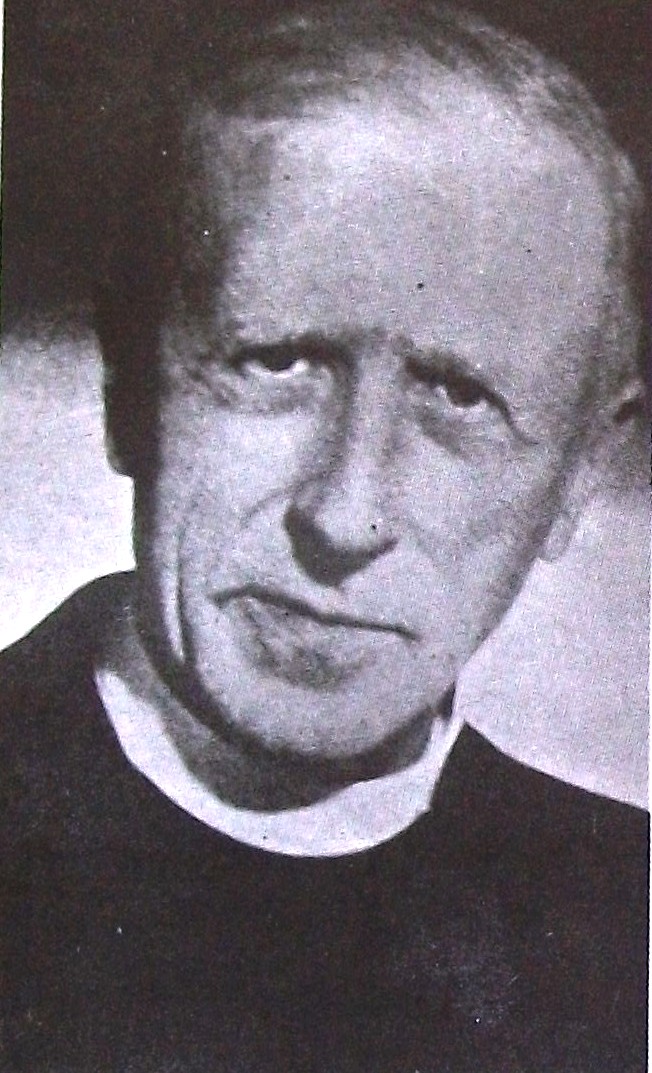

The position has deep intellectual roots. Thomas Aquinas distinguished between primary causation (God as the ultimate source of all being) and secondary causation (the natural processes through which God ordinarily acts), arguing that God typically works through natural agents rather than by continual miraculous intervention.13 This framework provides the philosophical scaffolding for theistic evolution: God is the primary cause of the biological world, but evolution by natural selection is the secondary cause through which that creative work proceeds. The Oxford physical chemist Charles Coulson gave a modern formulation of the same intuition: “Either God is in the whole of Nature, with no gaps, or He’s not there at all.”9
Key proponents
The modern case for theistic evolution has been advanced by scientists, theologians, and philosopher-scientists who argue that Christian faith and evolutionary biology are not merely compatible but mutually illuminating. Francis Collins, a geneticist who directed the Human Genome Project, published The Language of God in 2006, arguing that the evidence from genomics — including shared pseudogenes, endogenous retroviruses, and syntenic gene arrangements across species — confirms common descent beyond reasonable doubt, and that this evidence is entirely consistent with belief in a God who chose evolution as the means of creation.1 Collins subsequently founded the BioLogos Foundation in 2007 to promote the integration of science and evangelical Christian faith, making it the most prominent institutional voice for theistic evolution in the English-speaking world.1
The physicist and Anglican priest John Polkinghorne developed a sophisticated philosophical framework in which God acts within the openness of natural processes rather than by overriding them. In Belief in God in an Age of Science, Polkinghorne argued that the universe’s rational intelligibility — the fact that mathematics developed by the human mind successfully describes physical reality — is itself evidence of a rational creator, and that the contingency inherent in quantum mechanics and nonlinear dynamics provides conceptual space for non-interventionist divine action.2
Kenneth Miller, a cell biologist at Brown University, argued in Finding Darwin’s God that both creationism and atheistic materialism misread the evidence. Miller contended that the molecular evidence for evolution is overwhelming, but that the indeterminacy at the quantum level means the universe is not the closed deterministic system that would exclude divine action. For Miller, God’s providence operates through the genuine contingency of the natural world, not against it.3
The theologian Alister McGrath approached the question from historical theology, arguing in A Fine-Tuned Universe that the natural theology tradition, properly understood, does not require identifying gaps in scientific knowledge but rather interprets the whole of nature — including its evolutionary character — as pointing toward God.4 Denis Lamoureux coined the term “evolutionary creation” to emphasise that the noun (creation) carries the theological weight while the adjective (evolutionary) describes the method, inverting the emphasis of the more common label “theistic evolution.”5
Theological framework
The central theological claim of theistic evolution is that God’s creative action is not confined to miraculous interventions but extends through the natural laws and processes that science describes. This claim rests on the distinction between primary and secondary causation drawn from classical theism. God, as primary cause, sustains the existence of the universe and its laws at every moment; natural selection, genetic drift, and mutation operate as secondary causes within that sustained order.13, 2 On this view, saying “natural selection produced the human eye” and saying “God created the human eye” are not competing claims but descriptions at different levels of explanation, much as saying “the kettle is boiling because of heat transfer” and “the kettle is boiling because I want tea” are compatible accounts of the same event.
Denis Alexander has argued that God’s relationship to evolutionary creation is analogous to an author’s relationship to a novel: the author is responsible for every word without micromanaging each sentence in real time, and the characters’ actions are both genuinely their own and entirely dependent on the author’s creative act.14 Christopher Southgate has extended this framework to address the problem of natural evil — the suffering, predation, and extinction inherent in evolutionary processes — arguing that a world capable of producing genuine novelty and freedom necessarily involves costs, and that God’s redemptive action is directed toward the healing of that suffering rather than its prevention.15
Denominational positions
Several major Christian denominations have endorsed or accepted positions compatible with theistic evolution. In 1996, Pope John Paul II addressed the Pontifical Academy of Sciences and stated that “new knowledge leads to the recognition of the theory of evolution as more than a hypothesis,” affirming that the Catholic Church accepts the scientific evidence for biological evolution while insisting that the human soul is a direct creation of God and not a product of material forces alone.6 The International Theological Commission, under the presidency of then-Cardinal Joseph Ratzinger (later Pope Benedict XVI), published Communion and Stewardship in 2004, which explicitly stated that “the emergence of the first members of the human species” can be understood within an evolutionary framework while maintaining that human beings bear a unique dignity as bearers of the divine image.7
The Church of England has affirmed the compatibility of evolutionary science with Christian faith, and its educational resources explicitly endorse evolution as sound science.8 Most mainline Protestant denominations in the United States and Europe — including the United Methodist Church, the Evangelical Lutheran Church in America, and the Presbyterian Church (USA) — have issued statements accepting evolutionary biology as compatible with their theological commitments. A 2013 Pew Research Center survey found that 24% of American adults believe that “a supreme being guided the evolution of living things for the purpose of creating humans and other life in the form it exists today,” indicating a substantial constituency for some form of theistic evolution in the general population.16
Distinctions from other positions
Theistic evolution is distinguished from young-earth creationism, old-earth creationism, and intelligent design by its full acceptance of the scientific consensus on evolution. Young-earth creationism rejects the geological and biological timescales established by mainstream science; old-earth creationism accepts deep time but denies common descent; and intelligent design, while agnostic on the age of the earth, argues that certain biological structures require direct intervention by an intelligent agent and cannot be explained by unguided natural processes alone.11, 3 Theistic evolution accepts the complete evolutionary account — common descent, natural selection, deep time, and the sufficiency of natural mechanisms to produce biological complexity — and adds the theological interpretation that this process is divinely intended.
The distinction from atheistic interpretations of evolution is philosophical rather than scientific. Richard Dawkins, for example, has argued that natural selection eliminates the need for a designer and that the appearance of design in biology is an illusion produced by a blind, purposeless process.12 Theistic evolutionists respond that Dawkins conflates a scientific claim (natural selection is sufficient to produce complex adaptation) with a philosophical claim (therefore no God exists or is needed). The scientific evidence, they argue, is neutral on the metaphysical question: evolution describes the mechanism, but the question of whether that mechanism is itself the product of a purposeful creator lies beyond the scope of empirical investigation.1, 3
Objections
Theistic evolution faces criticism from multiple directions. From the young-earth creationist perspective, the position is charged with compromising the authority of Scripture by treating the early chapters of Genesis as non-literal. Phillip Johnson, a founding figure of the intelligent design movement, argued that theistic evolution effectively concedes the field to methodological naturalism, accepting the rules of secular science and then attempting to paste a theological interpretation onto conclusions that were reached without reference to God.11 On this view, theistic evolution is intellectually unstable: if natural processes are sufficient to produce biological complexity, the theological addition is doing no explanatory work and amounts to a form of God of the gaps reasoning in reverse — a God who is everywhere but explains nothing in particular.
From the atheist side, critics such as Dawkins have argued that theistic evolution is a well-intentioned but unnecessary compromise. If evolution by natural selection explains the diversity and complexity of life without invoking a designer, then adding a designer to the explanation violates the principle of parsimony: the simpler hypothesis (evolution without God) should be preferred over the more complex one (evolution plus God) unless the additional element does additional explanatory work.12
A third line of criticism concerns the problem of natural evil. The evolutionary process involves enormous quantities of suffering, predation, parasitism, extinction, and waste. If God chose evolution as the method of creation, then God is responsible for choosing a method that entails billions of years of animal suffering. Southgate has engaged this problem directly, arguing that a universe capable of producing free, complex beings may necessarily involve such costs, and that the Christian hope of redemption extends to all creation — but the challenge remains one of the most difficult philosophical problems for the theistic evolutionary position.15
Alvin Plantinga has offered a qualified defence. In Where the Conflict Really Lies, he argues that there is no logical incompatibility between divine guidance and evolutionary processes, and that God could direct evolutionary outcomes through quantum indeterminacy or other forms of non-interventionist action without violating any natural law. Plantinga contends that the real conflict is not between theism and evolution but between theism and the philosophical naturalism that is sometimes illegitimately attached to evolutionary science.10 Whether this defence succeeds depends on whether the concept of non-interventionist divine action is coherent — a question that remains actively debated in the philosophy of science and the philosophy of religion.
References
Finding Darwin's God: A Scientist's Search for Common Ground Between God and Evolution
The Blind Watchmaker: Why the Evidence of Evolution Reveals a Universe without Design
An Evolving God, An Evolving Purpose: Theistic Evolution and the Problem of Natural Evil