Overview
- Philosophy of science investigates the foundations, methods, and implications of scientific inquiry — including the demarcation problem (what distinguishes science from non-science), the logic of confirmation and falsification, the structure of scientific revolutions, and the epistemic status of scientific theories as descriptions of an unobservable reality.
- Key contributions include Popper’s falsificationism, Kuhn’s paradigm-shift model, Lakatos’s methodology of scientific research programmes, Hume’s problem of induction, and the Quine–Duhem thesis — each of which challenges a naïve view of science as the straightforward accumulation of proven facts.
- The field has direct practical consequences: it supplies the criteria by which claims such as young-earth creationism and intelligent design are evaluated as science or pseudoscience, and it informs ongoing debates about scientific realism, Bayesian reasoning, and the relationship between evidence, theory, and truth.
Philosophy of science is the branch of philosophy that examines the foundations, methods, assumptions, and implications of scientific inquiry. It asks what science is, how it differs from other forms of knowledge, what makes a theory scientific, and whether scientific theories describe an objective reality or merely serve as useful instruments for prediction. These questions are not idle abstractions: they bear directly on how evidence is evaluated, how theories are tested, and how the boundary between legitimate science and pseudoscience is drawn.1, 14
The discipline has roots in the epistemological investigations of David Hume and Immanuel Kant, but it took its modern form in the early twentieth century with the Vienna Circle's logical positivism and Karl Popper's subsequent critique of it. The mid-century work of Thomas Kuhn, Imre Lakatos, and Paul Feyerabend fundamentally challenged the image of science as a linear accumulation of knowledge, replacing it with accounts emphasising revolutions, research programmes, and even methodological anarchism.1, 2, 4, 7
The stakes of these debates extend well beyond the seminar room. Questions about what counts as science determine what is taught in classrooms, what receives public funding, what is admissible as expert testimony in court, and how societies evaluate competing claims about the natural world — from the age of the Earth to the safety of vaccines to the mechanisms of biological evolution. This article examines the central problems of the field: demarcation, falsification, induction, paradigm change, scientific realism, and the application of these ideas to the evaluation of pseudoscientific claims.
The demarcation problem
The demarcation problem — the question of what distinguishes genuine science from non-science or pseudoscience — is one of the oldest and most consequential issues in philosophy of science. It matters practically because the label "scientific" carries epistemic authority: claims presented as scientific receive deference in education, public policy, and law that claims labelled as religious, philosophical, or pseudoscientific do not.14
The logical positivists of the Vienna Circle proposed the verification principle as a demarcation criterion: a statement is cognitively meaningful (and thus potentially scientific) only if it can, in principle, be verified by observation or is analytically true. This criterion excluded metaphysics, theology, and ethics from the domain of meaningful discourse. However, the verification principle faced devastating internal problems. Universal scientific laws — "all copper conducts electricity" — cannot be conclusively verified by any finite number of observations, which means the criterion threatens to exclude the very laws of nature it was designed to protect. The principle also appeared self-undermining: the statement "only verifiable statements are meaningful" is itself neither empirically verifiable nor analytically true.1, 10
Karl Popper proposed falsifiability as an alternative criterion, which is examined in detail in the following section. More recently, Sven Ove Hansson has argued that demarcation is best understood not as a single criterion but as a cluster of criteria — including testability, methodological rigour, connection to other well-confirmed theories, and responsiveness to counterevidence — and that pseudosciences typically fail on multiple dimensions simultaneously.14
The demarcation problem remains unsolved in the sense that no single necessary and sufficient criterion has achieved consensus, but this does not mean the distinction between science and pseudoscience is arbitrary. Larry Laudan argued in a widely cited 1983 essay that the demarcation problem is a pseudo-problem and that "science" and "non-science" are not natural kinds with sharp boundaries. Most contemporary philosophers of science, however, hold that the boundary is real even if it is vague at the margins, analogous to the boundary between day and night: the existence of twilight does not imply that noon and midnight are indistinguishable. The practical need to distinguish established science from pseudoscientific mimicry — in courtrooms, in curricula, in public health policy — ensures that the demarcation problem remains a live philosophical concern.13, 14
Falsifiability and its limitations
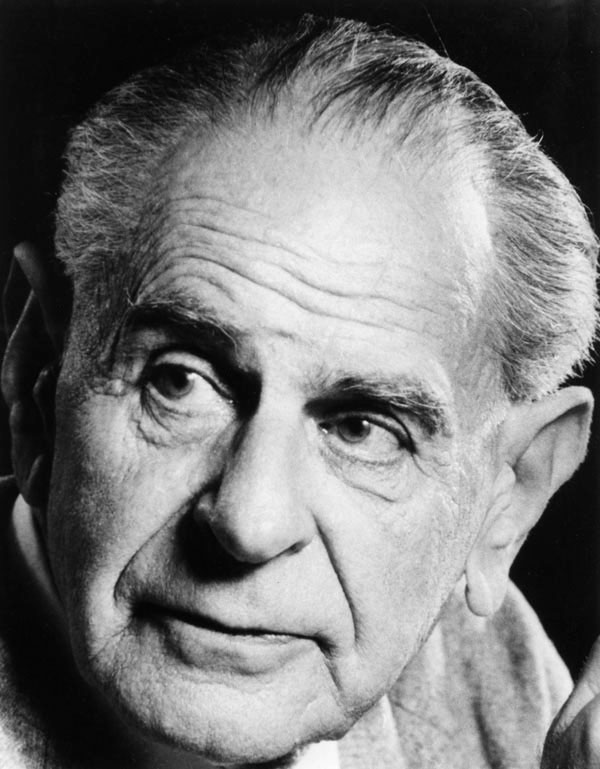

Karl Popper's Logik der Forschung (1934, published in English as The Logic of Scientific Discovery in 1959) proposed falsifiability as the criterion of demarcation between science and non-science. A theory is scientific, Popper argued, if and only if it makes predictions that could, in principle, be shown to be false by observation. A theory that is compatible with every conceivable observation — that can accommodate any outcome whatsoever — is not scientific, because it takes no empirical risk.1
Popper developed this criterion partly in response to what he saw as the unfalsifiable character of Freudian psychoanalysis, Adlerian individual psychology, and Marxist historiography. Each of these frameworks, Popper observed, could explain any human behaviour or historical event after the fact. If a patient's behaviour confirmed the Freudian prediction, it was cited as evidence for the theory; if the behaviour contradicted the prediction, the contradiction was explained away by appeal to defence mechanisms, repression, or other auxiliary hypotheses. The theory never faced a genuine test because no conceivable observation could refute it.10 Popper contrasted this with Einstein's general theory of relativity, which made a precise, risky prediction — that light from distant stars would be deflected by a specific measurable amount as it passed near the Sun — that could have been falsified by the observations of the 1919 solar eclipse. The willingness to specify conditions under which the theory would be abandoned is, for Popper, the hallmark of scientific seriousness.1, 10
Falsifiability, however, faces serious limitations as a demarcation criterion. The Quine–Duhem thesis holds that no scientific hypothesis is tested in isolation: every empirical test relies on a network of auxiliary assumptions (about instruments, background conditions, initial states, and the reliability of other theories), and when a prediction fails, the failure can always be attributed to one of these auxiliaries rather than to the hypothesis under test.5, 6 Pierre Duhem argued as early as 1906 that a physicist who obtains a result inconsistent with a theoretical prediction faces a choice: reject the theory, reject the auxiliary hypotheses, or question the experimental setup. The data alone do not determine which element is at fault.6 Quine extended this argument to all of knowledge, contending that "our statements about the external world face the tribunal of sense experience not individually but only as a corporate body."5
The practical implication is that any theory can be rescued from apparent falsification by modifying its auxiliary hypotheses, and conversely that a genuinely correct theory can produce false predictions if an auxiliary assumption is wrong. The history of science provides examples of both. The anomalous orbit of Uranus appeared to falsify Newtonian mechanics, but the anomaly was resolved not by abandoning Newton's theory but by postulating a previously unobserved planet (Neptune) — an auxiliary hypothesis that turned out to be correct.6
Conversely, an astronomer who modifies auxiliaries endlessly to save a theory from refutation may be engaged not in legitimate science but in what Lakatos would call a "degenerating" research programme. The Quine–Duhem thesis does not imply that all theory-saving modifications are equally rational; it implies that the logic of falsification is more complex than Popper's original formulation acknowledged, and that judgments about when to abandon a theory and when to modify an auxiliary require scientific skill and contextual evaluation rather than the mechanical application of a logical rule.4, 5
The problem of induction
David Hume's problem of induction, articulated in the Treatise of Human Nature (1739–40) and the Enquiry Concerning Human Understanding (1748), challenges the rational foundation of all empirical reasoning. Inductive reasoning moves from observed instances to general conclusions: having observed that the Sun has risen every morning, we conclude that it will rise tomorrow; having observed that all examined samples of gold are yellow, we conclude that all gold is yellow. Hume asked what justifies this inference.3, 9
The justification cannot be deductive, because the conclusion of an inductive argument does not follow necessarily from its premises — no finite number of observations logically entails a universal generalisation. Nor can the justification be inductive, because any attempt to justify induction by appeal to its past success ("induction has worked before, so it will work again") is itself an inductive argument and therefore circular.3 Hume concluded that inductive inference cannot be rationally justified; it rests on habit and custom rather than on logical demonstration. We expect the future to resemble the past not because we have a reason to believe it will, but because our minds are constituted to form such expectations automatically.9
The problem of induction has profound implications for the epistemic status of scientific knowledge. If induction cannot be rationally justified, then no scientific law — however well confirmed by past experience — can be known with certainty to hold in the future. The law of gravity, the conservation of energy, and the principles of thermodynamics are all generalizations from finite observations, and Hume's argument shows that no amount of past confirmation can logically guarantee their continued validity. This does not mean that science is irrational or unreliable; it means that scientific knowledge is provisional in a deep philosophical sense, always open to revision in the light of new evidence.3, 9
Popper embraced Hume's critique and argued that science does not, in fact, rely on induction. Scientific theories are not derived from observations by inductive generalisation; they are bold conjectures that scientists propose and then attempt to refute. Science advances not by confirming theories but by eliminating false ones. A theory that has survived rigorous attempts at falsification is "corroborated" but never confirmed — it remains a conjecture, always vulnerable to future refutation.1 Critics have argued that Popper's deductivism cannot fully account for scientific practice, because scientists routinely rely on inductive reasoning when they use past data to predict future outcomes, choose between empirically equivalent theories, or assign degrees of confidence to hypotheses. The Bayesian approach to confirmation theory, discussed below, represents an alternative framework that accommodates inductive reasoning within a formal probabilistic structure.4
Paradigm shifts and scientific revolutions
Thomas Kuhn's The Structure of Scientific Revolutions (1962) transformed the philosophy of science by challenging the view that scientific knowledge grows by the steady accumulation of new facts and the progressive refinement of existing theories. Kuhn argued that the history of science reveals a pattern of discontinuous change: long periods of normal science, in which researchers work within an established paradigm, are punctuated by revolutionary episodes in which the reigning paradigm is overthrown and replaced by a fundamentally new one.2
A paradigm, in Kuhn's usage, is more than a theory. It encompasses the shared assumptions, methods, exemplary problem-solutions, and standards of evaluation that define a scientific community's practice. During normal science, researchers do not question the paradigm; they engage in "puzzle-solving" — applying the paradigm's methods to extend its range of application, refine its predictions, and resolve technical difficulties.2
Anomalies arise when the paradigm fails to accommodate certain observations, but anomalies are initially tolerated, set aside, or absorbed by minor modifications. Only when anomalies accumulate to the point of crisis — when the paradigm's puzzle-solving capacity is seriously impaired — does the community become receptive to revolutionary alternatives. Kuhn cited the transition from the Ptolemaic to the Copernican model of the solar system, from phlogiston chemistry to Lavoisier's oxygen theory, and from Newtonian mechanics to Einstein's relativity as paradigm cases of this pattern. In each instance, the old paradigm had accumulated anomalies that its practitioners struggled to resolve, and the new paradigm offered a fundamentally different framework that dissolved the old problems while opening up new lines of inquiry.2
Kuhn's most controversial claim was that successive paradigms are incommensurable: they differ not just in their empirical claims but in their conceptual vocabularies, their standards of evidence, and even their ontologies (what kinds of entities they take to exist). The transition from Newtonian mechanics to Einsteinian relativity, for example, was not merely a matter of adding new equations; it involved a fundamental reconceptualisation of space, time, mass, and simultaneity. Terms like "mass" do not mean the same thing in the two frameworks, which means the theories cannot be straightforwardly compared point by point.2
Critics have argued that Kuhn's incommensurability thesis, if taken to its logical conclusion, implies a radical relativism in which there is no objective sense in which later science is "better" than earlier science — only different. Kuhn himself resisted this reading and maintained that later paradigms are typically better at puzzle-solving than their predecessors, but his account of how revolutionary transitions occur — through a gestalt-like shift in perception rather than through logical compulsion — left many philosophers unsatisfied.2, 4 Paul Feyerabend pushed the implications of Kuhn's work further. In Against Method (1975), Feyerabend argued that no single methodological rule has governed every successful episode in the history of science and that the only principle consistent with the historical record is "anything goes" — a position he called epistemological anarchism. Galileo, Feyerabend contended, succeeded not by following the methodological rules of his day but by breaking them: he introduced telescope observations as evidence before the reliability of the telescope was independently established, and he advocated the Copernican system on aesthetic and pragmatic grounds before the crucial confirming evidence (stellar parallax) was available.7 Feyerabend's work is often caricatured as anti-science, but his target was not science itself; it was the philosophical pretension that science succeeds because it follows a fixed method. His point was that the actual practice of successful science is more creative, more opportunistic, and less rule-governed than philosophers had assumed.7
Research programmes and progressive problem-shifts
Imre Lakatos developed his methodology of scientific research programmes partly in response to both Popper and Kuhn, seeking to preserve Popper's rationalist commitments while accommodating Kuhn's historical insights. Lakatos regarded Popper's naïve falsificationism as untenable in the face of the Quine–Duhem thesis: if no single observation can conclusively falsify a theory, then the simple Popperian rule "falsify and reject" cannot describe how science actually works. But he also rejected what he saw as the irrationalism lurking in Kuhn's paradigm model, in which theory change resembles a conversion experience rather than a rational evaluation of evidence.4
Lakatos argued that the unit of scientific appraisal is not an individual theory (as Popper held) or an entire paradigm (as Kuhn held) but a research programme — a series of related theories sharing a common "hard core" of fundamental assumptions, surrounded by a "protective belt" of auxiliary hypotheses that can be modified in response to anomalies.4
A research programme is progressive if successive modifications of the protective belt lead to novel predictions that are subsequently confirmed — if the programme anticipates new facts rather than merely accommodating known ones. A programme is degenerating if its modifications are purely ad hoc — if they serve only to rescue the hard core from refutation without generating new empirical content.4 Lakatos's framework provides a criterion for distinguishing legitimate science from pseudoscience that avoids the rigidity of Popper's falsificationism and the relativism of Kuhn's paradigm model: a research programme becomes pseudoscientific not when it faces anomalies (every programme does) but when it responds to anomalies only by contracting its empirical content rather than expanding it.
This criterion has significant implications for evaluating claims about the history of life. Evolutionary biology, for instance, constitutes a progressive research programme: the core Darwinian hypothesis of descent with modification through natural selection has generated novel predictions — about transitional fossils, genetic similarities between related species, the geographic distribution of organisms, and the molecular clock — that have been repeatedly confirmed by independent lines of evidence.4, 13 By contrast, critics have argued that intelligent design functions as a degenerating programme: its core claim (that an unspecified intelligent agent designed certain biological structures) has not generated novel predictions that have been independently confirmed, and its response to the discovery of evolutionary pathways for purportedly irreducibly complex systems has typically been to shift attention to new systems rather than to derive new testable consequences from the design hypothesis.13, 15
Evidence, prediction, and testability
Scientific theories are evaluated by their relationship to evidence, and the philosophy of science has devoted considerable attention to clarifying what this relationship involves. A theory derives its empirical support not merely from observations that are consistent with it — virtually any observation is consistent with some theory or other — but from observations that the theory predicts, especially predictions that are surprising, precise, and would be unlikely if the theory were false.1, 4
The distinction between prediction and accommodation is central to scientific epistemology. A prediction is a consequence derived from a theory before the relevant observation is made; an accommodation is a post hoc adjustment of a theory to fit observations already known. While there is philosophical debate about whether successful prediction is epistemically superior to successful accommodation, there is broad agreement that a theory gains significant credibility when it predicts phenomena that were not part of the data used to construct it.4, 12 The discovery of Neptune following its prediction from Newtonian mechanics, the confirmation of general relativity's prediction of light bending during the 1919 eclipse, and the detection of the cosmic microwave background radiation predicted by Big Bang cosmology are paradigm cases of successful novel prediction.1, 10
Testability is related to but distinct from falsifiability. A theory is testable if it generates specific empirical consequences that can be checked against observation; it is falsifiable if those consequences include predictions that, if they fail, would count decisively against the theory. In practice, testability comes in degrees. A theory that predicts precise quantitative values (the perihelion precession of Mercury to within 43 arc-seconds per century) is more testable than one that predicts only qualitative tendencies ("organisms will tend to be adapted to their environments").1
The most powerful scientific theories are those that make numerous precise, independently testable predictions across diverse domains — what William Whewell called the "consilience of inductions." When a single hypothesis successfully predicts phenomena in optics, chemistry, biology, and geology that were previously thought to be unrelated, the convergence of these independent lines of evidence provides far stronger support than any single line could provide alone. Darwin's theory of evolution by natural selection exemplifies this consilience: it unifies the fossil record, biogeography, comparative anatomy, embryology, and molecular genetics under a single explanatory framework, each domain providing independent confirmation of the core hypothesis of common descent.1, 4
Bayesian reasoning in science
Bayesian epistemology offers a formal framework for understanding how evidence bears on hypotheses, one that many philosophers regard as superior to both naïve inductivism and strict falsificationism. On the Bayesian account, a rational agent assigns a prior probability to each hypothesis before examining the evidence, then updates that probability in light of the evidence using Bayes's theorem: the posterior probability of a hypothesis given the evidence is proportional to the prior probability of the hypothesis multiplied by the likelihood of the evidence given the hypothesis.4, 8
The Bayesian framework accommodates several features of scientific reasoning that Popperian falsificationism struggles with. It explains why evidence can confirm a hypothesis in degrees rather than all-or-nothing; it explains why surprising successful predictions provide stronger confirmation than unsurprising ones (because the likelihood of a surprising observation is low on rival hypotheses, raising the posterior probability of the hypothesis that predicted it); and it explains why a single failed prediction does not necessarily doom a theory, because the posterior probability depends on the prior as well as the likelihood.4
Lakatos's distinction between progressive and degenerating research programmes can be recast in Bayesian terms. A progressive programme is one whose successive modifications increase the posterior probability of the core hypothesis by generating successful novel predictions with high likelihood ratios. A degenerating programme is one whose modifications lower the prior probability of the programme (because ad hoc adjustments are inherently less probable than principled ones) without compensating for this by successfully predicting new phenomena.4
Critics of the Bayesian approach raise several objections. The assignment of prior probabilities is inherently subjective — reasonable people can disagree about what prior to assign to a hypothesis before examining the evidence — and in the case of grand theoretical questions (such as the truth of a scientific paradigm), the prior probabilities are so uncertain as to make the Bayesian calculation indeterminate in practice. Van Fraassen has pressed this concern, arguing that the Bayesian framework merely relocates the problem of scientific rationality from methodology to probability assignment without solving it.8 Defenders respond that Bayesian convergence theorems show that, given enough evidence, agents with different priors will converge on the same posterior probability, so the subjectivity of priors is a temporary problem rather than a permanent defect. Whether the available evidence in any given scientific controversy is sufficient to produce convergence remains, however, a case-by-case question.4
Scientific realism vs anti-realism
The question of whether scientific theories describe an independently existing reality — or merely serve as instruments for organising experience and generating predictions — is among the deepest in philosophy of science. The debate between scientific realism and anti-realism concerns not the reliability of science as a practice but the metaphysical status of its theoretical claims.8, 12
Scientific realism holds that the aim of science is to produce true descriptions of the world, including the unobservable entities (atoms, electrons, quarks, genes) postulated by our best theories, and that the success of science gives us good reason to believe that our mature theories are at least approximately true. The most influential argument for scientific realism is the no-miracles argument, articulated by Hilary Putnam: the empirical success of science — its ability to make accurate predictions, develop effective technologies, and achieve consilience across independent domains — would be a miracle if our theories were not at least approximately true. The best explanation of science's success is that it is tracking real features of an independently existing world.12
Scientific anti-realism comes in several varieties. Bas van Fraassen's constructive empiricism, the most influential anti-realist position, holds that the aim of science is not truth but empirical adequacy — that our theories need only "save the phenomena" (correctly predict observable outcomes) without our believing that the unobservable entities they postulate actually exist. Van Fraassen accepts that theories make claims about unobservable entities but holds that belief in those claims is not rationally required; one need only accept the theory as empirically adequate.8
The debate between realism and anti-realism is sharpened by the pessimistic meta-induction, an argument attributed to Larry Laudan. The history of science is littered with theories that were empirically successful in their time but are now regarded as fundamentally false: the caloric theory of heat, the phlogiston theory of combustion, the luminiferous ether, Newtonian absolute space and time. If past theories that were successful turned out to be false, what grounds do we have for believing that our current successful theories are true?11 Scientific realists have responded by arguing that the relevant continuity across theory change is structural: even when the theoretical entities change (caloric fluid gives way to molecular kinetic energy), the mathematical structures and empirical relationships that made the old theory successful are typically preserved in the new one — a position known as structural realism.12
A related challenge comes from the underdetermination of theory by evidence. In its strongest form, the thesis holds that for any body of empirical evidence, there exist multiple mutually incompatible theories that are equally consistent with that evidence. If this is correct, then the evidence alone can never uniquely determine which theory is true, and theory choice must rely on extra-empirical criteria such as simplicity, elegance, explanatory scope, or coherence with other accepted theories.5, 8 Realists typically respond that underdetermination in practice is far weaker than in principle: while logically possible alternative theories can always be constructed, the successful alternatives that actually arise in science are few, and the extra-empirical criteria scientists use to choose between them — simplicity, unification, fertility — are themselves indicators of truth rather than mere pragmatic conveniences.12
The realism debate bears on the broader epistemic authority of science. If scientific realism is correct, then science provides our best access to the deep structure of reality, and scientific conclusions about matters such as the fact of evolution, the age of the Earth established by radiometric dating, or the Big Bang origin of the universe describe how things actually are. If anti-realism is correct, these theories remain our best tools for prediction and technological application, but the question of whether they describe an unobservable reality remains permanently open.8, 12
Science and pseudoscience
The tools of philosophy of science find their most direct practical application in the evaluation of pseudoscientific claims. Hansson identifies several characteristics of pseudoscience: it typically invokes scientific-sounding terminology while failing to employ scientific methodology; it treats its core claims as immune to revision in light of counterevidence; it lacks a progressive research programme that generates novel empirical predictions; and it operates outside the system of peer review and institutional self-correction that characterises legitimate scientific communities.14
Young-earth creationism provides a clear case study. The claim that the Earth is approximately 6,000–10,000 years old is contradicted by converging lines of evidence from radiometric dating, ice core stratigraphy, dendrochronology, and the observed rates of geological and astrophysical processes.13
Creationist responses to this evidence typically involve ad hoc modifications — postulating accelerated nuclear decay during a global flood, appealing to the appearance of age created by divine fiat, or questioning the constancy of decay rates without empirical justification — that serve only to protect the core claim from refutation without generating any novel predictions. These responses do not extend the empirical reach of the creationist framework; they merely insulate its core claims from counterevidence. In Lakatos's terms, young-earth creationism is a paradigmatically degenerating research programme: it responds to every anomaly by contracting rather than expanding its empirical content.13, 14
Intelligent design occupies a more philosophically contested position. Its proponents have argued that it meets the criteria of testability and falsifiability: if evolutionary biology were to demonstrate plausible step-by-step pathways for all purportedly irreducibly complex systems, the design inference for those systems would be undermined. However, the 2005 Kitzmiller v. Dover ruling concluded, after extensive expert testimony, that ID fails to meet the methodological standards of science: it invokes supernatural causation, it does not generate testable predictions, it has not been published in peer-reviewed scientific journals, and its negative arguments against evolution do not constitute a positive scientific theory.15 Philosophers such as Robert Pennock and Michael Ruse have argued that ID fails the demarcation criteria on multiple dimensions: it lacks a mechanism, generates no novel predictions, and is not responsive to counterevidence in the way that genuine scientific hypotheses are.13
The boundary between science and pseudoscience is not always sharp, and borderline cases exist. Historical sciences such as evolutionary biology and geology rely on retrodiction (explaining past events) rather than prediction of future observations, and some philosophers have argued that this makes their epistemic standing different from that of experimental physics or chemistry. However, retrodiction is not the same as accommodation: evolutionary theory does not merely explain known facts but predicts that specific kinds of evidence — transitional fossils in specific geological strata, shared genetic sequences among related taxa, nested hierarchical patterns of similarity — will be found in specific places, and these predictions are routinely confirmed.13
The philosophical tools surveyed in this article — falsifiability, progressive versus degenerating research programmes, Bayesian confirmation, testability, and the requirement of novel prediction — collectively provide a robust framework for drawing the distinction between science and pseudoscience. A field that makes risky predictions, subjects them to empirical test, revises its claims in light of counterevidence, and generates an expanding body of confirmed novel predictions is doing science. A field that protects its core claims from refutation by ad hoc adjustments, fails to generate novel predictions, and retreats in the face of each new piece of evidence is not.4, 13, 14
Broader significance
The philosophy of science is not merely an academic exercise. Its conclusions shape science education, public policy, and legal reasoning. The Kitzmiller decision, which prevented the teaching of intelligent design as science in public school biology classes, rested explicitly on philosophical criteria of demarcation — the court heard expert testimony from philosophers of science about what constitutes a scientific theory, and Judge Jones's opinion drew directly on the concepts of testability, falsifiability, and the methodological naturalism that defines scientific practice.15
More broadly, public understanding of how science works — its provisional character, its self-correcting mechanisms, and its reliance on evidence rather than authority — is essential for navigating a world in which scientific claims are routinely contested by motivated interests. Climate science, vaccine research, and public health policy all depend on the public's ability to distinguish well-confirmed scientific claims from poorly supported alternatives, and the philosophy of science provides the conceptual framework for making those distinctions.14
The field also addresses deep questions about the nature of human knowledge. Hume's problem of induction remains unsolved in the sense that no purely logical justification for inductive reasoning has been found, yet science continues to make successful predictions and develop powerful technologies.3, 9 Kuhn's work raised fundamental questions about whether scientific progress is rational or sociological, whether truth is the goal of science or merely a convenient label, and whether the history of science reveals a trajectory toward truth or merely a succession of socially constructed frameworks.2
The relationship between philosophy of science and natural theology deserves particular note. Natural theology relies on the same inferential tools that science employs — observation, abductive reasoning, inference to the best explanation — and its arguments (cosmological, teleological, fine-tuning) are presented as empirically grounded rather than revealed. The philosophy of science provides the standards by which such arguments are evaluated: whether they generate testable predictions, whether they constitute progressive or degenerative research programmes, and whether they satisfy the criteria of demarcation that distinguish scientific claims from metaphysical ones.13, 14
These remain live questions. The ongoing debates between scientific realism and constructive empiricism, between Bayesian and frequentist approaches to confirmation, and between internalist and externalist accounts of scientific rationality ensure that the philosophy of science will continue to evolve alongside the scientific enterprise it seeks to understand. Understanding how science works — its strengths, its limitations, and the philosophical foundations on which it rests — is essential for anyone who takes scientific claims seriously, whether those claims concern the origins of the universe, the mechanisms of evolution, or the structure of matter at its most fundamental level.8, 12
References
But Is It Science? The Philosophical Question in the Creation/Evolution Controversy (updated ed.)