Overview
- Anthropology is organized around four complementary subfields — cultural anthropology, archaeology, biological anthropology, and linguistic anthropology — a structure formalized by Franz Boas at Columbia University in the late nineteenth century.
- Each subfield contributes a distinct method and timescale to the study of humanity: ethnographic fieldwork, material excavation, skeletal and genetic analysis, and the documentation of language in social context.
- The four-field approach is distinguished from other social sciences by its insistence on cross-cultural comparison, extreme time depth, and a holistic framework that treats biology, culture, language, and history as inseparable dimensions of the human condition.
Anthropology is the comparative study of humankind in all its dimensions — biological, cultural, linguistic, and historical. As an academic discipline, it is distinguished from neighbouring social sciences such as sociology, psychology, and history by two foundational commitments: a commitment to cross-cultural comparison on a global scale, and a commitment to a timescale that stretches from the emergence of the first hominins more than four million years ago to the present day. These commitments are expressed institutionally through a four-field structure that has organized the discipline, particularly in the United States, since the late nineteenth century.20 The four fields — cultural anthropology, archaeology, biological anthropology, and linguistic anthropology — are understood not as independent disciplines but as complementary modes of inquiry into a single subject: the human condition in its full historical and biological depth.3
Origins of the discipline
The intellectual roots of anthropology extend to the Enlightenment tradition of natural history and comparative philosophy, but the discipline as an institutionalized science emerged only in the second half of the nineteenth century. Edward Burnett Tylor, often credited as one of the founders of the field, published his landmark work Primitive Culture in 1871, defining culture as "that complex whole which includes knowledge, belief, art, morals, law, custom, and any other capabilities and habits acquired by man as a member of society."5 This definition, though now subjected to substantial revision, established culture as an object of scientific analysis and placed its study at the center of what would become anthropology.
.jpg)
The specific four-field architecture of the discipline was consolidated largely through the work of Franz Boas, a German-American scholar who joined Columbia University in 1896 and built its first doctoral program in anthropology. Boas had trained as a physicist and geographer before turning to the study of human cultures, and he brought to anthropology an insistence on rigorous empirical method and deep skepticism toward the sweeping evolutionary typologies that dominated his era.1, 2 In his 1896 paper "The limitations of the comparative method of anthropology," Boas argued that the dominant practice of comparing superficially similar cultural traits across unrelated societies to reconstruct a single evolutionary ladder of civilization was methodologically indefensible.1 Instead, he advocated for intensive study of specific cultures in their full historical and environmental context — an approach that required simultaneous attention to language, biological makeup, material culture, and social practice.
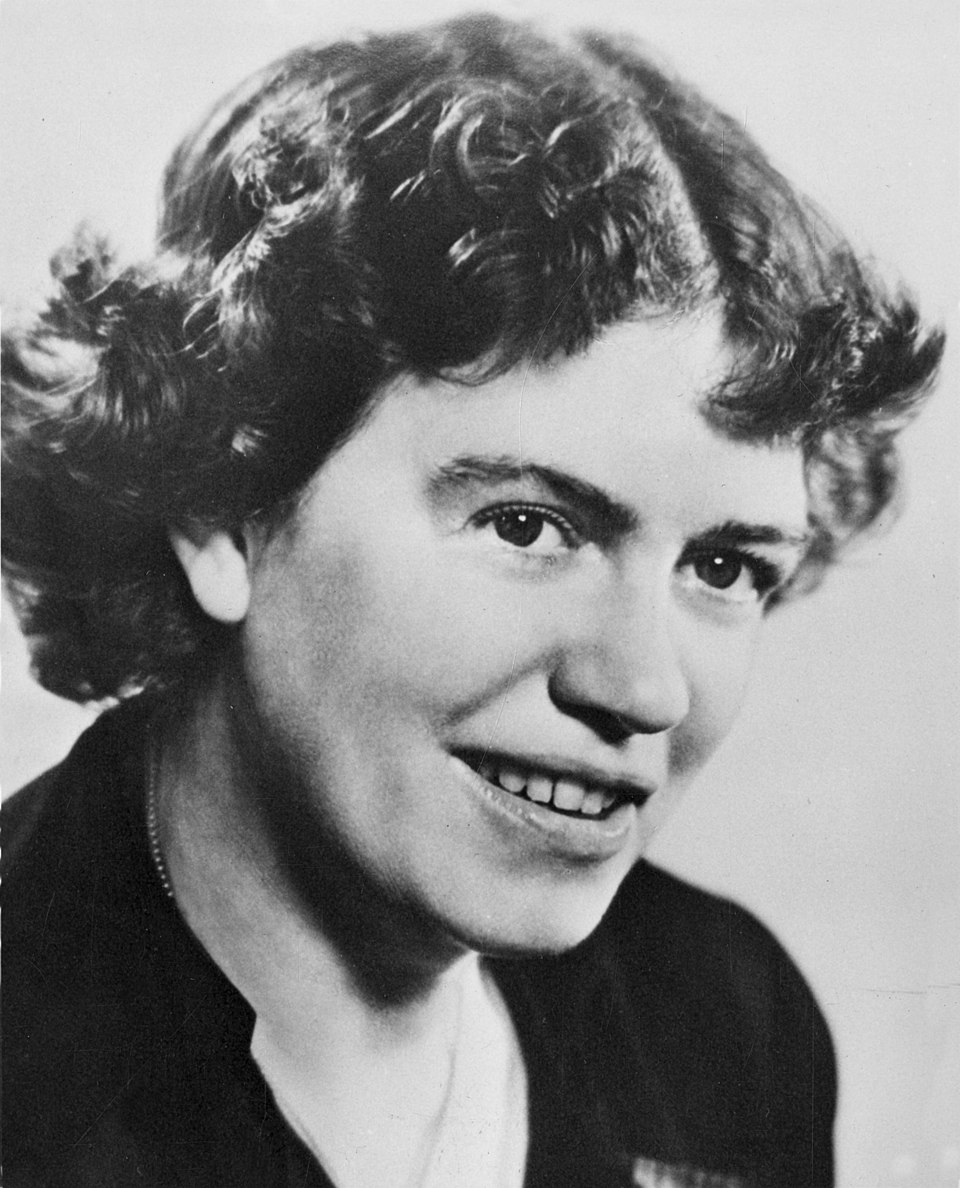
Boas trained an extraordinary generation of students, including Alfred Kroeber, Ruth Benedict, Margaret Mead, and Edward Sapir, who carried his holistic vision into the major American universities and established anthropology departments that reproduced the four-field structure.2, 3 Kroeber's 1915 paper on the concept of culture drew a sharp analytical distinction between biological inheritance and cultural transmission — what he called the "superorganic" — and this distinction underwrote the disciplinary boundary between biological anthropology and the culturally oriented fields.6 By the mid-twentieth century, the four-field approach had become the defining characteristic of American anthropology, distinguishing it from the predominantly two-field tradition of British social anthropology, which focused on ethnography and social structure and treated archaeology and physical anthropology as largely separate disciplines.17
Cultural anthropology
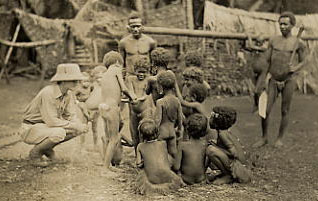
Cultural anthropology — sometimes called social anthropology in the British tradition — is the study of human cultures, social organization, belief systems, and practices as observed in living communities. It is the largest of the four subfields in terms of practitioners, and its methods have shaped the discipline's public identity more than any other branch. The defining method of cultural anthropology is ethnography: the systematic, long-term observation of a community through direct participation in its daily life. The ethnographer does not simply interview informants or administer questionnaires from a distance; she or he lives within the community, learns the local language, participates in rituals, economic activities, and social events, and constructs a sustained account of how local people understand and organize their world.19
.jpg)
This method was systematized above all by Bronisław Malinowski, a Polish-born anthropologist who conducted fieldwork among the Trobriand Islanders of Melanesia during and after the First World War. Malinowski's Argonauts of the Western Pacific, published in 1922, became the methodological manifesto of what he called participant observation.4 Malinowski insisted that the anthropologist's task was to grasp "the native's point of view" — to understand social institutions not from the outside as a detached observer, but from within the framework of meanings that gave them significance to the people who practiced them.4 His meticulous descriptions of the kula ring, a ceremonial exchange network linking dozens of island communities, demonstrated that apparently irrational or economically unproductive behaviour could be rendered fully intelligible when situated within its proper cultural context.
The theoretical framework through which cultural anthropologists organize their observations has changed considerably across the twentieth and twenty-first centuries. Early figures including Lewis Henry Morgan and Tylor worked within an evolutionary paradigm that ranked cultures along a universal sequence from "savagery" through "barbarism" to "civilization."5 Boas and his students dismantled this framework and replaced it with the principle of cultural relativism — the methodological stance that cultures must be understood on their own terms rather than judged by an external standard of progress or rationality.2 Subsequent theoretical orientations — structural-functionalism, symbolic anthropology, structuralism, interpretive anthropology, and postcolonial critique — each modified and extended this basic commitment to understanding cultural difference without ranking it.3
The core questions of cultural anthropology include how kinship systems structure social obligation, how religious and ritual practices produce and maintain shared meaning, how economic exchange organizes social relationships, how political authority is legitimated and contested, and how cultural categories mediate the experience of the body, gender, emotion, and the natural world. Because cultural anthropologists have worked in every inhabited region of the globe and documented an extraordinary diversity of answers to these questions, the comparative database they have assembled remains one of the most important sources of evidence for understanding the range of viable human social arrangements.20
Archaeology
Archaeology is the study of past human societies through the systematic recovery and analysis of the material remains they have left behind — tools, structures, animal bones, plant remains, ceramics, written documents, and the spatial patterning of these objects across landscapes and stratigraphic sequences. Where cultural anthropology works with people who are alive and can speak for themselves, archaeology addresses societies that no longer exist and must reconstruct cultural patterns entirely from physical evidence. This challenge gives archaeology its distinctive methodological identity and makes it simultaneously the most technically demanding and the most temporally expansive of the four subfields, extending the study of human behavior back to the first recognizably human tool use approximately 3.3 million years ago.13
The foundational principle of archaeological interpretation is stratigraphy, borrowed from geology: the recognition that sediments and the cultural materials embedded within them are deposited in sequential layers, with older deposits underlying younger ones. The systematic study of stratigraphic sequences, formalized in Edward Harris's 1979 work on stratigraphic principles, allows archaeologists to establish the relative chronology of cultural events and assemblages at a site.12 Combined with absolute dating methods — radiocarbon dating, potassium-argon dating, dendrochronology, thermoluminescence, and archaeomagnetism — stratigraphy permits archaeologists to assign calendar dates to cultural sequences with increasing precision.13 The development and refinement of these techniques across the twentieth century transformed archaeology from a discipline dependent on typological intuition and historical analogy into a rigorous empirical science capable of addressing questions about cultural change across deep time.
The second major analytical tool of archaeology is typology: the classification of artifact types and the tracking of their formal changes through time and space. By documenting how pottery styles, projectile point shapes, or architectural forms change across a region or a time period, archaeologists can trace the spread of ideas and technologies, identify cultural boundaries, and detect episodes of contact or migration between populations. Typology also allows archaeologists to assign relative dates to undated assemblages by comparing them to well-dated sequences elsewhere — a technique called cross-dating that was central to the reconstruction of Old World and New World prehistory throughout the twentieth century.13
Archaeological fieldwork encompasses a wide range of methods beyond excavation proper. Surface survey — systematic pedestrian traversal of a landscape combined with the recording of artifact scatters and site locations — provides a spatial picture of past land use that excavation alone cannot yield.13 Remote sensing techniques including aerial photography, satellite imagery, ground-penetrating radar, and LiDAR (Light Detection and Ranging) have dramatically expanded archaeologists' capacity to locate and map sites without physically excavating them, revealing buried features such as ancient road networks, field systems, and urban layouts across vast areas.23 Laboratory analysis of botanical remains, faunal assemblages, pollen sequences, isotopic signatures in human bone, and ancient DNA extracted from skeletal material adds further dimensions to the reconstruction of past diet, environment, health, and population movement.13
Biological anthropology
Biological anthropology — also called physical anthropology — investigates the biological dimensions of humankind: the evolutionary history of the human lineage, the biological variation that exists among living human populations, the behavioral biology of nonhuman primates, the growth and development of the human body, and the pathological conditions recorded in skeletal and dental remains from archaeological and forensic contexts. It is the subfield most directly integrated with the natural sciences, drawing on evolutionary biology, genetics, anatomy, ecology, and molecular biology as its primary theoretical and technical resources.11, 14
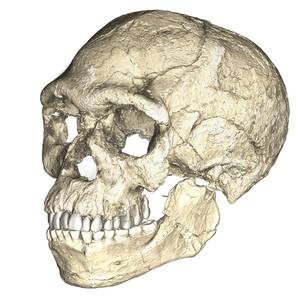

The transformation of biological anthropology from a largely descriptive, typological enterprise into a modern evolutionary science was accomplished above all by Sherwood Washburn, who articulated a programmatic statement of the "new physical anthropology" in a 1951 paper of that name.11 Washburn argued that the field had become preoccupied with measuring and classifying skeletal material without reference to functional or adaptive significance, and proposed instead that biological anthropology should become a science of process — one that asked how and why human biological characteristics evolved in relation to changing selective pressures, rather than simply documenting the distribution of morphological traits. This reorientation aligned biological anthropology with the synthetic theory of evolution and opened it to the contributions of population genetics, ethology, and comparative anatomy.11
Paleoanthropology — the study of the fossil record of human evolution — is the most publicly prominent branch of biological anthropology. It encompasses the excavation, description, and phylogenetic analysis of hominin fossils from sites across Africa, Europe, and Asia, and integrates this morphological evidence with the results of ancient DNA analysis to reconstruct the evolutionary relationships among archaic human populations.14 The field has been transformed in recent decades by genomic methods: the recovery of ancient DNA from Neanderthal, Denisovan, and early modern human skeletal material has revealed a complex pattern of interbreeding and population replacement that skeletal morphology alone could not resolve, and has forced substantial revision of earlier models of human origins.15
Primatology — the study of nonhuman primates — forms a second major branch, providing a comparative framework for interpreting human behavior and biology. By observing the social organization, foraging strategies, communication, and cognitive capacities of chimpanzees, gorillas, bonobos, and other primates, biological anthropologists establish the behavioral baseline from which the distinctively human characteristics of language, culture, and tool use must have evolved.16 Long-term field studies — most famously Jane Goodall's ongoing research at Gombe in Tanzania, begun in 1960 — have demonstrated that great apes engage in complex social politics, manufacture and use tools, engage in intercommunity violence, and transmit behavioral traditions across generations in ways that blur many previously assumed boundaries between human and nonhuman behavior.16
Forensic anthropology is the application of skeletal biology and paleoanthropological methods to the identification of human remains in medicolegal contexts. Forensic anthropologists assist law enforcement and international tribunals by estimating the biological profile — age at death, sex, stature, ancestry, and pathological conditions — of unidentified skeletal material, and by documenting skeletal evidence of trauma, disease, or cause of death.21 The methods and databases developed in this context have also improved the accuracy of demographic reconstruction from archaeological skeletal collections, creating productive feedback between forensic and academic branches of the subfield.
Linguistic anthropology
Linguistic anthropology examines the relationships between language, culture, and social life. It is distinguished from general linguistics by its emphasis on language as a social practice rather than as a formal computational system, and from sociolinguistics primarily by its grounding in anthropological theory and ethnographic method. Linguistic anthropologists study how language shapes social identity, encodes cultural categories, mediates interactions of power, and changes as communities change — questions that require the same sustained ethnographic engagement that characterizes cultural anthropology, combined with the systematic analysis of linguistic form.9
Edward Sapir, a student of Boas who made major contributions to both descriptive linguistics and cultural theory, articulated a foundational principle of the field: that language is not a neutral vehicle for expressing pre-formed thoughts, but a system that actively shapes the categories through which speakers perceive and organize their experience.7 This idea was extended and radicalized by Sapir's student Benjamin Lee Whorf, who proposed, on the basis of his analysis of the Hopi language and other Native American languages, that grammatical structures determine fundamental aspects of cognition, including the perception of time and causality.10 The Sapir-Whorf hypothesis — sometimes called linguistic relativity — in its strong form held that speakers of different languages literally think in incommensurable ways; in its weak form it holds only that language influences, rather than determines, thought. Experimental research in cognitive science and cross-cultural psychology over the past three decades has provided substantial support for the weak version of the hypothesis, demonstrating that grammatical and lexical structures do influence performance on a range of cognitive tasks involving color perception, spatial reasoning, and number.8
A central practical concern of linguistic anthropology since the mid-twentieth century has been the documentation of endangered languages. Of the approximately 7,000 languages spoken in the world today, a substantial proportion are spoken by small communities whose members are shifting to regionally dominant languages within a generation or two.24 When a language ceases to be spoken, a unique system of ecological knowledge, cultural classification, and historical memory encoded in its vocabulary, grammar, and narrative traditions is lost. Language documentation projects, typically conducted by linguistic anthropologists working in close collaboration with community members, aim to create audio and video archives, grammars, dictionaries, and text collections that preserve at least a record of the language even after its last fluent speakers are gone.24
Research emphases across the four fields
The following table summarizes the primary methods, temporal scope, and characteristic research questions that distinguish the four subfields, illustrating how each contributes a distinct analytical lens to the study of humanity.
Comparative overview of the four anthropological subfields3, 13, 19, 9
| Subfield | Primary method | Temporal scope | Core questions |
|---|---|---|---|
| Cultural anthropology | Participant observation, ethnographic interview | Present & recent past | How do cultures organize kinship, religion, economics, politics? |
| Archaeology | Excavation, survey, remote sensing, artifact analysis | 3.3 million years ago to present | How did past societies live, change, and interact? |
| Biological anthropology | Skeletal analysis, genomics, primatology, paleoanthropology | 6+ million years ago to present | How and why did human biology evolve? What is human biological variation? |
| Linguistic anthropology | Ethnographic fieldwork, discourse analysis, language documentation | Present & recent past | How does language shape and reflect culture, identity, and power? |
The holistic perspective
The rationale for the four-field structure rests on the claim that no single subfield can, by itself, produce a complete account of the human condition. A cultural anthropologist studying contemporary ritual practices cannot fully understand them without knowledge of the long historical processes that produced them — which requires archaeology. She cannot assess the biological costs and benefits of ritual behavior without knowledge of human evolutionary history — which requires biological anthropology. And she cannot adequately analyze the verbal dimensions of ritual without knowledge of linguistic structure and sociolinguistic context — which requires linguistic anthropology. The argument is not that every practitioner must be equally competent in all four fields, but that anthropologists must maintain enough awareness of the other fields to recognize when cross-field collaboration is necessary and to interpret evidence drawn from outside their own specialty.17
This holistic orientation distinguishes anthropology from other social sciences in a concrete methodological sense. Sociology, for example, studies social organization primarily in contemporary industrial societies, rarely extends its temporal horizon beyond a few centuries, and does not systematically engage with biological or archaeological evidence. Economics assumes a model of human rationality and largely brackets the cross-cultural variability in economic institutions that anthropological fieldwork has documented. Psychology has historically studied populations drawn overwhelmingly from Western, educated, industrialized, rich, and democratic societies — a sampling bias whose significance has been demonstrated by anthropological comparative research.20 Anthropology's insistence on including all of human history, all of the world's cultures, and both the biological and cultural dimensions of human life in its frame of reference gives it an epistemological ambition that none of the neighbouring disciplines separately possesses.
The four-field structure has not been without internal criticism. In the 1990s and early 2000s, debates within American anthropology about the coherence and future of the four-field model became acute, with some cultural anthropologists arguing that the increasing specialization of each subfield had made genuine synthesis impossible and that the model served primarily as an institutional fiction that justified the bundling of unrelated researchers in single departments.17 Defenders of the model responded that the alternative — the dissolution of anthropology into separate disciplines aligned with the physical sciences on one hand and the humanities on the other — would sacrifice precisely the cross-disciplinary synthesis that makes anthropological knowledge distinctive.17 The debate has not been definitively resolved, but the four-field structure remains the standard organizational model for anthropology departments in the United States and continues to influence curricula, hiring practices, and disciplinary self-definition internationally.20
Applied anthropology
Alongside its academic branches, anthropology has a substantial tradition of applying its methods and perspectives to practical problems in public health, international development, education, business, environmental policy, and law. Applied anthropology — sometimes described as a fifth field, though most practitioners understand it as a mode of practice that draws on all four subfields — uses ethnographic research, cross-cultural comparison, and biological and archaeological knowledge to inform decision-making and program design in real-world contexts.22
The range of applied practice is wide. Medical anthropologists study how cultural beliefs about the body, illness, and healing affect the uptake of public health interventions, with their findings routinely used to design more culturally appropriate health programs. Development anthropologists evaluate the cultural and social impacts of infrastructure projects, resettlement schemes, and market interventions in low-income countries. Forensic anthropologists provide expert testimony in criminal cases and work with international human rights organizations to identify victims of mass atrocities. Business anthropologists conduct ethnographic research for corporations seeking to understand consumer behavior and workplace culture. Environmental anthropologists contribute to conservation planning by documenting traditional ecological knowledge held by indigenous communities.22
The growth of applied practice has generated ongoing debate about the ethical obligations of anthropologists whose work serves institutional clients with interests that may not align with those of the communities they study. The American Anthropological Association's code of ethics, revised most recently in 2012, identifies "do no harm" as the paramount ethical principle and places the welfare and interests of research participants above the interests of funding agencies, employers, or governments.18 These ethical commitments are an extension of the discipline's foundational respect for the autonomy and dignity of the peoples it studies — a respect that Boas saw as inseparable from the scientific enterprise of understanding human diversity without prejudging it.2
Significance of the four-field approach
Taken together, the four fields provide a framework for answering questions about human nature that no single discipline can address alone. The archaeological record shows that the capacity for symbolic behavior, including deliberate burial of the dead, personal ornamentation, and representational art, appeared in the human lineage within the last few hundred thousand years, well after the emergence of anatomically modern Homo sapiens.14 Biological anthropology provides the evolutionary and neurological context for understanding why such capacities emerged and what selective pressures may have favored them. Cultural anthropology documents the extraordinary diversity of symbolic systems that have been built on these underlying capacities across human societies. Linguistic anthropology examines how language — perhaps the most powerful symbolic medium of all — structures the transmission and elaboration of cultural knowledge across generations.9
The synthesis that results is a picture of humanity that is neither purely biological nor purely cultural, neither timeless nor presentist. Human beings are animals shaped by millions of years of evolution, and the constraints and affordances of that evolutionary history are visible in our skeletal anatomy, our primate social instincts, and our universal capacities for language and culture. But human beings are also historical creatures, embedded in particular social and linguistic communities, shaped by contingent events and local traditions that cannot be predicted from biology alone. The four-field approach insists on holding both of these truths simultaneously — and it is this insistence that constitutes anthropology's most distinctive and durable contribution to the human sciences.3, 20
References
Primitive Culture: Researches into the Development of Mythology, Philosophy, Religion, Art, and Custom