Overview
- Between roughly 1543 and 1687, European natural philosophers dismantled the Aristotelian-Ptolemaic picture of the cosmos and replaced it with a mathematically rigorous, experimentally grounded model of nature, a transformation anchored by Copernicus placing the Sun at the center of the solar system, Kepler deriving the laws of planetary motion, and Newton unifying celestial and terrestrial physics under a single law of universal gravitation.
- The revolution was as much methodological as factual: Francis Bacon systematized inductive reasoning from observed particulars, Descartes proposed that nature operates as a mechanical system describable by mathematics, and Galileo pioneered the controlled experiment, together forging the empirical and quantitative approach that defines science to the present day.
- The founding of the Royal Society in 1660 and the Académie des Sciences in 1666 institutionalized the new practice of collective, public, reproducible inquiry, completing the shift from natural philosophy as the solitary contemplation of authoritative texts to science as a social enterprise accountable to evidence.
Between the publication of Nicolaus Copernicus's De Revolutionibus Orbium Coelestium in 1543 and Isaac Newton's Philosophiae Naturalis Principia Mathematica in 1687, European thinkers dismantled the cosmological and methodological framework that had governed the study of nature for nearly two thousand years and replaced it with something fundamentally new.12 The transformation is conventionally called the Scientific Revolution, though historians of science have contested whether it was as sudden, as unified, or as revolutionary as that label implies.1 What is not in dispute is its consequence: the conceptual tools, institutional forms, and epistemic norms that emerged from this century and a half of intellectual upheaval became the foundations on which every subsequent scientific discipline was built.

The old framework that the revolutionaries displaced was itself a formidable intellectual achievement. Ancient Greek philosophers, above all Aristotle and the mathematician-astronomer Claudius Ptolemy working in Alexandria in the second century CE, had constructed a picture of the cosmos that was geometrically precise, philosophically coherent, and broadly consistent with naked-eye observation.2 In this picture, the Earth stood motionless at the center of a nested series of crystalline spheres carrying the Moon, Sun, planets, and fixed stars. Below the Moon, matter was composed of four elements (earth, water, air, fire) and was subject to generation and corruption; above the Moon, the heavenly bodies were composed of a perfect fifth element and moved in perfect circles. This system had been absorbed into Christian theology by the thirteenth century, so that challenging Ptolemy's astronomy risked challenging not only a scientific authority but a theological worldview.16
The Copernican revolution
The challenge began in Poland, with a cathedral canon and physician who spent decades quietly revising the geometry of the heavens. Nicolaus Copernicus (1473–1543) was trained in both mathematics and medicine at the universities of Kraków, Bologna, and Padua, and he became troubled by the internal inconsistencies of the Ptolemaic system.2 To account for the observed motions of the planets—particularly the retrograde loops they appear to trace against the background stars—Ptolemy had been compelled to introduce a device called the equant: a point offset from the geometric center of each planet's orbit from which its angular velocity appeared constant. Copernicus found the equant philosophically intolerable, a violation of the Aristotelian principle that heavenly motion must be perfectly uniform about a center.2, 3
His solution was to relocate the center. In the heliocentric model Copernicus developed over roughly thirty years and finally published in De Revolutionibus Orbium Coelestium in the year of his death, the Sun occupies the center of the planetary system, with Earth demoted to the rank of a planet orbiting the Sun once per year and rotating on its own axis once per day.3 This single change dissolved retrograde motion into an optical illusion produced by the changing vantage point of a moving Earth overtaking or being overtaken by other planets in their orbits. The heliocentric model also provided a natural explanation for why Mercury and Venus are always seen near the Sun: they orbit inside the Earth's path and can never appear far from it.2
Copernicus was acutely aware of the theological and philosophical danger of his proposal. His preface, written by his friend Andreas Osiander without Copernicus's knowledge or approval, framed the heliocentric model as a mathematical calculating device rather than a claim about physical reality, a disclaimer that may have muted initial opposition.15 The book was not placed on the Catholic Church's Index of Forbidden Books until 1616, seventy-three years after publication, when Galileo's advocacy forced ecclesiastical authorities to confront what had previously been treated as an abstract astronomical hypothesis. Even then, the specific offense was not the mathematics but the claim that heliocentrism was literally true, in direct contradiction of scriptural passages describing the Sun's motion.5
Galileo and the telescopic universe
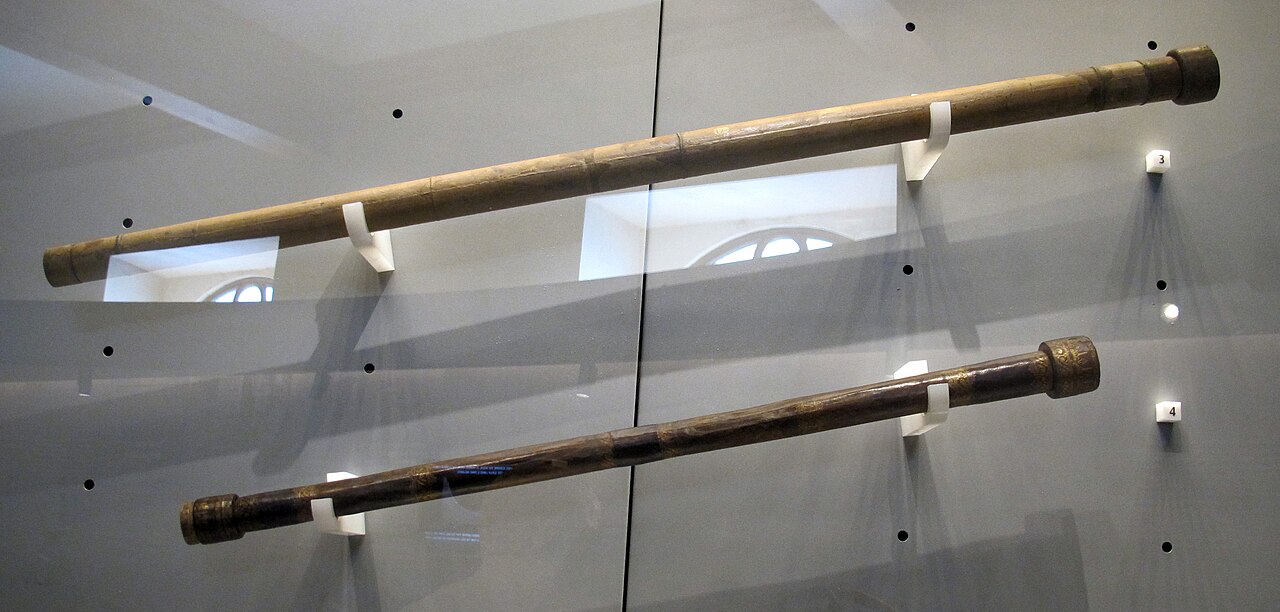
The figure who transformed heliocentrism from a theoretical option into a physical conviction was Galileo Galilei (1564–1642), professor of mathematics at Pisa and later Padua, and the individual most responsible for the new method of disciplined, quantitative experiment.4 Galileo did not invent the telescope—Dutch spectacle makers had produced the instrument by 1608—but he was among the first to turn one systematically toward the sky, and his observations between 1609 and 1613 shattered the Aristotelian dichotomy between the perfect heavens and the corrupt sublunary world.4
In the winter of 1609–1610, Galileo observed four small points of light near Jupiter that changed position from night to night in a regular pattern. He correctly interpreted them as moons orbiting Jupiter, publishing his findings in Sidereus Nuncius (The Starry Messenger) in March 1610.4 The discovery was decisive: here were celestial bodies that did not orbit the Earth, demonstrating that Earth was not the unique gravitational center of the cosmos. He observed that Venus passes through a complete cycle of phases, from crescent to full and back, which was only possible if Venus orbited the Sun rather than the Earth.4 He mapped the uneven surface of the Moon, observing mountains and craters that made it a world resembling Earth rather than a perfect crystalline sphere. He observed sunspots, dark blemishes that migrated across the solar disc and proved that the Sun itself was not unblemished and immutable.4, 12
Galileo's contributions extended far beyond astronomy. His studies of motion on inclined planes and of projectile trajectories pioneered the method of isolating physical variables, mathematizing the results, and testing predictions against controlled observation—the core logic of the modern physical experiment.4 His Dialogo sopra i due massimi sistemi del mondo (Dialogue Concerning the Two Chief World Systems, 1632) presented the Copernican and Ptolemaic systems in direct debate, with a character named Simplicio defending the old view in terms that many readers, including Pope Urban VIII, recognized as a caricature. The political consequences were swift: the Inquisition summoned Galileo to Rome, and in June 1633 he was found guilty of suspicion of heresy for holding and defending the Copernican opinion.5 He was sentenced to house arrest at his villa in Arcetri near Florence, where he remained until his death in 1642. The trial did not stop the Copernican system; it demonstrated that it could no longer be ignored.
Kepler and the geometry of planetary motion
While Galileo was pressing the observational case for heliocentrism, the German mathematician Johannes Kepler (1571–1630) was doing something even more radical: discarding the circle. Every astronomer from Plato through Copernicus had assumed that heavenly motions must be composed of uniform circular motion, either simple or in complex epicyclic combinations. Kepler was the first to abandon this axiom and follow the data wherever it led.6
Kepler had inherited the most precise naked-eye planetary observations ever compiled, the life's work of the Danish astronomer Tycho Brahe, who died in 1601 leaving Kepler as his successor in Prague. Working through Tycho's observations of Mars—the planet with the most irregular apparent motion and therefore the sternest test of any model—Kepler tried for years to fit the data to circular orbits before accepting that the residuals were too large to be observational error.6, 15 The shape that fit the data was an ellipse, with the Sun at one focus. This became Kepler's First Law, published in Astronomia Nova in 1609: the orbit of every planet is an ellipse with the Sun at one of the two foci.
The same work contained his Second Law: a line drawn from the Sun to a planet sweeps out equal areas in equal times, meaning planets move faster when closer to the Sun and slower when farther away. A decade later, in Harmonices Mundi (The Harmony of the World, 1619), he published the Third Law: the square of a planet's orbital period is proportional to the cube of the semi-major axis of its orbit.7 Kepler's three laws provided an exact, predictive description of planetary motion that required no epicycles, no equants, and no crystalline spheres. What they lacked was any physical explanation of why planets obeyed these rules, a gap that Newton would fill seventy years later.6
Bacon, Descartes, and the new philosophy of method
The astronomical discoveries of Copernicus, Galileo, and Kepler demolished the Aristotelian picture of the cosmos, but a parallel revolution was required at the level of method: a new account of how reliable knowledge about nature should be obtained and validated. Two thinkers above all others shaped this methodological transformation, and they did so from radically different starting points that nevertheless converged on a common conclusion: ancient authority was an obstacle to knowledge, and the only path forward was systematic engagement with nature itself.8
Francis Bacon (1561–1626), Lord Chancellor of England and the most influential advocate of empirical inquiry in the early seventeenth century, argued in Novum Organum (1620) that the philosophical tradition since Aristotle had been corrupted by what he called "idols"—systematic biases of the human mind that distort perception and reasoning.8 The Idol of the Tribe reflects tendencies common to all humans, such as the disposition to see more regularity in data than actually exists. The Idol of the Cave reflects individual peculiarities of education and temperament. The Idol of the Marketplace arises from the imprecision of language, and the Idol of the Theatre from the seductive authority of received philosophical systems.8 Against these deformations, Bacon proposed a systematic inductive method: patient, wide-ranging accumulation of observations, careful tabulation of instances where a phenomenon appears, where it is absent, and where it varies in degree, followed by cautious generalization toward underlying causes. Knowledge, on Bacon's account, was not deduced from first principles but built up from the careful interrogation of particulars.
Bacon's vision was as much institutional as methodological. He imagined a collective, organized enterprise of inquiry—described in utopian form in his unfinished New Atlantis (1627)—in which specialists divided intellectual labor, shared findings, and accumulated knowledge across generations.8 This vision anticipates the structure of the Royal Society and the modern research university with striking precision. Bacon's practical influence lay less in specific scientific results, of which he produced almost none, than in providing the ideological charter for the new scientific institutions that would crystallize after his death.
René Descartes (1596–1650) approached method from the opposite direction. Where Bacon started from observation and worked upward toward generalization, Descartes started from doubt and worked outward from certainty. His method, elaborated in the Discourse on the Method (1637) and the Meditations on First Philosophy (1641), began by systematically doubting every belief that could possibly be false until he arrived at the one proposition he could not doubt: that he was the thinking thing doing the doubting.9 From this foundation he reconstructed mathematics and physics on a rationalist basis, proposing that the material world is essentially extension—pure geometric space filled with matter in motion—and that all natural phenomena can in principle be explained by the mechanical interaction of particles.9
This "mechanical philosophy" was Descartes's most consequential contribution to the Scientific Revolution. By insisting that nature operated like a machine, governed entirely by contact forces between material particles, Descartes expelled from natural philosophy the occult qualities, vital forces, and teleological purposes that had populated Aristotelian physics.12 The world was not animate; it did not have purposes or strive toward ends. It was matter in motion, and the task of the natural philosopher was to discover the mathematical laws governing that motion. This framing licensed the application of mathematical analysis to physical problems in a way that Aristotelian physics, which treated mathematics as a tool for describing the heavens but not terrestrial matter, had not.9
Newton and the synthesis
Isaac Newton (1643–1727) inherited all of these threads—Kepler's orbital laws, Galileo's terrestrial mechanics, Descartes's mechanical philosophy, and the mathematical techniques of the new algebra and calculus—and wove them into the most powerful scientific synthesis produced by the entire revolution.11 His Philosophiae Naturalis Principia Mathematica, published in 1687 under the auspices of the Royal Society, accomplished something that no previous thinker had managed: it placed celestial and terrestrial physics under a single set of mathematical laws.
The conceptual core of the Principia is the law of universal gravitation: every particle of matter in the universe attracts every other particle with a force proportional to the product of their masses and inversely proportional to the square of the distance between them.10 This single law, combined with the three laws of motion Newton stated at the outset of the work, sufficed to derive Kepler's three laws of planetary motion from first principles, to explain the tides as the combined gravitational effect of the Moon and Sun on Earth's oceans, to account for the precession of Earth's rotational axis, and to predict the return of comets on elliptical orbits.10, 11 The same gravitational force that made an apple fall in an English garden held the Moon in its orbit and governed the motion of Jupiter's satellites. The conceptual boundary between the sublunar and superlunar worlds, maintained by every astronomer from Aristotle to Descartes, was abolished.
The Principia was written in the geometrical style of Euclid's Elements—definitions, axioms, propositions, proofs—a choice that made it extraordinarily rigorous and extraordinarily difficult to read. Newton had developed the mathematical tool of calculus independently of Leibniz in the 1660s, but he recast his arguments in classical geometry, partly for reasons of rigor and partly to shield his methods from criticism.11 The result was a work that contemporaries recognized as a monument even when they could not follow its arguments in detail. The Scottish mathematician Colin Maclaurin reportedly described students pointing to Newton as he walked through Cambridge and saying "There goes the man that writ a book that neither he nor anybody else understands."11 Despite its difficulty, the Principia transformed natural philosophy so thoroughly that its framework—forces, masses, accelerations, and the inverse-square law—remained the unchallenged basis of physics for over two centuries, until Einstein's general theory of relativity in 1915.
The experimental method and its institutions
The individual achievements of Copernicus, Galileo, Kepler, Bacon, Descartes, and Newton are often narrated as a sequence of intellectual breakthroughs, but the historian Steven Shapin has argued persuasively that the Scientific Revolution was also a social achievement: the construction of new institutions, new norms of credit and testimony, and new practices of collective verification that made scientific knowledge trustworthy in ways that the pronouncements of individual philosophers were not.12, 13
The most important institutional expression of the new science in England was the Royal Society, formally chartered by King Charles II in 1660 and incorporating a loose network of natural philosophers who had been meeting informally in Oxford and London since the 1640s.17 The Society's motto, Nullius in Verba ("take nobody's word for it"), encapsulated its epistemic program: claims about nature were to be established by public experiment and collective witnessing, not by citation of authorities. The Baconian ideal of collaborative, cumulative inquiry found institutional form in the Society's practice of having experiments performed before a meeting of fellows who could observe, repeat, and dispute the results.13 Its journal, Philosophical Transactions, founded in 1665, established the model of the scientific periodical as a vehicle for rapid communication and priority claims that persists today.
In France, Louis XIV's minister Jean-Baptiste Colbert established the Académie Royale des Sciences in 1666, which differed from the Royal Society in being a state institution with salaried members, explicit practical goals oriented toward French economic and military power, and a more centralized direction of research.16 The Académie sponsored large-scale mapping projects, organized astronomical expeditions to determine the shape of the Earth and the dimensions of the solar system, and produced systematic natural histories of animals and plants. Together, the Royal Society and the Académie des Sciences established a template for organized scientific inquiry that would be replicated across Europe throughout the eighteenth and nineteenth centuries.
The experimental method itself was not self-evidently valid, and its legitimacy had to be argued for and constructed. In a landmark study, Shapin and Schaffer analyzed the dispute between Robert Boyle and Thomas Hobbes over the status of air-pump experiments in the 1660s.13 Boyle used his air pump to produce phenomena—including the behavior of animals and candles in evacuated chambers—that he claimed established the existence of a vacuum and the elastic properties of air. Hobbes denied that the experiment proved anything, arguing that the concept of a vacuum was philosophically incoherent and that the testimony of a few gentlemen witnessing an artificial contrivance in a closed room could not constitute reliable natural knowledge. The dispute was not merely about air pumps; it was about who had the authority to certify facts about nature and what procedures that certification required. The eventual triumph of Boyle's experimental program established norms—public replication, peer witnessing, modest claims limited to what the data directly supported—that became the defining conventions of scientific practice.13
Context: the Reformation and the path to Enlightenment
The Scientific Revolution did not occur in a cultural vacuum. It unfolded in the same century as the Protestant Reformation, and the two upheavals were connected in ways that historians continue to debate.16 The Reformation shattered the institutional and intellectual unity of Latin Christendom, distributing both religious authority and the authority to interpret texts among a far wider range of actors. In Protestant regions, the emphasis on the individual's direct access to scripture encouraged a broader culture of reading and textual criticism that some historians have linked to the empiricist impulse to read the "book of nature" directly rather than through the commentary of authoritative predecessors.16 The religious wars of the sixteenth and seventeenth centuries also created powerful incentives to find domains of agreement—mathematical and experimental facts—that transcended confessional boundaries, and the new scientific societies were explicitly non-confessional in ways that few other institutions of the period were.14
At the same time, the Scientific Revolution must not be reduced to a conflict between science and religion. Most of the major figures of the revolution were devout Christians who understood their work as revealing the rational order inscribed in nature by its creator. Kepler explicitly framed his astronomical work as thinking God's thoughts after him. Newton spent more of his intellectual energy on biblical chronology and theology than on physics.11 The conflict with ecclesiastical authority was real—as Galileo's trial demonstrated—but it was narrower and more political than the simple "science versus religion" narrative suggests. What the revolution undermined was not Christianity but a specific theological commitment to Aristotelian cosmology and the literal interpretation of scriptural passages about the motion of the Sun.
The longer-term cultural consequence was the Enlightenment of the eighteenth century, which took the methods and the success of the Scientific Revolution as its central inspiration and applied them to human nature, politics, economics, and morality.18 Newton became the presiding intellectual deity of the Enlightenment. Voltaire, who had spent time in England and returned to France deeply impressed by Newtonian science and Lockean epistemology, dedicated much of his career to popularizing both. The Encyclopédie of Diderot and d'Alembert, the flagship project of the French Enlightenment, was explicitly organized around the Baconian classification of knowledge and presented the advancement of human understanding as dependent on the same empirical and experimental methods that had proved so fruitful in natural philosophy.18
The transformation of knowledge
The historian of science David Wootton has argued that the Scientific Revolution involved not merely new theories or new methods but a fundamental change in the concept of knowledge itself: a shift from a culture in which learned people primarily sought to understand texts to one in which they sought to discover facts about the world that no text had yet described.14 The very vocabulary of modern science—words like "fact," "experiment," "hypothesis," "theory," "discovery," "evidence," and "scientist"—either did not exist or did not carry their modern meanings before the sixteenth century. Their emergence tracks the conceptual transformation that the revolution effected.
Before the Scientific Revolution, the philosophy of science in the Western tradition was largely a branch of Aristotelian logic: the proper method for establishing knowledge was demonstration from self-evident first principles, supplemented by observation in cases where first principles alone were insufficient. The authority of Aristotle, Galen in medicine, and Ptolemy in astronomy was so deeply embedded in university curricula that questioning their conclusions was intellectually suspect regardless of what observation might suggest. The revolution replaced this deductive, authority-anchored model with an inductive, evidence-anchored one.12 Knowledge was no longer validated by its pedigree—by who had asserted it and how long it had been believed—but by its correspondence with systematically gathered and publicly verifiable observations.
This transformation had consequences that extended far beyond the specific questions of planetary motion and terrestrial mechanics that had originally motivated it. Once the principle was established that nature could be interrogated directly, that mathematical models could be constructed and tested against measurements, and that results could be reproduced independently by any investigator with the right instruments and techniques, the scope of what could become scientific knowledge was in principle unlimited. The chemistry of Lavoisier, the biology of Darwin, the genetics of Mendel, the physics of Einstein, and the genomics of the twenty-first century are all recognizably children of the epistemic transformation that unfolded between 1543 and 1687. The Scientific Revolution did not merely change what humanity knew about the cosmos; it changed the terms on which any claim to know anything about the natural world could be made and adjudicated.
References
- Kuhn, T. S. The Structure of Scientific Revolutions. University of Chicago Press, 1962. press.uchicago.edu
- Kuhn, T. S. The Copernican Revolution: Planetary Astronomy in the Development of Western Thought. Harvard University Press, 1957. hup.harvard.edu
- Copernicus, N. De Revolutionibus Orbium Coelestium. Johannes Petreius, Nuremberg, 1543. doi.org/10.3931/e-rara-445
- Drake, S. Galileo at Work: His Scientific Biography. University of Chicago Press, 1978. press.uchicago.edu
- de Santillana, G. The Crime of Galileo. University of Chicago Press, 1955. press.uchicago.edu
- Stephenson, B. Kepler's Physical Astronomy. Springer, 1987. doi.org/10.1007/978-1-4612-4652-5
- Kepler, J. (trans. Aiton, E. J., Duncan, A. M., Field, J. V.). The Harmony of the World. American Philosophical Society, 1997. amphilsoc.org
- Gaukroger, S. Francis Bacon and the Transformation of Early-Modern Philosophy. Cambridge University Press, 2001. doi.org/10.1017/CBO9780511612985
- Gaukroger, S. Descartes: An Intellectual Biography. Oxford University Press, 1995. global.oup.com
- Newton, I. (trans. Cohen, I. B. & Whitman, A.). The Principia: Mathematical Principles of Natural Philosophy. University of California Press, 1999. ucpress.edu
- Westfall, R. S. Never at Rest: A Biography of Isaac Newton. Cambridge University Press, 1980. doi.org/10.1017/CBO9781107340664
- Shapin, S. The Scientific Revolution. University of Chicago Press, 1996. press.uchicago.edu
- Shapin, S. & Schaffer, S. Leviathan and the Air-Pump: Hobbes, Boyle, and the Experimental Life. Princeton University Press, 1985. press.princeton.edu
- Wootton, D. The Invention of Science: A New History of the Scientific Revolution. Harper Collins, 2015. harpercollins.com
- Koestler, A. The Sleepwalkers: A History of Man's Changing Vision of the Universe. Hutchinson, 1959. worldcat.org
- Henry, J. The Scientific Revolution and the Origins of Modern Science. Palgrave Macmillan, 3rd ed., 2008. doi.org/10.1007/978-0-230-37806-1
- Lyons, H. A History of the Royal Society. Cambridge University Press, 1944. doi.org/10.1017/CBO9780511710087
- Robertson, J. The Enlightenment: A Very Short Introduction. Oxford University Press, 2015. doi.org/10.1093/actrade/9780199591787.001.0001