Overview
- Rogue planets (also called free-floating planets or isolated planetary-mass objects) are planetary-mass bodies that travel through interstellar space without being gravitationally bound to any host star, having either been ejected from their birth systems through planet-planet scattering and stellar encounters, or formed in isolation through gravitational fragmentation of molecular clouds in a process analogous to star formation.
- Gravitational microlensing surveys by the MOA and OGLE collaborations have estimated that rogue planets may be extraordinarily common in the Milky Way — potentially numbering in the billions or even exceeding the number of stars — though the precise population depends on the poorly constrained mass function extending down to Earth-mass objects and below.
- The James Webb Space Telescope has detected dozens of Jupiter-mass binary objects (JuMBOs) in the Orion Nebula that appear to be free-floating pairs of planetary-mass bodies, challenging conventional formation theories, while upcoming surveys with the Nancy Grace Roman Space Telescope are expected to conduct the first comprehensive census of the rogue planet population across a wide range of masses.
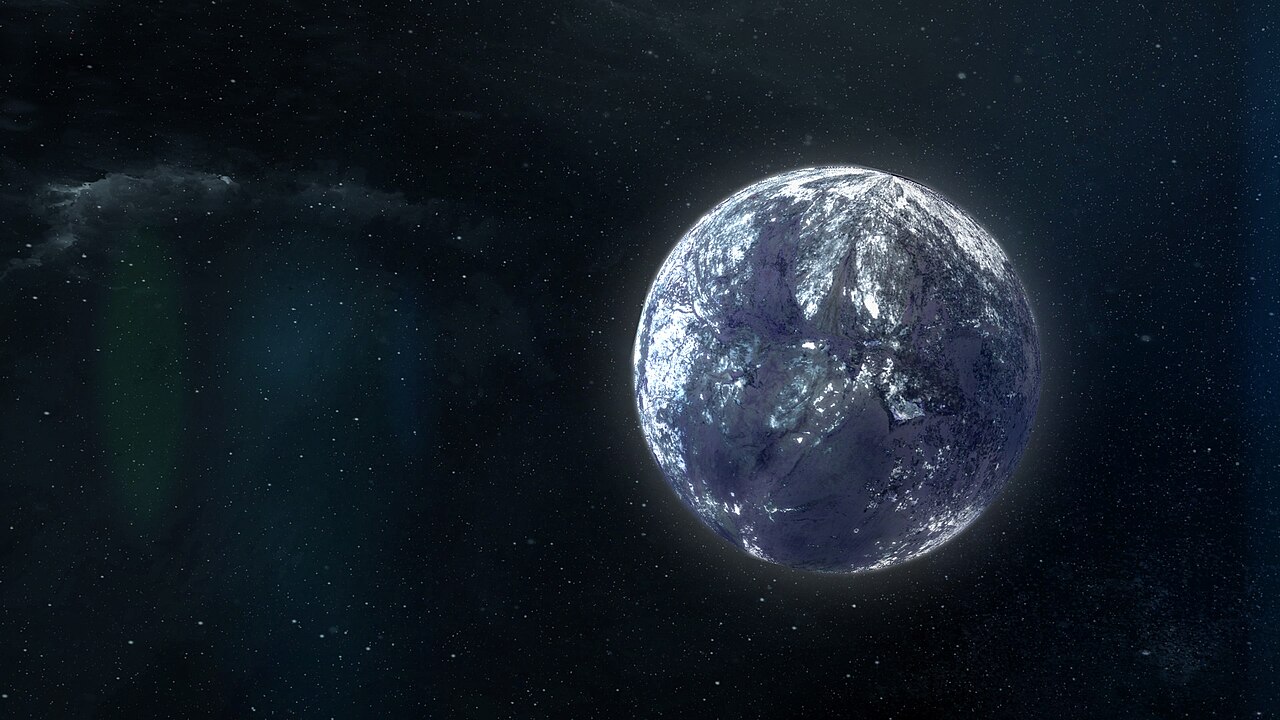
A rogue planet, also referred to as a free-floating planet, nomad planet, or isolated planetary-mass object, is a body of planetary mass that is not gravitationally bound to any star and instead travels through interstellar space on its own trajectory through the galaxy. Unlike the planets of a conventional solar system, which orbit a host star and receive light and heat from it, rogue planets drift in the darkness between stars, illuminated only by the faint glow of distant starlight and whatever internal heat they may retain. Once considered exotic hypotheticals, rogue planets are now understood to be a common — perhaps ubiquitous — outcome of the planet formation process, with population estimates suggesting they may rival or even outnumber the stars in the Milky Way.1, 2
.jpg)
The study of rogue planets sits at the intersection of exoplanet science, stellar dynamics, and observational astronomy. Their existence carries implications for our understanding of how planetary systems form and evolve, how gravitational interactions sculpt the architectures of multi-planet systems, and — in the most speculative vein — whether habitable environments might exist far from any star.13
Formation mechanisms
Rogue planets are thought to arise through at least three distinct mechanisms, each of which operates at different mass scales and in different environments. The most widely studied mechanism is ejection from a planetary system through dynamical instabilities. In systems with multiple giant planets, gravitational interactions during or after the dissipation of the protoplanetary disk can produce chaotic orbital evolution in which close encounters between planets transfer energy and angular momentum, ultimately flinging one or more planets onto hyperbolic trajectories that carry them out of the system entirely. Numerical simulations by Rasio and Ford demonstrated in 1996 that planet-planet scattering in systems of two or more giant planets routinely ejects at least one body, and subsequent work by Chatterjee and colleagues showed that the eccentric orbits observed in many exoplanetary systems are a natural byproduct of the same scattering events that produce rogue planets.6, 7
Ejection can also occur through external perturbation. In dense stellar environments such as open clusters or star-forming regions, close encounters between passing stars and a planetary system can strip the outermost planets from their orbits, contributing to the rogue planet population. This mechanism is particularly effective for planets on wide orbits (tens to hundreds of astronomical units), where the gravitational binding to the host star is weak and even a distant stellar flyby can unbind the planet. Over the several hundred million years that a typical open cluster persists before dissolving into the field population of the galaxy, repeated stellar encounters can eject a significant fraction of the wide-orbit planets from member systems.7
The second major formation pathway is in-situ formation through the gravitational collapse and fragmentation of molecular cloud cores, in a process analogous to star formation but operating at lower masses. Just as stellar-mass cores collapse under their own gravity to form protostars, sufficiently small cores or turbulent substructures within molecular clouds may collapse to form objects of a few Jupiter masses without ever igniting hydrogen fusion. This process is expected to produce isolated planetary-mass objects that were never associated with a host star in the first place. Direct imaging surveys of young star-forming regions have detected numerous planetary-mass objects that appear to be isolated, consistent with this formation channel. The boundary between the lowest-mass products of cloud fragmentation and the highest-mass products of planet formation within circumstellar disks remains poorly defined, and the two populations may be observationally indistinguishable for objects in the range of roughly 3 to 13 Jupiter masses, where the domains overlap.12, 15
A third possibility, relevant primarily for objects at the lowest end of the mass spectrum, is the photo-erosion of pre-stellar cores by nearby massive stars. In this scenario, an incipient low-mass core is exposed to intense ultraviolet radiation from a neighbouring O-type or B-type star before it has accumulated enough mass to form a star, truncating the accretion process and leaving behind an object of planetary mass. This mechanism has been invoked to explain some of the isolated planetary-mass objects observed in regions like the Orion Nebula, where the radiation environment is intense and the density of forming stars is high.5
Detection methods
Detecting objects that emit little or no light of their own and are not illuminated by a nearby star presents formidable observational challenges. The primary method for detecting rogue planets is gravitational microlensing, a technique based on the general relativistic prediction that a massive object passing between an observer and a distant background star will gravitationally deflect and amplify the background star’s light, producing a transient brightening event whose duration depends on the lens mass. For a Jupiter-mass rogue planet, the characteristic timescale of a microlensing event is approximately one to two days; for an Earth-mass object, it is only a few hours. The technique, first proposed for dark compact objects by Paczyński in 1986, is uniquely suited to detecting rogue planets because it requires no light from the lens itself and is sensitive to planetary-mass objects at distances of kiloparsecs.8, 9
The two principal ground-based surveys conducting microlensing searches are the Microlensing Observations in Astrophysics (MOA) collaboration, operating from New Zealand, and the Optical Gravitational Lensing Experiment (OGLE), operating from Chile. Both surveys monitor millions of stars in the direction of the Galactic bulge, searching for the brief brightening events characteristic of microlensing. Their combined datasets have provided the most statistically robust constraints on the rogue planet population to date.1, 2
Direct imaging provides a complementary detection method, but only for young rogue planets that retain sufficient formation heat to emit detectable infrared radiation. Planetary-mass objects cool over time as they radiate their internal heat into space, so direct imaging is effective only in young star-forming regions and moving groups where the objects are at most a few tens of millions of years old and still relatively luminous in the near-infrared. Chauvin and colleagues used direct imaging to detect the companion 2M1207b, a roughly 5-Jupiter-mass object orbiting a young brown dwarf, in 2004 — though this object is gravitationally bound rather than free-floating, the same technique has been applied to identify candidate rogue planets in regions such as the σ Orionis cluster and Upper Scorpius.4, 11
Population estimates
The first large-scale estimate of the rogue planet population came from Sumi and colleagues in 2011, who analysed short-duration microlensing events detected by the MOA-II survey toward the Galactic bulge. They identified an excess of events with timescales shorter than about two days that could not be attributed to known stellar or brown dwarf populations and concluded that Jupiter-mass free-floating or widely bound planets are approximately 1.8 times as numerous as main-sequence stars in the Milky Way — implying a population of hundreds of billions of such objects in the galaxy. This result was widely reported and sparked considerable scientific and public interest in rogue planets.1
A more refined analysis by Mróz and colleagues in 2017, using a larger and more carefully vetted sample of microlensing events from the OGLE survey, significantly revised the Sumi estimate downward. Mróz and colleagues found that the frequency of Jupiter-mass free-floating planets is at most 0.25 per main-sequence star at 95 percent confidence, roughly an order of magnitude lower than the Sumi estimate. The discrepancy arose partly because some of the short-timescale events in the earlier analysis were attributable to bound planets on wide orbits (which produce microlensing signals similar to those of free-floating planets) rather than truly unbound objects. However, the OGLE data remained consistent with a large population of rogue planets at lower masses — Earth-mass and super-Earth-mass objects — that produce even shorter microlensing events and are more difficult to detect systematically.2
In 2020, Mróz and colleagues reported the detection of the shortest-timescale microlensing event ever observed, OGLE-2016-BLG-1928, with a timescale of only 41.5 minutes. The extremely short duration implies a lens mass in the range of Earth to Mars masses, making it a candidate for detection of a terrestrial-mass rogue planet. While a single event cannot constrain the overall population, it demonstrates that microlensing is capable of detecting free-floating objects at Earth mass and below, opening the prospect of a comprehensive mass function extending from Jupiter-mass objects down to sub-Earth masses.3
Independent estimates from direct imaging in young star-forming regions support the existence of a substantial rogue planet population. Miret-Roig and colleagues surveyed the Upper Scorpius young stellar association using a combination of wide-field optical and infrared imaging and identified between 70 and 170 candidate free-floating planetary-mass objects with estimated masses in the range of 4 to 13 Jupiter masses, suggesting that the number of such objects produced in star-forming regions may significantly exceed what can be explained by ejection from planetary systems alone.4
JuMBOs in the Orion Nebula
Among the most unexpected early results from the James Webb Space Telescope was the discovery by Pearson and McCaughrean in 2023 of approximately 40 Jupiter Mass Binary Objects (JuMBOs) in the Trapezium Cluster at the heart of the Orion Nebula. These objects, detected through deep JWST near-infrared imaging, are pairs of planetary-mass bodies (each with estimated masses of roughly 1 to 14 Jupiter masses) separated by distances of 25 to 390 astronomical units, with no associated host star. The binary configuration was particularly surprising: while individual free-floating planetary-mass objects had been detected before in young clusters, the existence of gravitationally bound pairs of such objects was not predicted by standard planet formation or ejection models.5
The JuMBOs present a theoretical puzzle. Ejection from a planetary system would typically unbind any pre-existing pair of planets, making it difficult to explain how two ejected planets would remain gravitationally bound to each other. Formation through molecular cloud fragmentation can produce isolated low-mass objects, but producing bound pairs at separations of hundreds of astronomical units requires specific conditions — very low turbulence, gentle collapse, and limited subsequent dynamical processing — that are not obviously satisfied in the dense, turbulent environment of the Trapezium Cluster. Photo-erosion of pre-stellar cores has been proposed as a possible formation mechanism, but the details remain unclear. The JuMBOs have prompted renewed theoretical work on the minimum mass for cloud fragmentation and on the role of the local radiation environment in truncating accretion onto low-mass objects.5
Could rogue planets be habitable?
Although rogue planets receive no stellar radiation, several authors have explored whether they might nevertheless retain conditions hospitable to liquid water and, potentially, to life. In a pioneering 1999 paper, David Stevenson argued that a rogue planet with a sufficiently thick hydrogen-helium atmosphere could retain enough internal heat from radioactive decay and residual formation energy to sustain surface temperatures above the freezing point of water for billions of years. A dense hydrogen atmosphere acts as a powerful greenhouse blanket, trapping infrared radiation far more effectively than a nitrogen-oxygen atmosphere, and could in principle maintain surface liquid water on an Earth-mass rogue planet without any external energy source.13
Abbot and Switzer extended this analysis in 2011, investigating the possibility of subsurface liquid water oceans on rogue planets that lack thick atmospheres. They showed that an Earth-like rogue planet with a surface ice layer several kilometres thick could maintain a liquid ocean beneath the ice through geothermal heat from radioactive decay, analogous to the subsurface oceans thought to exist on Jupiter’s moon Europa and Saturn’s moon Enceladus. The ice layer acts as an insulating barrier, and the geothermal heat flux of a few tens of milliwatts per square metre is sufficient to maintain liquid water at the base of the ice indefinitely. While such a subsurface ocean would be isolated from any external energy source other than radioactivity, it could in principle support chemolithotrophic microbial life sustained by geochemical energy from water-rock interactions at the ocean floor.14
These habitability scenarios remain highly speculative, and no observational evidence exists for liquid water on any rogue planet. The conditions required — a thick primordial hydrogen atmosphere or a sufficiently large rocky body with sustained geothermal activity — may be uncommon among the rogue planet population, which likely spans a wide range of masses and compositions. Nevertheless, the sheer number of rogue planets implied by microlensing surveys means that even if only a small fraction possess conditions favourable for liquid water, the total number of potentially habitable rogue planets in the galaxy could be substantial.13, 14
Implications for planet formation
The existence and abundance of rogue planets carry significant implications for theories of planet formation and the dynamical evolution of planetary systems. If the rogue planet population is as large as microlensing surveys suggest, then planet formation is an even more prolific process than the population of bound exoplanets alone would indicate. Every rogue planet ejected from a planetary system represents a gravitational interaction that also altered the orbits of the planets that remained, meaning that the observed architectures of exoplanetary systems — their eccentricities, inclinations, and spacings — are sculpted in part by the same scattering events that produced the rogue population.6, 7
The mass function of rogue planets provides a diagnostic of the relative importance of different formation channels. Ejection from planetary systems should preferentially produce rogue planets in the mass range of super-Earths to Jupiters (the typical masses of planets involved in scattering events), while in-situ cloud fragmentation should produce objects primarily in the range of a few Jupiter masses and above (the minimum mass for gravitational collapse of a cloud core, the opacity-limit fragment mass of roughly 1 to 5 Jupiter masses). If future surveys reveal a large population of Earth-mass and sub-Earth-mass rogue planets, this would strongly favour ejection as the dominant formation mechanism at low masses, since cloud fragmentation cannot easily produce objects below the opacity limit. Conversely, an excess of objects at several Jupiter masses above what ejection models predict would point to a significant contribution from in-situ formation.4, 16
Future surveys
The most anticipated advance in rogue planet science is the Nancy Grace Roman Space Telescope (formerly WFIRST), a NASA flagship observatory scheduled for launch in the late 2020s. Roman will conduct a large-area microlensing survey toward the Galactic bulge using its wide-field infrared camera, monitoring approximately 200 million stars with a cadence of 15 minutes over multiple 72-day observing windows. The combination of space-based photometric precision (eliminating atmospheric seeing), high cadence, and wide field of view will make Roman sensitive to microlensing events with timescales as short as a few hours, enabling the detection of free-floating objects down to roughly Mars mass. Population estimates predict that Roman could detect hundreds to thousands of rogue planet microlensing events across a wide mass range, providing the first comprehensive census of the rogue planet mass function from gas giant masses down to terrestrial and sub-terrestrial masses.10, 16
Ground-based surveys will also contribute. The Vera C. Rubin Observatory’s Legacy Survey of Space and Time (LSST), with its 8.4-metre aperture and wide field of view, will detect microlensing events in the optical, complementing Roman’s infrared observations and providing colour information that helps distinguish planetary-mass lenses from more distant stellar-mass lenses. The Euclid space telescope, though primarily designed for cosmological surveys, will also detect some microlensing events in its survey fields. Together, these facilities are expected to transform rogue planet science from a field of tentative population estimates based on small samples to one with robust statistical constraints on the mass function, spatial distribution, and formation efficiency of free-floating planetary-mass objects throughout the galaxy.9, 10
The coming decade promises to resolve several of the most pressing open questions in rogue planet science: how many rogue planets exist per star in the Milky Way, what is their mass distribution, what fraction formed in planetary systems versus in isolation, and whether the JuMBOs discovered by JWST represent a common mode of formation or a curiosity specific to the extreme environment of the Orion Nebula. The answers will reshape our understanding of planet formation as a universal process and clarify whether the dark spaces between stars are as planetarily rich as the illuminated zones around them.5, 10, 16
References
A terrestrial-mass rogue planet candidate detected in the shortest-timescale microlensing event