Overview
- Coevolution is the process by which two or more interacting species exert reciprocal selective pressures on each other, driving evolutionary change in both lineages simultaneously and producing some of the most intricate adaptations in nature.
- Mutualistic coevolution, as seen in pollinator-flower relationships and mycorrhizal networks, generates tightly matched trait pairs that enhance fitness for both partners, while antagonistic coevolution between predators and prey or hosts and parasites drives escalating arms races described by Red Queen dynamics.
- Thompson's geographic mosaic theory demonstrates that coevolution is not uniform across species ranges but instead varies spatially, with intense reciprocal selection in coevolutionary hotspots and trait mismatches in coldspots, producing a dynamic landscape that generates and maintains biodiversity.
Coevolution is the process by which two or more species reciprocally influence each other's evolution through natural selection. When the fitness of individuals in one species depends on the traits of individuals in another species, and vice versa, the result is an ongoing cycle of adaptation and counter-adaptation that can persist over millions of years.5 The concept was first formalized by Ehrlich and Raven in their landmark 1964 study of butterflies and their host plants, which demonstrated that the diversification of plant chemical defences and the reciprocal evolution of insect detoxification mechanisms had driven speciation in both lineages.2 Since then, coevolution has been recognized as one of the most powerful engines of biological diversity, shaping everything from the morphology of flowers and their pollinators to the molecular arms races between hosts and their parasites.20, 21
Coevolutionary interactions fall along a spectrum from mutualistic, in which both partners benefit, to antagonistic, in which one partner gains at the other's expense. These interactions may be tightly pairwise, involving just two species locked in reciprocal adaptation, or diffuse, involving entire guilds of species exerting collective selective pressures on one another.5, 16 In all cases, the defining feature is reciprocity: evolutionary change in one species drives evolutionary change in the other, creating a feedback loop that can escalate traits, generate novelty, and promote speciation.
Mutualistic coevolution
Mutualistic coevolution occurs when two interacting species each derive a fitness benefit from the relationship, and natural selection in each species favours traits that improve the interaction. The result is the evolution of tightly matched trait pairs: structures, behaviours, or biochemical pathways in one species that are precisely complementary to those in the other. Some of the most striking examples come from pollination biology, where the morphology of flowers and the anatomy and behaviour of their pollinators have evolved in concert over tens of millions of years.7
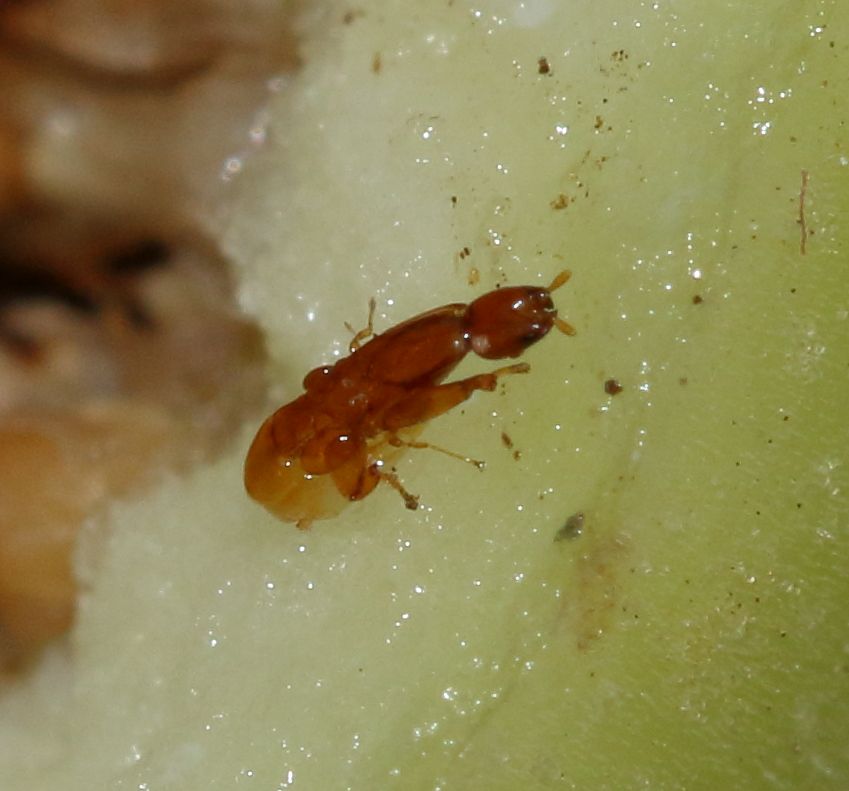

The relationship between figs and fig wasps is among the most tightly coevolved mutualisms known. Each of the roughly 750 species of fig is pollinated by one or a few species of agaonid wasp, and the wasps in turn can reproduce only inside the enclosed inflorescences (syconia) of their specific host fig. The female wasp enters the syconium through a narrow opening, pollinates the internal flowers, and lays her eggs inside some of them; the developing larvae consume the seeds of those flowers while the remaining pollinated flowers mature into seeds for the fig. This obligate reciprocal dependence has been maintained for an estimated 60 to 90 million years, and phylogenetic analyses reveal broadly congruent patterns of speciation in figs and their wasp pollinators, consistent with long-term cospeciation.23
One of the most celebrated predictions in the history of coevolution was made by Darwin in 1862. Upon examining the Malagasy orchid Angraecum sesquipedale, whose nectar spur extends to a length of nearly 30 centimetres, Darwin predicted that a pollinator must exist with a proboscis long enough to reach the nectar at the bottom of the spur, since the orchid's reproduction depended on such a visitor. The prediction was met with scepticism, but in 1903 the sphinx moth Xanthopan morganii praedicta was discovered in Madagascar with a tongue exceeding 20 centimetres in length. The extraordinary dimensions of both the orchid's spur and the moth's proboscis are the product of reciprocal selection: longer spurs favour moths with longer tongues, and longer tongues favour orchids with deeper spurs, driving an escalating cycle of trait exaggeration that has no analogue outside coevolutionary dynamics.25, 7
Pollination mutualisms need not be so species-specific to reflect coevolution. Many flowering plants have evolved suites of floral traits — termed pollination syndromes — that attract and reward particular functional groups of pollinators. Bee-pollinated flowers tend to be brightly coloured with ultraviolet nectar guides, landing platforms, and moderate nectar volumes, while hummingbird-pollinated flowers are typically tubular, red, and produce copious dilute nectar. These convergent patterns across unrelated plant lineages indicate that pollinators exert consistent selective pressures on floral morphology, and that flower shape, colour, and reward chemistry have coevolved with pollinator sensory systems and feeding apparatus.7
Another major form of mutualistic coevolution involves plants and mycorrhizal fungi. Approximately 80 to 90 percent of terrestrial plant species form associations with mycorrhizal fungi, in which the fungal hyphae colonize plant roots and extend into the surrounding soil, vastly increasing the plant's access to phosphorus and other limiting nutrients in exchange for photosynthetically fixed carbon.6 This mutualism is ancient: fossil evidence of mycorrhizal associations dates to the earliest land plants in the Devonian period, approximately 400 million years ago, and it has been hypothesized that mycorrhizal partnerships were essential for the colonization of terrestrial habitats by plants.6 The mycorrhizal network can connect multiple plants, creating underground networks through which carbon and nutrients flow between individuals, a phenomenon with significant ecological consequences for plant community structure and forest dynamics.22
Ant-plant mutualisms provide another well-studied example. Certain acacia species in Central America produce hollow thorns that house colonies of Pseudomyrmex ants, along with extrafloral nectaries and protein-rich Beltian bodies that feed them. In return, the ants aggressively defend the plant against herbivores, prune competing vegetation, and clear the surrounding ground. Janzen's classic 1966 study demonstrated that acacias deprived of their ant colonies suffered dramatically higher herbivory and reduced growth and survival, establishing that the relationship is a true coevolved mutualism in which both partners depend on the other for fitness.1, 8
Antagonistic coevolution and arms races
Antagonistic coevolution occurs when the interaction between two species is detrimental to at least one partner, as in predator-prey, host-parasite, and plant-herbivore relationships. Because the fitness interests of the two species are opposed, natural selection drives an escalating cycle of adaptation and counter-adaptation often described as an evolutionary arms race.12 The predator evolves a more effective hunting strategy, the prey evolves a more effective escape mechanism, and each advance by one side selects for a compensating advance in the other.
.JPG)
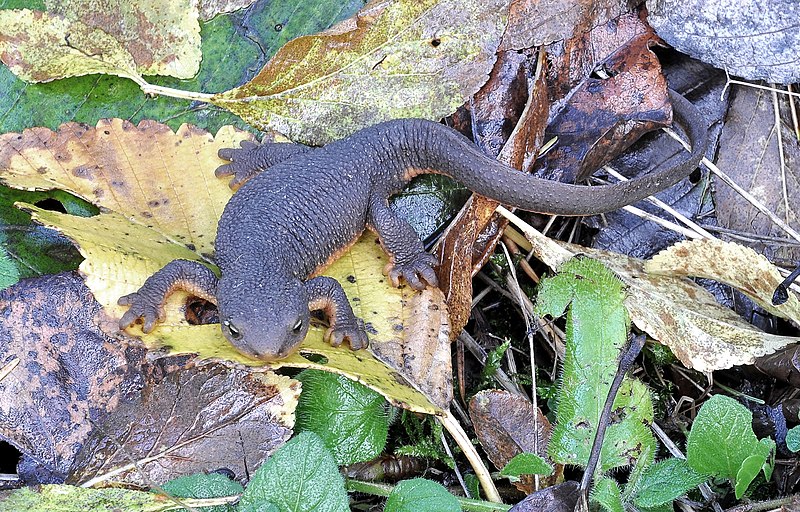
One of the most thoroughly documented arms races involves garter snakes and the rough-skinned newt (Taricha granulosa) in western North America. The newts produce tetrodotoxin (TTX), an extremely potent neurotoxin, in their skin. Garter snakes of the genus Thamnophis that prey on these newts have evolved resistance to TTX through amino acid substitutions in the sodium channel proteins that are the toxin's molecular target. Populations of snakes that co-occur with highly toxic newt populations possess correspondingly high levels of TTX resistance, while snake populations in areas without toxic newts have low resistance. The escalation is remarkable: some newt populations carry enough TTX to kill dozens of humans, far in excess of what any other predator could survive, a level of toxicity that only makes evolutionary sense in the context of an arms race with a resistant predator.19
A quantitative demonstration of trait escalation comes from the coevolutionary arms race between the Japanese camellia (Camellia japonica) and the camellia weevil (Curculio camelliae) in southern Japan. Toju and Sota documented that weevil populations in areas with thick-fruited camellias have evolved correspondingly longer rostrums (the elongated snout used to bore through the fruit wall to lay eggs), while camellia populations in areas with long-rostumed weevils have evolved thicker pericarps. The geographic correlation between weevil rostrum length and camellia pericarp thickness across populations provides a quantitative snapshot of an ongoing arms race, with measurable phenotypic escalation in both partners varying across the landscape in accordance with the geographic mosaic theory.26, 3
The Ehrlich-Raven model of plant-herbivore coevolution, the foundational framework for the entire field, describes a similar dynamic at the macroevolutionary scale. When a plant lineage evolves a novel chemical defence, it escapes herbivory temporarily and may diversify into a range of niches. Eventually, however, an insect lineage evolves the enzymatic machinery to detoxify or tolerate the defence, gaining access to a newly available food source and itself radiating into multiple species. This stepwise pattern of escape and radiation has been invoked to explain the extraordinary species richness of both angiosperms and phytophagous insects.2
Red Queen dynamics in host-parasite coevolution
The Red Queen hypothesis, proposed by Leigh Van Valen in 1973, posits that organisms must continually evolve simply to maintain their fitness relative to the other organisms with which they interact. The name alludes to the Red Queen in Lewis Carroll's Through the Looking-Glass, who tells Alice that "it takes all the running you can do, to keep in the same place."4 Although Van Valen originally framed the hypothesis in terms of extinction rates, it has found its most productive application in understanding host-parasite coevolution, where rapid cycles of adaptation and counter-adaptation are driven by the short generation times and large population sizes of parasites.
In host-parasite systems, the parasite evolves to exploit the most common host genotype, placing that genotype at a selective disadvantage and favouring rare host genotypes that the parasite is not yet adapted to exploit. As rare genotypes increase in frequency, the parasite population shifts to track them, and the cycle repeats. This process, termed negative frequency-dependent selection, maintains genetic diversity in both host and parasite populations and has been invoked as a major selective force favouring the evolution and maintenance of sexual reproduction. Because sexual reproduction generates genetically variable offspring through recombination, it may allow host populations to stay ahead of rapidly adapting parasites more effectively than clonal reproduction.10, 11
Experimental support for Red Queen dynamics came from Morran and colleagues, who demonstrated in laboratory populations of the nematode Caenorhabditis elegans exposed to a coevolving bacterial pathogen (Serratia marcescens) that host populations maintained or increased their rate of outcrossing (sexual reproduction), whereas populations exposed to a non-coevolving pathogen rapidly evolved toward selfing (a form of asexual reproduction). This result provided direct evidence that coevolution with parasites selects for sexual recombination, as predicted by the Red Queen hypothesis.11
Further evidence came from a striking natural archive. Decaestecker and colleagues resurrected resting stages of the water flea Daphnia magna and its microparasite Pasteuria ramosa from dated layers of Belgian pond sediment spanning several decades. They found that parasites from each time period were most infective to hosts from the immediately preceding time period, demonstrating that parasites were continually adapting to the most common host genotypes, which then declined in frequency as new resistant genotypes rose—precisely the oscillatory dynamics predicted by the Red Queen hypothesis, documented in a natural system across real evolutionary time.24
Host-parasite coevolution also shapes the evolution of immune systems. The extraordinary diversity of the major histocompatibility complex (MHC) in vertebrates, a gene family central to adaptive immunity, is thought to be maintained in part by parasite-mediated balancing selection, in which rare MHC alleles confer resistance to prevalent parasite genotypes and are therefore favoured by selection.9, 10
The geographic mosaic theory of coevolution
One of the most important conceptual advances in the study of coevolution is John N. Thompson's geographic mosaic theory, developed across two major works in 1994 and 2005.5, 3 The theory addresses a fundamental observation: coevolutionary interactions between two species are rarely uniform across their geographic ranges. Instead, the strength and even the direction of reciprocal selection vary from population to population, depending on local ecological conditions, community context, and the genetic composition of the interacting species.
The geographic mosaic theory rests on three core hypotheses. First, natural selection on interacting species varies across landscapes, creating a mosaic of different selective environments. Second, some locations are coevolutionary hotspots, where reciprocal selection is strong and both species are actively coevolving, while other locations are coevolutionary coldspots, where selection is non-reciprocal or absent — for example, because one of the two species occurs without the other, or because local conditions eliminate the interaction. Third, gene flow, genetic drift, and local extinction continually remix the genetic variation across this mosaic, so that the geographic pattern of adaptation and counter-adaptation is dynamic rather than static.3, 17
Empirical support for the geographic mosaic theory has come from several well-studied systems. The garter snake and newt arms race described above shows dramatic geographic variation in both newt toxicity and snake resistance, with some populations locked in an extreme arms race and others showing little escalation.19 Similar geographic variation in the intensity of coevolution has been documented in crossbill-conifer interactions, wild parsnip-parsnip webworm chemical arms races, and the Greya moth-plant mutualism studied extensively by Thompson's research group.3, 18 The geographic mosaic framework has become the dominant paradigm for understanding how coevolution operates in nature, replacing earlier models that implicitly assumed spatially uniform reciprocal selection.20
Diffuse coevolution
Not all coevolution is pairwise. In many natural systems, a species interacts with multiple other species simultaneously, and the selective pressures it experiences are the combined result of all those interactions rather than the influence of any single partner. This phenomenon, termed diffuse coevolution, was distinguished from pairwise coevolution to account for the reality that most species are embedded in complex ecological networks rather than isolated dyads.5, 16
Diffuse coevolution is particularly prevalent in pollination systems, where a plant may be visited by dozens of pollinator species and a pollinator may forage on many different plants. In such systems, the evolution of floral traits is shaped not by any single pollinator but by the combined selective effects of the entire pollinator assemblage, and pollinator traits are similarly shaped by the array of flowers they visit. The pollination syndromes described above — suites of floral traits associated with particular functional groups — may thus reflect diffuse coevolution with guilds of pollinators rather than pairwise coevolution with individual species.7, 16
The Ehrlich-Raven model of plant-herbivore coevolution is also better understood as diffuse rather than strictly pairwise. While the model describes reciprocal diversification between plant and insect lineages, the selective pressure on a given plant species comes from the entire community of herbivores it hosts, and the selective pressure on a herbivore comes from the chemical profiles of all the plants in its diet. Escape-and-radiation dynamics may therefore operate at the level of clades and guilds rather than individual species pairs.2, 5
Mimicry as coevolution
Mimicry systems provide some of the most visually dramatic examples of coevolution. Batesian mimicry, first described by Henry Walter Bates in 1862, occurs when a palatable or harmless species (the mimic) evolves to resemble an unpalatable or dangerous species (the model),
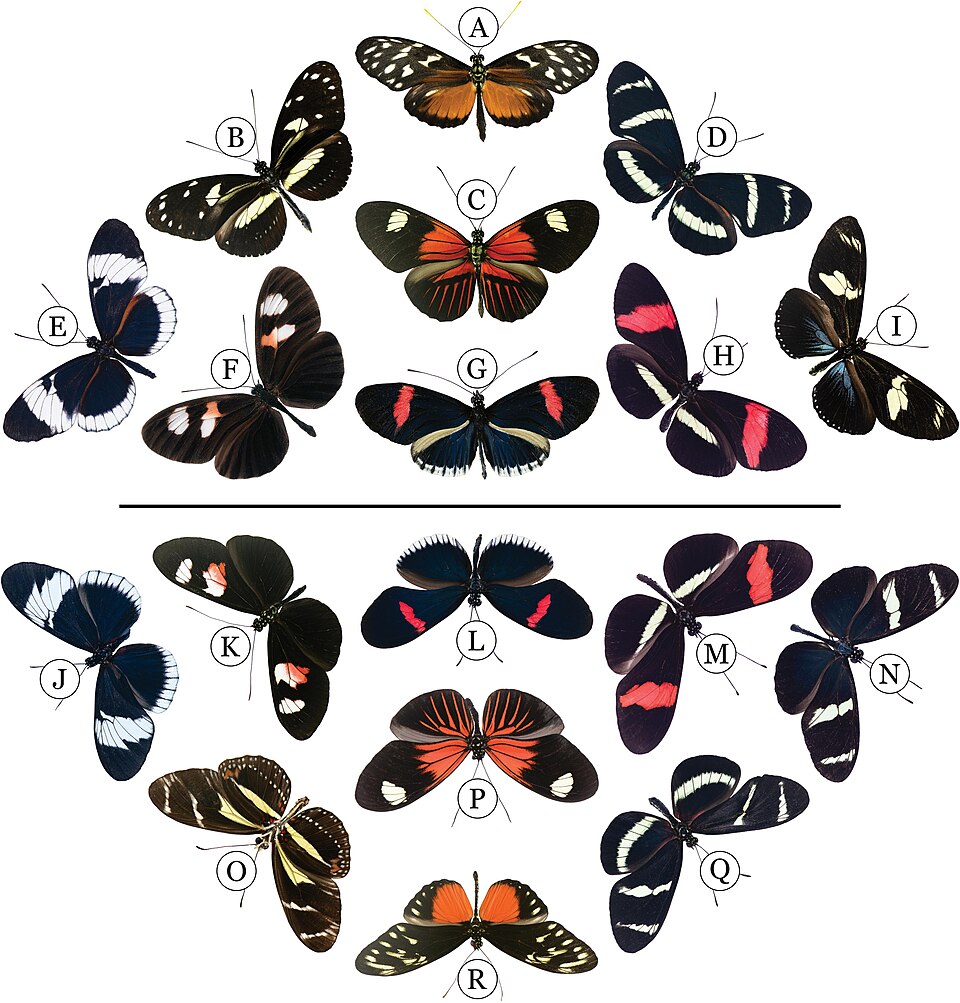

Mullerian mimicry, described by Fritz Muller in 1879, involves two or more unpalatable species converging on a shared warning signal.14 Unlike Batesian mimicry, the interaction is mutualistic: each species benefits from the shared pattern because predators need fewer total encounters to learn avoidance. The evolution of Mullerian mimicry rings — groups of unrelated toxic species that share nearly identical colour patterns — is well documented among Neotropical butterflies of the family Nymphalidae, where species from different genera may be virtually indistinguishable in wing pattern despite belonging to distinct evolutionary lineages. The convergent evolution of shared warning signals across multiple unrelated species illustrates how coevolutionary pressures mediated by shared predators can produce remarkable phenotypic similarity among distantly related organisms.14, 15
Both Batesian and Mullerian mimicry demonstrate that coevolution need not involve direct physical interaction between the coevolving species. In these systems, the selective agent linking mimic and model is a third party — the predator — whose learned behaviour creates the fitness landscape on which both mimic and model evolve. This tripartite interaction is a form of diffuse coevolution in which the predator community shapes the evolution of prey warning signals and mimetic resemblance simultaneously.15
Coevolution and the generation of biodiversity
Coevolution is increasingly recognized as one of the principal mechanisms generating and maintaining biological diversity. The reciprocal selective pressures between interacting species can promote speciation through several pathways. First, the escape-and-radiation dynamic described by Ehrlich and Raven, in which the evolution of a novel defence or counter-adaptation opens new ecological opportunities and triggers adaptive diversification, has been invoked to explain the species richness of both plant and insect lineages.2, 21 Second, the geographic mosaic of coevolution generates spatially divergent selection, which, when combined with limited gene flow, can drive populations of interacting species along different evolutionary trajectories in different locations, a process that may ultimately lead to reproductive isolation and speciation.3, 20
Third, obligate mutualisms can promote cospeciation, in which the speciation of one partner is mirrored by speciation of the other. The fig-fig wasp system is a classic example: the largely congruent phylogenies of figs and their obligate pollinator wasps indicate that the two lineages have diversified in parallel, with host shifts and cospeciation events producing matching patterns of branching.23 Similar patterns of parallel cladogenesis have been documented in other tightly coevolved systems, including yucca-yucca moth mutualisms and some host-parasite associations.21
Estimated species richness in selected coevolved lineages2, 7, 21
The sheer scale of species richness in coevolved lineages underscores the importance of reciprocal selection as a diversifying force. Angiosperms and their insect herbivores together account for the majority of described terrestrial species, and the timing of their diversification in the Cretaceous period is broadly consistent with the escape-and-radiation model of coevolutionary diversification.2, 21 The near-equal species counts of figs and fig wasps reflect the tight cospeciation expected in obligate mutualisms. More broadly, comparative analyses have shown that lineages engaged in intimate coevolutionary interactions tend to be more species-rich than their non-coevolving sister groups, suggesting that coevolution accelerates net diversification rates.21
Coevolution also maintains biodiversity at the population level through frequency-dependent selection. The Red Queen dynamics operating in host-parasite systems sustain genetic polymorphism in both hosts and parasites, preventing any single genotype from sweeping to fixation.4, 9 The geographic mosaic of coevolution further maintains diversity by ensuring that different populations of the same species are subject to different selective pressures, producing a patchwork of locally adapted genotypes connected by gene flow.3, 20 Together, these processes make coevolution one of the central mechanisms by which the natural world generates and sustains its extraordinary variety of life.
References
Predator-prey arms races: asymmetrical selection on predators and prey may be reduced when prey are dangerous
Newts and snakes: the evolutionary arms race between tetrodotoxin-resistant predators and their toxic prey
The role of coevolution in generating biological diversity: spatially divergent selection on interacting species
On the Various Contrivances by Which British and Foreign Orchids Are Fertilised by Insects
Arms race coevolution between camellia pericarp and camellia weevil: pattern of fruit defense and attack