Overview
- Eyes have evolved independently at least 40 to 65 times across the animal kingdom, yet the underlying genetic toolkit—particularly the master regulatory gene Pax6—is deeply conserved, illustrating how shared developmental programs channel independent lineages toward similar optical solutions.
- Molecular convergence extends far beyond morphology: echolocating bats and toothed whales independently evolved parallel amino acid substitutions in the prestin hearing gene, C4 photosynthesis arose over 60 times in flowering plants through repeated co-option of the same ancestral enzymes, and the crab-like body plan has evolved at least five times in decapod crustaceans through carcinization.
- The pervasive reuse of the same genes and regulatory networks across independent convergences—from electric organs recruiting the same sodium channel gene in six fish lineages to marsupials and placentals sharing convergent cis-regulatory elements—demonstrates that deep homology constrains evolutionary trajectories and makes certain adaptive outcomes far more probable than chance alone would predict.
Convergent evolution—the independent origin of similar traits in unrelated lineages—is not a curiosity confined to a handful of textbook examples. It is pervasive across the tree of life, occurring at scales ranging from the gross morphology of body plans to the precise amino acid sequences of individual proteins. Eyes have evolved independently dozens of times across the animal kingdom. Powered flight arose in four separate lineages of animals. Echolocating bats and toothed whales independently modified the same hearing gene at the same functional sites. The crab-like body plan has been reinvented at least five times in crustacean evolution. These convergences, and many others, are the subject of this article, which examines the most striking cases in detail and explores the molecular and developmental mechanisms that make such repeated independent innovation possible.24, 18
Each case illuminates a fundamental question in evolutionary biology: when unrelated organisms face the same physical or ecological challenge, how often do they arrive at the same solution, and why? The answers, drawn from comparative morphology, paleontology, and increasingly from genomics, reveal that convergence is not mere coincidence. It reflects the interplay of natural selection with deep constraints imposed by physics, biochemistry, and a shared genetic heritage that predates the divergence of the lineages in question.19, 22
The eye: at least 40 independent origins
No example of convergent evolution has captured scientific and public imagination more than the eye. In their landmark 1977 survey, Luitfried von Salvini-Plawen and Ernst Mayr concluded that photoreceptors and image-forming eyes had evolved independently at least 40, and possibly as many as 65, times across the animal kingdom.1 The figure encompassed the full range of optical designs found in nature: simple pigment cups in flatworms, pinhole cameras in the nautilus, compound eyes in arthropods, mirror-based eyes in scallops, and the sophisticated camera-type eyes of vertebrates and cephalopod mollusks. Each of these designs represents a functionally distinct solution to the problem of converting photons into spatial information, and the phylogenetic distribution of these designs leaves no doubt that most arose independently rather than from a single ancestral eye.1, 3
Michael Land and Dan-Eric Nilsson, in their authoritative survey of animal visual systems, catalogued at least ten fundamentally different optical designs that have been deployed by animals, with camera-type optics alone having been achieved independently in vertebrates, cephalopods, some polychaete worms, and jumping spiders.3 The camera eye of a vertebrate and that of an octopus are anatomically striking in their similarity: both possess a cornea, an adjustable lens, an iris, and a retina lined with photoreceptors. Yet the two constructions differ in a revealing detail. In vertebrates, the retina is inverted—the photoreceptors face away from the incoming light, with their wiring interposed between the lens and the sensory cells. In cephalopods, the retina is everted—the photoreceptors point directly toward the light. This difference is precisely what one would expect from two independent constructions that converged on the same optical physics but retained their ancestrally different developmental starting points.5
Despite this morphological independence, the genetic underpinning of eye development reveals a deep commonality. In the 1990s, Walter Gehring and colleagues demonstrated that the Pax6 gene (eyeless in Drosophila) functions as a master regulatory transcription factor for eye development in organisms as distantly related as mammals and fruit flies. When the mouse Pax6 gene was ectopically expressed in a fly, it induced the formation of morphologically normal compound fly eyes on the legs, antennae, and wings of the fly—not mouse-type eyes, but fly-type eyes controlled by a mammalian gene.4 Gehring interpreted this as evidence that all bilaterian eyes trace back to a proto-eye in the common ancestor of insects and vertebrates, controlled by the same Pax6 regulatory circuit.6 The repeated, independent elaboration of complex eyes across the animal kingdom thus represents not invention from nothing but the redeployment of a deeply conserved developmental toolkit in new lineages and new ecological contexts.
Nilsson and Pelger addressed the temporal plausibility of eye evolution in a 1994 computational study. Starting from a flat, light-sensitive patch of tissue, they modelled each successive step of improvement—invagination to form a cup, constriction to form an aperture, development of a lens—and calculated that a camera-type eye could evolve from a simple photoreceptor in fewer than 364,000 generations under conservative assumptions about selection intensity, heritability, and the coefficient of variation.2 For many animal lineages with generation times of a year or less, this amounts to well under half a million years. Given that the Cambrian radiation began approximately 540 million years ago, there has been ample time for eyes to evolve independently dozens of times over, consistent with the empirical diversity catalogued by Salvini-Plawen and Mayr.1, 2
The four origins of powered flight
Powered, sustained flight has evolved independently four times in the history of animal life: in insects, pterosaurs, birds, and bats. Each origin required solving the same fundamental aerodynamic problems—generating lift, minimising drag, and maintaining stable control in three dimensions—yet each group achieved these solutions through radically different anatomical structures. Insect wings are novel outgrowths of the thoracic exoskeleton with no clear structural precursor among other arthropod appendages. Pterosaur wings were membranes supported primarily by a single enormously elongated fourth finger. Bird wings are modified forelimbs with reduced and fused hand bones, in which the primary flight surface is provided by asymmetric feathers (remiges). Bat wings are membranes of skin (the patagium) stretched between four elongated fingers, the forearm, and the body.7, 8
The physiological convergences required to sustain powered flight are at least as striking as the morphological ones. Both birds and bats independently evolved compact, high-efficiency respiratory and cardiovascular systems capable of supporting the extraordinarily high metabolic rates demanded by sustained flapping flight. Both groups possess relatively large hearts with high cardiac output compared to non-flying mammals and reptiles. In bats, the wing membrane is densely supplied with blood vessels and contains arrays of sensory receptors that enable real-time aerodynamic adjustment of wing shape during flight—an independent solution to the same feedback control problems solved differently by the skeletal and feather architecture of bird wings.7
The fossil record of bat evolution provides an instructive window into the sequence of convergent innovations. The earliest known bat, Onychonycteris finneyi, from the Early Eocene (approximately 52.5 million years ago), possessed wings structurally capable of powered flight but had a cochlea that suggests it may not yet have possessed high-frequency echolocation. This finding indicates that flight and echolocation, the two defining innovations of modern bats, evolved sequentially rather than simultaneously, and that each represents a distinct convergence with capabilities found in other lineages: flight with birds and pterosaurs, echolocation with toothed whales.8
Echolocation: convergence at the molecular level
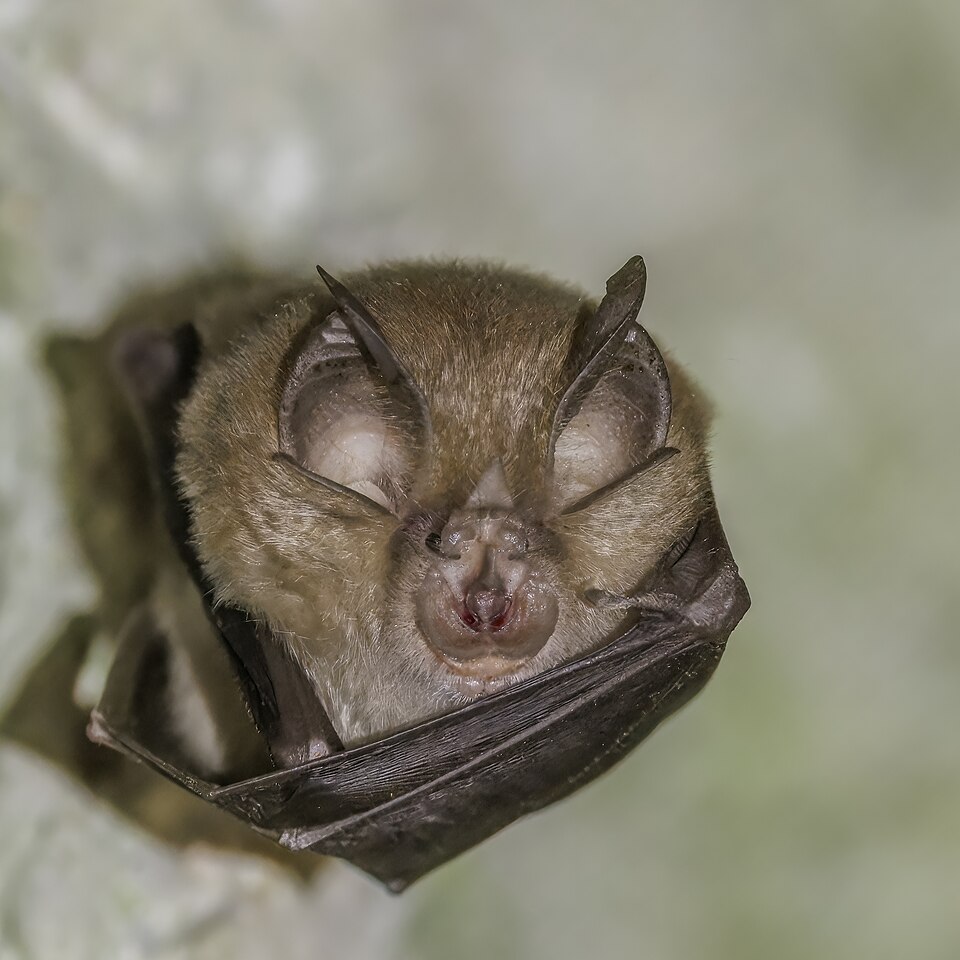
The independent evolution of high-frequency echolocation in bats and toothed whales (dolphins, porpoises, and their relatives) has become one of the most thoroughly dissected cases of convergent evolution in modern biology, because genomic data have allowed researchers to trace the convergence from the level of the whole organism down to individual amino acid substitutions. Bats and toothed whales diverged from a common mammalian ancestor approximately 90 million years ago, long before either group evolved echolocation. The two systems are produced by entirely different anatomical structures: a laryngeal mechanism in bats and a nasal sac and melon system in odontocetes.10, 11
_Hrdovicka.jpg)
The molecular breakthrough came in 2008, when Gang Li and colleagues analysed the gene encoding prestin, a motor protein expressed in the outer hair cells of the mammalian cochlea. Prestin is responsible for electromotility—the ability of outer hair cells to change length rapidly in response to voltage changes—which amplifies high-frequency sounds and is essential for the ultrasonic hearing that underpins echolocation. Li et al. found that when they constructed a phylogenetic tree using prestin protein sequences rather than the standard species tree, echolocating bats clustered with dolphins rather than with their closest non-echolocating relatives. This extraordinary result indicated that the prestin sequences of echolocating bats had converged upon those of dolphins through parallel amino acid substitutions at functionally important sites.9
Yang Liu and colleagues extended these findings in 2010, demonstrating that the prestin gene had undergone convergent substitutions in echolocating bats and dolphins at specific amino acid positions critical for high-frequency tuning, while non-echolocating mammals retained the ancestral amino acid states at those positions.10 A still broader analysis by Joe Parker and colleagues in 2013 compared the genomes of echolocating bats and dolphins against non-echolocating mammals and identified approximately 200 genomic regions showing elevated rates of convergent sequence evolution across all echolocating lineages. These regions were significantly enriched for genes involved in hearing, cochlear hair cell function, and inner ear development—a signal of genome-wide molecular convergence far exceeding what would be expected by chance.11
Molecular convergence in echolocation: key hearing genes9, 10, 11
| Gene | Function | Convergent signal |
|---|---|---|
| Prestin (SLC26A5) | Outer hair cell electromotility; high-frequency amplification | Parallel amino acid substitutions in echolocating bats and dolphins; phylogenetic clustering by function rather than ancestry |
| TMC1 | Mechanotransduction in cochlear hair cells | Accelerated convergent evolution in echolocating lineages |
| KCNQ4 | Potassium recycling in outer hair cells | Convergent amino acid changes in echolocating mammals |
| CDH23 | Tip-link protein in hair cell stereocilia | Signatures of positive selection in echolocating bats and odontocetes |
The echolocation case demonstrates a principle that recurs across many convergent systems: when strong directional selection acts on a shared molecular substrate, the same genes tend to be modified because they are the same genes that control the relevant functional properties in all lineages. The cochlear machinery of all mammals is built from the same developmental components, so when selection for high-frequency hearing intensifies in bats and dolphins independently, the same molecular targets are hit.18, 19
Streamlined bodies: sharks, ichthyosaurs, and dolphins
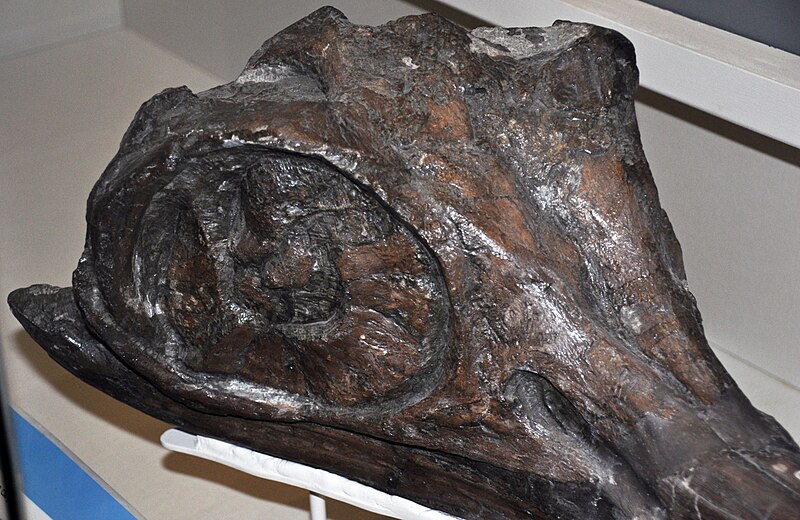
The fusiform body plan—tapered at both ends, with a crescent-shaped caudal fin generating thrust and stabilising fins preventing yaw and roll—is the hydrodynamic optimum for sustained high-speed swimming, and three entirely unrelated vertebrate lineages converged upon it independently.
_(Lower_Jurassic;_Lyme_Regis,_England)_2_(35788250005).jpg)
Sharks (cartilaginous fishes whose lineage extends back over 400 million years), ichthyosaurs (marine reptiles of the Mesozoic era), and dolphins and other cetaceans (mammals that returned to the sea approximately 50 million years ago) all evolved strikingly similar external body shapes despite having no common aquatic ancestor that bore any resemblance to the fusiform design.12, 13
The ichthyosaur case is particularly instructive because it can be traced through a detailed fossil sequence. The earliest ichthyosaurs from the Early Triassic (approximately 248 million years ago) had elongate, somewhat lizard-like bodies with limbs still recognisable as modified legs. Over the subsequent 50 million years, ichthyosaurs evolved progressively more fish-shaped proportions: the limbs became paddle-like flippers, the tail developed a vertical crescent-shaped fluked fin (independently from the horizontal flukes of cetaceans), and the body acquired a dorsal fin not supported by any skeletal element. Ryosuke Motani's comprehensive review of ichthyosaur functional morphology documented that advanced Jurassic ichthyosaurs had achieved body proportions and estimated cruising speeds closely comparable to those of modern dolphins, despite being separated from cetaceans by over 200 million years and belonging to a completely different vertebrate class.12
Andrew Foote and colleagues extended the analysis to the genomic level in 2015, comparing the genomes of multiple cetacean species with those of other mammals. They found convergent molecular changes in genes associated with the transition to a fully aquatic lifestyle: reductions in genes related to hair production, modifications to muscle metabolism genes relevant to breath-hold diving, and changes in kidney function genes adapted to a marine osmotic environment. These convergences in underlying physiology went far beyond the external body form and demonstrated that the aquatic transition independently modified the same gene networks in different lineages confronting the same physical demands.13
C4 photosynthesis: over 60 independent origins
Among the most numerically impressive examples of convergent evolution in any kingdom of life is the repeated, independent origin of C4 photosynthesis in flowering plants. The C4 pathway is a metabolic modification of the ancestral C3 carbon fixation system that dramatically improves photosynthetic efficiency in hot, dry, and high-light environments by concentrating carbon dioxide around the primary carboxylating enzyme RuBisCO in specialised bundle sheath cells, thereby suppressing the competing and wasteful process of photorespiration.14
Rufus Sage and colleagues documented that C4 photosynthesis has evolved independently at least 62 times across 19 angiosperm families, including multiple independent origins within grasses (Poaceae), sedges (Cyperaceae), and numerous eudicot lineages.14 Each origin required the coordinated evolution of a specialised leaf anatomy (Kranz anatomy, in which mesophyll and bundle sheath cells are arranged in concentric layers around the vascular tissue), differential gene expression between the two cell types, and biochemical modifications to the enzymes of carbon fixation. That this complex, multi-component system was assembled independently over 60 times from the same ancestral starting materials is a powerful demonstration that the genetic prerequisites for C4 evolution are broadly distributed in flowering plants and that the selective advantage conferred in appropriate environments is sufficient to drive the transition reliably.14
At the molecular level, each independent C4 origin has recruited the same set of pre-existing enzymes already present in all C3 plants. Phosphoenolpyruvate carboxylase (PEPC), pyruvate orthophosphate dikinase (PPDK), and NADP-malic enzyme (NADP-ME) are expressed at low levels in C3 plants for various housekeeping functions; in each C4 lineage, the genes encoding these enzymes have been independently upregulated, modified in their kinetic properties, and redirected to new cell-type-specific expression patterns.14 Comparative studies have identified at least 14 amino acid positions in PEPC that show parallel adaptive substitutions across independent C4 lineages, confirming that molecular convergence occurs at specific, functionally important residues even in a system that has evolved over 60 times independently.14
Independent origins of C4 photosynthesis by plant family14
Carcinization: the crab-like body plan
In 1916, the English zoologist Lancelot Alexander Borradaile coined the term carcinization to describe what he called "the many attempts of Nature to evolve a crab." The crab-like body form—characterised by a wide, flattened carapace, a reduced abdomen tucked beneath the thorax, and sideways locomotion—has evolved independently at least five times within the decapod crustaceans, including in true crabs (Brachyura), king crabs (Anomura: Lithodidae), porcelain crabs (Anomura: Porcellanidae), hairy stone crabs (Anomura: Lomisidae), and coconut crabs and their relatives (Anomura: Coenobitidae).15
Joanna Wolfe, Javier Luque, and Heather Bracken-Grissom reviewed the phenomenon in 2021, examining the morphological, ecological, and genetic dimensions of carcinization. They noted that while the crab-like body plan has been independently acquired at least five times, it has also been independently lost multiple times in a process they termed decarcinization—lineages that had evolved a crab-like form subsequently reverted to a more elongate, lobster-like or hermit-crab-like body plan. The existence of both carcinization and decarcinization within the same phylogenetic tree suggests that the crab-like form occupies a distinctive but not universally stable adaptive peak, and that the selective pressures favouring it can be reversed when ecological circumstances change.15
The functional advantages of the crab body plan remain a subject of investigation. The flattened carapace may offer improved resistance to predation by reducing the amount of vulnerable tissue accessible to attackers. The tucked abdomen and widened body may also facilitate more effective sideways locomotion in structurally complex habitats such as rocky intertidal zones and coral reefs. However, Wolfe and colleagues noted that the crab body plan may also represent a developmental attractor—a morphological outcome that the decapod body plan is particularly prone to reach given its existing developmental constraints, regardless of whether it confers a specific adaptive advantage in every case.15 This interpretation aligns with the broader theme of convergent evolution as the product of both selection and constraint.
Marsupial-placental convergence
The parallel radiations of marsupial mammals in Australia and placental mammals on other continents provide some of the most visually dramatic convergences in vertebrate evolution.
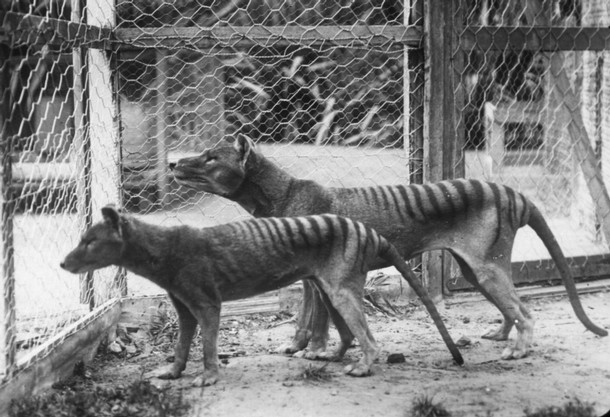

Marsupials and placentals diverged approximately 160 million years ago in the Jurassic, yet both groups subsequently produced suites of ecologically equivalent species with strikingly similar body forms, dentitions, and behaviours. The thylacine (Tasmanian tiger, Thylacinus cynocephalus) and the gray wolf (Canis lupus); the sugar glider (Petaurus breviceps) and the flying squirrel (Glaucomys volans); the marsupial mole (Notoryctes typhlops) and the golden mole (Chrysochloris spp.)—these pairs each independently evolved remarkably similar morphologies in response to similar ecological niches on separate continents.16, 24
The thylacine-wolf convergence has been examined in particular detail. Axel Newton and colleagues, using computed tomography to digitally reconstruct the skulls of thylacines and wolves at successive developmental stages from birth to adulthood, demonstrated that the cranial convergence between the two species is present from the earliest postnatal stages and intensifies throughout ontogeny. The two lineages independently evolved similar patterns of allometric growth in the skull, producing adult cranial proportions so alike that early European naturalists routinely misidentified thylacine specimens as canids. The convergence extends to the palate shape, jaw musculature geometry, and tooth proportions—the suite of cranial features required for a large cursorial predator that catches and kills medium-sized prey.17
At the genomic level, Charles Feigin and colleagues in 2019 identified candidate craniofacial cis-regulatory elements (enhancers that control when and where genes are expressed during development) and compared their evolutionary rates in the thylacine and wolf. They found abundant signatures of convergent positive selection in enhancers associated with genes involved in TGF-beta and BMP signalling—two key morphological signalling pathways with critical roles in establishing craniofacial tissue identities and boundaries. The result suggests that positive selection on cis-regulatory elements, rather than on the protein-coding genes themselves, may have been the primary molecular mechanism driving the thylacine-wolf cranial convergence.16 This finding illustrates a broader principle: convergent morphological evolution can be driven by convergent regulatory evolution, with the same developmental signalling pathways being independently fine-tuned in distant lineages to produce similar anatomical outcomes.
The molecular basis of convergence
A central finding of modern evolutionary genomics is that convergent phenotypes are frequently underpinned by convergent changes in the same genes. David Stern and Virginie Orgogozo, in a comprehensive 2008 review of the genetic basis of phenotypic evolution, compiled a catalogue of cases in which the same genes had been independently modified in different lineages to produce similar traits. They found that the probability of convergent phenotypes arising through changes in the same gene was far higher than expected under a model of unconstrained genetic change, and proposed that certain genes act as evolutionary "hotspots"—loci where mutations are particularly likely to produce large phenotypic effects while minimising harmful pleiotropic side effects on other traits.20
Stern extended this analysis in a 2013 review in Nature Reviews Genetics, distinguishing three routes by which genetic convergence can occur: convergent changes at the same gene achieved through different mutations, convergent changes achieved through the same mutation arising independently, and convergent changes achieved through introgression of the same allele between lineages.18 Across all three routes, the recurrent message is the same: the genetic architecture of a trait constrains the range of mutations that can produce adaptive change, and these constraints channel independent lineages toward the same molecular solutions. The echolocation convergence in prestin, the parallel PEPC substitutions in C4 plants, and the repeated recruitment of Scn4a in electric fish are all manifestations of this principle.9, 14, 21
The convergent evolution of electric organs provides one of the most compelling examples. Jason Gallant and colleagues, comparing the transcriptomes of independently electrogenic fish lineages, found that the same sodium channel gene (Scn4aa) was independently modified in the electric organ of multiple lineages, with convergent changes concentrated in the same protein domains responsible for electrocyte function. Furthermore, the broader gene expression profiles of independently evolved electric organs were remarkably similar, with overlapping sets of transcription factors and developmental pathways deployed across lineages that diverged hundreds of millions of years ago.21 This result is explicable through deep homology: electric organs evolved from skeletal muscle in all lineages, and Scn4a is the dominant sodium channel in vertebrate muscle. When selection favours the conversion of muscle into an electric organ, the same gene is targeted because it is the most relevant gene controlling the electrical properties of the ancestral tissue.19, 21
Deep homology and the limits of convergence
The concept of deep homology, formalised by Neil Shubin, Cliff Tabin, and Sean Carroll, provides a framework for understanding why convergent evolution is so pervasive. Deep homology refers to the conservation of genetic regulatory networks across distantly related animal phyla—networks that were established in the common ancestors of major animal groups and have been independently redeployed in descendant lineages to build superficially analogous structures.19 The Pax6 gene controlling eye development across all bilaterians, the Hox gene cluster patterning the body axis in arthropods and vertebrates, and the Distal-less gene directing limb and appendage formation in insects and mammals are all examples of deeply homologous regulatory programs that predate the divergence of the lineages in which they operate.
Shubin, Tabin, and Carroll argued that deep homology explains why convergent evolution so often recruits the same genetic components: the toolkit is shared, and the available raw material for building novel structures is the same across independent lineages.19 The wings of birds and bats are homologous as forelimbs (both derive from the ancestral tetrapod limb), and the Hox gene patterning that underlies wing development in both groups is also homologous at the regulatory level, even though the specific wing morphologies are not directly inherited from a common winged ancestor. Similarly, the electric organs of South American and African fishes both drew on the same Scn4a ion channel gene already present in muscle, because muscle is the tissue from which all known electric organs evolved.21
However, not all convergence follows the same molecular path. Natarajan and colleagues, studying convergent increases in hemoglobin-oxygen affinity among high-altitude Andean waterfowl, found that while functional convergence in hemoglobin binding properties was pervasive across highland taxa, the underlying amino acid substitutions responsible for those functional changes were largely non-parallel.25 A subsequent study in 2016 extended this finding, demonstrating that predictable convergence in hemoglobin function had unpredictable molecular underpinnings: historical substitutions had context-dependent effects, meaning that a mutation producing an adaptive change in one species might have no effect, or even a deleterious effect, in a different species with a different genetic background.23 These results indicate that the degree of molecular convergence depends critically on the genetic architecture of the trait in question. Where a single gene dominates a functional property (as prestin dominates high-frequency hearing), molecular convergence is likely to be strong. Where function depends on the interaction of many genes (as hemoglobin-oxygen affinity depends on dozens of amino acid positions across multiple subunits), functional convergence may be achieved through diverse molecular routes.
Jonathan Losos, reviewing the relationship between convergence, adaptation, and constraint in 2011, cautioned that convergent evolution does not automatically imply adaptation to similar environments. Some convergences may result from shared developmental biases that channel evolution in certain morphological directions regardless of ecological context, while others may reflect genetic drift or sexual selection rather than natural selection for ecological function.22 The task for evolutionary biology, Losos argued, is not simply to catalogue convergent cases but to determine, in each instance, whether convergence was driven by shared selective pressures, shared genetic constraints, or some combination of the two. The Anolis lizards of the Caribbean, in which the same set of ecomorph body types has evolved independently on four different islands, provide a model system for disentangling these factors: the repeated evolution of similar microhabitat specialists in replicated island environments strongly implicates natural selection, while the consistency of the convergent outcomes implicates constraint.22
Taken together, the examples examined in this article—from the 40-plus independent origins of eyes, to the genome-wide molecular convergence of echolocating mammals, to the regulatory convergence underlying the thylacine-wolf cranial similarity—demonstrate that convergent evolution is neither rare nor random. It is a predictable consequence of natural selection operating on a shared genetic heritage, channelled by the constraints of physics, chemistry, and developmental biology into a limited set of workable solutions. The boundaries of that solution space, and the degree to which convergence implies evolutionary inevitability rather than contingent happenstance, remain among the most actively debated questions in evolutionary biology.18, 22, 24
References
Evolution of fish-shaped reptiles (Reptilia: Ichthyopterygia) in their physical environments and constraints
Widespread cis-regulatory convergence between the extinct Tasmanian tiger and gray wolf
Ontogenetic origins of cranial convergence between the extinct marsupial thylacine and placental gray wolf
Predictable convergence in hemoglobin function has unpredictable molecular underpinnings
Convergent Evolution of Hemoglobin Function in High-Altitude Andean Waterfowl Involves Limited Parallelism at the Molecular Sequence Level