Overview
- Sexual selection, first articulated by Darwin in 1871, is the evolutionary process by which traits that increase mating success are favoured even when they reduce survival, explaining elaborate ornaments like the peacock's train and weapons like deer antlers that natural selection alone cannot account for.
- The two primary mechanisms of sexual selection are intrasexual competition, in which individuals of one sex compete directly for access to mates through weapons and fighting, and intersexual choice, in which the opposite sex selects mates on the basis of ornamental traits that may signal genetic quality or health.
- Sexual selection is now recognised as one of the most powerful forces in evolution, capable of driving rapid phenotypic divergence between populations and contributing to speciation through the coevolution of mating preferences and sexually selected traits.
Sexual selection is the component of natural selection that arises from differences in mating success. First given systematic treatment by Charles Darwin in The Descent of Man, and Selection in Relation to Sex (1871), it was proposed to explain the existence of elaborate traits — brilliant plumage, extravagant tail feathers, massive antlers, complex songs — that appear to reduce the survival of their bearers and thus seem paradoxical under a framework focused solely on the struggle for existence.1 Darwin recognised that an animal's reproductive success depends not only on surviving to adulthood but also on obtaining mates, and that traits which enhance mating success can be favoured by selection even when they impose survival costs. The peacock's train, which Darwin famously confessed made him feel "sick" whenever he contemplated it from a purely adaptationist standpoint, became the emblematic example of this process.1
Sexual selection operates through two broad mechanisms: intrasexual selection, in which members of one sex (usually males) compete directly with one another for access to mates, and intersexual selection, in which members of the opposite sex (usually females) choose among potential mates on the basis of particular traits.1, 4 In the century and a half since Darwin's original formulation, sexual selection theory has been refined through major contributions from Fisher, Zahavi, Trivers, Hamilton, and many others, and it is now recognised as one of the most potent forces shaping the morphology, behaviour, and life history of sexually reproducing organisms.4, 13
Intrasexual selection
Intrasexual selection encompasses the competitive interactions that occur between members of the same sex — typically males — for access to mates or to mating resources such as territories and harems.
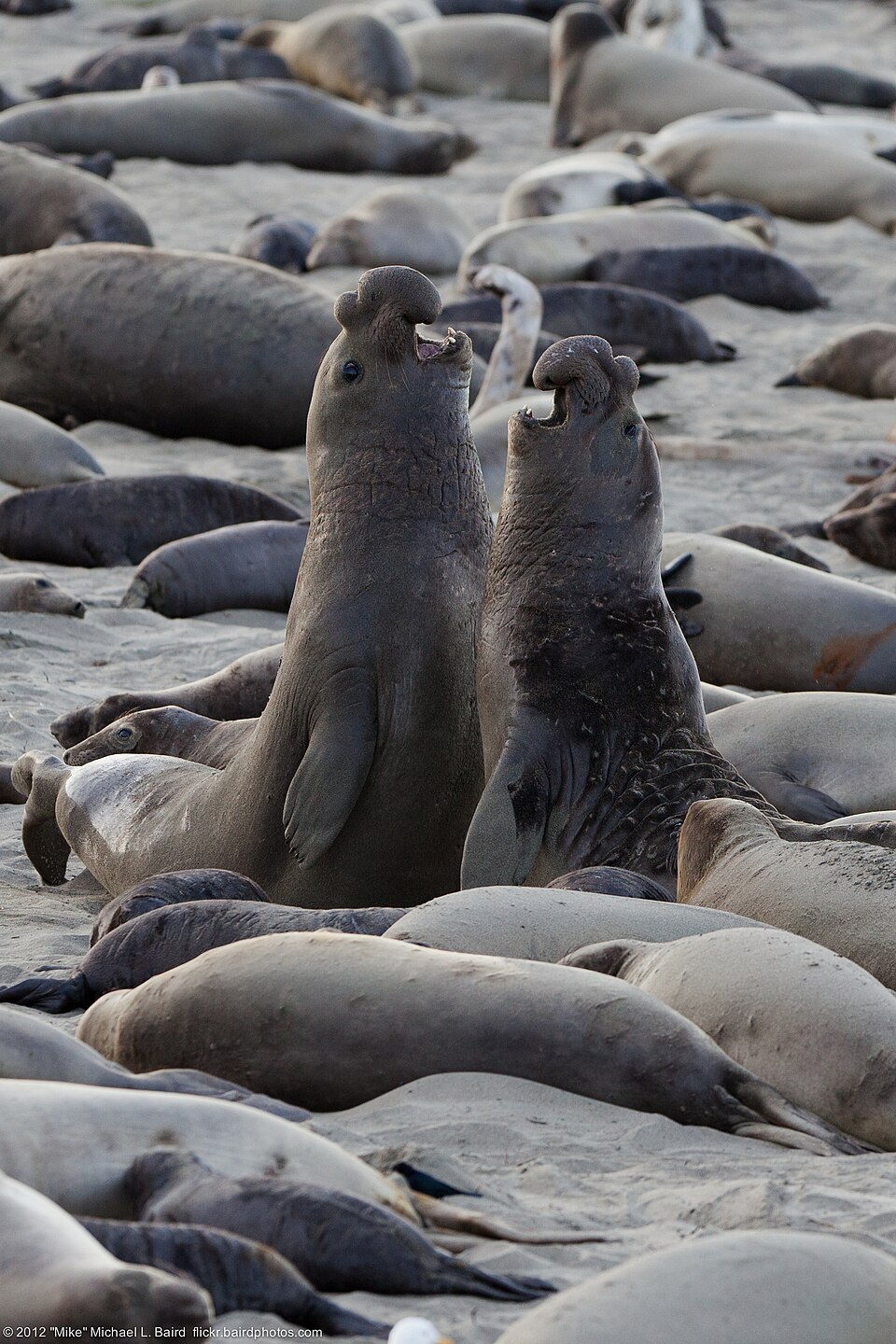

The most visible products of intrasexual selection are the weapons used in combat: the antlers of cervids, the horns of bovids and rhinoceros beetles, the tusks of elephants and narwhals, and the enlarged canines of many primates and carnivorans.1, 14 These structures are used in direct fights, displays of strength, or ritualised contests that determine which males gain reproductive access to females.
The evolutionary dynamics of animal weapons follow predictable patterns. Douglas Emlen's review of the empirical literature has shown that sexually selected weapons tend to evolve to extreme proportions when three ecological conditions are met: the resource being defended (typically females or a territory containing females) is economically defensible, encounters between rivals are frequent enough that the weapon provides a reliable advantage, and the weapon functions as an honest signal of the bearer's fighting ability because its growth is condition-dependent.14 Under these conditions, weapons can escalate through a positive feedback between competitive advantage and reproductive payoff, producing the striking sexual dimorphism observed in species such as elk (Cervus canadensis), where males carry antlers that may span more than a metre and weigh over 18 kilograms.
One of the most extreme examples of intrasexual selection is found in the northern elephant seal (Mirounga angustirostris), in which males may weigh approximately 2,300 kilograms — roughly three to four times the mass of adult females.16 Males compete ferociously for control of harems on breeding beaches, and the variance in male reproductive success is enormous: a small number of dominant males sire the majority of offspring in any given year, while most males fail to mate at all. This high variance in male mating success is the hallmark of strong intrasexual selection and is a key predictor of the degree of sexual dimorphism within a species.4, 16
Intrasexual competition does not always cease at the point of mating. In 1970, Geoffrey Parker introduced the concept of sperm competition, recognising that when females mate with multiple males, selection continues at the level of the ejaculate.9 Males of many species have evolved adaptations to succeed in this post-copulatory arena, including the production of copulatory plugs that physically block subsequent inseminations, seminal fluid proteins that alter female reproductive physiology, enlarged testes that produce greater sperm volumes, and mate-guarding behaviour that prevents rivals from copulating with a recently mated female.9, 13 Sperm competition has been documented across insects, birds, mammals, fish, and many other taxa, and its recognition expanded the domain of sexual selection theory well beyond the pre-copulatory arena that Darwin had originally envisaged.9
Intersexual selection and mate choice
The second major mechanism of sexual selection is intersexual choice — the preferential mating of one sex (usually females) with particular members of the opposite sex on the basis of displayed traits. Darwin proposed that peahens prefer peacocks with larger and more elaborate trains, that female birds of paradise favour males with the most spectacular plumage, and that female songbirds select mates on the basis of vocal quality.1 At the time, the idea that females could exercise aesthetic judgement in their choice of mates was controversial; it remained largely neglected for decades after Darwin's death.
.jpg)
.jpg)
The modern revival of mate choice theory began with R. A. Fisher's The Genetical Theory of Natural Selection (1930), in which he proposed a mechanism now known as Fisherian runaway selection.2 Fisher argued that if females in a population happen to develop a preference for a particular male trait, then sons of choosy females will tend to inherit both the preferred trait and daughters will tend to inherit the preference for it. This genetic correlation between trait and preference creates a positive feedback loop: as the preference spreads, the trait is exaggerated further, which in turn favours stronger preferences, leading to a self-reinforcing "runaway" process that can drive ornaments to elaborate extremes far beyond any optimum set by natural selection.2, 15 Russell Lande provided the first formal quantitative genetic models of this process in 1981, demonstrating that runaway dynamics can emerge from the genetic covariance between female preferences and male traits.15
Richard Prum has argued that the Fisherian mechanism, formalised by Lande and Mark Kirkpatrick, should be regarded as the null model of intersexual selection — the outcome expected whenever there is heritable variation in both traits and preferences, in the absence of additional selective forces such as survival benefits or parasite resistance.20 Under this view, sexually selected ornaments need not be honest signals of anything; they may be arbitrary aesthetic products of the coevolutionary dynamics between preference and display.20
Empirical research has confirmed that female mate choice is widespread across the animal kingdom. Systematic reviews of the literature have identified significant female preferences for male ornamental traits in hundreds of species spanning insects, crustaceans, fish, amphibians, reptiles, birds, and mammals.4, 21 The strength and consistency of these preferences vary considerably both between and within species, influenced by factors such as female age, condition, prior experience, predation risk, and the availability of potential mates.21
Honest signalling and the handicap principle
A central question in sexual selection theory is whether ornamental traits carry reliable information about the quality of their bearers. In 1975, Amotz Zahavi proposed the handicap principle, arguing that sexually selected traits are honest signals of male genetic quality precisely because they are costly to produce and maintain.3 Only males in superior condition can afford the metabolic expense, predation risk, and physiological burden of elaborate ornaments; inferior males that attempt to display them are disproportionately penalised. The costliness of the signal thus guarantees its reliability — it cannot be "faked" by low-quality individuals because the survival penalty for doing so is too great.3
The handicap principle was initially met with scepticism, largely because early population-genetic models appeared to show that it could not produce evolutionarily stable strategies. This changed in 1990, when Alan Grafen published a rigorous game-theoretic analysis demonstrating that costly signalling equilibria are indeed evolutionarily stable under fairly general conditions, provided that the marginal cost of signalling is higher for low-quality individuals than for high-quality ones.7 Grafen's model showed that at equilibrium, signal intensity is an increasing function of signaller quality, and receivers can rely on the signal to make adaptive decisions. This result placed the handicap principle on a solid theoretical foundation and generated a large body of empirical research testing its predictions.7
One influential line of evidence for honest signalling comes from the work of William Hamilton and Marlene Zuk, who in 1982 proposed that bright, conspicuous plumage in male birds functions as a signal of resistance to parasites.6 By comparing blood parasite loads and plumage brightness across North American passerine species, Hamilton and Zuk found a significant positive correlation: species with higher parasite prevalence tended to exhibit more elaborate male ornamentation.6 Their explanation was that parasites maintain heritable variation in host fitness, and females that select brightly coloured males are choosing mates whose immune systems can sustain the metabolic costs of ornament production while simultaneously fighting infection. This "Hamilton-Zuk hypothesis" provided one of the first empirically grounded mechanisms by which female choice could yield indirect genetic benefits for offspring.6
Marion Petrie's experimental work on peafowl (Pavo cristatus) provided direct evidence linking male ornamentation to offspring fitness. In a controlled breeding experiment in which females were randomly assigned to males, Petrie found that the offspring of males with more elaborate trains — those bearing more eyespots — grew faster and survived better under semi-natural conditions than the offspring of males with less elaborate displays.8 Subsequent work confirmed that the iridescent structural coloration of peacock eyespots is correlated with mating success, suggesting that females use properties of eyespot coloration as a cue when choosing mates.22 These results are consistent with the prediction that ornaments serve as honest advertisements of heritable genetic quality.
Carotenoid-based plumage coloration in birds has become another well-studied system for testing honest signalling hypotheses. Carotenoids are pigments that animals cannot synthesise de novo and must obtain from their diet; they also serve physiological functions as antioxidants and immunostimulants. The allocation of carotenoids to integumentary coloration therefore creates a trade-off with immune function and oxidative stress resistance, potentially making carotenoid-based colour an honest signal of foraging ability, nutritional status, and health.4, 6
Sexual dimorphism and Bateman's principle
Sexual selection is the primary evolutionary explanation for sexual dimorphism — the morphological, physiological, and behavioural differences between males and females of the same species. In many animals, males are larger, more conspicuously ornamented, more aggressively armed, or more brightly coloured than females. Understanding why sexual selection typically acts more strongly on males than on females has been a central preoccupation of the field since Darwin.1, 4
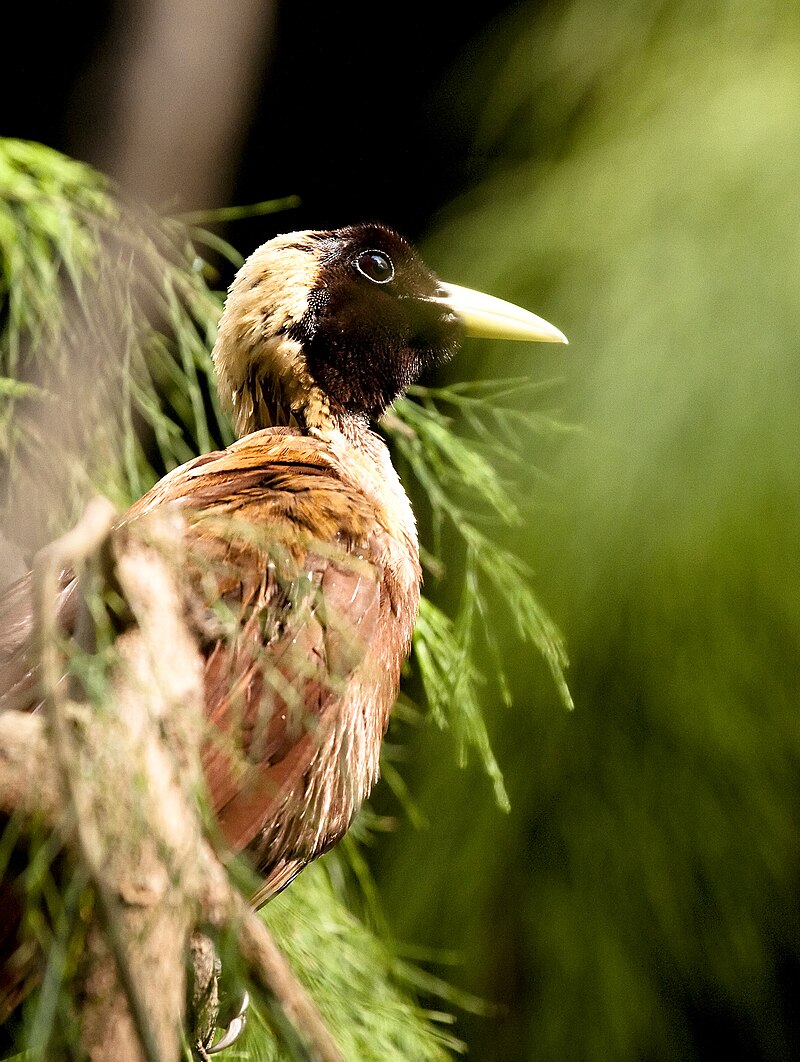

The foundational insight came from A. J. Bateman's 1948 study of the fruit fly Drosophila melanogaster, in which he measured reproductive success as a function of the number of mates obtained by each sex.10 Bateman found that male reproductive success increased steeply with the number of mating partners, whereas female reproductive success did not, because females were limited by the rate at which they could produce and provision eggs rather than by access to sperm. This asymmetry — a greater variance in reproductive success among males than among females, and a steeper relationship between mating success and reproductive output in males — became known as Bateman's principle and was taken to explain why males are typically the more competitive sex and females the more choosy one.10
Robert Trivers extended Bateman's reasoning in his influential 1972 paper on parental investment theory, arguing that the sex investing more heavily in each offspring (in terms of time, energy, and risk) will be the more discriminating in its choice of mates, while the sex investing less will compete more intensely for access to the higher-investing sex.5 In most vertebrate species, females are the higher-investing sex because they produce large, metabolically expensive eggs and, in many lineages, provide extended parental care. Males, by contrast, often contribute little beyond sperm. This asymmetry in parental investment generates the pattern of choosy females and competitive males that Darwin originally described, though Trivers's formulation made the crucial insight that it is parental investment, not biological sex per se, that determines the direction of sexual selection.5
The ultimate cause of this investment asymmetry lies in anisogamy — the difference in gamete size between the sexes. Females produce few, large, nutrient-rich eggs; males produce many, small, metabolically inexpensive sperm. Because each egg represents a greater fraction of a female's total reproductive potential than each sperm represents of a male's, females stand to lose more from a poor mating decision and are therefore expected to be more selective.5, 12 Kokko and colleagues demonstrated formally that anisogamy alone is sufficient to generate the sex-role conventions typically observed in nature, including greater male-male competition and greater female choosiness, even in the absence of any other asymmetry in parental care or operational sex ratio.12
Importantly, sexual selection is not exclusively a male phenomenon. Tim Clutton-Brock has argued that in species where males provide substantial parental investment, or where the operational sex ratio is female-biased, females may compete intensely for mates and males may be choosy.16 Female ornamentation, female-female aggression over mating opportunities, and mutual mate choice have now been documented in a wide range of taxa, challenging the traditional view of sexual selection as a unidirectional force acting primarily on males.4, 16
Theoretical models of mate choice evolution
The evolution of female mating preferences is one of the most intensely debated questions in evolutionary biology. Three major classes of models have been proposed, each with distinct predictions about why females prefer particular male traits, and each supported by varying amounts of empirical evidence.4, 12
The Fisherian runaway model, as formalised by Lande and Kirkpatrick, posits that female preferences evolve through a genetic correlation with preferred male traits, driven by the non-random mating that preferences create.2, 15 Under this model, the specific traits that females prefer may be arbitrary — they need not signal any aspect of male quality. The self-reinforcing coevolution of trait and preference can produce ornamental exaggeration limited only by the countervailing force of natural selection on male survival.15, 20 A key prediction of the Fisherian model is that lines of equilibrium, rather than single equilibrium points, exist in trait-preference space, meaning that different populations may evolve towards different combinations of trait elaboration and preference strength purely by chance.15
Good genes models, including the Hamilton-Zuk hypothesis and the handicap principle, propose that female preferences evolve because ornamental traits honestly signal heritable genetic quality.3, 6 Females that mate with highly ornamented males produce offspring with superior viability, resistance to parasites, or other fitness advantages, generating indirect selection on the preference. The central requirement of these models is that ornaments must be condition-dependent — their expression must be sensitive to the bearer's physiological state, so that they reliably indicate quality.7
Direct benefits models propose that females prefer males that provide tangible, non-genetic resources: superior territories, nutritional gifts, paternal care, or reduced parasite transmission.12 In these models, the female preference evolves not because it is genetically correlated with male traits, but because choosy females gain immediate fitness benefits that more than compensate for the costs of being selective. Direct benefits are widely documented in insects and birds, and meta-analyses suggest they may explain a substantial proportion of the observed variation in mate choice across species.4, 12
These three classes of models are not mutually exclusive. Kokko and colleagues have argued that direct and indirect benefit mechanisms operate along a continuum, and that the distinction between them may be less sharp than originally supposed, since any preference that provides direct benefits will also tend to become genetically correlated with the preferred trait through linkage disequilibrium.12 The relative importance of each mechanism likely varies across species and ecological contexts, and disentangling their contributions remains one of the major empirical challenges in the field.13
Major theoretical models of sexual selection4, 12, 13
| Model | Key proponent(s) | Mechanism | Ornament function |
|---|---|---|---|
| Fisherian runaway | Fisher (1930), Lande (1981) | Genetic correlation between female preference and male trait drives coevolutionary escalation | Arbitrary; no quality information required |
| Handicap / honest signal | Zahavi (1975), Grafen (1990) | Costly ornaments reliably signal bearer quality because only high-quality males can afford them | Honest indicator of genetic quality or condition |
| Good genes (parasite resistance) | Hamilton & Zuk (1982) | Bright coloration signals heritable resistance to parasites; choosy females gain genetically superior offspring | Honest indicator of immune competence |
| Direct benefits | Multiple authors | Females prefer males that provide material resources: territory, food, paternal care | Indicator of resource-holding ability |
| Sensory bias / exploitation | Ryan (1990), Endler (1992) | Male traits exploit pre-existing sensory biases in female nervous systems that evolved in non-mating contexts | Exploits receiver psychology; initially uninformative |
| Chase-away selection | Holland & Rice (1998) | Sexual conflict drives cycles of male sensory exploitation and female resistance | Manipulative; may reduce female fitness |
Sexual selection and speciation
Sexual selection has long been hypothesised to be a potent driver of speciation, because divergent evolution of mating preferences and sexually selected traits between populations can rapidly produce behavioural reproductive isolation.15, 17 Lande's 1981 models demonstrated that sexual selection on polygenic traits could generate reproductive isolation between populations as a by-product of divergent coevolution between preferences and displays, even in the absence of ecological divergence or geographical barriers.15
Comparative evidence is broadly consistent with this hypothesis. Panhuis and colleagues reviewed the evidence linking sexual selection to speciation rates and found that lineages subject to strong sexual selection — as indicated by pronounced sexual dimorphism, elaborate male ornaments, or polygynous mating systems — tend to be more species-rich than their less sexually selected sister clades, although the interpretation of such comparisons is complicated by the difficulty of distinguishing the effects of sexual selection from those of other factors that influence diversification rates.17
The most compelling direct evidence for speciation driven by sexual selection comes from the cichlid fishes of the East African Great Lakes. Ole Seehausen and colleagues demonstrated that in Lake Victoria, closely related cichlid species have diverged in male nuptial coloration and female colour preferences along environmental light gradients.11 In clear waters, where the full visible spectrum is available, females discriminate between red and blue males, maintaining reproductive isolation between sympatric species. In turbid waters, where the light environment is degraded, female colour discrimination breaks down and hybridisation occurs, leading to the collapse of species boundaries. This system provides a remarkably complete demonstration of speciation through "sensory drive" — the process by which environmental variation in sensory conditions selects for divergent sensory systems, which in turn drive divergent mating preferences and male signals.11
Birdsong provides another well-studied example of how sexual selection can contribute to reproductive isolation. Song is both a sexually selected signal — females in many passerine species preferentially mate with males that produce more complex or locally typical songs — and a species-recognition signal. When populations become geographically separated, divergence in song through cultural drift, local adaptation, or sexual selection can produce assortative mating upon secondary contact, contributing to pre-zygotic reproductive isolation.4, 17 However, whether sexual selection generally accelerates speciation remains debated, and some analyses have found no consistent relationship between the intensity of sexual selection and species richness when potential confounds are controlled.17
Sexual selection in humans
Darwin himself proposed that sexual selection had played a role in human evolution, suggesting in The Descent of Man that many features distinguishing human populations and the two sexes had arisen through mate choice and competition rather than through natural selection for survival.1 The extent to which sexual selection has shaped human morphology, behaviour, and cognition remains an active and sometimes contentious area of research.
The morphological evidence for sexual selection in humans includes moderate sexual dimorphism in body size (males are approximately 10 to 15 percent taller and 15 to 20 percent heavier than females on average), deeper male voices, greater male upper-body musculature, the development of facial hair in males, and differences in fat distribution between the sexes.18 David Puts has argued that many of these dimorphisms are best explained by a combination of intrasexual competition and intersexual choice: traits such as body size, musculature, and voice depth appear to have been shaped primarily by male-male competition, functioning as signals of dominance and physical formidability, while traits that correlate with attractiveness to the opposite sex may reflect intersexual selection through mate choice.18
More speculatively, Geoffrey Miller has proposed that distinctively human cognitive capacities — including language, humour, creativity, musical ability, and moral reasoning — evolved at least in part through sexual selection, functioning as courtship displays that advertise intelligence, creativity, and heritable fitness to potential mates.19 Miller noted that many of these capacities appear "over-designed" for the practical demands of survival, much as the peacock's train is over-designed for any aerodynamic function, and suggested that their exaggerated development in humans may reflect runaway sexual selection for cognitive display.19 While this hypothesis has generated considerable discussion, it has also been criticised for being difficult to test empirically and for underestimating the role of natural selection, social cooperation, and cultural learning in the evolution of human cognition.18
The study of sexual selection in humans is complicated by the profound influence of culture, social institutions, and mate-choice traditions that have no clear parallels in other animals. Whereas in most sexually selected species the preferences and traits under selection are largely genetically determined, in humans cultural norms, economic circumstances, and individual experience exert powerful effects on mate choice, making it difficult to distinguish the products of biological sexual selection from those of social and cultural processes.16, 18
Contemporary perspectives and ongoing debates
Sexual selection research has expanded enormously since Darwin's original treatment, and several areas of active debate continue to shape the field. One persistent question concerns the relative importance of Fisherian runaway processes versus indicator mechanisms (good genes, condition dependence, honest signalling) in driving the evolution of ornamental traits. The difficulty of distinguishing these alternatives empirically arises because both predict a positive correlation between ornament expression and mating success, and because the indirect genetic benefits predicted by good-genes models are typically small and difficult to measure in natural populations.4, 12, 13
The recognition of post-copulatory sexual selection — sperm competition and cryptic female choice, in which females bias paternity among the sperm of multiple males after mating — has substantially broadened the scope of sexual selection theory.9, 13 These mechanisms are now understood to be at least as widespread as pre-copulatory competition and choice, and in many taxa they appear to be the dominant arena of sexual selection. The integration of pre- and post-copulatory sexual selection into a unified framework is an active area of theoretical and empirical work.13
Bateman's original 1948 data and conclusions have been re-examined critically in recent years, with some authors noting methodological limitations in his experimental design and questioning whether his results are as universal as originally assumed.10, 16 While the general principle that the sex with greater variance in reproductive success is subject to stronger sexual selection remains well supported across many taxa, the assumption that females are invariably the choosy sex and males the competitive sex has been challenged by numerous examples of sex-role reversal, mutual mate choice, and female competition.4, 16
Finally, the relationship between sexual selection and extinction risk has attracted growing attention. Because sexually selected traits can impose survival costs on their bearers and because strong sexual selection can reduce effective population sizes by concentrating reproduction in a few successful individuals, some researchers have suggested that intense sexual selection may increase vulnerability to environmental change and elevate extinction risk — though others have argued that sexual selection may facilitate adaptation by improving the efficiency with which deleterious mutations are purged from populations.4, 13 These questions illustrate that, a century and a half after Darwin first confronted the puzzle of the peacock's tail, sexual selection remains one of the most vibrant and productive areas of evolutionary biology.
References
The Lande–Kirkpatrick mechanism is the null model of evolution by intersexual selection: implications for meaning, honesty, and design in intersexual signals
Iridescent structurally coloured eyespots correlate with mating success in the peacock