Overview
- Sexual selection operates through multiple distinct mechanisms including Fisherian runaway (self-reinforcing coevolution of female preference and male ornament), the handicap principle (costly signals that honestly advertise genetic quality), good genes models (mate choice for heritable fitness benefits), and sensory bias (pre-existing perceptual preferences exploited by mating signals).
- Beyond mate choice, sexual selection encompasses intrasexual competition through sperm competition and cryptic female choice, in which females exert post-copulatory control over which male's sperm fertilise their eggs, and chase-away selection, in which male signals exploit female sensory biases to the detriment of female fitness.
- Sexual selection has been implicated as a driver of rapid phenotypic divergence and speciation, because populations that evolve different mating preferences or ornaments may become reproductively isolated even in the absence of geographic barriers or ecological divergence.
Sexual selection, first articulated by Charles Darwin in 1871, is the component of natural selection that arises from variation in mating success rather than survival. Darwin recognised two primary modes: intrasexual selection, in which members of one sex (typically males) compete directly with each other for access to mates, and intersexual selection (mate choice), in which members of one sex (typically females) preferentially mate with individuals bearing particular traits.1 Since Darwin, evolutionary biologists have developed a rich array of theoretical models to explain how and why mate preferences evolve, why organisms produce extravagant and apparently costly ornaments, and how sexual selection interacts with natural selection to shape the diversity of mating systems across the animal kingdom. These models include Fisherian runaway selection, the handicap principle, good genes models, sensory bias, chase-away selection, and mechanisms of post-copulatory sexual selection such as sperm competition and cryptic female choice.6 Together, they reveal sexual selection as one of the most powerful and rapid drivers of phenotypic evolution, capable of producing elaborate ornaments, complex courtship behaviours, and rapid reproductive divergence between populations.12
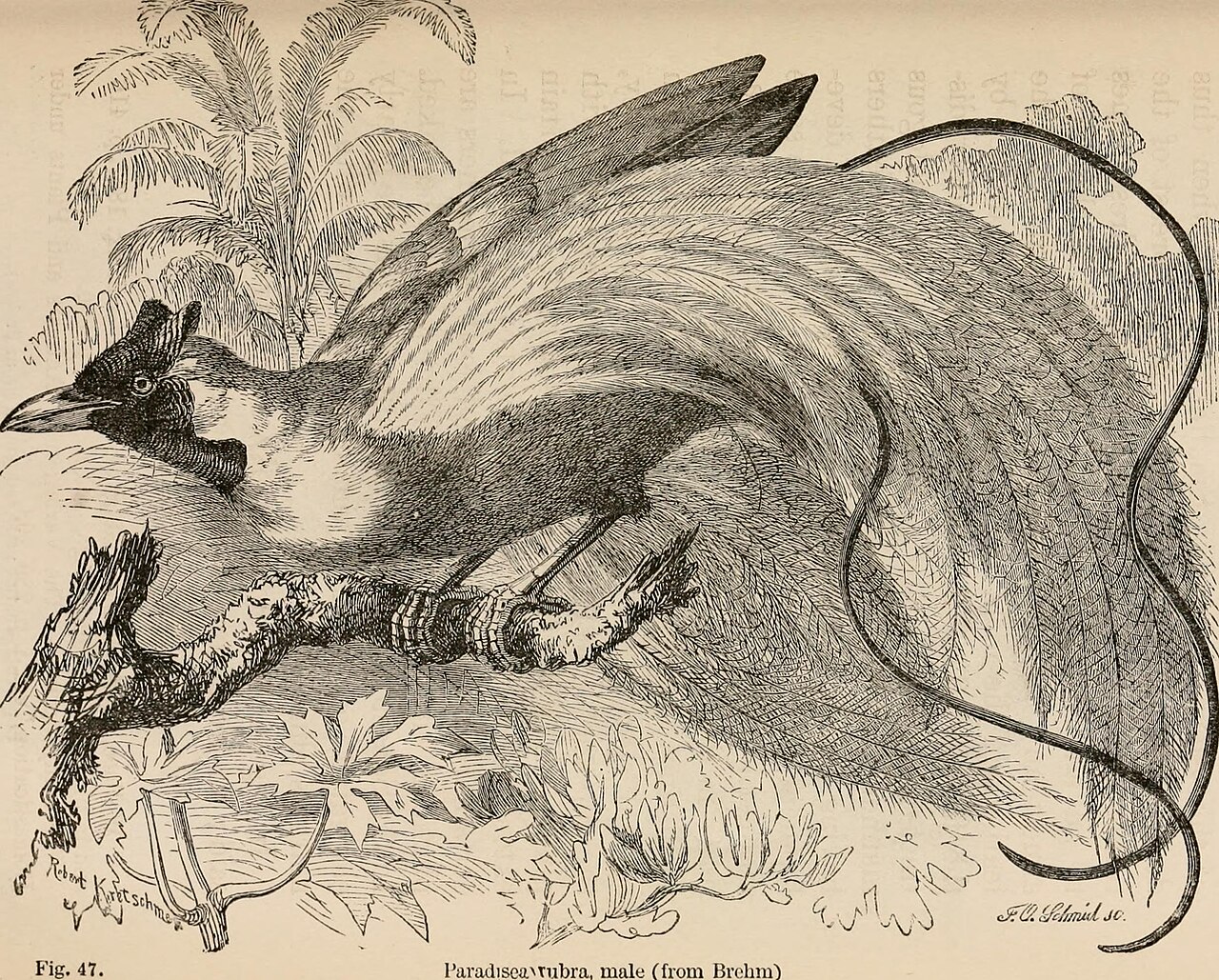
_(14783084495).jpg)
Fisherian runaway selection
The first formal genetic model of mate choice was proposed by Ronald Fisher in 1930. Fisher argued that if females have a genetically based preference for a particular male trait (say, a longer tail), and if males with longer tails have higher mating success as a result of this preference, then a positive feedback loop is established between the preference gene and the trait gene. Females that prefer longer tails produce sons with longer tails (who enjoy high mating success) and daughters with a preference for longer tails (who mate with successful long-tailed males), creating a genetic correlation between preference and trait that can drive both to ever more extreme values in a process Fisher called runaway selection.2
The runaway process is self-reinforcing: the more extreme the female preference, the greater the mating advantage of extreme males, and the more extreme males become, the greater the advantage of preferring them. The process continues until it is checked by opposing natural selection, when the ornament becomes so costly that the survival disadvantage of bearing it outweighs the mating advantage. At equilibrium, the ornament represents a compromise between sexual selection (pushing toward elaboration) and natural selection (pushing toward reduction).2, 6
Lande formalised Fisher's verbal argument mathematically in the 1980s, showing that runaway can produce rapid, exponential coevolution of trait and preference, and that the equilibrium line along which trait-preference combinations are stable is a "line of equilibria" rather than a single point, meaning that different populations can stabilise at very different trait-preference combinations. Prum extended this analysis and argued that Fisherian runaway is the null model of sexual selection: it operates whenever there is a genetic correlation between preference and trait, without requiring any additional mechanism (such as costly signalling or good genes) to maintain the preference.17
A critical feature of Fisherian runaway is that it requires no adaptive benefit to the female beyond the production of attractive sons. The preference is arbitrary in the sense that it need not correlate with any measure of male viability or genetic quality; it is maintained solely by the mating advantage it confers on the sons of choosy females. This makes Fisherian runaway fundamentally different from good genes and handicap models, which require that the preferred trait honestly signals some aspect of male quality. The distinction has practical implications: under Fisherian runaway, different populations of the same species can evolve very different ornaments and preferences through stochastic divergence along the line of equilibria, potentially generating the rapid reproductive isolation that drives speciation.2, 17
Experimental support for Fisherian dynamics comes from Andersson's classic 1982 study of long-tailed widowbirds (Euplectes progne). By experimentally lengthening and shortening the tail feathers of territorial males, Andersson demonstrated that females strongly preferred males with artificially elongated tails, providing direct evidence for the female preference component of the runaway process.5
The handicap principle
In 1975, the Israeli biologist Amotz Zahavi proposed the handicap principle, a radically different explanation for the evolution of costly ornaments. Zahavi argued that elaborate male traits function as honest signals of genetic quality precisely because they are costly. Only males in genuinely good condition can afford to produce and maintain a large ornament without succumbing to its survival costs, so the ornament reliably advertises the bearer's underlying quality. Females that choose mates with the most elaborate ornaments thereby obtain genes for viability for their offspring.3
Zahavi's proposal was initially met with scepticism, partly because his verbal arguments were not easy to formalise mathematically. The key theoretical breakthrough came in 1990, when Alan Grafen used game theory to show that handicap signalling is evolutionarily stable when two conditions are met. First, the cost of producing the signal must be condition-dependent: the marginal cost of increasing ornament size must be higher for low-quality males than for high-quality males. Second, the benefit of the signal (increased mating success) must be sufficient to offset the cost for high-quality males but not for low-quality males. Under these conditions, an equilibrium exists in which each male honestly signals his quality by producing an ornament whose size is proportional to his condition, and females can reliably infer quality from ornament size.4
The handicap principle is sometimes called the costly signalling theory or the conditional handicap model to distinguish it from Zahavi's original, broader formulation. It predicts that sexual ornaments should be condition-dependent (brighter, larger, or more symmetric in males in better condition), that they should impose genuine survival costs, and that females that choose ornamented males should obtain indirect genetic benefits (higher-quality offspring). Empirical evidence supporting these predictions comes from studies of carotenoid-based plumage coloration in birds (where colour intensity depends on the male's nutritional and immune status), antler size in deer (which correlates with body condition and parasite load), and song complexity in birds (which correlates with territory quality and male survival).6, 19
Good genes and indicator models
The good genes hypothesis is closely related to the handicap principle but emphasises a specific prediction: that female mate choice for elaborate male traits results in offspring that are more fit (survive longer, have higher reproductive success) because they inherit genes for viability from their ornamented fathers. The model predicts a genetic correlation between male ornament expression and offspring fitness that is mediated by heritable variation in overall condition or disease resistance.6, 16
The Hamilton-Zuk hypothesis, proposed in 1982, is a specific version of the good genes model. Hamilton and Zuk argued that female mate choice in birds is directed toward males with bright, elaborate plumage because plumage condition is an honest indicator of resistance to parasites and pathogens. Brightly coloured males signal that they have genes for effective immune defence, and females choosing these males obtain parasite-resistant offspring. Read and Harvey tested this hypothesis across bird species and found a significant positive correlation between the degree of male plumage showiness and the prevalence of blood parasites, consistent with the idea that sexual selection for showy ornaments is driven by parasites: species under greater parasite pressure have evolved more elaborate male display because the signal value of ornament condition is greatest where the fitness costs of parasitism are highest.19
A persistent theoretical challenge for good genes models is the lek paradox: if females consistently choose the highest-quality males, directional selection should erode the additive genetic variance in quality that makes mate choice beneficial. If all males eventually share the same high-quality genes, there is no longer a genetic benefit to being choosy, and the preference should weaken. Several resolutions have been proposed, including mutation-selection balance (new deleterious mutations continuously replenish genetic variance in condition), genotype-by-environment interactions (the best genotype varies across environments, maintaining variance), and fluctuating parasite-host coevolution (Hamilton-Zuk dynamics maintain variance in immune genes).6, 16
Kokko and colleagues developed models integrating direct benefits (material resources provided by the mate) and indirect genetic benefits (good genes), showing that the relative importance of direct versus indirect benefits depends on ecological conditions such as the variance in male territory quality, the heritability of condition, and the cost of mate searching. In many systems, females may simultaneously gain both direct and indirect benefits from mate choice, making the sharp distinction between "good genes" and "direct benefits" models somewhat artificial.16
Sensory bias and pre-existing preferences
The sensory bias (or sensory exploitation) hypothesis proposes that female preferences for certain male traits arise not because those traits signal quality or genetic benefits, but because they exploit pre-existing biases in the female sensory system that evolved in non-mating contexts. For example, if females have evolved a heightened sensitivity to the colour orange because orange-coloured food items (such as carotenoid-rich fruits) are nutritionally valuable, males that display orange coloration may be preferred by females not because orange signals quality but because it stimulates a sensory system that evolved for foraging.6, 7
A key prediction of the sensory bias hypothesis is that the female preference should predate the male trait phylogenetically: the preference should be found in species that lack the male ornament, indicating that the preference evolved first and the male trait subsequently evolved to exploit it. Proctor tested this prediction in water mites, where males of some species produce vibrations during courtship that mimic the vibrations produced by prey. Females respond to these vibrations by approaching the male, apparently mistaking his courtship signal for a food item. Phylogenetic analysis confirmed that the female response to prey-like vibrations (the sensory bias) was ancestral, while male courtship vibrations (the exploitative signal) evolved subsequently in particular lineages.7
Endler's studies of guppies (Poecilia reticulata) provided another influential example. Male guppies display orange spots that are preferred by females, and the orange coloration of the spots closely matches the colour of carotenoid-rich food items in the guppies' environment. Endler proposed that female preference for orange males originated as a by-product of foraging preferences and was subsequently co-opted by sexual selection.13 The sensory bias hypothesis does not deny that other mechanisms (runaway, handicap, good genes) can subsequently shape the coevolution of trait and preference once the initial bias is established; rather, it addresses the question of how female preferences originate in the first place, a question that the other models largely take as given.6
Chase-away selection
Chase-away sexual selection, proposed by Holland and Rice in 1998, describes a coevolutionary dynamic in which male traits evolve to exploit female sensory biases, but unlike the benign sensory exploitation scenario, the female pays a fitness cost for responding to the male's signal. In chase-away selection, males evolve increasingly stimulating signals that manipulate females into mating against their optimal interests (for example, mating more frequently or with less-preferred partners than would be optimal for the female). Females, in turn, are selected to evolve increased resistance to the male signal, leading to an evolutionary arms race in which male signals become ever more exaggerated and female resistance ever stronger.8
The chase-away model differs from Fisherian runaway in a crucial respect. In Fisherian runaway, the female preference is maintained because choosy females produce sexy sons; both sexes benefit from the coevolution. In chase-away selection, the female preference is not beneficial; rather, the female is being manipulated by a male signal that exploits her sensory system, and she is selected to resist. The equilibrium in chase-away selection is an arms race rather than a cooperative escalation, and the resulting ornaments are maintained not by female preference but by the ongoing conflict between male exploitation and female resistance.8
Chase-away selection predicts that in at least some species, female responses to male ornaments are reluctant rather than enthusiastic, that female resistance to male signals should increase over evolutionary time, and that experimentally enhancing a male's ornament should reduce rather than increase female fitness. While these predictions are difficult to test directly, the model highlights the importance of sexual conflict as a driver of ornament evolution and challenges the assumption, implicit in Fisher and Zahavi's models, that female mate choice is always adaptive for the female.8, 6
Sperm competition and cryptic female choice
Sexual selection does not end at copulation. When females mate with multiple males, competition for fertilisation continues after mating through two post-copulatory mechanisms: sperm competition and cryptic female choice.
Sperm competition, first described by Geoff Parker in 1970, occurs when the sperm of two or more males compete to fertilise a female's eggs. Parker recognised that when females mate multiply, selection on males shifts from obtaining matings to winning the post-copulatory contest for fertilisation. This creates selection for increased sperm number (to outnumber a rival's sperm), increased sperm quality (faster, more vigorous sperm that reach the egg first), larger testes (to produce more sperm), and mechanisms for displacing or incapacitating a rival's sperm (such as the elaborate penile morphology of many insects, which functions to remove previously deposited sperm).9
Comparative evidence for sperm competition is extensive. Across primates, mammals, birds, and insects, species with higher rates of female multiple mating (polyandry) have relatively larger testes than species with lower rates, a pattern consistent with the prediction that sperm competition selects for increased sperm production.9, 11 In insects, the diversity of male genital morphology has been attributed in large part to sperm competition and the coevolutionary dynamics between male sperm removal and female sperm storage.11
Cryptic female choice refers to post-copulatory mechanisms by which females bias fertilisation toward the sperm of preferred males. These mechanisms can include selective sperm storage (retaining or ejecting sperm from particular males), differential ovulation timing, biochemical barriers in the female reproductive tract that differentially affect sperm from different males, and selective investment in offspring sired by preferred males. The term "cryptic" reflects the fact that these processes occur internally and are not directly observable from external behaviour.6, 10
Ward demonstrated cryptic female choice in the yellow dung fly (Scathophaga stercoraria), showing that females exert control over which male's sperm fertilises their eggs through differential sperm storage and ejection. Females that mated with larger males retained a higher proportion of those males' sperm, even when the order and duration of copulation were controlled. This finding demonstrated that female post-copulatory mechanisms can bias paternity independently of pre-copulatory mate choice, adding a hidden dimension to sexual selection that operates after mating has occurred.10
Mutual mate choice and female ornaments
Most theoretical and empirical work on sexual selection has focused on female choice of male traits, reflecting the widespread pattern of greater male ornamentation and female choosiness. However, mate choice is not always unidirectional. Mutual mate choice, in which both sexes are choosy and both sexes compete for access to preferred mates, occurs in species where both sexes make substantial investments in reproduction and where the quality of available mates varies significantly within both sexes.6, 18
Bergstrom and Real modelled mutual mate choice and showed that both sexes should be choosy when mate quality varies, when mating is costly (in terms of search time or opportunity costs), and when the operational sex ratio is approximately equal. When one sex is much rarer than the other, the rarer sex can afford to be highly choosy while the commoner sex must compete for whatever mates are available, producing the classic pattern of unidirectional choosiness. As the sex ratio approaches equality, both sexes become simultaneously choosy and competitive.18
The evolution of female ornaments has received increasing attention. Tobias, Montgomerie, and Lyon reviewed the evidence and found that female ornamentation is widespread in birds, occurring in the majority of species, and that female ornaments are not simply non-functional by-products of genetic correlation with male ornaments (the "genetic constraint" hypothesis). Instead, many female ornaments appear to be maintained by sexual selection (female-female competition for mates or territories), social selection (signalling dominance status), or natural selection (species recognition, predator deterrence).15 This finding challenges the traditional view that sexual selection acts primarily on males and is reshaping our understanding of how mating systems and ornament evolution interact across both sexes.
Sexual selection and speciation
Sexual selection has been proposed as a potent driver of speciation because divergence in mating signals and preferences between populations can produce reproductive isolation without requiring geographic separation or ecological divergence. If two populations evolve different male ornaments and different female preferences (through drift, local adaptation, or runaway coevolution), individuals from the two populations may refuse to mate with each other when they come into contact, effectively creating a prezygotic reproductive barrier.12
Panhuis and colleagues reviewed the evidence for sexual selection as a driver of speciation and identified three patterns consistent with the hypothesis. First, clades with stronger sexual selection (measured by sexual dichromatism, ornament elaboration, or mating system polygyny) tend to be more species-rich than closely related clades with weaker sexual selection, consistent with higher speciation rates. Second, closely related species often differ primarily in sexually selected traits (song, colour pattern, courtship display) rather than in ecologically relevant traits, suggesting that divergence in mating signals was the initial step toward reproductive isolation. Third, experimental studies of mate choice in species pairs such as Drosophila, cichlid fish, and Hawaiian crickets have demonstrated that females from one population strongly prefer males from their own population over males from the other, indicating that sexual selection can generate the behavioural isolation that is the first step toward speciation.12, 14
However, the relationship between sexual selection and speciation is not straightforward. Ritchie noted that while sexual selection can promote divergence between populations, it can also constrain divergence if stabilising sexual selection on a shared signalling system prevents the populations from diverging in mating traits. Furthermore, the higher speciation rates observed in sexually selected clades may be offset by higher extinction rates (because the costs of elaborate ornaments may increase extinction risk in changing environments), producing no net increase in species diversity.14 The relative importance of sexual selection in driving speciation compared to other mechanisms such as ecological divergence, geographic isolation, and polyploidy remains an active area of investigation in evolutionary biology.
Synthesis and ongoing questions
The mechanisms of sexual selection are not mutually exclusive, and in most real mating systems, multiple mechanisms likely operate simultaneously. A male bird's elaborate plumage may be partly a product of Fisherian runaway (maintained by a self-reinforcing genetic correlation between trait and preference), partly an honest signal of condition (consistent with the handicap principle), and partly an exploitation of pre-existing sensory biases (sensory exploitation). Distinguishing among these mechanisms empirically requires careful experimental manipulation of traits and preferences, phylogenetic reconstruction of the order in which traits and preferences evolved, and quantitative genetic analysis of the correlations among preference, trait, and fitness components.6, 17
Current research is integrating these classical models with newer perspectives on sexual conflict, post-copulatory selection, and the genomic basis of mating preferences and ornament production. Genomic studies are beginning to identify the specific genes underlying sexually selected traits, from plumage coloration genes in birds to pheromone receptor genes in insects, providing a molecular basis for the coevolutionary dynamics predicted by theory. Studies of sexual selection in wild populations, using long-term data on individual fitness, paternity, and mate choice, are providing increasingly rigorous tests of whether mate choice yields the indirect genetic benefits predicted by good genes models or whether the patterns are better explained by direct benefits, sensory exploitation, or stochastic processes.6, 16
Sexual selection remains one of the most dynamic and productive areas of evolutionary biology. From Darwin's initial recognition that mate choice could explain the extravagant ornaments and bizarre courtship displays found across the animal kingdom, the field has developed a sophisticated theoretical framework encompassing runaway processes, honest signalling, sensory exploitation, sexual conflict, and post-copulatory competition. The ongoing synthesis of these perspectives promises a more complete understanding of how mating interactions shape the evolution of phenotypic diversity, behavioural complexity, and the origin of new species.12
References
Sensory exploitation and the evolution of male mating behaviour: a cladistic test using water mites