Overview
- Multilevel selection theory holds that natural selection can operate simultaneously at multiple levels of biological organization — genes, individuals, kin groups, and populations — with the relative importance of each level depending on the strength of between-group versus within-group selection.
- The Price equation provides a mathematical framework for partitioning evolutionary change into within-group and between-group components, resolving decades of debate by showing that group selection and individual selection are not mutually exclusive but complementary descriptions of the same underlying process.
- Major evolutionary transitions, such as the origins of chromosomes, eukaryotic cells, and multicellular organisms, represent cases where formerly independent entities became integrated into higher-level units, suppressing lower-level conflict and enabling group-level adaptation.
Multilevel selection theory is a framework in evolutionary biology that recognizes natural selection as capable of operating simultaneously at multiple levels of biological organization, from genes and individual organisms to kin groups, populations, and even entire species.8, 12 The question of whether and how selection acts above the level of the individual organism has been one of the most contentious debates in the history of evolutionary thought, generating sharp disagreements among some of the field's most prominent figures. The modern consensus, formalized through the Price equation and supported by both theoretical models and experimental evidence, holds that selection at multiple levels is not only possible but has been a driving force behind some of the most significant transitions in the history of life.5, 9
The rise and fall of naive group selection
The idea that natural selection might favor traits that benefit the group rather than the individual has a long informal history, but it was given its most explicit formulation by the British ecologist V. C. Wynne-Edwards in his 1962 book Animal Dispersion in Relation to Social Behaviour. Wynne-Edwards argued that many animal populations regulate their own numbers through voluntary restraint in reproduction, a form of self-sacrifice that prevents overexploitation of resources and benefits the group as a whole.1 He interpreted diverse phenomena — territorial behavior, dominance hierarchies, communal roosting displays — as mechanisms by which populations collectively assessed their density and adjusted their reproductive output accordingly. Under this view, groups whose members exercised reproductive restraint would persist, while groups of unrestrained breeders would deplete their resources and go extinct.1
The reaction from the evolutionary biology community was swift and largely negative. In 1966, the American evolutionary biologist George C. Williams published Adaptation and Natural Selection, a rigorous critique that became one of the most influential books in twentieth-century evolutionary thought.2 Williams argued that Wynne-Edwards' group selection hypothesis was unnecessary and almost certainly wrong because it required conditions that were biologically implausible. The central problem was the free-rider dilemma: within any group of self-restraining individuals, a mutant that reproduced without restraint would leave more offspring, and its selfish alleles would spread within the group faster than group-level selection could eliminate them.2 Williams insisted that evolutionary biologists should invoke selection at the lowest level sufficient to explain the observed adaptation, and that virtually all apparent group-level adaptations could be explained more parsimoniously as products of individual-level or gene-level selection.2, 14
John Maynard Smith reinforced Williams' critique with formal mathematical models showing that the conditions required for group selection to override individual selection were extremely restrictive: groups had to be small, migration between groups had to be low, and the differential extinction rate of groups had to be high relative to the generation time of individuals within them.14 By the early 1970s, naive group selectionism of the Wynne-Edwards variety was widely regarded as discredited, and the dominant paradigm in evolutionary biology shifted firmly toward the gene-centered view, later popularized by Richard Dawkins' 1976 book The Selfish Gene.7
Kin selection and Hamilton's rule
While Williams and Maynard Smith were dismantling naive group selection, W. D. Hamilton was developing an alternative framework that explained apparent altruism without invoking group benefit.
.jpg)
.jpg)
In two landmark papers published in 1964, Hamilton introduced the concept of inclusive fitness, which measures an organism's evolutionary success not solely by the number of its own offspring but by the total number of copies of its alleles that are passed to the next generation, including those transmitted through the reproduction of relatives who share those alleles by common descent.3, 4
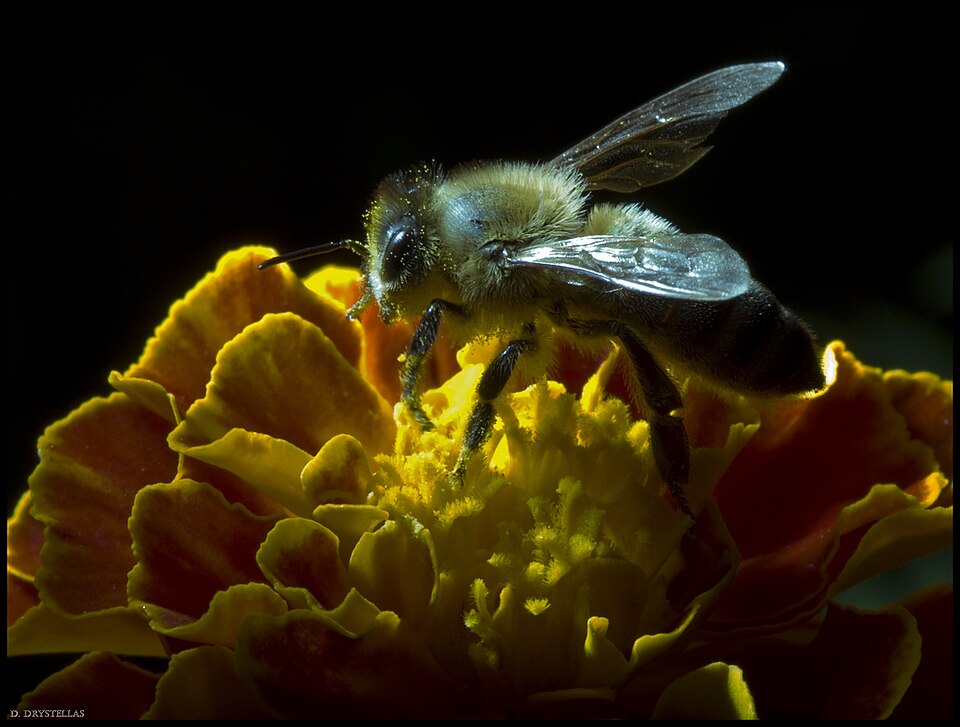
Hamilton derived a deceptively simple inequality, now known as Hamilton's rule, which states that an altruistic behavior will be favored by selection when rB > C, where r is the coefficient of relatedness between the actor and the recipient, B is the reproductive benefit conferred on the recipient, and C is the reproductive cost borne by the actor.3 When rB exceeds C, the gene underlying the altruistic behavior increases in frequency because the indirect fitness gain through relatives more than compensates for the direct fitness cost to the altruist. Hamilton's rule elegantly explained the evolution of sterile worker castes in social insects such as ants, bees, and wasps, where the haplodiploid sex-determination system produces sisters that are related to one another by r = 0.75 — more closely related than a mother is to her own daughters (r = 0.5) — creating a genetic predisposition for workers to raise sisters rather than produce their own offspring.3, 4
Kin selection became the dominant framework for explaining cooperation and altruism in biology for decades. However, as Samir Okasha and others later emphasized, kin selection and multilevel selection are not competing theories but rather different mathematical descriptions of the same evolutionary dynamics, as demonstrated through the Price equation.12, 21
The Price equation and partitioning selection
The mathematical tool that ultimately reconciled the levels-of-selection debate was developed by George R. Price, an American population geneticist working in London. In 1970, Price published a brief but profound paper in Nature presenting what is now called the Price equation, a completely general description of evolutionary change that makes no assumptions about the mechanism of inheritance, the nature of the entities under selection, or the level at which selection operates.5
The Price equation expresses the change in the average value of any trait in a population between two time points as the sum of two terms: the covariance between fitness and trait value (representing the direct action of selection), and the expected value of the transmission bias (representing any systematic change in trait value during transmission from parent to offspring, including mutation and recombination).5, 19 In its simplest form, the equation is written as:
w̄Δz̄ = Cov(w, z) + E(wΔz)
where w is fitness, z is the trait value, bars denote population means, and Δ denotes change between generations.5 The power of the Price equation lies in its recursive applicability. Because the equation is entirely general, it can be applied at any level of a nested hierarchy. When a population is subdivided into groups, the total covariance between fitness and trait value can be decomposed into a between-group component and a within-group component using the law of total covariance.19, 21 The between-group covariance captures the effect of differential group productivity — groups with a higher average frequency of the trait contributing more individuals to the next generation — while the within-group covariance captures the effect of individual-level selection within each group.21
This decomposition made it mathematically precise to say that group selection and individual selection operate simultaneously, with the direction of net evolutionary change determined by their relative magnitudes. If between-group selection favoring altruism is stronger than within-group selection favoring selfishness, the altruistic trait can increase in frequency across the total population even though it is disfavored within every single group.8, 21 Steven Frank demonstrated that Hamilton's rule can be derived directly from the Price equation, confirming the mathematical equivalence of kin selection and multilevel selection as alternative decompositions of the same quantity.21
Multilevel selection theory
Beginning in the 1970s, the biologist David Sloan Wilson revived group selection in a more rigorous form that differed fundamentally from Wynne-Edwards' earlier proposals. In a 1975 paper in the Proceedings of the National Academy of Sciences, Wilson presented a structured population model demonstrating that altruistic traits could evolve under biologically realistic conditions when populations were subdivided into temporary groups that formed, interacted, and dissolved within each generation.6 Unlike Wynne-Edwards' model, which required stable, reproductively isolated groups persisting over many generations, Wilson's trait-group model showed that even transient associations among individuals — such as groups that form to forage, mate, or avoid predators — could generate the between-group variance needed for group selection to operate.6
Wilson, together with the philosopher Elliott Sober, elaborated this framework in a series of influential publications through the 1990s, culminating in their 1998 book Unto Others.10 They argued that the rejection of group selection following Williams' critique had been an overcorrection. The real question was not whether group selection could occur — the Price equation proved it could — but how often ecological and demographic conditions in nature generated sufficient between-group variance to make group selection a significant evolutionary force.8, 10 Wilson and Sober proposed that multilevel selection theory (often abbreviated MLS) should replace both naive group selectionism and the gene-centered view as the most general framework for understanding adaptation, because it explicitly tracked the relative contributions of selection at each level rather than privileging one level a priori.8
The philosopher Samir Okasha provided a further conceptual clarification by distinguishing between two types of multilevel selection. In MLS1, the fitness of a group is defined as the average fitness of the individuals within it, and group selection operates by producing differential individual fitness across groups. In MLS2, the group itself is the focal unit of selection, with group fitness defined as the number of offspring groups it produces, independent of the fitness of its constituent individuals.12 MLS1 applies to cases like the evolution of altruism in temporarily structured populations, while MLS2 applies to cases like the differential proliferation of whole colonies or species — a distinction that resolved much of the confusion in the earlier literature.11, 12
Experimental evidence
The theoretical plausibility of multilevel selection has been supported by direct experimental evidence. Charles Goodnight conducted a landmark series of experiments using the flour beetle Tribolium castaneum, in which he applied artificial selection at the group level by allowing only the most productive groups to found the next generation of groups. Goodnight found that group selection was effective at shifting population-level traits, including traits that were not heritable at the individual level but exhibited significant heritable variation among groups.16 In further experiments, Goodnight and Stevens demonstrated that group selection could produce evolutionary responses at multiple trophic levels simultaneously, with the outcome depending on the interaction between within-group and between-group components of selection.15
.jpg)
These experiments were significant because they demonstrated under controlled conditions exactly what the Price equation predicted: that the partitioning of selection into within-group and between-group components was not merely a mathematical abstraction but corresponded to real, measurable evolutionary forces that could be manipulated independently.15, 16 The flour beetle results also showed that group selection could be effective even with relatively modest numbers of groups and moderate migration rates, challenging the earlier consensus that group selection required implausibly restrictive conditions.16
Effectiveness of selection at different levels in Tribolium experiments15, 16
Major transitions in evolution
Perhaps the most compelling evidence that selection can operate at levels above the individual comes from the history of life itself. In their 1995 book The Major Transitions in Evolution, John Maynard Smith and Eörs Szathmáry identified a series of transformative events in which formerly independent biological entities became integrated into higher-level units of organization, creating new levels at which selection could operate.9 These major transitions include the origin of chromosomes from independently replicating genes, the origin of eukaryotic cells from symbiotic associations of prokaryotes, the origin of sexual reproduction, the evolution of multicellular organisms from unicellular ancestors, and the emergence of eusocial colonies in which reproduction is monopolized by a small number of individuals.9

Each major transition shares a common pattern: entities that previously reproduced independently became parts of a larger whole that now reproduces as a unit. In every case, the transition required mechanisms to suppress competition among the lower-level entities — what is sometimes called the problem of lower-level conflict.9, 12 In multicellular organisms, for example, the potential for cells to defect from cooperation and proliferate selfishly (cancer) is suppressed by mechanisms such as apoptosis, immune surveillance, and germ-soma separation. In eusocial insect colonies, reproductive conflict among workers is suppressed by policing behaviors in which workers destroy eggs laid by other workers rather than by the queen.9
The major transitions framework illustrates that the levels of selection are not fixed features of the biological world but have themselves evolved. What counts as an "individual" at one stage of evolutionary history becomes a "group" or a "component" at the next. Multicellular organisms are groups of cells; eukaryotic cells are groups of formerly free-living prokaryotes; chromosomes are groups of genes.9, 12 At each transition, the evolution of mechanisms to suppress within-group conflict shifted the balance of selection from the lower level to the higher level, enabling the new collective to become a unit of selection in its own right.12
Cultural group selection
The multilevel selection framework has been extended beyond genetic evolution to explain patterns of cooperation in human societies. The theory of cultural group selection, developed primarily by Robert Boyd, Peter Richerson, and their collaborators, proposes that human cultural norms and institutions — transmitted through social learning rather than genetic inheritance — are subject to selection among groups, and that this process has been a major force shaping human prosociality, morality, and large-scale cooperation.17, 18
The argument rests on several observations. First, human populations exhibit substantial cultural variation between groups, maintained by mechanisms such as conformist transmission (the tendency to adopt the most common behavior in one's group) and norm enforcement through punishment of deviants.18 These mechanisms reduce within-group variation and maintain between-group variation, creating exactly the conditions that the Price equation identifies as favorable for group-level selection. Second, human groups with norms that promote cooperation — such as food sharing, collective defense, and punishment of free-riders — tend to outcompete groups whose norms are less cooperative, through mechanisms including warfare, differential group persistence, and the preferential migration of individuals into more successful groups.17
Boyd, Gintis, Bowles, and Richerson showed through mathematical models that altruistic punishment — the costly punishment of non-cooperators by group members — can evolve through cultural group selection even when it cannot evolve through individual-level selection alone, because groups with punishers maintain higher levels of cooperation and outcompete groups without punishers.18 Richerson and colleagues marshaled cross-cultural and archaeological evidence suggesting that cultural group selection has been operating in human populations for at least the last 70,000 years, intensifying after the development of agriculture and the emergence of large-scale societies with codified laws, religious institutions, and organized warfare.17
Contemporary debates and scientific consensus
The status of multilevel selection within evolutionary biology remains a subject of ongoing discussion, though the nature of the debate has shifted considerably since the mid-twentieth century. The mathematical equivalence of kin selection and multilevel selection, demonstrated through the Price equation, is now broadly accepted: the two frameworks are alternative accounting methods that partition the same evolutionary change in different ways, and neither is more fundamental than the other.12, 21 The substantive empirical question is not whether group selection can occur — it can, by mathematical necessity whenever populations are structured — but how often ecological conditions in nature generate sufficient between-group variation to make it a quantitatively important force relative to within-group selection.11
A high-profile controversy erupted in 2010 when Martin Nowak, Corina Tarnita, and E. O. Wilson published a paper in Nature arguing that inclusive fitness theory was limited in scope and that standard natural selection models operating on groups provided a more general explanation for the evolution of eusociality.13 The paper provoked an immediate and forceful response: over 130 evolutionary biologists signed a reply arguing that Nowak, Tarnita, and Wilson had mischaracterized inclusive fitness theory and that their alternative framework offered no new predictive power.13 E. O. Wilson elaborated his position in The Social Conquest of Earth (2012), arguing that group selection had been the primary force shaping the evolution of human sociality, and that the gene-centered view of Dawkins and Hamilton was insufficient to explain the full range of social phenomena observed in humans and other eusocial species.20
The current scientific consensus can be summarized as follows. First, the levels-of-selection question is empirical, not purely theoretical: for any particular trait in any particular population, the relative contributions of within-group and between-group selection must be measured rather than assumed.11, 12 Second, the major transitions in evolution provide unambiguous evidence that group-level selection has been a transformative force at critical junctures in the history of life, even if it is not the dominant force in most everyday evolutionary dynamics.9 Third, in human evolution specifically, cultural group selection has likely played a significant role in shaping the unusual degree of large-scale cooperation, norm-following, and institutional complexity that characterizes Homo sapiens.17, 18 The multilevel selection framework, grounded in the Price equation and tested through both laboratory experiments and comparative analyses, provides the most general and mathematically rigorous approach to understanding how natural selection operates across the full hierarchy of biological organization.8, 12, 21
References
Cultural group selection plays an essential role in explaining human cooperation: A sketch of the evidence