Overview
- Niche construction is the process by which organisms modify their own selective environments through their metabolism, activities, and choices, thereby altering the selection pressures that act on themselves, their descendants, and other species — examples include beaver dams, earthworm soil modification, and spider web construction.
- The theoretical framework developed by Odling-Smee, Laland, and Feldman treats niche construction as an evolutionary process in its own right, operating alongside natural selection, generating ecological inheritance (modified environments transmitted across generations) that is conceptually distinct from genetic inheritance.
- Cultural niche construction in humans — including agriculture, cooking, shelter building, and institutional design — represents the most extreme case, creating novel selection pressures that have driven genetic adaptations such as adult lactase persistence and amylase gene copy-number expansion, illustrating the reciprocal causation between organisms and their environments.
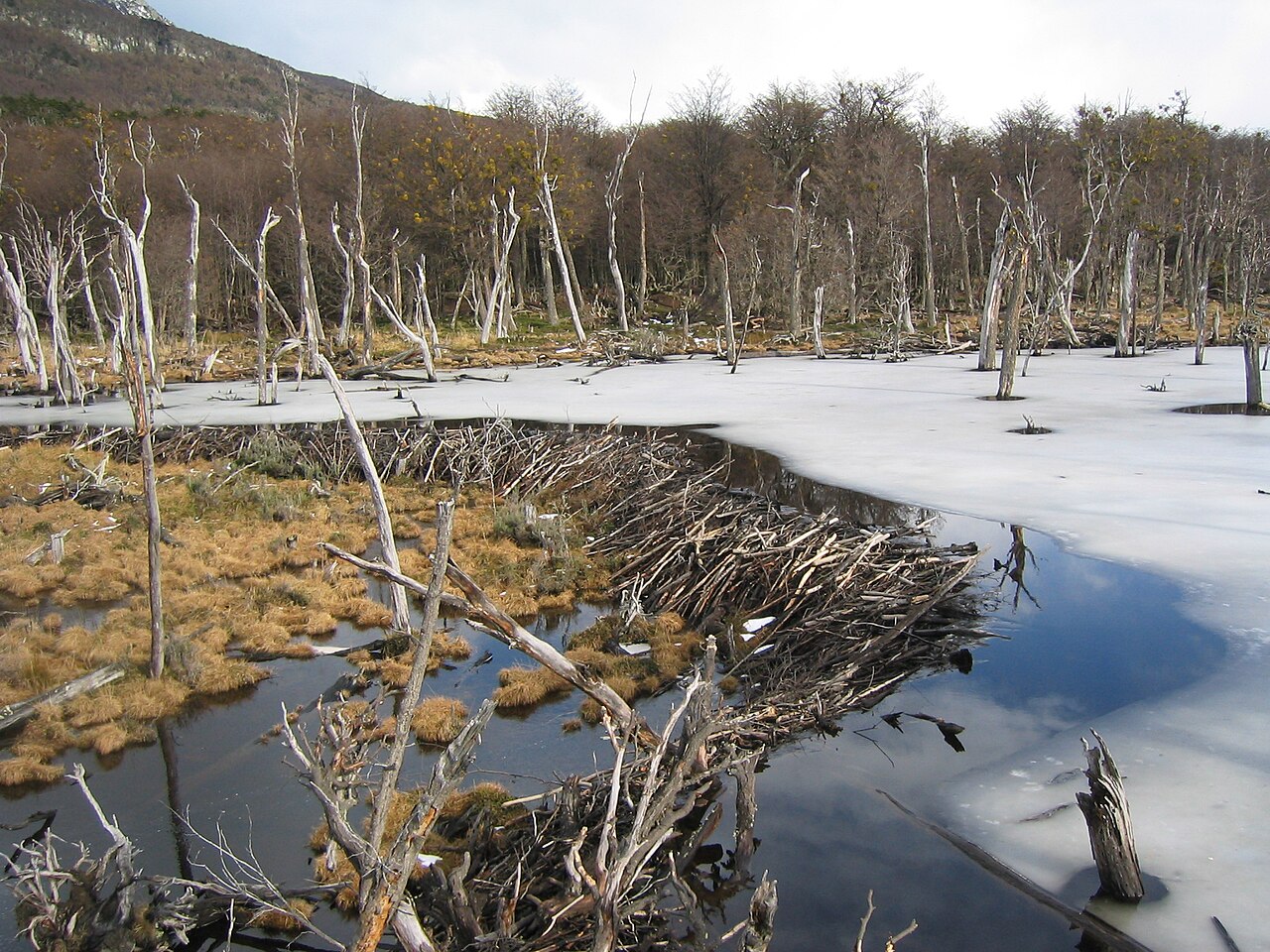
Niche construction is the process by which organisms, through their metabolism, activities, and choices, modify their own selective environments and the selective environments of other species. Beavers build dams that create ponds, transforming terrestrial habitats into aquatic ones. Earthworms rework soil chemistry and structure, altering drainage, aeration, and nutrient availability for plant communities. Spiders construct webs that extend their sensory and predatory capabilities far beyond their own bodies. In each case, the organism is not merely a passive recipient of selection pressures imposed by an external environment but an active agent in shaping the conditions under which [natural selection](/evolution/natural-selection) operates.1, 4 The niche construction perspective, formalised by Odling-Smee, Laland, and Feldman, argues that this process deserves recognition as an evolutionary cause in its own right — a source of modified selection pressures and ecological inheritance that operates alongside, and in interaction with, genetic inheritance.1, 5

Theoretical framework
The foundational treatment of niche construction as an evolutionary process was presented by Odling-Smee, Laland, and Feldman in their 2003 monograph Niche Construction: The Neglected Process in Evolution. They argued that standard evolutionary theory treats the environment as an independent variable that imposes selection pressures on populations, to which organisms then adapt through genetic change. Niche construction introduces a second pathway: organisms also modify their environments, and these modifications can persist across generations, creating altered selection pressures that feed back to influence the subsequent evolution of the population. The result is a system of reciprocal causation in which organisms both respond to and construct the conditions of their own evolution.1
Formally, Odling-Smee and colleagues incorporated niche construction into population-genetic models by adding a second inheritance system. In their framework, organisms transmit not only genes to their offspring but also modified environments — what they termed ecological inheritance. A beaver kit inherits not only its parents' genes but also the dam, the pond, and the altered landscape that its parents and ancestors constructed. This ecological inheritance is not coded in DNA but is transmitted through the persistence of environmental modifications, and it can influence the selective regime experienced by descendants just as powerfully as genetic inheritance influences their phenotypes.1, 8
Their mathematical models demonstrated that niche construction can qualitatively alter evolutionary outcomes. Depending on the relative rates of environmental modification and genetic change, niche construction can accelerate adaptation, slow it, stabilise populations at different equilibria than would be predicted by models without niche construction, or even drive evolutionary change in the absence of external environmental perturbation. These effects arise because niche construction introduces a time lag between environmental modification and its selective consequences, creating feedback dynamics that are absent from standard models of selection in fixed environments.1, 5
Ecosystem engineering
The concept of niche construction is closely related to, but distinct from, the ecological concept of ecosystem engineering, introduced by Jones, Lawton, and Shachak in 1994. Ecosystem engineers are organisms that create, modify, or maintain habitats, thereby influencing the availability of resources for other species. Jones and colleagues distinguished between autogenic engineers, which modify the environment through their own physical structures (trees creating canopy shade, coral building reefs), and allogenic engineers, which transform materials from one physical state to another (beavers felling trees and damming streams, woodpeckers excavating nest cavities).4
The beaver (Castor canadensis and C. fiber) is the paradigmatic allogenic ecosystem engineer. Beaver dams impound streams, creating ponds that can persist for decades and transform local hydrology, sedimentation, nutrient cycling, and community composition across entire watersheds. Naiman and colleagues documented that beaver engineering increases the total area of wetland habitat, raises water tables, traps sediment and organic matter, and creates a mosaic of aquatic, riparian, and terrestrial habitats that supports far greater biodiversity than the undammed stream would.12 From the niche construction perspective, these modifications are evolutionarily significant because they alter the selection pressures experienced not only by the beavers themselves (which benefit from the aquatic habitat they create) but also by the many species that colonise beaver-modified landscapes.
Earthworms provide another foundational example, one recognised by Darwin himself in his final book, The Formation of Vegetable Mould through the Action of Worms (1881). By consuming organic matter and mineral soil, excreting nutrient-rich casts, and creating extensive burrow networks, earthworms fundamentally alter soil structure, chemistry, and hydrology. Turner noted that earthworm activity creates a form of ecological inheritance: the modified soil persists long after individual worms die, shaping the selective environment for subsequent generations of worms and for the plant communities that depend on the soil.13
Relationship to the extended phenotype
Niche construction shares conceptual territory with Richard Dawkins's concept of the extended phenotype, articulated in his 1982 book of that title. Dawkins argued that the phenotypic effects of a gene should not be restricted to the body of the organism carrying the gene but should include all effects of the gene on the world, including artefacts such as bird nests, spider webs, and beaver dams. A gene in a beaver that influences dam-building behaviour has a phenotypic effect that extends far beyond the beaver's body into the surrounding landscape.2
While both frameworks recognise that organisms modify their environments, they differ in emphasis and interpretation. Dawkins's extended phenotype is gene-centred: it extends the reach of gene-level selection to encompass environmental modifications, treating them as phenotypic expressions of genes that can be analysed using standard neo-Darwinian logic. Niche construction theory, by contrast, emphasises the evolutionary consequences of environmental modification — the altered selection pressures and ecological inheritance that flow from it — and argues that these consequences represent a distinct causal process that cannot be fully captured by gene-centred models alone.1, 6
Critics of the niche construction perspective, including Scott-Phillips and colleagues, have argued that it adds conceptual complexity without generating new predictions beyond those already derivable from standard evolutionary theory with appropriate environmental feedback. They contend that standard models of frequency-dependent selection and gene-environment interaction can accommodate niche construction effects without treating them as a separate evolutionary process.6 Proponents respond that while any individual case of niche construction can be modelled using conventional tools, the systematic recognition of organisms as co-directors of their own evolution changes how biologists frame questions, design studies, and interpret patterns in nature — a perspective shift whose value lies in the research programme it motivates rather than in any single prediction it generates.1, 16
Cultural niche construction in humans
Human cultural niche construction represents the most extreme expression of the niche construction process. Through technology, agriculture, architecture, and social institutions, humans have modified their selective environments on a scale and at a pace unmatched by any other species. These cultural modifications have in turn driven genetic adaptations, creating a feedback loop between cultural and genetic evolution that Richerson, Boyd, and Henrich have termed gene-culture coevolution.9, 15
The evolution of adult lactase persistence provides a well-documented example. In most mammals, the enzyme lactase, which digests the milk sugar lactose, is downregulated after weaning. In several human populations with a long history of dairying — particularly in northern Europe, East Africa, and parts of the Middle East — genetic variants that maintain lactase production into adulthood have risen to high frequency. The cultural practice of dairying (a form of niche construction) created a novel selection pressure favouring individuals who could digest fresh milk, and the resulting genetic adaptation (lactase persistence alleles) then reinforced the cultural practice by making dairy a more valuable food resource. Ingram and colleagues' global analysis confirmed that lactase persistence genotypes are strongly correlated with histories of pastoralism, providing direct evidence of culturally driven genetic evolution.11
A parallel example involves the amylase gene (AMY1). Perry and colleagues showed that human populations with diets historically high in starch — resulting from the cultural innovation of agriculture and cooking — carry significantly more copies of the salivary amylase gene than populations with traditionally low-starch diets. The additional gene copies produce more amylase enzyme, enhancing starch digestion. Here again, a culturally constructed dietary niche (cooking and agriculture making starch a dietary staple) imposed selection for a genetic adaptation (increased AMY1 copy number) that in turn made the cultural practice more nutritionally profitable.10
Evolutionary implications
Niche construction has been invoked as a contributing factor in several major evolutionary patterns and transitions. Erwin argued that niche construction may have played an important role in the Cambrian explosion of animal body plans: as early animals began to burrow, build tubes, and create biogenic structures, they modified marine sediments and water chemistry in ways that opened new ecological opportunities for further diversification, creating a positive feedback loop between organismal complexity and environmental complexity.7
The concept also bears on the evolution of [symbiosis and mutualism](/evolution/symbiosis-and-mutualism). Many mutualistic relationships can be understood as reciprocal niche construction, in which each partner modifies the environment in ways that benefit the other. Mycorrhizal fungi modify soil chemistry to enhance nutrient uptake by plants, while plants provide carbohydrates that fuel fungal growth; each partner constructs a niche that sustains the other, and the relationship is maintained by the mutual dependence created through these reciprocal modifications.1
Bateson emphasised that niche construction through behavioural choice can accelerate [coevolution](/evolution/coevolution) by exposing populations to novel selection pressures before genetic change occurs. When organisms choose new habitats, adopt new food sources, or develop new social structures, they immediately alter the selective regime acting on themselves and their descendants, potentially initiating evolutionary cascades that would not have occurred without the behavioural innovation. This mechanism provides a non-Lamarckian route by which organismal agency — the capacity to make choices that affect one's own selective environment — can influence the direction of evolutionary change.14
Whether niche construction constitutes a genuinely new element that necessitates an extended evolutionary synthesis, as Laland and colleagues have argued, or whether it is adequately accommodated within the existing theoretical framework, remains a matter of active debate in evolutionary biology.3, 6, 16 What is not in dispute is that organisms routinely and substantially modify their own selective environments, that these modifications can persist across generations as a form of ecological inheritance, and that the resulting feedback between organism and environment is a pervasive feature of the evolutionary process. The niche construction perspective has drawn productive attention to these dynamics and stimulated empirical research programmes that continue to enrich understanding of [how evolution works](/evolution/mechanisms-of-evolution).1, 8