Overview
- Speciation — the formation of new, reproductively isolated species — has been directly observed dozens of times in the wild and in the laboratory, through mechanisms including polyploidy, host-race formation, chromosomal rearrangement, and selection-driven behavioral isolation.
- Some of the clearest cases involve plants: the allopolyploid species Tragopogon mirus and T. miscellus arose in Washington State within decades of their parental species being introduced, and Mimulus peregrinus was documented forming a new reproductively isolated species in a single generation.
- The creationist claim that “we’ve never seen a new species form” is straightforwardly false; the more honest objection is that observed speciations are microevolutionary events, a distinction evolution does not require to be sharp.
Among the most common objections to evolutionary biology advanced by creationists is the assertion that speciation has never been observed — that scientists have documented only variation within kinds but never the emergence of a genuinely new species. This claim is empirically false. Biologists have documented speciation occurring in real time and within recorded history across plants, insects, birds, reptiles, and mammals, through a variety of mechanisms. These cases range from the dramatic and nearly instantaneous, as in plant allopolyploidy, to the gradual and ongoing, as in host-race formation and chromosomal divergence. Taken together, they form a body of direct observational evidence that speciation is not a theoretical inference but a repeatedly observed biological event.1, 12, 13

The cases described in this article are not exhaustive. They represent a curated cross-section chosen to illustrate different speciation mechanisms and ecological contexts. Polyploid speciation events in plants alone number in the hundreds; laboratory speciation experiments have been conducted across multiple genera; and ongoing fieldwork continues to document populations in the act of diverging. The honesty the evidence demands is this: speciation has been seen, and the mechanisms responsible are well understood.1, 4
Polyploid speciation in Tragopogon
The clearest and most incontestable examples of observed speciation come from allopolyploidy — a process in which hybridization between two species is followed by chromosome doubling, producing a new organism that is reproductively isolated from both parents because crosses with either parent yield offspring with an unbalanced chromosome count incapable of completing meiosis correctly. The goatsbeard genus Tragopogon provides a textbook case. Three European species — T. dubius, T. porrifolius, and T. pratensis — were introduced to the Palouse region of Washington State and Idaho in the early twentieth century. By the 1950s, botanist Marion Ownbey had documented two new tetraploid species, T. mirus and T. miscellus, each the product of hybridization between two of the introduced parental species followed by spontaneous polyploidy. Crucially, Ownbey knew when the parental species had arrived, giving an upper bound of several decades for the speciation events he was describing.1
Subsequent work by Douglas and Pamela Soltis and their colleagues confirmed Ownbey’s interpretation and added molecular precision to it. Genetic analyses demonstrated that T. mirus and T. miscellus had each originated independently on multiple occasions in different localities — polyploidy had happened not once but repeatedly, in parallel, across the same landscape within the same century.2, 3 Each origin event produced a new lineage reproductively isolated from its progenitors. The new species exhibited transgressive phenotypes relative to their parents, and cytogenetic analysis confirmed the expected doubled chromosome complement. This is not speciation inferred from indirect evidence: it is speciation with a known date of first opportunity, confirmed genetic parentage, documented multiple independent origins, and demonstrated reproductive isolation from the ancestral species.19
Mimulus peregrinus and single-generation speciation
If the Tragopogon cases established that allopolyploid speciation could happen within decades, the discovery of Mimulus peregrinus in Scotland compressed that timescale to a single generation. The monkey-flower genus Mimulus has been the subject of intensive speciation research for decades, and the introduction of M. guttatus from North America to the British Isles in the nineteenth century created the conditions for an unplanned natural experiment. In 2012, Mario Vallejo-Marin described M. peregrinus as a new species from riparian populations in Scotland, identifying it as an allohexaploid derived from the tetraploid hybrid M. × robertsii (itself a cross between M. guttatus and M. luteus) through an additional round of polyploidy.12
Mimulus peregrinus is distinct from both its parents in morphology, chromosome number, and reproductive behavior. Its flowers are self-fertile under conditions where the parental hybrid is nearly sterile, conferring a strong immediate advantage by allowing it to set seed without a mate. Crossing experiments confirmed substantial reproductive isolation from the parental species: hybrids with M. × robertsii showed markedly reduced fertility, exactly the barrier that delimits species under the biological species concept. Because the parental hybrid is itself a relatively recent introduction to the British flora, the formation of M. peregrinus is constrained to the period since the nineteenth century, making this one of the most recently documented natural polyploid speciation events ever described.12
The apple maggot fly: sympatric host-race formation
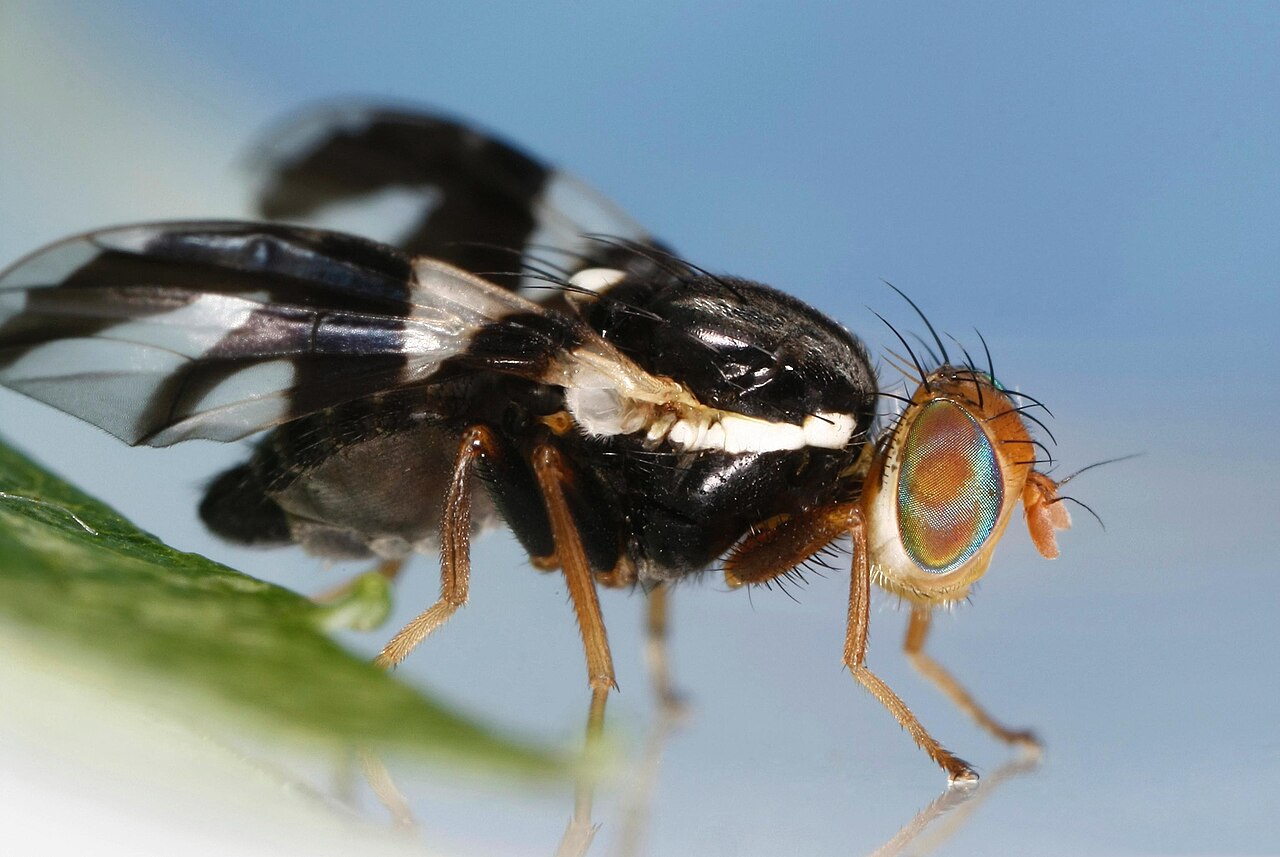
Not all observed speciation is as instantaneous as polyploidy. Rhagoletis pomonella, the apple maggot fly, is the canonical example of sympatric speciation in progress — the splitting of a lineage into two incipient species without geographic separation, driven instead by divergent natural selection on host plant preference. The fly’s native host in North America is the hawthorn (Crataegus), but around 1850, populations began colonizing domesticated apple trees (Malus domestica), an introduced species from Europe. Within roughly 150 years — a blink by geological standards — the apple-feeding and hawthorn-feeding populations had diverged sufficiently to be recognized as distinct host races with measurable genetic differentiation, different seasonal timing, and partial reproductive isolation.5
The genetic signature of this divergence is striking. The two host races differ at multiple loci associated with host recognition, larval survival on each fruit type, and adult emergence timing — the apple trees fruit earlier than hawthorns, so apple-race flies emerge earlier, and this phenological shift reduces interbreeding between races because mating occurs on the host fruit.4, 6 Laboratory experiments confirmed that apple-race larvae survive significantly better on apple tissue than hawthorn-race larvae, and vice versa, demonstrating that selection on host preference has a measurable fitness consequence. The host races are not yet fully reproductively isolated — some gene flow continues — but they represent a population partway along the speciation continuum, and they are diverging in the direction predicted by the ecological speciation model.20 Importantly, a third host race has subsequently colonized dogwood (Cornus), suggesting that the process is ongoing and that each novel host association initiates a new round of divergence.
The London Underground mosquito
Below the streets of London, in the tunnel systems of the Underground railway, lives a mosquito population that has diverged from its above-ground relatives to a degree that constitutes, by most species concepts, a separate biological entity. Culex pipiens molestus inhabits the subterranean environment created when the Underground was built in the nineteenth century, and it differs from the surface form C. pipiens pipiens in a suite of characters: it breeds without requiring a blood meal before producing eggs (autogeny), it mates in confined spaces rather than requiring open-air swarms (stenogamy), it is active in winter while surface mosquitoes are dormant, and it feeds on mammals rather than birds.7
Genetic surveys by Katharine Byrne and Richard Nichols revealed that the Underground populations are genetically differentiated from surface populations to a degree inconsistent with recent common ancestry or ongoing gene flow, and that different tunnel lines harbor genetically distinct subpopulations that have apparently diverged from one another since colonizing different parts of the system.8 Crossing experiments showed that hybrids between surface and Underground mosquitoes have substantially reduced egg hatch rates compared to within-form crosses, indicating partial reproductive isolation.7 The minimum age of the Underground tunnels — the oldest sections date to 1863 — provides an upper bound of approximately 160 years for this divergence, making C. pipiens molestus one of the best-documented cases of urban speciation in any animal group.9
Cichlid speciation in crater lakes
The cichlid radiations of the African Great Lakes are among the most spectacular evolutionary events in the vertebrate record, but they occurred over timescales too long to observe directly. Crater lake cichlids offer a different kind of evidence: young, isolated populations that have undergone rapid speciation within geologically and historically constrained timeframes. Lake Apoyo in Nicaragua, a crater lake formed approximately 23,000 years ago, harbors two cichlid species where the lake’s isolation permits only a single ancestral colonization event. The arrow cichlid (Amphilophus citrinellus) inhabits the surrounding lakes, while the closely related and morphologically distinct Midas cichlid variant A. zaliosus is endemic to Apoyo.10
Mario Barluenga and colleagues used genetic analysis in 2006 to demonstrate that A. zaliosus is nested within A. citrinellus genetically, confirming that the endemic species arose within the lake from a single ancestral population rather than from two separate colonization events. The two species have diverged in body shape, habitat use, diet, and coloration despite the lake’s small size and the lack of geographic barriers within it — placing this squarely in the category of sympatric speciation.10 The age constraint of approximately 23,000 years for the lake itself means that speciation was complete within that window, an extraordinarily short interval for vertebrate species formation. Similar patterns have been documented in cichlid radiations across other small crater lakes in Cameroon and Central America, suggesting that the process is repeatable and mechanistically consistent.11
Laboratory speciation: the Dodd experiment
The preceding cases all occurred in nature, where uncontrolled variables could complicate interpretation. Diane Dodd’s 1989 experiment with Drosophila pseudoobscura demonstrated speciation under controlled laboratory conditions, removing any ambiguity about the mechanism responsible. Dodd divided a single D. pseudoobscura population into replicate lines and raised half on starch-based food and half on maltose-based food for approximately 35 generations. When she then offered flies the choice of mates from their own food-type group or the other group, flies preferentially mated with individuals raised on the same food source — a phenomenon called assortative mating that represents the behavioral component of reproductive isolation.13
The assortative mating preference arose independently in multiple replicate lines, confirming that it was a predictable response to selection rather than a chance event. Flies from starch lines preferred starch-line mates; flies from maltose lines preferred maltose-line mates. Preference for same-food-type mates was significantly stronger than chance in every replicate, and control lines raised on the same food type showed no such preference, ruling out genetic drift as the explanation.13 The experiment did not produce complete reproductive isolation — the lines were not yet incapable of interbreeding — but it demonstrated that assortative mating, one of the key mechanisms by which gene flow between diverging populations is reduced, can evolve in fewer than 35 generations under divergent selection on ecology alone. Combined with the natural cases described elsewhere in this article, the Dodd experiment shows that the laboratory can replicate the early stages of a process whose later stages are visible in nature.
Italian wall lizards on Pod Mrcaru
In 1971, five adult pairs of the Italian wall lizard Podarcis sicula were introduced to the small Adriatic island of Pod Mrcaru, where they replaced the native lizard Podarcis melisellensis. The introduced population was left undisturbed for three decades. When researchers returned in 2004, they found that the Pod Mrcaru lizards had diverged strikingly from the source population on the nearby island of Pod Kopiste, from which the founders had been taken.14
The divergence was not superficial. Pod Mrcaru lizards showed larger heads, higher bite forces, and — most remarkably — a novel gut morphology: cecal valves, structures never observed in the source population or in P. sicula generally, which slow food passage and allow the microbial digestion of plant material. The island’s vegetation is dominated by plants rather than the insects that constitute the bulk of P. sicula’s diet on the mainland, and the new morphology facilitates a more herbivorous diet.14 While full reproductive isolation between the two populations has not been demonstrated, the morphological and physiological divergence achieved within 36 years — roughly 30 to 36 generations — illustrates how rapidly selection can produce population-level change when ecological opportunity is strong. The case is widely cited as one of the most dramatic documented instances of rapid phenotypic evolution in a vertebrate.
Madeira house mouse chromosomal races
Chromosomal rearrangements can drive speciation independently of ecological divergence by creating a mechanical barrier to successful reproduction between chromosomally different individuals. When two populations carry different Robertsonian fusions — translocations in which two acrocentric chromosomes fuse at their centromeres to form a single metacentric chromosome — heterozygous offspring carrying one copy of each arrangement often suffer impaired meiosis, producing fewer viable gametes. The Madeira archipelago house mouse (Mus musculus domesticus) provides one of the most thoroughly documented cases of this process in nature.15, 16
Mice were first introduced to Madeira approximately 500 years ago, carried inadvertently by Portuguese settlers. In that interval, populations in different valleys on the island have accumulated different sets of Robertsonian fusions, creating a mosaic of chromosomal races with karyotypes ranging from 2n = 22 to 2n = 40, compared to the ancestral 2n = 40 of the standard European house mouse.15 Laboratory crosses between mice from different chromosomal races produce offspring with reduced fertility, and the degree of fertility reduction is proportional to the number of fusions that differ between the parental races.16 In nature, the different chromosomal races are geographically separated by sharp boundaries that show very limited genetic mixing despite the absence of obvious ecological barriers — the chromosomal arrangement itself is suppressing gene flow between adjacent populations. Within 500 years and across a small archipelago, the house mouse has effectively initiated speciation through chromosomal divergence, with multiple incipient species now present on the island simultaneously.16
Blackcap warblers and the migratory divide
The Eurasian blackcap (Sylvia atricapilla) is a migratory songbird that breeds across Europe and overwinters in sub-Saharan Africa. Beginning in the 1960s, a small number of British birdwatchers began reporting blackcaps wintering in their gardens — unusual because British winters are far colder than the species’ traditional wintering range. Ringing and genetic studies revealed that these birds were breeding in central Europe but had adopted a novel migratory route that took them northwest to Britain rather than southwest to Africa, reversing the ancestral migration direction.18
The consequences for speciation are significant. Migratory direction in Sylvia atricapilla has a strong heritable component, with selection experiments demonstrating that captive-raised birds inherit a migratory tendency that closely mirrors that of their parents.17 Birds that winter in Britain return to their breeding grounds earlier in spring than Africa-wintering conspecifics, because the British wintering grounds are closer to the central European breeding range. Earlier return means that Britain-wintering birds arrive before Africa-wintering birds and preferentially mate with one another, since pair formation occurs on arrival. The result is assortative mating based on migratory phenotype, and the two groups — the ancestral Africa-winterers and the derived Britain-winterers — are already showing subtle genetic divergence consistent with reduced gene flow between them.18 The entire process has unfolded in approximately 60 years, demonstrating that behavioral divergence driven by a novel ecological opportunity can initiate reproductive isolation within a human lifespan.
Addressing the creationist objection
The claim that speciation has never been observed is straightforwardly contradicted by the evidence surveyed in this article. The more sophisticated version of the creationist objection concedes that these events occurred but argues that they represent only variation within a kind — that polyploid Tragopogon is still a goatsbeard, that apple maggot flies are still flies, that London Underground mosquitoes are still mosquitoes. This objection misunderstands what evolutionary theory requires speciation to demonstrate. Speciation is not the appearance of a wholly new body plan or a novel phylum; it is the formation of a reproductively isolated lineage that will thereafter evolve independently. All of the cases in this article satisfy that definition by the standards of one or more established species concepts.1, 12
A further objection holds that observed speciation events are microevolutionary and do not demonstrate that macroevolution — the origin of higher taxa — is possible. This objection treats microevolution and macroevolution as categorically distinct processes requiring separate mechanisms, an assumption that the evidence does not support. Macroevolution is the cumulative product of many microevolutionary events compounded over geological time. The documented cases of speciation are not merely analogous to the processes that produced the major branches of the tree of life; they are the same processes, observable at human timescales because some speciation events are fast enough to be witnessed directly. The evolutionary interpretation of the fossil record, molecular phylogenetics, biogeography, and comparative anatomy all point to the same conclusion: there is no boundary between the kind of divergence seen in Tragopogon or Rhagoletis and the kind that, extended over millions of years, produces the diversity of life.2, 20
What the observation of speciation in real time adds to evolutionary biology is not a proof that evolution occurs — that proof was already overwhelming — but a confirmation that the mechanisms proposed to explain evolutionary history are real, active, and sufficient. Natural selection on host preference drives Rhagoletis divergence exactly as ecological speciation theory predicts. Polyploidy produces instant reproductive isolation in Tragopogon and Mimulus exactly as the genetics of chromosome pairing predicts. Assortative mating arising from adaptation to different environments produces behavioral isolation in Drosophila exactly as models of reinforcement and ecological speciation predict. The observed cases do not just show that speciation happens; they show that it happens for the reasons evolutionary biology identifies.1, 4, 13
References
Rapid chromosomal evolution in introduced Tragopogon mirus and T. miscellus (Compositae)
Recent and recurrent polyploidy in Tragopogon (Asteraceae): cytogenetic, genomic and genetic comparisons
Host race formation in the apple maggot fly Rhagoletis pomonella: a case study in sympatric speciation
Sympatric host race formation and speciation in Rhagoletis (Diptera: Tephritidae): phylogeny and timing of new host associations
The underground mosquito: morphological and genetic divergence of Culex pipiens molestus from Culex pipiens pipiens (Diptera: Culicidae)
Parallel genetic evolution of the Culex pipiens mosquito populations in the London Underground
Explosive parallel adaptive radiations from a single ancestral cichlid lineage in the African Great Lakes
The origin of new species by sympatric speciation in Drosophila: an experimental approach
Rapid evolution of animal behaviour: a new species of lizard adapts to its island home
Differential migration of blackcaps Sylvia atricapilla: connectivity between breeding and wintering areas
A new migratory divide and sympatric assortative mating in the blackcap Sylvia atricapilla