Overview
- Dendrochronology — the science of tree-ring dating — produces continuous, independently verified chronologies extending over 12,000 years by cross-matching overlapping ring patterns from living trees, dead wood, and subfossil timber, providing a direct annual record that far exceeds any young-earth timescale.
- Bristlecone pine chronologies exceed 9,000 continuous years, while European oak and pine chronologies built at the Hohenheim laboratory extend beyond 12,400 years; these records serve as the primary calibration backbone for radiocarbon dating through the IntCal curves.
- Multiple independent annual-layer archives — ice cores reaching 800,000 years, Lake Suigetsu varves spanning 52,800 years, and coral banding records spanning centuries — all corroborate dendrochronological timescales and collectively demonstrate that Earth’s history vastly exceeds 6,000 years.
Dendrochronology is the science of dating events and environmental change by analysing the annual growth rings of trees. Because trees in temperate and many other climates produce exactly one ring per year, a continuous sequence of rings constitutes a direct, countable record of elapsed time. By cross-matching the ring-width patterns of overlapping specimens — living trees, historical timbers, and subfossil wood preserved in bogs and riverbeds — researchers have constructed unbroken chronologies that extend far beyond the lifespan of any individual tree. The longest of these continuous records now span more than 12,000 years, providing one of the most straightforward and independently verifiable demonstrations that Earth’s history exceeds the approximately 6,000-year timescale proposed by young-earth creationism.6, 9
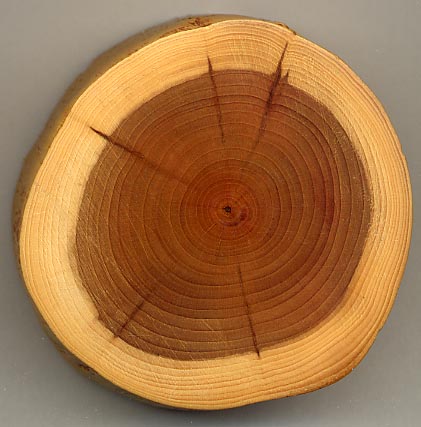

Dendrochronology also serves as a critical calibration tool for radiometric dating. Because tree rings of known calendar age can be radiocarbon-dated, they reveal how atmospheric 14C concentrations have varied through time, enabling the construction of calibration curves that convert raw radiocarbon ages into true calendar dates.7, 16 Beyond dating, tree rings record information about past temperature, precipitation, volcanic eruptions, and solar activity, making dendrochronology an indispensable tool in paleoclimatology, archaeology, and the geosciences.20
Origins and principles
The modern science of dendrochronology was founded by Andrew Ellicott Douglass, an American astronomer working at the University of Arizona in the early twentieth century. Douglass was originally investigating the influence of sunspot cycles on climate when he noticed that the width of annual rings in ponderosa pines varied in patterns that could be matched between different trees growing in the same region. In 1919, he published Climatic Cycles and Tree-Growth, establishing the foundational principle that trees record environmental conditions in their ring widths and that these patterns can be correlated across specimens.1 By the 1930s, Douglass had developed the technique of cross-dating — matching ring-width sequences between living trees and archaeological timbers — and used it to assign calendar dates to Pueblo ruins in the American Southwest, demonstrating the method’s archaeological power.1, 23
The fundamental principle underlying dendrochronology is straightforward. In temperate regions, a tree produces one growth ring per year: rapid growth in spring and early summer lays down large, thin-walled cells (earlywood), while slower growth in late summer produces denser, thick-walled cells (latewood). The boundary between one year’s latewood and the following year’s earlywood is sharp and visible, marking the transition between growth seasons.9 The width of each ring reflects growing conditions during that year — a warm, wet year typically produces a wider ring, while drought or cold produces a narrower one. Because all trees in a given region experience the same climate, they tend to produce similar ring-width patterns, enabling cross-dating between specimens.9, 17
Cross-dating is the methodological core of dendrochronology and distinguishes it from simple ring counting. Rather than merely counting rings from bark to pith in a single specimen, dendrochronologists match the distinctive year-to-year pattern of wide and narrow rings between multiple trees. A sequence of, say, three narrow rings followed by two wide ones followed by a very narrow one creates a “fingerprint” that can be identified across specimens from the same region, even if those specimens lived at different times. This pattern-matching process is performed both visually and statistically, using correlation coefficients and other quantitative measures to ensure reliability.9, 17 Because cross-dating requires agreement among multiple independent specimens for each segment of the chronology, it is self-correcting: an error in one specimen will be caught by comparison with others.
Building long chronologies
The power of dendrochronology lies in its ability to extend backwards in time far beyond the lifespan of any single tree. The process begins with living trees whose outermost ring corresponds to the current year, providing an absolute anchor point. Older specimens — dead standing trees, fallen logs, structural timbers from historical buildings, and subfossil wood recovered from peat bogs, lake sediments, and river gravels — are then cross-dated against the established sequence. If a dead specimen’s outer rings overlap with the inner rings of a living tree (or of an already-dated specimen), its ring pattern can be locked into the chronology, pushing the record further into the past.9, 17
This process of overlapping and extending has produced several continuous master chronologies of remarkable length. The bristlecone pine (Pinus longaeva) chronology from the White Mountains of California is among the most celebrated. Bristlecone pines are the oldest known living trees, with individual specimens exceeding 4,800 years of age. In the late 1960s, Charles Wesley Ferguson of the University of Arizona’s Laboratory of Tree-Ring Research constructed a continuous bristlecone pine chronology extending over 7,100 years by cross-dating living trees with dead wood found on the ground nearby.2, 3 Subsequent work has extended the continuous bristlecone pine chronology to over 9,000 years, with more recent studies by Salzer and Hughes contributing high-resolution isotope records from this archive.8
In Europe, Bernd Becker and his colleagues at the Hohenheim laboratory in Germany constructed what remains the longest continuous tree-ring chronology in the world. By cross-dating thousands of oak and pine samples recovered from river gravels, peat bogs, and archaeological sites across central Europe, the Hohenheim team produced a continuous record extending back 12,460 years to approximately 10,461 BC.5, 6 This chronology is built from overlapping segments of subfossil oak (Quercus spp.) for the most recent 10,000 years and subfossil pine (Pinus sylvestris) for the earliest portion, where oaks were not yet established in central Europe following the last ice age. The two species overlap sufficiently to allow secure cross-dating between them.6 Additional long chronologies have been developed from Irish oak, spanning over 7,000 years, and from various other European and Near Eastern species, providing independent checks on the Hohenheim record.23, 24
Radiocarbon calibration
One of dendrochronology’s most consequential scientific contributions is its role in calibrating radiocarbon dating. Radiocarbon dating measures the decay of carbon-14 (14C), a radioactive isotope produced in the atmosphere by cosmic ray interactions with nitrogen. Living organisms continuously exchange carbon with the atmosphere, maintaining a 14C concentration that mirrors the atmospheric level. After death, 14C decays with a half-life of approximately 5,730 years, and the remaining concentration indicates how much time has elapsed.9
However, the atmospheric concentration of 14C has not remained constant through time. Variations in solar activity, the strength of Earth’s magnetic field, ocean circulation patterns, and other factors cause the 14C production rate to fluctuate, meaning that a “raw” radiocarbon age does not always correspond directly to a true calendar age. Tree rings solve this problem. Because each ring has a known calendar age determined by cross-dating, researchers can radiocarbon-date individual rings and compare the measured 14C age with the true age, building a calibration curve that maps radiocarbon years to calendar years.3, 16
The internationally accepted IntCal calibration curves rely heavily on dendrochronological data. The most recent iteration, IntCal20, uses tree-ring data as its primary calibration source for the period from the present back to approximately 13,900 calendar years before present, with the Hohenheim and bristlecone pine chronologies providing the backbone of this interval.7 For earlier periods beyond the reach of continuous tree-ring records, IntCal20 incorporates data from other annual layer chronology archives, including the Lake Suigetsu varve-counted sediment record, marine sediments, and speleothems, extending the calibration curve to approximately 55,000 years before present.7, 10 The fact that tree-ring calibration and these other independent archives produce a smooth, continuous calibration curve with no discontinuities or contradictions is itself a powerful demonstration of the consistency of multiple dating methods across deep time.
The paleoclimate record in tree rings
Beyond their use as a dating tool, tree rings constitute one of the highest-resolution terrestrial paleoclimate archives available. Ring width, wood density, and the stable isotope ratios of carbon and oxygen within individual rings all respond to climate variables — primarily temperature and moisture availability — during the growing season.9, 20 Networks of tree-ring chronologies from climate-sensitive sites around the world have been used to reconstruct temperature and precipitation patterns spanning centuries to millennia, providing context for understanding modern climate variability and change.
The bristlecone pine record from the White Mountains, for example, has yielded a 5,480-year oxygen-isotope record that tracks moisture source variability over the Sierra Nevada region, recording shifts in atmospheric circulation patterns that cannot be detected through ring width alone.8 In Europe, dense networks of oak and pine chronologies have been used to reconstruct summer temperatures across the continent for the past several thousand years, identifying cool periods associated with volcanic eruptions and warm intervals corresponding to medieval climate anomalies.20 These paleoclimate reconstructions, derived entirely from tree-ring data, are consistent with records from ice core paleoclimatology and other independent archives, reinforcing the reliability of dendrochronological dating.19, 20
Young-earth creationist objections
Young-earth creationism (YEC) holds that Earth was created approximately 6,000 years ago, a timescale incompatible with continuous tree-ring chronologies that exceed 12,000 years. YEC authors have raised several objections to dendrochronological evidence, though these have been addressed in the scientific literature.
The most common objection is that trees can produce more than one ring per year, a phenomenon called “false rings” or “intra-annual density fluctuations.” This is a real phenomenon in some species: a mid-season drought can cause a tree to cease growth temporarily and then resume, producing a band of dense latewood-like cells within what is actually a single year’s growth. However, false rings differ microscopically from true annual ring boundaries — the transition between the false ring and resumed growth is typically gradual rather than sharp — and experienced dendrochronologists identify and exclude them as a routine part of analysis.9 More importantly, the cross-dating process itself eliminates the possibility that false rings could systematically inflate a chronology. Because the ring-width pattern must match across dozens or hundreds of independent specimens for each segment of the chronology, a false ring in one tree would not match the pattern in others and would be detected and corrected.9, 17
Bristlecone pines, which form the backbone of the oldest North American chronologies, are particularly resistant to false ring formation. LaMarche and Harlan (1975) specifically investigated this question and found that bristlecone pines in the White Mountains almost never produce false rings due to the extremely arid, high-altitude environment in which they grow. The growing season is so short and conditions so uniform that the trees consistently produce exactly one ring per year.4 This finding has been repeatedly confirmed in subsequent studies of bristlecone pine growth.8
A related objection suggests that missing rings — years in which a tree fails to produce a ring entirely — could cause chronologies to undercount actual elapsed time. Missing rings do occur, particularly in stressed trees, but they are locally absent rather than globally absent: a ring missing on one radius of a trunk is often present on another, and a ring missing in one tree will almost certainly be present in neighbouring trees of the same species.9 Cross-dating between multiple specimens and multiple radii within specimens catches missing rings, and their incidence is quantified in published chronologies. In bristlecone pines, missing rings occur at a rate of roughly 1–5 percent depending on the period, and all published chronologies account for them.2, 4 Missing rings, if anything, would cause a chronology to underestimate rather than overestimate the true number of years, meaning that the actual elapsed time may be slightly greater than the ring count indicates.
Some YEC authors have also argued that the cross-dating between living and dead specimens is unreliable, suggesting that ring patterns might repeat or that matches could be spurious. In practice, dendrochronological cross-dates are evaluated using rigorous statistical criteria. A match between two specimens is accepted only when the correlation between their ring-width series exceeds a threshold that rules out chance agreement, typically a t-value of 3.5 or higher, and when the match is confirmed by visual inspection.17 The probability of a spurious match across a 100-year overlap is vanishingly small when these criteria are applied, and master chronologies are constructed from so many overlapping specimens that the overall structure is robust to the removal of any individual sample.9, 17
Corroborating annual-layer records
Dendrochronological records do not stand in isolation. Several other natural archives preserve annual layers that can be counted independently, and all of them produce timescales that exceed the YEC framework by large margins. The convergence of these multiple independent records, each governed by entirely different physical and biological processes, constitutes some of the most compelling evidence for deep time in the Earth sciences.
Ice cores
In the polar ice sheets of Greenland and Antarctica, annual snowfall accumulates into layers that are distinguishable by seasonal variations in dust content, chemical composition, and stable isotope ratios of oxygen and hydrogen. The Greenland Ice Sheet Project 2 (GISP2) core produced a volcanic and climatic record extending approximately 110,000 years, with annual layers clearly resolvable in the upper portion.12 The Greenland Ice Core Chronology 2005 (GICC05), constructed by counting annual layers in multiple Greenland cores, provides an independently counted timescale extending to 60,000 years before present with a cumulative uncertainty of approximately 5 percent.13, 18 In Antarctica, the EPICA Dome C core reaches approximately 800,000 years, encompassing eight complete glacial-interglacial cycles.11 These records are discussed in detail in ice core paleoclimatology. Where ice-core and tree-ring records overlap, volcanic marker horizons provide independent tie points that confirm both chronologies are counting the same years.12, 19
Lake varves
Varves are annually laminated sediments deposited in lakes, where seasonal changes in biological productivity, sediment input, and water chemistry produce distinct light-dark couplets each year. The Lake Suigetsu record in Japan provides a continuous, independently counted varve chronology spanning 52,800 years.10, 15 The Suigetsu record is especially significant because the lake sediments also contain terrestrial plant macrofossils that can be radiocarbon-dated, providing a direct comparison between varve-counted calendar ages and radiocarbon ages. This comparison forms a key component of the IntCal calibration curve for the period beyond the reach of tree-ring data and confirms that the varve counting and radiocarbon methods produce consistent results.10, 22 Multiple other varve records from Scandinavia, North America, and East Africa provide additional long chronologies, all exceeding the YEC timescale.
Coral banding
Reef-building corals deposit calcium carbonate skeletons that exhibit annual density banding, analogous to tree rings. High-density bands form during warm seasons and low-density bands during cool seasons, producing visible couplets that can be counted under X-ray imaging.14 Individual coral colonies typically live for centuries, and continuous records have been constructed by overlapping specimens in a manner analogous to tree-ring cross-dating. The longest coral records span several hundred years and provide high-resolution records of sea surface temperature, salinity, and ocean circulation that complement and corroborate terrestrial archives.21 While coral records are shorter than tree-ring, ice-core, or varve records, they represent yet another independent annual-layer archive that agrees with the others wherever their intervals overlap.
Convergence of evidence
The significance of dendrochronology for understanding Earth’s age extends beyond the tree-ring record itself. The critical observation is that multiple independent annual-layer archives — tree rings, ice cores, lake varves, and coral bands — all produce timescales that are mutually consistent and all exceed 6,000 years, most by very large margins. These archives are governed by fundamentally different physical processes: tree growth responds to temperature and moisture; ice layers reflect snowfall and atmospheric chemistry; varves record sediment deposition and lake productivity; coral bands reflect ocean temperature and carbonate chemistry. There is no plausible mechanism by which all of these unrelated systems could independently produce false records that happen to agree with each other and with radiometric dating methods.7, 19
Furthermore, dendrochronological calibration of radiocarbon dating reveals a smooth, continuous relationship between radiocarbon years and calendar years extending back over 13,000 years, with the calibration curve showing systematic deviations that reflect known geomagnetic and solar variability.7, 16 The Lake Suigetsu varve record extends this calibration to 52,800 years with no discontinuities.10 The Greenland ice-core chronology extends to 60,000 counted annual layers and beyond.13, 18 The Antarctic EPICA record reaches 800,000 years.11 Each of these records independently demonstrates that Earth’s past extends orders of magnitude beyond any young-earth timescale, and their mutual agreement through radiometric cross-validation and shared volcanic and climatic marker events makes this conclusion robust beyond reasonable dispute.
Dendrochronology occupies a central position among these lines of evidence because it is the most intuitive and transparent: one ring equals one year, visible under a hand lens, countable by anyone willing to look. The long chronologies built from bristlecone pine and European oak are not theoretical constructs or model outputs but physical records of individual years, each ring a tangible layer of wood formed during a single growing season. When these records are extended by the overlapping patterns of thousands of cross-dated specimens into unbroken sequences exceeding 12,000 years, they provide evidence for the age of the earth that is as direct and accessible as any in the Earth sciences.6, 9
References
A 7,104-year annual tree-ring chronology for bristlecone pine, Pinus aristata, from the White Mountains, California
Constructing long tree-ring chronologies: establishing 12,460 years of dendrochronological data in central Europe
A 5480-year oxygen-isotope record from bristlecone pine trees in the White Mountains, California
Greenland Ice Core Chronology 2005 (GICC05): a new timescale from the surface to the base of the NGRIP ice core