Overview
- The earliest secure evidence for hominin fire use comes from Wonderwerk Cave, South Africa, at approximately 1 million years ago, but habitual, repeated fire use only becomes archaeologically unambiguous after roughly 400,000–350,000 years ago.
- Cooking food increases net caloric yield, reduces chewing time, and detoxifies plant compounds, and may have been the key dietary innovation that enabled the reduction of the gut and the expansion of the metabolically expensive human brain.
- Fire extended the social day beyond sunset, created defended gathering places that promoted storytelling and social bonding, enabled landscape management through deliberate burning, and ultimately expanded the habitable range of hominins into cold, high-latitude environments.
The control of fire is arguably the single most transformative technological achievement in human evolutionary history. No other species habitually creates, maintains, or deliberately deploys fire, and the capacity to do so has shaped virtually every dimension of hominin biology, ecology, and social life. Fire provided warmth that extended the habitable range of hominins into cold, high-latitude environments; light that lengthened the productive day beyond sunset; protection from predators at night; a means of modifying landscapes to improve foraging returns; and, most consequentially, the ability to cook food, which may have driven the biological evolution of smaller teeth, reduced guts, and larger brains.4, 7 The relationship between humans and fire is unique in the animal kingdom, and understanding when and how this relationship developed is one of the central questions in palaeoanthropology.
The archaeological evidence for early fire use is patchy, contested, and difficult to interpret, because distinguishing between natural wildfires and deliberate hominin combustion in sedimentary deposits hundreds of thousands of years old is a formidable analytical challenge. The earliest secure evidence for in situ burning in an archaeological context comes from Wonderwerk Cave in South Africa at approximately 1 million years ago, but unambiguous evidence for habitual, repeated fire use does not become widespread until roughly 400,000 to 350,000 years ago.1, 3, 16 This gap raises a fundamental question: did early hominins such as Homo erectus control fire, or were they merely opportunistic users of natural blazes? The answer has profound implications for how we understand human evolution.
The archaeological evidence
Identifying ancient fire use in the archaeological record requires distinguishing intentional hominin burning from natural phenomena such as wildfires, lightning strikes, and spontaneous combustion of organic matter. Archaeologists rely on several lines of evidence: the presence of charred bone and plant material, burned or heat-altered stone artefacts, ash deposits, reddened or thermally altered sediments, and the spatial concentration of these indicators in patterns consistent with hearths rather than natural fires. The deeper in time one looks, the more ambiguous the evidence becomes, and claims for very early fire use are frequently debated.7
The oldest widely accepted evidence for hominin-controlled fire comes from Wonderwerk Cave in the Northern Cape province of South Africa. In 2012, Francesco Berna and colleagues reported microstratigraphic evidence of in situ burning within the Acheulean strata of the cave, dated to approximately 1 million years ago. Using Fourier transform infrared microspectroscopy and micromorphological analysis of intact sediments, the team identified well-preserved ashed plant material and burned bone fragments deposited on discrete surfaces approximately 30 metres from the cave entrance. The good preservation and angularity of the particles indicated that the burning occurred locally rather than being washed in from outside the cave, effectively ruling out a natural wildfire origin.1 This evidence represents the earliest secure demonstration of burning in an archaeological context, though whether it reflects habitual fire use or occasional, perhaps opportunistic, episodes remains an open question.
At Gesher Benot Ya'aqov in the Jordan Rift Valley of Israel, Naama Goren-Inbar and colleagues documented evidence of fire use dating to approximately 790,000 years ago. The site preserves clusters of burned flint microartefacts and carbonised seeds and wood of edible species, including olive, wild barley, and wild grape, concentrated in discrete spatial clusters that the excavators interpreted as the remnants of hearth locations. The clustering of burned material in specific spots, rather than being uniformly distributed across the site, was taken as evidence for controlled rather than natural fire.2
At Koobi Fora in northern Kenya, the site complex FxJj20, dated to approximately 1.5 million years ago, has yielded heated sediments and thermally altered artefacts that some researchers interpret as evidence for early hominin fire use. Sarah Hlubik and colleagues used Fourier transform infrared spectrometry and high-resolution spatial analysis to document patterns of burned and unburned material that they argued were consistent with on-site combustion by hominins rather than natural burning.14 However, these very early claims remain contested, and the evidence is not universally accepted as demonstrating deliberate fire control.
The picture becomes substantially clearer after approximately 400,000 years ago. At Qesem Cave in Israel, extensive micromorphological and mineralogical analyses have documented habitual fire use spanning a period from roughly 400,000 to 200,000 years ago, with evidence of repeated hearth construction in the same locations over long periods. A large central hearth covering approximately 4 square metres, the largest contemporaneous hearth known, showed multiple superimposed use-cycles indicating sustained, repeated burning by the cave's occupants.10, 11 At Beeches Pit in Suffolk, England, dated to approximately 400,000 years ago (Marine Isotope Stage 11), excavations recovered abundant charred material, burned flints, and discrete areas of thermally altered sediment interpreted as hearths, in association with Acheulean stone tools attributed to Homo heidelbergensis.20 At Schöningen in Germany, the famous site that yielded wooden throwing spears dating to approximately 300,000 years ago, the archaeological context includes evidence of fire use alongside the sophisticated hunting technology.21
When did habitual fire use begin?
The question of when fire became a regular, habitual component of hominin behaviour rather than an occasional or opportunistic resource has generated sustained debate. Two broad schools of thought have emerged. The early-use hypothesis holds that fire was controlled by Homo erectus at 1 million years ago or earlier, pointing to evidence from sites such as Wonderwerk Cave, Gesher Benot Ya'aqov, and Koobi Fora as proof that early hominins possessed the cognitive and technological capacity to manage fire.1, 2, 14 The late-use hypothesis argues that habitual fire use developed only around 400,000 to 350,000 years ago, and that earlier instances represent sporadic, perhaps accidental encounters with natural fire rather than sustained technological practice.3, 16


In a systematic review of the European archaeological record, Wil Roebroeks and Paola Villa created a database of 141 potential fire-use sites dating from 1.2 million to 35,000 years ago. They found that convincing evidence for habitual fire use in Europe appears only from approximately 400,000 to 300,000 years ago onward. Before that threshold, European sites spanning hundreds of thousands of years of hominin occupation show little or no evidence for fire, despite the fact that hominins had occupied northern latitudes well above 45 degrees north since at least 800,000 years ago.3 This finding was striking because it implied that early European hominins colonised cold environments without the routine use of fire, relying instead on behavioural and physiological adaptations to cope with seasonal cold.
Ron Shimelmitz and colleagues reached a similar conclusion from a different dataset. Analysing frequencies of burned flints through a 16-metre-deep sequence of archaeological deposits at Tabun Cave in Israel, they found that thermally altered artefacts were rare before approximately 350,000 years ago but became markedly more common after that date. Combined with broader Levantine data, they proposed that habitual fire use emerged in the region between 350,000 and 320,000 years ago.16
One interpretation that reconciles these positions is that early hominins could use and maintain fire obtained from natural sources, such as lightning-ignited wildfires, volcanic activity, or spontaneous combustion of peat, but could not reliably create fire on demand. Under this model, fire would have been an intermittent resource, available when natural ignition sources were accessible and lost when they were not. The transition to habitual fire use would then have required the invention of deliberate fire-making techniques, a technological breakthrough that may not have occurred until the Middle Pleistocene.7, 19 Evidence from Neandertal sites in southwestern France supports this interpretation: at Pech de l'Azé IV and Roc de Marsal, Dennis Sandgathe and colleagues found that fire-use signals were largely absent during cold glacial phases, precisely when fire would have been most needed and when lightning-ignited natural fires would have been least frequent. This pattern is consistent with hominins who depended on natural fire sources and lacked the ability to ignite fires themselves.19
Cooking and its biological consequences
Of all the transformations wrought by fire, cooking may have had the most profound evolutionary consequences. Richard Wrangham first articulated the cooking hypothesis in 1999, arguing that the adoption of cooking was the key dietary innovation that fuelled the emergence of the genus Homo and, in particular, the evolution of Homo erectus with its larger brain, smaller teeth, and reduced gut.5 He developed this argument at length in his 2009 book Catching Fire: How Cooking Made Us Human, proposing that cooking was not merely a cultural convenience but a biological turning point that reshaped hominin anatomy and physiology.4

Cooking increases the net energy value of food through multiple mechanisms. Heating gelatinises starch granules in tubers and other plant foods, making them far more digestible by pancreatic amylase. It denatures proteins in meat and other animal tissues, unfolding the complex three-dimensional structures that resist enzymatic attack in their native state. It breaks down plant cell walls, releasing intracellular nutrients that would otherwise pass through the gut unabsorbed. And it detoxifies many naturally occurring plant defence compounds, including alkaloids and tannins, thereby expanding the range of plants that can be safely consumed.6 Rachel Carmody and Wrangham demonstrated in a systematic review that across a wide range of food types, cooking consistently increases the proportion of ingested calories that are metabolically available to the consumer, with the magnitude of the effect varying by food type but the direction being universal.6
The implications for time budgets are equally significant. Katherine Zink and Daniel Lieberman showed experimentally that simple food processing techniques available to Lower Palaeolithic hominins, including slicing meat with stone tools and pounding plant foods, dramatically reduced the number of chewing cycles required per year. If meat comprised one-third of the diet, mechanical processing alone could reduce chewing effort by 13 percent in cycles and 15 percent in force. Adding cooking to the equation would have reduced chewing time still further.15 By comparison, wild chimpanzees spend approximately five to six hours per day chewing, whereas modern humans on a cooked diet spend roughly one hour. The reduction in chewing time freed by cooking would have released hours each day for other activities, including foraging, toolmaking, socialising, and childcare.4
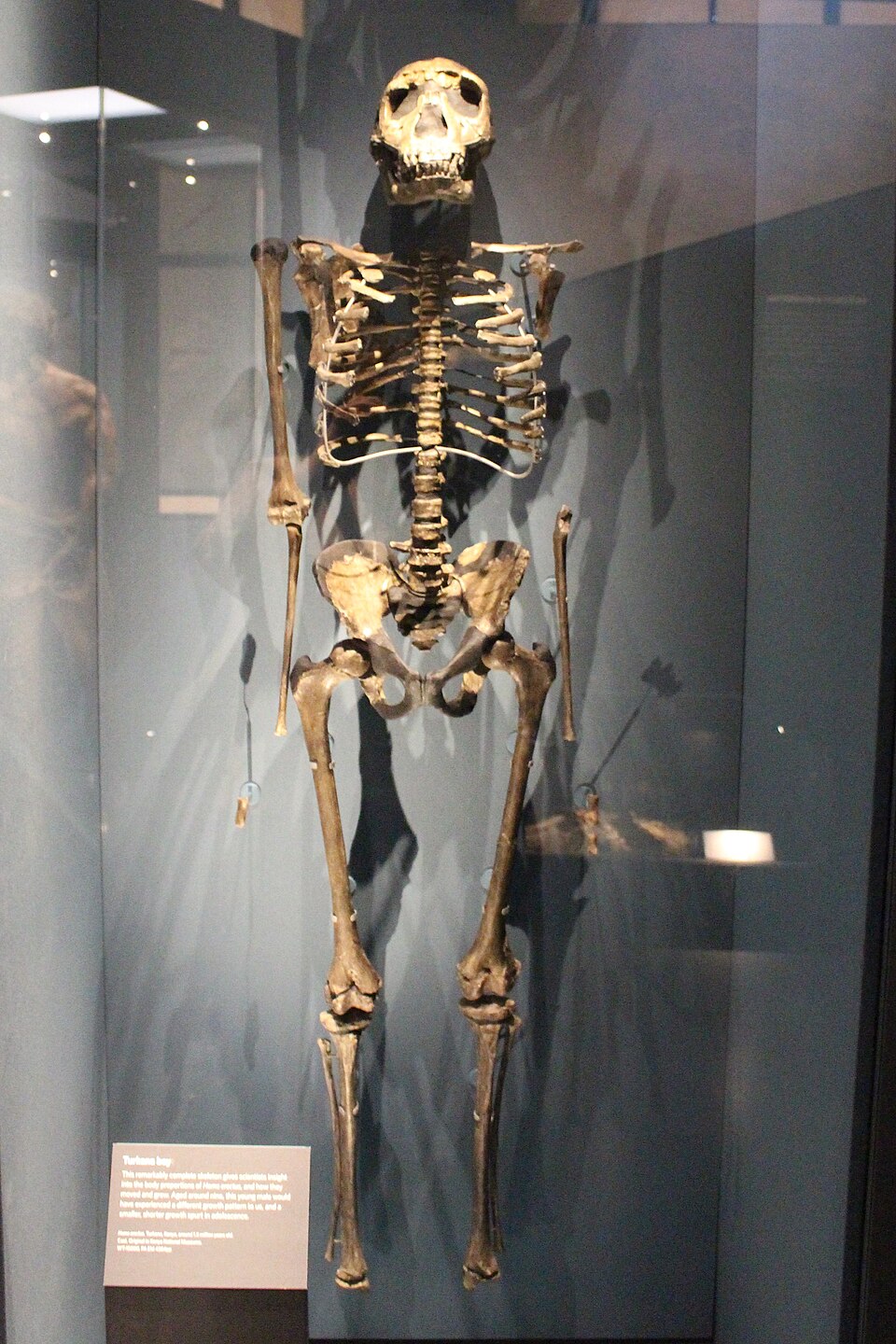
The anatomical changes visible in the fossil record of early Homo are consistent with the cooking hypothesis. Beginning approximately 1.9 million years ago, Homo erectus exhibited a marked reduction in molar tooth size, jaw robusticity, and the size of the chewing muscles relative to earlier hominins such as the australopithecines. These changes are precisely what would be predicted if the diet shifted to softer, more processed foods.4, 5 The expensive-tissue hypothesis, proposed by Leslie Aiello and Peter Wheeler in 1995, provides a complementary framework: because both the brain and the gastrointestinal tract are metabolically expensive organs, an increase in brain size could be offset by a decrease in gut size without raising overall basal metabolic rate, provided that the diet was of sufficiently high quality to support nutrition through a smaller digestive system. A cooked diet, with its higher caloric yield and reduced digestive demands, is the most plausible mechanism for enabling this trade-off.12
Fire and social evolution
Beyond its nutritional and biological effects, fire transformed the social world of hominins. A controlled fire creates a defended space, a warm, illuminated zone that deters predators and extends the usable hours of the day beyond sunset. Robin Dunbar and John Gowlett argued that fire fundamentally altered hominin time budgets by adding several hours of usable social time each evening, time that could be devoted to activities incompatible with the demands of daytime foraging: conversation, storytelling, singing, ritual, and social bonding.8 This extension of the "social day" may have been as consequential for human evolution as the caloric benefits of cooking, because it provided the temporal substrate on which complex sociality, cultural transmission, and eventually language could develop.
Polly Wiessner's ethnographic study of the Ju/'hoansi (formerly !Kung) Bushmen of the Kalahari provides a vivid illustration of how firelight shapes social life. Wiessner compared 174 daytime and nighttime conversations and found that the content of speech shifts dramatically after dark. Daytime talk is dominated by economic concerns, complaints, and gossip that regulates social relationships. Nighttime talk around the fire, by contrast, is devoted to storytelling, singing, and accounts of distant people and places, activities that evoke higher-order theory of mind, stimulate the imagination, and transmit cultural knowledge across generations.13 While ethnographic analogies to the deep past must be applied cautiously, the Ju/'hoansi data suggest that firelight created a distinct social environment, one characterised by relaxation, communality, and narrative, that may have been a crucible for the evolution of human cultural capacities.
The archaeological record supports the idea that hearths served as focal points for social activity. At Qesem Cave, the large central hearth around which activities were organised suggests that fire was not merely a cooking device but a spatial anchor for group life, with different activities, including butchery, tool manufacture, and food preparation, distributed around the fire in structured patterns.10, 11 Similar patterns of structured space use around hearths are documented at numerous Middle and Upper Palaeolithic sites, indicating that the hearth as a centre of communal life has deep roots in human behavioural evolution.7
Fire and landscape modification
The use of fire to modify landscapes is one of the oldest and most widespread human ecological practices. Deliberate burning of vegetation, sometimes called fire-stick farming, allows human foragers to drive game, clear undergrowth to improve mobility and visibility, promote the growth of nutritious new vegetation that attracts herbivores, remove dead plant material that might fuel uncontrolled wildfires, and favour fire-tolerant plant species that produce edible seeds, tubers, or fruits. The practice is documented ethnographically in cultures across the world, but it has been studied most intensively among Australian Aboriginal peoples, who have used fire to manage their environments for tens of thousands of years.18
Rebecca Bliege Bird and colleagues tested the "fire-stick farming" hypothesis quantitatively by combining ethnographic observations of contemporary Aboriginal hunting and burning in Western Australia with satellite imagery of landscape structure. They found that Aboriginal-managed landscapes contained a significantly greater diversity of successional stages than landscapes governed solely by lightning-ignited fires. The fire mosaic created by Aboriginal burning promoted habitat heterogeneity at a fine spatial scale, which in turn increased the productivity of hunting for small burrowed prey such as monitor lizards, a foraging specialty of Aboriginal women.18 The differences between anthropogenic and natural fire regimes were differences of scale rather than kind: Aboriginal burning produced smaller, more frequent, and more spatially varied patches than the large, infrequent, and homogeneous burns characteristic of lightning fires.
The antiquity of landscape burning is difficult to establish directly from the archaeological record, because distinguishing intentional anthropogenic fires from natural fires in ancient sedimentary sequences is even more challenging than doing so in cave deposits. However, the cognitive and technological requirements for landscape burning are modest compared with those for hearth-based cooking, since all that is required is the ability to carry and apply fire to dry vegetation. It is therefore plausible that landscape modification through burning has considerable antiquity, potentially predating habitual hearth-based fire use. The ecological consequences of such burning over tens or hundreds of thousands of years would have been substantial, reshaping vegetation communities, altering animal distributions, and potentially contributing to the decline of megafaunal species in some regions.7, 18
Fire-making technology
A critical distinction in the study of early fire use is that between fire maintenance, the ability to keep an existing fire burning once obtained, and fire creation, the ability to ignite a new fire from raw materials. The former requires only that the user understand how to feed fuel to a flame and shelter it from wind and rain. The latter demands a conceptual understanding of combustion and the mastery of specific techniques for generating sufficient heat through friction or percussion to ignite tinder. This distinction is important because a hominin population that could maintain but not create fire would have been dependent on natural ignition sources, a dependency that would explain the sporadic nature of early fire evidence.7
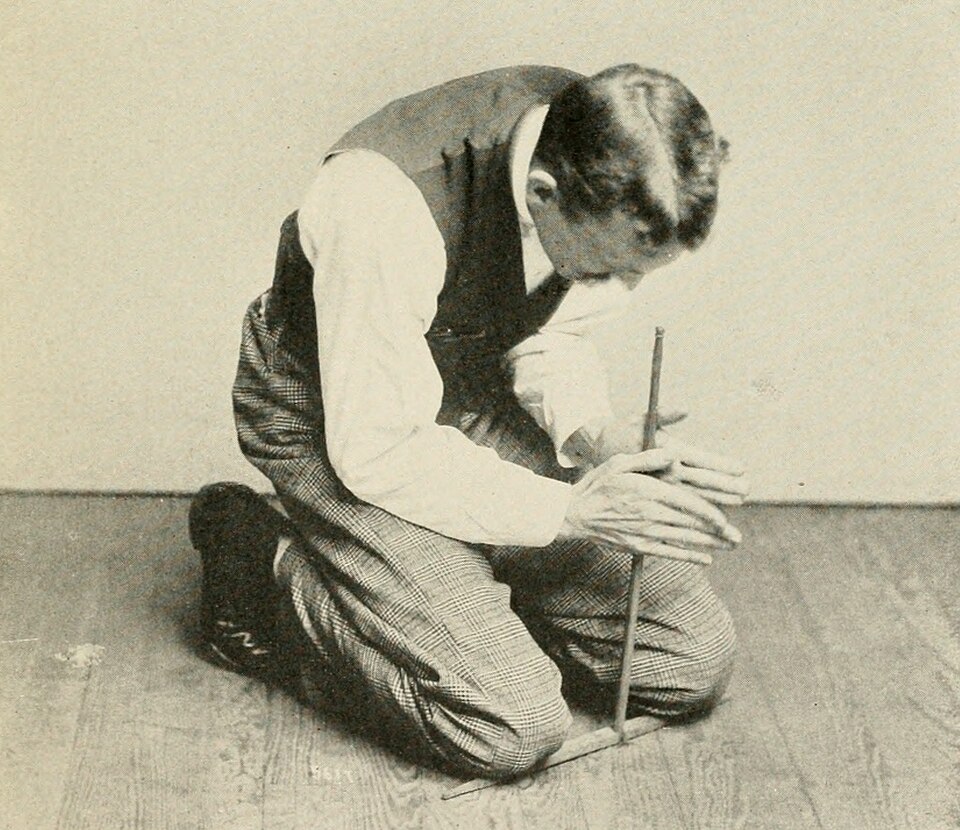

Two fundamental methods of fire creation are known from the ethnographic and archaeological records. Percussion involves striking a hard siliceous stone, such as flint or chert, against iron-bearing minerals, typically pyrite or marcasite, to generate sparks that are caught in dry tinder. Friction methods, including the fire drill, fire plough, and bow drill, generate heat through the rapid rotation or reciprocation of a wooden rod against a wooden base until the temperature at the contact point exceeds the ignition point of the resulting wood dust. Both methods require specific raw materials, technical skill, and dry conditions, and both leave characteristic traces that archaeologists can identify in the material record.7
The earliest direct evidence for deliberate fire-making comes from Neandertal sites. Peter Heyes and colleagues demonstrated in 2016 that late Neandertals at the site of Pech-de-l'Azé I in southwestern France were deliberately selecting blocks of manganese dioxide from sources several kilometres away and bringing them to the site. Through combustion experiments and thermogravimetric analysis, the team showed that manganese dioxide powder substantially reduces the auto-ignition temperature of wood and increases the rate of char combustion, making it an effective fire-starting agent. They argued that this was the most beneficial use of the material, more so than the decorative function previously proposed, because the Neandertals already had ready access to soot and charcoal for pigment and would not have needed to incur the costs of obtaining manganese dioxide for that purpose.9
Andrew Sorensen, Émilie Claud, and Marie Soressi provided complementary evidence in 2018 by documenting distinctive microwear traces on Neandertal bifaces from multiple sites in France dated to approximately 50,000 years ago. The traces, including C-shaped percussion marks, parallel striations, and mineral polish, matched those produced experimentally by striking flint against pyrite to generate sparks. The researchers eliminated alternative explanations, including pigment grinding and tool sharpening, through controlled experiments, and concluded that the occasional use of bifaces as strike-a-lights was a widespread technocultural practice among French Neandertals.17 Together, the manganese dioxide and percussion evidence demonstrate that Neandertals possessed at least two independent methods of fire creation, confirming their status as active fire-makers rather than mere fire-maintainers.
Key archaeological sites with evidence of fire use
The following table summarises the major archaeological sites that have yielded evidence for hominin fire use, spanning from approximately 1.5 million years ago to 50,000 years ago. The quality and interpretation of the evidence varies considerably across sites, with earlier sites generally providing more ambiguous signals and later sites offering unequivocal demonstrations of habitual, controlled fire use.
Major archaeological sites with evidence of hominin fire use1, 2, 3, 7, 10, 14, 16, 20
| Site | Location | Approximate date | Key evidence | Interpretation |
|---|---|---|---|---|
| FxJj20, Koobi Fora | Kenya | ~1.5 Ma | Heated sediments, thermally altered artefacts | Contested; possible early fire use |
| Wonderwerk Cave | South Africa | ~1.0 Ma | Ashed plant material, burned bone in situ | Earliest secure evidence of in situ burning |
| Gesher Benot Ya'aqov | Israel | ~790 ka | Burned flint clusters, carbonised seeds and wood | Controlled fire with spatial patterning |
| Beeches Pit | England | ~400 ka | Burned flints, charred material, hearth features | Habitual fire use by H. heidelbergensis |
| Qesem Cave | Israel | ~400–200 ka | Repeated hearth construction, thick ash deposits | Habitual fire use with structured space |
| Tabun Cave | Israel | ~350–320 ka onset | Increased frequency of burned flints | Transition to habitual fire use |
| Schöningen | Germany | ~300 ka | Fire evidence alongside wooden spears | Fire use in hunting camp context |
| Pech-de-l'Azé I | France | ~50 ka | Manganese dioxide fire-starting agent | Deliberate fire creation by Neandertals |
The table illustrates the long, uneven trajectory of fire use in human evolution. The evidence shifts from isolated, ambiguous signals before 400,000 years ago to abundant, unambiguous demonstrations of habitual fire use in the Middle and Late Pleistocene. This pattern is consistent with a gradual transition from opportunistic fire use, in which hominins exploited naturally occurring fires when available, to the deliberate creation and routine maintenance of fire as a core element of hominin technological and social life.3, 7, 16
Evolutionary significance
The control of fire sits at the intersection of nearly every major theme in human evolution: diet and nutrition, brain evolution, social complexity, technological innovation, and ecological expansion. Its effects ramified through hominin biology and culture in ways that were mutually reinforcing. Cooking increased caloric returns, which supported larger brains, which enabled more complex social organisation and technological innovation, which in turn facilitated more effective fire management and new applications of fire.4, 7, 12 Fire extended the habitable range of hominins into environments that would otherwise have been prohibitively cold, enabling the colonisation of Europe, northern Asia, and eventually the Americas. It provided a defence against nocturnal predators, relaxing a selective pressure that had constrained primate behaviour for millions of years. And it created the social campfire, a setting for the transmission of knowledge, the rehearsal of cooperative plans, and the cultivation of the narrative imagination that is a hallmark of the human mind.8, 13
The precise chronology of fire control remains debated, and important questions persist. Whether Homo erectus was a habitual fire user or merely an opportunistic one has not been definitively resolved. Whether cooking drove the anatomical changes visible in early Homo, as Wrangham proposed, or whether those changes preceded cooking and were initially driven by other dietary shifts, including the mechanical processing of food with stone tools, is an active area of investigation.5, 15 What is not in doubt is that by the time modern humans and Neandertals occupied the landscapes of the Middle and Late Pleistocene, fire had become indispensable, woven into the fabric of daily life in ways that left permanent marks on the archaeological record and on the evolutionary trajectory of the human lineage.3, 7, 17
References
Microstratigraphic evidence of in situ fire in the Acheulean strata of Wonderwerk Cave, Northern Cape province, South Africa
Evidence for habitual use of fire at the end of the Lower Paleolithic: site-formation processes at Qesem Cave, Israel
Evidence for the repeated use of a central hearth at Middle Pleistocene (300 ky ago) Qesem Cave, Israel
The expensive-tissue hypothesis: the brain and the digestive system in human and primate evolution
Hominin fire use in the Okote member at Koobi Fora, Kenya: new evidence for the old debate
Impact of meat and Lower Palaeolithic food processing techniques on chewing in humans
The 'fire stick farming' hypothesis: Australian Aboriginal foraging strategies, biodiversity, and anthropogenic fire mosaics
On the role of fire in Neandertal adaptations in western Europe: evidence from Pech de l'Azé IV and Roc de Marsal, France
Humans in the Hoxnian: habitat, context and fire use at Beeches Pit, West Stow, Suffolk, UK