Overview
- After approximately three million years of sustained encephalization that produced the largest brain-to-body ratio of any primate, human brain size began to decrease roughly 10,000 to 30,000 years ago, with average endocranial volume declining by an estimated 100 to 150 cubic centimetres — a reduction of roughly 10 percent from the Late Pleistocene peak.
- The self-domestication hypothesis, proposed by researchers including Brian Hare and Richard Wrangham, suggests that selection against reactive aggression in increasingly dense and cooperative human societies favoured individuals with reduced craniofacial robusticity and smaller brains, paralleling the domestication syndrome observed in animals selected for tameness.
- Alternative explanations include the distributed cognition hypothesis (that external information storage in tools, symbols, and social institutions reduced the individual cognitive demands that had previously driven encephalization), climate-related body size reduction (since brain size partially tracks body size), and increased neural efficiency (doing more with less through improved connectivity and synaptic organisation).
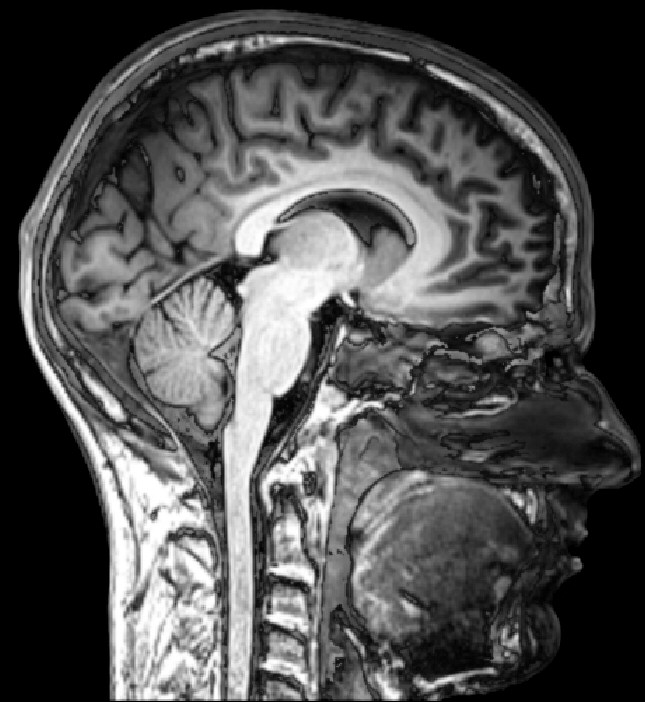
The story of human brain evolution is conventionally told as a story of relentless expansion. Over approximately three million years, from the australopithecines to Late Pleistocene Homo sapiens, average endocranial volume roughly tripled, from approximately 450 cubic centimetres (cc) to a peak of approximately 1,500 cc in some populations, producing the largest brain-to-body ratio of any primate and arguably the most complex structure in the known universe — a trend sustained in part by the lengthening of juvenile growth periods that permitted extended brain development.10, 11, 15 But this narrative of continuous expansion obscures a more recent and puzzling development: at some point in the past 10,000 to 30,000 years, human brains began to get smaller. Average endocranial volume in modern humans is approximately 1,350 cc — roughly 100 to 150 cc less than the Late Pleistocene average, representing a decline of approximately 10 percent.5, 6, 7

Documenting the reduction
The observation that human crania have become smaller over the Holocene has been documented by multiple research groups using geographically diverse samples. Maciej Henneberg, in a series of studies beginning in the late 1980s, measured endocranial volumes from archaeological populations spanning the past 30,000 years and demonstrated a statistically significant decrease in cranial capacity across populations in Europe, Africa, and Asia.5, 6 The decline is not uniform across all populations or all dimensions of the skull, but the overall trend is robust: modern humans have smaller brains, on average, than their Upper Palaeolithic ancestors.
A comprehensive analysis by Jeremy DeSilva, James Traniello, and colleagues in 2021, examining 985 fossil and modern human crania spanning the past 100,000 years, confirmed the general pattern of encephalization followed by reduction. Their analysis identified the onset of the decrease at approximately 3,000 years ago, considerably more recently than some earlier estimates, and associated it with the increasing complexity of human social organisation and the emergence of collective intelligence in large-scale societies.7 A subsequent 2025 study by DeSilva and colleagues, incorporating additional data, refined the timing further, suggesting a reduction beginning around 17,000 to 5,000 years ago depending on the population, with the most pronounced decreases occurring in the Holocene.8
The magnitude of the reduction is noteworthy. A decrease of 100–150 cc is comparable to the entire endocranial volume of a chimpanzee brain (approximately 350–400 cc). In the context of the three-million-year trend of encephalization, a reversal of this magnitude occurring in just the most recent one percent of the timeline demands explanation, and several hypotheses have been advanced.7, 11
The self-domestication hypothesis
One of the most influential explanations for the reduction in brain size draws an analogy with animal domestication. When wild animals are domesticated — wolves into dogs, wild boar into pigs, wildcats into domestic cats — they consistently undergo a suite of morphological and behavioural changes known as the domestication syndrome: reduced brain size, smaller faces and teeth, floppy ears, curly tails, depigmentation, reduced sexual dimorphism, longer juvenile periods, and reduced reactive aggression.4 Domesticated animals have brains that are 10 to 15 percent smaller than their wild ancestors, a figure strikingly similar to the reduction observed in humans.4
Adam Wilkins, Richard Wrangham, and W. Tecumseh Fitch proposed in 2014 that the domestication syndrome is caused by mild deficits in neural crest cell migration during embryonic development. Neural crest cells contribute to the development of adrenal glands (which produce stress hormones mediating aggression), craniofacial bone and cartilage, and melanocytes (pigment cells), among other tissues. Selection for tameness — that is, against reactive aggression — inadvertently selects for reduced neural crest cell output, producing the entire suite of domestication traits as a correlated byproduct.4
Brian Hare and Wrangham have extended this framework to humans, arguing that Homo sapiens underwent a process of self-domestication. As human societies became larger and more cooperative, individuals who were prone to reactive aggression were at a selective disadvantage: they were ostracised, punished, or killed by coalitions of other group members. This selection against aggression, sustained over thousands of generations, favoured individuals with reduced stress reactivity and reduced craniofacial robusticity — and, as a correlated consequence, smaller brains.2, 3, 14 Robert Cieri and colleagues found supporting evidence in the fossil record: human crania have become progressively more gracile (less robust, with reduced brow ridges and smaller faces) over the past 80,000 years, with the most pronounced feminisation of facial features coinciding with the appearance of behavioural modernity and the onset of brain size reduction.1
The distributed cognition hypothesis
An alternative explanation, which may be complementary rather than competing, focuses on the externalisation of cognitive functions into cultural artefacts and social institutions. Andy Clark and David Chalmers' extended mind thesis argues that human cognition is not confined to the brain but extends into the tools, symbols, and technologies that humans use to think: writing, mathematical notation, maps, libraries, and now computers.13 If cognitive functions that were once performed individually — memorising food locations, tracking social relationships, performing calculations — are increasingly offloaded to external storage and social institutions, then the selective pressure maintaining large individual brain size may relax.
DeSilva and Traniello drew an explicit analogy with the social insects, arguing that the emergence of collective intelligence in complex human societies reduced the need for large individual brains, just as individual ant brain size is smaller in species with more elaborate colony organisation. They termed this the "social brain reduction" hypothesis: as the cognitive burden is distributed across the group through language, writing, institutional memory, and division of cognitive labour, individual brains can become smaller without a loss in the collective cognitive capacity of the society.7
Joseph Henrich has made a related argument in The Secret of Our Success, contending that human cultural evolution has progressively transferred adaptive information from individual brains to cultural repositories. Hunter-gatherers must store vast amounts of ecological knowledge — the properties of hundreds of plants, the habits of dozens of animal species, the techniques for making tools and processing foods — in individual memory. As societies develop writing, formal education, and institutional specialisation, each individual needs to store less information personally because the group's collective knowledge is distributed across institutions and retrievable as needed.9
Body size reduction and scaling effects
Brain size is correlated with body size across mammals, and human body size has also decreased since the Late Pleistocene. Late Pleistocene humans, particularly in cold-adapted populations such as the Neanderthals and early European Homo sapiens, were on average more robust and heavier than contemporary populations. The transition to a warmer Holocene climate, combined with the shift from a protein-rich hunter-gatherer diet to the carbohydrate-dominated diet of agricultural societies, has been associated with a general decrease in body mass and skeletal robusticity.12, 15
Some of the observed brain size reduction may therefore be a scaling effect: as bodies became smaller, brains decreased proportionally without any reduction in relative brain size or cognitive capacity. However, analyses that control for body size suggest that the brain reduction exceeds what body size scaling alone can explain — the brain has become disproportionately smaller relative to body size, not merely smaller in absolute terms.5, 7
Increased neural efficiency
A fourth hypothesis suggests that the decrease in brain volume has been accompanied or even driven by an increase in neural efficiency. Brain size is a crude measure of cognitive capacity; what matters is the organisation, connectivity, and processing efficiency of neural circuits, not merely their volume. Smaller brains with more efficiently organised neural networks — denser synaptic connections, more myelinated fibres, or more specialised processing regions — could perform as well as or better than larger but less efficiently organised brains.16
This hypothesis is difficult to test directly because neural organisation does not fossilise. However, it is consistent with the observation that modern humans show no evidence of cognitive decline relative to their larger-brained ancestors: if anything, the complexity of modern human technology, language, and social organisation far exceeds that of the Upper Palaeolithic, suggesting that whatever cognitive changes have occurred, they have not impaired intellectual capacity.9, 16
An ongoing reversal
The reduction of human brain size over the past 10,000 to 30,000 years remains one of the most intriguing puzzles in human evolutionary biology. It challenges the long-standing assumption that bigger brains are always better and that encephalization is an irreversible trend in the hominin lineage. The various hypotheses — self-domestication, distributed cognition, body size scaling, and neural efficiency — are not mutually exclusive, and the reduction may reflect a combination of several processes operating simultaneously.7, 8 What is clear is that the relationship between brain size and cognitive capacity is more complex than the simple equation of bigger with smarter, and that human cognitive evolution cannot be fully understood by tracking endocranial volume alone. The last 10,000 years of brain evolution represent a reminder that natural selection does not move in only one direction, and that the organ most central to human identity is still changing.7, 9, 11
References
The Goodness Paradox: The Strange Relationship Between Virtue and Violence in Human Evolution
The 'domestication syndrome' in mammals: a unified explanation based on neural crest cell behavior and genetics
The Secret of Our Success: How Culture Is Driving Human Evolution, Domesticating Our Species, and Making Us Smarter
Global human mandibular variation reflects differences in agricultural and hunter-gatherer subsistence strategies