Overview
- Zhoukoudian (Locality 1), a limestone cave system southwest of Beijing, produced the celebrated Peking Man fossils — over 200 Homo erectus specimens from at least 40 individuals — during excavations from the 1920s through 1930s, establishing East Asia as a major region for hominin evolution.
- The original Peking Man fossils were lost during the Japanese invasion of China in 1941 and have never been recovered, but Franz Weidenreich's meticulous casts, photographs, and published descriptions preserved the scientific record and remain the primary basis for analysis of the material.
- Revised dating has pushed the age of the main Homo erectus deposits to approximately 780,000–400,000 years ago, while the longstanding claim that Peking Man controlled fire has been challenged by reanalysis suggesting the dark deposits previously identified as hearths may be naturally deposited organic sediments.
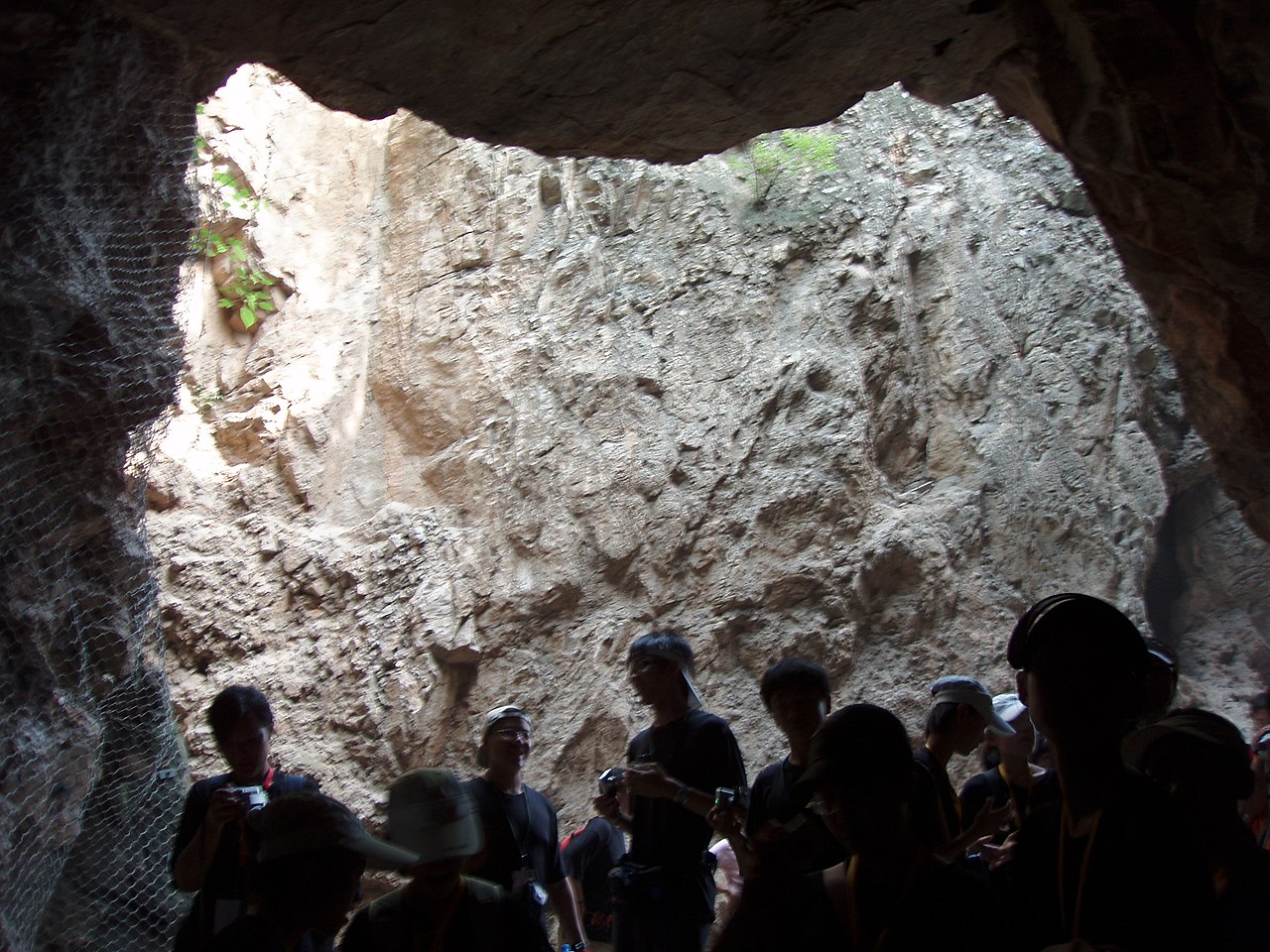
Zhoukoudian (historically romanized as Choukoutien) is a complex of cave and fissure sites located approximately 48 kilometers southwest of central Beijing in Fangshan District, China.2 The site is best known as the discovery locality of "Peking Man," a large collection of Homo erectus fossils recovered from Locality 1, a collapsed limestone cave, during a series of excavations conducted between 1921 and 1937 that rank among the most consequential in the history of paleoanthropology.1, 2 The Peking Man fossils established beyond reasonable doubt that East Asia had been inhabited by early humans hundreds of thousands of years ago and provided the most comprehensive skeletal sample of Homo erectus available at the time, including portions of more than 40 individuals.1 The loss of the original specimens during the chaos of the Second World War remains one of the greatest tragedies in the history of paleontology, but the scientific legacy of Zhoukoudian endures through the detailed casts, photographs, and monographic descriptions prepared by Franz Weidenreich before the originals disappeared.1, 14 Designated a UNESCO World Heritage Site in 1987, Zhoukoudian continues to yield new fossils and new insights through ongoing excavations and the application of modern analytical techniques to the site's complex stratigraphic record.16

Discovery and early excavations
The Zhoukoudian area had long been known to local people as "Dragon Bone Hill" (Longgushan) because the limestone fissures yielded fossils that traditional Chinese pharmacology classified as dragon bones and sold for medicinal use.14 Scientific attention was first drawn to the site in 1918 when the Swedish geologist Johan Gunnar Andersson was alerted to the fossil deposits by a local quarry operator. Andersson visited the site in 1921 and, together with the Austrian paleontologist Otto Zdansky, initiated excavations that recovered two hominin teeth from the cave deposits in 1921 and 1923.2, 14
Zdansky did not immediately recognize the significance of the teeth, and it was not until 1926, when he described them in a publication, that the anatomist Davidson Black of the Peking Union Medical College took notice. Black examined the teeth and, on the basis of a single well-preserved lower molar discovered during subsequent excavations in 1927, made the bold decision to name a new hominin genus and species: Sinanthropus pekinensis, "Peking Man."3 The decision to erect a new taxon on a single tooth was controversial at the time, but Black's conviction was soon vindicated when, on 2 December 1929, the Chinese paleontologist Pei Wenzhong (W. C. Pei) uncovered a nearly complete skullcap (calotte) from the cave deposits — the first substantial cranial evidence of Peking Man.7
The discovery of the skullcap ignited international excitement and secured major funding from the Rockefeller Foundation and the Geological Survey of China, enabling large-scale systematic excavation that continued until the Japanese invasion halted fieldwork in 1937.2 Over this period, the excavations produced an extraordinary collection of hominin material: fragments of at least 14 partial crania, 11 mandibles, 147 isolated teeth, and a small number of postcranial elements, collectively representing more than 40 individuals.1 Davidson Black oversaw the early analysis of the fossils until his sudden death from a heart attack in 1934, after which the German anatomist Franz Weidenreich assumed responsibility for studying and describing the material.1
Weidenreich's contribution to the study of Peking Man cannot be overstated. Between 1936 and 1943, he produced a series of monographic studies of the Zhoukoudian fossils that remain masterworks of descriptive anatomy. He created high-quality plaster casts of every significant specimen, commissioned detailed photographs and drawings, and published exhaustive morphological descriptions and measurements.1 This meticulous documentation would prove crucial, for the original fossils were soon to vanish.1
Loss of the originals
As tensions between China and Japan escalated in 1941, the decision was made to evacuate the Peking Man fossils from the Peking Union Medical College to the United States for safekeeping. The fossils were packed into two footlockers and entrusted to a detachment of United States Marines stationed in northern China, who were to transport them to the port of Qinhuangdao for shipment to the American Museum of Natural History in New York.14 The footlockers left Beijing on approximately 5 December 1941 but never reached their destination. Two days later, Japan attacked Pearl Harbor, and the Marines were captured as prisoners of war. The fossils disappeared, and despite decades of searching, numerous false leads, and intermittent media attention, they have never been recovered.14
The loss has been the subject of extensive investigation and speculation. Hypotheses about the fate of the fossils range from destruction during the confusion of the Japanese advance, to burial by the Marines or Chinese collaborators, to seizure by Japanese military personnel who may have recognized or failed to recognize their significance.14 The Chinese government has periodically appealed for the return of the fossils, and private searches have been conducted, but no credible evidence of the fossils' whereabouts has ever emerged.14
The scientific impact of the loss was mitigated, though not eliminated, by Weidenreich's documentation. His casts, preserved at the American Museum of Natural History and distributed to institutions worldwide, have served as the primary basis for all subsequent analysis of the Peking Man cranial material.1 However, casts cannot capture all the morphological detail of the originals, and the inability to apply modern analytical techniques — CT scanning, ancient DNA extraction, trace element analysis, direct radiometric dating — to the original specimens represents an irreplaceable loss to science.13
Stratigraphic sequence
Locality 1, the primary Homo erectus-bearing site at Zhoukoudian, is a large collapsed cave or rockshelter in Ordovician limestone, filled with approximately 40 meters of sedimentary deposits divided into 17 recognized layers.15 The sediments accumulated through a combination of processes including roof collapse (contributing angular limestone blocks), aeolian (wind-blown) dust deposition, slope wash from the hillside above, and in situ weathering of the cave walls.15 The hominin fossils are concentrated primarily in Layers 3 through 11, with the richest deposits in Layers 8 through 10 near the middle of the sequence.2, 15
The chronology of the Locality 1 deposits has been revised substantially since the original excavations. Early estimates based on biostratigraphy and comparison with European glacial sequences placed Peking Man at approximately 500,000 years ago. In 2009, Guanjun Shen and colleagues applied cosmogenic nuclide burial dating (using the ratio of aluminum-26 to beryllium-10 in quartz grains) to the Zhoukoudian sediments and obtained ages of approximately 770,000 years for the lower hominin-bearing deposits, substantially older than previous estimates.4 The upper hominin deposits yielded ages of approximately 400,000 years, indicating that the cave was occupied intermittently over a span of nearly 400,000 years.4
Revised chronology of key Zhoukoudian Locality 1 deposits4, 15
| Layer | Approximate age (ka) | Key contents |
|---|---|---|
| 1–3 | ~400 | Upper hominin fossils, stone tools |
| 4–5 | ~500 | "Ash" layers (fire debate), fauna |
| 6–7 | ~550–600 | Hominin fossils, stone tools |
| 8–9 | ~600–700 | Richest hominin-bearing deposits |
| 10 | ~770 | Earliest hominin fossils, stone tools |
| 11–17 | >770 | Pre-hominin deposits, fauna |
The revised dating has significant implications for understanding Homo erectus evolution in East Asia. An age of nearly 800,000 years for the earliest Peking Man deposits makes them roughly contemporaneous with the transition from the Early to Middle Pleistocene, and indicates that H. erectus populations were established in the temperate latitudes of northern China during a period of considerable climatic variability, enduring multiple glacial-interglacial cycles.4
The fire use debate
One of the most enduring claims associated with Zhoukoudian is that Peking Man controlled fire, a capability that would have been essential for surviving the cold winters of northern China during glacial periods. The original excavators noted thick layers of dark, ashy-looking sediment in several parts of the Locality 1 sequence, which they interpreted as the remains of hearths and campfires.2 This interpretation was widely cited in textbooks and popular accounts throughout the twentieth century as one of the earliest examples of controlled fire use by hominins.14
In 1998, Steve Weiner, Qinqi Xu, Paul Goldberg, and colleagues published a reanalysis of the purported ash layers using Fourier-transform infrared spectroscopy (FTIR) and micromorphological analysis of thin sections. Their results were provocative: they found no evidence of wood ash in the supposedly burned layers. Instead, the dark deposits appeared to consist of organic-rich sediments, possibly including decomposed bat guano, that had accumulated naturally within the cave.5 The bone fragments within these layers showed no evidence of burning when examined at the microscopic level. Weiner and colleagues concluded that there was no convincing evidence for in situ fire use at Zhoukoudian, and that the "hearths" of Peking Man were an artifact of earlier, less rigorous analytical methods.5
This conclusion has been challenged by subsequent work. Zhong and colleagues in 2014 reported evidence of burned bone, heated sediment, and wood charcoal from several layers within Locality 1, based on new samples analyzed with FTIR and scanning electron microscopy. They argued that while some of the previously identified "ash" layers were indeed not the product of burning, other layers did contain genuine evidence of fire use.6 The debate has not been fully resolved, and the question of whether Homo erectus at Zhoukoudian routinely controlled fire remains one of the most contested issues in the study of the site.5, 6
The stakes of this debate extend beyond Zhoukoudian itself. If Homo erectus populations at approximately 40 degrees north latitude were unable to control fire, then alternative explanations must be found for how they survived the cold conditions of glacial winters in northern China. Possibilities include seasonal migration to warmer areas, reliance on animal furs and natural shelters, and physiological cold adaptation, but none of these alternatives has been demonstrated from the Zhoukoudian evidence.14 The robust build and relatively short distal limb proportions inferred for Peking Man are consistent with cold adaptation through thermoregulatory body shape (following Bergmann's and Allen's rules), which would have provided some physiological buffering against low temperatures, but it is unclear whether body shape alone would have been sufficient for survival during the coldest glacial episodes without some form of technological or behavioral thermoregulation.13, 14
It is also worth noting that even within the fire-use debate, the question is not binary. Some researchers have argued for a distinction between occasional, opportunistic use of naturally occurring fire (from lightning strikes or volcanic activity) and the habitual, controlled production of fire. Even if the evidence for in situ fire at Zhoukoudian is ambiguous, it remains possible that Peking Man populations exploited natural fire sources when available without possessing the ability to create fire on demand.5, 6 The resolution of this debate will likely require additional high-resolution micromorphological and geochemical analysis of the remaining in situ deposits at Locality 1, as much of the original sedimentary evidence was destroyed or removed during the early twentieth-century excavations, which were conducted before modern geoarchaeological methods existed.15
Morphology and relationships
The Peking Man fossils, as documented by Weidenreich, display the classic features of Homo erectus: a low, elongated braincase with a prominent supraorbital torus (brow ridge), an angular occipital bone with a transverse torus, thick cranial vault bones, and a receding frontal profile.1 Cranial capacities ranged from approximately 850 to 1,225 cubic centimeters, with a mean of roughly 1,050 cc, showing considerable variation that Weidenreich attributed partly to sexual dimorphism and partly to evolutionary change through the long span of occupation represented at the site.1, 13
Weidenreich initially classified the Zhoukoudian hominins as Sinanthropus pekinensis, the name given by Davidson Black, but he later concluded that Sinanthropus was not generically distinct from the Javanese Pithecanthropus erectus (now Homo erectus), arguing that both represented regional variants of a single widespread species.1 This synthesis, broadly accepted today, subsumes both the Chinese and Indonesian fossils within Homo erectus, although some researchers have proposed that the Chinese specimens should be separated as a distinct subspecies or chronospecies given certain morphological differences.13
Comparative studies by Susan Antón and others have examined the Zhoukoudian specimens (via Weidenreich's casts) in the context of the broader Homo erectus sample from across Africa and Asia. These analyses have shown that while the Zhoukoudian crania share the basic H. erectus bauplan with African and Indonesian specimens, they also show some regionally distinctive features including a more sagittally keeled vault, a flatter facial profile, and somewhat thicker vault bones than the African material.13 Whether these differences reflect local adaptation, genetic drift in an isolated population, or temporal change within a widespread species remains debated.9, 13
The body proportions of Peking Man, insofar as they can be reconstructed from the limited postcranial material, appear consistent with those of other East Asian and African Homo erectus populations. The few limb bone fragments recovered from Locality 1 suggest individuals of moderate stature, probably between 155 and 165 centimeters, with robust builds and thick cortical bone walls.1 Weidenreich noted that the femoral shafts showed a degree of anteroposterior flattening (platymeria) and the tibial shafts showed mediolateral flattening (platycnemia), features common in Homo erectus worldwide and thought to reflect habitual long-distance walking and weight-bearing on the lower limbs.1 The teeth of Peking Man are large compared to those of modern humans but fall within the range of variation documented for H. erectus at other sites. The incisors frequently display shovel-shaped morphology, a trait in which the lingual surfaces of the incisors are bounded by prominent marginal ridges, a feature that remains common in modern East Asian and Native American populations and has been cited, controversially, as evidence for morphological continuity between H. erectus and later populations in the region.1, 13
The stone tools associated with the Homo erectus deposits at Locality 1 are predominantly small flakes and cores made from locally available vein quartz and other siliceous materials. The assemblages are technologically simple, lacking the large bifacial handaxes characteristic of the Acheulean tradition in Africa, western Asia, and Europe.2 This absence has been noted as part of a broader pattern, sometimes called the "Movius Line," in which East Asian Paleolithic assemblages lack handaxes, though the significance of this pattern and the reasons for it remain debated.2
The Upper Cave
In addition to the Homo erectus deposits of Locality 1, the Zhoukoudian site complex includes several other localities of paleontological and archaeological significance. The most important of these is the Upper Cave (Shandingdong), a separate cave higher on the hillside that was excavated by Pei Wenzhong in 1933–1934 and yielded the remains of at least eight anatomically modern humans associated with a Late Pleistocene cultural assemblage.11
The Upper Cave human remains include three relatively complete crania, designated Upper Cave 101, 102, and 103, along with postcranial elements from additional individuals. Radiocarbon dates on associated fauna and sediments place the Upper Cave occupation at approximately 27,000 to 34,000 years ago, though the precise dating has been debated and some researchers have argued for a somewhat younger age.11, 12 The cultural assemblage includes bone needles with eyed points, perforated animal teeth and shells used as ornaments, ground stone tools, and ochre pigment, indicating a level of technological and symbolic sophistication consistent with the Upper Palaeolithic cultural complex found at contemporary sites across Eurasia.11
The Upper Cave crania have been the subject of considerable morphological analysis. Shang and colleagues noted that the three skulls show considerable morphological diversity, with some features suggesting affinities to modern East Asian populations and others appearing more generalized.11 The Upper Cave specimens have been invoked in debates about the origin of modern humans in East Asia, with some researchers citing them as evidence for regional continuity between Peking Man and later Chinese populations, and others interpreting them as representatives of a dispersing modern human population with origins in Africa or western Asia.11, 12
Like the original Peking Man fossils, most of the Upper Cave human remains were lost during the Second World War, though casts and Weidenreich's descriptions survive. A few fragmentary specimens that remained in China have been reanalyzed with modern techniques, and ongoing excavations at other Zhoukoudian localities continue to add to the site's paleontological record.10, 12
Recent excavations and continuing significance
Excavations at Zhoukoudian resumed in the 1950s and have continued intermittently to the present day, with new fieldwork campaigns in the 1960s, 1970s, 1990s, and 2000s yielding additional hominin fossils, stone tools, and faunal remains from both previously excavated and newly exposed deposits.2, 10 A partial cranium discovered in the 1960s and additional fragments recovered in subsequent decades have helped to expand the known sample of Peking Man beyond Weidenreich's original collection, though none of the newer finds approach the completeness of the best pre-war specimens.10
Modern geoarchaeological analysis by Goldberg and colleagues has provided a more detailed understanding of the depositional processes that formed the Locality 1 sequence, distinguishing between primary cultural deposits, reworked sediments, and naturally accumulated material.15 This work has clarified some long-standing ambiguities in the stratigraphic record and has provided a more reliable framework for interpreting the distribution of fossils and artifacts within the cave fill.15
The application of cosmogenic nuclide dating by Shen and colleagues in 2009 substantially revised the site's chronology, pushing the age of the lower deposits to approximately 770,000 years ago, roughly 200,000 years older than the widely cited previous estimate of 500,000 years.4 This revision has implications for models of Homo erectus dispersal and persistence in East Asia, suggesting that hominin populations were established in the Beijing region during the Early-Middle Pleistocene transition and persisted there for nearly 400,000 years despite significant climatic fluctuations.4
Zhoukoudian's significance extends beyond its hominin fossils. The site preserves one of the longest and most detailed faunal records of the Middle Pleistocene in East Asia, documenting changes in mammalian community composition in response to glacial-interglacial climate cycles.2 The associated stone tool assemblages, though technologically simple, provide a baseline for understanding the lithic traditions of East Asian Homo erectus populations and their relationship (or lack thereof) to the Acheulean tradition of western Eurasia and Africa.2
The relationship between Peking Man and other East Asian Homo erectus populations has been illuminated by comparisons with fossils from sites such as Lantian (Gongwangling and Chenjiawo) in Shaanxi Province, Hexian in Anhui Province, and Nanjing in Jiangsu Province. These specimens span a considerable temporal range, from approximately 1.15 million years ago at Gongwangling to perhaps 200,000 years ago at some of the younger sites, and they show both shared features consistent with classification within Homo erectus and regional variation that may reflect adaptation to local environments or genetic drift in partially isolated populations.13 The Zhoukoudian sample, with its large number of individuals spanning several hundred thousand years, provides the most extensive window into the morphological range and temporal trends within a single East Asian H. erectus population.1, 13
The question of whether East Asian Homo erectus populations contributed genetically to modern East Asian populations, the so-called multiregional continuity hypothesis, has been one of the most contentious debates in paleoanthropology. Proponents of regional continuity, particularly some Chinese researchers, have pointed to certain facial features shared by Peking Man and modern East Asian populations, such as a relatively flat midface and shovel-shaped incisors, as evidence of evolutionary continuity across hundreds of thousands of years.13 However, the overwhelming weight of genetic evidence from modern human DNA supports an Out of Africa model in which modern humans evolved in Africa and dispersed globally within the last 100,000 years, replacing rather than blending with local archaic populations. Some limited admixture with archaic populations including Denisovans has been documented in modern East Asian genomes, but direct genetic continuity between Peking Man and living Chinese populations has not been demonstrated and is considered unlikely by most researchers.13, 14
The fauna associated with the Homo erectus deposits at Locality 1 is extensive and includes species adapted to both warm and cold conditions, reflecting the multiple glacial-interglacial cycles represented in the stratigraphic sequence. Warm-period faunal assemblages include species such as the thick-jawed deer (Megaloceros pachyosteus), water buffalo, and macaque, while cold-period assemblages are characterized by species such as the woolly rhinoceros, hyena, and the giant beaver Trogontherium.2 The alternation of these faunal communities through the sequence provides independent evidence of the climatic fluctuations that the Peking Man population endured, and the dietary breadth implied by the faunal diversity, along with the stone tool assemblages, suggests that Homo erectus at Zhoukoudian was a flexible, generalized forager capable of exploiting a range of animal and plant resources across changing environmental conditions.2, 14
As the type locality for Peking Man and a UNESCO World Heritage Site, Zhoukoudian remains one of the most recognized paleoanthropological sites in the world. Its story encompasses the excitement of discovery, the tragedy of war, the persistence of scientific inquiry, and the capacity of modern technology to extract new information from old deposits. The loss of the original fossils is a permanent wound, but the site itself continues to produce new material, and the questions that Peking Man raised about the diversity, adaptability, and geographical range of Homo erectus remain at the forefront of research into human evolution in Asia.14, 16
References
Asia Palaeanthropology: On a lower molar hitherto unknown to science (Sinanthropus pekinensis)
New 26Al/10Be burial ages for Sterkfontein Member 2 Australopithecus and Member 5 Oldowan
Morphological and morphometric comparison of the Zhoukoudian Homo erectus crania to world samples