Overview
- Charles Darwin called the sudden appearance and rapid diversification of flowering plants in the Cretaceous fossil record an “abominable mystery” — a puzzle that has only partially been resolved by modern molecular phylogenetics and an improved fossil record extending the angiosperm lineage back to approximately 130–135 million years ago.
- Angiosperms owe their extraordinary success to a suite of innovations: the enclosed carpel protecting developing seeds, double fertilization producing nutrient-rich endosperm, vessel elements enabling high-efficiency water transport, and diverse floral morphologies that drove tight coevolutionary partnerships with insect, bird, and bat pollinators.
- From near-absence at the beginning of the Cretaceous, angiosperms achieved ecological dominance of terrestrial vegetation by the end of it, and today comprise roughly 300,000 described species — approximately 90 percent of all land plant species — occupying every terrestrial biome on Earth.
When Charles Darwin wrote to botanist Joseph Hooker in 1879, he described the rapid appearance of flowering plants in the Cretaceous fossil record as “an abominable mystery.”1 The angiosperms seemed to materialize suddenly and diversify at explosive speed, with little apparent transitional history — a pattern that sat uncomfortably with Darwin’s gradualist view of evolution. More than a century of subsequent research has illuminated the mystery considerably, revealing a fossil record extending back to the earliest Cretaceous, molecular clock estimates that push the lineage’s origin deeper still, and a set of biological innovations so effective that flowering plants now constitute roughly 90 percent of all land plant species on Earth.4, 11
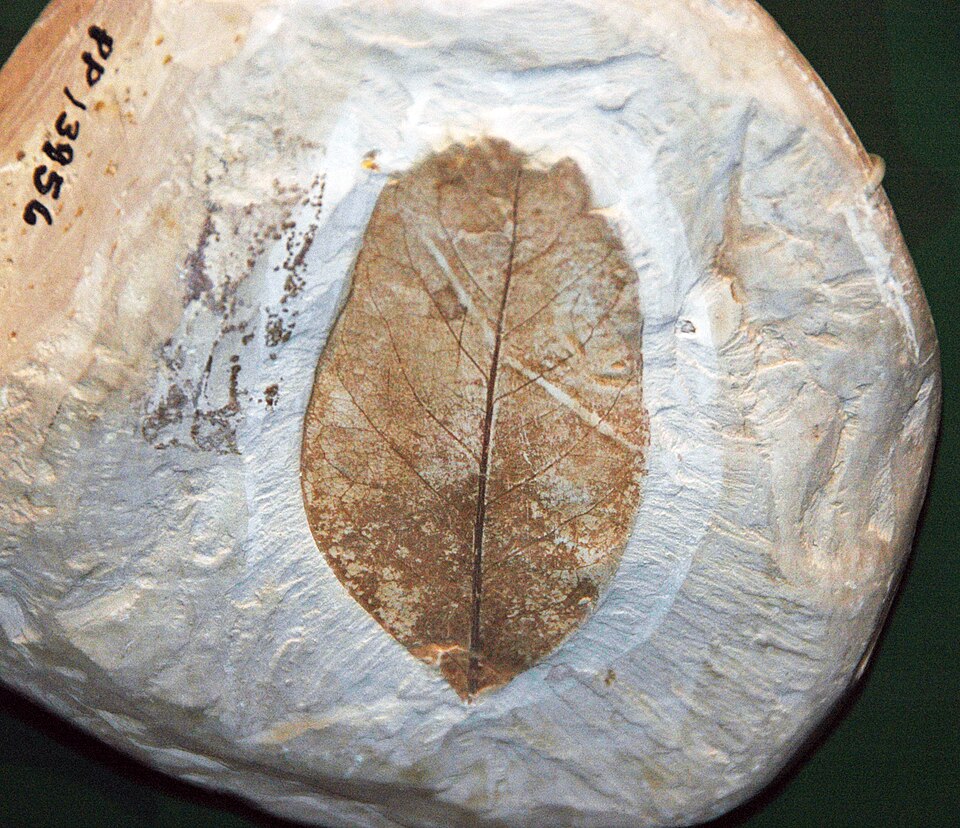
_(Cretaceous;_Alabama,_USA).jpg)
The broader history of land plant evolution spans nearly 470 million years, from the first cryptospore-producing bryophyte-grade organisms of the Ordovician through the gymnosperm-dominated forests of the Mesozoic. Angiosperms represent its most recent and most successful chapter: a lineage that originated in the Early Cretaceous, achieved ecological dominance within roughly 50 million years, and has since diversified into every terrestrial habitat from tropical rainforests to alpine tundra.4, 13
Darwin’s abominable mystery
Darwin’s frustration was empirically grounded. The Cretaceous fossil record of the mid-nineteenth century appeared to show angiosperms arising abruptly, without a clear sequence of primitive forms connecting them to the gymnosperms that dominated Mesozoic vegetation. In the rocks of the Albian and Cenomanian stages (roughly 113 to 94 million years ago), diverse flowering plant pollen and leaf fossils were already abundant, representing lineages that seemed to have diversified fully formed.1, 4 This violated the expectation, fundamental to Darwin’s theory, that complex new body plans should be traceable through a gradual fossil series.
The problem was compounded by the difficulty of identifying truly “primitive” angiosperms from morphology alone. Flowering plants share a suite of derived characters — the enclosed carpel, the double fertilization event, the three-aperturate pollen of eudicots — but their deepest branches are morphologically heterogeneous, and the features linking them to any gymnosperm ancestor remained disputed for well over a century.13 Gnetophytes, with their vessel elements and reduced gametophytes, were long considered the closest gymnosperm relatives of angiosperms, but molecular phylogenetics has since placed gnetophytes firmly within the conifers, severing that connection and leaving the angiosperm stem lineage without a clear gymnosperm sister group in the living biota.8
Modern analyses have reframed the mystery without entirely dissolving it. The apparent suddenness of angiosperm appearance is partly an artifact of preservation: early angiosperms were likely small, weedy plants growing in disturbed, low-preservation habitats poorly represented in the fossil record.11, 13 But even accounting for preservational bias, the rate of morphological diversification during the Cretaceous angiosperm radiation was genuinely rapid by any geological standard — a true adaptive radiation driven by novel biological capabilities rather than a gradual accumulation of novelty over deep time.1
The earliest fossil record
The oldest angiosperm fossils are pollen grains. Monosulcate pollen attributable to the angiosperm lineage appears in Hauterivian-age sediments (approximately 130 million years ago) from multiple localities, including cores from the Potomac Group of the eastern United States and equivalent deposits in Portugal and West Africa.10, 11 These grains bear the columellar wall structure characteristic of angiosperm pollen and occur in assemblages otherwise dominated by gymnosperm pollen, suggesting that angiosperms were a minor, perhaps marginal, component of Early Cretaceous vegetation at this stage.
Body fossils of comparable age are rarer but increasingly well documented. Montsechia vidalii, recovered from lacustrine limestone deposits in the Montsec and Las Hoyas formations of Spain and dated to approximately 125–130 million years ago, is one of the oldest known angiosperm body fossils, preserving stems, leaves, and structures interpreted as fruits containing a single seed enclosed within a carpel.3 The plant appears to have been an aquatic herb — a rootless, submerged form resembling modern hornworts in ecology if not in phylogenetic placement. Its age and preserved fruit characters firmly establish the presence of true angiosperms by the Barremian stage at the latest.
Archaefructus sinensis and related species from the Yixian and Jiufotang Formations of Liaoning Province, China, dated to approximately 125 million years ago, have attracted particular attention as early angiosperms preserved in exceptional detail in lacustrine sediments.2 Archaefructus preserves elongated axes bearing follicle-like fruits and stamens, with an organization interpreted by some researchers as representing a very basal angiosperm grade — a plant at or near the base of the flowering plant phylogeny. Its exact systematic position has been debated, but it remains one of the most completely preserved Early Cretaceous angiosperms known and has shaped discussions of what the earliest flowering plants looked like ecologically and morphologically.2, 11
By the Aptian and Albian (approximately 125 to 100 million years ago), the diversity and abundance of angiosperm pollen increased dramatically in pollen profiles worldwide, reflecting genuine ecological expansion rather than improved preservation alone.4, 11 Megafossil floras of this age from the Potomac Group, the Portuguese Cretaceous, and equivalent deposits document a rapidly diversifying assemblage of leaf and fruit forms, including early members of lineages that would later become dominant components of global vegetation.4
Molecular clocks and deep origins
Molecular phylogenetic analyses, using DNA sequence divergence rates calibrated against fossil occurrences, have consistently pushed the estimated origin of the angiosperm crown group further back than the fossil record alone would suggest. A major study by Bell, Soltis, and Soltis using a multi-gene dataset with multiple fossil calibrations placed the angiosperm crown group origin at approximately 140 to 190 million years ago — extending into the Jurassic or even late Triassic — while the divergence of the angiosperm stem lineage from its gymnosperm relatives may be older still.5 A broader analysis by Magallón and colleagues using a 36-taxon plastome dataset estimated angiosperm crown origins at around 140–250 million years ago depending on calibration scheme, with most point estimates falling in the Jurassic.12
These deep molecular clock estimates are controversial because they predict a long “ghost lineage” for angiosperms — an interval of tens of millions of years during which the lineage must have existed but left no convincing fossil evidence. Proponents argue that early angiosperms were rare, ecologically marginal plants in habitats that preserve poorly, and that their absence from the fossil record is a sampling artifact rather than evidence of absence.5, 12 Skeptics counter that the molecular clock estimates are sensitive to calibration choices and that extraordinary claims for a Triassic angiosperm origin require extraordinary fossil evidence, which has not yet materialized. The tension between the molecular and paleobotanical records remains an active and unresolved area of research.11
What is not in dispute is that the molecular clock evidence fundamentally changes the framing of the abominable mystery. If angiosperms originated in the Jurassic or Triassic, their explosive Cretaceous diversification is not a story of sudden origin but of a lineage that existed in obscurity for tens of millions of years before ecological and evolutionary conditions enabled rapid diversification.5 The mystery shifts from “where did they come from so suddenly?” to “what triggered such rapid success after so long a delay?”
Key biological innovations
The ecological dominance of angiosperms is generally attributed to a combination of innovations that individually occur in other plant groups but are uniquely combined in flowering plants. The most fundamental is the enclosed carpel — the defining character of the angiosperm clade, from which the name derives (angeion, vessel; sperma, seed). In gymnosperms, ovules are borne exposed on cone scales; in angiosperms, the ovule is enclosed within a carpel whose wall forms the pericarp of the mature fruit. This enclosure protects the developing ovule from desiccation and herbivory, enables the evolution of a style and stigma for more controlled pollen capture, and most importantly creates the substrate for diverse fruit morphologies that dramatically enhance seed dispersal.13, 20
Double fertilization is a second defining angiosperm innovation with profound ecological consequences. In the angiosperm embryo sac, two sperm cells are delivered by the pollen tube: one fertilizes the egg to produce the diploid embryo, and the second fuses with the polar nuclei to produce the triploid (or otherwise polyploid) endosperm, a nutrient-rich tissue that nourishes the developing embryo.16 Endosperm represents a maternal investment in seed quality that gymnosperms lack: gymnosperm seeds provision their embryos with haploid gametophytic tissue laid down before fertilization, regardless of whether fertilization occurs. The angiosperm system ties maternal investment directly to successful fertilization, potentially increasing per-seed efficiency, and produces seeds with nutritional profiles attractive to animal dispersers — a prerequisite for the evolution of fleshy fruits.16, 20
Water transport efficiency represents a third major innovation. Angiosperm xylem contains vessel elements — cells with perforated end walls that stack end to end to form continuous open tubes — in addition to the tracheids present in all vascular plants. Vessel elements offer dramatically lower resistance to water flow than tracheids of the same diameter, enabling higher transpiration rates, higher stomatal conductance, and consequently higher rates of photosynthesis per unit leaf area.9 This hydraulic advantage is not universal — some basal angiosperms lack vessels entirely, and some ferns and gnetophytes have convergently evolved vessel-like elements — but in the angiosperm crown group, the evolution of vessels is correlated with the expansion into warm, high-productivity environments where rapid water and carbon turnover confers the greatest advantage.9
Polyploidy has also played a recurring role in angiosperm diversification. Genome duplication events — both ancient whole-genome duplications and more recent allopolyploidy — are common throughout angiosperm phylogeny. A major polyploidy event near the base of the eudicots, the clade containing roughly 75 percent of angiosperm species, has been detected in genomic analyses and may have contributed to the rapid diversification of that lineage in the mid-Cretaceous.6 Polyploidy creates genetic redundancy that buffers against the deleterious effects of mutations and provides raw material for functional divergence of duplicate gene copies, potentially accelerating the evolution of new morphological and biochemical traits.6
Coevolution with pollinators
Perhaps the most consequential driver of angiosperm diversification has been the tight coevolutionary relationship between flowering plants and their animal pollinators. Gymnosperms are predominantly wind-pollinated, scattering vast quantities of pollen indiscriminately in the hope that some reaches a receptive ovule of the correct species. Animal pollination, by contrast, can achieve highly targeted pollen transfer: a bee visiting only flowers of a single species carries pollen directly from one individual to another of the same species, dramatically improving fertilization efficiency and enabling reproductive isolation between populations even in the absence of geographic barriers.7
The fossil record documents the antiquity of insect-plant pollination relationships. Cycads and bennettitaleans of the Jurassic may have been pollinated by beetles and other insects visiting their reproductive structures, and some amber-preserved insects from the Cretaceous carry angiosperm-like pollen on their bodies, providing direct evidence of pollination behavior.7, 14 The Cretaceous radiation of angiosperms coincided with and probably drove a major diversification of insects, particularly the bees, wasps, butterflies, moths, and flies that today constitute the primary pollinator guilds for most flowering plant families.14 Labandeira and Sepkoski’s analysis of insect family diversity through the Phanerozoic found a significant correlation between the Cretaceous angiosperm radiation and a step-increase in insect family richness, consistent with a coevolutionary response.14
Floral morphology is the evolutionary interface of this coevolution. The extraordinary diversity of angiosperm flower forms — from the radially symmetric, open-bowl flowers of basal lineages accessible to generalist beetles, to the bilaterally symmetric, nectar-spurred orchid flowers that admit only specific bees or hawkmoths — reflects the progressive specialization of pollination relationships over evolutionary time.7 Floral traits including color, scent, shape, petal arrangement, nectar composition, and timing of opening have all been demonstrated to function as filters that preferentially attract particular pollinator types while excluding others, sharpening the specificity of pollen transfer and accelerating speciation by reinforcing reproductive isolation.7, 13
Vertebrate pollinators added further dimensions to this diversification. Bird pollination (ornithophily) has evolved independently in dozens of angiosperm lineages, particularly among plants with tubular red or orange flowers producing copious dilute nectar accessible to probing bills — a syndrome so convergent that it can arise from nearly any floral ground plan given the right selective pressure.15 Bat pollination (chiropterophily) evolved in tropical lineages producing large, pale, night-opening flowers with strong fermented or musky scents and robust structures able to withstand the weight of visiting bats, providing access to a powerful dispersal vector in return for pollen carriage.15 These vertebrate pollination syndromes are largely a Cenozoic elaboration of the basic angiosperm-pollinator relationship established during the Cretaceous radiation, but they demonstrate the continued evolutionary plasticity of the flowering plant–pollinator interface.15
The Cretaceous ecological takeover
Between approximately 100 and 66 million years ago, angiosperms underwent a transformation from minor components of gymnosperm-dominated floras to the ecological dominants of most terrestrial vegetation. This transition is documented in pollen profiles from hundreds of Cretaceous localities worldwide, which show a progressive increase in angiosperm pollen relative abundance from a few percent in the Hauterivian to 60–80 percent or more in Campanian and Maastrichtian assemblages.4, 18 By the latest Cretaceous, the major angiosperm lineages were firmly established: the magnoliids, the monocots, the eudicots, and within the eudicots the rosids and asterids that today contain the vast majority of angiosperm families.8, 13
The ecological mechanisms of gymnosperm displacement by angiosperms have been the subject of considerable debate. Gymnosperms were not simply outcompeted — they remain highly successful today, with conifers dominating boreal forests across millions of square kilometres. Rather, angiosperms appear to have been superior competitors specifically in warm, wet, high-productivity environments where their higher photosynthetic rates, faster growth, and more efficient reproductive systems provided decisive advantages.19 Bond’s analysis of the gymnosperm-angiosperm transition emphasizes that angiosperms effectively closed the canopy in tropical and subtropical forests, reducing light levels beneath which gymnosperms could not regenerate, a form of competitive exclusion mediated through canopy architecture rather than direct resource competition.19
The radiation also restructured food webs. The diversification of fleshy fruits created new mutualisms with frugivorous animals, driving diversification of fruit-eating birds, mammals, and reptiles that served as seed dispersers in return for caloric rewards.20 The nutritional richness of angiosperm foliage — driven partly by higher nitrogen content and faster leaf turnover relative to gymnosperms — supported the diversification of herbivorous insects and vertebrates, reshaping trophic structures across terrestrial ecosystems.14, 19
The Cretaceous-Paleogene mass extinction 66 million years ago, which eliminated the non-avian dinosaurs, had differential effects on plant lineages. Many gymnosperm and fern lineages suffered heavily, while angiosperms, with their buried seeds and root systems capable of rapid resprouting, recovered quickly. Silvestro and colleagues’ Bayesian analysis of angiosperm diversification rates found elevated origination rates in the immediate post-extinction interval, suggesting that the ecological disruption of the end-Cretaceous event actually accelerated angiosperm diversification by opening habitat for colonization.18
Displacement of gymnosperms and ferns
Before the angiosperm radiation, Mesozoic terrestrial vegetation was dominated by conifers, cycads, bennettitaleans, ginkgoes, and various seed fern lineages, with a rich understorey of ferns and horsetails. The bennettitaleans — a diverse, cycad-like group with conspicuous, flower-like reproductive structures — went extinct entirely by the end of the Cretaceous, possibly outcompeted by the angiosperms that replaced them in many ecological niches.4, 13 The seed ferns, which had persisted from the Carboniferous through the Mesozoic, also vanished, leaving no descendants. Cycads, once diverse and globally distributed, contracted to a relic distribution in tropical and subtropical regions where they persist today as a single surviving order with approximately 300 species — a shadow of their Mesozoic diversity.19
Ferns underwent a paradoxical response to the angiosperm radiation. Most Mesozoic fern lineages declined as angiosperms colonized the understorey, but one derived fern clade — the polypod ferns (Polypodiales) — diversified explosively in the shade cast by angiosperm canopies, evolving from a Cretaceous common ancestor into the roughly 9,000 species that today constitute approximately 80 percent of living fern diversity.4 This “shadow radiation” of polypod ferns, dependent on the closed-canopy habitat created by angiosperms, illustrates how the angiosperm radiation simultaneously displaced many plant lineages and created new ecological opportunities for others.4
The Cenozoic saw the further refinement of angiosperm dominance through the evolution and spread of grasses (Poaceae). Grass pollen first appears in the Late Cretaceous, but the major expansion of C4 grassland biomes occurred in the Miocene, approximately 8 to 3 million years ago, driven by declining atmospheric CO2 that gave C4 photosynthesis a competitive advantage in warm, open environments.17 The spread of grasslands reshaped entire continental interiors, driving the evolution of grazing mammals, cursorial predators, and ultimately the open savanna environments that formed the selective backdrop for much of hominin evolution.17, 19
Molecular phylogenetics and the APG system
Understanding the evolutionary relationships among the roughly 300,000 described angiosperm species was for most of botanical history an intractable problem. Morphological classification systems, including those of Engler and Prantl in the nineteenth century and Cronquist, Takhtajan, and Thorne in the twentieth, were based on overall similarity and produced conflicting results because convergent evolution of similar floral and vegetative traits repeatedly misled classification.8 The advent of DNA sequencing transformed plant systematics as thoroughly as any other field of biology.
The Angiosperm Phylogeny Group (APG) was established in 1998 as an informal consortium of systematists committed to producing a classification based strictly on molecular phylogenetic evidence. The APG system has been updated four times — APG I (1998), APG II (2003), APG III (2009), and APG IV (2016) — with each iteration refining ordinal and family-level circumscriptions as additional molecular data accumulated.8 APG IV recognizes 64 orders and 416 families of flowering plants, and its topology has proven broadly stable across analyses using different molecular markers and different methodological approaches.8
The molecular phylogeny resolved several longstanding controversies. The phylogenetic analysis placed Amborella trichopoda, a small shrub endemic to New Caledonia, as the sister lineage to all other living angiosperms, followed by the water lilies (Nymphaeales) and Austrobaileya and its relatives (Austrobaileyales) — collectively called the ANA grade — before the major radiation into monocots and eudicots.8 The position of Amborella as the earliest-diverging angiosperm lineage means that its characteristics provide a baseline for inferring ancestral angiosperm morphology: small, shrubby, with simple, open flowers and no vessels in the wood, consistent with the inferred ecology of early angiosperms as plants of small-stature, disturbed, or low-competition habitats.8, 13
The eudicots, defined by their three-aperturate (tricolpate) pollen, comprise the most species-rich angiosperm clade, including the rosids (oaks, roses, legumes, mustards, squashes) and asterids (sunflowers, mints, tomatoes, coffee). Monocots, characterized by a single seed leaf and parallel-veined foliage, form a second major clade containing grasses, palms, orchids, and lilies. The magnoliids — magnolias, laurels, peppers, and relatives — occupy a position between the ANA grade and the monocot-eudicot split, though their precise placement has varied across analyses.8
Major angiosperm clades and estimated species richness8, 4
| Clade | Approximate species | Representative families | Phylogenetic position |
|---|---|---|---|
| ANA grade (Amborella, water lilies, Austrobaileyales) | ~100 | Nymphaeaceae, Amborellaceae | Earliest-diverging angiosperms |
| Magnoliids | ~9,000 | Magnoliaceae, Lauraceae, Piperaceae | Sister to monocots + eudicots |
| Monocots | ~70,000 | Poaceae, Orchidaceae, Arecaceae, Liliaceae | Major crown clade |
| Eudicots – rosids | ~90,000 | Fabaceae, Rosaceae, Brassicaceae, Cucurbitaceae | Largest eudicot subclade |
| Eudicots – asterids | ~80,000 | Asteraceae, Lamiaceae, Solanaceae, Rubiaceae | Sister to rosids |
Why angiosperms dominate
The question of why angiosperms now constitute roughly 90 percent of land plant species does not have a single answer but rather a convergence of reinforcing advantages. Their physiological efficiency — vessel-mediated hydraulics, rapid nutrient cycling through faster leaf turnover, flexible growth habits — allowed angiosperms to achieve higher productivity in warm environments than the gymnosperms they replaced.9, 19 Their reproductive innovations — the enclosed carpel, efficient double fertilization, diverse fruit morphologies — enabled more precise pollen targeting, higher seed quality, and access to a vast guild of animal dispersers that gymnosperms largely lack.16, 20
The coevolutionary dynamic with pollinators and seed dispersers created a self-reinforcing diversification engine. Each new floral specialization that evolved to attract a particular pollinator guild simultaneously excluded others, creating reproductive barriers between populations and driving speciation. Each new fruit type that evolved to attract a particular disperser created new geographic ranges and new gene flow patterns. The result was a clade that diversified faster, and has continued to diversify faster, than any other comparable plant lineage.7, 18
The relationship with coevolution is not merely one of cause and effect but of mutual escalation. As angiosperms diversified, they drove insect diversification; as insects diversified, they created new pollination niches that further drove angiosperm speciation. Labandeira and Sepkoski’s data show that the families of phytophagous (plant-eating) insects — the primary consumers of angiosperm tissue — diversified in parallel with angiosperms throughout the Cretaceous and Cenozoic, suggesting that the entire terrestrial food web was restructured around the rise of flowering plants.14
Darwin’s mystery has not been fully resolved. The stem lineage of angiosperms remains poorly documented in the fossil record, and the precise sequence of character acquisitions that produced the first true flower is still unknown. But the broad outlines are now clear: a lineage that originated no later than the Early Cretaceous and possibly in the Jurassic, equipped with a combination of physiological and reproductive innovations that no prior plant group possessed in the same combination, diversified into every available terrestrial habitat over the course of roughly 100 million years. The world’s forests, grasslands, croplands, and gardens — indeed, nearly every green surface on Earth that is not boreal forest or Arctic tundra — are the product of that radiation.1, 4, 18
References
An update of the Angiosperm Phylogeny Group classification for the orders and families of flowering plants: APG IV
Hauterivian (Early Cretaceous) angiosperm pollen: new records from northwestern Gondwana