Overview
- Insects are the most species-rich animal group on Earth, with over one million described species and an evolutionary history extending back to at least the Early Devonian, approximately 410 million years ago.
- Insects were the first animals to evolve powered flight, achieving this innovation by the Late Carboniferous, and the subsequent evolution of complete metamorphosis enabled extraordinary ecological versatility and accelerated diversification.
- The co-radiation of insects and flowering plants during the Cretaceous produced the most consequential mutualistic relationship in terrestrial ecology, fundamentally reshaping pollination networks, herbivory patterns, and global biodiversity.
Insects are the most diverse group of animals on Earth, with over one million described species and estimates of total species richness ranging from 5.5 million to more than 8 million.12 Their evolutionary history spans at least 410 million years, from enigmatic hexapod fragments in Early Devonian deposits to the staggering variety of beetles, butterflies, ants, and flies that dominate terrestrial ecosystems today.1, 2 The story of insect evolution is one of repeated innovation — the colonization of land, the invention of flight, the development of complete metamorphosis, and a profound co-evolutionary partnership with flowering plants — each breakthrough unlocking new adaptive zones and driving explosive diversification.3
Earliest hexapod fossils
The oldest widely accepted insect fossil is Rhyniognatha hirsti, a pair of mandibles recovered from the Early Devonian Rhynie chert of Scotland, dated to approximately 410 million years ago.1 The Rhynie chert is a Lagerstätte of exceptional preservation that provides a window into one of the earliest terrestrial ecosystems, preserving plants, fungi, and arthropods in exquisite three-dimensional detail within silicified hot-spring deposits.17 The mandibles of Rhyniognatha possess features — including dicondylic articulation, in which two ball-and-socket joints connect the mandible to the head capsule — that are characteristic of true insects (Insecta) rather than more basal hexapods, suggesting that the insect lineage had already diverged from other hexapod groups by the Early Devonian.1
Molecular clock analyses calibrated with the fossil record broadly support a Devonian or possibly late Silurian origin for Hexapoda, with the major insect orders diverging through the late Paleozoic and Mesozoic.2 A landmark phylogenomic study using transcriptomic data from 144 species estimated that insects originated approximately 479 million years ago (Early Ordovician), though the earliest body fossils remain Devonian in age, indicating a substantial gap between molecular divergence times and the earliest physical evidence.2 The colonization of land by hexapods coincided with the diversification of early land plants, which provided both food resources and structural habitat for the first terrestrial arthropods.3, 17
The Carboniferous radiation and giant insects
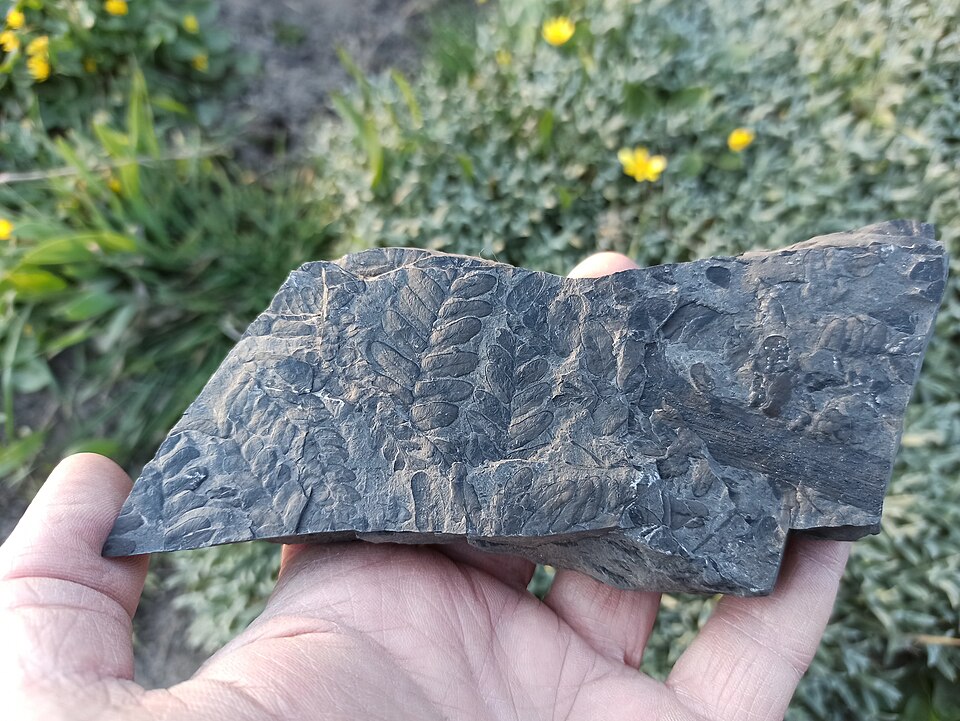
The Carboniferous period (359 to 299 million years ago) witnessed a dramatic radiation of insect lineages, coinciding with the expansion of vast tropical forests dominated by lycopsids and ferns. By the Late Carboniferous, insects had diversified into numerous orders, including early relatives of dragonflies (Protodonata), cockroaches (Blattodea), and mayflies (Ephemeroptera).6 This interval also produced the largest insects in Earth's history. The griffenfly Meganeura monyi, a stem-group odonate from the Late Carboniferous of France, possessed a wingspan of approximately 70 centimetres, dwarfing any modern insect.4
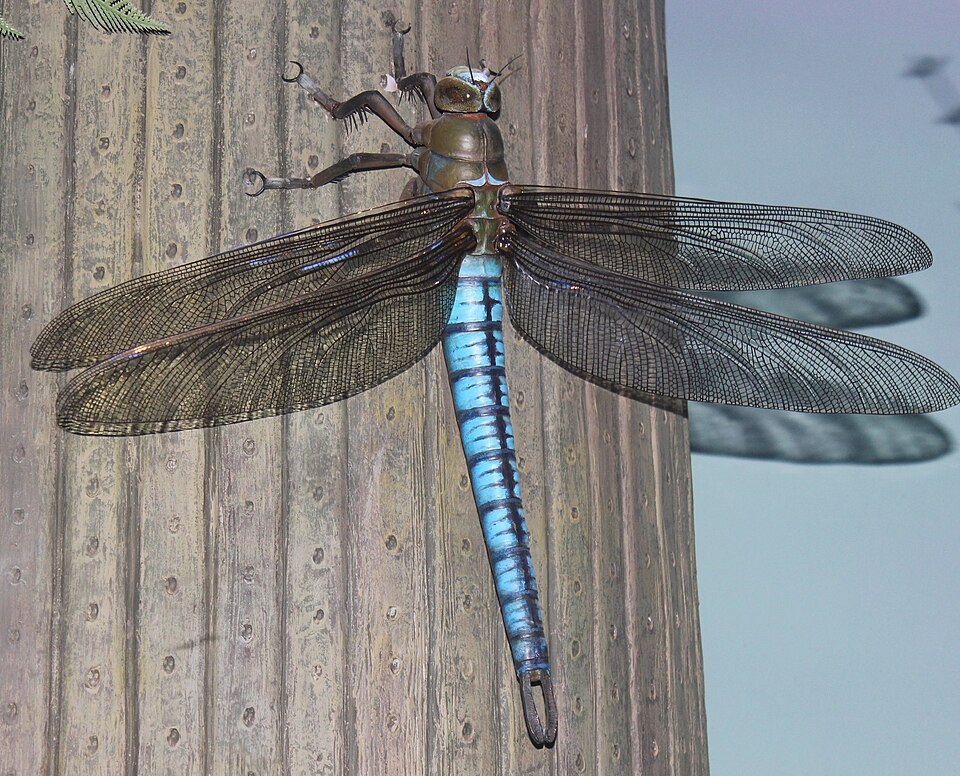

The prevailing explanation for Carboniferous insect gigantism centres on atmospheric oxygen levels. Geochemical models indicate that atmospheric oxygen rose to approximately 31 to 35 percent during the Late Carboniferous and Early Permian, compared with the present-day level of 21 percent.5, 7 Because insects deliver oxygen to their tissues through a network of tracheal tubes rather than through a circulatory system, the maximum body size that can be sustained by tracheal respiration increases with ambient oxygen concentration. Experimental studies have confirmed that modern insects reared under hyperoxic conditions grow larger, supporting the oxygen-gigantism hypothesis.7 As oxygen levels declined during the Permian and Mesozoic, insect maximum body size decreased correspondingly, and the era of giant insects came to an end.5, 7
Evolution of flight
Insects were the first animals to achieve powered flight, evolving this ability by the Late Carboniferous, at least 150 million years before the earliest pterosaurs and birds.4, 3 The origin of insect wings remains one of the most debated questions in evolutionary biology. Two principal hypotheses have been advanced: the paranotal hypothesis, which proposes that wings evolved from lateral extensions of the thoracic tergum (the dorsal body wall) that initially served as gliding surfaces; and the leg-exite hypothesis, which suggests that wings are derived from gill-like appendages on the proximal segments of ancestral crustacean-like legs.13
Developmental genetic studies have provided support for a dual origin combining elements of both models. The expression of wing-patterning genes such as apterous and nubbin in both the dorsal body wall and leg-associated tissues of crustaceans suggests that the insect wing may have originated through the fusion of two distinct tissue sources during the transition from aquatic to terrestrial life.13 Regardless of the precise morphological origin, the evolution of flight was a transformative innovation. It enabled insects to disperse across landscapes, escape ground-dwelling predators, exploit aerial food sources, and colonize new habitats with unprecedented efficiency. The ecological advantages of flight are reflected in the overwhelming taxonomic dominance of winged insect lineages (Pterygota), which account for the vast majority of all insect species.3

Complete metamorphosis
Among the most consequential innovations in insect evolution was the development of holometaboly, or complete metamorphosis — a life cycle in which the organism passes through four distinct stages: egg, larva, pupa, and adult. In holometabolous insects, the larval stage is specialized for feeding and growth, while the adult stage is specialized for reproduction and dispersal, with a pupal stage intervening during which the body is radically reorganized.8 This decoupling of larval and adult ecologies allows a single species to exploit two entirely different niches during its lifetime, dramatically reducing competition between juvenile and adult stages.
The earliest fossil evidence of holometabolous insects dates to the Late Carboniferous and Early Permian, with representatives of stem-group Holometabola appearing alongside the more archaic hemimetabolous (incomplete metamorphosis) orders.9 Molecular phylogenetic analyses place the origin of Holometabola in the Early Carboniferous, approximately 345 million years ago.2 Today, the four largest insect orders — Coleoptera (beetles), Lepidoptera (butterflies and moths), Hymenoptera (ants, bees, and wasps), and Diptera (flies) — are all holometabolous, and together they account for approximately 80 percent of all described insect species.8, 12 The ecological versatility afforded by complete metamorphosis is widely regarded as a key factor in the extraordinary species richness of these orders.9
Estimated species counts for the four largest insect orders12, 15
Co-evolution with flowering plants
The evolutionary relationship between insects and plants is one of the most significant co-evolutionary partnerships in the history of life. Insects have been feeding on plants since the Late Carboniferous, as evidenced by distinctive damage patterns preserved on fossil leaves, including external foliage feeding, piercing-and-sucking marks, mining traces, and galling.16 However, the most transformative chapter of insect-plant interaction began with the diversification of angiosperms (flowering plants) during the Cretaceous period, approximately 125 to 80 million years ago.10, 11
.jpg)
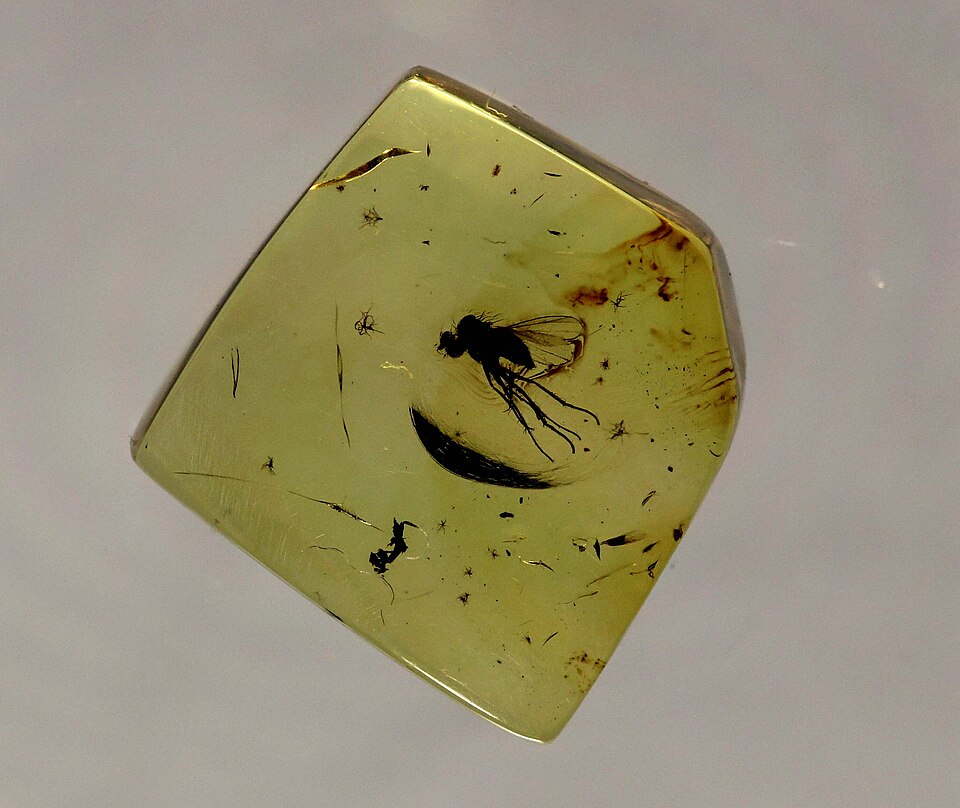
The radiation of angiosperms created entirely new ecological opportunities for insects. Flowers offered concentrated nectar and pollen rewards to visiting insects, and in return gained a highly efficient mechanism for pollen transfer between individual plants. This mutualistic exchange drove the diversification of pollinator lineages — including bees, butterflies, moths, flies, and beetles — while simultaneously accelerating angiosperm speciation through the evolution of increasingly specialized floral morphologies.10, 11 Fossil evidence from Cretaceous ambers and compression fossils documents the progressive elaboration of this relationship, including the appearance of the earliest bees (Apoidea) and the diversification of flower-visiting flies and beetles alongside the expanding angiosperm flora.11 The co-radiation of insects and angiosperms is considered a primary driver of the extraordinary terrestrial biodiversity observed from the Late Cretaceous to the present.10
Diversity and ecological dominance
By any measure, insects are the most successful animal group in Earth's history. With more than one million formally described species and conservative estimates of total species richness exceeding 5.5 million, they account for roughly 80 percent of all known animal species.12 Insects occupy virtually every terrestrial and freshwater habitat, from tropical rainforest canopies to Antarctic nunataks, and they perform ecological functions that are indispensable to the biosphere: pollination of approximately 87 percent of flowering plant species, decomposition and nutrient cycling, biological pest control, and serving as the primary food source for countless vertebrate species.12, 14
The causes of insect hyperspeciosity are debated, but several factors are consistently identified as contributing. Small body size permits fine partitioning of habitats and resources; flight enables rapid dispersal and colonization; complete metamorphosis allows niche separation between life stages; and the co-evolutionary arms race with plants continuously generates new adaptive opportunities through host specialization.3, 15 Among all insect orders, the beetles (Coleoptera) stand out as the single most species-rich order of any organism, with approximately 400,000 described species. A comprehensive phylogenetic analysis attributed the extraordinary diversity of beetles to multiple factors including their ancient origin in the Permian, repeated shifts between herbivorous and non-herbivorous lifestyles, and the exploitation of angiosperm-dominated ecosystems from the Cretaceous onward.15
Modern threats and ongoing significance
Despite their evolutionary resilience across multiple mass extinction events, insects face unprecedented pressures in the modern era. A growing body of evidence documents declines in insect abundance and diversity in many regions, driven by habitat loss, agricultural intensification, pesticide use, light pollution, invasive species, and climate change.14 Long-term monitoring studies in Europe have reported declines of 75 percent or more in flying insect biomass over several decades, raising alarm about cascading effects on pollination, food webs, and ecosystem services.14
The evolutionary history of insects across deep time demonstrates that this lineage has survived the end-Permian and end-Cretaceous extinction events, adapting to radically different atmospheric compositions, climates, and ecological regimes over more than 400 million years.2, 3 Understanding the mechanisms that drove past insect radiations and extinctions is essential for assessing the vulnerability of modern insect communities and the ecosystems that depend upon them.14
References
Atmospheric oxygen, giant Paleozoic insects and the evolution of aerial locomotor performance
Giant insects from the Paleozoic: maximum body size in relation to atmospheric oxygen levels
A comprehensive phylogeny of beetles reveals the evolutionary origins of a superradiation