Overview
- The Messel Pit near Darmstadt, Germany, is a UNESCO World Heritage Site preserving an Eocene maar lake ecosystem (~47 Ma) with extraordinary detail, including soft tissues, stomach contents, fur, feathers, and iridescent insect cuticle.
- Key fossils from Messel include the early primate Darwinius masillae (‘Ida’), the earliest known bat with preserved echolocation-capable ear structures, and a succession of early horses documenting the transition from multi-toed forest browsers to modern equids.
- The exceptional preservation at Messel is attributed to seasonal overturn of a deep, stratified volcanic lake that released toxic gases, killing animals at the surface and depositing their carcasses in anoxic bottom waters where bacterial degradation was minimal.
The Messel Pit (Grube Messel) is a disused quarry near the town of Messel, approximately 9 kilometres northeast of Darmstadt in the German state of Hessen, that contains one of the richest and most important fossil sites of the Cenozoic era. The site preserves the sediments of a former maar lake — a deep, crater-shaped lake formed by a phreatomagmatic volcanic explosion — that existed during the middle Eocene epoch, approximately 47.8 ± 0.2 million years ago, as determined by 40Ar/39Ar radiometric dating of volcanic minerals in the lake sediments.10 Designated a UNESCO World Heritage Site in 1995, the Messel Pit is celebrated for the extraordinary quality of its fossil preservation, which routinely includes soft tissues such as fur, feathers, skin outlines, stomach contents, and even the iridescent structural colours of beetle cuticle — details that are almost never preserved in the fossil record under normal depositional conditions.1, 14
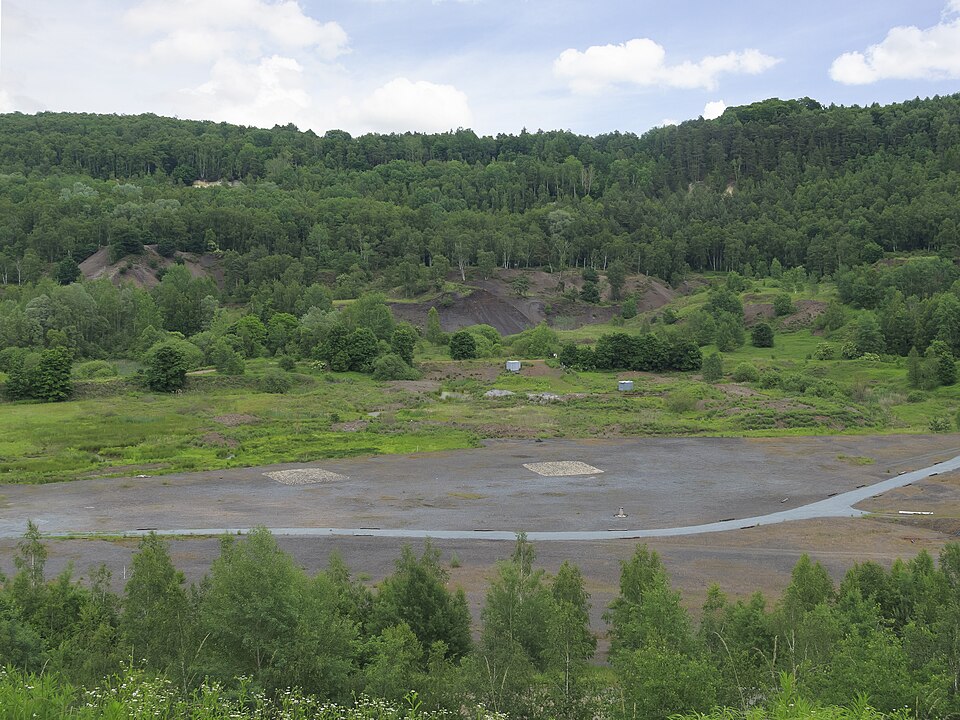

The scientific importance of the Messel Pit lies in its capacity to provide an exceptionally detailed window into a complete Eocene ecosystem, capturing not just the skeletal remains of organisms but intimate details of their biology, diet, reproduction, and behaviour. More than 10,000 fossil specimens have been recovered from the site, representing over 70 species of vertebrates and an even greater diversity of invertebrates and plants. Key taxa include early primates, some of the earliest known bats, archaic horses, crocodilians, turtles, snakes, birds, fish, insects, and an extraordinary diversity of angiosperms, collectively documenting the explosive mammalian radiation that followed the end-Cretaceous mass extinction.1, 2
Geological setting
The Messel Pit formed as a maar — a type of shallow volcanic crater produced when rising magma encountered groundwater, triggering a violent phreatomagmatic explosion that excavated a broad, roughly circular crater in the surrounding bedrock. The explosion occurred in the crystalline basement rocks of the Odenwald massif, and the resulting crater was approximately 700 metres in diameter and an estimated 300 metres deep. Following the eruption, the crater rapidly filled with water to form a deep, steep-sided lake with no surface outlet, analogous to modern maar lakes such as those found in the Eifel region of western Germany.1, 16
The lake persisted for an estimated one million years, during which time it accumulated a sequence of finely laminated oil shales (bituminous mudstones) up to approximately 190 metres thick. The laminations consist of alternating light and dark layers interpreted as varves — annual cycles of sedimentation reflecting seasonal changes in algal productivity, sediment input, and water chemistry. The dark layers are rich in organic carbon derived from algal blooms, while the lighter layers contain more detrital mineral grains washed in during periods of higher rainfall. The fine grain size and undisturbed lamination of the sediments indicate that the bottom waters of the lake were permanently anoxic and devoid of burrowing organisms, creating the stagnant, oxygen-free conditions essential for the extraordinary preservation that makes the site famous.1, 13
Radiometric dating using 40Ar/39Ar methods on sanidine crystals from volcanic ash layers interbedded with the oil shales places the formation of the lake at approximately 47.8 million years ago, corresponding to the Lutetian stage of the middle Eocene. At this time, central Europe lay at approximately 44°N latitude and experienced a subtropical to warm-temperate climate, with mean annual temperatures estimated at 20 to 25°C and abundant rainfall supporting dense mixed mesophytic forests in the region surrounding the lake.10, 13
Mechanisms of exceptional preservation
The Messel Pit is classified as a Konzentrat-Lagerstätte — a fossil deposit characterised not merely by the abundance of fossils but by the exceptional quality of their preservation. The term Lagerstätte, introduced by Seilacher and colleagues in 1985, denotes fossil deposits that provide substantially more biological information than typical fossil assemblages, either through unusual concentrations of specimens (Konzentrat-Lagerstätten) or through exceptional preservation of soft parts (Konservat-Lagerstätten). The Messel Pit qualifies under both definitions.9
The extraordinary preservation at Messel results from a combination of factors. The most important is the permanently anoxic condition of the lake's bottom waters. The deep, steep-sided morphology of the maar crater promoted strong thermal stratification, with warm, oxygenated surface waters overlying cold, anoxic bottom waters rich in dissolved hydrogen sulphide. Under these conditions, organisms that sank to the lake floor were not consumed by scavengers or significantly degraded by aerobic bacteria, allowing soft tissues to be preserved as carbonised films, bacterial casts, or impressions in the fine-grained sediment.1, 2
The mechanism by which terrestrial animals entered the lake has been the subject of considerable discussion. The prevailing model holds that the maar lake periodically released toxic gases — primarily carbon dioxide and hydrogen sulphide — during seasonal overturn events or volcanic degassing episodes. When the stratified water column mixed, dissolved toxic gases from the anoxic bottom waters would have been released at the surface, creating a lethal gas cloud in the low-lying crater that killed or incapacitated animals at the shore and on the lake surface. Birds, bats, and insects flying over the lake would have been asphyxiated and fallen into the water, while terrestrial mammals, reptiles, and amphibians at the lake margins would have been overcome and washed into the lake. This model accounts for the remarkable diversity of terrestrial organisms preserved at Messel, including animals that would not normally enter a lake voluntarily.1, 16
Once submerged, carcasses sank through the oxygenated surface layer relatively quickly and came to rest on the anoxic lake floor, where they were rapidly entombed in the accumulating organic-rich mud. The fine grain size of the sediment preserved minute anatomical details, while the anoxic chemistry inhibited decomposition and permitted the bacterial replacement of soft tissues by siderite (iron carbonate) and other authigenic minerals. In some specimens, the original organic chemistry of tissues has been partially preserved, allowing the identification of melanin pigments, structural colours, and even remnant biomolecules through mass spectrometry and synchrotron analysis.6, 15
Key mammalian fossils
The mammalian fauna of the Messel Pit is among the most diverse and well-preserved Eocene mammal assemblages known anywhere in the world. More than 45 mammalian species have been identified, representing a wide range of ecological niches from arboreal insectivores to terrestrial herbivores and semi-aquatic predators. The quality of preservation routinely includes complete articulated skeletons with fur outlines, stomach contents, and in some cases the remains of unborn fetuses, providing an unparalleled view of Eocene mammalian biology.1, 2
The most publicly famous Messel mammal is Darwinius masillae, popularly known as "Ida," a juvenile female adapiform primate described by Franzen and colleagues in 2009. The specimen (PMO 214.214) is approximately 95 percent complete and preserves not only the entire skeleton but also the outline of the body in soft tissue, the contents of the gut (showing that the animal had consumed fruits and leaves shortly before death), and the shadow of the fur coat. Franzen and colleagues initially argued that Darwinius occupied a pivotal position in primate phylogeny as a stem haplorhine — that is, a basal member of the lineage leading to tarsiers, monkeys, apes, and humans rather than the lemur lineage — a claim that generated enormous media attention and considerable scientific controversy.3
Subsequent phylogenetic analyses placed Darwinius more conservatively within Adapiformes, a group of strepsirrhine primates related to modern lemurs, rather than on the haplorhine line. Franzen and colleagues maintained their original interpretation in a 2012 reply to critics, but the consensus among primate systematists has shifted toward a strepsirrhine placement. Regardless of its precise phylogenetic position, the specimen remains one of the most complete primate fossils ever discovered and provides invaluable anatomical information about Eocene primate diversity.3, 17
The Messel Pit has also yielded some of the earliest and most informative bat fossils known. Several species are represented, including Palaeochiropteryx tupaiodon and Hassianycteris messelensis, both preserved with exquisite detail including wing membranes, fur, and in some cases the remains of insects in the stomach. Analysis of cochlear morphology in Messel bats has demonstrated that echolocation was already well developed by the middle Eocene, with cochlear dimensions falling within the range of modern echolocating microchiropterans. A closely related early bat, Onychonycteris finneyi from the slightly older Green River Formation of Wyoming, shows that the earliest bats possessed fully developed wings for powered flight but lacked the cochlear specialisations associated with echolocation, suggesting that flight evolved before echolocation in bat evolution — a hypothesis that the Messel bats helped to substantiate.4 Other remarkable mammalian taxa from Messel include the pantolestid Kopidodon macrognathus, a semi-aquatic mammal preserved with dense fur and a long, muscular tail, and several species of early carnivores, rodents, and insectivores, each contributing to the picture of a mature, ecologically stratified mammalian community that had already diversified to fill a broad range of ecological niches by the middle Eocene.1, 7
Early horses from Messel include Eurohippus (formerly Propalaeotherium), a small, multi-toed forest browser approximately the size of a fox terrier. Messel specimens preserve not only the skeleton but also the outline of the body, gut contents showing a diet of fruits and leaves, and in one celebrated specimen, the remains of an unborn foal, demonstrating that Eocene horses were already viviparous and providing a rare direct window into reproductive biology. The Messel horses are significant for documenting the early stages of equid evolution, when horses were small, multi-toed browsers inhabiting closed forests — a far cry from the large, single-toed grazers of the modern savanna.1, 8
Birds, reptiles, and insects
The avian fauna of the Messel Pit is exceptionally diverse, with over 70 bird species identified from the site, making it one of the most species-rich Eocene bird assemblages known. Gerald Mayr's comprehensive studies of Messel birds have documented representatives of numerous modern avian orders, including early relatives of parrots, hawks, swifts, rollers, mousebirds, trogons, and hoopoes, alongside extinct lineages with no modern descendants. Several specimens preserve feathers in sufficient detail to allow reconstruction of plumage patterns, and in a few cases structural colour has been identified through analysis of melanin-containing nanostructures in fossil feathers, demonstrating that some Messel birds possessed iridescent plumage comparable to that of modern hummingbirds or starlings.11, 12, 15
Stomach contents are preserved in several Messel bird specimens, providing direct evidence of diet. Mayr's 2002 description of a Messel bird with preserved stomach contents revealed the remains of fish, demonstrating a piscivorous feeding habit. Other specimens contain the remains of insects, seeds, or small vertebrates, collectively documenting a wide range of avian feeding ecologies within the Messel ecosystem.11
The reptilian fauna includes several species of crocodilians, the large terrestrial snake Palaeopython (reaching lengths of over 2 metres), numerous turtle species, and a diverse assemblage of lizards. Smith and Scanferla's 2016 study of a Palaeopython specimen with exceptionally preserved soft tissue revealed details of the body wall musculature and suggested that this snake was adapted for lunge-feeding, ambushing prey from a concealed position rather than constricting it in the manner of modern pythons.18
The insect fauna of the Messel Pit is among the most remarkable components of the entire assemblage. Thousands of insect specimens have been recovered, representing beetles, wasps, ants, flies, butterflies, and many other orders. The most extraordinary aspect of insect preservation at Messel is the retention of structural colour in beetle elytra (wing cases). McNamara and colleagues' 2012 study used electron microscopy to demonstrate that the multilayer reflectors responsible for the metallic green and blue colours of living jewel beetles are preserved in Messel beetle specimens with sufficient fidelity that the original colours can be reconstructed. This finding demonstrated that structural colour can survive for nearly 50 million years under favourable preservational conditions and opened a new avenue of research into the palaeoecology of colour in deep time.6
Selected vertebrate taxa from the Messel Pit1, 2
| Taxon | Group | Notable preservation |
|---|---|---|
| Darwinius masillae | Primate | 95% complete, gut contents, fur outline |
| Palaeochiropteryx tupaiodon | Bat | Wing membranes, echolocation cochlea |
| Eurohippus messelensis | Horse | Gut contents, unborn foal |
| Kopidodon macrognathus | Pantolestid | Complete skeleton with fur |
| Palaeopython fischeri | Snake | Soft tissue, body wall musculature |
| Messelornis cristata | Bird | Feather microstructure, colour |
Oil shale mining and conservation history
The human history of the Messel Pit is inseparable from its geological wealth. The oil shale deposits were first commercially exploited in the late nineteenth century, when mining began to extract the bituminous mudstone for processing into crude oil. Industrial-scale mining continued intermittently through the first half of the twentieth century, with operations expanding substantially during both World Wars when Germany's access to imported petroleum was restricted. The mining operation involved open-pit extraction of the oil shale, which was then retorted (heated in the absence of oxygen) to drive off the kerogen as crude oil. At the height of production, the Messel Pit was one of several oil shale operations in the Hessen region, though its output was modest by industrial standards.1, 5
Fossil discoveries during mining operations were sporadic and largely incidental to the commercial purpose of the quarry. It was not until the mid-twentieth century that systematic palaeontological investigation began, driven by the recognition that the Messel oil shales contained fossils of exceptional quality. The Senckenberg Research Institute in Frankfurt took a leading role in organising scientific excavation, and by the 1960s and 1970s, the site was producing specimens of such remarkable preservation that it attracted international attention from the palaeontological community.1
The commercial mining operation ceased in 1971, and the pit was subsequently threatened with conversion into a municipal landfill. Plans to fill the 60-metre-deep, 800-metre-wide crater with household waste from the Frankfurt metropolitan area were advanced by local authorities, who viewed the abandoned quarry as a convenient disposal site. The proposal generated fierce opposition from scientists and conservationists who recognised the irreplaceable scientific value of the remaining sediments, and a prolonged campaign to save the site ensued. After years of political and legal struggle, the Hessen state government purchased the site in 1991, and in 1995 the Messel Pit was inscribed on the UNESCO World Heritage List as Germany's first natural World Heritage Site, with the citation praising it as "the single best site for understanding the living environment of the Eocene."5, 14
Flora and palaeoclimate
The plant fossil record of the Messel Pit is as remarkable as its vertebrate fauna, providing a detailed picture of Eocene vegetation that complements and contextualises the animal fossils. Over 60 species of angiosperms (flowering plants) have been identified from Messel, along with numerous ferns, conifers, and aquatic plants. The flora is dominated by subtropical to paratropical taxa including members of the Lauraceae (laurel family), Juglandaceae (walnut family), Vitaceae (grape family), and Arecaceae (palms), indicating a warm, humid forest environment with year-round growing conditions and no hard frost. Leaves of many species are preserved with extraordinary detail, including fine venation patterns, cuticular cell outlines, and in some cases the remains of epiphyllous fungi growing on the leaf surfaces, documenting ecological interactions at a microscopic scale.1, 13
Palynological (pollen and spore) analysis of the laminated oil shales has revealed seasonal fluctuations in plant productivity, with some taxa producing pollen predominantly in spring or summer months. These seasonal signals, recorded in the varved sediments, allow reconstruction of the annual cycle of vegetation growth in the Messel ecosystem and provide data on the relative contributions of wind-pollinated and insect-pollinated species to the regional flora. The abundance of insect-pollinated plants, together with the rich insect fauna preserved in the same sediments, documents an already mature and complex network of plant-insect interactions 47 million years ago, including early evidence for the pollination syndromes that characterise modern tropical forests.2, 13
The palaeoclimatic conditions recorded at Messel are consistent with the broader pattern of the Early to Middle Eocene Climate Optimum (EECO), a period of elevated global temperatures during which polar ice sheets were minimal or absent and subtropical vegetation extended to latitudes well north of its modern range. Mean annual temperatures at the Messel latitude are estimated at 20 to 25°C, with mean annual precipitation of 1,000 to 1,500 millimetres, based on leaf physiognomy (the statistical relationship between leaf shape and climate in modern floras) and the taxonomic composition of the fossil flora. These conditions are broadly comparable to those of modern subtropical forests in southeastern China or the Gulf Coast of the United States, and they explain the presence at Messel of taxa such as palms and crocodilians that are restricted to tropical and subtropical regions today.1, 13
Broader scientific significance
The Messel Pit occupies a unique position in the history of palaeontology as a site that documents, with unrivalled fidelity, the state of terrestrial ecosystems during one of the most important intervals in mammalian evolution. The middle Eocene, approximately 47 million years ago, falls within the early stages of the great mammalian radiation that followed the end-Cretaceous extinction 66 million years earlier. By the time the Messel lake was accumulating its fossiliferous sediments, the major orders of modern placental mammals had already diverged, but many lineages were still in their early, often unrecognisably primitive stages. The Messel fauna captures this transitional period, preserving early representatives of primates, bats, horses, carnivores, and rodents alongside archaic groups such as pantolestids, apatemyids, and condylarths that would not survive to the modern era.1, 2
The quality of preservation at Messel has enabled types of analysis that are normally impossible with fossil material. Stomach contents have been used to reconstruct food webs with a precision unattainable from skeletal morphology alone, revealing, for example, that early Eocene horses were frugivorous forest dwellers, that certain birds were specialist fish-eaters, and that some insects had already evolved complex symbiotic relationships with plants. Fur and feather preservation has allowed reconstruction of integumentary structure, thermoregulatory strategy, and in some cases body colour. The retention of structural colour in beetle elytra and bird feathers has opened entirely new research programmes investigating the evolution of visual signalling and the physical basis of colour production in deep time.6, 11, 15
The Messel Pit also serves as a critical reference point for understanding Eocene climate and vegetation. Pollen and plant macrofossil analyses from the lake sediments document a paratropical to subtropical flora dominated by laurel-family trees, palms, walnuts, and vines, consistent with the warm, humid climate of the Eocene thermal optimum. The diversity of the flora and fauna together indicate a closed-canopy forest ecosystem with a complex vertical structure, supporting arboreal primates and bats in the canopy, terrestrial mammals on the forest floor, and aquatic organisms in the lake itself. This level of ecosystem-wide reconstruction, encompassing producers, primary consumers, and predators at multiple trophic levels, is possible at very few fossil sites in the world, and it is this holistic picture — rather than any single spectacular specimen — that constitutes the Messel Pit's greatest contribution to science.1, 2, 13
The Messel Pit has also contributed significantly to understanding the tempo and mode of mammalian evolution in the early Cenozoic. The co-occurrence of archaic groups (condylarths, pantolestids, apatemyids) alongside recognisable early members of modern orders (primates, bats, perissodactyls, carnivores) at a single, precisely dated locality provides a snapshot of faunal composition at a specific moment in evolutionary time, allowing calibration of molecular clock estimates for the divergence dates of mammalian orders. The diversity of ecological specialisations already present among Messel mammals — from arboreal frugivores to semi-aquatic fish-eaters to cursorial insectivores — demonstrates that the mammalian adaptive radiation was well advanced by the middle Eocene, only 19 million years after the end-Cretaceous extinction removed the non-avian dinosaurs and opened ecological space for mammalian diversification.1, 2
Scientific excavation at the Messel Pit continues under the direction of the Senckenberg Research Institute, with new specimens recovered each field season. Modern preparation techniques, including computed tomography (CT) scanning, synchrotron imaging, and advanced chemical analysis, are revealing details in existing collections that were invisible to earlier generations of researchers. The site remains one of the most actively studied fossil localities in the world, and its continued yield of new discoveries ensures that the Messel Pit will remain central to understanding the early evolution of the modern world for decades to come.2
References
The Messel Pit Fossil Site: exceptional preservation, biodiversity, and paleoenvironment
Complete primate skeleton from the Middle Eocene of Messel in Germany: morphology and paleobiology
Structural colors in the Eocene: exceptionally preserved scales of beetles from the Messel oil shale
The first Messel mammal from the 1900 Darmstadt collection: a nearly complete skeleton of Kopidodon macrognathus (Cimolesta, Pantolestidae)
Soft-tissue anatomy of the Messel snake Palaeopython: evidence for lunge-feeding in early snakes