Overview
- Therapsida is the large clade of synapsids that includes all mammals and their Permian–Triassic relatives, defined by a suite of progressive anatomical changes toward the mammalian body plan including an enlarged temporal fenestra, differentiated dentition, and increasingly erect limb posture.
- Therapsids dominated terrestrial ecosystems throughout the middle and late Permian as apex predators, large herbivores, and burrowers, but suffered devastating losses in the end-Permian mass extinction, after which only a few lineages—most famously the dicynodont Lystrosaurus—survived to repopulate Triassic landscapes.
- Bone histology, respiratory turbinate evidence, and oxygen isotope analyses indicate that multiple therapsid lineages independently evolved elevated metabolic rates approaching endothermy, long before the origin of crown-group mammals in the Late Triassic.
Therapsida is a major clade of synapsid amniotes that encompasses all living mammals along with a spectacular diversity of extinct Permian and Triassic forms commonly referred to as “mammal-like reptiles”—a misnomer, since therapsids are not reptiles but rather the dominant branch of the synapsid lineage that diverged from reptiles in the late Carboniferous.1 First appearing in the fossil record during the middle Permian, approximately 272 million years ago, therapsids rapidly diversified and came to dominate terrestrial ecosystems across Pangaea for roughly 40 million years before the catastrophic end-Permian mass extinction reshaped the trajectory of their evolution.2 The group is of paramount importance to vertebrate paleontology because it documents, in extraordinary fossil detail, the step-by-step acquisition of anatomical features that define mammals today—from differentiated teeth and a secondary palate to an erect gait and the unique dentary-squamosal jaw joint.1, 3
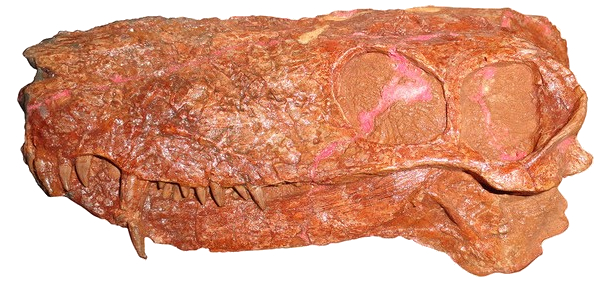

Definition and phylogeny
Therapsida is defined as a node-based clade comprising the last common ancestor of dinocephalians, anomodonts, and theriodonts together with all of its descendants, which by extension includes crown-group Mammalia.3 Therapsids are distinguished from the more basal “pelycosaur”-grade synapsids (such as Dimetrodon and Edaphosaurus) by a suite of derived features: a larger temporal fenestra providing greater jaw-muscle attachment area, a reduction of the number of bones in the skull roof, more differentiated dentition with distinct incisors, canines, and postcanines, and a shift toward a more upright limb posture.1, 2
The internal phylogeny of Therapsida is traditionally divided into several major subgroups. Biarmosuchia is generally recovered as the most basal therapsid clade, retaining many primitive features shared with pelycosaur-grade synapsids.3 The remaining therapsids fall into two great radiations: Anomodontia (including the hugely successful Dicynodontia) and Theriodontia, which itself comprises Gorgonopsia, Therocephalia, and Cynodontia.2 Dinocephalia, a group of large-bodied middle Permian therapsids, is sometimes placed as sister to the anomodont–theriodont clade or in a more basal position, depending on the analysis.1, 9 Among theriodonts, the cynodonts are the lineage that ultimately gave rise to mammaliaforms in the Late Triassic and, eventually, to modern mammals.3
Major groups
Dinocephalia were among the earliest therapsids to achieve large body size and ecological prominence. Appearing in the middle Permian (Guadalupian), dinocephalians included both herbivorous forms such as Moschops and Estemmenosuchus and carnivorous forms like Anteosaurus.9 These animals were often massive—Moschops reached lengths of over 2.5 meters—and some possessed thickened skull roofs likely used in intraspecific combat.1 Dinocephalians went extinct by the end of the Guadalupian, well before the end-Permian crisis, and their ecological roles were subsequently filled by other therapsid groups.2
Anomodontia, particularly the subgroup Dicynodontia, represents one of the most successful therapsid radiations. Dicynodonts were predominantly herbivorous animals characterized by a distinctive pair of upper tusks (in many species) and a keratinous beak used for cropping vegetation.1, 12 They ranged in size from small burrowing forms the size of a rat to the massive Lisowicia bojani, an elephant-sized dicynodont from the Late Triassic of Poland. Dicynodonts achieved extraordinary taxonomic diversity during the late Permian, constituting the dominant herbivores in most terrestrial ecosystems of Gondwana, and several lineages survived the end-Permian extinction to persist into the Triassic.2, 3
Gorgonopsia were the apex predators of late Permian ecosystems. These theriodonts possessed large, saber-like canines and a wide gape, features convergent with much later saber-toothed cats but evolved independently.10 The largest gorgonopsians, such as Inostrancevia, reached body lengths exceeding three meters and likely preyed upon the abundant dicynodonts and pareiasaurs of their ecosystems.10 Gorgonopsians did not survive the end-Permian extinction and left no descendants.2
Therocephalia were a diverse clade of theriodonts that ranged from small insectivores to moderate-sized predators. Therocephalians are notable for exhibiting several features independently paralleling those of cynodonts, including a partial bony secondary palate and evidence of a more mammal-like metabolic physiology based on bone histology.15 Several therocephalian lineages crossed the Permian–Triassic boundary, though the group declined during the Early Triassic and was extinct by the Middle Triassic.2, 3
Cynodontia is the clade of theriodonts most directly relevant to mammalian origins. Cynodonts appeared in the late Permian and progressively acquired an increasingly mammalian anatomy through the Triassic: a fully ossified secondary palate separating the oral and nasal cavities, precise tooth occlusion, a reduced number of jaw bones with an enlarged dentary, and an increasingly parasagittal (erect) limb posture.1, 13 Non-mammaliaform cynodonts such as Thrinaxodon, Cynognathus, and Probainognathus document successive stages in this transformation, bridging the anatomical gap between early therapsids and the first true mammals.3
Permian dominance and end-Permian extinction
During the middle and late Permian, therapsids were the dominant terrestrial vertebrates across Pangaea. Faunal assemblages from the Karoo Basin of South Africa, the Cis-Urals of Russia, and scattered localities in China, Brazil, and elsewhere demonstrate that therapsids occupied virtually every major ecological niche: large and small herbivores (dicynodonts, dinocephalians), apex predators (gorgonopsians, large therocephalians), mesopredators, insectivores, and burrowers.2, 7 This ecological breadth was unprecedented among synapsids and would not be matched again until the Cenozoic radiation of crown mammals.7
The end-Permian mass extinction, approximately 252 million years ago, devastated therapsid diversity. An estimated 70–80% of terrestrial vertebrate species perished, including the entire Gorgonopsia and most dicynodont and therocephalian lineages.2, 3 The causes of the extinction—massive volcanism from the Siberian Traps, global warming, ocean anoxia, and acid rain—created conditions hostile to large-bodied terrestrial animals. Survival was biased toward smaller body sizes, burrowing habits, and physiological resilience, traits that characterized the therapsid lineages that persisted into the Triassic.4, 8
*Lystrosaurus* and Triassic recovery
The aftermath of the end-Permian extinction produced one of the most remarkable ecological phenomena in the fossil record: the near-global dominance of the dicynodont genus Lystrosaurus. In many Early Triassic assemblages, particularly in the Karoo Basin, Lystrosaurus constitutes over 90% of vertebrate fossil specimens, a level of single-genus dominance almost without parallel in the Phanerozoic.8, 12 Several factors likely contributed to this dominance, including a broad dietary tolerance, a robust burrowing-capable body plan that may have provided refuge from harsh surface conditions, and a wide geographic range spanning South Africa, India, China, Russia, and Antarctica.8
The ecological recovery of therapsids during the Triassic was, however, ultimately cut short by the rise of archosaurs. While cynodonts continued to diversify and progressively approach the mammalian condition, and while large dicynodonts such as Placerias and Lisowicia persisted into the Late Triassic, the archosaur radiation—including the first dinosaurs—gradually displaced therapsids from large-bodied ecological roles.1, 2 By the end of the Triassic, only small-bodied cynodonts (including the first mammaliaforms) remained, a pattern that would persist throughout the Mesozoic until the end-Cretaceous extinction eliminated the non-avian dinosaurs and opened new opportunities for mammalian diversification.1, 2
Acquisition of mammalian features
The therapsid fossil record provides one of the most complete documentations of a major evolutionary transition in vertebrate history: the gradual, mosaic acquisition of features that define the mammalian body plan. This transformation occurred not as a single event but as a stepwise process spanning over 100 million years, with different anatomical systems evolving at different rates in different lineages.1, 3
The transformation of the jaw joint is perhaps the single most celebrated example. In basal synapsids, the jaw articulates via the articular bone of the lower jaw and the quadrate bone of the skull (the primitive amniote condition). Through the therapsid lineage, the dentary bone progressively enlarged while the postdentary bones (articular, surangular, angular) shrank, until in advanced cynodonts a contact formed between the dentary and the squamosal bone of the skull—creating a new, mammalian jaw joint alongside the still-functional ancestral one.13, 14 Eventually, the redundant postdentary bones detached from the jaw entirely and were incorporated into the middle ear as the malleus and incus, joining the stapes to form the three-ossicle hearing apparatus unique to mammals.14
The evolution of a bony secondary palate—a shelf of bone separating the nasal passages from the mouth—occurred independently in therocephalians and cynodonts and is functionally linked to the ability to breathe while chewing, a prerequisite for sustained high metabolic rates.1, 6 Limb posture similarly shifted across the therapsid lineage, from a sprawling gait inherited from pelycosaur-grade ancestors toward the fully erect, parasagittal stance of mammals, reducing the energy cost of locomotion and enabling more sustained activity.1, 7
Dental evolution was equally transformative. While early therapsids already showed some tooth differentiation, cynodonts developed precise occlusion between upper and lower postcanine teeth, enabling efficient food processing and, by extension, supporting higher metabolic demands.13 The shift from polyphyodonty (continuous tooth replacement) toward diphyodonty (two sets of teeth) also occurred within cynodonts, as precise occlusion requires stable, precisely positioned teeth that are incompatible with frequent replacement.1
Evidence for endothermy
One of the most debated questions in therapsid paleobiology concerns the evolution of endothermy—the ability to maintain a high, stable body temperature through internal metabolic heat production. Multiple independent lines of evidence now indicate that elevated metabolic rates evolved well before the origin of crown mammals, and likely arose independently in several therapsid lineages.5
Bone histology provides the most direct evidence. Fibrolamellar bone, characterized by rapidly deposited woven-fibered tissue permeated by vascular canals, is associated with fast growth rates and high metabolic activity in living endotherms. Studies of therapsid long bones reveal that fibrolamellar bone is widespread among cynodonts and also present in some therocephalians and dicynodonts, suggesting growth rates approaching those of modern mammals.4, 15 In contrast, more basal therapsids and pelycosaur-grade synapsids predominantly exhibit lamellar-zonal bone indicative of slower, more reptilian growth patterns.4
The presence of respiratory turbinates—thin, scrolled bones within the nasal cavity that recover moisture and heat from exhaled air—has been identified in at least one therapsid genus, the late Permian therocephalian Glanosuchus.6 In living mammals, respiratory turbinates are functionally linked to high ventilation rates required by endothermic metabolism, and their presence in a Permian therapsid implies that at least some theriodonts had already evolved significantly elevated metabolic rates by 260 million years ago.6
Oxygen isotope analyses of therapsid tooth enamel have provided additional support. A study by Rey and colleagues measured apatite oxygen isotope compositions across multiple therapsid clades and found that cynodonts, therocephalians, and even some dicynodonts exhibited body temperature estimates significantly above ambient environmental temperatures, consistent with some degree of endothermic or intermediate metabolic physiology.5 These data suggest that the evolution of mammalian-style endothermy was not a single event but a gradual, multilineage process deeply rooted in therapsid history.
The Karoo Basin fossil record
No discussion of therapsid paleontology is complete without reference to the Karoo Basin of South Africa, which preserves the most continuous and taxonomically rich record of Permian–Triassic terrestrial vertebrate evolution anywhere on Earth.11 The Karoo Supergroup spans from the late Carboniferous through the Early Jurassic, with the Beaufort Group in particular containing an extraordinary succession of therapsid-bearing assemblage zones that document the waxing and waning of successive faunal communities over approximately 60 million years.11
The biostratigraphic scheme established for the Karoo Basin divides the Beaufort Group into a series of assemblage zones named after characteristic therapsid genera: the Eodicynodon, Tapinocephalus, Pristerognathus, Tropidostoma, Cistecephalus, Daptocephalus, and Lystrosaurus Assemblage Zones, among others.2, 11 This sequence allows precise correlation of therapsid evolutionary events with global stratigraphic stages and provides an unparalleled window into the ecological dynamics of Permian and Early Triassic terrestrial communities. The Karoo record has been instrumental in documenting the severity of the end-Permian extinction on land, the post-extinction dominance of Lystrosaurus, and the subsequent Triassic recovery and diversification of cynodonts and archosaurs.8, 11
Comparable therapsid faunas are known from the Ural region of Russia (including the classic localities yielding dinocephalians and gorgonopsians), the Chañares and Ischigualasto Formations of Argentina, the Fremouw Formation of Antarctica, and various sites in China, India, Zambia, and Tanzania, collectively demonstrating the Pangaea-wide distribution of therapsid-dominated ecosystems during the Permian and Early Triassic.2, 7
Significance
Therapsids occupy a unique position in vertebrate paleontology as the group that bridges the vast evolutionary distance between the earliest synapsids of the late Carboniferous and the mammals of today. The therapsid fossil record demonstrates that the features defining modern mammals—warm-bloodedness, precise dental occlusion, a single-boned lower jaw, three middle-ear ossicles, erect posture—did not appear all at once but accumulated gradually, in mosaic fashion, across multiple lineages and tens of millions of years.1, 3 This record stands as one of the strongest empirical demonstrations of large-scale evolutionary transformation through the accumulation of incremental changes, and it continues to be refined as new discoveries emerge from the Karoo Basin, Russia, Brazil, and elsewhere across the former supercontinent of Pangaea.
References
Oxygen isotopes suggest elevated thermometabolism within multiple Permo-Triassic therapsid clades
A complete skull of Lystrosaurus (Therapsida, Dicynodontia) from the Lower Triassic of South Africa and the evolution of the dicynodont postcanine dentition
Bone histology of the Permian therocephalian Moschorhinus reveals rapid growth and adaptive strategies toward the end-Permian mass extinction