Overview
- Trace fossils (ichnofossils) preserve evidence of organism behavior — tracks, burrows, borings, and coprolites — rather than body parts, making them the only direct record of how ancient animals actually moved, fed, and interacted with their environment.
- Adolf Seilacher’s ichnofacies model groups trace fossil assemblages into recurring communities tied to water depth and substrate energy, providing a powerful tool for reconstructing ancient depositional environments independently of body fossils.
- The Cambrian substrate revolution marks one of the most consequential ecological transitions in Earth history: the emergence of deep bioturbation fundamentally restructured seafloor ecosystems and altered sediment geochemistry on a global scale.
Among all the objects preserved in the geological record, trace fossils occupy a singular position: they capture not the organism itself but the record of its behavior. A footprint, a burrow, a feeding groove etched into a shell — these structures, collectively termed ichnofossils from the Greek ichnos meaning track, encode information that no body fossil can supply. They record where an animal stood, how it moved, what it ate, and how it interacted with the sediment beneath it. While body fossils tell paleontologists what organisms existed, trace fossils tell them what those organisms did.1
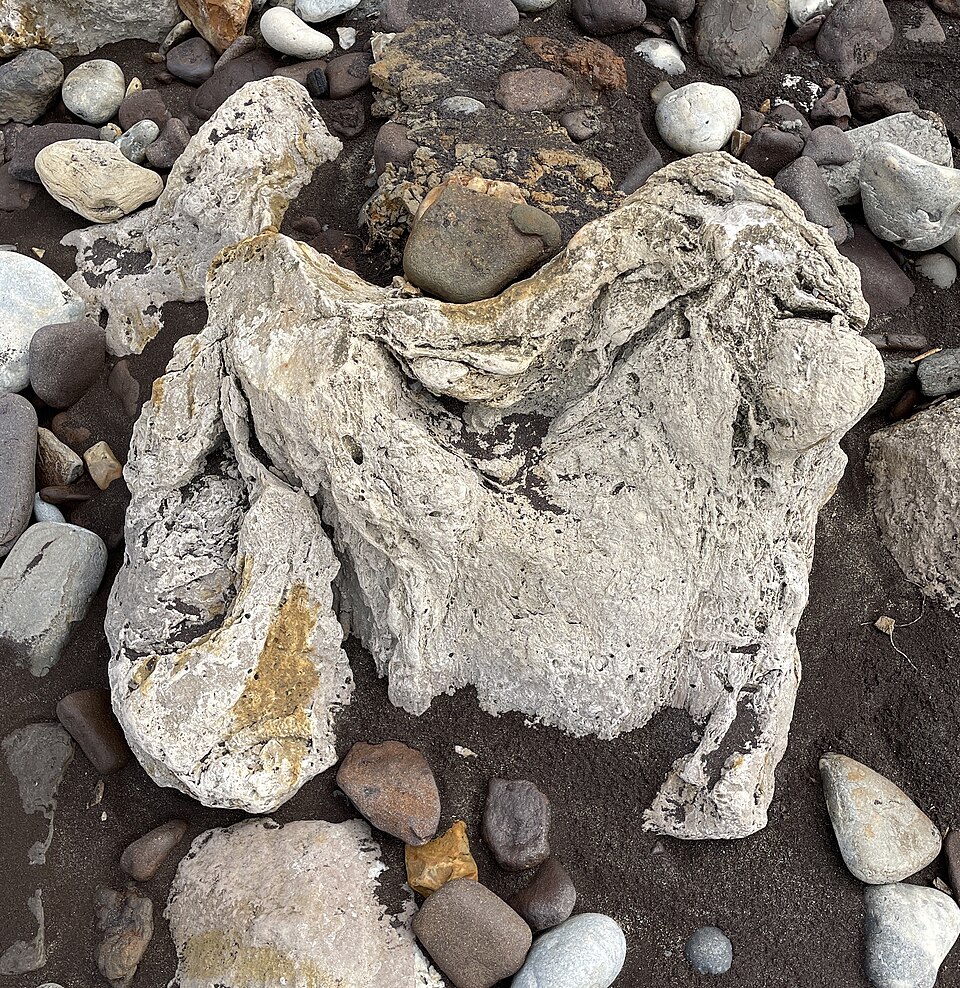

The scientific study of trace fossils, ichnology, emerged as a rigorous discipline in the twentieth century, largely through the foundational work of the German paleontologist Adolf Seilacher, who recognized that trace fossil assemblages were not random but organized into predictable communities governed by water depth, substrate energy, and food availability.1, 8 Seilacher’s ichnofacies model, first articulated in the 1960s, transformed ichnology from a descriptive curiosity into a powerful interpretive framework applicable across the full span of the Phanerozoic rock record. Today, ichnologists use trace fossil assemblages to reconstruct ancient depositional environments, map oxygen gradients in ancient seafloors, track the evolution of animal behavior through deep time, and decode some of the most consequential ecological transitions in Earth history.7, 12
Types of trace fossils
Ichnofossils are classified by the behavioral category they represent rather than by the taxonomy of the maker, a convention that reflects the core logic of the discipline: trace fossils are behavioral artifacts, and the same behavior may be expressed by phylogenetically unrelated organisms. The principal categories are tracks and trackways, burrows, borings, coprolites, gastroliths, root traces, and nests.1, 8
Tracks and trackways are surface impressions left by animals moving across soft sediment or firm substrates. Individual footprints (tracks) preserve morphological detail about foot anatomy and, in some cases, soft tissue; trackways — sequences of tracks — provide kinematic data including stride length, step width, gait, and speed. The analysis of trackways allows paleontologists to calculate approximate locomotor speeds using equations derived from modern animal biomechanics, making trackways one of the few windows into the dynamics of extinct locomotion.6
Burrows are structures excavated into soft sediment, recording domicile construction, locomotion through the substrate, or feeding activity. They range from simple, unbranched dwelling tubes to elaborately branched three-dimensional architectures that rival the complexity of insect nests. Burrows are among the most abundant trace fossils in the geological record and are the primary evidence used to reconstruct bioturbation — the physical mixing of sediment by organisms — which has profound consequences for sediment geochemistry and the preservation of primary sedimentary structures.9
Borings are distinct from burrows in that they penetrate hard substrates: shell, bone, wood, or lithified rock. Organisms that produce borings include bivalves, sponges, polychaete worms, and barnacles, among many others. Because borings require active chemical or mechanical abrasion of a hard surface, their producers must dwell in permanent contact with the substrate, and the resulting structures are typically preserved with exceptional fidelity.8
Coprolites are fossilized feces, representing a category of trace fossil with remarkable informational richness. Because coprolites preserve undigested food remnants — bone fragments, scales, plant material, invertebrate cuticle — they provide direct evidence of diet that body fossil teeth can only suggest indirectly. The size and morphology of a coprolite can sometimes be used to identify its producer to a broad taxonomic level, particularly for large vertebrates, and chemical analysis of coprolite composition has revealed aspects of gut chemistry in extinct animals.15
Gastroliths are smoothed stones found within the body cavities of certain fossil vertebrates, inferred to have been swallowed and retained in a muscular gizzard to aid in the mechanical processing of food. Although the gastrolith interpretation is contested for some taxa, particularly long-necked sauropod dinosaurs, well-documented gastrolith assemblages in birds and crocodilians provide a functional analogue for the inference.16 Root traces (rhizoliths) are produced by plant roots penetrating and chemically altering surrounding sediment or rock, and they serve as evidence of subaerial exposure and soil formation — critical indicators in sequence stratigraphic analysis. Nests, including dinosaur nesting sites with clutch geometry preserved, document reproductive behavior and parental care strategies that are entirely invisible in skeletal remains.
Formation and preservation
The formation of a trace fossil involves a fundamental paradox: the organism must modify the substrate in a way that persists after the organism is gone, yet in doing so it often disturbs the very sediment that would preserve both its own remains and those of other organisms. Preservation of traces depends on the interplay between the rate of trace formation, the rate of sediment burial, and the physical and chemical properties of the substrate.1, 8
Tracks are most likely to be preserved when made in sediment with appropriate cohesion — wet enough to record fine detail but firm enough to retain morphology until burial. A footprint made in saturated mud may collapse immediately; one made in sediment at the ideal moisture content can retain extraordinary surface detail, including skin texture impressions, if buried rapidly by a subsequent depositional event such as a flood or ash fall. The overlying sediment acts as a natural mold, and the underside of the covering layer may preserve a natural cast of the original track surface, sometimes with greater fidelity than the primary impression itself.6
Burrows are preserved through two distinct mechanisms. In active fill, the organism itself backfills the burrow as it advances, producing a meniscate or spreite structure that records the direction and sequence of burrowing. In passive fill, the open burrow is subsequently filled by sediment of different grain size or composition, creating a contrast that is preserved after lithification. The preservation potential of burrows is generally higher than that of surface tracks because burrows penetrate beneath the sediment surface and are therefore protected from erosion.7
A critical taphonomic distinction in ichnology is the difference between the original trace (ichnia) and the structure as preserved in rock. Sedimentary compaction, diagenetic cementation, and differential weathering can substantially alter trace morphology, and ichnologists must account for these post-depositional modifications when identifying and interpreting fossil traces. The same trace, preserved in different lithologies or viewed from different orientations (top view versus cross-section), can appear morphologically distinct, a complication that has historically led to the erection of redundant ichnotaxa.8
Seilacher’s ichnofacies model
The most influential conceptual framework in ichnology is the ichnofacies model developed by Adolf Seilacher in the 1960s and refined over subsequent decades. Seilacher observed that trace fossil assemblages in ancient marine rocks were not randomly distributed but recurred in consistent groupings tied to depositional environment — primarily water depth and substrate energy — across different geographic regions and geological time periods.1, 12 The model defines a series of named ichnofacies, each characterized by a recurring ichnological signature, and provides paleontologists with a tool for reconstructing ancient environments from trace fossil evidence alone, independent of body fossils or sedimentological analysis.
The Skolithos ichnofacies is characterized by simple, vertical or steeply inclined burrows — dwelling structures such as Skolithos (sand-tubes), Diplocraterion (U-tubes with spreite), and Arenicolites (open U-burrows). This assemblage is typical of high-energy, well-oxygenated shoreline environments with shifting substrates: sandy beaches, tidal flats, and shallow subtidal zones where suspension-feeding organisms anchor themselves against constant sediment reworking by waves and currents. The organisms that produce these traces must invest heavily in dwelling structure maintenance, and their traces reflect this strategy through the prevalence of retrusive spreite produced as organisms track the sediment surface upward during erosion.7
The Cruziana ichnofacies, named for the bilobate feeding or locomotion trail Cruziana (classically attributed to trilobites), characterizes calmer, lower-energy, shallow to mid-shelf environments below normal wave base. Here, deposit-feeding organisms dominate, and the trace fossil assemblage reflects more complex behaviors including systematic feeding patterns, active locomotion across the sediment surface, and diverse domicile architectures. The Cruziana ichnofacies typically shows greater diversity and behavioral complexity than the Skolithos ichnofacies, reflecting the greater food availability and environmental stability of the mid-shelf.1, 8
The Zoophycos ichnofacies represents deeper, quieter, oxygen-stressed environments such as the distal shelf and upper slope. The namesake trace Zoophycos is a complex, helical or fan-shaped spreite structure interpreted as a systematic deposit-feeding gallery — a highly efficient strategy for processing organic material from sediment in nutrient-poor, low-oxygen settings. The Zoophycos ichnofacies is characterized by low diversity but high abundance of specialized traces adapted to the exploitation of marginal resources under reduced competition.14
The Nereites ichnofacies typifies the deep-sea abyssal plain, the most food-limited environment on the seafloor. The assemblage is dominated by complex, systematically patterned graphoglyptid traces — meandering, spiral, and branching networks that represent the most geometrically elaborate feeding behaviors in the ichnological record. These patterns are interpreted as optimal foraging strategies that maximize sediment coverage while minimizing revisitation of depleted areas, a behavioral response to extreme food scarcity at abyssal depths.1, 14 The predictive power of the ichnofacies model has been demonstrated through its successful application to ancient deep-sea deposits in mountain belts, where the identification of Nereites-type assemblages in deformed flysch sequences has helped reconstruct the paleogeography of ancient ocean basins.12
Famous trackway sites
Trace fossil sites of exceptional significance span the full temporal range of animal evolution, from the earliest Ediacaran evidence of motile organisms to the abundant trackways of the Mesozoic.
The Laetoli footprints of northern Tanzania, dated to approximately 3.6 million years ago, constitute perhaps the most scientifically and emotionally resonant of all trace fossil discoveries. Preserved in a layer of volcanic ash (tuff) deposited during an eruption of the nearby Sadiman volcano, the footprints were made by at least three individual hominins moving across wet ash that subsequently hardened before being buried.2 Discovered by Mary Leakey’s team in 1978 and subsequently studied by generations of researchers, the Laetoli prints reveal that bipedal locomotion was well established in Australopithecus afarensis or a contemporaneous hominin long before the expansion of the genus Homo and well before the evolution of the modern human brain. The prints show a heel-strike gait with a well-developed medial longitudinal arch, closely resembling modern human trackways, and biomechanical analyses confirm a fully upright, energy-efficient bipedal stride.2 A 2016 study at Laetoli revealed additional tracks from a site (S) approximately 150 meters from the original discovery, documenting greater variation in body size and gait speed than previously recognized, and suggesting the presence of at least five individuals.3
The Paluxy River dinosaur trackways at what is now Dinosaur Valley State Park near Glen Rose, Texas, preserve an exceptional record of sauropod and theropod dinosaurs from the Early Cretaceous (approximately 113 million years ago). Exposed in the limestone bed of the Paluxy River, the trackways include both the enormous, broad three-toed prints of large theropods and the elephantine oval impressions of long-necked sauropods, sometimes appearing to run parallel in sequences that have been interpreted as evidence of social behavior or predator-prey interaction — though the precise behavioral relationship between contemporaneous trackways requires cautious interpretation.6 The site became famous in the mid-twentieth century for claims — subsequently refuted on ichnological grounds — that human footprints co-occurred with dinosaur tracks, making it a landmark case study in the critical analysis of trace fossil evidence.
The earliest unambiguous trace fossils of animal locomotion come from Ediacaran strata. Traces such as Helminthoidichnites and Helminthopsis, found in rocks of latest Ediacaran age (approximately 555–540 million years ago), record the movement of simple, worm-like organisms across or just beneath the sediment surface.4, 10 A 2019 study reported bilaterian trace fossils from South China dated to approximately 551 million years ago, potentially the oldest known evidence of directed, muscular locomotion by any animal.13 These traces are of immense significance for understanding the Cambrian explosion because they demonstrate that motile, muscular bilaterians existed in the Ediacaran — predating the dramatic diversification of body plans recorded in Cambrian strata — and that the behavioral and ecological innovations of the Cambrian were rooted in a Precambrian evolutionary context linked to the broader Ediacaran biota.4
What trace fossils reveal that body fossils cannot
The complementarity of trace fossils and body fossils is one of the most important conceptual principles in paleontology. Body fossils record morphology — what an organism looked like — but are nearly silent on behavior, ecology, and physiology in action. Trace fossils provide the behavioral and ecological dimension that skeletal anatomy cannot supply, and in many cases the two lines of evidence diverge in ways that force significant revisions to prevailing interpretations.1, 8
Locomotion is perhaps the clearest domain in which traces add irreplaceable information. The skeletal anatomy of a dinosaur may allow detailed reconstruction of limb proportions, muscle attachment sites, and possible range of motion, but only trackways can confirm the actual gait, posture, and speed at which the animal moved. The shift in scientific consensus from sprawling, tail-dragging dinosaur postures to fully erect, high-speed locomotion was supported significantly by trackway evidence: the absence of tail-drag marks in nearly all dinosaur trackways, combined with stride-length calculations indicating rapid movement, was among the earliest evidence that the standard reptilian-locomotion model was inappropriate for most dinosaurs.6
Ecological structure — the spatial arrangement of organisms within a community, and the way different species partitioned resources — is almost entirely inaccessible through body fossils alone. Trace fossil assemblages, by contrast, record the relative abundance and depth distribution of burrowers in ancient seafloors, revealing tiered communities in which different species exploited different sediment depths simultaneously. The recognition of tiering in Paleozoic trace fossil assemblages, in which shallow-tier, mid-tier, and deep-tier burrow systems co-occur in consistent stratigraphic relationships, has allowed paleontologists to reconstruct the three-dimensional ecological architecture of ancient benthic communities with a precision that body fossil accumulations cannot approach.7, 8
Feeding ecology is another domain where traces outperform bones. The identification of a theropod dinosaur as a carnivore from skeletal anatomy is inference by analogy with modern predators; a coprolite found in association with that taxon and containing bone fragments from identifiable prey taxa is direct evidence of diet. Similarly, the complex patterned feeding traces of deep-sea graphoglyptids document not merely that an organism was a deposit feeder but the precise spatial strategy it used to optimize resource extraction, information that no body fossil could conceivably encode.15
The Cambrian substrate revolution
One of the most consequential ecological transitions documented in the trace fossil record is the Cambrian substrate revolution, a term introduced by David Bottjer and colleagues to describe the fundamental reorganization of seafloor ecology that accompanied and immediately followed the Cambrian explosion of animal body plans.5 The revolution is recorded not in body fossils but almost entirely in the trace fossil record, making ichnology the primary evidence base for understanding this transition.
In the Ediacaran period, marine seafloors were dominated by microbial mats — cohesive, laterally extensive sheets of photosynthetic and heterotrophic bacteria that stabilized the sediment surface and created a distinctive substrate texture referred to by ichnologists as a Precambrian-style substrate or matground.5, 10 Ediacaran trace fossils are predominantly shallow, horizontal structures confined to the mat surface or the mat-sediment interface. The organisms making them were limited to the uppermost millimeters of the sediment by the physical barrier of the mat, and bioturbation of the underlying sediment was essentially absent. The mat itself was both resource and obstruction: it provided food for mat-grazing organisms but prevented access to the organic material sequestered in the sediment below.
The appearance of animals capable of burrowing through and beneath the microbial mat — a capability that expanded dramatically at the base of the Cambrian — transformed this system irreversibly.5, 11 As burrowing depth and intensity increased through the Cambrian, bioturbation disrupted the physical continuity of the mat, allowing oxygen to penetrate deeper into the sediment and destroying the stratified geochemical gradients that had characterized Ediacaran seafloors. The sediment became what ichnologists call a mixground, constantly stirred and homogenized by burrowing organisms, and the microbial mat habitat was progressively restricted to environments inhospitable to burrowers: hypersaline lagoons, low-oxygen basins, and intertidal zones.9
The ecological consequences of this transition were far-reaching. The destruction of mat-stabilized substrates eliminated the ecological foundation on which many Ediacaran organisms had depended, potentially contributing to the disappearance of the Ediacaran macrofossil assemblage at the Precambrian–Cambrian boundary.4 Simultaneously, the newly mixed, oxygenated sediment opened an enormous new three-dimensional ecological space for exploitation by burrowing animals, providing a driving force for the diversification of infaunal lifestyles during the Cambrian radiation. The escalating arms race between burrowing depth and the evolution of new burrowing strategies is documented in the trace fossil record by a progressive increase in maximum burrow depth through the early Cambrian, from a few centimeters in the earliest Cambrian to tens of centimeters by the end of the period.11
Trace fossil evidence for the evolution of locomotion
The trace fossil record provides an independent and in many respects more direct line of evidence for the evolution of locomotion than skeletal anatomy, because it records the output of locomotory systems rather than their structural components. The history of animal movement, reconstructed from ichnological evidence, reveals several major transitions with profound evolutionary implications.1, 10
The earliest evidence of directed movement by any animal comes from Ediacaran trace fossils. Simple, unbranched horizontal trails — the oldest of which may approach 560 million years in age — record the passage of soft-bodied organisms through or across sediment.13 These traces are the product of muscular, peristaltic locomotion driven by a fluid-filled hydrostatic skeleton, the most primitive form of directed movement in the animal kingdom. Their appearance in the geological record predates the first body fossils of most animal phyla and demonstrates that the evolution of muscular locomotion — one of the defining innovations of the bilaterian body plan — occurred during the Ediacaran, before the animal diversity explosion of the Cambrian.4
The early Cambrian trace fossil record then documents a dramatic elaboration of locomotory strategies. The appearance of Cruziana and Rusophycus — traces attributed to trilobite-grade arthropods — records the evolution of jointed appendage locomotion, with its fundamentally different biomechanical properties: greater speed, more precise maneuverability, and the capacity for locomotion over hard substrates as well as soft sediment.8 The shift from peristaltic to appendage-based locomotion represents one of the major transitions in the evolutionary history of movement, and the trace fossil record captures its timing and initial distribution with precision that body fossils alone could not provide.
In the terrestrial realm, the trace fossil record documents the colonization of land by animals through trackways preserved in Silurian and Devonian coastal deposits. Trackways attributed to early myriapods (millipede-grade arthropods) from the Ordovician and Silurian predate the body fossil record of unambiguous land animals, suggesting that the ecological conquest of terrestrial environments was underway earlier than skeletal remains alone would indicate.1 The subsequent elaboration of tetrapod trackways through the Devonian and Carboniferous documents the transition from aquatic to fully terrestrial locomotion — the evolution of weight-bearing limbs, refined gait patterns, and eventually the full decoupling of the locomotory system from aquatic constraint. Taken together, the trace fossil record from the Ediacaran through the Paleozoic represents an unbroken archive of behavioral evolution that complements and in many cases precedes the body fossil evidence for the same transitions.
References
New footprints from Laetoli (Tanzania) provide evidence for marked speed variation in early hominins