Overview
- The Ediacaran biota, appearing roughly 575 to 539 million years ago, represent the oldest known assemblage of large, architecturally complex organisms in the fossil record and predate the Cambrian explosion by tens of millions of years.
- These soft-bodied organisms include iconic forms such as Dickinsonia, Charnia, and Kimberella, many of which cannot be assigned to any living phylum, and their taxonomic affinities remain intensely debated among paleontologists.
- The Ediacaran biota emerged in a post-Snowball Earth world of rising oxygen levels and disappeared before the Cambrian, likely displaced by the evolution of mobile, predatory animals that rendered their sessile, undefended lifestyles untenable.
The Ediacaran biota are the oldest known assemblage of large, architecturally complex organisms in the fossil record. Appearing roughly 575 million years ago and persisting until the onset of the Cambrian approximately 539 million years ago, these enigmatic soft-bodied organisms represent Earth's first experiment with macroscopic, multicellular life.1 Named after the Ediacara Hills of South Australia where they were first recognized, the Ediacaran biota include frond-like forms anchored to the seafloor, flat quilted organisms that rested on microbial mats, and a handful of creatures that may have been capable of movement. Many cannot be assigned to any living phylum, and their relationship to modern animal groups remains one of the most actively debated questions in paleontology.1, 4
The Ediacaran Period itself, spanning from approximately 635 to 538.8 million years ago, was formally ratified by the International Union of Geological Sciences in 2004, making it the first new geological period added to the geologic time scale in over a century.7 The period takes its name from the fossil localities in the Flinders Ranges, and its base is defined by a Global Stratotype Section and Point at the base of the Nuccaleena Formation cap carbonate in South Australia, directly above glacial deposits of the Marinoan glaciation.7 The organisms that inhabited the Ediacaran seas lived in a world profoundly different from our own: oxygen levels were lower, predators were absent or exceedingly rare, and the seafloor was blanketed by microbial mats that provided both substrate and nutrition for the communities above.14, 18
Discovery and recognition
The scientific recognition of the Ediacaran biota unfolded over several decades and required overcoming a deeply entrenched assumption: that complex life could not predate the Cambrian period. In 1946, the Australian geologist Reginald Claude Sprigg discovered unusual fossil impressions in abandoned mines in the Ediacara Hills, approximately 30 kilometres west of Beltana in the Flinders Ranges of South Australia. Sprigg described these fossils the following year as "Early Cambrian(?) jellyfishes," tentatively assigning them to the earliest Cambrian on the basis of their stratigraphic position beneath known Cambrian strata.8 His uncertainty was reflected in the question mark in the title, and the broader paleontological community largely dismissed the discovery, unable to accept that complex organisms could exist in Precambrian rocks.
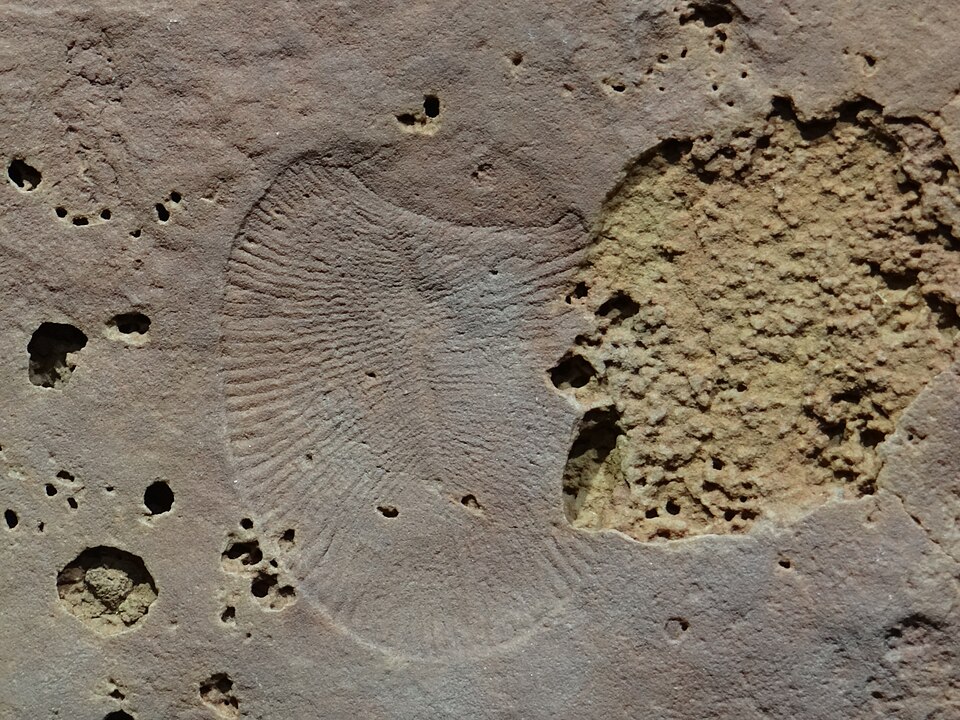

The critical reassessment came from Martin Glaessner, a German-born paleontologist working at the University of Adelaide. Through the late 1950s and 1960s, Glaessner and his colleague Mary Wade systematically studied the Ediacara fossils and established that they were genuinely Precambrian in age. Glaessner noted that the fossiliferous Pound Quartzite was separated from overlying Cambrian strata by a profound regional unconformity and lay a considerable stratigraphic distance below the earliest trilobites, making a Cambrian age untenable.9 He initially interpreted many of the forms as Precambrian coelenterates — relatives of modern jellyfish and sea pens — and argued that they represented a diverse pre-Cambrian fauna with affinities to living animal groups.9
Meanwhile, similar fossils were being found on other continents, though their significance was not always immediately appreciated. In 1957, a schoolboy named Roger Mason discovered an unusual frond-like impression in Precambrian volcanic rocks of Charnwood Forest, Leicestershire, England. The following year, Trevor Ford formally described the specimen as Charnia masoni, making it the first Precambrian macrofossil to be recognized as such in the published literature.10 Remarkably, another schoolgirl, Tina Negus, had spotted the same fossil a year before Mason, but her geography teacher dismissed the possibility of Precambrian fossils. Subsequent discoveries at Mistaken Point on the southeastern coast of Newfoundland, along the White Sea coast of Russia, and in the Nama Group of Namibia confirmed that the Ediacaran biota had a global distribution and represented a major chapter in the history of life.1, 13
The three assemblages
The Ediacaran biota are not a single, static community but rather a succession of distinct assemblages that reflect changing environments, evolving ecosystems, and geographic variation over a span of roughly 35 million years. In 2003, Ben Waggoner formalized the division of Ediacaran fossils into three principal assemblages based on parsimony analysis of endemicity, incorporating temporal, paleogeographic, and paleoenvironmental data.19 These three groupings — the Avalon, White Sea, and Nama assemblages — have since become a foundational framework for understanding the pattern of Ediacaran evolution, though subsequent work has refined and occasionally challenged their boundaries.1, 21
The Avalon assemblage, the oldest of the three, dates to approximately 575 to 560 million years ago. Its name derives from the Avalon Peninsula of Newfoundland, where the extraordinary fossil surfaces at Mistaken Point preserve the oldest known complex macroscopic organisms on Earth. Radiometric dating of volcanic ash layers interbedded with the fossil-bearing strata constrains the oldest Mistaken Point fossils to approximately 574 million years ago.16 The Avalon assemblage is dominated by rangeomorphs — frond-like organisms characterized by fractal, self-similar branching patterns unlike anything in the modern biota.11 Iconic Avalon genera include Charnia, Fractofusus, and Trepassia. These organisms lived in deep-water environments below the photic zone, preserved in situ beneath volcanic ash layers that smothered the seafloor communities. More than 10,000 individual fossil impressions have been documented along the Mistaken Point coastline, and the site was designated a UNESCO World Heritage Site in recognition of its scientific importance.1, 11
The White Sea assemblage, spanning roughly 560 to 550 million years ago, is named for the extensive fossil localities along the White Sea coast of northwestern Russia, though equivalent faunas are found in the Ediacara Member of the Rawnsley Quartzite in South Australia and at scattered sites in other regions. The White Sea assemblage is the most taxonomically diverse of the three, encompassing a wide range of body plans that includes the flat, ribbed Dickinsonia, the bilaterally symmetric Kimberella, the triradially symmetric Tribrachidium, the enigmatic Spriggina, and numerous other forms.6, 13 These organisms inhabited shallow-marine environments and are preserved primarily as impressions on the soles of sandstone beds that were cast against the microbial mats covering the seafloor. The White Sea assemblage marks the first appearance of organisms with demonstrable bilateral symmetry, evidence for directed locomotion, and possible grazing traces — ecological innovations that foreshadow the animal-dominated ecosystems of the Cambrian.6, 21
The Nama assemblage, the youngest of the three, dates from approximately 550 to 539 million years ago. It is best known from the Nama Group of southern Namibia and includes forms such as Cloudina, Namacalathus, and Swartpuntia. The Nama assemblage is distinguished by the first appearance of biomineralizing organisms — creatures that constructed hard skeletal elements from calcium carbonate. Cloudina, a tiny tube-building organism consisting of nested calcareous cones, is the earliest known animal to have produced a mineralized skeleton and serves as an index fossil for the terminal Ediacaran worldwide.1, 21 The Nama assemblage is less taxonomically diverse than the White Sea assemblage, and approximately 80 percent of White Sea genera are absent from the Nama interval, a loss rate comparable to that of Phanerozoic mass extinctions.6, 20
Major Ediacaran genera and their assemblage affiliations1, 6, 19
| Genus | Assemblage | Age (Ma) | Key localities | Proposed affinity |
|---|---|---|---|---|
| Charnia | Avalon | ~574–555 | Newfoundland, England | Rangeomorph (uncertain) |
| Fractofusus | Avalon | ~574–565 | Newfoundland | Rangeomorph (uncertain) |
| Dickinsonia | White Sea | ~560–550 | Australia, Russia | Animal (stem-group) |
| Kimberella | White Sea | ~558–555 | Russia, Australia | Bilaterian (mollusc-like) |
| Tribrachidium | White Sea | ~555–550 | Australia, Russia | Uncertain (triradial) |
| Spriggina | White Sea | ~555–550 | Australia | Uncertain (bilaterian?) |
| Cloudina | Nama | ~550–539 | Namibia, China, Spain | Animal (cnidarian-like) |
| Namacalathus | Nama | ~550–539 | Namibia | Animal (uncertain) |
Iconic genera
Dickinsonia is perhaps the most recognizable and intensely studied of all Ediacaran organisms. This flat, oval to roughly circular organism is characterized by a series of rib-like segments radiating from a central midline, with the width and length of segments increasing toward one end. Specimens range from a few millimetres to approximately 1.4 metres in length, making the largest individuals among the biggest organisms of their era.3, 6 For decades, the biological affinities of Dickinsonia were fiercely contested: it was variously interpreted as a jellyfish, a polychaete worm, a lichen, a xenophyophore (a giant single-celled protist), or a member of the extinct kingdom Vendobionta. The debate was substantially advanced in 2018, when Ilya Bobrovskiy and colleagues extracted lipid biomarkers from exceptionally well-preserved Dickinsonia fossils collected from cliffs along the White Sea in Russia. The fossils contained an overwhelming abundance of cholesteroids — sterols characteristic of animals — comprising roughly 93 percent of the extractable organic matter, while the surrounding microbial mat contained predominantly ergosteroids and stigmasteroids typical of algae and bacteria.3 This molecular evidence established Dickinsonia as one of the earliest known animals, though its precise position within the animal tree of life remains uncertain.


Charnia holds a singular place in the history of paleontology as the first Precambrian macrofossil to be scientifically recognized. Formally described by Trevor Ford in 1958 from Charnwood Forest in England, Charnia masoni is a frond-like organism consisting of a series of self-similar, fractally branching modules arranged along a central axis.10 Specimens have since been found at Mistaken Point in Newfoundland and in other Avalon assemblage localities, where they are among the oldest complex organisms in the fossil record. Charnia was originally compared to modern sea pens (pennatulaceans), but detailed morphological analysis has shown that its fractal branching architecture is fundamentally different from that of any living organism, and it is now classified as a rangeomorph — a group with no modern descendants.11 The deep-water habitats in which Charnia lived, well below the photic zone, preclude photosynthesis as a nutritional strategy, and the organism likely absorbed dissolved organic molecules directly from seawater through its large surface area.11, 4
Kimberella is among the most important Ediacaran fossils for understanding the origins of bilaterian animals — the great clade that includes insects, molluscs, and vertebrates. First described from southern Australia, Kimberella was reinterpreted in 1997 by Fedonkin and Waggoner as a bilaterally symmetric, benthic organism with a non-mineralized, univalved shell resembling that of a mollusc. The fossils are frequently found in association with fan-shaped scratch marks on the substrate, interpreted as feeding traces produced by a radula-like organ as the animal grazed on microbial mats.12 If this interpretation is correct, Kimberella provides evidence that the divergence of complex bilaterian body plans occurred well before the Cambrian explosion, consistent with molecular clock estimates that place the origin of major animal lineages deep in the Ediacaran or even Cryogenian.5, 12
Tribrachidium is a small, disc-shaped organism with three raised arms spiralling outward from a central point, exhibiting a triradial symmetry that has no analogue among modern animals. Known exclusively from the White Sea assemblage, Tribrachidium has defied all attempts at classification. It is not bilaterally symmetric like most animals, nor does it display the tetraradial or pentaradial symmetry of cnidarians and echinoderms. Its unique body plan exemplifies the broader challenge of the Ediacaran biota: many of these organisms appear to represent evolutionary experiments in body organization that left no descendants.1, 13
What were they?
The taxonomic affinities of the Ediacaran biota have been debated since their discovery, and no single hypothesis has achieved consensus. The question is fundamental: were these organisms animals, protists, fungi, lichens, or something entirely without modern analogue? The answer has profound implications for understanding the tempo and mode of animal evolution, and the debate has generated some of the most creative and contentious ideas in the history of paleontology.
The earliest systematic interpretation was that of Glaessner, who argued in the late 1950s and 1960s that many Ediacaran organisms were cnidarians — members of the phylum that includes jellyfish, corals, and sea pens. Under this view, disc-shaped fossils were medusae (jellyfish), frond-like forms were sea pens, and the Ediacaran biota as a whole represented a Precambrian radiation of relatively simple animals belonging to living phyla.9 This interpretation dominated for decades but was challenged as detailed morphological studies revealed that the similarities to living cnidarians were often superficial.
The most radical alternative was proposed by Adolf Seilacher in 1992, who argued that many Ediacaran organisms belonged to an entirely extinct kingdom that he called the Vendobionta. Seilacher noted that the dominant body plan of Ediacaran organisms was one of "quilted" construction — thin, flexible sheets divided into compartments by internal septa, creating structures that maximized surface area relative to volume. He argued that this quilted architecture was fundamentally different from the body plans of any living organism and that the Vendobionta represented a separate experiment in multicellular life that was terminated by the end of the Ediacaran.2 Under this hypothesis, the Ediacaran biota would have no direct descendants among modern animals, and the Cambrian explosion would represent a genuinely independent origin of complex animal life.
Other researchers have proposed that at least some Ediacaran organisms were not animals at all. Gregory Retallack controversially argued in 2013 that certain Ediacaran fossils, including Dickinsonia, were lichens that lived on terrestrial soils rather than marine organisms. He based this interpretation on the geochemical and mineralogical characteristics of the enclosing sediments, which he identified as paleosols.22 This hypothesis was met with widespread skepticism from the paleontological community, particularly because the preservation of Ediacaran fossils on the soles of event beds and their association with microbial mat textures are most parsimoniously explained by marine deposition.14
The current consensus, to the extent that one exists, is that the Ediacaran biota were probably a phylogenetically diverse assemblage that included representatives of multiple kingdoms of life. Molecular and biomarker evidence increasingly supports animal affinities for at least some Ediacaran organisms: the cholesterol signature in Dickinsonia places it firmly within the animal kingdom, and the bilaterian-like morphology of Kimberella suggests that crown-group animal lineages had diverged by the late Ediacaran.3, 12 Other forms, particularly the rangeomorphs, may represent stem-group animals, extinct lineages that diverged before the last common ancestor of living animals. Still others may prove to be giant protists, algae, or organisms belonging to lineages that defy placement in any extant kingdom.4, 1 The Ediacaran biota thus appear not to be a monophyletic group but rather a temporal assemblage of disparate organisms united by their age and their shared preservation in a world before skeletal biomineralization and active predation became widespread.
Preservation and taphonomy
The preservation of soft-bodied organisms in the fossil record is inherently exceptional, requiring unusual conditions to prevent the rapid decomposition that normally destroys soft tissues within days or weeks of death. The Ediacaran biota owe their remarkable preservation to a combination of factors that were unique to the late Precambrian world and that largely disappeared with the onset of the Cambrian.14
The single most important factor was the ubiquity of microbial mats. In the Ediacaran, the seafloor was extensively covered by cohesive mats of photosynthetic and chemosynthetic microorganisms that bound sediment and created a firm, stable substrate. When organisms living on or within these mats died, the microbial community rapidly colonized the decaying remains, and early diagenetic mineral precipitation — particularly the formation of iron sulfide (pyrite) and iron oxide films — created what James Gehling termed "Ediacaran death masks": thin mineral coatings that faithfully replicated the external morphology of the organisms before they decomposed.14 These death masks were then preserved as casts and molds on the bases of overlying sandstone beds, producing the characteristic mode of Ediacaran fossil preservation.
The Avalon assemblage at Mistaken Point was preserved by a different mechanism. There, volcanic ash falls smothered living communities in situ, burying them instantaneously and preserving entire populations as three-dimensional impressions on bedding surfaces. This mode of preservation provides an unparalleled snapshot of Ediacaran community ecology, capturing the spatial relationships among individuals and allowing paleontologists to analyze population density, size-frequency distributions, and reproductive strategies.1, 11
The style of Ediacaran preservation largely ceased with the Cambrian transition. The evolution of burrowing animals disrupted microbial mats through bioturbation, destroying the cohesive mat fabrics that had sealed and stabilized the seafloor. This biological restructuring of the sediment-water interface, sometimes called the agronomic revolution, fundamentally altered the taphonomic conditions of shallow-marine environments and made the preservation of soft-bodied organisms as Ediacaran-style molds and casts far less likely.14, 21
Environmental context
The Ediacaran biota emerged into a world that was recovering from the most severe glacial episodes in Earth's history. The Ediacaran Period began at 635 million years ago, immediately following the Marinoan glaciation, the younger of the two major Cryogenian glaciations collectively known as the Snowball Earth events. During these episodes, geological and geochemical evidence suggests that ice sheets extended to equatorial latitudes, the oceans were largely covered by sea ice, and biological productivity collapsed catastrophically.17 The termination of the Marinoan glaciation was marked by a rapid greenhouse warming driven by the accumulation of volcanic CO2 in the atmosphere during the glacial interval, producing the distinctive cap carbonate sequences that define the base of the Ediacaran Period worldwide.7, 17
The first Ediacaran macrofossils appear approximately 575 million years ago, some 60 million years after the end of the Marinoan glaciation and roughly 5 to 10 million years after the smaller, non-global Gaskiers glaciation at approximately 580 million years ago. Precise U-Pb zircon geochronology constrains the Gaskiers glaciation to a duration of less than 340,000 years, far shorter than the multimillion-year durations predicted by the Snowball Earth hypothesis, suggesting that the Gaskiers event was not a true snowball glaciation but rather a more limited ice age.16 The first appearance of complex Ediacaran macrofossils less than 10 million years after the Gaskiers glaciation raises the question of whether the two events are causally related, though the precise mechanism linking glaciation and biological innovation remains unclear.
Rising atmospheric and oceanic oxygen concentrations during the Neoproterozoic Oxygenation Event are widely considered a key enabling factor for the evolution of large, metabolically active organisms. Geochemical proxies indicate that oxygen levels rose substantially during the late Neoproterozoic, though the precise timing, magnitude, and causation of this rise remain subjects of ongoing research.18 Aerobic metabolism scales with body size: larger organisms require higher ambient oxygen concentrations to support the diffusion of oxygen to internal tissues, and the low oxygen levels that characterized most of the Proterozoic may have imposed a fundamental ceiling on organismal size.15, 18 The appearance of centimetre- to metre-scale organisms in the Ediacaran is broadly consistent with models predicting that a critical oxygen threshold was crossed during this interval, though some rangeomorphs in the Avalon assemblage may have circumvented oxygen limitations through their fractal body plans, which maximized surface area for passive absorption of dissolved nutrients and gases.11, 18
The ecological structure of Ediacaran communities has been characterized by the evocative metaphor of the "Garden of Ediacara," coined by Mark McMenamin in 1986 to describe a world dominated by sessile, osmotrophic organisms living on and within microbial mats, in the effective absence of predation and active locomotion.23 This image captures an important truth: Ediacaran communities were fundamentally different from those of the Phanerozoic. Most Ediacaran organisms appear to have been sessile or, at most, capable of slow creeping movement. They lacked obvious defensive structures — no shells, no spines, no burrows — and the rarity of predatory trace fossils suggests that the selective pressure of predation, which would dominate Phanerozoic ecosystems, had not yet become a significant ecological force.4, 6
Ecology and life habits
Despite the difficulty of inferring biology from the impressions of soft-bodied organisms that have been dead for more than half a billion years, substantial progress has been made in reconstructing the ecology of Ediacaran communities. The Ediacaran biota demonstrate the earliest known instances of several ecological strategies that would become central to animal life: tiered suspension feeding, benthic grazing, sexual reproduction, and the construction of complex, spatially structured communities.6, 21
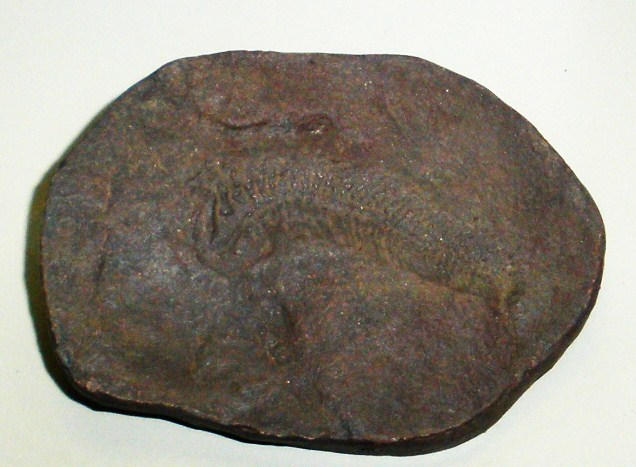

The rangeomorphs of the Avalon assemblage were sessile organisms rooted to the seafloor by holdfasts, with frond-like structures extending upward into the water column. Their fractal branching architecture created enormous surface areas relative to their volumes, and the deep-water environments in which they lived preclude photosynthesis as a nutritional strategy. The leading hypothesis is that rangeomorphs were osmotrophs — organisms that absorbed dissolved organic carbon and other nutrients directly from seawater through their body surfaces.11, 4 Population analyses of Fractofusus at Mistaken Point have revealed a bimodal size-frequency distribution consistent with two modes of reproduction: large individuals produced propagules that settled near the parent (accounting for the clustered spatial distribution), while smaller individuals may have been produced by waterborne dispersal of fragments or spores.6
In the White Sea assemblage, greater ecological complexity is evident. Dickinsonia specimens are sometimes found with a trail of serial resting traces, suggesting that the organism was capable of directed movement across the microbial mat surface, possibly in search of food. The resting traces show a progressive increase in size, consistent with growth during successive stops.6, 21 Kimberella, with its associated scratch marks, provides the strongest evidence for active grazing in the Ediacaran, indicating that at least some organisms had evolved the ability to mechanically process food rather than simply absorbing nutrients osmotically.12 These ecological innovations — directed locomotion, active feeding, and bilateral body symmetry — represent the foundational steps toward the mobile, predator-dominated ecosystems that would characterize the Cambrian and all subsequent geological periods.5, 21
Disappearance and the Cambrian transition
Most Ediacaran organisms disappeared from the fossil record before or at the base of the Cambrian, approximately 539 million years ago. This disappearance represents one of the most dramatic faunal turnovers in Earth's history: a diverse, globally distributed biota was replaced, over a geologically brief interval, by the entirely different assemblage of skeletonized, burrowing, and predatory animals that characterize the Cambrian explosion.20 The causes of this turnover remain debated, but three principal hypotheses have been advanced, and they are not mutually exclusive.
The first hypothesis invokes ecological displacement by Cambrian-type animals. The evolution of animals with the ability to burrow through sediment would have destroyed the microbial mats upon which many Ediacaran organisms depended for substrate, nutrition, and even preservation. This bioturbation-driven disruption of the mat ecosystem may have undermined the ecological foundations of the Ediacaran biota, rendering their sessile, surface-dwelling lifestyles unviable.20, 14
The second hypothesis emphasizes the evolution of predation. The appearance of animals capable of consuming other organisms would have imposed intense selective pressure on the soft-bodied, undefended Ediacaran organisms. Some late Ediacaran fossils of Cloudina show bore holes consistent with predatory drilling, providing the oldest direct evidence of predation in the fossil record and suggesting that the arms race between predators and prey had already begun before the Cambrian boundary.1, 20 Organisms that lacked shells, burrows, or the ability to flee would have been particularly vulnerable to this new ecological pressure.
The third hypothesis attributes the disappearance to environmental change. Geochemical evidence indicates that the Ediacaran-Cambrian transition was accompanied by significant fluctuations in ocean chemistry, including changes in redox conditions, carbon cycling, and possibly oxygen levels. Whether these environmental perturbations were a cause or a consequence of the biological turnover is difficult to disentangle, but the coincidence of geochemical anomalies with the disappearance of the Ediacaran biota suggests that abiotic factors played at least a contributing role.20, 5
A few Ediacaran organisms appear to have survived into the earliest Cambrian. Cloudina and Namacalathus, the biomineralizing organisms of the Nama assemblage, disappear at or very near the Cambrian boundary, and rare Ediacaran-type body fossils have been reported from lowermost Cambrian strata in a handful of localities. However, these survivors are exceptions. The overwhelming pattern is one of wholesale replacement: a biota dominated by soft-bodied, sessile, osmotrophic organisms yielding to one dominated by mobile, heterotrophic, skeletonized animals.20, 5 Whether the Ediacaran biota were ancestral to any Cambrian lineages, or whether they represent an evolutionary dead end with no living descendants, remains one of the central unresolved questions in the study of early animal evolution.4, 1
References
Ancient steroids establish the Ediacaran fossil Dickinsonia as one of the earliest animals
On the eve of animal radiation: phylogeny, ecology and evolution of the Ediacara biota
The Cambrian conundrum: early divergence and later ecological success in the early history of animals
Dodging snowballs: geochronology of the Gaskiers glaciation and the first appearance of the Ediacaran biota
The rise of animals in a changing environment: global ecological innovation in the late Ediacaran