Overview
- The argument from beauty reasons from the existence of natural beauty and the human capacity for aesthetic experience to the existence of God, contending that a universe produced by blind physical processes has no reason to be beautiful, whereas a universe created by a rational and good being would plausibly exhibit the kind of elegance, order, and aesthetic richness that we observe
- Richard Swinburne has developed the most systematic version of the argument within his cumulative case for theism, treating beauty as one of several features of the universe whose probability is higher on theism than on naturalism, while F. R. Tennant argued that the widespread beauty of nature — far exceeding what survival requires — constitutes evidence of a purposive intelligence behind the cosmos
- Critics respond that beauty is a subjective response shaped by evolutionary psychology rather than an objective feature of reality requiring theological explanation, that the argument conflates aesthetic preference with metaphysical evidence, and that the existence of natural ugliness and suffering undermines any inference from beauty to a benevolent designer
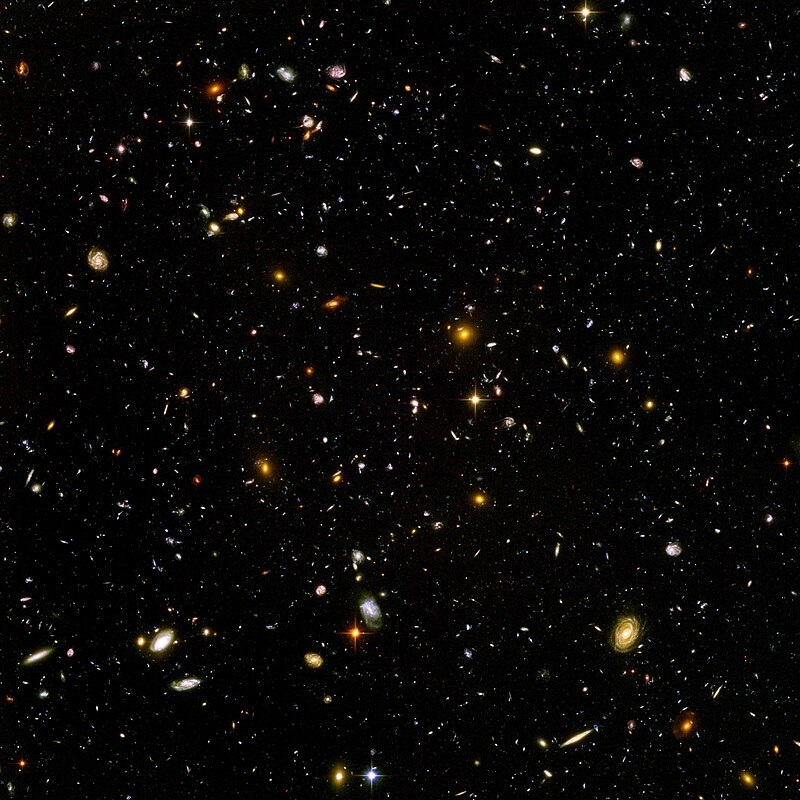
The argument from beauty contends that the pervasive beauty of the natural world — the mathematical elegance of physical laws, the intricate symmetry of snowflakes, the chromatic splendour of sunsets, the vast aesthetic appeal of starry skies — is better explained by theism than by naturalism. On this view, a universe that owes its existence to blind, purposeless physical processes has no reason to be beautiful, yet a universe created by a rational, good, and purposive being would plausibly exhibit the kind of order and aesthetic richness that we observe. The argument occupies a distinctive position in the philosophy of religion: it does not claim that beauty logically entails God’s existence, but rather that the existence and character of beauty raises the probability of theism relative to its competitors.1, 2
The argument has deep historical roots, appearing in various forms in Plato, Augustine, Aquinas, and the British natural theologians, but received its most rigorous modern formulations in the work of F. R. Tennant and Richard Swinburne. It intersects with the teleological argument in treating features of the natural world as evidence for design, but differs in focusing not on functional complexity or fine-tuning but on the sheer aesthetic character of reality — a feature that, proponents argue, cries out for explanation but sits awkwardly within a purely naturalistic framework.1, 5

Historical development
The idea that beauty points toward the divine has ancient origins. Plato’s Symposium and Phaedrus describe an ascent from the appreciation of particular beautiful objects to the contemplation of Beauty itself — an eternal, unchanging Form that transcends the physical world. For Plato, the experience of earthly beauty awakens the soul to the higher reality of the Forms, and the Form of the Beautiful is intimately connected with the Form of the Good, which in later Neoplatonic interpretation was identified with the divine.15
Augustine of Hippo adapted this Platonic framework for Christian theology, arguing in the Confessions that the beauty of created things serves as a signpost to the Creator: “I asked the earth, I asked the sea and the deeps, among the living animals the things that creep. I asked the winds that blow, I asked the heavens, the sun, the moon, the stars, and to all I addressed the question: Tell me of my God.” For Augustine, the order, proportion, and beauty of the created world are reflections of divine beauty, and the human capacity to perceive and delight in beauty is itself a gift oriented toward the contemplation of God. Thomas Aquinas similarly listed beauty — understood as integritas (wholeness), consonantia (harmony), and claritas (radiance) — among the transcendental properties of being, making beauty an objective feature of reality grounded in the nature of God.15
The modern philosophical treatment of beauty took a decisive turn with Immanuel Kant’s Critique of Judgment (1790), which analysed aesthetic experience as involving a distinctive form of judgment — neither purely cognitive nor purely sensory — in which the subject apprehends a purposiveness in the object without attributing to it any definite purpose. Kant distinguished between the “beautiful” (characterised by harmonious free play of the cognitive faculties) and the “sublime” (characterised by the overwhelming power or magnitude of nature that stretches the imagination beyond its normal limits). Although Kant himself did not develop a theistic argument from beauty, his analysis of aesthetic judgment as pointing toward a purposiveness in nature that transcends mechanical explanation provided conceptual resources that later natural theologians would exploit.4
Tennant’s aesthetic argument
The first sustained modern philosophical argument from beauty to God was developed by F. R. Tennant in his two-volume Philosophical Theology (1928–1930). Tennant situated the argument within a broader empirical teleology, arguing that the cumulative force of several features of the natural world — its amenability to rational understanding, its production of life, its production of moral agents, and its beauty — together raise the probability of theism to a degree that no single feature achieves alone. Beauty, for Tennant, constitutes a distinctive strand in this cumulative argument because it is not explicable by the same considerations that explain functional adaptation.2
Tennant’s central contention is that the beauty of nature is “superfluous” from the standpoint of survival. Natural selection can explain why organisms develop sensory capacities that track features of the environment relevant to survival and reproduction — detecting predators, finding food, identifying mates — but it cannot explain why the world that those senses reveal is saturated with beauty that far exceeds what adaptation requires. The iridescent plumage of tropical birds, the fractal geometry of coastlines, the harmonic structure of birdsong, the chromatic drama of auroral displays — none of these aesthetic qualities is necessary for the survival of the organisms that perceive them, yet they pervade the natural world with a richness and depth that seem, on Tennant’s analysis, better explained by a purposive intelligence than by unguided physical processes.2
Tennant explicitly distinguished his argument from the classical design argument critiqued by David Hume. The Humean objection — that an analogy between natural objects and human artefacts is too weak to sustain a design inference — does not apply to the aesthetic argument, because the argument does not reason by analogy from human design to cosmic design. Instead, it reasons from the brute fact that the universe is beautiful to the hypothesis that best explains that fact. Tennant argued that theism provides such an explanation, since a rational and good creator would have reason to produce a beautiful universe, whereas on naturalism the beauty of nature is an unexplained coincidence — a cosmic accident with no explanatory ground.2, 5
The formal argument
The argument from beauty can be formulated in several ways. The following Bayesian formulation captures the logical structure common to Swinburne’s and Tennant’s versions:
P1. The natural world exhibits pervasive beauty — mathematical elegance in physical laws, aesthetic order in biological forms, and sublime grandeur in cosmic phenomena.
P2. On theism, the existence of pervasive natural beauty is expected, since a rational and good creator would have reason to produce a beautiful universe.
P3. On naturalism, the existence of pervasive natural beauty is unexpected, since blind physical processes have no tendency to produce beauty beyond what is required for survival.
C. Therefore, the existence of pervasive natural beauty is evidence that raises the probability of theism relative to naturalism.
The argument is probabilistic rather than deductive: it does not claim that beauty entails God’s existence, but that beauty is more probable on theism than on naturalism, so that observing beauty should shift one’s credence toward theism. In Bayesian terms, if P(Beauty | Theism) > P(Beauty | Naturalism), then by Bayes’s theorem the observation of beauty raises the posterior probability of theism. The argument’s strength depends on how much higher the theistic likelihood is and on the prior probabilities assigned to each hypothesis.1, 7
Swinburne’s treatment
Richard Swinburne incorporates the argument from beauty into his comprehensive Bayesian cumulative case for theism in The Existence of God (1979; 2nd ed. 2004). Swinburne treats each piece of evidence — the existence of the universe, its conformity to simple natural laws, the fine-tuning of physical constants, the existence of conscious beings, moral awareness, and the beauty of nature — as an independent confirmatory datum whose cumulative effect renders theism more probable than not. Beauty constitutes one strand in this cumulative argument, though Swinburne does not assign it as much evidential weight as the cosmological or fine-tuning considerations.1
Swinburne’s specific argument proceeds as follows. The beauty of the natural world is a contingent fact: the laws of physics could have produced a universe that is orderly enough to sustain life but aesthetically barren. That the actual universe exhibits not merely functional order but aesthetic order — that physical laws produce spiral galaxies, crystalline mineral structures, the colour spectrum of stellar emission, the fractal branching of rivers and trees — is an additional fact that requires explanation. On theism, a God who is both rational and good would have reason to create a beautiful universe, since beauty is a good and a rational being would have reason to instantiate goods. On naturalism, by contrast, the aesthetic character of physical law is an unexplained brute fact. Since theism predicts beauty better than naturalism does, beauty constitutes evidence for theism.1
Swinburne anticipates the objection that beauty is subjective — merely a projection of human preferences onto a value-neutral world — by distinguishing between the subjective experience of beauty and the objective features of the world that evoke it. The mathematical elegance of the Standard Model of particle physics, the geometric precision of Kepler’s laws, the symmetry groups underlying the fundamental forces — these are objective structural features of reality, not subjective responses. Even if the feeling of beauty is subjective, the order that occasions it is an objective fact about the world, and it is this objective order that the argument seeks to explain.1
The beauty of mathematics and physics
A recurrent theme in arguments from beauty is the remarkable aesthetic character of fundamental physics. Physicists themselves have frequently remarked on the beauty, elegance, and mathematical simplicity of the laws governing the universe. Paul Dirac famously declared that “it is more important to have beauty in one’s equations than to have them fit experiment,” and the physicist Steven Weinberg observed that the beauty of physical theories has consistently served as a reliable guide to truth, with aesthetically beautiful theories proving empirically successful far more often than their uglier competitors.8
John Polkinghorne, a theoretical physicist and Anglican priest, developed this observation into an explicit argument for theism. Polkinghorne argued that the deep mathematical structure of the physical world — the fact that the universe is not merely describable by mathematics but describable by beautiful mathematics — constitutes evidence for a rational mind behind nature. On naturalism, there is no reason why the fundamental laws should be expressible in compact, elegant mathematical form. The universe could have been governed by complicated, ugly equations that happen to produce the same observable outcomes. That the actual equations are beautiful is, on Polkinghorne’s analysis, a clue to the character of the creator.8
Eugene Wigner’s famous essay on “the unreasonable effectiveness of mathematics in the natural sciences” raises a closely related puzzle that has given rise to a distinct argument from mathematics. Wigner observed that mathematical structures developed by pure mathematicians for their intrinsic beauty and interest — group theory, differential geometry, complex analysis — repeatedly turn out to describe the physical world with astonishing precision, a fact that Wigner called “a wonderful gift which we neither understand nor deserve.” While this is not itself a theistic argument, proponents of the argument from beauty contend that theism provides a natural explanation for the connection between mathematical beauty and physical truth: a rational creator would design the universe according to mathematically elegant principles, making the applicability of beautiful mathematics to nature expected rather than mysterious.1, 8
Lewis and the argument from desire
C. S. Lewis developed a related but distinct argument from desire that connects beauty with a deep human longing he called Sehnsucht or “joy” — an intense, bittersweet desire evoked by experiences of beauty that points beyond itself to something transcendent. In Surprised by Joy and Mere Christianity, Lewis argued that every natural desire corresponds to a real object capable of satisfying it: hunger corresponds to food, thirst to water, sexual desire to sexual union. The desire evoked by beauty — the aching sense that something beautiful points beyond itself to a reality we cannot quite grasp — is a natural desire, and if the pattern holds, it must correspond to a real transcendent object. Lewis identified this object as God.3
Lewis’s argument is not strictly an argument from beauty to God’s existence but rather an argument from the desire that beauty awakens to the existence of a transcendent reality that could satisfy that desire. The logical structure differs from Tennant’s and Swinburne’s versions: where they argue that the objective beauty of the world requires explanation, Lewis argues that the subjective experience of longing evoked by beauty requires explanation. The two arguments are complementary — one addresses the object of aesthetic experience, the other the subject — but they rest on different premises and are vulnerable to different objections.3, 10
William Lane Craig has noted that Lewis’s argument from desire, while suggestive, faces a significant vulnerability: the premise that every natural desire has a corresponding real satisfier is an empirical generalisation rather than a necessary truth, and counterexamples may exist. Craig nevertheless regards the argument as contributing to a cumulative case in which the various features of human experience — moral awareness, aesthetic sensitivity, rational intuition — together point toward a transcendent ground that naturalism struggles to accommodate.10
Major objections
The argument from beauty has attracted several lines of criticism. The most fundamental objection questions whether beauty is an objective feature of reality or merely a subjective response — a product of human psychology rather than a property of the world itself. David Hume argued in A Treatise of Human Nature that “beauty is no quality in things themselves: it exists merely in the mind which contemplates them; and each mind perceives a different beauty.” If beauty is subjective, then the argument’s first premise — that the world is beautiful — is not a statement about the world but about human psychology, and explaining human psychology does not require invoking God.16
The evolutionary objection develops this point further. Evolutionary psychologists argue that human aesthetic preferences are products of natural selection, shaped by their contribution to reproductive fitness. Preferences for landscapes with water, moderate vegetation, and long sight lines — the features consistently rated as beautiful across cultures in psychological studies — may reflect ancestral habitat preferences that enhanced survival. The perception of symmetry as beautiful may track mate quality, since bilateral symmetry is a reliable indicator of developmental stability and genetic health. On this account, the “beauty” of nature is not a mind-independent property requiring theological explanation but a projection of adaptively shaped perceptual biases onto a value-neutral world.12, 13
A third objection, pressed by J. L. Mackie and Graham Oppy, concerns the argument’s comparative probability claim. Even granting that beauty is objective, the naturalist can argue that the beauty of the world is not improbable on naturalism. Physical laws inevitably produce ordered patterns — the spiral structure of galaxies follows from gravitational dynamics, the hexagonal symmetry of snowflakes follows from the molecular properties of water, the fractal geometry of coastlines follows from erosion processes. These patterns strike human observers as beautiful, but their existence is a straightforward consequence of physical law, not an additional fact requiring a separate explanation. If the patterns are already explained by physics, adding God to explain their beauty is explanatorily redundant.6, 7
The problem of ugliness presents a further challenge. If the beauty of nature supports theism, then the pervasive ugliness of nature — parasitic wasps that devour their hosts from within, the bloated decomposition of corpses, the barren desolation of volcanic wastelands, the chaotic destruction of natural disasters — should count as evidence against theism. Darwin himself raised this point in a letter to Asa Gray: “I cannot persuade myself that a beneficent and omnipotent God would have designedly created the Ichneumonidae with the express intention of their feeding within the living bodies of caterpillars.” A universe created by a perfectly good and powerful being should arguably be uniformly beautiful, yet the actual universe contains vast quantities of aesthetic horror alongside its beauty.12, 14
Responses to objections
Defenders of the argument have responded to each of these objections. Against the subjectivity objection, Swinburne and Roger Scruton have argued that beauty has an objective dimension that cannot be reduced to subjective preference. The mathematical elegance of physical laws, the geometric precision of crystal structures, the harmonic ratios underlying musical consonance — these are structural features of reality that evoke aesthetic responses across cultures and historical periods. The cross-cultural convergence of aesthetic judgments on certain natural phenomena (starry skies, flowing water, flowering landscapes) suggests that human aesthetic responses track genuine features of the world rather than projecting arbitrary preferences onto it.1, 15
Against the evolutionary objection, proponents argue that natural selection can explain why humans find certain things beautiful but not why the world contains beautiful things in the first place. The evolutionary account explains the perceiver but not the perceived. Even if the human aesthetic sense is a product of evolution, the question remains: why does a universe governed by blind physical laws produce the kind of ordered structures — mathematical elegance, crystalline symmetry, biological complexity — that a survival-oriented aesthetic sense finds beautiful? The coincidence between what evolution has tuned humans to appreciate and what physics happens to produce is itself a fact requiring explanation, and theism provides one by positing a designer who intended both the beauty of the world and the capacity to appreciate it.2, 9
Against the explanatory redundancy objection, defenders distinguish between physical explanation and ultimate explanation. The hexagonal symmetry of snowflakes is explained by molecular physics, but the question is why the laws of molecular physics are such as to produce aesthetically pleasing patterns. The argument from beauty does not compete with physical explanations of particular beautiful phenomena but asks a different question: why are the fundamental laws of physics aesthetically fruitful? This is not a question that physics itself can answer, since physics takes its own laws as given.1, 8
Against the problem of ugliness, defenders typically invoke a strategy parallel to responses to the problem of evil. Just as theists argue that evil may be permitted for the sake of greater goods (such as free will, moral development, or natural law regularity), so the aesthetic argument can accommodate ugliness by arguing that a world containing both beauty and ugliness may be aesthetically richer than a world of uniform beauty. The contrast between beauty and ugliness may itself be beautiful in a higher-order sense, just as a painting may derive its power from the contrast between light and shadow. Whether this response is adequate depends on the same considerations that govern the debate over theodicy.1, 11
Beauty and the cumulative case
Most contemporary defenders of the argument from beauty do not present it as a standalone proof of God’s existence but as one strand in a broader cumulative case. Swinburne’s Bayesian framework treats each piece of evidence — cosmological, teleological, moral, aesthetic — as independently raising the probability of theism, with the cumulative effect being stronger than any single argument. On this approach, beauty may not by itself render theism more probable than not, but it contributes incremental evidential support that, combined with the arguments from cosmology, fine-tuning, consciousness, and morality, may tip the balance.1, 11
Tennant similarly embedded his aesthetic argument within a wider teleological programme, arguing that the beauty of nature is one of several converging lines of evidence that together support the hypothesis of a purposive intelligence behind the natural order. The force of the cumulative case depends not on any single strand being decisive but on the improbability of all the strands independently pointing in the same direction if theism were false.2
Comparative evidential features in the cumulative case for theism1, 11
| Evidential feature | Key proponent | Theistic expectation | Naturalistic challenge |
|---|---|---|---|
| Existence of the universe | Leibniz, Craig | A creator would produce a universe | Brute fact or necessary existence |
| Fine-tuning of constants | Collins, Swinburne | A designer would set life-permitting values | Multiverse or anthropic selection |
| Mathematical elegance of laws | Polkinghorne, Swinburne | A rational creator would use beautiful laws | Beauty is a human projection |
| Consciousness | Swinburne, Moreland | A conscious creator would produce minds | Emergent from physical complexity |
| Moral awareness | Adams, Craig | A good creator would produce moral agents | Evolved social instincts |
| Natural beauty | Tennant, Swinburne | A good creator would produce beauty | Physical laws inevitably produce patterns |
Contemporary assessment
The argument from beauty remains one of the less formally developed arguments in the philosophy of religion, receiving substantially less attention in the professional literature than the cosmological, teleological, and moral arguments. This relative neglect may reflect the difficulty of formulating precise claims about beauty that can be rigorously evaluated. The argument’s premises — that the world is objectively beautiful, that beauty is unexpected on naturalism, that theism better predicts beauty — each involve contested philosophical claims about the nature of aesthetic value, the scope of evolutionary explanation, and the predictive content of theism.5, 7
Graham Oppy has argued that the argument faces a structural problem shared by all arguments from specific features of the world to theism: the probability of any specific feature of the world on theism depends entirely on what one assumes about God’s preferences, and since we have no independent access to God’s preferences, the theistic likelihood — P(Beauty | Theism) — is indeterminate rather than high. A God might have reason to create a beautiful universe, but a God might equally have reason to create a universe that is functional but aesthetically neutral, or one whose beauty is accessible only to certain kinds of minds, or one in which beauty is distributed very differently from what we observe. Without an independent argument establishing that God would produce this kind and degree of beauty, the argument’s key premise — that beauty is more probable on theism — remains an assumption rather than a conclusion.7
Defenders respond that the assumption is not arbitrary but grounded in a natural theology in which God is understood as the supreme exemplification of rationality and goodness. A perfectly good being would have reason to produce goods, and beauty is a good; a perfectly rational being would have reason to instantiate rational order, and mathematical elegance is a form of rational order. The theistic prediction of beauty follows not from ad hoc assumptions about God’s preferences but from the classical theistic conception of God’s nature. Whether this response succeeds depends on whether the classical theistic conception of God is independently well-supported — a question that returns to the broader cumulative case in which the argument from beauty is embedded.1, 10
The argument from beauty thus occupies a modest but distinctive place in the landscape of natural theology. It does not aim to prove God’s existence on its own, and its premises remain philosophically contested. What it offers is an additional consideration — the pervasive aesthetic character of the natural world — that sits more comfortably within a theistic framework than within a naturalistic one, and that contributes to the broader cumulative case by adding an evidential strand that the other arguments do not provide. Whether the cumulative case is strong enough to render theism more probable than not remains one of the central unresolved questions in the philosophy of religion.1, 2, 11