Overview
- Omniscience is the property of possessing complete and perfect knowledge, standardly defined as knowing every true proposition and believing no falsehoods, and it has been regarded alongside omnipotence and perfect goodness as one of the three central attributes of God in classical theism across the Christian, Jewish, and Islamic philosophical traditions.
- The concept generates several major philosophical difficulties: the apparent incompatibility of exhaustive foreknowledge with libertarian free will (the problem of theological fatalism), the tension between knowing temporally indexed truths and divine immutability, the challenge of first-person knowledge that appears uniquely accessible to individual knowers, and Patrick Grim's Cantorian argument that no set of all truths can exist.
- Proposed solutions to these difficulties include the Boethian appeal to divine timelessness, the Ockhamist distinction between hard and soft facts about the past, the Molinist doctrine of middle knowledge, open theism's restriction of omniscience to exclude future contingents, and the Thomistic account of non-discursive divine cognition — each of which preserves omniscience in some form while modifying either its scope or its relationship to other divine attributes.
Omniscience is the property of possessing maximal or complete knowledge. Along with omnipotence and perfect goodness, it is standardly regarded as one of the three central attributes of God in classical theism. The concept appears throughout the history of philosophical theology, from the biblical depiction of a God who "knows all things" through the systematic treatments of Aquinas, Boethius, and the medieval Islamic and Jewish philosophers, to the rigorous analyses of contemporary analytic philosophy of religion. In its most widely used formulation, omniscience is defined propositionally: a being is omniscient if and only if, for every proposition p, if p is true then that being knows p.1, 2

Despite the apparent simplicity of this definition, omniscience has proved to be one of the most philosophically fertile of the divine attributes. Its analysis raises questions that extend far beyond theology into epistemology, the philosophy of time, modal logic, and the philosophy of language. The claim that an omniscient being exists generates a series of interlocking philosophical difficulties: whether exhaustive foreknowledge is compatible with libertarian free will, whether knowledge of temporally indexed truths is compatible with divine immutability, whether any being can possess another's first-person knowledge, and whether the totality of all truths can even coherently be said to exist. This article examines the definition and scope of omniscience, the major arguments surrounding it, and the principal philosophical responses that have been developed over the past two millennia.
Defining omniscience
The standard definition of omniscience in contemporary analytic philosophy is propositional: a being S is omniscient if and only if, for every proposition p, if p is true then S knows p. This definition, sometimes labelled D1 in the literature, captures the intuitive idea that an omniscient being leaves no truth unknown. Some philosophers, following Linda Zagzebski, add the further requirement that an omniscient being also knows, for every false proposition, that it is false. Given standard assumptions about the logical structure of propositions — that the negation of a false proposition is a true proposition — this stronger definition is equivalent to D1.1
A third variant requires not only that an omniscient being know all truths but also that it believe no falsehoods. This belief-inclusive definition is motivated by the thought that a being who knows every truth but also holds some false beliefs is not genuinely omniscient, since its doxastic state contains error. In practice, the distinction matters little: knowledge is standardly taken to entail truth (one cannot know a falsehood), so an omniscient being who knows every truth will, by virtue of that knowledge, believe no falsehoods, provided it has no additional beliefs beyond what it knows.1, 2
More recently, philosophers have proposed restricted accounts of omniscience. Bruce Langtry has argued that omniscience should be understood as knowing all truths that the being is not cognitively precluded from knowing, allowing that certain truths (such as first-person truths belonging to other agents) may fall outside the scope of even maximal knowledge. Yujin Nagasawa has proposed a "maximal consistency" approach, on which omniscience is the greatest degree of knowledge that is consistent with the maximal instantiation of God's other attributes. Richard Swinburne has argued that omniscience does not include knowledge of future free actions, since such actions have no determinate truth value to be known.1, 10, 23 These restricted accounts represent departures from the classical definition and are motivated by the various philosophical difficulties examined below.
Additional features of divine knowledge
Beyond the bare requirement that God know all truths, classical theism has traditionally attributed several additional features to divine knowledge, each of which introduces its own philosophical complexities.1, 14
Infallibility. An omniscient being is not merely one that happens to know all truths; it is one that cannot believe falsehoods. The distinction between contingent and necessary omniscience matters here. A being might, as a matter of fact, believe all and only truths without it being the case that this is a necessary feature of its cognitive life. Classical theism has generally held that God's omniscience is essential rather than accidental: God is necessarily omniscient, such that there is no possible world in which God exists and fails to know some truth. This essential infallibility has important consequences for the foreknowledge debate, as Nelson Pike's influential 1965 argument demonstrated.3, 1
Non-discursive knowledge. Thomas Aquinas held that God does not reason from premises to conclusions. Human knowledge is characteristically discursive — we move from what we already know to what we do not yet know through inference. Divine knowledge, on Aquinas's account, is wholly intuitive: God grasps all truths in a single, non-sequential act of understanding. This claim is connected to the doctrine of divine simplicity, which holds that God has no internal composition, and therefore no succession of mental states that could constitute a process of reasoning.14, 1
Occurrent versus dispositional knowledge. Human beings know many things dispositionally — a person who is asleep still knows that 2 + 2 = 4, even though this knowledge is not currently before her mind. David Hunt has argued that the distinction between occurrent and dispositional knowledge may be relevant to reconciling omniscience with free will: if God's foreknowledge of a future free action is dispositional rather than occurrent, it may exert less metaphysical pressure on the agent's freedom. This suggestion remains controversial, with critics arguing that it merely relocates the problem rather than solving it.21, 1
Omnisubjectivity. Zagzebski has proposed that divine omniscience includes, or perhaps entails, a further property she calls omnisubjectivity: the capacity to grasp with perfect accuracy and completeness the first-person perspective of every conscious being. On this view, God does not merely know about the subjective experiences of creatures but knows them from the inside, as the creatures themselves experience them. Whether omnisubjectivity is an additional divine attribute or a consequence of propositional omniscience remains debated.22
Foreknowledge and free will
The most extensively discussed philosophical problem generated by omniscience is the apparent tension between divine foreknowledge and human freedom. If God knows all truths, and if propositions about the future have determinate truth values, then God knows today every action that every agent will perform tomorrow. The question is whether an action that God infallibly knew in advance would occur can be genuinely free — whether the agent could have done otherwise.3, 9, 19
The classical formulation of the problem can be stated as a formal argument.
P1. God knew at time t1 that Jones will do action A at time t2.
P2. If God knew at t1 that Jones will do A at t2, then it is necessary (given the fixity of the past) that Jones does A at t2.
P3. If it is necessary that Jones does A at t2, then Jones is not free with respect to doing A at t2.
C. Therefore, Jones is not free with respect to doing A at t2.
Nelson Pike's 1965 paper "Divine Omniscience and Voluntary Action" provided the most influential modern formulation of this argument. Pike argued that if God is essentially omniscient — if there is no possible world in which God exists and holds a false belief — then God's past belief that Jones will do A is an "accidentally necessary" fact about the past. Since no one has the power to change the past, no one has the power to make God's past belief false. But God's past belief entails that Jones does A, and accidental necessity is closed under entailment (if a necessary proposition entails another proposition, the entailed proposition is also necessary). Therefore, Jones necessarily does A and is not free.3
The argument has generated an enormous literature. Five major families of responses have been developed, each denying a different premise or presupposition of the argument. The Boethian response denies that God has foreknowledge in the temporal sense, holding that God apprehends all events from an atemporal eternal present. The Ockhamist response, developed by Alvin Plantinga, denies that God's past belief about Jones's future action is a "hard" fact about the past, arguing that it is a "soft" fact whose truth depends on what happens at t2. The Molinist response appeals to middle knowledge to show how God can have comprehensive foreknowledge without causally determining free choices. Open theism denies that God possesses exhaustive foreknowledge of future contingents. And theological determinism accepts the argument's conclusion but denies that libertarian free will is required for moral responsibility.8, 9, 13, 17, 19 The foreknowledge problem is treated in detail in the article on divine foreknowledge and free will.
Omniscience and immutability
A second major philosophical difficulty for omniscience concerns its compatibility with divine immutability — the classical theistic doctrine that God does not change. The problem was stated most clearly by Norman Kretzmann in his 1966 paper "Omniscience and Immutability." Kretzmann observed that certain propositions change their truth values over time. The proposition "It is now Tuesday" is true on Tuesdays and false on every other day. An omniscient being must know, at every moment, which propositions are currently true. But if the set of currently true propositions changes from moment to moment, an omniscient being must change its beliefs accordingly — knowing on Tuesday that it is Tuesday, and knowing on Wednesday that it is Wednesday. A being that changes in any respect is not immutable. Therefore, omniscience appears to be incompatible with immutability.4
The argument can be stated formally.
P1. An omniscient being knows all true propositions at every time.
P2. Some propositions (such as "It is now Tuesday") change their truth values over time.
P3. If a being's knowledge changes over time, that being is not immutable.
C. Therefore, an omniscient being is not immutable.
Several responses have been offered. One approach, favoured by Pike and Swinburne (in his earlier work), argues that the appearance of changing truth values is an artefact of indexical language. The proposition expressed by "It is now Tuesday" on a particular Tuesday is not the same proposition expressed by those words on Wednesday. What is true on Tuesday is the eternal proposition "It is Tuesday on March 15, 2026," and what is true on Wednesday is the different eternal proposition "It is Wednesday on March 16, 2026." Neither proposition ever changes its truth value, so an omniscient being need not change its beliefs to track them.1, 20
A second response appeals to divine timelessness. If God exists outside of time altogether, then God does not believe things "at" different times. God's single, eternal act of knowledge encompasses all of temporal reality without being located at any point within it. On this view, God does not first believe that it is Tuesday and then change to believing that it is Wednesday; God timelessly knows the entire temporal series, including which events occur on Tuesday and which on Wednesday.12
Jonathan Kvanvig has argued that even if some propositions do change truth values, omniscience can be preserved through a more careful definition. If omniscience is defined as knowing, at each time, all propositions that are true at that time, then an omniscient being's knowledge changes in content over time without this constituting a genuine change in the being itself, since the being is simply tracking an external change in which propositions are true. Whether this response succeeds depends on whether changes in the content of knowledge constitute real changes in the knower — a question that connects to deeper issues in the metaphysics of properties and persistence.11, 1
The problem of first-person knowledge
Kretzmann's 1966 paper also raised a distinct problem for omniscience concerning de se (first-person) knowledge. When Jones knows "I am in the hospital," Jones possesses a piece of knowledge that appears to be uniquely his own. The proposition Jones grasps when he thinks "I am in the hospital" is not the same as the proposition someone else grasps when thinking "Jones is in the hospital." Jones's knowledge is essentially indexical — tied to his first-person perspective in a way that cannot be replicated from the outside. If omniscience requires knowing everything that anyone knows, and if Jones's de se knowledge is something that only Jones can possess, then God cannot be omniscient without being identical to Jones. Since God is presumably not identical to Jones (or to every other conscious being), divine omniscience appears to be impossible.4, 5
Patrick Grim pressed this argument more forcefully in his 1985 paper "Against Omniscience: The Case from Essential Indexicals." Grim argued that every conscious being has first-person knowledge that is in principle inaccessible to any other being, including God. If God cannot know what it is like to be Jones from Jones's own first-person perspective, then there are truths God does not know, and God is not omniscient.5
The most widely discussed response, developed by Edward Wierenga, appeals to the concept of haecceities — individual essences that uniquely identify each person. On Wierenga's account, the propositions God knows include propositions involving the haecceities of persons and times, such as "the individual with Jones's haecceity is in the hospital at time t." These propositions capture all the information contained in Jones's de se knowledge without requiring God to occupy Jones's first-person perspective. God's knowledge is expressed not through indexical propositions but through haecceity-involving propositions that are fully objective and available to an omniscient being.2, 1
Hector-Neri Castañeda offered an early response along different lines, arguing that the logical form of de se attributions does not generate the problem Kretzmann supposed. On Castañeda's analysis, when we say "Jones knows that he himself is in the hospital," the quasi-indicator "he himself" functions differently from an ordinary pronoun, and the knowledge attributed to Jones can be fully captured in a third-person framework enriched with the appropriate logical apparatus.15
Nagasawa has proposed yet another approach, treating omniscience as an "epistemic power" that is part of divine omnipotence. On this view, God has the power to know everything that any being knows, including first-person knowledge, even if the exercise of that power would require God to adopt perspectives that are, for a distinct being, ordinarily inaccessible. Whether this solution involves God actually possessing the de se knowledge or merely having the capacity to possess it remains a point of discussion.1, 23
Grim's Cantorian argument
Patrick Grim advanced a further argument against omniscience in his 1988 paper "Logic and the Limits of Knowledge and Truth," drawing on Cantor's theorem in set theory. The argument aims to show that there can be no set of all truths, and that if there is no such set, then omniscience — understood as knowledge of all truths — is impossible.6
The argument proceeds as follows. Suppose there exists a set T containing all truths. Consider the power set of T — the set of all subsets of T. For each subset S of T, and for each truth t1 in T, either t1 is a member of S or it is not. In either case, there is a corresponding truth: either "t1 is a member of S" or "t1 is not a member of S." This means there are at least as many truths as there are elements of the power set of T. But Cantor's theorem proves that the power set of any set is strictly larger than the set itself. Therefore, there are more truths than there are members of T, which contradicts the assumption that T contains all truths. No set of all truths can exist.6
Grim then connects this result to omniscience: if an omniscient being existed, the totality of what it knows would constitute a set of all truths. Since no such set exists, no omniscient being exists. The argument is notable because it does not depend on any particular theological assumption; it is a purely logical argument that, if sound, would render omniscience impossible for any being whatsoever.6
Alvin Plantinga responded in a 1993 exchange with Grim. Plantinga argued that Grim's argument is self-undermining: if there is no set of all truths, then neither is there a set of all propositions, and the very framework within which the argument is stated (quantification over "all truths") collapses. Plantinga contended that knowledge of all truths does not require that there be a set of all truths; one can quantify over all truths without assuming they form a set, just as one can say "every proposition is either true or false" without assuming that all propositions form a set. The move from "there is no set of all truths" to "there is no omniscient being" involves a non sequitur.7
The exchange between Grim and Plantinga illuminated deep connections between the philosophy of religion and the foundations of mathematics. Grim responded that Plantinga's position requires a coherent account of quantification without sets, which is not straightforwardly available. Further responses have been offered by Keith Simmons, Graham Oppy, and others, and the debate remains unresolved, though it has shifted attention from the question of whether omniscience is possible to the question of what formal framework is appropriate for representing totalities of truths.7, 1
Knowledge de re and complete knowledge
A further dimension of the analysis of omniscience concerns knowledge de re — knowledge of things, as opposed to knowledge de dicto, which is knowledge of propositions. Arthur Prior raised this issue in his 1962 paper "Formalities of Omniscience," arguing that complete knowledge requires not only knowing every true proposition but also knowing everything about everything — for every individual x and every property F, if x has F, then God knows de re of x that it has F.18
The question is whether propositional omniscience (D1) entails complete de re knowledge. If God knows all true propositions, does it follow that God knows, of each individual, all of that individual's properties? The answer depends on whether every de re truth can be captured by a de dicto proposition. If, for every individual x and property F, there exists a proposition p that is true if and only if x has F, and if God knows p, then propositional omniscience suffices for de re omniscience. Most contemporary philosophers of religion accept this reduction, provided that God bears the appropriate epistemic relation (sometimes called "acquaintance") to the individuals in question.1, 16
Wierenga has argued that the key to securing de re knowledge for an omniscient being is the concept of epistemic rapport: a relation between the knower and the object of knowledge that grounds genuine singular thought about that object. If God bears epistemic rapport to every individual — which seems guaranteed by God's role as creator and sustainer of all things — then God's propositional knowledge about individuals constitutes genuine de re knowledge of them.2, 16
Aquinas's account of divine knowledge
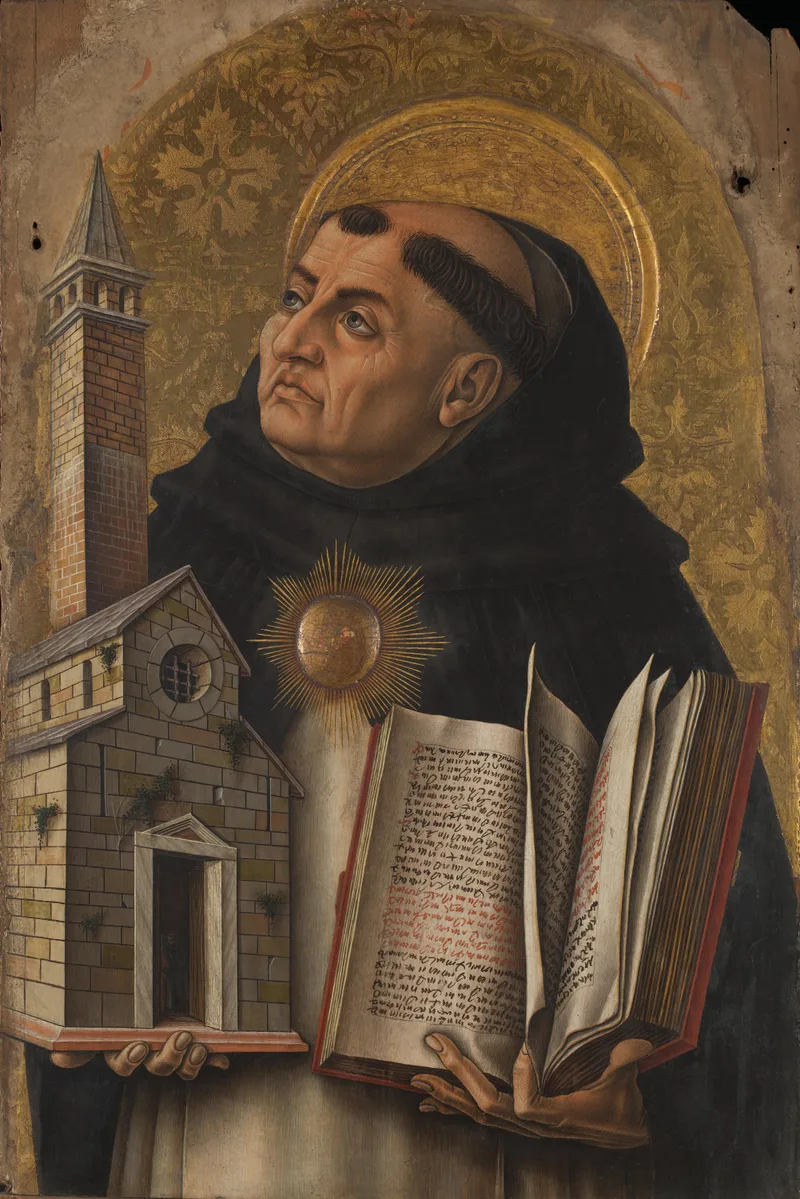

The most influential systematic treatment of divine omniscience in the history of Western philosophy was provided by Thomas Aquinas in Questions 14 and 15 of the Prima Pars of the Summa Theologiae. Aquinas held that God knows all things — past, present, future, actual, and merely possible — in a single, non-discursive, eternal act of self-knowledge.14
Aquinas's account rests on the principle that God, as pure actuality and the first cause of all things, knows all things by knowing himself. Since every created thing is an effect of God's causal power, and since a cause contains within itself the intelligibility of its effects, God's perfect self-knowledge includes knowledge of every actual and possible creature. God does not learn about the world by observing it; God knows the world by knowing his own creative power and its range of possible exercises.14
Several features of this account are philosophically distinctive. First, Aquinas denied that God's knowledge is divided into temporal stages. God does not first know one thing and then another; all of God's knowledge is simultaneous and eternal. This feature connects divine omniscience to the Boethian doctrine of divine timelessness and provides Aquinas's answer to the immutability problem: since God's knowledge does not unfold in time, it does not change.14, 12
Second, Aquinas distinguished between God's knowledge of things that actually exist (which he called scientia visionis, knowledge of vision) and God's knowledge of things that are merely possible (scientia simplicis intelligentiae, knowledge of simple understanding). This distinction would later be elaborated by Luis de Molina, who proposed a third category — middle knowledge (scientia media) — positioned logically between the other two.14
Third, Aquinas held that God knows future contingents — events that depend on the free choices of creatures — not by determining them but by seeing them as present in the divine eternity. Because all of time is present to God, God does not foreknow future events; God simply knows them, as an observer on a hill sees the entire road below, including the travellers who have not yet arrived at later points from the perspective of other travellers on the road. This analogy, borrowed from Boethius, has been criticised for obscuring the metaphysical relationship between God's knowledge and the events known, but it remains one of the most discussed models for reconciling omniscience with contingency.14, 12
Major responses to the difficulties
The various philosophical difficulties generated by omniscience have produced a rich ecosystem of proposed solutions, each of which modifies either the definition of omniscience, the scope of its application, or the metaphysical framework within which it is understood.
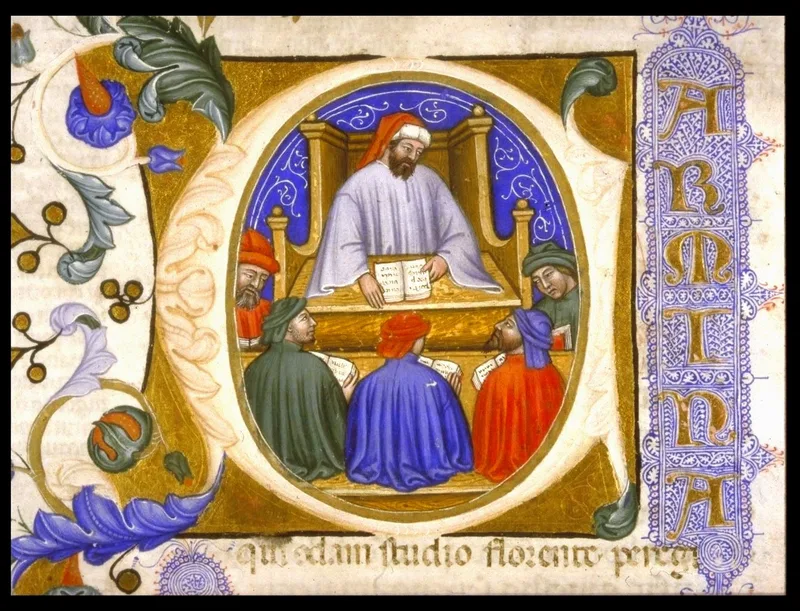

Divine timelessness. The Boethian-Thomistic tradition holds that God exists outside of time and apprehends the whole of temporal reality in a single eternal act. Stump and Kretzmann's 1981 paper "Eternity" provided the most influential modern defence of this position, arguing that divine eternity is a mode of existence that is "duration without succession" — analogous to temporal duration in its fullness but lacking the sequential character that defines time. If God is timeless, then the immutability problem dissolves (God's knowledge does not change because God is not in time) and the foreknowledge problem is reframed (God does not foreknow future events but rather eternally knows them). Critics, including Plantinga and Zagzebski, have argued that the concept of timeless knowledge is obscure and that the fatalism problem can be reformulated for timeless knowledge just as easily as for temporal foreknowledge.12, 8, 9
Ockhamism. Plantinga's 1986 paper "On Ockham's Way Out" proposed that God's past beliefs about future free actions are "soft" facts about the past — facts that, despite being expressed in past-tense language, depend for their truth on what happens in the future. Soft facts are not subject to the necessity of the past in the way that "hard" facts are. The event of God's believing at t1 that Jones will do A at t2 is not a purely past event; it is a past event whose occurrence is partly constituted by what happens at t2. If this is correct, then premise P2 of Pike's argument is false: the past belief is not accidentally necessary, and Jones retains the power to act otherwise.8
Open theism. A more radical response, developed by William Hasker, Clark Pinnock, and others in the 1980s and 1990s, holds that the future is genuinely open and that propositions about future free actions do not have determinate truth values prior to the actions being performed. On this view, God is omniscient in the sense of knowing all truths, but since there are no truths about future free actions, God's omniscience does not include foreknowledge of them. Open theism preserves the standard definition of omniscience while restricting its domain, arguing that the absence of foreknowledge does not represent a cognitive limitation in God but a metaphysical feature of the future itself.13, 17
Restricted omniscience. Swinburne has proposed that omniscience should be defined as knowing all truths that it is logically possible to know. If it is logically impossible to know future free actions (because their truth is not yet determined), then an omniscient being's failure to know them does not count against its omniscience, any more than an omnipotent being's inability to create a square circle counts against its omnipotence. This approach preserves the intuitive connection between omniscience and maximal knowledge while accommodating the limitations imposed by logic and the structure of reality.10, 23
Comparison of major positions on divine omniscience1, 19
| Position | Scope of omniscience | Foreknowledge of free acts | Immutability preserved | Key difficulty |
|---|---|---|---|---|
| Classical (Aquinas) | All truths, including future contingents | Affirmed (via eternal present) | Yes | Coherence of timeless knowledge |
| Ockhamism (Plantinga) | All truths, including future contingents | Affirmed (via soft facts) | Disputed | Hard/soft fact distinction |
| Molinism | All truths, including counterfactuals | Affirmed (via middle knowledge) | Yes | Grounding objection |
| Open theism | All truths (but future free acts lack truth values) | Denied | Denied | Departure from classical theism |
| Restricted (Swinburne) | All knowable truths | Denied | Yes | Adequacy of restricted definition |
Omniscience and other divine attributes
The analysis of omniscience cannot proceed in isolation from the other attributes traditionally ascribed to God. Several of the most persistent difficulties for omniscience arise from the interaction between omniscience and other divine properties, particularly immutability, timelessness, simplicity, and perfect goodness.2, 23
The relationship between omniscience and divine simplicity is especially fraught. If God is absolutely simple — if there are no real distinctions within the divine being — then God's knowledge cannot be distinct from God's power or God's goodness. This raises the question of how a simple being can know different things without having different cognitive states. Aquinas addressed this through the doctrine of analogical predication: the multiple truths God knows are not distinct items of knowledge within God's mind but are different aspects of a single, simple act of self-knowledge, conceptually distinguishable by finite minds but ontologically identical in God. Whether this account is coherent remains one of the central points of contention in the debate over divine simplicity.14
The relationship between omniscience and omnipotence also generates philosophical questions. Can an omnipotent being choose not to know something? If God can do anything logically possible, and if it is logically possible to know a truth without being aware of it (dispositional knowledge), then God might in principle have the power to "bracket" certain items of knowledge. Most classical theists reject this possibility, holding that essential omniscience means God necessarily knows all truths and cannot choose ignorance. But if God's omniscience is necessary, then it constrains God's freedom: God cannot freely choose what to know, which may appear to limit divine sovereignty.23, 2
The connection between omniscience and the problem of evil has also been explored. If God knows all truths, then God knows about every instance of suffering that will ever occur, including the specific details of each person's pain. This knowledge, combined with God's omnipotence and perfect goodness, intensifies the problem of evil: a being who knows precisely what suffering will result from creation and chooses to create anyway bears a heavier burden of justification than a being with incomplete information. This consideration has been explored in the context of middle knowledge, where the attribution to God of counterfactual knowledge of every evil that free creatures would commit intensifies the demand for a morally sufficient reason for creation.9, 13
Contemporary assessment
The philosophical analysis of divine omniscience remains one of the most active areas of inquiry in analytic philosophy of religion. The problems identified by Kretzmann, Pike, Grim, and others have not been conclusively resolved, and each proposed solution generates its own secondary difficulties. The Boethian appeal to divine timelessness faces the charge that timeless knowledge is either incoherent or insufficient to avoid fatalism. The Ockhamist distinction between hard and soft facts has been challenged as ad hoc. The Molinist appeal to middle knowledge encounters the grounding objection. Open theism has been criticised as an unacceptable departure from the classical conception of God. And restricted accounts of omniscience face the worry that they concede too much, defining omniscience in a way that accommodates the problems rather than solving them.1, 9, 19
The significance of the debate extends well beyond the philosophy of religion. The analysis of omniscience has contributed to developments in the philosophy of time (the debate between tensed and tenseless theories of time), the philosophy of language (the semantics of indexicals and de se attitudes), set theory and the foundations of mathematics (the question of whether totalities of truths can form sets), and epistemology (the nature of propositional versus non-propositional knowledge). The concept of omniscience serves as a philosophical test case: a concept that, when pushed to its logical limits, reveals deep questions about the nature of knowledge, truth, and reality that are of interest independently of any theological commitment.1, 7, 16
What the ongoing debate demonstrates is that the concept of omniscience, despite its apparent simplicity, encodes a remarkably complex set of philosophical commitments. To say that a being "knows everything" is to make claims about the nature of truth (whether all truths are propositional), the structure of time (whether future truths exist), the nature of knowledge (whether knowledge requires belief), the metaphysics of persons (whether first-person perspectives are irreducible), and the foundations of mathematics (whether all truths can be collected into a totality). Each of these background commitments can be and has been challenged, and the assessment of omniscience depends in large part on which background framework one adopts. The result is a philosophical topic that, more than two millennia after its first articulation, continues to generate productive inquiry across multiple areas of philosophy.1, 2, 22, 23