Overview
- Alvin Plantinga’s evolutionary argument against naturalism (EAAN) contends that if both naturalism and evolution are true, then the probability that human cognitive faculties are reliable is low or inscrutable, because natural selection shapes behavior for survival rather than belief for truth — generating a self-defeating situation in which the naturalist has a defeater for the reliability of all her beliefs, including her belief in naturalism
- The argument turns on the claim that under naturalism, the content of a belief is causally irrelevant to behavior (epiphenomenalism) or at best only indirectly relevant through its connection to neurophysiology, so there is no selection pressure specifically for true beliefs — an organism could behave in fitness-maximizing ways while holding systematically false beliefs
- Critics respond that the argument conflates global and local reliability, that natural selection does in fact track truth in the domains most relevant to survival, that Plantinga’s probability assessment rests on a questionable construal of the relationship between belief content and neural structure, and that the argument proves too much by equally undermining theistic belief if extended consistently
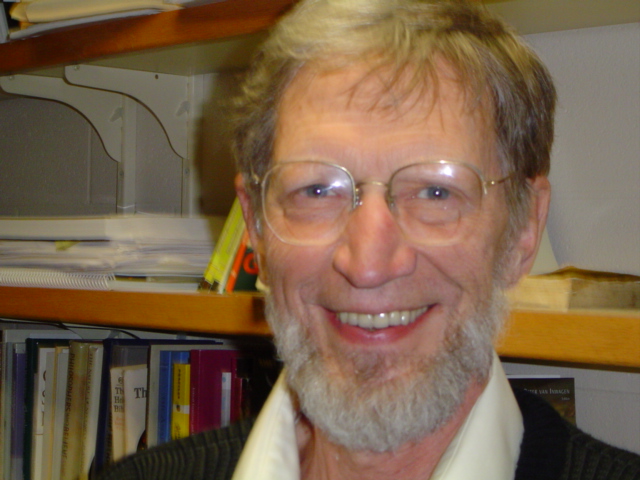
The evolutionary argument against naturalism (EAAN) is an argument developed by Alvin Plantinga that aims to show that naturalism — the view that there is no God and that nature is all there is — is self-defeating when conjoined with evolutionary theory. The argument contends that if both naturalism and unguided evolution are true, then the probability that human cognitive faculties produce mostly true beliefs is low or inscrutable. Since the naturalist relies on her cognitive faculties to form the belief that naturalism is true, she has an undefeated defeater for that very belief. Naturalism, if true, provides a reason to doubt itself. Plantinga concludes that there is a deep conflict between naturalism and science — not between theism and science, as is commonly assumed — because science depends on the reliability of cognitive faculties that naturalism cannot underwrite.1, 2

Historical background
The root intuition behind the EAAN is not new. Charles Darwin himself expressed a version of the worry in a letter to William Graham in 1881: “With me the horrid doubt always arises whether the convictions of man’s mind, which has been developed from the mind of the lower animals, are of any value or at all trustworthy. Would any one trust in the convictions of a monkey’s mind, if there are any convictions in such a mind?” Darwin’s doubt was passing, but it identified a genuine philosophical puzzle: if the mind is a product of natural selection, what reason is there to trust its deliverances about matters that extend beyond the demands of survival?2
C. S. Lewis raised a related concern in his argument from reason, contending that if human thought is fully determined by non-rational causes (neural events governed by physical laws), then there is no reason to regard any thought as a rational insight rather than a mere effect of prior physical states. J. L. Mackie noted the tension between naturalism and the reliability of reason but did not develop it into a formal argument. Arthur Balfour and C. E. M. Joad pressed similar points in the early twentieth century. Plantinga drew these strands together and gave the argument its most rigorous formulation in Warrant and Proper Function (1993) and its most accessible presentation in Where the Conflict Really Lies (2011).1, 2, 5
The argument stated
The EAAN proceeds in several steps. Let N stand for naturalism and E for the proposition that human cognitive faculties have evolved by natural selection. The conjunction N&E is the position held by most scientifically informed naturalists. Let R stand for the proposition that our cognitive faculties are reliable — that they produce a substantial preponderance of true beliefs in the domains in which they are regularly employed.1, 2
The first step asks: what is P(R|N&E) — the probability that our cognitive faculties are reliable, given naturalism and evolution? Plantinga argues that this probability is low or inscrutable. The key premise is that natural selection selects for adaptive behavior, not for true belief. An organism that flees from predators, seeks food, avoids toxins, and cooperates with conspecifics will survive and reproduce regardless of whether its internal representations of the world are true, false, or meaningless. What matters for fitness is the behavioral output, not the propositional content of the beliefs (if any) that cause it.1
The second step introduces the defeater. If P(R|N&E) is low or inscrutable, then the person who accepts N&E has a defeater for R. A defeater for R is a defeater for every belief produced by the cognitive faculties in question — including the belief in N&E itself. The naturalist who accepts evolution thus has a reason to doubt the reliability of her cognitive faculties, which means she has a reason to doubt her belief in naturalism. Naturalism is therefore self-defeating: it cannot rationally be held, because holding it provides a reason to reject it.1, 2
The third step distinguishes theism from naturalism on this point. On theism, God designed human cognitive faculties with the intention that they should produce true beliefs. P(R|T&E) — the probability of reliability given theism and evolution — is high, because a God who wanted creatures to know truth would have ensured that their cognitive faculties are reliable. Theism therefore provides what naturalism cannot: a foundation for the reliability of reason and the possibility of knowledge.2, 13
The content-epiphenomenalism premise
The core of the EAAN is the claim that, under naturalism, the content of a belief — what the belief is about, what it asserts — is causally irrelevant to behavior, or at least not relevant in a way that would select for truth. Plantinga considers several possible relationships between belief content and neural structure under naturalism.1, 2
If epiphenomenalism is true — if mental content has no causal influence on behavior — then natural selection is completely blind to the truth or falsity of beliefs. An organism’s behavior is fully determined by its neurophysiology, and the propositional content of its mental states is a causally inert byproduct. In this case, P(R|N&E) is clearly low: the truth of beliefs plays no role in the causal chain leading to behavior, so there is no selection pressure for true beliefs.1
If semantic epiphenomenalism is false and belief content does causally influence behavior, Plantinga argues that the connection between content and fitness is still too loose to guarantee reliability. A belief’s influence on behavior depends on its interaction with other beliefs, desires, and cognitive states. For any fitness-enhancing behavior, there are many possible combinations of beliefs and desires that would produce that behavior, most of which involve false beliefs paired with compensating desires. The organism that flees from a tiger could believe that the tiger is a cuddly friend and desire above all things to run away from cuddly friends. The behavioral output is the same; the belief is false. Plantinga argues that the space of belief-desire combinations that produce adaptive behavior is vast, and the proportion of those combinations that involve true beliefs is small.1, 9
Thomas Nagel, though not a theist, endorsed a version of Plantinga’s concern in Mind and Cosmos (2012). Nagel argued that the materialist neo-Darwinian conception of nature is “almost certainly false” because it cannot account for the emergence of consciousness, cognition, and value. Nagel concluded that some form of teleological naturalism — a non-theistic but purposive account of nature — is needed to explain the reliability of human reason.6
Objections from epistemology
The EAAN has been extensively criticized. Branden Fitelson and Elliott Sober (1998) argue that Plantinga’s probability assessment is mistaken. They contend that natural selection does select for true beliefs in many domains because beliefs with true content are systematically more likely to produce fitness-enhancing behavior than beliefs with false content. An organism that accurately perceives the location of predators, food sources, and mates will, on average, behave more adaptively than an organism with false beliefs about these matters, because the behavioral output of a belief system depends on its interaction with the environment, and true beliefs are better calibrated to the environment than false ones.4
Fitelson and Sober argue that Plantinga’s counterexamples — the organism that believes tigers are cuddly but desires to flee from cuddly things — are logically possible but evolutionarily implausible. Such baroque belief-desire combinations require a more complex cognitive architecture than simple true-belief systems, and natural selection tends to favor simpler mechanisms that achieve the same behavioral results. The objection is not that Plantinga’s scenarios are inconceivable but that they are improbable given what we know about how natural selection shapes cognitive systems.4
Daniel Dennett responds that the EAAN rests on an outdated folk-psychological model of belief. Beliefs are not discrete propositions floating in a mental space; they are dispositional states of a neural system that evolved to track environmental regularities. The “content” of a belief is not an independent variable that could vary while behavior stays fixed; it is constituted by the functional role the state plays in the cognitive system. On a functionalist account, a belief with the content “there is a tiger” just is a neural state that plays the tiger-detecting role — a role that includes producing flight behavior in the presence of tigers. False beliefs cannot systematically play the same functional role as true beliefs, because the functional role is defined by its connection to the environment.11, 3
The tu quoque objection
Several critics have argued that the EAAN, if valid, undermines theistic belief as well as naturalistic belief. Stephen Law (2012) develops this objection in detail. Law argues that Plantinga’s argument applies to any worldview whose adherent’s cognitive faculties were shaped by evolution, including theism. The theist’s cognitive faculties were also produced by natural selection (assuming the theist accepts evolution), and the theist also relies on these faculties to form the belief that God exists. If natural selection is unreliable, the theist’s belief in God is just as undermined as the naturalist’s belief in naturalism.15
Plantinga responds that the theist has a crucial resource the naturalist lacks: the theist believes that God designed the evolutionary process with the intention of producing reliable cognitive faculties. On theism, evolution is not unguided — it is God’s chosen mechanism for creating rational creatures. P(R|T&E) is high because the theist’s God is a rational being who wanted to create other rational beings and who chose evolution as the means to do so. The naturalist cannot make this move because naturalism, by definition, excludes divine guidance of the evolutionary process.2, 10, 13
Law counters that this response is circular: the theist uses her cognitive faculties to form the belief that God designed those faculties to be reliable, but the reliability of those faculties is precisely what is in question. The theist cannot bootstrap the reliability of her faculties by using those same faculties to infer divine design. Plantinga has responded that this objection applies equally to any foundational epistemological principle — including the naturalist’s trust in empirical observation — and that some degree of epistemic circularity is unavoidable at the foundational level.15, 13
The scope problem
A further line of criticism concerns the scope of the EAAN. Even if natural selection does not guarantee the reliability of cognitive faculties in all domains, it arguably does guarantee reliability in the domains most relevant to survival: perception of the immediate physical environment, basic reasoning about causes and effects, memory of past events, and simple inductive generalizations. The naturalist can concede that cognitive faculties may be unreliable in domains far removed from ancestral selection pressures — abstract metaphysics, higher mathematics, quantum mechanics — without conceding that they are globally unreliable.4, 3
Tim Childers and Jan Halak (2019) press this point by distinguishing between local and global reliability. Natural selection, they argue, produces cognitive mechanisms that are locally reliable — reliable in the ecological contexts in which they evolved. This local reliability is sufficient for science, since science extends local perceptual and inferential reliability through instruments, experiments, and mathematical modeling. The EAAN requires global unreliability — the claim that cognitive faculties are unreliable across all domains — and this stronger claim does not follow from the premise that natural selection tracks fitness rather than truth.16
Plantinga responds that the local/global distinction does not save naturalism. Even if cognitive faculties are locally reliable for immediate perception, the naturalist uses those faculties to make grand theoretical claims about the nature of reality — claims about the non-existence of God, the sufficiency of natural causes, and the completeness of physical explanation. These are precisely the kind of abstract, domain-general beliefs for which natural selection provides no reliability guarantee. The EAAN, Plantinga argues, generates a specific defeater for naturalism (a theoretical belief about the fundamental nature of reality) rather than for all beliefs indiscriminately.2, 9
Broader implications
The EAAN has implications beyond the naturalism-theism debate. If the argument is sound, it creates a problem for any worldview that combines unguided evolution with the reliability of cognition. This includes not only metaphysical naturalism but also agnosticism, pantheism, and any worldview that denies purposive design of cognitive faculties. Conversely, any worldview that includes a purposive designer of cognition — whether the Christian God, a deistic creator, or some other rational agent — has the resources to underwrite cognitive reliability.2
The argument intersects with the argument from consciousness, which reasons from the existence of subjective experience to the inadequacy of naturalism. The EAAN adds an epistemological dimension: it is not just that consciousness is hard to explain on naturalism, but that the reliability of consciousness — its capacity to track truth — is undermined by naturalism. Richard Swinburne’s broader cumulative case for theism incorporates both arguments: the existence of consciousness as evidence for God, and the reliability of consciousness as further evidence.14
The EAAN also connects to Sharon Street’s evolutionary debunking argument in metaethics. Street argues that if evolution shaped our moral intuitions, the moral realist faces a dilemma: either our evolved moral beliefs coincidentally track mind-independent moral truths (which is wildly improbable), or there is a systematic connection between evolution and moral truth (which the realist cannot explain). Plantinga’s argument generalizes Street’s concern from moral beliefs to all beliefs: if evolution shaped all our cognitive faculties, the naturalist faces the same dilemma for cognitive reliability that Street poses for moral reliability.12, 8
Current state of the debate
The EAAN remains one of the most discussed arguments in contemporary philosophy of religion. Plantinga continued to develop and defend it in Knowledge and Christian Belief (2015), responding to the latest objections. The argument has generated a substantial secondary literature, including an entire volume of critical essays (Naturalism Defeated?, edited by James Beilby, 2002) in which leading epistemologists and philosophers of religion assess the argument from multiple angles.3, 13
The debate centers on two unresolved questions. The first is the relationship between belief content and neural structure under naturalism: does the propositional content of a belief have the right kind of causal connection to behavior to make natural selection a reliable truth-producing mechanism? Plantinga says no; functionalists and teleosemanticists say yes. The second is whether the EAAN is self-referentially coherent: if the argument succeeds, does it undermine the reliability of the very cognitive faculties used to formulate it? Plantinga contends that the theist escapes this problem because the theist does not accept the conjunction N&E; critics contend that the problem of epistemic circularity affects theists and naturalists alike.7, 15, 16
Responses to the evolutionary argument against naturalism3, 9
| Response | Key proponent | Core claim | Plantinga’s reply |
|---|---|---|---|
| Fitness tracks truth | Fitelson & Sober | True beliefs produce more adaptive behavior than false beliefs | Many false-belief-desire combinations produce identical behavior |
| Functionalism | Dennett | Belief content is constituted by functional role; false beliefs cannot play the same role | Functionalism is a contentious theory, not an established result |
| Tu quoque | Law | The argument equally undermines theistic belief | The theist posits a designer of reliable faculties; the naturalist cannot |
| Local reliability | Childers & Halak | Selection guarantees reliability in survival-relevant domains | Naturalism is an abstract metaphysical claim outside those domains |
| Teleological naturalism | Nagel | Nature is purposive without being theistic | Unexplained teleology is metaphysically ad hoc |
| Evolutionary debunking | Street | Accepts the problem for moral realism; moral anti-realism follows | Generalizes the problem beyond morality to all cognition |
References
Mind and Cosmos: Why the Materialist Neo-Darwinian Conception of Nature Is Almost Certainly False