Overview
- Natural law theory, rooted in the work of Thomas Aquinas, holds that objective moral norms are grounded in human nature and discoverable through rational reflection on basic human goods — including life, knowledge, sociality, procreation, and reasonable conduct — making morality neither arbitrary divine command nor mere social convention but a rational apprehension of what fulfills the human person
- The theory rests on the synderesis principle — the innate disposition of practical reason to apprehend first principles of morality, such as ‘good is to be done and pursued, and evil is to be avoided’ — from which more specific moral precepts are derived through reflection on the natural inclinations that constitute human flourishing
- Critics charge that natural law theory commits the is–ought fallacy identified by Hume, illegitimately deriving moral norms from facts about human biology and psychology, while modern defenders such as John Finnis and Germain Grisez respond that the basic goods are self-evident starting points of practical reason, not conclusions inferred from observations about human nature
Natural law theory is a tradition in moral philosophy that holds moral norms to be grounded in human nature and discoverable through the exercise of practical reason. The theory’s most influential formulation is found in the work of Thomas Aquinas (1225–1274), who argued in the Summa Theologica that the natural law is the participation of rational creatures in the eternal law — the divine reason governing all creation — and that human beings can apprehend its fundamental precepts through reflecting on the basic goods toward which human nature is naturally inclined.1 Natural law theory occupies a distinctive position in the landscape of ethical thought: it holds that morality is objective and universal (against moral relativism), that moral knowledge is accessible to unaided human reason (against fideism), and that moral norms are grounded in the nature of things (against both divine command theory and social constructivism). The tradition has a long history stretching from Aristotle through the Stoics and the medieval schoolmen to modern defenders such as John Finnis and Germain Grisez, and it continues to shape debates in moral realism, political philosophy, and the moral argument for God’s existence.2, 3

Aquinas’s natural law
Aquinas developed his account of natural law in the Treatise on Law (Summa Theologica I–II, qq. 90–97). He defined law in general as “an ordinance of reason for the common good, made by him who has care of the community, and promulgated.” The eternal law is God’s rational governance of the entire universe; natural law is the way in which rational creatures participate in the eternal law by using their reason to discern the basic principles of morality. Unlike other creatures, which are directed to their ends by instinct and physical law, human beings are directed to their proper end by reason — by a rational apprehension of what is good and what conduces to human flourishing.1, 6
The foundation of Aquinas’s natural law is what he calls the synderesis principle: the innate disposition of practical reason to apprehend the first principles of morality. The most fundamental of these is the principle that “good is to be done and pursued, and evil is to be avoided” (bonum est faciendum et prosequendum, et malum vitandum). This principle is not a conclusion derived from prior premises; it is a self-evident starting point of practical reason, analogous to the law of non-contradiction in theoretical reason. All other precepts of the natural law are derived from this first principle by considering the basic human goods that reason recognizes as worthy of pursuit.1, 8
Aquinas identified the basic goods by reflecting on the natural inclinations of human beings. Human nature inclines us toward self-preservation, toward sexual union and the rearing of children, toward living in society, toward the pursuit of knowledge, and toward acting in accordance with reason. From these inclinations, practical reason derives the primary precepts of natural law: preserve life, procreate and educate offspring, live in community, pursue truth, and act reasonably. These are not arbitrary commands but rational recognitions of what constitutes human flourishing — what it means for a human being to live well. Secondary precepts (more specific moral rules about murder, theft, lying, and so on) are derived from the primary precepts by further rational reflection on what the basic goods require in specific circumstances.1, 6, 9
Relationship to divine command theory
Natural law theory and divine command theory are both theistic accounts of morality, but they differ in fundamental ways. Divine command theory holds that moral norms are constituted by God’s commands: an action is right because God commands it and wrong because God forbids it. Natural law theory holds that moral norms are grounded in human nature and discoverable by reason: God commands certain actions because they are good, and they are good because they conduce to human flourishing as determined by the rational nature God has created.3, 13
The classic formulation of the tension between these views is the Euthyphro dilemma: is something good because God wills it, or does God will it because it is good? Divine command theorists accept the first horn: goodness is constituted by divine will. Natural law theorists accept the second horn (with modification): God wills certain things because they are good for human beings, and what is good for human beings is determined by human nature, which God has created. On this account, morality is neither arbitrary (since it is grounded in the objective features of human nature) nor independent of God (since human nature is itself the product of divine creative wisdom).1, 13
Aquinas argued that natural law is accessible to all rational beings, regardless of whether they know or believe in God. The pagans of the ancient world could and did apprehend moral truths through reason — Aristotle’s ethics being a prime example. This universality is both a strength and a source of tension for the theory: it grounds morality in something publicly accessible (human nature and reason) rather than in a particular religious revelation, but it also raises the question of whether the theory truly requires theism or could stand on purely secular foundations.2, 3
Hume’s is–ought problem
The most influential philosophical objection to natural law theory was formulated by David Hume in A Treatise of Human Nature (1739). Hume observed that moral philosophers frequently begin by making observations about what is the case — about human nature, divine commands, or social arrangements — and then suddenly shift to conclusions about what ought to be the case, without explaining how the transition from descriptive premises to normative conclusions is justified. This is–ought gap (sometimes called Hume’s guillotine) appears to cut directly against natural law theory, which derives moral norms from observations about human nature and natural inclinations.4
If natural law theory argues that because human beings naturally incline toward self-preservation, they ought to preserve life, it seems to commit exactly the fallacy Hume identified: deriving an “ought” from an “is.” Human beings also naturally incline toward aggression, status-seeking, and tribal favoritism — but it does not follow that these inclinations ground moral obligations. The mere fact that human nature inclines us toward something does not, by itself, establish that we ought to pursue it. The is–ought gap demands a bridge principle — some additional premise connecting facts about human nature to moral obligations — and critics contend that natural law theory has never satisfactorily provided one.4, 5
Kai Nielsen pressed this objection vigorously, arguing that natural law theory illegitimately smuggles normative assumptions into its description of human nature. When Aquinas identifies the “natural inclinations” of human beings, he selects only those inclinations that conform to his prior moral convictions and ignores those that do not. The resulting account of human nature is not a neutral empirical description but a morally loaded portrait that already presupposes the conclusions it is supposed to ground. Natural law theory, on this reading, is circular: it derives moral norms from a conception of human nature that has been tailored to yield precisely those norms.5
Modern natural law: Finnis and Grisez
The most significant twentieth-century development in natural law theory came from John Finnis and Germain Grisez, who reformulated the tradition in a way designed to avoid Hume’s objection. In Natural Law and Natural Rights (1980), Finnis argued that the basic goods of human life — which he identified as life, knowledge, play, aesthetic experience, friendship, practical reasonableness, and religion — are not derived from observations about human nature but are self-evident to practical reason. They are the starting points of moral thinking, not conclusions inferred from prior premises. Just as the principle of non-contradiction is self-evident in theoretical reason and does not require proof, the basic goods are self-evident in practical reason and do not require derivation from facts about human biology or psychology.2
Grisez had laid the groundwork for this approach in a landmark 1965 article on Aquinas’s first principle of practical reason. Grisez argued that Aquinas himself did not commit the is–ought fallacy because the first principle of practical reason (“good is to be done and pursued”) is a principle of practical reason, not a conclusion derived from theoretical observations about human nature. Practical reason has its own starting points, which are the basic goods that reason grasps as intrinsically worth pursuing. The derivation runs from practical reason to moral norms, not from facts about nature to moral norms, and Hume’s objection is therefore inapplicable.7, 8
The Finnis-Grisez “new natural law theory” holds that the basic goods are incommensurable — they cannot be ranked on a single scale or traded off against one another. No amount of knowledge compensates for the destruction of a human life; no amount of friendship justifies the sacrifice of practical reasonableness. This incommensurability grounds absolute moral norms: because the basic goods cannot be weighed against one another, there are certain kinds of action (such as intentionally killing the innocent) that are always wrong, because they involve directly acting against a basic good. The theory thus provides a philosophical foundation for moral absolutes that does not depend on divine command.2, 7
Mark Murphy has developed an alternative modern natural law account that is more sympathetic to the Thomistic tradition than the Finnis-Grisez approach. Murphy argues that the basic goods are indeed grounded in human nature — that the is–ought gap can be bridged by a proper understanding of practical reason and its relationship to the natural ends of human beings — and that the Finnis-Grisez attempt to sever the goods from human nature actually weakens the theory by depriving it of its distinctive explanatory power.10
Critique from evolutionary ethics
A different line of criticism challenges natural law theory from the standpoint of evolutionary biology. If human nature is the product of natural selection, then our “natural inclinations” are not oriented toward objective goods but toward reproductive fitness in ancestral environments. The inclination to care for offspring, to cooperate within groups, and to seek knowledge are adaptations shaped by the pressures of survival and reproduction — not pointers toward transcendent moral truths. On this account, the apparent teleology that natural law theory reads into human nature is an illusion: human beings do not have natural “ends” in the Aristotelian sense, only biological functions that were selected for their contribution to gene propagation.15
This objection depends on the claim that evolutionary origins undermine teleological explanations. Natural law theorists respond that evolution describes the causal history of human nature but does not exhaust its metaphysical significance. Even if the inclination toward knowledge evolved because it enhanced survival, knowledge remains an objective good for human beings — the evolutionary story explains how we came to have the capacity for knowledge, not whether knowledge is genuinely valuable. To argue that evolutionary origins undermine the value of natural inclinations is to commit the genetic fallacy: confusing the causal origin of a belief or disposition with its truth or validity.6, 11
Alasdair MacIntyre, while not a straightforward natural law theorist, has argued in After Virtue (1981) that modern moral philosophy lost its coherence when it abandoned the Aristotelian-Thomistic framework of human nature and natural ends. Without a teleological account of what human beings are for, moral claims become either arbitrary assertions of individual preference (emotivism) or attempts to construct morality from pure practical reason without content (Kantianism). MacIntyre’s diagnosis suggests that the recovery of natural law thinking — or something like it — may be necessary to restore intelligibility to moral discourse.11
Natural law and theism
The relationship between natural law and theism remains contested. Aquinas regarded the natural law as a participation in the eternal law — the rational ordering of creation by the divine intellect. On this view, the natural law presupposes a lawgiver: the intelligible order of human nature reflects the creative wisdom of God, and the moral obligations grounded in that nature ultimately derive their binding force from the divine will that sustains the natural order. Natural law is not opposed to divine command; rather, it is the means by which God governs rational creatures, directing them to their proper end through their own reason rather than through external compulsion.1, 12
Some modern natural law theorists, including Finnis, have argued that the basic goods can be apprehended by reason without explicit reference to God, even if the full metaphysical grounding of the natural law ultimately requires a theistic worldview. On this account, atheists and theists can agree about the content of morality (what the basic goods are and what they require) even if they disagree about its ultimate foundation. The moral argument for God’s existence can then proceed by arguing that the existence of objective moral norms — which natural law theory articulates — is best explained by the existence of a God who created human beings with a nature oriented toward genuine goods.2, 13
Secular critics respond that if the natural law is genuinely accessible to unaided reason, then it does not need a theological foundation. The theory’s strength — its claim that morality is rationally discoverable — becomes an argument against the necessity of theism for morality. Nielsen argued that natural law theory either requires God (in which case it collapses into divine command theory) or does not require God (in which case it provides no evidence for God’s existence). The natural law theorist must navigate between these poles, maintaining both that morality is rationally accessible without faith and that its ultimate intelligibility depends on a theistic metaphysics.5, 3
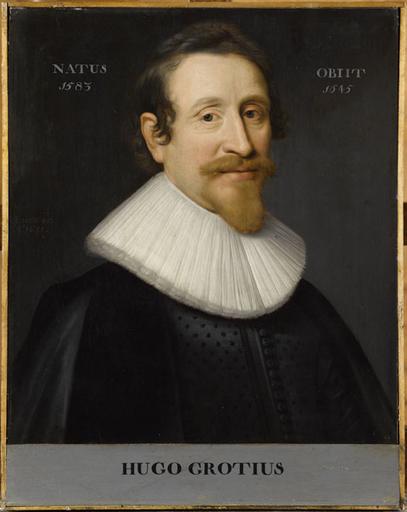
The debate is further complicated by the diversity of natural law traditions. The early modern period saw the development of secular natural law theories by Hugo Grotius, Samuel Pufendorf, and John Locke, who grounded natural law in human nature and reason without explicit dependence on Thomistic metaphysics. These thinkers argued that natural law would be valid “even if we should concede that which cannot be conceded without the utmost wickedness, that there is no God” (Grotius). Whether these secular appropriations of natural law are faithful developments of the tradition or departures from it remains a question that divides scholars of natural law to this day.14, 16
References
The First Principle of Practical Reason: A Commentary on the Summa Theologiae, 1–2, Question 94, Article 2