Overview
- The omnipotence paradox asks whether an omnipotent being can create a stone so heavy that the being cannot lift it, generating an apparent dilemma in which either answer seems to entail a limitation on the being's power and therefore a denial of omnipotence.
- George Mavrodes argued in 1963 that the paradox is dissolved if omnipotence is defined as the power to do anything logically possible, since a stone too heavy for an omnipotent being to lift is itself a logical impossibility and therefore falls outside the scope of omnipotence, while Harry Frankfurt countered that a truly omnipotent being in the Cartesian sense could both create the stone and lift it.
- Contemporary analyses by Flint and Freddoso, Wierenga, and Hoffman and Rosenkrantz have developed increasingly refined accounts of omnipotence that specify the relationship between maximal power and logical possibility, temporal indexing, essential versus accidental omnipotence, and compatibility with other divine attributes such as moral perfection.
The omnipotence paradox is a family of philosophical puzzles that arise from the concept of a being with unlimited power. The most famous formulation asks whether an omnipotent being can create a stone so heavy that the being cannot lift it. If the being can create such a stone, then there is something it cannot do (lift the stone), and it is not omnipotent. If the being cannot create such a stone, then there is also something it cannot do (create the stone), and it is again not omnipotent. Either way, it appears that omnipotence is a self-contradictory concept — that no being could possess truly unlimited power.2, 3
The paradox has ancient roots but received its most rigorous treatment in the twentieth century, when analytic philosophers undertook the project of defining omnipotence with precision. The central question is whether the concept of maximal power is logically coherent — whether a being can be said to have the power to do “anything” without generating contradictions. The debate has produced a series of increasingly refined analyses of what omnipotence means, each attempting to capture the intuition that an omnipotent being possesses maximal power while avoiding the paradoxes that arise from naively universal formulations. This article surveys the historical development of the concept of omnipotence, the major formulations of the paradox, the principal proposed resolutions, and the contemporary state of the philosophical analysis.2, 12
Historical development
The question of divine omnipotence has been discussed since antiquity. In the Hebrew Bible, the power of God is presented without philosophical qualification: God creates the heavens and the earth, parts the sea, destroys cities, and raises the dead. The Greek philosophical tradition, however, introduced the question of whether there are logical limits to what a maximally powerful being can do. Aristotle held that certain states of affairs are impossible by their nature — a thing cannot simultaneously be and not be — and this principle of non-contradiction would later shape the medieval treatment of divine power.1, 12
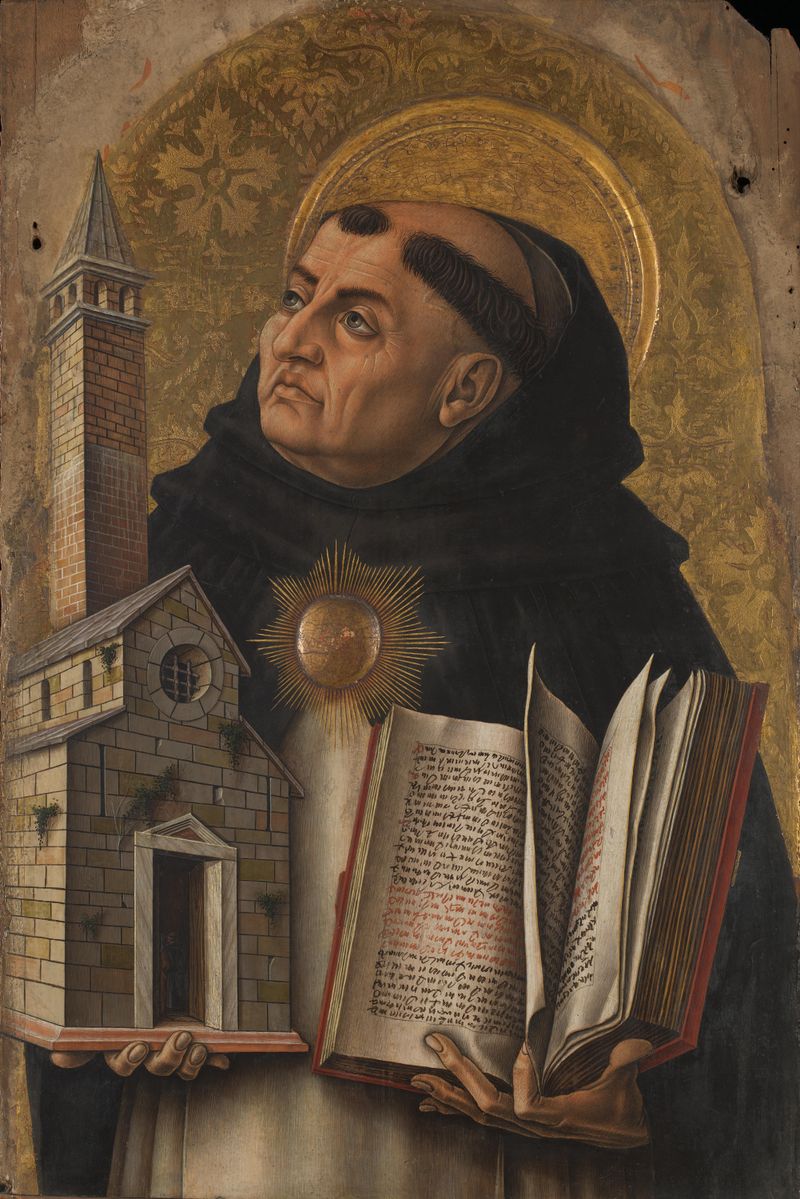
The most systematic medieval treatment of omnipotence was provided by Thomas Aquinas (1225–1274) in the Summa Theologiae, Question 25. Aquinas distinguished between two senses of the claim that God can do “all things.” In the absolute sense, this would mean that God can bring about any state of affairs whatsoever, including logically contradictory ones. Aquinas rejected this reading. He argued that a contradiction — such as a square circle or a married bachelor — is not a “thing” at all but a combination of words to which no possible reality corresponds. To say that God cannot make a square circle is not to identify a limitation on God’s power; it is to note that “square circle” does not describe anything that could exist. As Aquinas put it: “Whatever implies a contradiction does not come within the scope of divine omnipotence, because it cannot have the aspect of possibility. Hence it is better to say that such things cannot be done, rather than that God cannot do them.”1
This formulation — that omnipotence encompasses the power to do anything logically possible — became the dominant position in the Thomistic tradition and remains the baseline for most contemporary analyses. Moses Maimonides (1138–1204) articulated a similar view, holding that God’s omnipotence extends to everything that is “possible in itself” but not to contradictions, which are impossible by nature rather than by any deficiency in God.1, 2

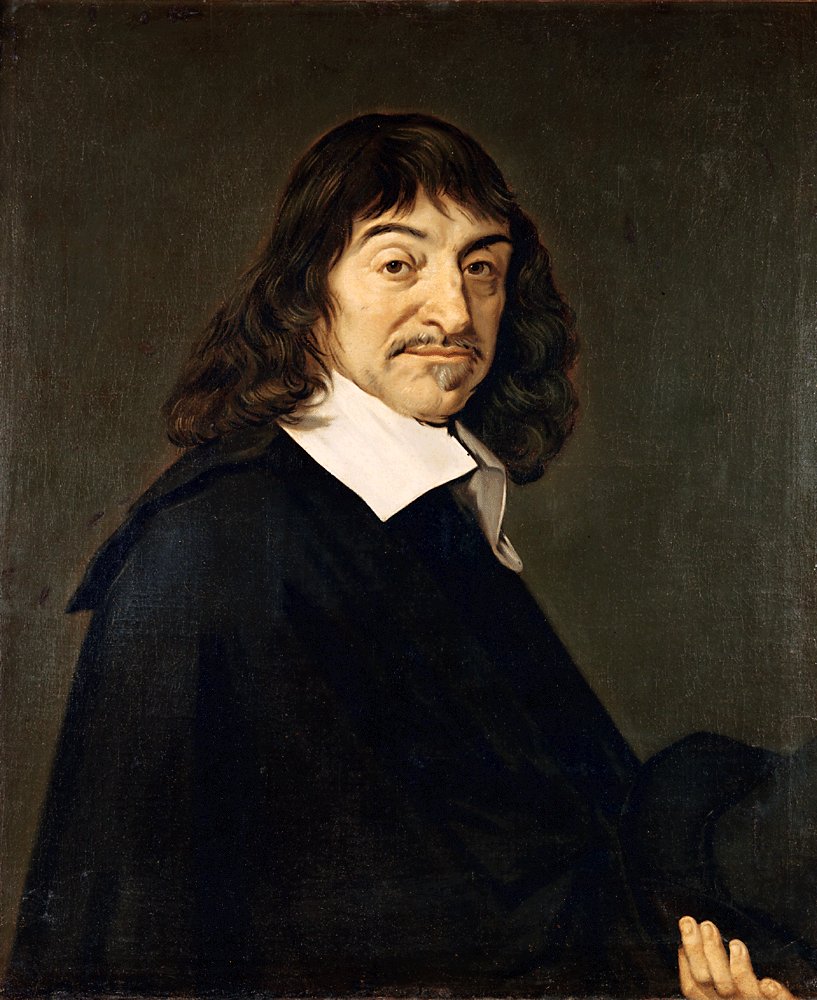
René Descartes (1596–1650) offered a strikingly different account. Descartes held that God’s power is so unlimited that it extends even to the truths of logic and mathematics: God could have made it the case that twice four does not equal eight, or that contradictions are true. On this view, the laws of logic are themselves products of divine will, and God is not bound by them. Descartes’s position, sometimes called universal possibilism or voluntarism about modality, has few contemporary defenders, since it appears to render all reasoning about God (including the reasoning used to establish God’s existence) undermined by the possibility that God has ordained a different logic than the one we employ.4, 12
The paradox of the stone
The most widely discussed formulation of the omnipotence paradox is the paradox of the stone, which can be stated as follows:3, 5
P1. Either an omnipotent being can create a stone so heavy that it cannot lift it, or it cannot.
P2. If it can create such a stone, then there is something it cannot do (lift the stone), and therefore it is not omnipotent.
P3. If it cannot create such a stone, then there is something it cannot do (create the stone), and therefore it is not omnipotent.
C. Therefore, an omnipotent being does not exist (or the concept of omnipotence is incoherent).
The paradox exploits the reflexive character of omnipotence: the concept of unlimited power appears to generate demands that are self-undermining when the power is directed at limiting itself. The stone is merely the most vivid illustration of a general pattern. Structurally identical paradoxes can be generated with any self-referential task: can an omnipotent being create a prison from which it cannot escape? Can it make a promise it cannot break? Can it create a being more powerful than itself? In each case, the ability to perform the task seems to entail an inability, and the inability to perform the task is itself a limitation.2, 5
The paradox has the logical form of a dilemma: two exhaustive alternatives are presented, and each is shown to lead to the denial of omnipotence. The force of the paradox depends on whether the two horns of the dilemma are genuinely exhaustive and whether the inferences drawn from each horn are valid. The philosophical literature since the 1960s has been largely devoted to questioning these assumptions.3, 12
Mavrodes and the appeal to logical possibility
The modern analytical debate over the paradox was launched by George Mavrodes in his 1963 paper “Some Puzzles Concerning Omnipotence,” published in The Philosophical Review. Mavrodes argued, following Aquinas, that the paradox dissolves once omnipotence is properly defined as the power to do anything logically possible.3
Mavrodes’s argument proceeds as follows. Suppose that God is omnipotent — that is, God has the power to do anything logically possible. A stone too heavy for an omnipotent being to lift is a stone too heavy for a being with unlimited lifting power to lift. But there is no weight that exceeds unlimited lifting power; the description “a stone too heavy for an omnipotent being to lift” is self-contradictory, like “a square circle.” Since creating a self-contradictory object is not a logically possible task, an omnipotent being’s inability to create such an object is not a limitation on its power. The apparent paradox arises only if one assumes that omnipotence includes the power to do logically impossible things — an assumption that, following Aquinas, Mavrodes rejects.3
Mavrodes also noted an important asymmetry. If one assumes that God is not omnipotent, then a stone too heavy for God to lift might well be possible — there could be a finite weight exceeding God’s finite lifting power. In that case, it would indeed be a limitation on God’s power if God could not create such a stone. The paradox thus has different force depending on whether one begins by assuming omnipotence or by denying it. If omnipotence is assumed, the task is self-contradictory; if it is denied, the task may be perfectly coherent. The paradox does not show that omnipotence is incoherent but rather that the description of the task contains a hidden reference to the very attribute whose coherence is in question.3
Frankfurt’s Cartesian reply

Harry Frankfurt published a brief but influential response to Mavrodes in 1964, titled “The Logic of Omnipotence.” Frankfurt argued that Mavrodes’s solution succeeds only on the Thomistic definition of omnipotence and fails on the Cartesian definition.4
Frankfurt pointed out that if God can do the logically impossible — as Descartes maintained — then the paradox does not arise in the way Mavrodes described. A God who can do the logically impossible can both create a stone too heavy for him to lift and lift it. The contradiction between “creating a stone one cannot lift” and “lifting the stone one cannot lift” is no barrier to a being whose power extends beyond the constraints of logic. On Frankfurt’s reading, the Cartesian God transcends the paradox entirely: the paradox assumes that the laws of logic constrain what an omnipotent being can do, but if omnipotence includes the power to violate the laws of logic, the paradox’s premises are false.4
Frankfurt did not endorse the Cartesian position but argued that Mavrodes had not shown omnipotence to be incoherent; he had shown only that a Thomistic omnipotent being cannot perform self-contradictory tasks, which Aquinas and Mavrodes would accept as no limitation at all. The philosophical price of the Cartesian solution, however, is high. If God can make contradictions true, then no argument about God — including arguments for God’s existence — can be trusted, since God might have made the premises true and the conclusion false. The Cartesian account of omnipotence, while paradox-proof, renders rational theology impossible.4, 12
Essential versus accidental omnipotence
C. Wade Savage introduced an important distinction in his 1967 paper “The Paradox of the Stone” that has shaped all subsequent discussion: the distinction between essential and accidental omnipotence. A being is essentially omnipotent if it is omnipotent in every possible world in which it exists — it could not exist without being omnipotent. A being is accidentally omnipotent if it happens to be omnipotent but could have been (or could become) non-omnipotent.5
This distinction transforms the paradox. If a being is essentially omnipotent, then the state of affairs in which it is not omnipotent is logically impossible. Since a stone too heavy for an essentially omnipotent being to lift would be a stone whose existence entails the non-omnipotence of that being, such a stone is logically impossible. Creating a logically impossible object falls outside the scope of Thomistic omnipotence, so the inability to create such a stone is not a genuine limitation. The Thomistic resolution, on this account, succeeds precisely because the being’s omnipotence is essential rather than contingent.2, 5
If a being is only accidentally omnipotent, the situation is more complex. An accidentally omnipotent being could, in principle, create a stone and then divest itself of the power to lift it. The being would be omnipotent at the time of creating the stone but not at the time of attempting to lift it. On some analyses, this scenario poses no paradox at all: the being exercises its omnipotence by creating a stone and then ceasing to be omnipotent. At no single moment is the being both omnipotent and unable to lift the stone; the inability emerges only after omnipotence has been relinquished.5, 2
Alfred Mele and M. P. Smith (1988) raised a further challenge with what they called the “new paradox of the stone.” Even granting that an essentially omnipotent being cannot create an unliftable stone, they asked whether such a being can bring about the state of affairs there being a stone that no one can lift. If the being is essentially omnipotent, it can always lift any stone, so this state of affairs is impossible as long as the being exists. But the inability to bring about this state of affairs may itself seem like a limitation. Mele and Smith argued that resolving this variant requires a more nuanced account of what it means for a task to be within an agent’s power than the simple appeal to logical possibility provides.19
Act theories and result theories
Contemporary analyses of omnipotence fall into two broad categories: act theories, which define omnipotence in terms of the actions an omnipotent being can perform, and result theories, which define it in terms of the states of affairs an omnipotent being can bring about. The distinction is significant because some paradoxes arise from the self-referential character of action descriptions but can be avoided by reformulating omnipotence in terms of results.12, 2
Act theories take the form: S is omnipotent if and only if S can perform any action A such that A is logically possible. The stone paradox is formulated in act-theoretic terms: the action “creating a stone one cannot lift” is described in a way that refers reflexively to the agent’s own limitations. Act theories must navigate the difficulty that many action descriptions contain implicit references to the agent, and some of these agent-relative descriptions generate paradoxes even though the corresponding states of affairs are perfectly coherent. For instance, “creating a stone that Jones cannot lift” describes a perfectly possible state of affairs (there are many stones Jones cannot lift), but “creating a stone that an omnipotent being cannot lift” does not, because an omnipotent being can lift any stone.12
Result theories take the form: S is omnipotent if and only if S can bring about any logically possible state of affairs. James F. Ross (1969) developed an early result theory, arguing that omnipotence should be analysed as the power to actualise any possible state of affairs. On Ross’s account, the stone paradox dissolves because the relevant state of affairs — there exists a stone too heavy for an omnipotent being to lift — is logically impossible when the being is essentially omnipotent, and therefore falls outside the scope of omnipotence. Result theories avoid some of the reflexivity problems that plague act theories, but they face their own difficulties, including the problem of specifying which states of affairs are genuinely possible and which are rendered impossible by the existence of an omnipotent being.17, 2
Comparison of major analyses of omnipotence2, 12
| Analysis | Type | Key proponent(s) | Definition of omnipotence | Response to stone paradox |
|---|---|---|---|---|
| Thomistic | Act | Aquinas, Mavrodes | Power to do anything logically possible | Task is self-contradictory; not a limitation |
| Cartesian | Act | Descartes, Frankfurt | Power to do anything whatsoever, including the logically impossible | Being can create the stone and lift it (logic does not constrain God) |
| Result (basic) | Result | Ross | Power to bring about any possible state of affairs | State of affairs is impossible; no limitation |
| Maximal power | Result | Flint & Freddoso | Power to actualise any state of affairs compatible with counterfactuals of freedom and the past | Disambiguates by temporal and modal indexing |
| Temporally indexed | Result | Wierenga | Power at a time to bring about anything possible given the past | Essential omnipotence renders the task impossible |
| Unrestricted repeatability | Result | Hoffman & Rosenkrantz | Power to bring about any unrestrictedly repeatable state of affairs | Excludes non-repeatable states from the domain of omnipotence |
The Flint–Freddoso analysis
Thomas Flint and Alfred Freddoso published the most detailed and technically sophisticated analysis of omnipotence in their 1983 paper “Maximal Power.” Their account incorporates insights from Alvin Plantinga’s work on possible worlds and libertarian free will to develop a definition of omnipotence that handles a wide range of problematic cases.6
Flint and Freddoso distinguish between two types of bringing about a state of affairs. Strong actualisation is the direct causal production of a state of affairs by an agent. Weak actualisation is the indirect bringing about of a state of affairs by performing actions that, given the counterfactuals of freedom (facts about what free creatures would do in various circumstances), result in the desired state of affairs. An omnipotent being can strongly actualise any state of affairs that is logically possible for any agent to strongly actualise, and can weakly actualise any state of affairs that is logically possible for any agent to weakly actualise, given the relevant counterfactuals of freedom and the fixed past.6, 2
The Flint–Freddoso analysis accommodates several constraints that simpler definitions cannot. First, it respects the fixed past: an omnipotent being at a particular time cannot change what has already happened, and this is not a limitation on its power but a feature of the logic of time. Second, it respects libertarian free will: if God has created free creatures, there are possible states of affairs — such as Jones freely choosing to volunteer — that God cannot strongly actualise, because strong actualisation of a free choice would render it unfree. God can weakly actualise such states by creating circumstances in which Jones would freely choose to volunteer, but whether Jones actually does so depends on Jones. Third, the analysis is temporally indexed: omnipotence is defined relative to a time, so the question of what an omnipotent being can do is always asked relative to the state of the world at that moment.6
The Flint–Freddoso analysis has been criticised on several grounds. The most fundamental objection is that it presupposes the existence of counterfactuals of freedom — that there are determinate truths about what free creatures would do in counterfactual circumstances. This presupposition, which is central to Molinism (the theory of divine middle knowledge), is contested by philosophers who deny that such counterfactuals have determinate truth values.2
Wierenga and temporal indexing
Edward Wierenga developed an alternative analysis of omnipotence in a 1983 article and more fully in his 1989 book The Nature of God. Wierenga’s approach shares some features with the Flint–Freddoso analysis but does not depend on counterfactuals of freedom.7, 20
On Wierenga’s account, a being S is omnipotent at a time t if and only if S can at t strongly actualise any state of affairs that is possible for S to strongly actualise at t, given the history of the world up to t. The key innovation is the restriction “given the past.” The past is fixed, and the inability to change it is not a limitation on power; it is a feature of the metaphysics of time that applies equally to omnipotent and non-omnipotent beings.7, 20
Wierenga’s analysis handles the stone paradox straightforwardly. If S is essentially omnipotent, then the state of affairs there is a stone that S cannot lift is logically impossible — it is incompatible with S’s essential nature. Since S cannot strongly actualise impossible states of affairs, the inability to create such a stone is no limitation on S’s power. Wierenga also addresses the McEar objection (discussed below) by arguing that genuine omnipotence cannot be possessed by a being with only one ability: a being’s essential properties partly determine what is possible for it, and a being with essential omnipotence necessarily has abilities extending across the full range of logically possible states of affairs.7, 2
Richard Swinburne (1973) offered a temporally indexed account with a different emphasis. Swinburne defined omnipotence at a time as the ability to bring about any state of affairs that is consistent with the facts about what has happened before that time. On Swinburne’s view, an omnipotent being at time t can bring about anything logically compatible with the history of the world up to t. This definition handles the stone paradox similarly to Wierenga’s: if the being is essentially omnipotent, the state of affairs described is impossible; if the being is only accidentally omnipotent, the being could create the stone and then lose its omnipotence, but at no time would the being be both omnipotent and unable to lift the stone.9
The McEar objection
A persistent challenge to analyses of omnipotence based on logical possibility is the McEar objection. McEar is a hypothetical being whose essential nature is such that the only action it can perform is scratching its ear. Since this is the only logically possible action for McEar, and McEar can perform it, the definition “S is omnipotent if S can do anything logically possible for S” would entail that McEar is omnipotent. But McEar is manifestly not omnipotent: a being that can only scratch its ear does not possess maximal power. The objection thus charges that agent-relative definitions of omnipotence are too permissive.2, 12
Several responses to the McEar objection have been proposed. Wierenga argued that McEar is metaphysically impossible: any being with the power to scratch its ear necessarily has the power to move its arm, to exert force on an object, and to perform the various sub-actions involved in ear-scratching. Powers are not atomistic; they come in necessary clusters, and no being could have exactly one power in isolation. If McEar is impossible, the objection fails because it rests on a false presupposition about what kinds of beings are possible.7, 2
Hoffman and Rosenkrantz took a different approach. In their 1988 paper “Omnipotence Redux” and their 2002 book The Divine Attributes, they proposed that omnipotence should be defined in terms of unrestrictedly repeatable states of affairs — those that can obtain, fail to obtain, and obtain again indefinitely. An omnipotent being must have the power to bring about any unrestrictedly repeatable state of affairs that is possibly brought about by some agent. This definition excludes McEar because most unrestrictedly repeatable states of affairs (moving a mountain, creating a star, parting a sea) are not logically possible for McEar to bring about, even though they are logically possible for some agent. An omnipotent being must be able to match or exceed the powers of every possible agent across the full range of repeatable tasks.8, 16
Erik Wielenberg (2000) proposed yet another strategy. He defined omnipotence in terms of the absence of power limitations: a being is omnipotent if there is no state of affairs that the being is unable to bring about due to a lack of power. On this account, an inability that results from logical impossibility, the fixity of the past, or the freedom of other agents does not count as a power limitation. Only an inability that results from an actual deficiency in the being’s power would disqualify it from omnipotence. McEar clearly lacks power (he cannot move mountains, create stars, or do anything other than scratch his ear), so he is not omnipotent on this definition. An essentially omnipotent being, by contrast, has no power deficiency: every inability it has results from logical impossibility, not from a shortfall in power.18
Omnipotence and moral perfection
Traditional Western theism attributes to God not only omnipotence but also moral perfection. This conjunction raises a further puzzle: if God is perfectly good, God cannot perform evil actions. But if God cannot perform evil actions, there are things God cannot do, and God is not omnipotent. Nelson Pike (1969) formulated this as the question of whether God can sin: if God can sin, God’s moral perfection is threatened; if God cannot sin, God’s omnipotence is threatened.10
The standard response follows the same pattern as the response to the stone paradox. If God is essentially morally perfect, then the state of affairs in which God performs an evil action is logically impossible — not because evil is generally impossible, but because it is incompatible with God’s essential nature. An omnipotent being’s inability to bring about states of affairs that are logically incompatible with its essential nature is not a limitation on its power. Just as the inability to create a square circle reflects the incoherence of the task rather than a deficiency in power, the inability to perform an action incompatible with one’s essential goodness reflects the nature of the being rather than a constraint on power.10, 2
Swinburne has argued that the compatibility of omnipotence and moral perfection can be maintained even on a broader definition of omnipotence, provided one holds that God’s perfect goodness is itself a consequence of omnipotence: God is so powerful that no external force or internal inclination could drive God to act against God’s own perfect nature. On this view, the impossibility of divine sin results from maximal power, not from a limitation upon it — a being so powerful that nothing can move it to evil is more powerful, not less, than a being that could be swayed.13
The problem of evil exploits the conjunction of omnipotence and moral perfection from a different angle. J. L. Mackie’s logical problem of evil (1955) argued that the conjunction of “God is omnipotent,” “God is perfectly good,” and “evil exists” forms an inconsistent triad. Alvin Plantinga’s free will defense (1974) responded by arguing that it is logically possible for an omnipotent God to be unable to create a world containing free creatures who never do wrong, because the free choices of those creatures are not within God’s power to determine. This response refines the analysis of omnipotence by restricting its scope: omnipotence does not include the power to causally determine the free choices of other agents, because a causally determined free choice is a contradiction in terms (on a libertarian understanding of freedom).14, 15
Omnipotence and other divine attributes
The analysis of omnipotence intersects with the analysis of other attributes traditionally ascribed to God, including omniscience, immutability, and divine simplicity. Each conjunction raises its own puzzles.2, 11
The conjunction of omnipotence and omniscience raises the question of whether an omnipotent being can make itself ignorant. If God is essentially omniscient, God cannot bring about a state of affairs in which God does not know something, since such a state is logically incompatible with God’s essential nature. As with the stone paradox and the problem of sinning, defenders of classical theism argue that this is a limitation imposed by the logic of the concepts involved, not by a deficiency in God’s power.11
The conjunction of omnipotence and immutability raises the question of whether an omnipotent being can change. If God is essentially immutable (unchanging), God cannot bring about a change in the divine nature. Yet the ability to change oneself might seem to be an instance of power, and the inability to change might seem to be a limitation. Defenders of immutability argue that the capacity for change is in fact a sign of deficiency rather than power: a being that is already in the most perfect state has no need to change, and the inability to become less perfect is not a lack but an achievement of maximal excellence.1, 13
The conjunction of omnipotence and necessary existence raises the question of whether an omnipotent being can cease to exist. If God exists necessarily, God cannot bring about a state of affairs in which God does not exist. The same pattern of response applies: the inability to bring about one’s own non-existence, when one exists necessarily, reflects the metaphysical status of necessary existence rather than a deficiency in power.2, 11
Brian Leftow (2009) has argued that these puzzles are best understood as revealing the systematic interconnection of the divine attributes rather than as generating genuine problems for the coherence of theism. Each attribute constrains what is logically possible for God, and the full set of divine attributes jointly determines the range of states of affairs that an omnipotent God can bring about. Omnipotence, on this view, is not the bare ability to do anything but the maximal power that a being with God’s complete set of attributes can possess. The qualification is not a weakening of omnipotence but a specification of what omnipotence amounts to for a being whose nature includes moral perfection, omniscience, immutability, and necessary existence.11
Contemporary assessment
The philosophical analysis of omnipotence has progressed considerably since Mavrodes’s initial paper. The stone paradox, once presented as a straightforward refutation of the coherence of omnipotence, is now widely regarded in the literature as dissoluble on any of several analyses. The Thomistic response — that the task is self-contradictory and therefore falls outside the scope of omnipotence — is the most widely adopted, and variations of it underlie the analyses of Wierenga, Flint and Freddoso, Hoffman and Rosenkrantz, and Swinburne.2, 12
The deeper questions that the paradox raises remain active areas of research. These include the precise relationship between logical possibility and omnipotence, the bearing of temporal indexing on what an omnipotent being can do at a given time, the implications of libertarian free will for the scope of divine power, and the compatibility of omnipotence with the full set of divine attributes. No single analysis of omnipotence has achieved consensus: the Flint–Freddoso account depends on contested assumptions about counterfactuals of freedom, the Wierenga account faces variants of the McEar objection, and the Hoffman–Rosenkrantz account has been challenged on the coherence of the “unrestricted repeatability” criterion.2, 16, 18
What the sustained analysis has accomplished is a demonstration that the naive formulation of the paradox — “Can God create a stone so heavy He cannot lift it?” — rests on an imprecise understanding of what omnipotence involves. When the concept of omnipotence is formulated with care, the paradox either dissolves (because the task is shown to be self-contradictory) or is relocated to deeper and more technical questions about the logic of power, possibility, and agency. Whether those deeper questions ultimately threaten the coherence of omnipotence or merely reveal the complexity of the concept remains a matter of philosophical investigation. The omnipotence paradox continues to serve as a productive starting point for the analysis of one of the central attributes of God in Western philosophical theology.2, 11, 12