Overview
- Pragmatism approaches religious belief not through abstract metaphysical proof but through practical consequences — William James argued in “The Will to Believe” (1896) that when evidence is insufficient, the choice is forced, and the stakes are momentous, it is rational and permissible to believe on the basis of practical considerations, while his Varieties of Religious Experience (1902) treated religious experience as psychologically real and potentially transformative regardless of its supernatural origin.
- The pragmatist tradition contains a wide spectrum of positions on religion: James defended the legitimacy of personal religious belief; John Dewey in A Common Faith (1934) stripped religion of supernaturalism while preserving its moral and communal functions; Richard Rorty’s anti-foundationalism rendered the question of God’s objective existence philosophically idle; and Cornel West’s prophetic pragmatism combined pragmatist method with the social justice tradition of the Black church.
- Pragmatism’s relationship to religion remains contested: defenders argue that evaluating beliefs by their fruits rather than their metaphysical credentials is intellectually honest and psychologically realistic, while evidentialist critics in the tradition of W. K. Clifford contend that pragmatic justification confuses the question of whether a belief is useful with the question of whether it is true, licensing self-deception and undermining epistemic integrity.
Pragmatism and religion is a strand of philosophical inquiry that evaluates religious beliefs, practices, and institutions primarily by their practical consequences — their effects on individual conduct, psychological well-being, moral development, and social life — rather than by the success or failure of abstract metaphysical arguments for the existence of God. Rooted in the American pragmatist tradition inaugurated by Charles Sanders Peirce, William James, and John Dewey in the late nineteenth and early twentieth centuries, this approach treats the meaning and value of religious ideas in terms of their observable effects, applying the pragmatist principle that the significance of any concept lies in the practical difference it makes to human experience.3, 10
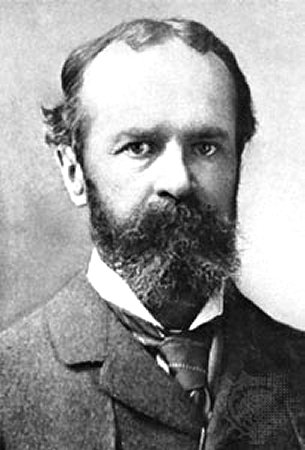

The pragmatist approach to religion occupies a distinctive position in the philosophy of religion. Unlike traditional natural theology, which seeks to demonstrate God’s existence through deductive arguments such as the cosmological or teleological arguments, pragmatism shifts the question from “Does God exist?” to “What difference does it make to believe in God?” This shift does not necessarily deny the relevance of evidence and argument, but it insists that the practical dimension of belief cannot be separated from its epistemic assessment — a position that has provoked both admiration and sharp criticism from philosophers across the spectrum of religious and irreligious thought.4, 11
The pragmatic theory of truth
The pragmatist approach to religion is grounded in a distinctive theory of truth that departs from both the correspondence theory (truth as agreement between belief and reality) and the coherence theory (truth as internal consistency within a system of beliefs). Charles Sanders Peirce (1839–1914), the founder of pragmatism, formulated the pragmatic maxim in his 1878 essay “How to Make Our Ideas Clear”: “Consider what effects, which might conceivably have practical bearings, we conceive the object of our conception to have. Then, our conception of these effects is the whole of our conception of the object.” On this view, the meaning of any concept is exhausted by its practical consequences — a concept that makes no difference to experience is cognitively empty.3
Peirce himself was cautious about applying the pragmatic maxim to religious questions. His version of pragmatism was oriented toward scientific inquiry: truth, for Peirce, is the opinion that the community of inquirers would converge upon in the long run. This leaves open the question of whether religious propositions are the kind of claims that inquiry can eventually settle, and Peirce did not develop a systematic philosophy of religion. However, his pragmatic maxim provided the intellectual framework that William James would apply far more boldly to the religious domain.3, 10
James expanded Peirce’s pragmatic maxim into a full theory of truth in his 1907 book Pragmatism. For James, truth is not a static property of propositions but a process — beliefs become true insofar as they prove useful, satisfactory, and productive in guiding action and organising experience. “The true is the name of whatever proves itself to be good in the way of belief, and good, too, for definite, assignable reasons,” James wrote. Applied to religion, this means that a religious belief can be “true” in the pragmatic sense if it produces genuine benefits — moral improvement, psychological resilience, social cohesion, a sense of meaning — even if its metaphysical content cannot be verified by empirical observation or philosophical argument. This formulation generated intense criticism (most notably from Bertrand Russell and G. E. Moore), who charged that James had confused truth with utility and licensed the acceptance of comforting falsehoods.4, 10
James’s “The Will to Believe”
William James’s (1842–1910) most influential contribution to the philosophy of religion is his 1896 essay “The Will to Believe,” which he described as “a defence of our right to adopt a believing attitude in religious matters, in spite of the fact that our merely logical intellect may not have been coerced.” The essay was written as a direct response to W. K. Clifford’s 1877 essay “The Ethics of Belief,” in which Clifford had declared that “it is wrong always, everywhere, and for anyone, to believe anything upon insufficient evidence.”1, 5
James argued that Clifford’s principle is too restrictive. There are situations in which the evidence is genuinely insufficient to settle a question, but a decision must nevertheless be made — situations in which suspending judgment is itself a decision with practical consequences. James formalised these conditions with three criteria that must be met before belief on pragmatic grounds is permissible. The hypothesis must be live — psychologically available to the agent as a genuine possibility, not merely a logical abstraction. The choice must be forced — there must be no neutral ground, so that not choosing is equivalent to choosing against the hypothesis. And the stakes must be momentous — the decision must involve significant consequences that cannot be deferred indefinitely without loss.1
James held that the religious hypothesis meets all three conditions for many people. Whether God exists is a live question for someone raised in a religious culture; the choice between theism and atheism is forced, because agnosticism, in practice, amounts to living as though God does not exist; and the stakes are momentous, because if God exists, then the believer gains access to a relationship and a moral order that the non-believer forfeits. Under these conditions, James argued, it is rational and permissible to let one’s “passional nature” break the tie that evidence alone cannot resolve. The will to believe is not a licence to believe anything one likes; it is a carefully delimited permission to believe in specific circumstances where the evidence is balanced and the consequences of inaction are themselves a form of decision.1
The Varieties of Religious Experience
James’s Gifford Lectures, delivered at the University of Edinburgh in 1901–1902 and published as The Varieties of Religious Experience, remain one of the most influential works in the psychology and philosophy of religion. Rather than evaluating religious doctrines or theological arguments, James examined firsthand accounts of religious experience — conversion, mysticism, saintliness, prayer, and the sense of divine presence — treating them as psychological phenomena to be described, classified, and assessed by their fruits.2
James distinguished between institutional religion (the churches, creeds, rituals, and organisational structures of established traditions) and personal religion (the individual’s direct experience of what they take to be the divine). He focused almost exclusively on personal religion, arguing that institutional religion is derivative — a crystallisation of experiences that originally occurred in individual lives. The most significant religious experiences, in James’s account, share certain common features: a sense of encountering a reality larger and more fundamental than the everyday world, a feeling of liberation or transformation, and a lasting change in the experiencer’s character and conduct.2
The pragmatic criterion is central to James’s assessment. He proposed judging religious experiences not by their origin (which may involve neurological or psychological processes that are scientifically explicable) but by their “fruits” — their effects on the individual’s life. An experience that produces greater moral seriousness, increased compassion, reduced anxiety, or enhanced resilience is, by the pragmatic test, a valuable experience, regardless of whether it was “really” caused by a supernatural being or by the experiencer’s own subconscious. James did not dismiss the possibility that religious experiences have a genuine supernatural source, but he insisted that the question of their origin could not be settled by the experiences themselves and that their value must be assessed independently of their causal explanation.2, 12
Dewey’s A Common Faith
John Dewey (1859–1952), the third of the classical pragmatists, developed a radically naturalistic approach to religion in his 1934 Terry Lectures at Yale, published as A Common Faith. Dewey distinguished sharply between religion (a noun denoting institutional structures, supernatural beliefs, and fixed doctrines) and the religious (an adjective describing a quality of experience characterised by commitment to ideal ends, a sense of connection to something larger than the self, and the unification of the self around its highest values). Dewey rejected religion in the institutional, supernaturalist sense but embraced the religious quality of experience as a valuable and genuinely transformative dimension of human life.6
For Dewey, the religious quality of experience arises whenever an individual achieves an enduring adjustment of the self to the conditions of existence — a wholehearted commitment to ideals that organises and harmonises one’s purposes, emotions, and actions. This experience does not require belief in a personal God, an immortal soul, or any supernatural reality. It can occur in the context of artistic creation, scientific inquiry, political activism, or personal relationships. Dewey argued that by freeing the religious quality of experience from its traditional entanglement with supernatural belief and institutional authority, one could make it available to everyone, including those who cannot accept the doctrines of traditional religions.6, 13
Dewey’s naturalism was far more radical than James’s. Where James left open the possibility that religious experiences might have a supernatural source and defended the individual’s right to believe in God, Dewey sought to reconstruct the concept of the religious in entirely naturalistic terms. He used the word “God” not to denote a supernatural being but as a name for the “active relation between ideal and actual” — the process by which human ideals are projected, pursued, and progressively realised in the world. This redefinition satisfied neither traditional theists (who objected that Dewey had emptied the concept of God of its essential content) nor secular critics (who questioned whether the word “God” added anything to Dewey’s naturalistic account that could not be expressed without it).6
Rorty’s anti-foundationalism and religion
Richard Rorty (1931–2007), the most prominent neo-pragmatist of the late twentieth century, extended the pragmatist critique of foundationalism to the philosophy of religion with characteristically provocative results. In Philosophy and the Mirror of Nature (1979) and subsequent works, Rorty argued that the entire project of seeking foundations for knowledge — whether in sense experience (empiricism), in reason (rationalism), or in divine revelation (theology) — rests on a mistaken picture of the mind as a mirror that represents reality. If there are no foundations, then there is no neutral standpoint from which to adjudicate between theism and atheism, and the question of God’s “objective existence” is not a well-formed philosophical question but a relic of a foundationalist framework that pragmatism has rendered obsolete.7
Rorty’s position on religion was nuanced and evolved over time. He consistently opposed what he called “ecclesiastical religion” — religious institutions that claim epistemic authority over their members and seek to influence public policy on the basis of purported divine commands. But he was more sympathetic to what he called “religion as conversation-stopper” in its private dimension: the individual’s use of religious language to express personal commitments and organise a meaningful life. In his later essays, Rorty suggested that religious belief is acceptable as a private source of meaning and motivation, provided it is not invoked as a trump card in public deliberation about matters of shared concern. This “privatisation” of religion drew criticism from both religious philosophers (who objected that it trivialised faith) and secular philosophers (who questioned whether the public-private distinction could bear the weight Rorty placed on it).14
West’s prophetic pragmatism
Cornel West (b. 1953) developed a distinctive fusion of pragmatist philosophy and prophetic religious tradition in The American Evasion of Philosophy: A Genealogy of Pragmatism (1989). West’s prophetic pragmatism draws on three sources: the American pragmatist tradition (especially James and Dewey), the Marxist and social-democratic traditions of social critique, and the prophetic tradition of the Black church, with its emphasis on justice, liberation, and solidarity with the oppressed. For West, pragmatism’s insistence on evaluating ideas by their consequences aligns naturally with the prophetic imperative to judge societies by their treatment of the most vulnerable — “the least of these,” in the biblical phrase.8
West’s approach differs from both James’s and Rorty’s in significant respects. Unlike James, who focused on the individual’s right to believe, West emphasises the social and political dimensions of religious practice: the role of churches, mosques, and synagogues as institutions of communal solidarity and resistance to injustice. Unlike Rorty, who sought to privatise religion, West insists that religious convictions can and should inform public engagement, provided they are expressed in a spirit of democratic dialogue rather than dogmatic authority. Prophetic pragmatism is thus a deeply engaged, politically active form of religious thought that refuses the separation of the theoretical and the practical, the sacred and the political, the personal and the communal.8
Pragmatism and Pascal’s Wager
The pragmatist approach to religion bears a surface resemblance to Pascal’s Wager, and the two are sometimes conflated in popular discussion, but the differences are significant. Pascal’s Wager is a decision-theoretic argument that appeals to the expected utility of belief in God: given the possibility of infinite gain (eternal life) and infinite loss (damnation), the rational agent should wager on God’s existence regardless of the evidence. The argument assumes that God either exists or does not, that the payoffs are as described by Christian theology, and that rational self-interest is the appropriate criterion for belief formation.9, 15
James’s pragmatic argument differs in several respects. First, James does not invoke infinite utilities or the threat of damnation; his argument concerns the practical benefits of belief in this life, not the avoidance of infinite punishment in the next. Second, James requires that the evidence be genuinely insufficient — the will to believe is not a substitute for evidence but a permission to believe when evidence runs out. Third, James requires that the hypothesis be “live” for the individual, meaning that it must be a genuine psychological possibility, not merely a logical one. A devout Muslim may find the Christian hypothesis dead, and vice versa, and the will to believe does not override this psychological constraint. Finally, James’s argument appeals to the positive effects of belief on the believer’s experience — moral seriousness, hope, energy, purpose — rather than to a post-mortem calculation of rewards and punishments.1, 15
Jordan has argued that both Pascal’s Wager and James’s will to believe belong to the broader category of pragmatic arguments for theism — arguments that appeal to the practical benefits of belief rather than to evidence for its truth. But within this category, they represent different strategies: the Wager is a maximisation argument (choose the option with the highest expected utility), while the will to believe is a permission argument (it is permissible to believe when the evidence is inconclusive and the stakes are high). The distinction matters because the Wager faces objections (the many-gods problem, the infinite utility problem) that do not apply to James’s more modest claim.15
The evidentialist critique
The most enduring criticism of the pragmatist approach to religion comes from the evidentialist tradition, which holds that the epistemic justification of a belief depends entirely on the evidence for its truth, not on the practical consequences of holding it. Clifford’s principle — “it is wrong always, everywhere, and for anyone, to believe anything upon insufficient evidence” — remains the sharpest expression of this position. On the evidentialist view, the fact that a belief makes someone happier, more moral, or more resilient is epistemically irrelevant: a belief is justified if and only if the evidence supports it, and unjustified if it does not, regardless of its practical benefits.5
The evidentialist critique charges that pragmatism confuses two distinct questions: whether a belief is true (or likely to be true) and whether it is useful (or conducive to well-being). A belief can be useful without being true (a comforting delusion), and true without being useful (a depressing fact). By treating utility as a criterion for evaluating beliefs, pragmatism licenses what the evidentialist regards as a form of epistemic self-deception — believing something because one wants it to be true rather than because the evidence supports it. Clifford argued that this practice is not merely an intellectual error but a moral failing: believing without evidence erodes the habit of careful inquiry, making one susceptible to manipulation by authority and fashion, and contributes to a social environment in which credulity is tolerated and critical thinking devalued.5
Pragmatists have responded to this critique along several lines. James argued that Clifford’s principle is itself a practical choice — a decision to prioritise the avoidance of error over the acquisition of truth — and that this choice is no more epistemically neutral than the decision to prioritise the acquisition of truth over the avoidance of error. “He who says, ‘Better go without belief forever than believe a lie!’ merely shows his own preponderant private horror of becoming a dupe,” James wrote. Both strategies involve trade-offs, and neither can be justified on purely epistemic grounds without invoking practical considerations. The debate between James and Clifford thus reveals that even evidentialist epistemology rests on a practical judgment about which errors are more costly, a judgment that is itself not derivable from evidence alone.1
Contemporary pragmatist philosophy of religion
Contemporary pragmatist philosophy of religion has developed in several directions. Sami Pihlström has argued for a “pragmatic realism” about religion that takes seriously both the practical significance of religious belief and the question of whether religious claims refer to mind-independent realities. On this view, pragmatism need not collapse into anti-realism about God; rather, it can treat the question of God’s existence as a genuine question while insisting that its answer must be evaluated partly by its practical consequences for human life and inquiry.11
William Alston, though not a pragmatist in the strict sense, developed a position in Perceiving God (1991) that resonates with pragmatist themes. Alston argued that religious experience can function as a form of perception — a “mystical perception” that is structurally analogous to sense perception and can provide prima facie justification for beliefs about God, just as sense perception provides prima facie justification for beliefs about the physical world. This argument does not depend on the pragmatic value of religious belief but on its experiential character, yet it shares with pragmatism the conviction that religious epistemology should attend to the actual experience of religious practitioners rather than relying exclusively on a priori argument.16
The pragmatist tradition’s engagement with religion remains philosophically vital because it refuses to accept either of the positions that dominate much contemporary debate: that religion is a matter of demonstrable fact (the stance of natural theology) or that it is a matter of irrational faith unsupported by reason (the stance of some forms of secularism). By insisting that beliefs be evaluated by their consequences, by their capacity to organise experience and guide action, and by their effects on individual and communal life, pragmatism offers a third way that takes religion seriously as a human phenomenon without committing itself to the metaphysical claims of any particular tradition — a stance that continues to generate both admiration and criticism in equal measure.10, 11