Overview
- Natural evil refers to suffering caused by impersonal natural processes rather than by the free choices of moral agents, encompassing earthquakes, diseases, predation, parasitism, and genetic disorders, and it poses a distinct philosophical challenge to theism because the free will defense, which addresses moral evil by appealing to creaturely freedom, does not straightforwardly explain suffering that arises from the operation of natural laws.
- Major theistic responses include the natural law theodicy (a world governed by regular natural laws is a precondition for moral agency), the soul-making theodicy (natural hardship provides the conditions for moral and spiritual growth), Plantinga’s suggestion that natural evil may be caused by non-human free agents, and skeptical theism (human cognitive limitations prevent confident judgments about whether specific natural evils are gratuitous).
- The problem has intensified in light of evolutionary biology, which reveals hundreds of millions of years of animal suffering preceding the emergence of human beings, prompting dedicated philosophical treatments by Michael Murray, Trent Dougherty, and others who address what has been called the Darwinian problem of evil.
Natural evil is suffering that results from impersonal natural processes rather than from the deliberate choices of moral agents. Earthquakes, volcanic eruptions, tsunamis, diseases, parasitism, predation, droughts, and genetic disorders are characteristic examples. The philosophical significance of natural evil lies in the challenge it poses to the existence of an omnipotent, omniscient, and perfectly good God: while the free will defense offers a widely discussed account of why God might permit moral evil (evil resulting from the misuse of creaturely freedom), it does not straightforwardly explain why a world created by such a God would contain suffering that arises from the impersonal operation of natural laws, with no free agent responsible for the harm inflicted.1, 6
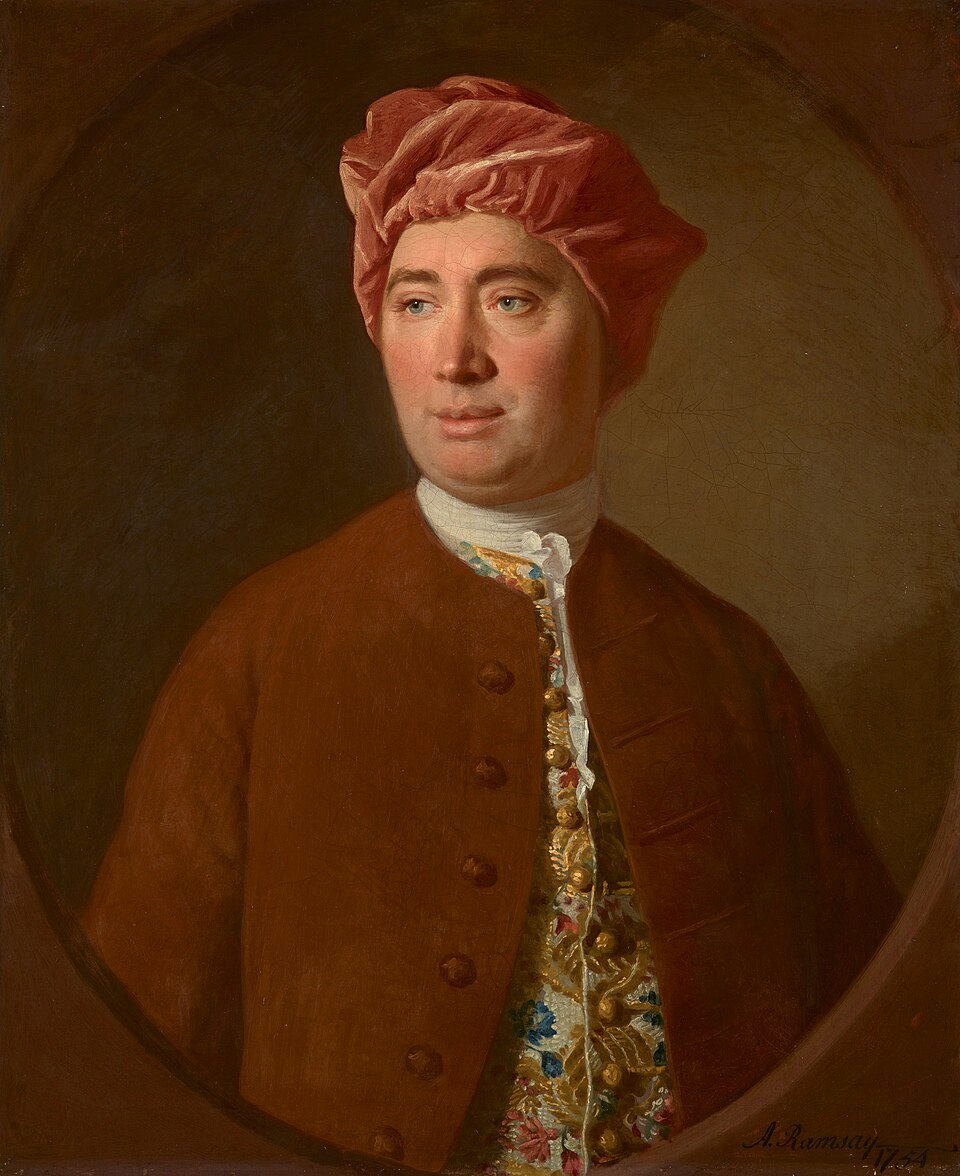
The problem of natural evil has roots in ancient philosophy but received its most influential early modern formulation in David Hume’s Dialogues Concerning Natural Religion (1779), where the character Philo catalogues the suffering produced by the natural world and argues that no inference from nature to a benevolent designer is warranted.2 In contemporary philosophy of religion, the problem has been sharpened by evolutionary biology, which reveals hundreds of millions of years of animal suffering, predation, parasitism, and disease preceding the emergence of human beings. This temporal dimension — vast stretches of sentient suffering with no human observers, no moral agents, and no apparent soul-making purpose — has generated a dedicated philosophical literature addressing what Michael Murray has called the “Darwinian problem of evil.”8
Defining natural evil
The distinction between natural evil and moral evil is fundamental to the philosophy of religion. Natural evils are undesirable states of affairs that do not result from the intentions or negligence of moral agents. Hurricanes, earthquakes, childhood leukemia, and animal predation are standard examples. Moral evils, by contrast, result from the free choices or negligence of moral agents: murder, theft, cruelty, and deception are paradigmatic cases. The distinction matters philosophically because theodicies and defenses developed for one category may not apply to the other.1, 17
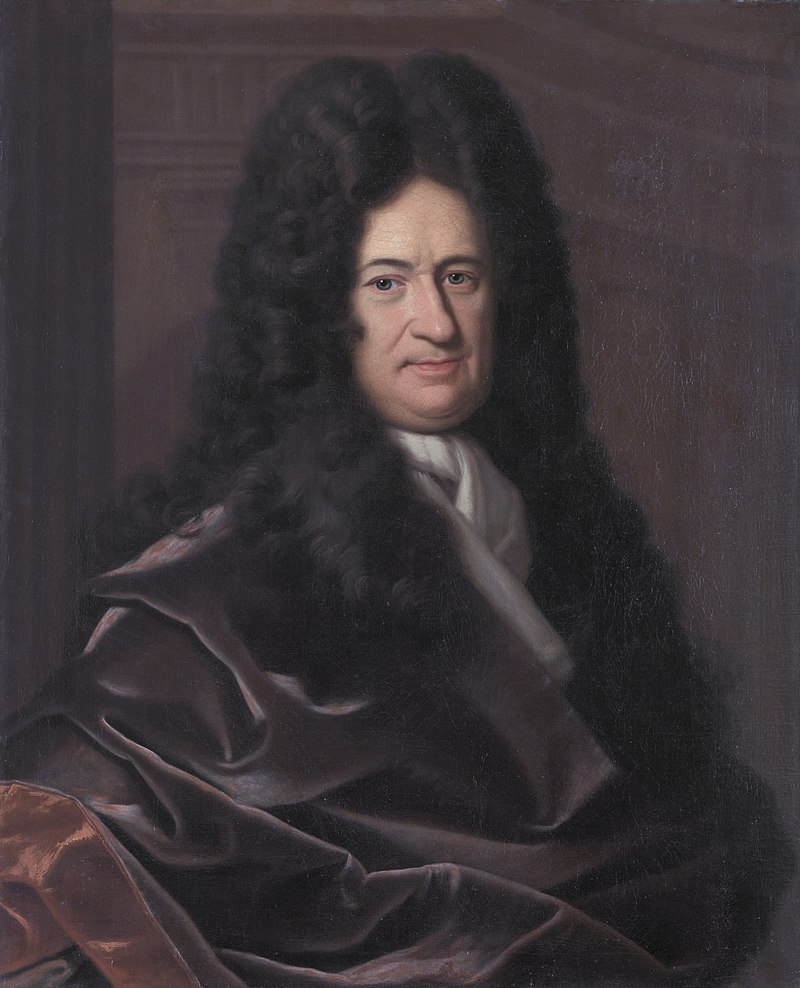
Gottfried Wilhelm Leibniz, in his Theodicy (1710), introduced a tripartite classification of evil: metaphysical evil (the necessary imperfection of any created being), physical evil (suffering and pain), and moral evil (sin). What contemporary philosophers call “natural evil” overlaps substantially with Leibniz’s categories of metaphysical and physical evil, though the modern usage specifically emphasizes the absence of moral agency in the causal chain producing the suffering.3, 21
The boundary between natural and moral evil is not always sharp. A famine may be caused by drought (natural evil), exacerbated by political corruption (moral evil), and worsened by structural inequality (moral evil). A tsunami is a natural evil, but the failure to build adequate warning systems may be a moral evil. Luke Gelinas has noted that most real-world instances of suffering involve a mixture of natural and moral factors, and that the philosophical interest of the distinction lies not in the purity of actual cases but in the different explanatory resources available for each category.6 The philosophical question is whether the suffering attributable to impersonal natural processes alone, setting aside all human contribution, can be reconciled with the existence of an omnipotent, omniscient, and perfectly good God.
Historical development
The problem of natural evil was not sharply distinguished from the general problem of evil in ancient philosophy, but its themes were present from the earliest discussions. Epicurus (or the formulation attributed to him by Lactantius) raised the question of why an omnipotent and benevolent God would permit any suffering at all — a question that encompasses both moral and natural evil. The Stoics, by contrast, developed a providentialist framework in which apparent natural evils serve a greater cosmic purpose, a position that anticipates later theodicies.1
Augustine of Hippo attributed all evil, including natural evil, ultimately to the Fall — the original sin of Adam and Eve, which corrupted not only human nature but the natural world itself. On this view, earthquakes, disease, and animal predation are consequences of a primordial act of moral evil, and natural evil is therefore a derivative category. This Augustinian framework remained dominant in Western Christian theology for over a millennium and continues to inform some contemporary treatments of the problem.12, 1
Leibniz’s Theodicy (1710) offered the first systematic philosophical treatment. Leibniz argued that God, being perfectly rational and perfectly good, created the best of all possible worlds — a world in which the total combination of goods exceeds those of any alternative. Physical evil (natural suffering) exists in this world because its elimination would require the elimination of greater goods or the introduction of greater evils elsewhere in the total system. Just as dark patches in a painting may contribute to the beauty of the whole, so natural evils contribute to the perfection of the best possible world.3, 21

Hume’s Dialogues Concerning Natural Religion (1779), particularly Parts X and XI, constitute the most influential Enlightenment challenge to theistic accounts of natural evil. Hume’s character Philo identifies four features of the natural world that produce suffering: creatures are designed to feel pain; the world operates according to general laws that harm and benefit individuals indiscriminately; nature equips creatures with limited faculties for self-preservation; and the “inaccurate workmanship” of nature produces frequent malfunction. Philo argues that if one attempts to infer God’s moral attributes from the natural world, the only warranted conclusion is that the first cause is morally indifferent — neither benevolent nor malevolent.2, 24

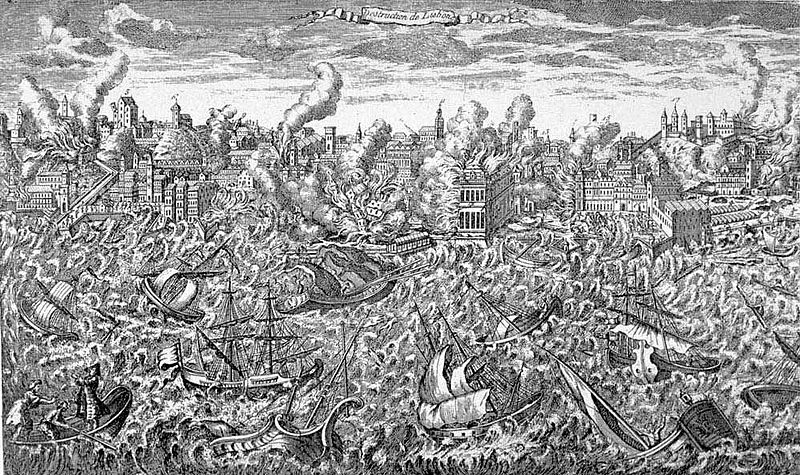
The Lisbon earthquake of 1755, which killed tens of thousands and devastated one of Europe’s great cities, catalyzed Enlightenment debate about natural evil and divine providence. Voltaire’s Poème sur le désastre de Lisbonne (1756) attacked Leibnizian optimism directly, and his Candide (1759) satirized the doctrine that this is the best of all possible worlds. The Lisbon disaster made the abstract philosophical problem concrete and public in a way that shaped subsequent discussion for generations.21, 1

The formal problem
The problem of natural evil can be stated in both logical and evidential forms. The logical form holds that the existence of natural evil is logically incompatible with the existence of an omnipotent, omniscient, perfectly good God. The evidential form holds that the amount, distribution, and character of natural evil make the existence of such a God improbable, even if not strictly impossible.1, 6
The logical form can be expressed as follows:
P1. If an omnipotent, omniscient, perfectly good God exists, then no natural evil exists unless its permission is necessary for a greater good or the prevention of an equal or greater evil.
P2. There exist instances of natural evil whose permission is not necessary for any greater good or the prevention of any equal or greater evil.
C. Therefore, an omnipotent, omniscient, perfectly good God does not exist.
The argument is logically valid. Its soundness depends on the truth of both premises. P1 follows from the standard conception of perfect goodness combined with omnipotence: a being that is both perfectly good and omnipotent would eliminate any evil it could eliminate without cost to the overall good. P2 is the contested premise — the claim that at least some natural evil serves no justifying purpose. Whether this premise can be established depends on whether any of the theistic responses discussed below succeed in identifying morally sufficient reasons for God’s permission of natural evil.1, 6
Quentin Smith developed a focused version of the logical argument in his 1991 paper “An Atheological Argument from Evil Natural Laws.” Smith argued that certain natural laws themselves are evil — specifically, the law that animals must kill and devour other sentient creatures in order to survive. Smith contended that an omnipotent God could have created a world governed by different natural laws in which sentient creatures did not need to cause suffering to one another in order to live, and that the obtaining of predatory natural laws is sufficient evidence that no perfectly good omnipotent God exists.15
The evidential version, associated with William Rowe’s broader argument, does not claim that natural evil and God are logically incompatible but that the specific natural evils found in the actual world constitute strong evidence against theism. Rowe’s famous example of a fawn trapped in a forest fire, suffering for days before dying with no observer present and no apparent good served, is explicitly an instance of natural evil. The argument holds that the apparent gratuitousness of such suffering — the absence of any discernible reason for God to permit it — provides evidential grounds for concluding that it is probably actually gratuitous, and hence that the God of traditional theism probably does not exist.20, 18
Why the free will defense does not straightforwardly apply
Alvin Plantinga’s free will defense is widely regarded as having resolved the logical problem of moral evil. The defense demonstrates that it is logically possible for God and moral evil to coexist: if it is possible that every creatable free creature would freely choose wrongly in at least some circumstances (Plantinga’s concept of “transworld depravity”), then God cannot guarantee a world with moral good and no moral evil. Since the defense requires only logical possibility, not actuality, it succeeds against the logical version of the problem of moral evil.4, 1
The challenge is that the free will defense, in its standard form, addresses evil produced by the free choices of moral agents. Natural evil, by definition, is not produced by moral agents. An earthquake is not a free choice. A genetic mutation causing childhood cancer is not an act of creaturely will. Parasitic wasps that lay eggs in living caterpillars, causing the host to be eaten alive from within, are not exercising morally significant freedom. The explanatory apparatus of the free will defense — which depends on the value of creaturely freedom and the logical constraints it places on God — does not straightforwardly extend to suffering caused by the impersonal operation of natural laws.6, 1
Plantinga himself recognized this difficulty and suggested, in God, Freedom, and Evil (1977), that natural evil might be attributed to the free actions of non-human agents such as fallen angels or demons. If it is logically possible that powerful non-human free agents are responsible for earthquakes, diseases, and other natural evils, then the free will defense can be extended to cover natural evil as well. Plantinga was explicit that he was not claiming this scenario is actual or even probable — only that it is logically possible, which is all a defense against the logical problem requires.4
This move has been widely discussed. The logical point is correct: the bare logical possibility of demonic causation of natural disasters is sufficient to defeat a purely logical argument. However, many philosophers have noted that the extension comes at a significant cost to the plausibility of the defense. While invoking transworld depravity in the context of human freedom strikes many as at least conceivable, invoking demonic causation of earthquakes and childhood leukemia strikes many as ad hoc. Moreover, the extension does nothing to address the evidential version of the problem, which asks not about logical possibility but about probability. The existence of demons causing natural disasters, while logically possible, does not make the theistic hypothesis probable given the evidence.6, 7
The natural law theodicy
The natural law theodicy, developed most systematically by Bruce Reichenbach, holds that the existence of natural evil is a necessary consequence of God’s creation of a world governed by regular natural laws, and that such a world is a precondition for the existence of morally significant free agents. The core argument is that moral agency requires the ability to predict the consequences of one’s actions, which in turn requires a world that operates according to stable, discoverable regularities. Without regular natural laws, human beings could not know that fire burns, that water drowns, that heights are dangerous — and without such knowledge, no genuinely informed moral choices could be made.5, 22
Richard Swinburne developed a closely related argument in Providence and the Problem of Evil (1998) and The Existence of God (2004). Swinburne argued that natural evil serves a specific epistemic function: it provides human beings with the knowledge they need to make morally significant choices. If fire never burned anyone, no one would know that fire can be used to harm others, and the choice not to burn someone would be empty. If disease did not exist, no one could choose to alleviate disease or comfort the suffering. Natural evil, on this view, is not an unfortunate byproduct of physical laws but a necessary precondition for the kind of moral knowledge and moral agency that makes human existence supremely valuable.10, 11
Swinburne extended this reasoning to argue that the specific character of natural evil — its regularity, its indifference to moral desert, its capacity to produce intense suffering — is precisely what one would expect in a world designed to support morally significant free agency. A world in which God intervened to prevent every natural disaster would be a world in which human beings could not learn from experience, could not exercise courage in the face of danger, and could not make the kind of sacrificial choices that constitute the highest forms of moral goodness.10
The natural law theodicy has faced several objections. One is the problem of scale: even if regular natural laws are necessary for moral agency, it is unclear why the laws must produce suffering on the scale actually observed. An omnipotent God could presumably have created natural laws that support moral knowledge and free agency while producing less suffering than the actual laws do. Earthquakes that kill hundreds of thousands, genetic diseases that cause children to suffer and die slowly, parasites that cause agonizing illness in millions — these seem disproportionate to the requirements of moral knowledge.6, 15
A second objection concerns pre-human suffering. The natural law theodicy is framed in terms of the conditions necessary for human moral agency. But the natural laws that produce suffering have operated for billions of years, and sentient creatures have suffered under those laws for hundreds of millions of years before human beings existed. If the purpose of natural evil is to provide human beings with moral knowledge, the vast temporal extent of pre-human suffering appears inexplicable — millions of years of animal suffering with no human agents to benefit from the knowledge it provides.8, 6
The soul-making theodicy and natural evil
John Hick’s soul-making theodicy, developed in Evil and the God of Love (1966, rev. 1977), offers a different account of natural evil. Hick argued that the purpose of human life is not happiness but moral and spiritual growth — the development of what he called “soul-making.” God did not create human beings as finished products but placed them in an environment that challenges them, causing them to develop virtues such as courage, compassion, patience, and perseverance through confrontation with genuine hardship, including the natural evils of disease, natural disaster, and mortality.12
Hick argued that a world without natural evil would be what he called a “hedonistic paradise” — a world in which no one suffers, no one faces genuine danger, and no one has occasion to develop the moral and spiritual qualities that constitute the highest human goods. In such a world, courage would be impossible (there would be nothing to fear), compassion would be empty (there would be no suffering to respond to), and self-sacrifice would be meaningless (there would be nothing to sacrifice for). Natural evil, on this view, is not contrary to God’s purposes but instrumental to them: it creates the conditions in which the most valuable forms of human character can develop.12
The soul-making theodicy addresses natural evil more directly than the free will defense, since it identifies a positive good — moral and spiritual growth — that natural evil serves. However, it faces distinctive objections in the context of natural evil. The first is the distribution objection: natural evil does not fall evenly on those who might benefit from soul-making. Infants who die of genetic diseases, populations devastated by tsunamis, animals consumed by parasites — these sufferers do not have the cognitive capacities to undergo moral growth through their suffering. The soul-making theodicy requires that suffering be educative, but much natural evil appears to fall on beings for whom no education is possible.6, 12
The second objection is the quantity objection. Even if some natural evil is necessary for soul-making, the actual quantity of natural evil appears far in excess of what soul-making requires. A single earthquake that kills a few people might provide occasion for courage and compassion; a tsunami that kills 230,000 people seems disproportionate to any soul-making benefit it could produce. Hick acknowledged the force of this objection and responded by appealing to the necessity of an “epistemic distance” between God and human beings — the idea that the world must appear, to some degree, as though there is no God, in order for faith to be a genuine free response rather than a compelled one. The sheer scale of natural evil contributes to this epistemic distance by making God’s existence non-obvious.12, 1
Animal suffering and the Darwinian problem of evil
The problem of animal suffering has emerged as one of the most challenging dimensions of natural evil. The challenge is both quantitative and qualitative. Quantitatively, sentient animal life has existed on Earth for at least 500 million years, and during that time an incalculable number of sentient creatures have experienced predation, parasitism, disease, starvation, and death by exposure. Qualitatively, much of this suffering has been extreme: parasitoid wasps whose larvae consume their hosts alive, prey animals torn apart by predators, marine creatures that starve during ecosystem collapses.8, 9
The standard theistic responses to natural evil — the free will defense, the natural law theodicy, and the soul-making theodicy — were developed primarily with reference to human suffering and face distinctive difficulties when extended to animal suffering. The free will defense, even in Plantinga’s extended version invoking non-human agents, does not explain why God would permit hundreds of millions of years of animal suffering before any free agents existed. The natural law theodicy explains natural evil as a precondition for human moral agency, but animal suffering preceded human existence by hundreds of millions of years. The soul-making theodicy requires that sufferers have the cognitive capacities for moral and spiritual growth, but most animals lack these capacities.6, 8
Michael Murray’s Nature Red in Tooth and Claw: Theism and the Problem of Animal Suffering (2008) is the first book-length philosophical treatment of the problem. Murray developed three broad strategies. The first is the “neo-Cartesian” strategy, which questions whether animals are conscious at all or whether they experience suffering in a morally significant sense. Drawing on contemporary philosophy of mind and cognitive science, Murray argued that some animals may lack the higher-order mental states necessary for experiencing suffering (as opposed to merely exhibiting pain behavior), though he acknowledged that this strategy is implausible for many vertebrate species. The second strategy identifies morally sufficient reasons for God to permit animal suffering, including the goods of a regular natural order, the ecological roles that predation and disease play in sustaining complex ecosystems, and the possibility that animal suffering is a necessary consequence of the natural laws required for the emergence of sentient life. The third strategy appeals to the possibility of an animal afterlife in which suffering is compensated.8
Trent Dougherty, in The Problem of Animal Pain: A Theodicy for All Creatures Great and Small (2014), extended the soul-making theodicy to animal suffering by defending the possibility of an animal afterlife in which animals experience compensating goods. Dougherty argued that if animals have an afterlife — a proposition he defended as both logically possible and theologically available — then the suffering they experience in this life can be outweighed by the goods they experience in the next, in a manner analogous to the way human suffering can be outweighed by the goods of moral and spiritual development. This approach is unusual in the philosophical literature and has been both praised for its creativity and criticized for its speculative character.9
Paul Draper’s influential 1989 paper “Pain and Pleasure: An Evidential Problem for Theists” drew heavily on the biological dimensions of animal suffering. Draper argued that the distribution of pain in the animal kingdom is closely correlated with biological function: pain serves as a signal of tissue damage that motivates avoidance behavior, exactly as one would expect on the hypothesis that unguided natural selection, rather than divine benevolence, shaped the distribution of hedonic states. The existence of pain that exceeds biological function — chronic pain, pain in terminal illness, phantom pain — provides further evidence that the distribution of suffering tracks evolutionary fitness rather than providential design.16
Major approaches to the problem of animal suffering8, 9
| Approach | Key proponent(s) | Strategy | Objection |
|---|---|---|---|
| Neo-Cartesian skepticism | Murray (2008) | Animals may lack morally significant consciousness | Implausible for vertebrates with complex nervous systems |
| Natural order defense | Swinburne (1998), Reichenbach (1982) | Animal suffering is necessary for a law-governed world that supports moral agency | Does not explain pre-human suffering with no moral agents present |
| Ecological value | Murray (2008) | Predation and disease sustain complex ecosystems with net positive value | An omnipotent God could create ecosystems without requiring suffering |
| Animal afterlife | Dougherty (2014) | Compensating goods in an afterlife outweigh earthly suffering | Speculative; no independent evidence for animal afterlife |
| Evolutionary necessity | van Inwagen (1988, 2006) | Suffering is an unavoidable consequence of the evolutionary process God used to create complex life | An omnipotent God could create complex life without evolution |
Skeptical theism and natural evil
Skeptical theism offers a response to the problem of natural evil that does not attempt to identify the specific reasons God might have for permitting natural suffering. Instead, it argues that human cognitive limitations are too severe to support the inference from apparent gratuitousness to actual gratuitousness. The core claim is that our inability to see a morally sufficient reason for God’s permission of a particular natural evil does not provide good evidence that there is no such reason, because the space of possible goods, possible evils, and the entailment relations between them may vastly exceed human comprehension.19, 1
Stephen Wykstra’s CORNEA principle (Condition Of ReasoNable Epistemic Access) holds that the inference from “we see no reason for this evil” to “there is no reason for this evil” is warranted only if we would expect to see the reason if one existed. Given the cognitive gap between finite human minds and an omniscient God, Wykstra argued, we have no such expectation — the goods that justify God’s permission of natural evil might be as far beyond human comprehension as a parent’s reasons for permitting a painful vaccination are beyond the comprehension of an infant. Michael Bergmann’s three skeptical theses (ST1–ST3) systematize this response by targeting our grasp of the space of possible goods, our grasp of the space of possible evils, and our grasp of the connections between particular goods and the permission of particular evils.19
Skeptical theism has particular force in the context of natural evil, where the causal chains are extraordinarily complex and the consequences of alternative arrangements are impossible to calculate. The removal of a single natural disaster from history might, for all we know, alter the subsequent course of evolutionary history, the development of human civilizations, and the moral and spiritual opportunities available to billions of individuals. The skeptical theist argues that our inability to calculate these counterfactuals should make us cautious about declaring any specific natural evil gratuitous.19, 13
The response has generated its own set of objections. One concern is that skeptical theism, taken to its logical conclusion, undermines not only the argument from natural evil but also our ability to make any moral judgments about God’s actions. If we cannot assess whether a natural evil is gratuitous because God’s reasons are beyond our comprehension, then by the same reasoning we cannot assess whether any state of affairs is evidence for or against God’s goodness — a conclusion that some philosophers regard as epistemically corrosive. A second concern is that skeptical theism does not provide a positive account of why natural evil exists; it merely argues that we cannot rule out the existence of such an account. For some philosophers, this is a significant limitation: a response to the problem of evil that cannot identify any reason for evil, but merely argues that such reasons might exist beyond human ken, leaves the existential and pastoral dimensions of the problem unaddressed.19, 23
Hybrid and expanded defenses
Several philosophers have developed accounts of natural evil that combine elements of multiple theodicies. Peter van Inwagen, in his 1988 essay “The Magnitude, Duration, and Distribution of Evil” and his 2006 Gifford Lectures published as The Problem of Evil, offered what he called an “expanded free will defense” that addresses natural evil alongside moral evil. Van Inwagen proposed a possible scenario — not claimed as actual — in which human beings originally existed in a state of harmony with God and the natural world, but their free turning away from God resulted in the loss of divine protection from natural hazards, so that the natural world became “a world containing all the horrors we know.”14, 13
Van Inwagen’s account thus traces natural evil indirectly to a free act of will — not the free will of the individual sufferer, but the collective free will of the first human community. This approach preserves the explanatory apparatus of the free will defense while extending it to natural evil. Van Inwagen was careful to note that his defense requires only the logical possibility, not the truth, of this scenario, since a defense against the logical problem of evil requires only that the coexistence of God and evil be shown to be logically consistent.13
Gelinas, in his two-part survey “The Problem of Natural Evil” (2009), identified several “hybrid replies” that combine the natural law theodicy with elements of the free will defense or the soul-making theodicy. One such hybrid holds that a world of regular natural laws is necessary for free agency (the natural law component), that the specific natural laws operative in our world are necessary for the emergence of complex sentient life through evolution (the evolutionary component), and that the evolutionary process that produces such life inevitably involves suffering as a byproduct (the Darwinian component). On this view, God could not have created free, rational, embodied agents without creating a world governed by natural laws, and the particular laws required for the emergence of such agents inevitably produce natural evil as a byproduct.7
William Hasker has developed what he calls the “only way” argument: the idea that a world of free, rational, embodied agents who arise through natural processes is possible only if the natural processes include the operation of laws that produce suffering. If there is no way to achieve the goods of free, rational, embodied existence without passing through an evolutionary process, and if evolutionary processes inevitably produce suffering, then God’s permission of natural evil is justified by the value of the end achieved. This is distinct from Leibnizian optimism because it does not claim that this is the best of all possible worlds in every respect, but only that the specific good of free, rational, embodied existence could not be achieved without the specific evils that accompany its emergence.7, 23
The problem of scale and distribution
Even if a theistic account can explain why some natural evil exists, a further challenge concerns the amount, severity, and distribution of natural evil in the actual world. This is the problem of what van Inwagen called the “magnitude, duration, and distribution” of evil.14
The magnitude problem asks why natural evil is as severe as it is. Earthquakes that kill hundreds of thousands, volcanic eruptions that bury entire cities, pandemics that kill millions — these seem disproportionate to the requirements of any theodicy based on moral knowledge, soul-making, or the value of natural law. An omnipotent God could presumably have created a world with natural laws that support moral agency and soul-making but that produce natural disasters of lesser severity.14, 6
The duration problem asks why natural evil has persisted for so long. If the purpose of natural evil is to serve human moral and spiritual development, then the hundreds of millions of years of pre-human animal suffering appear purposeless — vast stretches of time in which sentient creatures suffered without any moral agents present to benefit from the suffering. The soul-making theodicy and the natural law theodicy both presuppose the existence of moral agents whose development is served by natural evil, but for the great majority of Earth’s history, no such agents existed.8, 14
The distribution problem asks why natural evil falls as it does. Natural disasters do not discriminate between the virtuous and the vicious, between those who might benefit from suffering and those who cannot. Infants dying of genetic diseases cannot learn from their suffering. Populations in earthquake zones are not more in need of soul-making than populations in geologically stable regions. The distribution of natural evil appears random with respect to any morally relevant feature of the sufferers, which is difficult to reconcile with the claim that it serves a providential purpose.14, 1
Estimated death tolls from major natural disasters in recorded history14
The scale of individual natural disasters illustrates the difficulty of the magnitude problem. Each event represents tens or hundreds of thousands of individual deaths, most of which involved intense suffering and affected individuals with no apparent morally relevant connection to the disaster. The philosophical question is whether any theodicy can account for not just the existence of natural evil in principle but for its actual character in the world as it is.14, 1
Contemporary assessment
The problem of natural evil remains one of the most actively discussed topics in the philosophy of religion. Several developments have shaped the contemporary landscape. First, the emergence of evolutionary biology as a central framework for understanding the natural world has intensified the problem by making vivid the temporal scale and the sheer quantity of pre-human animal suffering. Murray’s Nature Red in Tooth and Claw (2008) and Dougherty’s The Problem of Animal Pain (2014) represent attempts by theistic philosophers to address this challenge directly, and the Darwinian problem of evil has become a recognized sub-field within the philosophy of religion.8, 9
Second, the development of skeptical theism has provided a powerful general response to arguments from natural evil, but at the cost of declining to identify positive reasons for natural evil. The tension between the explanatory ambitions of theodicy (which seeks to identify God’s reasons) and the epistemic modesty of skeptical theism (which argues that God’s reasons may be beyond human comprehension) continues to structure the debate.19, 23
Third, the relationship between natural evil and the physical sciences has become a topic of philosophical attention. The discovery that the universe’s physical constants appear fine-tuned for the existence of complex life has generated a teleological argument for God’s existence, but it also raises the question of whether an omnipotent designer could have fine-tuned the constants in a way that produces complex life without producing the specific natural evils that accompany the actual laws of physics. The same physical constants that make stars, planets, and life possible also make earthquakes, supernovae, and radiation damage possible. Whether these goods and evils are inseparable or whether an omnipotent God could have arranged them differently is a question at the intersection of physics, biology, and philosophy of religion.11, 23
The problem of natural evil remains philosophically open. No theodicy has achieved general acceptance, and no argument from natural evil has been regarded as conclusive. The core difficulty persists: a world that contains earthquakes, childhood cancer, parasites, and hundreds of millions of years of animal suffering before the first moral agent appeared is, at minimum, a world whose character requires explanation from any worldview that posits a perfectly good, omnipotent, omniscient creator. Whether the available theistic responses constitute an adequate explanation, or whether natural evil renders theism improbable, remains a question on which informed philosophers continue to disagree.1, 6, 23