Overview
- The demographic argument holds that because religious belief correlates far more strongly with birthplace, ethnicity, and family than with any process of independent investigation, the probability that a given believer arrived at the ‘true’ religion through evidence rather than cultural accident is very low — making birthplace, not inquiry, the overwhelmingly dominant predictor of which god a person worships.
- Pew Research Center data confirm that religious identity is among the most geographically clustered of all human characteristics: more than 97 percent of people in Saudi Arabia are Muslim, more than 95 percent of those in Thailand are Buddhist, and more than 70 percent of those in the United States identify as Christian — figures that track the birthplace of adherents far more closely than any evidential investigation could account for.
- The argument is not the genetic fallacy: it does not claim that cultural origin refutes a religion’s truth claims, but that it defeats the common apologetic claim of personal discovery, and it raises a pointed epistemological challenge — the same one formalized by John Loftus as the outsider test for faith — about whether believers have genuinely evaluated their tradition or simply inherited it.
The demographic argument against religious truth claims begins with a simple observation: the single best predictor of what religion a person holds is not the evidence they have examined but the country, family, and culture into which they were born. A child raised in Saudi Arabia has a greater than 97 percent probability of becoming a Muslim; a child raised in Thailand has a greater than 93 percent probability of becoming a Buddhist; a child raised in the American South has a probability well above 70 percent of becoming a Protestant Christian; a child raised in Japan absorbs Shinto practice and Buddhist sensibility as naturally as they absorb their native language.1, 3 These figures do not represent the conclusions of independent spiritual inquiries conducted by billions of people across distinct cultures. They represent the predictable output of cultural transmission — the same process by which people acquire language, cuisine, and political orientation.
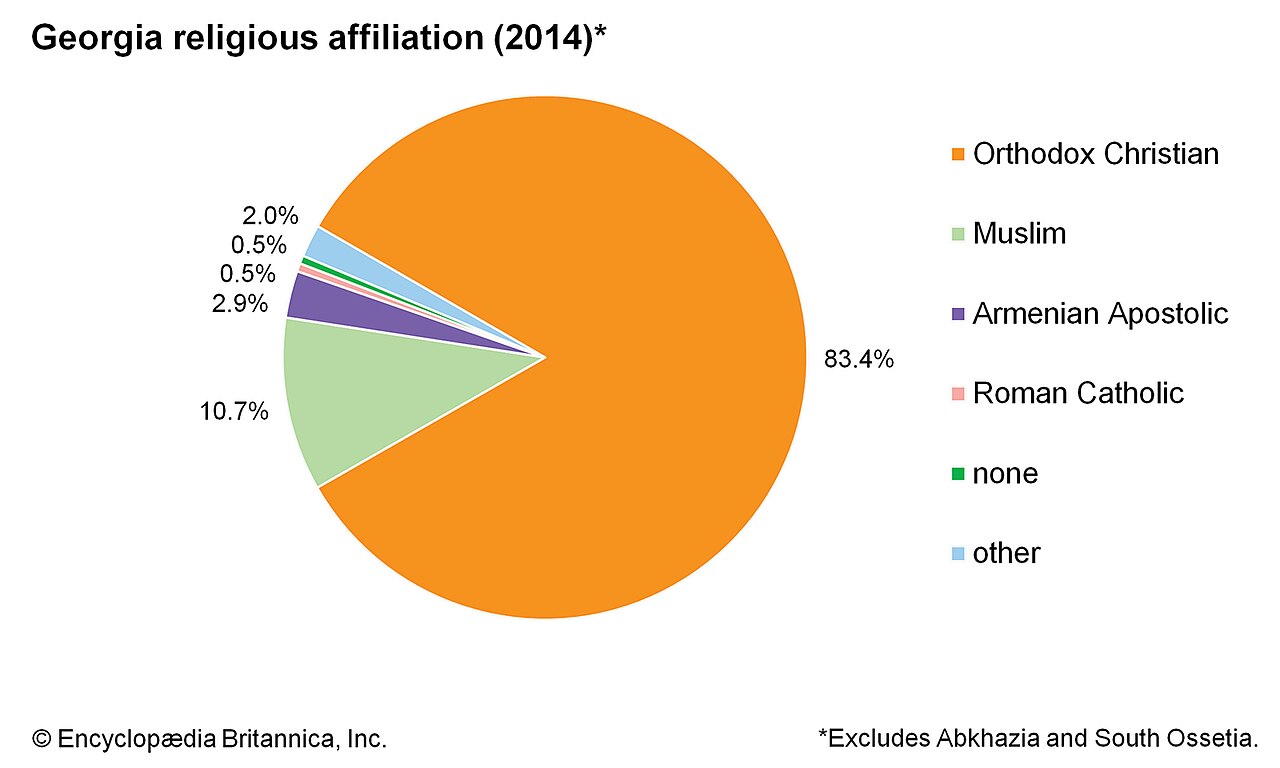

The epistemological implication is pointed: if religious belief tracks geography and family rather than evidence, then the probability that any given believer arrived at the true religion through a reliable truth-tracking process is very low. The argument does not claim to refute any religion’s doctrines directly. It targets instead a prior and more fundamental question: whether the mechanisms by which people come to hold religious beliefs are the kind that reliably produce true beliefs. The answer the demographic data suggests is that they are not.2, 6
The basic observation
Religious identity is among the most geographically and ethnically clustered of all human characteristics. Pew Research Center surveys, which represent the most comprehensive global data on religious affiliation, document the pattern in detail. In the Middle East and North Africa, Islam accounts for 93 percent of the population. In South Asia, Hinduism predominates in India, where approximately 80 percent of the population is Hindu — a figure that would have been nearly impossible to predict from evidence alone and that corresponds closely to the historical geography of Hindu civilization. Christianity accounts for roughly 90 percent of the population across Latin America, the result not of independent religious inquiry across hundreds of millions of people but of the particular colonial history of Spanish and Portuguese expansion.1, 3
Within countries, the pattern continues at the level of ethnicity and family. In the United States, which contains more religious diversity than most nations, a person’s specific denomination correlates closely with their ethnic and regional background: Southern Baptists are concentrated in the South; Catholics are concentrated in the Northeast and among Hispanic communities; Lutherans are concentrated in the upper Midwest, reflecting the settlement patterns of Scandinavian and German immigrants; Latter-day Saints are overwhelmingly concentrated in Utah and the surrounding Mountain West. The Pew Religious Landscape Study found that roughly two-thirds of American adults remain in the faith in which they were raised, and that those who do change religion overwhelmingly move to closely related traditions.12, 4
David Hume was among the first to make this observation philosophically explicit. In his Dialogues Concerning Natural Religion, Hume noted that the religion of any individual is a product of their education and the opinion of their country, and that the diversity of religious traditions, each held with comparable conviction, should induce modesty in all of their adherents.15 The demographic argument gives Hume’s observation its modern statistical form, grounding it in survey data that was unavailable to him.
The statistical profile
The Pew Research Center’s Global Religious Landscape report (2012) surveyed 232 countries and territories and found that religious affiliation is overwhelmingly concentrated in geographic clusters that correspond to historical patterns of cultural transmission, conquest, and missionary activity rather than to any discernible pattern of evidential discovery. Christianity is the majority religion in 158 countries; Islam in 49; Buddhism predominates across much of mainland Southeast Asia and Sri Lanka; Hinduism is largely confined to South Asia. The report found that approximately 83 percent of the world’s population belongs to a religious group, and that the distribution of that 83 percent across traditions maps almost perfectly onto the historical geography of those traditions.1
Religious composition by selected country or region1, 3
| Country or region | Dominant religion | Approximate share |
|---|---|---|
| Saudi Arabia | Islam | 97%+ |
| Thailand | Buddhism | 93% |
| India | Hinduism | 80% |
| Brazil | Christianity (Catholic) | 65% |
| United States | Christianity (Protestant/Catholic) | ~63% |
| Japan | Shinto / Buddhism | ~70% (combined) |
| Middle East & North Africa | Islam | 93% |
| Sub-Saharan Africa | Christianity | 62% |
The intergenerational transmission rate is equally striking. The Pew Religious Landscape Study found that among those raised Catholic in the United States, 68 percent remain Catholic as adults; among those raised in evangelical Protestant households, 65 percent remain evangelical; among those raised Mormon, 64 percent remain Mormon. These retention figures are consistent across denominations and traditions and represent a pattern of belief transmission that closely parallels the transmission of other culturally inherited characteristics, such as political affiliation and dietary preference.12 The sociologist Peter Berger described this process in terms of “plausibility structures” — the social institutions, networks, and routines that sustain belief by making it feel natural and self-evident to those embedded within them.5
The epistemological implication
The epistemological force of the demographic argument can be stated precisely. Suppose that exactly one of the world’s religions is wholly true in its core claims. Given the demographic data, the probability that a randomly selected believer arrived at that religion through independent evaluation of the evidence — rather than through being born in the right place to the right parents — is very low. The mechanism that actually produces most religious belief is cultural transmission: parental instruction, community membership, ritual participation, and the maintenance of plausibility structures. These mechanisms are excellent at propagating beliefs reliably across generations; they are not, by their nature, sensitive to evidential truth.2, 11
The argument does not assert that cultural transmission always produces false beliefs. A person raised in a scientifically literate household will absorb accurate beliefs about evolution, the age of the earth, and the structure of the solar system through cultural transmission, and those beliefs happen to be true. But in that case, the beliefs can also be verified independently by anyone, anywhere, using publicly available methods — and cross-cultural inquiry on such questions converges rather than diverges. Religious inquiry, by contrast, produces systematically divergent results across cultures. If the mechanism of transmission were tracking truth, one would expect the same kind of convergence that characterises mathematics and the natural sciences. The geographic clustering of incompatible religious beliefs is precisely what one would expect if transmission, rather than truth-tracking inquiry, were the dominant mechanism.2, 16
Linda Zagzebski has formalised the underlying intuition as “the problem of religious luck.” If one’s religious beliefs are largely determined by the accident of birthplace, then one’s epistemic position resembles that of a person who arrives at a true belief not through reliable reasoning but through luck — a circumstance that most epistemologists hold insufficient for genuine knowledge. Zagzebski argues that the geographic concentration of religious belief is structurally analogous to moral luck: it affects one’s epistemic standing without being within one’s rational control, and believers who reflect seriously on it are owed an explanation of why they should trust the tradition they happened to be born into rather than any other.10
Relationship to the outsider test for faith
The demographic argument is the empirical foundation for the outsider test for faith, formulated by the philosopher and former Christian minister John W. Loftus. Loftus’s test holds that because religious belief is determined primarily by cultural origin rather than evidence, intellectual consistency requires that a believer evaluate their own faith with the same skeptical standards they already apply to every other religion. A Christian already knows how to be skeptical of Hinduism; the outsider test asks only that the same skepticism be directed inward.2, 14
The demographic argument supplies the normative pressure behind this demand. If a person’s religion is overwhelmingly likely to be the religion of their parents and their birth culture, then the subjective confidence with which they hold that religion provides no evidential support for its truth, since adherents of mutually incompatible religions report the same confidence with the same intensity. Loftus draws on the cognitive science of religion to reinforce this point: the cognitive mechanisms that generate religious belief — hyperactive agency detection, theory of mind extended to invisible agents, the intuitive appeal of minimally counterintuitive concepts — are domain-general processes that operate equally well across all religious traditions, producing confident belief in incompatible doctrines depending on the cultural input they receive.8, 2
The outsider test operationalises the demographic argument as a methodological prescription: examine your religion as you would examine any other tradition into which you were not born. The demographic argument provides the motivation for this prescription by demonstrating that the ordinary process by which people come to hold religious beliefs — birth, enculturation, the maintenance of plausibility structures — is not a process that reliably produces true beliefs, even though it reliably produces confident ones.2, 5
The argument within Christianity
The demographic argument has force not only across religious traditions but within them. Denominational affiliation within Christianity tracks ethnicity and region with a fidelity that mirrors the cross-tradition pattern. The historical coincidence of Lutheran settlement patterns in the American Midwest, Baptist dominance in the American South, and Catholic concentration in the Northeast is not the product of millions of individuals independently evaluating the theological differences between infant baptism, adult baptism, and high-church liturgy, and arriving at the locally dominant conclusion. It is the product of migration patterns, social networks, and the tendency of communities to pass their practices intact to the next generation.12
This internal pattern undercuts a common response to the broader demographic argument. Defenders of Christianity sometimes argue that the geographic clustering of Christian belief is explained by the fact that Christian missionaries carried true doctrines into new regions, and that the subsequent dominance of Christianity in those regions reflects the truth of the gospel rather than mere cultural transmission. But this response is equally available to defenders of Islam, Hinduism, and Buddhism, all of which have also spread through missionary activity and cultural influence. More tellingly, the argument cannot account for the sub-denominational variation within Christianity itself: Methodist theology did not spread through the American South because Methodism is truer than Presbyterianism, but because Francis Asbury and his circuit riders were effective organizers in a particular historical moment. The demographic argument, applied internally, reveals that even within a tradition that might conceivably be true, the specific form in which the tradition is held by any given believer is overwhelmingly predicted by factors that have nothing to do with the relative truth of its variants.12, 8
John Hick, writing from a pluralist perspective, drew the same conclusion about intrareligious diversity in his An Interpretation of Religion. Hick observed that a person born into a Catholic household in sixteenth-century Spain would almost certainly have become a devout Catholic, would have had religious experiences that confirmed Catholic doctrines, and would have found the arguments of Catholic theologians convincing — and that the same person, born into a Calvinist household in Geneva, would have had equally genuine religious experiences that confirmed Calvinist doctrines. The subjective phenomenology of sincere religious belief, Hick argued, provides no way of distinguishing which tradition, if any, is tracking truth.13
Responses and their problems
Several responses to the demographic argument are made by its critics, and each faces characteristic difficulties. The most theologically common response is the providential placement objection: God placed people in the geographic and cultural circumstances where they would be most receptive to the truth, and the clustering of, say, Christianity in Europe and Islam in the Middle East reflects divine wisdom rather than arbitrary cultural accident. This response has an immediate and severe implication: it makes God directly responsible for the fact that the vast majority of the world’s population, measured by the critic’s own theological lights, is born into a “wrong” religion. If Saudi Arabians are born into Islam because God placed them where they would be receptive to the truth, then the God of the Christian apologist has arranged for several billion people to be born into a faith that, on Christianity’s own account, leads to eternal damnation. The providential-placement response transforms the demographic argument into a version of the argument from religious diversity combined with the problem of hell.6, 9
A second common response is the truth-origin independence objection: the causal origin of a belief is logically independent of its truth. This is correct as a logical point, and it is precisely why the demographic argument does not commit the genetic fallacy (discussed below). The observation that most Christians became Christian because they were born in a Christian household does not, by itself, prove that Christianity is false. But it does undercut the specific apologetic claim that believers have personally investigated the evidence and found Christianity compelling. When a Muslim in Tehran and a Christian in Dallas each report that they examined the evidence and found their respective tradition to be true, the demographic data reveals that this self-report is almost certainly incomplete: the overwhelming predictor of their conclusion was their birthplace, not their investigation. The truth-origin independence objection concedes too much, because it grants the demographic point while offering no explanation of how, given that point, a believer can claim to have arrived at their religion through a process more reliable than chance.2, 7
A third response, associated with Alvin Plantinga’s reformed epistemology, holds that belief in God can be “properly basic” — warranted without being inferred from evidence — because God has implanted in human beings a sensus divinitatis that produces true beliefs about God when operating in the right conditions. On this view, the cultural transmission of religious belief is epistemically irrelevant because the warrant for the belief does not depend on its causal history. Critics note, however, that this response is equally available to adherents of any tradition: a Muslim can claim that Allah has endowed human beings with a fitra (innate disposition toward Islam), a Hindu can invoke a divinely given faculty for perceiving Brahman, and the argument from properly basic belief provides no resources for adjudicating between these parallel claims. The cognitive science of religion further complicates Plantinga’s position by providing a naturalistic explanation for the relevant cognitive faculty — agency detection and theory of mind — that does not require positing a divine origin.7, 8
The demographic argument and the genetic fallacy
The genetic fallacy is the error of evaluating a belief based on its causal or historical origin rather than on the evidence or arguments available for it. A straightforward instance would be: “You believe in evolution only because your biology professor told you to, therefore evolution is false.” The origin of the belief is irrelevant to its truth; what matters is the evidence. Critics sometimes charge that the demographic argument commits this fallacy by suggesting that because religious beliefs are transmitted culturally, they are therefore false.7
The charge is mistaken, and understanding why clarifies the actual scope and force of the demographic argument. The demographic argument does not assert that cultural origin makes a religion false. It makes two more limited claims. The first is epistemological: if the primary mechanism that produced a belief is cultural transmission rather than evidence-sensitive inquiry, then the believer cannot take their confidence in the belief as evidence of its truth, because that same mechanism produces equally confident belief in incompatible doctrines elsewhere. The second is about self-understanding: the demographic argument challenges the common apologetic claim that a believer has personally examined the evidence and found their tradition compelling. If birthplace predicts religious affiliation with 70–97 percent accuracy depending on the country, then the believer’s confidence is almost certainly parasitic on their cultural formation rather than on any independent investigation — even if, after the fact, they have found arguments that they find convincing.2, 14
The distinction matters because it determines what the demographic argument can and cannot establish. It cannot establish that any religion is false. It can establish that the subjective confidence of any given believer is weak evidence for the truth of their tradition, that the apologetic claim of personal discovery is in most cases descriptively inaccurate, and that intellectual honesty requires a degree of epistemic humility about one’s inherited religious commitments that is not commonly practiced. This is the conclusion that the outsider test for faith draws out in its methodological prescription, and it follows from the demographic data without committing any fallacy about the relationship between origin and truth.2, 6
The argument also connects to broader questions explored in the religious indoctrination literature: the observation that religious transmission exploits features of childhood cognition — the credulity and authority-deference that make cultural transmission so efficient in the first place — and that beliefs installed through these mechanisms carry a different epistemic status than beliefs arrived at through deliberate adult evaluation. The demographic argument, read in light of the developmental psychology of belief formation, suggests that for most religious believers, the question “why do you believe?” has an answer that is largely sociological rather than evidential, however sincerely the believer may feel otherwise.8, 11
Assessment
The demographic argument is among the most empirically grounded challenges to the epistemic standing of religious belief. Unlike arguments that turn on contested metaphysical premises — the problem of evil, the argument from divine hiddenness — the demographic argument rests on survey data that is publicly available, methodologically transparent, and not seriously disputed by anyone. The geographic clustering of incompatible religious beliefs is a fact, and it is a fact that demands explanation.1, 3
The argument is not a refutation of any religious claim. It is, rather, a challenge to the epistemic basis on which religious beliefs are typically held and defended. It undermines the apologetic presentation of faith as the conclusion of a personal investigation, and it places the burden of proof squarely on any believer who wishes to claim that their tradition was adopted on evidential rather than cultural grounds. For most believers in most traditions, the demographic data suggests that this is not an accurate account of how they came to believe what they believe. The appropriate response is not necessarily to abandon one’s tradition, but to hold it with the intellectual honesty that the demographic reality demands: an awareness that birthplace has done most of the epistemological work, and that the arguments constructed in support of the inherited conclusion may deserve more scrutiny than they typically receive.2, 9, 10
Robert McKim has argued that the pattern of religious diversity — of which the demographic argument is one precise articulation — supports a posture of “tentative” or “modest” religious belief: belief held with an awareness of its own contingency, open to revision, and free of the triumphalism that often accompanies inherited conviction. Whether or not one accepts McKim’s conclusion, the demographic argument establishes that such modesty is not optional for the intellectually honest believer — it is precisely what the data require.9, 6