Overview
- The Hebrew Bible contains passages in which God claims direct responsibility for creating disability (Exodus 4:11), creating calamity and evil (Isaiah 45:7), sending deceptive spirits (1 Kings 22:23), and giving statutes requiring child sacrifice (Ezekiel 20:25–26) — texts that have generated extensive scholarly debate about the nature of divine agency in Israelite theology
- Several biblical texts present God as commanding or orchestrating violence that includes the killing of infants and non-combatants (1 Samuel 15:3, Deuteronomy 20:16–17), threatening siege cannibalism as covenant punishment (Leviticus 26:29, Jeremiah 19:9), and creating certain people specifically for destruction (Romans 9:21–23, Proverbs 16:4)
- Scholarly responses to these passages range from readings that emphasize ancient Near Eastern literary conventions and the progressive development of Israelite theology, to those that take the texts as representing genuine features of the biblical God-concept that resist harmonization with later theological frameworks
The Bible contains passages that have generated sustained scholarly attention because they attribute actions to God that stand in tension with other biblical portrayals of the divine character. These texts describe God as creating disability, causing calamity, sending deceptive spirits, commanding the killing of non-combatants, threatening siege cannibalism as punishment, and creating certain people specifically for destruction. Walter Brueggemann describes the Old Testament as containing both “testimony” (Israel’s core claims about Yahweh as just and compassionate) and “counter-testimony” (passages that qualify, challenge, or undermine those claims).1
What follows presents these passages at length, with the scholarly context that has accumulated around them. The texts are quoted from the English Standard Version unless otherwise noted, and are grouped by the type of divine action they describe.
Divine agency and disability
In Exodus 4, when Moses objects that he is not eloquent enough to serve as God’s spokesman to Pharaoh, God responds by claiming direct responsibility for human disability (Exodus 4:11):
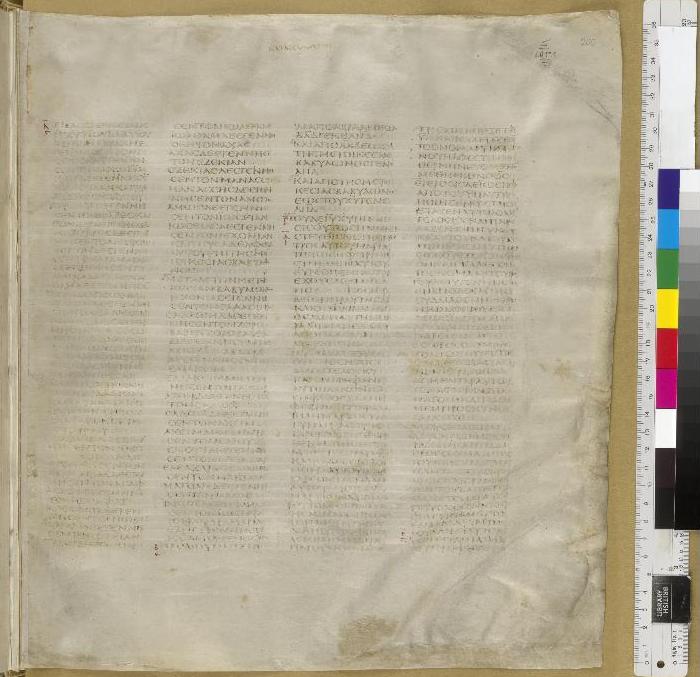

Exodus 4:11, ESV“Then the LORD said to him, ‘Who has made man’s mouth? Who makes him mute, or deaf, or seeing, or blind? Is it not I, the LORD?’”
The statement is presented as a rhetorical question expecting the answer “yes.” God claims to be the one who “makes” (’asah) people mute, deaf, or blind — using the same verb employed in the Genesis creation accounts. Terence Fretheim notes that the passage presents a theology of unqualified divine sovereignty in which all human conditions, including disability, are attributed directly to God’s creative activity rather than to secondary causes such as natural processes or human sin.2
This text stands alongside other passages that assert God’s causal role in suffering. Deuteronomy 32:39 states: “See now that I, even I, am he, and there is no god beside me; I kill and I make alive; I wound and I heal” (Deuteronomy 32:39, ESV). The book of Amos asks: “Does disaster come to a city, unless the LORD has done it?” (Amos 3:6, ESV). John Goldingay observes that the Hebrew Bible consistently attributes both beneficial and harmful events to God’s agency, reflecting a theological framework in which divine sovereignty extends to all domains of human experience.8
Creation of calamity and evil
The prophet Second Isaiah, writing during the Babylonian exile, places a declaration of universal divine causation in God’s mouth (Isaiah 45:7):1
Isaiah 45:7, ESV“I form light and create darkness; I make well-being and create calamity; I am the LORD, who does all these things.”
The Hebrew word translated “calamity” in the ESV is ra’ (רָע), the standard Hebrew term for “evil.” The same word is used throughout the Hebrew Bible to describe moral evil, wickedness, and harm. The King James Version translates the word directly: “I make peace, and create evil.” Modern translations have rendered it variously as “calamity” (ESV), “disaster” (NIV), and “woe” (NRSV).16
Brueggemann argues that the passage reflects a strict monotheistic theology in which all phenomena — including destructive ones — must be attributed to the single God, since no rival deity exists to bear responsibility for evil. The context is Second Isaiah’s polemic against Persian dualism: against the Zoroastrian framework in which a good deity (Ahura Mazda) and an evil deity (Angra Mainyu) divide cosmic responsibility, Second Isaiah asserts that Yahweh alone is the source of both light and darkness, both welfare and destruction.1
Goldingay notes that while the polemical context explains why the claim is made, it does not diminish the theological weight of the assertion itself. The text states that God “creates” (bore’) ra’ — using the same verb (bara’) that Genesis 1 uses for God’s creation of the heavens and the earth.8
Divine deception
Several biblical passages attribute the use of deception to God.3 In 1 Kings 22, the prophet Micaiah describes a scene in the divine council in which God commissions a “lying spirit” to deceive the prophets of King Ahab:
1 Kings 22:20–22, ESV“And the LORD said, ‘Who will entice Ahab, that he may go up and fall at Ramoth-gilead?’ And one said one thing, and another said another. Then a spirit came forward and stood before the LORD, saying, ‘I will entice him.’ And the LORD said to him, ‘By what means?’ And he said, ‘I will go out, and will be a lying spirit in the mouth of all his prophets.’ And he said, ‘You are to entice him, and you shall succeed; go out and do so.’”
The passage presents God as deliberately authorizing deception. The lying spirit operates with God’s explicit approval (“you shall succeed; go out and do so”), and the narrative treats the deception as part of God’s plan to bring about Ahab’s death.16
The New Testament contains a parallel statement. Second Thessalonians 2 describes God sending “a strong delusion” to those who have rejected the truth (2 Thessalonians 2:11–12):
2 Thessalonians 2:11–12, ESV“Therefore God sends them a strong delusion, so that they may believe what is false, in order that all may be condemned who did not believe the truth but had pleasure in unrighteousness.”
The text states that God is the agent who “sends” (pempei) the delusion, and that the purpose of the delusion is condemnation. The passage raises questions about free will and divine justice: if God actively causes people to believe falsehood, the basis for their condemnation becomes a subject of theological difficulty.15
Seibert observes that these passages present a “God who deceives” as a genuine feature of the biblical text, not merely as a literary device or accommodation to human understanding. The divine council scene in 1 Kings 22 is presented as a revelation of actual events in the heavenly realm, and the narrator treats Micaiah’s account as the true explanation for why Ahab’s prophets gave false counsel.3
Child-sacrifice statutes
Ezekiel 20 contains a passage in which God claims to have given Israel “statutes that were not good” — specifically, statutes involving the sacrifice of firstborn children (Ezekiel 20:25–26):11
Ezekiel 20:25–26, ESV“Moreover, I gave them statutes that were not good and rules by which they could not have life, and I defiled them through their very gifts in their offering up all their firstborn, that I might devastate them. I did it that they might know that I am the LORD.”
Moshe Greenberg, in the Anchor Bible commentary, argues that Ezekiel is referring to the law of the firstborn in Exodus 22:29 (“The firstborn of your sons you shall give to me”), which, taken literally and without the redemption provisions of later legislation, could be understood as requiring child sacrifice. Greenberg reads the passage as presenting God’s act of giving “bad statutes” as a form of judicial punishment: because Israel repeatedly rejected God’s good laws, God gave them over to the consequences of their own misreading.11
Seibert notes that the passage is difficult to harmonize with texts like Jeremiah 7:31, in which God declares: “They have built the high places of Topheth, which is in the Valley of the Son of Hinnom, to burn their sons and their daughters in the fire, which I did not command, nor did it come into my mind.” In Jeremiah, God denies having commanded child sacrifice; in Ezekiel, God claims to have given the statutes that led to it.3 Brueggemann identifies this as an instance of the Bible’s “unsettled testimony” — texts that resist harmonization and preserve the tensions within Israel’s theological reflection (see also human sacrifice in the Bible).1
Commanded violence against non-combatants
The Hebrew Bible contains commands attributed to God that specify the killing of women, children, and infants.14 The command regarding the Amalekites in 1 Samuel 15 is among the most explicit:
1 Samuel 15:3, ESV“Now go and strike Amalek and devote to destruction all that they have. Do not spare them, but kill both man and woman, child and infant, ox and sheep, camel and donkey.”
The command in Deuteronomy 20 regarding the Canaanite nations is similarly comprehensive (Deuteronomy 20:16–17):
Deuteronomy 20:16–17, ESV“But in the cities of these peoples that the LORD your God is giving you for an inheritance, you shall save alive nothing that breathes, but you shall devote them to complete destruction, the Hittites and the Amorites, the Canaanites and the Perizzites, the Hivites and the Jebusites, as the LORD your God has commanded you.”
The Hebrew term for “devote to destruction” is herem, which denotes the irrevocable consecration of persons or property to God through annihilation. Susan Niditch identifies the herem as a sacral institution in which military destruction functions as a sacrificial act — the enemy is offered to the deity as a burnt offering (see also the conquest of Canaan).14
The Show Them No Mercy volume presents four scholarly responses to these texts. C. S. Cowles argues that the violence attributed to God in the Old Testament is incompatible with the revelation of God in Jesus and must be understood as a human misattribution. Eugene Merrill defends the commands as reflecting God’s sovereign judgment against incorrigibly wicked nations. Daniel Gard reads them through a typological lens in which herem warfare foreshadows eschatological judgment. Tremper Longman argues that the commands were historically specific and limited to a particular moment in redemptive history.12
Gregory Boyd proposes a “cruciform hermeneutic” in which violent Old Testament portraits of God are read as divine accommodations to human violence — God is portrayed as stooping to meet Israel within their violent cultural context, with the cross of Christ revealing God’s true non-violent character.13 Seibert, by contrast, argues that the texts should be identified as morally objectionable and that attributing genocide to God reflects the ideology of the human authors rather than the actual character of God.10
Predestination to destruction
Several biblical texts present God as creating certain people specifically for destruction or dishonor.15 The potter analogy in Romans 9 is the most developed:
Romans 9:21–23, ESV“Has the potter no right over the clay, to make out of the same lump one vessel for honorable use and another for dishonorable use? What if God, desiring to show his wrath and to make known his power, has endured with much patience vessels of wrath prepared for destruction, in order to make known the riches of his glory for vessels of mercy, which he has prepared beforehand for glory?”
The analogy presents human beings as clay that has no claim against the potter’s intentions. Joseph Fitzmyer, in the Anchor Bible commentary on Romans, notes that Paul draws on Isaiah 29:16 and Jeremiah 18:1–6, where the potter-clay metaphor is used to assert God’s sovereignty over Israel. Fitzmyer argues that Paul’s use of the analogy is not a statement about individual predestination to eternal damnation but about God’s sovereign right to determine the roles that different groups play in salvation history.15
Proverbs 16:4 makes a more compact statement:
Proverbs 16:4, ESV“The LORD has made everything for its purpose, even the wicked for the day of trouble.”
Goldingay reads this text within the broader context of Israelite wisdom literature, where it functions as a statement about the comprehensiveness of divine sovereignty: nothing falls outside God’s purposive design, including the existence of the wicked and the judgment they will face.8 Kaiser argues that the verse does not teach that God creates people to be wicked but that God has determined a purpose (judgment) for those who choose wickedness.9 The text itself, however, uses the verb ’asah (“made”) with “the wicked” as the direct object and “the day of trouble” as the stated purpose.16
Siege cannibalism as covenant punishment
The covenant curse lists in Leviticus 26 and Deuteronomy 28 include siege cannibalism among the punishments God will bring upon Israel for disobedience.9 Leviticus 26 states:
Leviticus 26:29, ESV“You shall eat the flesh of your sons, and you shall eat the flesh of your daughters.”
Deuteronomy 28 elaborates at greater length:
Deuteronomy 28:53–55, ESV“You shall eat the fruit of your womb, the flesh of your sons and daughters, whom the LORD your God has given you, in the siege and in the distress with which your enemies shall distress you. The man who is the most tender and refined among you will begrudge food to his brother, to the wife he embraces, and to the last of the children whom he has left, so that he will not give to any of them any of the flesh of his children whom he is eating, because he has nothing else left, in the siege and in the distress with which your enemy shall distress you.”
The prophet Jeremiah attributes the same threat directly to God in the first person (Jeremiah 19:9):2
Jeremiah 19:9, ESV“And I will make them eat the flesh of their sons and their daughters, and everyone shall eat the flesh of his neighbor in the siege and in the distress, with which their enemies and those who seek their life afflict them.”
Kaiser reads the Leviticus and Deuteronomy curses within the framework of ancient Near Eastern suzerainty treaties, in which the vassal agrees to a list of increasingly severe punishments for covenant violation. Cannibalism appears in other ancient Near Eastern treaty curse lists, including the Vassal Treaties of Esarhaddon (672 BCE), suggesting that the biblical form draws on a shared rhetorical convention.9 Fretheim, however, notes that the Jeremiah passage goes beyond the treaty form by placing the threat in God’s own mouth as a first-person declaration of intent: “I will make them eat” — presenting God not merely as permitting a consequence but as actively bringing it about.2
Scholarly interpretive frameworks
The passages examined above have generated a range of scholarly responses that can be broadly categorized by their hermeneutical strategy.
Major interpretive approaches to morally difficult passages3, 5, 13
| Approach | Core claim | Representative scholars |
|---|---|---|
| Divine command | God’s commands are by definition just; human moral intuitions are unreliable when they conflict with divine revelation | Copan, Kaiser, Merrill |
| Progressive revelation | Earlier texts reflect a less developed understanding of God’s character; later revelation (especially the New Testament) corrects or supersedes them | Cowles, Enns, Webb |
| Accommodation | God accommodated to the violent culture of ancient Israel, allowing human misunderstandings to be expressed in Scripture | Boyd, Seibert |
| Ancient Near Eastern context | The texts use hyperbolic conventions shared with other ancient literature and should not be read as literal descriptions | Longman, Copan, Walton |
| Dialectical theology | The Bible preserves both testimony and counter-testimony about God; the tension is a feature, not a defect, of the canon | Brueggemann, Goldingay |
| Ethical critique | The texts are morally objectionable and should be identified as reflecting the ideology of human authors rather than the character of God | Seibert, Davies, Trible |
Brueggemann’s approach in Theology of the Old Testament treats the difficult passages not as problems to be solved but as testimony that must be heard alongside the dominant tradition. He identifies a “core testimony” in which Yahweh is just, compassionate, and faithful, and a “counter-testimony” in which Yahweh is hidden, abusive, and unreliable. Brueggemann argues that the tension between these two portraits is constitutive of the Old Testament’s theological witness: the counter-testimony prevents the core testimony from becoming a domesticated ideology.1
Copan and Kaiser represent the divine command tradition, which holds that God’s sovereign authority provides sufficient justification for the actions described. Copan argues that the Canaanite conquest must be understood against the backdrop of Canaanite religious practices (including child sacrifice) and that God’s judgment, however severe, was a response to extreme moral corruption.5 Kaiser reads the covenant curses as warnings intended to deter disobedience rather than as descriptions of God’s desired actions.9
Seibert argues for an explicitly ethical reading that distinguishes between what the text attributes to God and what can be responsibly affirmed about God’s character. In Disturbing Divine Behavior, Seibert proposes a “christocentric hermeneutic” in which the revelation of God in Jesus functions as the interpretive key: passages that present God in ways inconsistent with the character revealed in Jesus should be understood as reflecting the theological limitations of the human authors rather than the actual character of God.3 Davies takes a further step, arguing that the category of “difficult passages” is itself misleading, since it implies that the passages can be resolved. Some biblical texts, Davies contends, present a God-concept that is genuinely immoral by any defensible ethical standard, and intellectual honesty requires acknowledging this rather than explaining it away.6
Boyd’s Crucifixion of the Warrior God proposes that violent portraits of God in the Old Testament represent a form of divine accommodation analogous to the incarnation: just as God took on human form in Christ, God took on the violent cultural assumptions of ancient Israel in order to work within that context. The cross, Boyd argues, reveals that God’s true character is self-sacrificial love, and all previous portraits of God must be reinterpreted through this lens.13
The texts in tension
The difficulty of these passages is compounded by the presence of countervailing texts within the same canon. The God who creates calamity in Isaiah 45:7 is the same God who “does not willingly afflict or grieve the children of men” in Lamentations 3:33. The God who commands the herem of entire populations is the same God who declares “I have no pleasure in the death of anyone” in Ezekiel 18:32. The God who sends a lying spirit in 1 Kings 22 is the God of whom Numbers 23:19 states: “God is not man, that he should lie.”16
Fretheim argues that these tensions are not the result of editorial carelessness but reflect the genuine complexity of Israelite theological reflection over centuries. The Hebrew Bible preserves multiple voices, written in different historical contexts, addressing different aspects of the divine-human relationship. The difficult passages represent one strand of that tradition — a strand that later biblical writers sometimes modify, sometimes challenge, and sometimes leave standing without resolution.2
Trible’s Texts of Terror reads the narratives of Hagar, Tamar, the unnamed concubine of Judges 19, and Jephthah’s daughter as texts that the Bible itself does not resolve or redeem. The victims remain victims; the violence remains violence. Trible argues that the reader’s task is not to explain away the terror of these texts but to sit with it — to allow the texts to function as a witness to suffering that the biblical narrative does not fully address.7
References
The Crucifixion of the Warrior God: Interpreting the Old Testament’s Violent Portraits of God in Light of the Cross