Overview
- Pseudepigraphy — the practice of composing a text under an assumed name, typically that of a revered figure from the past — was widespread in the ancient Mediterranean and Near Eastern world, attested in Greek philosophical traditions, Jewish apocalyptic literature, and early Christian writings.
- Several texts within the biblical canon display internal features — vocabulary shifts, theological developments, historical anachronisms, and stylistic differences from the named author's undisputed works — that are consistent with pseudepigraphic composition.
- Ancient attitudes toward pseudepigraphy were not uniform: some writers condemned it as forgery, while others appear to have regarded writing under a teacher's name as a legitimate means of extending that teacher's authority into new circumstances.
Pseudepigraphy — from the Greek pseudepigraphos (pseudos, "false," and epigraphē, "inscription" or "title") — is the practice of attributing a written work to someone other than its actual author, typically a revered or authoritative figure from the past. The term describes a compositional strategy, not a moral judgment: a pseudepigraphic text is one that bears a name the author did not possess. The practice was pervasive in the ancient world. Greek philosophical schools produced works under the names of their founders. Jewish writers of the Second Temple period composed apocalypses, testaments, and wisdom literature under the names of patriarchs and prophets. Early Christian communities circulated letters, gospels, and apocalypses attributed to apostles who may not have written them.1, 3
Within the biblical canon itself, several texts raise the question of pseudepigraphy through their internal features: vocabulary and style that differ from the named author's undisputed works, historical references that point to a later period, theological developments that presuppose a context after the named author's lifetime, and literary relationships with other texts that complicate direct authorial attribution. This article examines the practice of pseudepigraphy in its ancient context, surveys the evidence for pseudepigraphic composition within biblical and related texts, and presents the ancient sources that bear on how such writing was understood by those who produced and received it.1, 9
Pseudepigraphy in the Greco-Roman world
The production of texts under false names was common across the literary cultures of the ancient Mediterranean. Within Greek philosophical traditions, the problem was acute. Diogenes Laertius, writing in the third century CE, catalogs the works attributed to various philosophers and notes disputes over authenticity. In his account of the Stoic philosopher Chrysippus, Diogenes records that some works circulating under Chrysippus's name were suspected of being composed by others.2 The Pythagorean tradition was especially prolific in pseudepigraphic production. By the Hellenistic period, a large body of treatises on mathematics, cosmology, and ethics circulated under the names of Pythagoras and his early followers, many of them composed centuries after the historical Pythagoras. The philosopher Iamblichus, in the third century CE, attempted to sort genuine from spurious Pythagorean works, a task that presupposes a recognized problem of false attribution within the tradition.1
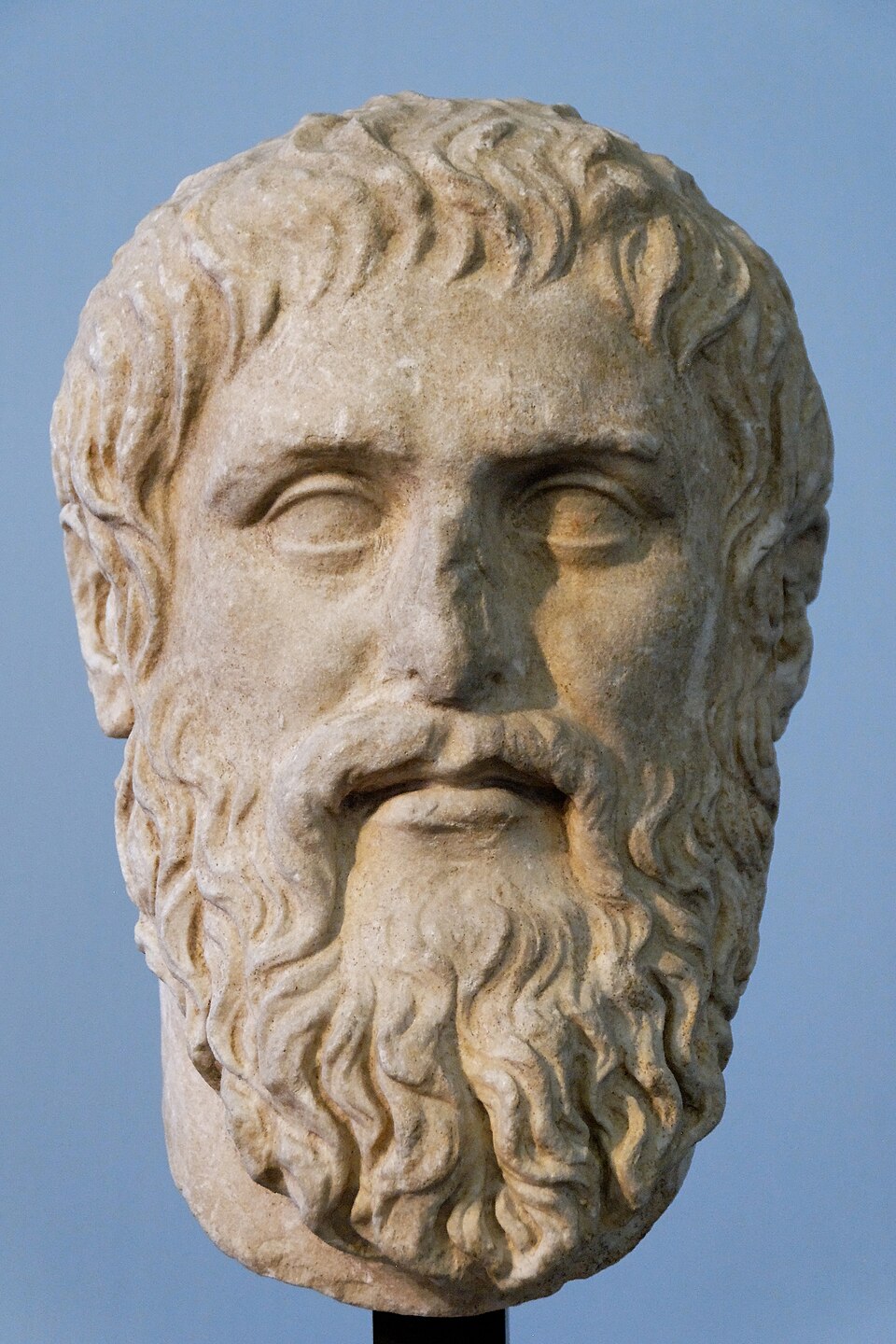

Roman rhetorical education included exercises in prosopopoeia (Greek) or ethopoeia (Latin) — the composition of speeches in the character of a historical or mythological figure. Students practiced writing what a famous person would have said in a given situation. Suetonius, in his account of Roman rhetoricians, describes this practice as a standard element of rhetorical training.11 While rhetorical exercises and pseudepigraphic literary production are not identical, the educational practice demonstrates that composing texts in the voice of another person was a recognized and cultivated skill in the Greco-Roman world.
The ancient world also possessed a concept of literary forgery as something distinct from legitimate pseudepigraphy. The physician Galen, in the second century CE, wrote a treatise titled On His Own Books in which he listed his genuine works specifically to combat the circulation of texts falsely attributed to him. Galen's concern was practical: spurious medical treatises bearing his name could lead to dangerous treatments. His response — producing an authoritative bibliography to distinguish the genuine from the false — demonstrates that the attribution of works to famous authors was a recognized problem and that at least some writers regarded it as deceptive.1
Jewish pseudepigraphy in the Second Temple period
The Second Temple period (roughly 516 BCE to 70 CE) produced an extensive body of Jewish literature attributed to figures from Israel's distant past. These texts, collectively known as the Pseudepigrapha, include apocalypses attributed to Enoch, Abraham, and Baruch; testaments attributed to the twelve patriarchs, Moses, and Solomon; and wisdom and poetic works attributed to various biblical figures.3, 5
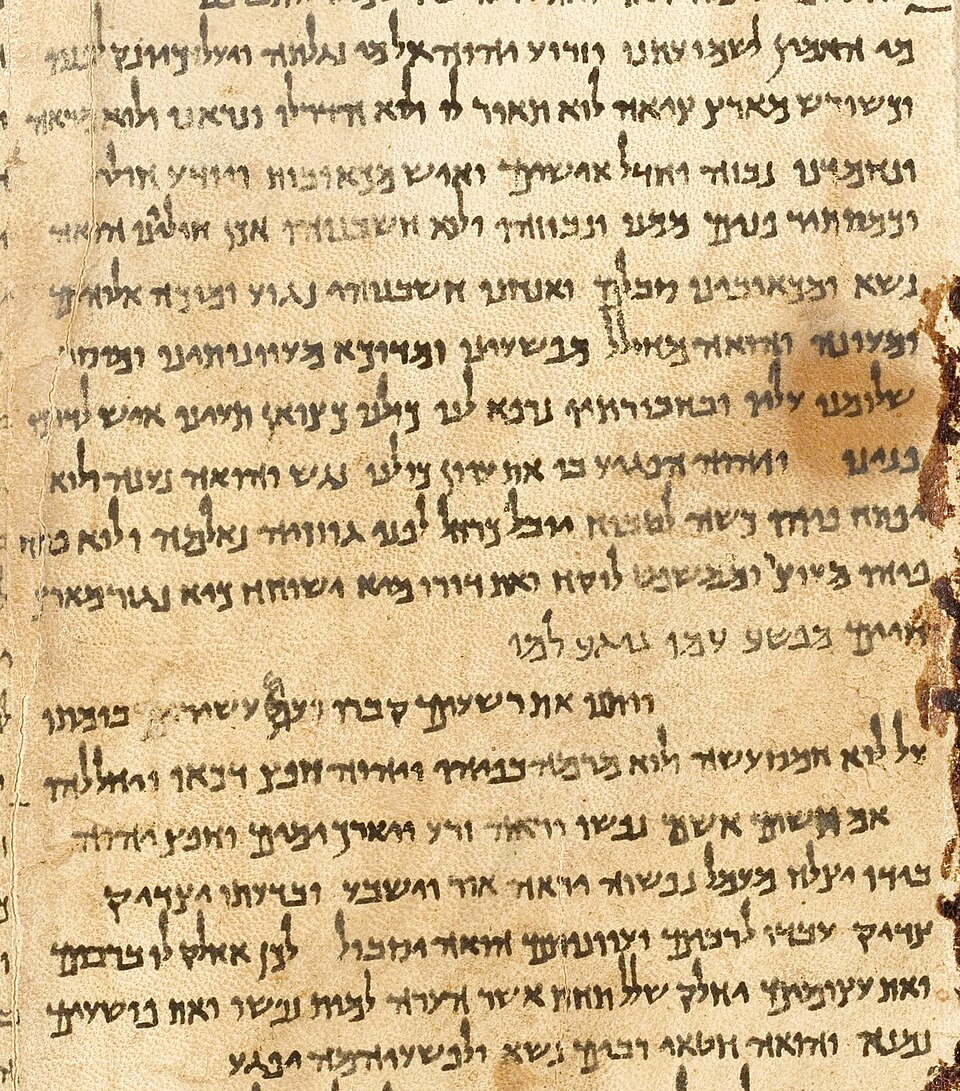

The Book of 1 Enoch opens with an attribution to the antediluvian patriarch:
The words of the blessing of Enoch, wherewith he blessed the elect and righteous, who will be living in the day of tribulation, when all the wicked and godless are to be removed. And he took up his parable and said — Enoch a righteous man, whose eyes were opened by God, saw the vision of the Holy One in the heavens, which the angels showed me, and from them I heard everything, and from them I understood as I saw, but not for this generation, but for a remote one which is for to come. (1 Enoch 1:1–2, trans. Charles)4
The text presents itself as the words of Enoch, the figure described in Genesis 5:21–24 as one who "walked with God" and was taken by God without dying. The actual composition of the various sections of 1 Enoch spans several centuries, from the third century BCE (the Book of the Watchers, chapters 1–36) to the first century BCE or later (the Parables of Enoch, chapters 37–71). Fragments of 1 Enoch in Aramaic were found among the Dead Sea Scrolls at Qumran, confirming the text's circulation in the Second Temple period, though no fragments of the Parables section have been identified at Qumran.3, 5
Other pseudepigraphic works from this period include the Testaments of the Twelve Patriarchs, in which each of Jacob's twelve sons delivers a deathbed speech; the Psalms of Solomon, attributed to the Israelite king but composed in the first century BCE; 4 Ezra (2 Esdras 3–14), attributed to Ezra but written after 70 CE in response to the destruction of the Second Temple; and 2 Baruch, attributed to the prophet Jeremiah's scribe but also reflecting a post-70 CE perspective.5 In each case, a later author wrote under the name of an earlier authoritative figure. The practice appears to have served multiple functions: it connected new theological ideas to an established tradition, it lent authority to the message by associating it with a figure of recognized stature, and it situated the text within a literary genre — the apocalypse or testament — whose conventions included pseudonymous attribution.3, 5
Pseudepigraphic features in the Hebrew Bible
Several books within the Hebrew Bible display features consistent with pseudepigraphic composition.9 The Book of Ecclesiastes opens by identifying its speaker:
The words of the Teacher, the son of David, king in Jerusalem.Ecclesiastes 1:1, 12, NRSV
The text continues: "I, the Teacher, when king over Israel in Jerusalem, applied my mind to seek and to search out by wisdom all that is done under heaven" (Ecclesiastes 1:12, NRSV). (Ecclesiastes 1:1, 12) The "son of David, king in Jerusalem" is a clear reference to Solomon. However, the Hebrew of Ecclesiastes contains late linguistic features — Aramaisms and Persian loanwords — that place its composition in the postexilic period, centuries after Solomon's time. The word pardes ("park" or "garden," Ecclesiastes 2:5), for example, is a Persian loanword (pairidaeza) that entered Hebrew only after the Persian period began in 539 BCE.9 The Solomonic attribution functions as a literary device: the wealthiest and wisest king in Israelite tradition is the ideal persona through which to explore questions about the meaning of wealth, wisdom, and human effort.
The Wisdom of Solomon, included in the Septuagint and the Catholic and Orthodox canons but not in the Hebrew Bible or Protestant Old Testament, presents itself as the voice of Solomon speaking to fellow rulers:
I also am mortal, like everyone else, a descendant of the first-formed child of earth; and in the womb of a mother I was molded into flesh, within the period of ten months, compacted with blood, from the seed of a man and the pleasure of marriage. And when I was born, I began to breathe the common air, and fell upon the kindred earth; my first sound was a cry, as is true of all. I was nursed with care in swaddling cloths. For no king has had a different beginning of existence.Wisdom of Solomon 7:1–7, NRSV
The text never names Solomon directly, but the references to kingship and the pursuit of wisdom make the identification unmistakable. The Wisdom of Solomon is written in Greek, not Hebrew, and its language and philosophical categories — including the Greek concept of the immortality of the soul (Wisdom 3:1–4) — place its composition in the Hellenistic period, likely the first century BCE in Alexandria.5
The Book of Deuteronomy presents itself as the words of Moses delivered in speeches before the Israelites enter Canaan. Deuteronomy 31:24–26 states:
When Moses had finished writing down in a book the words of this law to the very end, Moses commanded the Levites who carried the ark of the covenant of the Lord, saying, "Take this book of the law and put it beside the ark of the covenant of the Lord your God; let it remain there as a witness against you."Deuteronomy 31:24–26, NRSV
The text attributes its own composition to Moses. However, Deuteronomy 34 narrates Moses' death and burial, and verse 34:6 states, "no one knows his burial place to this day" — a phrase that implies a temporal distance between the events described and the time of writing. The account in 2 Kings 22 describes the discovery of "the book of the law" in the temple during the reign of King Josiah (c. 622 BCE):
The high priest Hilkiah said to Shaphan the secretary, "I have found the book of the law in the house of the Lord." When Hilkiah gave the book to Shaphan, he read it... When the king heard the words of the book of the law, he tore his clothes.2 Kings 22:8–13, NRSV
The content of the reforms Josiah undertakes after this discovery corresponds closely to the laws and prohibitions found in Deuteronomy, including the centralization of worship at a single sanctuary. The relationship between this "found" law book and the text of Deuteronomy has been a subject of analysis since the patristic period.9
The Book of Daniel presents its visions as received by Daniel during the Babylonian exile in the sixth century BCE. Daniel 7:1 reads: "In the first year of King Belshazzar of Babylon, Daniel had a dream and visions of his head as he lay in bed. Then he wrote down the dream" (NRSV). The text contains detailed references to the succession of kingdoms from Babylon through Persia and Greece, including what appears to be a description of the Seleucid king Antiochus IV Epiphanes and the desecration of the temple in 167 BCE (Daniel 11:21–39). These references become progressively more specific as they approach the mid-second century BCE and then become imprecise regarding events after 164 BCE. The language of Daniel shifts between Hebrew and Aramaic, and the Aramaic contains features characteristic of the second century BCE rather than the sixth century BCE. The book is placed in the Writings (Ketuvim) section of the Hebrew Bible rather than among the Prophets (Nevi'im), which may reflect its relatively late acceptance into the canon.3, 9
Disputed Pauline letters
The question of pseudepigraphy is particularly acute within the Pauline corpus of the New Testament. Thirteen letters in the New Testament bear Paul's name. Seven of these — Romans, 1 Corinthians, 2 Corinthians, Galatians, Philippians, 1 Thessalonians, and Philemon — are widely treated as authentic on the basis of their consistent vocabulary, style, and theological content. The remaining six — Ephesians, Colossians, 2 Thessalonians, 1 Timothy, 2 Timothy, and Titus — display features that have led to questions about their authorship.1, 9
The undisputed letters of Paul display identifiable characteristics. Paul's Greek employs complex, sometimes convoluted sentence structures with frequent digressions, rhetorical questions, and antithetical parallelism. His theology centers on justification by faith, the imminent return of Christ, the Spirit as a present reality, and the tension between the old age and the new. His letters typically open with a greeting from "Paul" and often one or more named co-senders, followed by a thanksgiving, a body of theological argument and practical instruction, and closing greetings. (Galatians 1:1–2)9
The Pastoral Epistles — 1 Timothy, 2 Timothy, and Titus — identify Paul as their author. First Timothy opens: "Paul, an apostle of Christ Jesus by the command of God our Savior and of Christ Jesus our hope, To Timothy, my loyal child in the faith" (1 Timothy 1:1–2, NRSV). (1 Timothy 1:1–2) These letters, however, contain vocabulary that does not appear elsewhere in the Pauline corpus. An analysis of the Greek text shows that the Pastoral Epistles use over 300 words that appear nowhere else in the Pauline letters, and that many of these words are common in second-century Christian literature. The term eusebeia ("godliness" or "piety"), used ten times across the three Pastorals, does not appear in any of Paul's undisputed letters. The phrase pistos ho logos ("the saying is sure" or "faithful is the word"), which occurs five times in the Pastorals as a formula for introducing received tradition, is absent from the undisputed letters.6, 9
The organizational structure described in the Pastoral Epistles presupposes a level of institutional development beyond what the undisputed Pauline letters reflect. The letters describe the qualifications for episkopos ("overseer" or "bishop") and diakonos ("deacon") in terms that suggest established institutional offices with formal criteria for selection (1 Timothy 3:1–13, Titus 1:5–9). Paul's undisputed letters, by contrast, speak of charismata — gifts of the Spirit distributed to members of the community — as the basis for communal roles (1 Corinthians 12:4–11, 27–31), rather than of formal offices with lists of qualifications.6, 9
The Pastoral Epistles also contain personal details that would, at first glance, support Pauline authorship. (Titus 3:12–13) instructs: "When I send Artemas to you, or Tychicus, do your best to come to me at Nicopolis, for I have decided to spend the winter there. Make every effort to send Zenas the lawyer and Apollos on their way" (NRSV). These concrete personal references are consistent with what a pseudepigrapher might include to lend verisimilitude to the text — a practice observable in other ancient pseudepigraphic letters. They are also, of course, consistent with genuine Pauline authorship. The personal details alone do not settle the question in either direction; they must be weighed alongside the vocabulary, style, and theological evidence.1
The following table compares selected features of the undisputed Pauline letters with the disputed letters.6, 8, 9
Selected features of undisputed and disputed Pauline letters6, 9
| Feature | Undisputed letters (Rom, 1–2 Cor, Gal, Phil, 1 Thess, Phlm) | Pastoral Epistles (1–2 Tim, Titus) |
|---|---|---|
| Vocabulary unique to the group (hapax legomena) | Proportional to letter length | Over 300 words not found in other Pauline letters |
| Use of eusebeia ("godliness") | Absent | 10 occurrences |
| Use of pistos ho logos formula | Absent | 5 occurrences |
| Church offices described | Spirit-based gifts (charismata) | Formal offices with qualification lists (episkopos, diakonos) |
| Attitude toward women's teaching | Women named as co-workers (Rom 16:1–7) | "I permit no woman to teach or to have authority over a man" (1 Tim 2:12) |
| Eschatological expectation | Imminent return of Christ (1 Thess 4:15–17) | Delayed parousia; emphasis on sound doctrine for the long term |
| Christological vocabulary | Christos, Kyrios | Adds sōtēr ("savior"), epiphaneia ("appearing") |
Ephesians presents a different kind of case. The letter opens "Paul, an apostle of Christ Jesus by the will of God, To the saints who are in Ephesus and are faithful in Christ Jesus" (Ephesians 1:1, NRSV). (Ephesians 1:1) However, the words "in Ephesus" (en Ephesō) are absent from several early manuscripts, including the Chester Beatty Papyrus P46 (c. 200 CE) and the original hand of Codex Sinaiticus and Codex Vaticanus.8, 13 Without these words, the letter has no named recipient, which is unusual for a Pauline letter and consistent with the possibility that it was composed as a general circular rather than as a letter to a specific community Paul knew well. The language and style of Ephesians differ from the undisputed letters: sentences in Ephesians are markedly longer and more liturgical in character. Ephesians 1:3–14, in the Greek, constitutes a single sentence of over 200 words. The letter also draws heavily on the language of Colossians, reproducing phrases and passages from that letter in a way that suggests literary dependence. Colossians itself instructs that it be shared with the church at Laodicea and that the Laodicean letter be read in return: "And when this letter has been read among you, have it read also in the church of the Laodiceans; and see that you read also the letter from Laodicea" (Colossians 4:16, NRSV). (Colossians 4:16)9
Ephesians 2:19–22 refers to the church as "built upon the foundation of the apostles and prophets, with Christ Jesus himself as the cornerstone" (NRSV). This image of the apostles as a foundation upon which the church is built — a completed foundation, spoken of from a vantage point of retrospection — is a perspective more naturally associated with a later writer looking back on the apostolic generation than with an apostle writing during it.9
The case of 2 Peter
Second Peter presents one of the clearest cases for examining pseudepigraphic composition within the New Testament.1, 9 The letter opens: "Simeon Peter, a servant and apostle of Jesus Christ" (2 Peter 1:1, NRSV), using an archaic spelling of Peter's name (Symeōn) that appears elsewhere only in Acts 15:14. The letter claims to be written by the apostle Peter, and it includes a reference to the author having been present at the Transfiguration (2 Peter 1:16–18).
Several features of the text bear on the question of its authorship.1 2 Peter 3:15–16 refers to the letters of Paul as a known collection:
So also our beloved brother Paul wrote to you according to the wisdom given him, speaking of this as he does in all his letters. There are some things in them hard to understand, which the ignorant and unstable twist to their own destruction, as they do the other scriptures.2 Peter 3:15–16, NRSV
This passage refers to "all his letters" (pasais epistolais) as a recognizable body of literature, and it groups them with "the other scriptures" (tas loipas graphas) — treating Paul's letters as having the status of scripture. This presupposes a stage in the development of early Christianity at which Paul's letters had been collected, were circulating as a group, and had been elevated to scriptural authority. Such a stage postdates Paul's own lifetime and, if Peter died in the mid-60s CE as early Christian tradition indicates, postdates Peter's lifetime as well.1, 9
Second Peter also displays a literary relationship with the Epistle of Jude. Nearly the entire content of Jude is reproduced in 2 Peter 2, often in the same order and with similar wording, but with modifications. Where Jude 17–18 reads:
But you, beloved, must remember the predictions of the apostles of our Lord Jesus Christ; for they said to you, "In the last time there will be scoffers, indulging their own ungodly lusts."Jude 17–18, NRSV
The parallel in 2 Peter 3:3–4 reads:
First of all you must understand this, that in the last days scoffers will come, scoffing and indulging their own lusts and saying, "Where is the promise of his coming? For ever since our ancestors fell asleep, all things continue as they were from the beginning of creation!"2 Peter 3:3–4, NRSV
Jude tells its readers to "remember the predictions of the apostles," speaking of the apostles in the third person and in the past tense — as figures from an earlier generation whose predictions are now being fulfilled. If 2 Peter's author is the apostle Peter, he has incorporated a text that refers to the apostles as a past generation. Second Peter's version of this passage shifts the phrasing but retains the content, adding the specific complaint about the delay of Christ's return ("Where is the promise of his coming?") — a concern that becomes prominent in Christian literature of the late first and early second centuries.1, 9
The style and vocabulary of 2 Peter differ substantially from those of 1 Peter. The two letters share only a handful of vocabulary words, and the Greek of 2 Peter is markedly more ornate and Hellenistic in character.9 Eusebius of Caesarea, writing in the early fourth century, records that 2 Peter was among the books whose canonicity was disputed (antilegomena):7
Of Peter, one epistle, which is called his first, is acknowledged. This the ancient presbyters used in their own writings as undisputed. But the so-called second epistle we have not received as canonical, yet since it appeared useful to many, it was studied with the other Scriptures. (Eusebius, Ecclesiastical History 3.3.1, paraphrased from the Greek)7
2 Thessalonians and the awareness of forgery
Second Thessalonians provides a distinctive window into the question of pseudepigraphy because it explicitly warns against letters falsely attributed to Paul. The letter states:
We beg you, brothers and sisters, not to be quickly shaken in mind or alarmed, either by spirit or by word or by letter, as though from us, to the effect that the day of the Lord is already here.2 Thessalonians 2:2, NRSV
The phrase "by letter, as though from us" (hōs di' hēmōn) warns recipients against a letter purportedly from Paul that teaches an incorrect eschatological position. The letter closes with an authentication device:
I, Paul, write this greeting with my own hand. This is the mark in every letter of mine; it is the way I write.2 Thessalonians 3:17, NRSV
This verse claims that Paul's autograph greeting is a consistent feature of "every letter of mine" — a mark by which genuine Pauline letters can be distinguished from forgeries. However, most of the undisputed Pauline letters do not contain such an authentication device, which makes the claim in 2 Thessalonians 3:17 difficult to reconcile with the actual Pauline corpus as it survives. Romans 16:22 identifies the scribe — "I Tertius, the writer of this letter, greet you in the Lord" (NRSV) — but does not include an autograph greeting from Paul comparable to the one described in 2 Thessalonians 3:17. (2 Thessalonians 3:17; Romans 16:22)
The situation presents a layered question. If 2 Thessalonians is authentically Pauline, it attests to Paul's awareness that forged letters were circulating in his name during his own lifetime and records his attempt to provide an authentication mechanism. If 2 Thessalonians is itself pseudepigraphic, the passage represents a pseudepigrapher including an anti-forgery device within a forged letter — a strategy that would simultaneously discredit rival pseudepigraphic texts and authenticate the pseudepigrapher's own work as genuinely Pauline. The text can be read in either direction; the evidence it provides is relevant to both interpretations.1, 9
Ancient attitudes toward writing under another's name
Ancient sources do not present a single, uniform attitude toward pseudepigraphic writing. Some texts treat it as acceptable or even expected; others condemn it explicitly.1
The practice of writing in a teacher's name appears to have been accepted in some philosophical schools. Within the Pythagorean tradition, as noted above, the production of treatises under the master's name continued for centuries and was apparently not regarded as problematic by many within the tradition. The assumption seems to have been that a disciple who faithfully transmitted the master's teaching could legitimately write under the master's name, since the teaching, not the individual author, was what mattered.1
Philo of Alexandria, writing in the first century CE, describes Moses as the author of the Pentateuch, including the account of Moses' own death in Deuteronomy 34 — attributing prophetic foreknowledge rather than considering the passage the work of a later hand.10 This reflects an approach in which an authoritative attribution, once established, is maintained even in the face of textual evidence that complicates it.
Against this background of acceptance, other ancient writers condemned pseudepigraphic writing in explicit terms. Tertullian, writing around 200 CE, reports the case of an Asian presbyter who composed the Acts of Paul and Thecla under Paul's name:
If the writings which wrongly go under Paul's name claim Thecla's example as a license for women's teaching and baptizing, let them know that the presbyter who composed that writing in Asia, as if he were augmenting Paul's fame from his own store, after being convicted and confessing that he had done it from love of Paul, was removed from his office. (Tertullian, De Baptismo 17)12
This account presents several relevant details. The presbyter composed a text under Paul's name. His motivation, according to Tertullian, was "love of Paul" — not financial gain or malice. Nevertheless, when the pseudepigraphic nature of the composition was discovered, the presbyter was removed from his position. The punishment indicates that writing under an apostle's name was not considered acceptable in this context, regardless of the author's stated intentions.1, 12
The Muratorian Fragment, a list of books considered authoritative by a Christian community in the late second century, explicitly rejects certain texts as pseudepigraphic forgeries composed for sectarian purposes: "There is current also one to the Laodiceans, another to the Alexandrians, forged in Paul's name for the sect of Marcion, and several others, which cannot be received in the catholic church; for it is not fitting that gall be mixed with honey."14 The language of rejection — "forged" (fictae), not "fitting" for the church — indicates that this community drew a firm line between genuine and pseudepigraphic Pauline letters, and that pseudepigraphy was a reason for exclusion from the authoritative collection.
Secretaries, co-senders, and the spectrum of composition
The question of pseudepigraphy in the Pauline letters is complicated by the ancient practice of using secretaries (amanuenses) in letter writing. Paul's letters were not necessarily written in his own hand. (Romans 16:22) makes this explicit: "I Tertius, the writer of this letter, greet you in the Lord" (NRSV). Tertius identifies himself as the scribe who physically wrote the letter to the Romans at Paul's direction. The degree of freedom a secretary exercised in composing the text — whether he took dictation verbatim, worked from an outline, or composed independently under general instructions — varied in ancient practice and cannot be determined from the letters themselves.1, 9
Several Pauline letters list co-senders alongside Paul. Galatians opens: "Paul an apostle — sent neither by human commission nor from human authorities, but through Jesus Christ and God the Father, who raised him from the dead — and all the members of God's family who are with me, To the churches of Galatia" (Galatians 1:1–2, NRSV). (Galatians 1:1–2) Colossians 1:1 names "Timothy our brother" as co-sender. (Colossians 1:1) The presence of co-senders raises the question of whether the style and vocabulary of a given letter might reflect the contributions of the co-sender or the secretary rather than Paul alone.
This consideration introduces a spectrum of compositional possibilities between fully authentic and fully pseudepigraphic writing. At one end stands a letter composed entirely by Paul in his own hand. Next is a letter dictated by Paul to a scribe who records it verbatim. Further along the spectrum is a letter composed by a secretary working from Paul's instructions, with more or less freedom in choosing specific vocabulary and phrasing. Next is a letter composed by a close associate after Paul's death, writing what the associate believed Paul would have said in the new circumstances. At the far end is a letter composed by an unknown writer, perhaps a generation or more after Paul, using Paul's name to lend authority to a message Paul never articulated.1, 9
The vocabulary and style differences observed between the undisputed and disputed letters are relevant to locating specific texts along this spectrum, but the secretary hypothesis has limits as an explanation. A secretary taking dictation, or even composing with some freedom, would be working under Paul's direct supervision. The theological differences between the undisputed letters and the Pastorals — the shift from charismatic community structures to formal institutional offices, from imminent eschatological expectation to long-term organizational planning, from Pauline christological vocabulary to the language of the Pastorals — extend beyond what variation in scribal practice would produce.6
Theological development across the Pauline corpus
The internal theological content of the disputed Pauline letters, when placed alongside the undisputed letters, displays a pattern of development that is relevant to the question of when and by whom these texts were composed.6, 9
In the undisputed letters, Paul's eschatological expectation is immediate. First Thessalonians 4:15–17 states: "For this we declare to you by the word of the Lord, that we who are alive, who are left until the coming of the Lord, will by no means precede those who have died... and so we will be with the Lord forever" (NRSV). The phrase "we who are alive, who are left" includes Paul himself among those who expect to be alive at the parousia. In Galatians, Paul writes with urgency about the present crisis of Judaizing opponents and frames his argument in terms of the immediate implications of Christ's death and resurrection. The undisputed letters address current controversies with the expectation that the present age is brief. (Galatians 5:1–6)
The Pastoral Epistles, by contrast, address the problem of maintaining correct teaching over an extended period. The central concern is not the imminent return of Christ but the preservation of "sound doctrine" (hygiainousa didaskalia) against false teachers. First Timothy 2:11–15 instructs:
Let a woman learn in silence with full submission. I permit no woman to teach or to have authority over a man; she is to keep silent. For Adam was formed first, then Eve; and Adam was not deceived, but the woman was deceived and became a transgressor. Yet she will be saved through childbearing, provided they continue in faith and love and holiness, with modesty.1 Timothy 2:11–15, NRSV
This instruction establishes a permanent restriction grounded in the creation narrative. Paul's undisputed letters name women in active roles: Phoebe is a diakonos ("deacon" or "minister") of the church at Cenchreae (Romans 16:1); Prisca (Priscilla) is identified as a "co-worker" (synergos) alongside her husband Aquila (Romans 16:3); Junia is described as "prominent among the apostles" (Romans 16:7). The undisputed Paul does not use the creation order as a basis for excluding women from teaching or leadership. The contrast in the treatment of women's roles between the undisputed letters and the Pastorals is a textual feature that the reader can evaluate.9
Ephesians develops the concept of the church in ways that extend beyond the undisputed Paul's usage. In Paul's undisputed letters, the term ekklēsia ("church" or "assembly") refers to specific local congregations — "the church in Corinth," "the churches of Galatia." In Ephesians, ekklēsia becomes a cosmic entity: the universal church as the body of Christ, with Christ as its head (Ephesians 1:22–23; Ephesians 5:23–32). The church is described as already "built upon the foundation of the apostles and prophets" (Ephesians 2:20, NRSV), a statement that looks back on the apostolic period as a completed foundation. In the undisputed letters, Paul describes himself as actively laying the foundation (1 Corinthians 3:10), not as someone reflecting on a foundation already laid by "the apostles" as a group.9
Manuscript evidence and canonical reception
The disputed letters are attested in the earliest surviving collections of Pauline correspondence. P46, a papyrus codex dated to approximately 200 CE and housed in the Chester Beatty Library in Dublin, contains portions of Romans, Hebrews, 1 and 2 Corinthians, Ephesians, Galatians, Philippians, Colossians, and 1 Thessalonians. The Pastoral Epistles (1 Timothy, 2 Timothy, Titus) are not present in P46 as it survives, though whether this is because they were absent from the original codex or because the relevant pages have been lost is debated. The codex originally contained an estimated 104 leaves; approximately 86 survive, and the missing pages at the end of the manuscript may or may not have been sufficient to contain the Pastorals.13
By the time of the major fourth-century codices — Codex Sinaiticus and Codex Vaticanus — all thirteen Pauline letters, including the Pastorals, are present. The Muratorian Fragment (late second century) lists thirteen Pauline letters, including two to Timothy and one to Titus, indicating that the Pastoral Epistles were being received as part of the Pauline collection by at least the late second century.14
The canonical reception of these letters does not, by itself, resolve the question of authorship. The criterion for inclusion in the canon was apostolic authority — the association of a text with an apostle or an apostle's companion. A pseudepigraphic letter bearing Paul's name and teaching that was consistent with Pauline tradition would meet this criterion regardless of its actual author. The Muratorian Fragment's rejection of the Epistles to the Laodiceans and to the Alexandrians as "forged in Paul's name" demonstrates that the early church was aware of pseudepigraphic Pauline letters and excluded some of them.14 The letters that were included were those that the receiving communities accepted as authoritative, a judgment that rested on the perceived quality and orthodoxy of the teaching as much as on confidence in the attribution.1, 8
Motivations and functions of pseudepigraphic writing
The ancient texts themselves, and the patterns observable across pseudepigraphic literature, point to several functions that writing under an assumed name served in antiquity.
The first and most evident function is the extension of authority. A writer who wished to address a new situation within a community could invoke the authority of its founding figure by writing in that figure's name. The Pastoral Epistles, if pseudepigraphic, represent an attempt to bring Paul's authority to bear on questions of church organization, the role of women, and the management of false teaching — questions that had become pressing in the decades after Paul's death. The writer is not simply forging a document for personal gain; he is channeling the tradition's founding authority to address problems the tradition faces. The distinction between this kind of pseudepigraphy and simple forgery is a matter of intent that the texts themselves do not explicitly disclose.1
A second function is genre convention. In Jewish apocalyptic literature, the attribution of visions to ancient figures — Enoch, Abraham, Moses, Ezra, Baruch — was a recognized convention of the genre. A reader encountering a new apocalypse attributed to Enoch would understand the work within the established literary framework of Enochic literature. The pseudonymous attribution signaled the kind of text the reader was receiving and connected it to an existing body of tradition. Whether ancient readers understood these attributions as literally true or as literary conventions is debated, and the answer may have varied across communities and periods.3, 5
A third function is the resolution of theological disputes. In the period after an authoritative figure's death, competing factions within a movement might each claim to represent the figure's true teaching. Pseudepigraphic texts could function as interventions in these disputes, presenting a particular theological position as the position of the founding figure. If the Pastoral Epistles are pseudepigraphic, their emphasis on "sound doctrine" and their condemnation of specific forms of false teaching represent one faction's understanding of Pauline tradition, now codified in letter form and attributed to Paul himself to settle the dispute definitively.1, 9
The evidence for pseudepigraphy in antiquity — its prevalence across literary cultures, its presence within the biblical canon's own textual features, and the range of ancient attitudes toward it — is presented here from the primary sources: the biblical texts, the manuscript tradition, and the surviving ancient commentary on the practice. The vocabulary data, the theological development across the Pauline corpus, the literary relationships between texts like 2 Peter and Jude, and the explicit ancient discussions of writing under false names constitute the evidentiary basis from which the reader can evaluate the scope and significance of pseudepigraphic composition in the formation of the biblical literature.1, 3, 9
References
The Jewish Pseudepigrapha: An Introduction to the Literature of the Second Temple Period