Overview
- The Indian subcontinent sustained one of the world's earliest urban civilizations in the Indus Valley, and following its decline around 1900 BCE, the subsequent Vedic period laid the cultural and religious foundations for Hindu and Buddhist traditions that would shape South and Southeast Asia for millennia.
- The Maurya Empire under Ashoka unified most of the subcontinent by the third century BCE and propagated Buddhism as a state-supported faith, while the later Gupta dynasty presided over a golden age of mathematics, astronomy, metallurgy, and literary achievement between the fourth and sixth centuries CE.
- Archaeological sites such as Taxila, Pataliputra, and Nalanda provide material evidence of sophisticated urban planning, long-distance trade networks, and intellectual institutions that made ancient India a major centre of scientific and philosophical innovation in the pre-modern world.
The Indian subcontinent has been a cradle of civilization for more than five thousand years. Following the decline of the Indus Valley civilization around 1900 BCE, successive cultures on the subcontinent developed new forms of social organization, religious thought, and scientific inquiry that profoundly influenced the trajectory of human history.1, 2 From the pastoral communities of the Vedic period to the imperial administrations of the Maurya and Gupta dynasties, ancient India produced innovations in mathematics, astronomy, metallurgy, urban planning, and philosophy that radiated outward across South and Southeast Asia and, through later transmission, shaped the intellectual heritage of the wider world.8, 11
Decline of the Indus Valley civilization
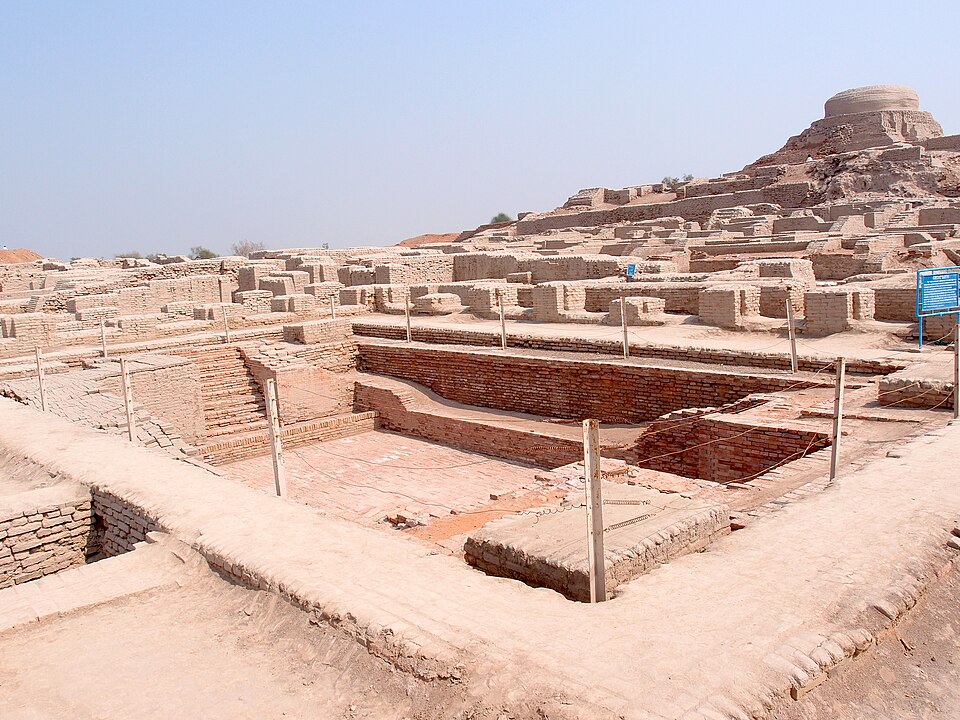
The Indus Valley civilization, also known as the Harappan civilization, flourished between approximately 2600 and 1900 BCE across a vast region encompassing much of modern Pakistan and northwestern India. Its cities, including Mohenjo-daro and Harappa, exhibited remarkably sophisticated urban planning, with grid-pattern streets, standardized brick construction, and elaborate drainage systems.1 By approximately 1900 BCE, however, the major urban centres were in decline. Geological and paleoclimatic evidence indicates that shifts in monsoon patterns and the drying or migration of river systems, particularly the Ghaggar-Hakra, disrupted the agricultural base that had sustained Harappan urbanism.2 The decline was not a sudden collapse but a gradual process of de-urbanization, during which populations dispersed into smaller, more rural settlements across the Gangetic plain and the Deccan plateau.1, 5

The Vedic period
The centuries following the Harappan decline witnessed the emergence of a new cultural complex centred on the composition and oral transmission of the Vedas, the oldest religious texts in the Sanskrit language. The Rigveda, the earliest of the four Vedas, is generally dated to between approximately 1500 and 1200 BCE and provides the principal textual evidence for the society, religion, and cosmology of this period.3 The Vedic peoples were predominantly pastoral and semi-nomadic, organized into tribal groupings called jana, and their economy rested on cattle-herding supplemented by agriculture, particularly after the adoption of iron tools around 1000 BCE enabled the clearance of the dense forests of the Gangetic plain.5
The later Vedic period, roughly 1000 to 600 BCE, saw the gradual transition from tribal pastoralism to settled agriculture and the formation of the first territorial states, known as the mahajanapadas (great kingdoms). This era also witnessed the crystallization of the varna system of social stratification, which genetic and textual evidence suggests became increasingly rigid over time.4 The philosophical ferment of the late Vedic age produced the Upanishads, speculative texts that explored concepts of the self (atman), ultimate reality (brahman), and the cycle of rebirth (samsara) that would become foundational to both Hinduism and Buddhism.3, 8
The Maurya Empire and Ashoka
The first large-scale political unification of the Indian subcontinent was achieved by the Maurya dynasty, founded by Chandragupta Maurya around 322 BCE following the power vacuum left by Alexander the Great's withdrawal from the northwest. At its height under Ashoka (r. c. 268–232 BCE), the Maurya Empire encompassed nearly the entire subcontinent, from Afghanistan in the northwest to Bengal in the east and the Deccan plateau in the south, making it one of the largest empires of the ancient world.6


Ashoka's reign is documented through a remarkable corpus of rock and pillar edicts inscribed across the empire, representing the earliest substantial body of written records in Indian history. These inscriptions, composed primarily in Prakrit using the Brahmi script, proclaim Ashoka's conversion to Buddhism following the devastating Kalinga War and articulate a policy of dhamma (righteous conduct) emphasizing non-violence, religious tolerance, and welfare for humans and animals alike.7 Ashoka dispatched Buddhist missionaries to Sri Lanka, Central Asia, and the Hellenistic kingdoms of the eastern Mediterranean, initiating the transformation of Buddhism from a regional Indian movement into a pan-Asian religion.6, 13 The capital at Pataliputra (near modern Patna in Bihar) was described by the Greek ambassador Megasthenes as a vast, fortified city with impressive timber architecture, and excavations at the Kumrahar site have uncovered the remains of a large pillared hall dating to the Mauryan period.14
The Gupta golden age
.jpg)
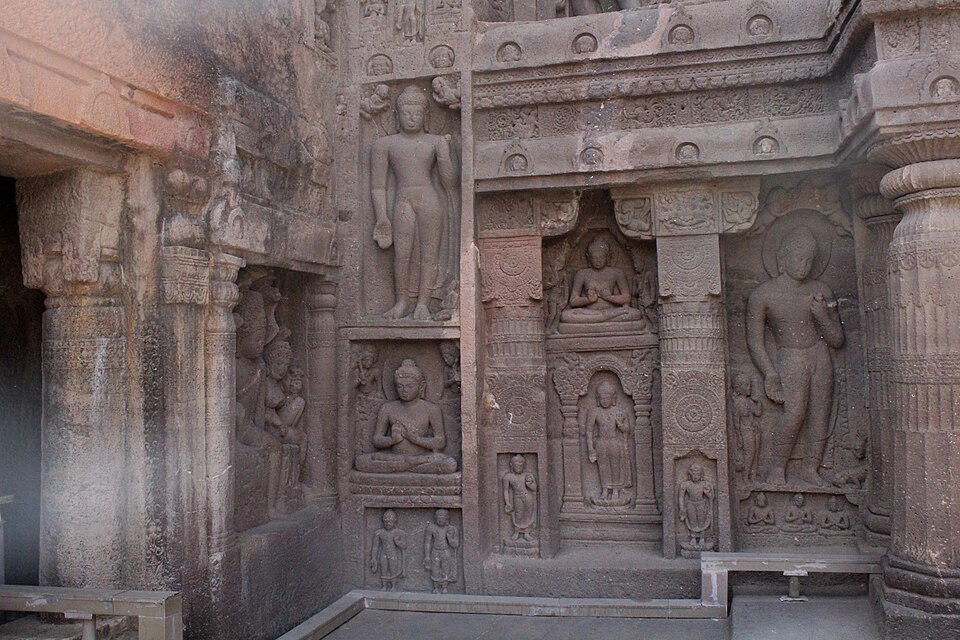
After several centuries of political fragmentation following the Maurya decline, the Gupta dynasty (c. 320–550 CE) reunified much of northern India and presided over a period widely regarded as a golden age of Indian culture and scholarship. Under rulers such as Chandragupta I, Samudragupta, and Chandragupta II, the empire fostered a flourishing of art, literature, science, and philosophy that set lasting standards for subsequent Indian civilization.10
The Gupta period witnessed major advances in mathematics, including the formal development of the decimal place-value numeral system and the concept of zero as a number, which would later be transmitted to the Islamic world and thence to Europe. The mathematician and astronomer Aryabhata (476–550 CE) composed the Aryabhatiya, in which he described the Earth's rotation on its axis, calculated pi to four decimal places, and presented solutions to quadratic equations.11 Indian astronomical traditions, codified in texts such as the Surya Siddhanta, developed sophisticated models of planetary motion that incorporated trigonometric functions including the sine, which was an Indian innovation later adopted by Arab and European astronomers.15
Key scientific contributions of ancient India11, 12, 15
| Contribution | Period | Significance |
|---|---|---|
| Decimal place-value system | c. 3rd–5th century CE | Foundation of modern numeral notation used worldwide |
| Zero as a numeral | c. 5th–7th century CE | Enabled positional arithmetic and algebraic computation |
| Sine function (jya) | c. 5th century CE | First tabulation of trigonometric sine values |
| Aryabhata's Earth rotation model | 499 CE | Correctly attributed diurnal motion to Earth's axial rotation |
| Wootz (crucible) steel | c. 6th century BCE onward | High-carbon steel prized across the ancient world |
| Delhi iron pillar | c. 402 CE | Corrosion-resistant iron demonstrating advanced forge welding |
Metallurgical achievements
Ancient Indian metallurgists achieved a level of skill that has attracted sustained scientific attention. The production of wootz steel, a high-carbon crucible steel, originated in southern India by at least the sixth century BCE and became the basis for the famed Damascus steel blades traded across the ancient and medieval worlds.8 The Delhi iron pillar, erected around 402 CE during the Gupta period, stands over seven metres tall and weighs more than six tonnes, yet has resisted significant rusting for over sixteen centuries. Metallurgical analysis has shown that the pillar's corrosion resistance derives from a protective passive film of iron hydrogen phosphate hydrate (misawite), formed as a consequence of the high phosphorus content of the iron produced by ancient Indian forge-welding techniques.12
The spread of Buddhism and Hinduism
The religious traditions that emerged in ancient India achieved a reach far beyond the subcontinent. Buddhism, founded in the fifth century BCE, received its most consequential institutional support under Ashoka, whose missionary activity established the faith in Sri Lanka, from where it later spread to Southeast Asia.6, 13 The Kushan Empire (c. first–third centuries CE) facilitated the transmission of Buddhism along the Silk Road into Central Asia and China, while maritime trade routes carried both Buddhist and Hindu cultural influences to the Indonesian archipelago, the Malay Peninsula, and mainland Southeast Asia.13
The great monastic university at Nalanda, founded in the fifth century CE in Bihar, functioned for approximately seven hundred years as the premier centre of Buddhist learning in Asia, attracting students from China, Korea, Tibet, and Southeast Asia. Archaeological excavations have revealed a campus of brick monasteries, temples, and lecture halls covering an area of roughly twelve hectares, attesting to an institution of remarkable scale and organizational sophistication.16
Urban planning and archaeological evidence
The archaeological record provides extensive material evidence for the sophistication of ancient Indian urbanism. Taxila, located in the Gandhara region of modern Pakistan, was excavated extensively by John Marshall in the early twentieth century and revealed three successive cities spanning from the sixth century BCE to the fifth century CE. The site preserves evidence of Hellenistic, Persian, and Indian cultural interactions, including Gandharan Buddhist art that blended Greek sculptural traditions with Indian iconography.9 The earliest city at Taxila, the Bhir Mound, exhibits irregular street plans typical of organic urban growth, while the later Sirkap, founded under Indo-Greek rule in the second century BCE, displays a Hippodamian grid plan reflecting Hellenistic urban design principles.9
At Pataliputra, excavations at Kumrahar uncovered the remains of a large hypostyle hall with stone column bases arranged in rows, interpreted as part of the Mauryan imperial palace complex described by Megasthenes. The use of polished stone columns reflects Achaemenid Persian architectural influence, consistent with the documented contacts between the Maurya court and the Hellenistic and Persian worlds.14, 6 Together with sites such as Sanchi, Sarnath, and Amaravati, these archaeological remains document a civilization that combined indigenous innovation with creative assimilation of external influences to produce distinctive traditions in architecture, art, and urban design that endured for centuries and spread across much of Asia.5, 8