Overview
- Human societies have grown from small egalitarian bands of a few dozen people into states governing millions, a trajectory archaeologists trace through material remains spanning at least 12,000 years.
- Social complexity emerges from the interaction of population growth, surplus production, warfare, trade, and ideology — no single cause is sufficient on its own.
- Modern evolutionary frameworks — dual inheritance theory, multilevel selection, and cultural niche construction — explain how culturally transmitted behaviors accumulate and reshape the environments that select for further complexity.
Among the most consequential developments in the natural history of Homo sapiens is the capacity to organize social life at scales far exceeding those of any other primate. Chimpanzee communities rarely exceed 150 individuals and are held together by direct personal relationships; modern nation-states govern hundreds of millions of people who cooperate across impersonal institutions, shared legal codes, and abstract symbols of collective identity. The transition between these poles was neither abrupt nor universal. It unfolded over roughly 12,000 years through a series of threshold crossings — from egalitarian foraging bands to sedentary villages, chiefdoms, and ultimately literate, bureaucratic states — each of which left distinctive signatures in the archaeological record.1, 5 Understanding how and why human societies scale up is among the central questions of anthropology, one that has attracted competing theoretical frameworks and a rich comparative dataset spanning every inhabited continent.
The neoevolutionary typology
The framework that dominated mid-twentieth-century anthropology was formalized by Elman Service in his 1962 volume Primitive Social Organization. Drawing on ethnographic data and evolutionary theory, Service proposed a four-stage sequence — bands, tribes, chiefdoms, and states — that described increasing levels of sociopolitical integration.1 Bands are small, typically mobile, and largely egalitarian. Leadership is informal and situational; decisions emerge by consensus rather than coercion. Tribes are somewhat larger and more sedentary but still lack permanent, formalized authority. Leadership roles exist but are not hereditary and carry no reliable ability to compel obedience.
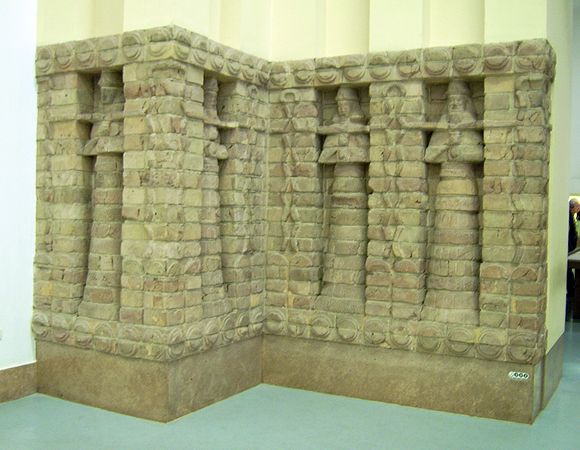

The chiefdom represents the first society with a permanent, hereditary leadership position supported by redistributive control over surplus goods. A chief occupies a distinct social rank not merely by personal achievement but by birth, and the institution persists across generations.1, 23 The state, at the apex of Service's sequence, is defined by a monopoly on legitimate force, a standing administrative apparatus, social stratification formalized in law, and territory governed by institution rather than kinship.
Morton Fried offered an influential critique of this scheme in his 1967 book The Evolution of Political Society. Fried objected primarily to the category of "tribe," which he argued was not an evolutionary stage at all but rather an artifact of contact with — and disruption by — more powerful, expansionist states.2 Many societies labeled "tribal" in the ethnographic literature were, he contended, fragmented remnants of previously more complex systems. Fried preferred a taxonomy organized around the principle of social inequality: egalitarian societies, rank societies (where ranked positions exist but do not control access to subsistence resources), stratified societies (where differential access to resources is institutionalized), and state societies. While Service's terminology remains in widespread use, Fried's critique introduced a persistent awareness that typologies risk obscuring variability within categories and the mechanisms that produce change between them.
Childe's urban revolution
Independent of and roughly contemporaneous with the neoevolutionary debate in American anthropology, the Australian archaeologist V. Gordon Childe proposed a set of empirical criteria by which the emergence of urban, state-level civilization could be recognized in the ground. Published in 1950 in an article titled "The Urban Revolution," Childe enumerated ten characteristics that he argued jointly distinguished the earliest cities from all preceding settlement types.3 These included large and dense population concentrations; the accumulation of a food surplus enabling full-time craft specialists; monumental public architecture; the development of writing; long-distance trade in raw materials; the emergence of a ruling class supported by tribute; the creation of arithmetic, geometry, and astronomy; and the replacement of kinship as the primary principle of social organization by residence and occupation.
Childe's criteria were derived primarily from Mesopotamian evidence but were intended as universal markers of a threshold in social organization. Subsequent archaeology has complicated the picture: not all early urban centers possessed writing, not all writing systems were associated with dense urbanism, and some large population agglomerations lack the hierarchical administrative signatures Childe associated with statehood.13 Nevertheless, Childe's framework endured because it directed archaeological attention toward a cluster of co-occurring institutional changes rather than any single diagnostic trait, and because it foregrounded the material conditions — especially surplus production — that make complexity possible.
The Natufian-to-Neolithic transition
The transition from mobile foraging to settled, food-producing life is not a single event but a process, and the Levantine Natufian culture (approximately 15,000 to 11,500 years before present) offers an exceptionally well-documented case study in its earliest stages. Natufian communities in the southern Levant — modern Israel, Jordan, and Syria — constructed semi-permanent stone structures, accumulated large quantities of wild cereal remains in purpose-built storage facilities, and maintained formal cemeteries, all before the domestication of any plant or animal species.9 The presence of cemeteries implies attachment to place and, in some sites, evidence of differential burial wealth suggests that inherited social rank was beginning to emerge even within a predominantly foraging economy.22
The intensification of wild plant harvesting during the Natufian period reflects a response to the combination of favorable climatic conditions during the Bølling-Allerød interstadial and the population growth that those conditions permitted. When the Younger Dryas cooling event (approximately 12,900 to 11,700 years ago) dramatically reduced the productivity of wild cereals across the region, communities already organized around sedentary cereal exploitation faced strong selective pressure to manage plant reproduction more directly — the proximate context within which deliberate cultivation and domestication began.9, 10 The Natufian-to-Neolithic transition thereby illustrates how environmental perturbation can accelerate social and economic reorganization in populations already positioned near a threshold of complexity.
Within the subsequent Pre-Pottery Neolithic A and B periods (approximately 10,200 to 8,500 BCE), settled villages with populations numbering in the hundreds to low thousands became widespread across the Fertile Crescent. The construction of large communal structures, the standardization of house forms, and the emergence of long-distance exchange networks in obsidian, marine shell, and greenstone all indicate that social integration was being achieved through means beyond immediate kinship ties.10
Complex chiefdoms: Cahokia and Chaco Canyon
The chiefdom level of organization is documented not only in the Old World agricultural hearths but also, vividly, in the pre-Columbian North American record. Two sites — Cahokia in the American Bottom of the central Mississippi Valley and Chaco Canyon in the San Juan Basin of New Mexico — illustrate the organizational complexity and inherent instability that characterize large-scale chiefdoms.
Cahokia, occupied most intensively between approximately 1050 and 1200 CE, is the largest pre-Columbian settlement north of Mexico. At its peak the site encompassed an estimated population of 10,000 to 20,000 people organized around a monumental core of more than 100 earthen mounds, the largest of which — Monks Mound — contains more fill material than the Great Pyramid of Giza.11
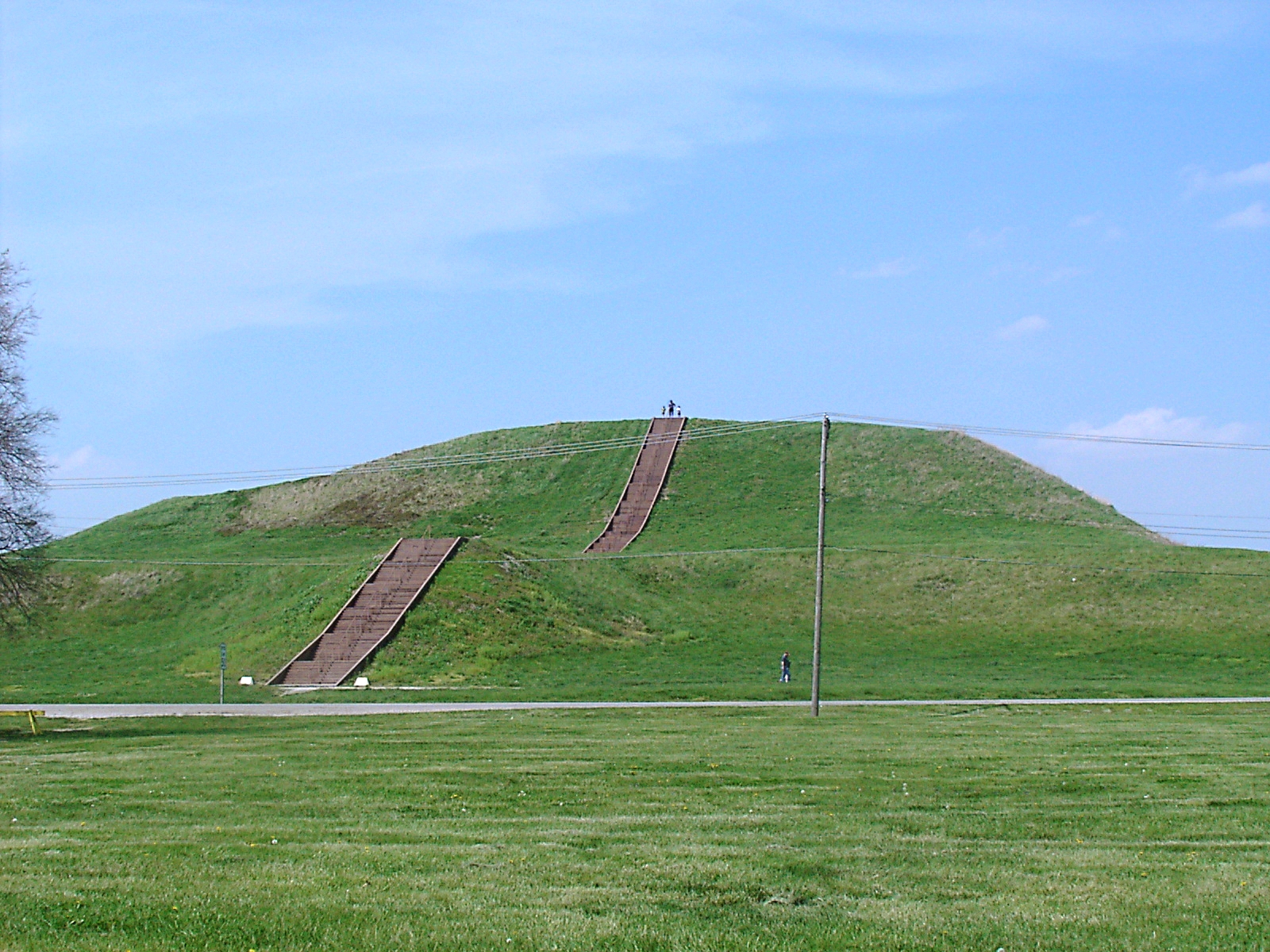

Excavations of the Mound 72 mortuary precinct reveal the sacrificial interment of hundreds of individuals, predominantly young women, alongside a paramount chief lavishly furnished with beaded capes constructed from tens of thousands of marine shell disc beads transported from the Gulf Coast. This depositional pattern is consistent with the concentrated, personalized authority and the ideological legitimation of inequality characteristic of complex chiefdoms.11 Cahokia's collapse by 1350 CE, apparently driven by some combination of resource depletion, climatic deterioration during the Little Ice Age, and internal political fragmentation, exemplifies the cyclical, boom-and-bust dynamics that are a recurring feature of chiefdom-level polities.
Chaco Canyon functioned between approximately 850 and 1150 CE as the organizational center of a regional system spanning some 60,000 square kilometers of the San Juan Basin. Eleven great houses — massive multi-storied masonry structures with hundreds of rooms each — were connected to outlying communities by a network of engineered roads, some of which extended more than 80 kilometers from the canyon center.12 The roads served no obvious utilitarian function given the absence of wheeled transport, suggesting they functioned primarily as symbols of political authority and as corridors for the movement of people, goods, and ritual information. The concentration of turquoise, macaws, and high-quality ceramics at canyon-center great houses is consistent with tribute flow toward a redistributive elite. Like Cahokia, the Chacoan system collapsed rapidly in the mid-twelfth century, plausibly in response to prolonged drought and a breakdown in the redistributive networks that sustained it.
The pristine states
Archaeologists and historians use the term "pristine states" — following Service's original formulation — to designate the handful of polities that developed administrative hierarchy and institutionalized inequality without any prior example to emulate or borrow from. The conventional list includes Mesopotamia (Sumer, approximately 3500 BCE), Egypt (approximately 3100 BCE), the Indus Valley civilization (approximately 2600 BCE), early China (Yellow River basin, approximately 2000–1700 BCE), Mesoamerica (Olmec and Classic Maya, approximately 1200 BCE–900 CE), and the Andean civilizations of coastal Peru (Caral, approximately 2600 BCE; later Tiwanaku, Wari, and Inca).13
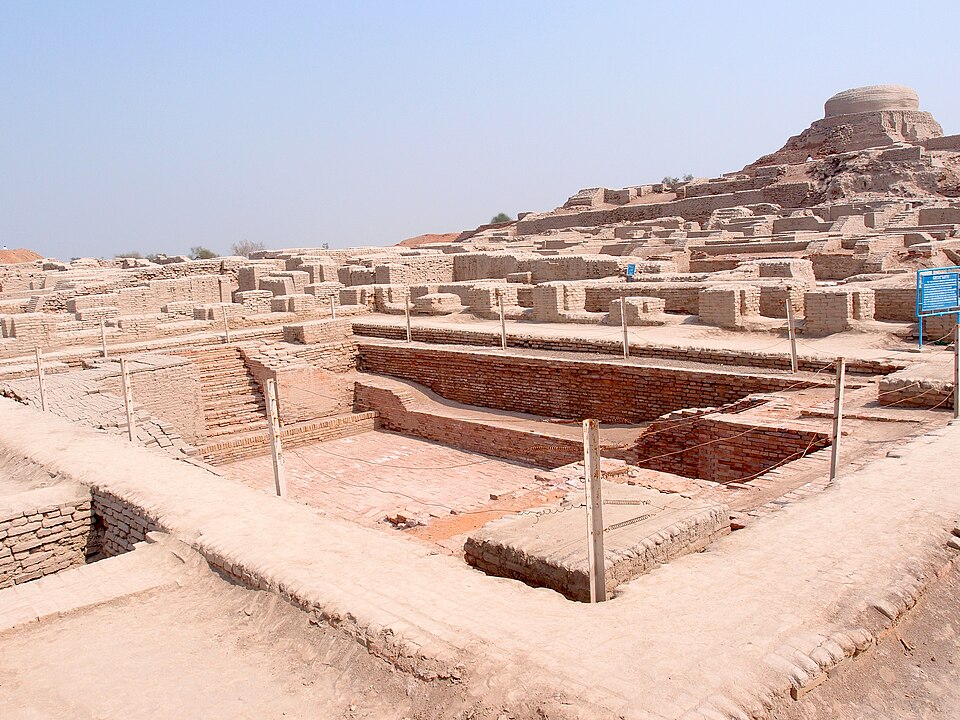
Mesopotamian urbanism, centered on cities such as Uruk, Ur, and Lagash, is the best-documented case. By the late fourth millennium BCE, Uruk had grown to cover more than 250 hectares and may have housed 40,000 to 80,000 inhabitants. The invention of writing in this context was inseparable from administrative necessity: the earliest cuneiform tablets from Uruk (approximately 3200 BCE) are not literary texts but accounting records documenting the receipt and disbursement of grain, textiles, and labor rations.13 The logistical requirements of managing a large urban population — rationing workers, tracking tribute, scheduling irrigation labor — appear to have driven the development of notation systems.
Ancient Egypt presents a contrasting trajectory. The unification of Upper and Lower Egypt under a single pharaoh around 3100 BCE involved political centralization along a linear river corridor rather than the multi-center urban competition characteristic of Sumer. The pharaonic state claimed divine authority for its ruler in a way that Mesopotamian kingship, where kings were servants of the gods rather than gods themselves, did not fully replicate.14 The ideological dimension of Egyptian statehood — expressed through monumental tomb and temple construction that mobilized tens of thousands of workers — illustrates Michael Mann's argument that ideological power is a distinct, irreducible source of social organization that cannot be reduced to economic or military coercion.
The Indus Valley civilization, centered on the cities of Mohenjo-daro and Harappa, offers a peculiarly egalitarian counterpoint: the absence of obvious royal tombs, palace complexes, or weapons caches in the archaeological record has led some researchers to propose that Indus political organization was more collective and less personalized than its Mesopotamian or Egyptian contemporaries, though the script remains undeciphered.15 The six independent cases of pristine state formation on separate continents constitute a powerful natural experiment demonstrating that social complexity of this scale emerges reliably under a specific set of material and demographic conditions, rather than being a culturally contingent accident.

Approximate dates and population estimates for the pristine states13, 14, 15, 16, 17, 18
| Civilization | Region | Approx. state formation | Peak urban population (est.) |
|---|---|---|---|
| Sumer / Uruk | Mesopotamia | 3500 BCE | 40,000 – 80,000 |
| Pharaonic Egypt | Nile Valley | 3100 BCE | 30,000 – 60,000 (Memphis) |
| Indus Valley | South Asia | 2600 BCE | 30,000 – 40,000 (Mohenjo-daro) |
| Early Chinese states | Yellow River basin | 2000–1700 BCE | 10,000 – 30,000 |
| Olmec / Classic Maya | Mesoamerica | 1200 BCE (Olmec) | 50,000 – 100,000 (Teotihuacan) |
| Caral / Andean states | Coastal Peru | 2600 BCE (Caral) | 15,000 – 40,000 |
Drivers of social complexity
Why do some societies become more complex while others remain stable at simpler organizational levels for millennia? The most influential single-cause theory was advanced by Robert Carneiro in a 1970 paper in Science. Carneiro's circumscription theory holds that states emerge specifically where agricultural populations are hemmed in by physical or social barriers — mountains, deserts, rival groups — that prevent defeated communities from fleeing conquest.4 Under these conditions, warfare between neighboring chiefdoms produces not the dispersal of losing groups but their subordination: the losers pay tribute, supply labor, and are eventually incorporated into a hierarchically organized polity. Carneiro tested this prediction against the distribution of early states worldwide and found strong support: the Nile Valley, coastal Peru, and the basin of Mexico are all environments where agricultural land is sharply bounded by non-arable terrain.
Carneiro's theory is elegant but has attracted persistent criticism for its inability to account for state formation in uncircumscribed environments such as the northern Chinese plains, and for its treatment of warfare as the primary driver to the exclusion of other mechanisms.5 Michael Mann's multivariate framework, developed in The Sources of Social Power (1986), identifies four distinct and irreducible sources of social organization: ideological power (the control of meaning and normative frameworks), economic power (the control of resource extraction and exchange), military power (the organized use of force), and political power (the territorial regulation of populations).5 Mann's argument is that no single source dominates in all historical cases; rather, complex societies emerge when these four power networks interact and reinforce one another in specific geographic and temporal settings.
Population growth and agricultural intensification are widely recognized as permissive conditions for complexity even when they are not its proximate cause. A larger population can support a greater division of labor, enabling the full-time specialization in administration, craft production, and ritual that characterize complex societies.25 At the same time, denser populations increase the frequency of conflict and the logistical demands of coordination, creating selection pressures for more centralized authority. Research on pre-Columbian settlement scaling by Ortman and colleagues demonstrated that population size and urban productivity in ancient societies follow the same superlinear scaling relationship observed in modern cities — suggesting that the organizational dynamics of urbanization are governed by broadly consistent principles across time and culture.25
Trade and long-distance exchange serve as both an economic driver and an integrative mechanism. Access to prestige goods from distant sources — copper, obsidian, lapis lazuli, exotic shells — allows emergent elites to distinguish themselves materially from commoners and to build political alliances through gift exchange. The control of trade routes and the monopolization of prestige goods are recurring strategies by which aspiring chiefs translate economic advantage into political authority, and the loss of control over these goods often precipitates the collapse of chiefdom-level polities.23
Relative contribution of complexity drivers across societal types4, 5, 23
Social stratification and inequality
The emergence of institutionalized social inequality — in which differential access to resources, status, and power is reproduced across generations — is arguably the single most consequential transformation in human social history. In egalitarian band societies, inequalities of skill, age, and prestige exist but are not heritable in any systematic way; mechanisms such as demand sharing, ridicule of boastful hunters, and the leveling of successful leaders all function to prevent the accumulation and transmission of advantage.2 The shift to rank societies begins when certain positions — lineage elder, ceremonial specialist, master craftsperson — accrue differential prestige that can be transmitted through descent, even in the absence of differential control over subsistence resources.
Stratification proper, in Fried's sense, emerges when certain social segments monopolize access to the means of subsistence — land, water, domesticated animals — and others must labor for or pay tribute to those who hold these resources. Archaeologically, this transition is recognizable in the divergence of burial assemblages: in egalitarian societies, mortuary variability reflects primarily age and sex differences; in stratified societies, it reflects a wealth gradient that maps onto social position.23 The appearance of high-status burials containing non-local prestige goods, weapons, and sacrificed individuals marks the crystallization of hereditary elite status in the archaeological record and is documented across the pristine states with remarkable consistency.
Peter Turchin's cliodynamic research, synthesizing comparative historical data from a global database of pre-industrial polities, found that intense inter-group competition — warfare above all — is the most consistent correlate of the expansion of large-scale cooperative institutions, including the norms and ideologies that enforce cooperation across ethnic and kinship boundaries.19 On this view, stratification is not merely the exploitation of commoners by elites but also, paradoxically, the price paid by commoners for the military coordination that enables survival against rival polities. The institutional framework that extracts surplus also organizes collective defense, a tradeoff that generates the evolutionary stability of stratified hierarchies even in the face of internal grievance.
Collective learning and the ratchet effect
A key distinction between human culture and the social learning observed in other animals is its cumulative character. Chimpanzees and several other species demonstrate social learning — the acquisition of behaviors by observation — but their cultural traditions do not accumulate over generations in a directional way. Human children, by contrast, not only copy adult behaviors but actively seek to understand the intentions behind those behaviors, enabling them to reproduce solutions more faithfully and to improve upon them.24 The psychologist Michael Tomasello described this as the "ratchet effect": each generation begins where the previous one left off, adding increments of improvement that are then locked in before the next cycle of transmission. This mechanism generates a directionality in technological and institutional change that has no close parallel in non-human animal culture.24
Experimental evidence for the ratchet effect in human social learning was provided by Caldwell and Millen in a 2008 study in which participants were asked to build paper planes or spaghetti towers in a transmission-chain experiment, with each generation able to observe and modify the products of the previous group.8 Performance improved significantly across generations in the human transmission chains, a pattern not observed in control conditions without social learning. The study confirmed that cumulative culture — the progressive refinement of solutions across generations — is a genuine empirical phenomenon and not merely a theoretical construct.
The sociologist David Christian, drawing on this framework in his concept of "collective learning," argues that the defining feature of human history is the ability to share information cumulatively across space and time, first through spoken language, then through writing, and ultimately through electronic media.7 On this account, the accelerating pace of social and technological change visible over the past 12,000 years reflects the exponential growth of the collective human information store rather than any change in individual cognitive capacity. Writing, in this framework, is not merely a record-keeping convenience but a phase transition in the rate at which cultural information can accumulate and be acted upon.
Dual inheritance theory and multilevel selection
The most rigorous evolutionary framework for understanding cultural change is dual inheritance theory (DIT), developed principally by Robert Boyd and Peter Richerson beginning with their 1985 book Culture and the Evolutionary Process.6 DIT holds that human behavior is shaped by two distinct but interacting inheritance systems: genetic inheritance, operating through natural selection on heritable variation in reproductive fitness, and cultural inheritance, operating through biased social learning. Cultural variants — beliefs, practices, technologies, institutional forms — are transmitted from individual to individual with variation and differential persistence, and they therefore undergo a process formally analogous to natural selection, though the mechanisms of transmission and the timescales involved differ fundamentally from genetic evolution.
A central contribution of DIT is the identification of transmission biases that systematically shape which cultural variants spread and which are lost. Conformist transmission — the tendency to adopt the most common variant in one's reference group — promotes within-group cultural uniformity and between-group differentiation, making group-level cultural differences stable enough to serve as units of selection.6, 7 Prestige bias — the tendency to preferentially copy high-status individuals — can accelerate the spread of adaptive cultural innovations but can also drive the adoption of costly signals of status that are individually maladaptive. Content biases favor the acquisition of beliefs that fit pre-existing cognitive templates, explaining why certain institutional forms — hierarchical authority, in-group/out-group distinctions, supernatural sanctions for rule violation — recur across independent cultural traditions.
Richerson and colleagues extended DIT to propose that cultural group selection — the differential survival and expansion of groups with more adaptive cultural norms — is a major force in the evolution of large-scale human cooperation.20 Groups with norms that enforce cooperation among non-relatives, suppress free-riding, and coordinate collective action outcompete groups lacking such norms, causing the institutional innovations that enable cooperation to spread through a population of competing groups. This multilevel selection framework has been applied to explain the emergence of moralizing religion, codified law, and generalized reciprocity as convergent solutions to the problem of maintaining cooperation at scales beyond the reach of personal reputation and kinship ties.
Closely related is the concept of cultural niche construction — the process by which culturally transmitted behaviors modify the selective environment faced by subsequent generations, both culturally and genetically.21 Agricultural practices, for instance, altered the distribution of pathogens, the dietary landscape, and the social structure of populations in ways that fed back to reshape both genetic and cultural evolution. Lactase persistence — the retention of the ability to digest milk sugar into adulthood, which is genetically derived but whose spread is explained only in populations that adopted dairying — is a paradigmatic example of gene-culture coevolution driven by cultural niche construction. More broadly, the construction of large-scale institutions — temples, irrigation systems, legal codes — modifies the selective environment for all subsequent institutional development, embedding each generation in a structured social niche built by its predecessors and thereby channeling the trajectory of future complexity.
References
The Sources of Social Power, Volume 1: A History of Power from the Beginning to AD 1760
The Chaco Meridian: One Thousand Years of Political and Religious Power in the Ancient Southwest