Overview
- Long-distance exchange of prestige goods such as obsidian, marine shells, and pigments can be traced back more than 30,000 years, demonstrating that prehistoric humans were connected across hundreds of kilometres long before the rise of cities or writing.
- By the Bronze Age a genuinely global web of exchange linked the British Isles, Scandinavia, the Mediterranean, Mesopotamia, the Indus Valley, and Central Asia through commodities including tin, lapis lazuli, amber, and copper, carried along land and sea routes whose complexity rivalled anything the ancient world produced politically.
- The Uluburun shipwreck (~1300 BCE), recovered off the Turkish coast, carried cargo traceable to at least seven distinct civilisations and stands as the single richest physical testament to how tightly the Late Bronze Age world was commercially integrated.
Trade is one of the oldest distinctly human behaviours. Long before the first cities rose along the Tigris and Euphrates, before writing was invented to keep accounts and before coinage existed to measure value, prehistoric people were moving desirable materials across hundreds — and sometimes thousands — of kilometres. The evidence is unambiguous: obsidian from Anatolian volcanoes ends up in Neolithic Jericho more than 800 kilometres away, marine shells from the Atlantic and Mediterranean coasts turn up in graves deep in continental Europe, and ochre pigments appear far outside their geological sources in African Middle Stone Age contexts.1, 4 These are not isolated curiosities. They reflect systematic exchange relationships that shaped social complexity, political hierarchy, craft specialisation, and ultimately the development of writing itself. Understanding ancient trade networks means understanding how the ancient world was actually connected — not as isolated civilisations in separate boxes, but as nodes in webs of exchange that spanned continents.
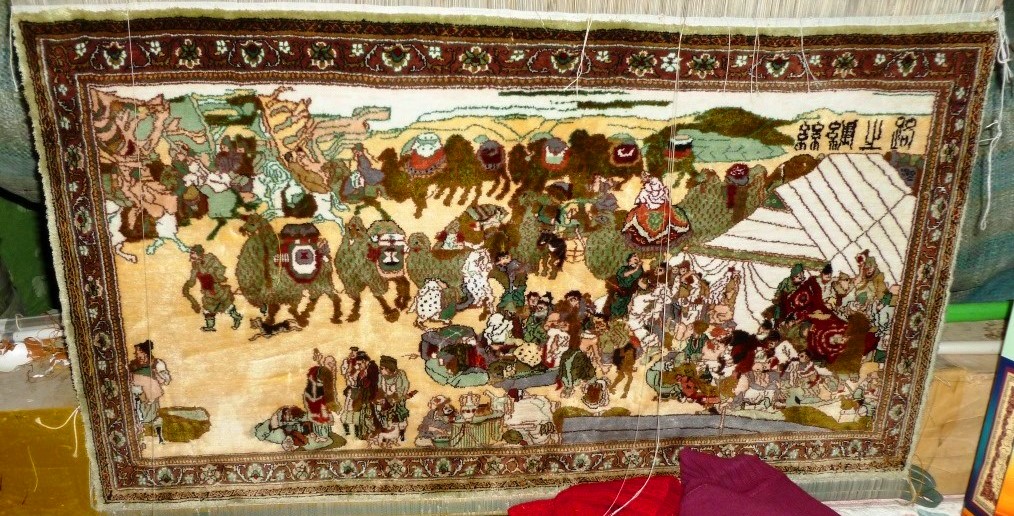

Paleolithic origins of long-distance exchange
The earliest secure evidence for long-distance exchange of non-local materials dates to the Upper Paleolithic, roughly 40,000–10,000 years ago. Marine shells, perforated as ornaments, have been recovered at inland sites hundreds of kilometres from the nearest coast at sites across Europe and the Levant, demonstrating that networks of contact — whether through direct travel, down-the-line exchange between neighbouring groups, or both — were moving objects over substantial distances by at least 30,000 BCE.4 Madeleine Vanhaeren and colleagues documented ornamental shell species at Upper Paleolithic sites in Germany, Poland, and Russia that could only have originated on Atlantic or Mediterranean coastlines, implying either extraordinary mobility or multi-stage exchange chains linking communities separated by weeks of travel.4
These Paleolithic exchange networks almost certainly moved information as well as objects. A shell pendant or a piece of exotic stone carried far from its origin carries social meaning: it signals connection, obligation, and the existence of relationships that extend beyond the local group. Anthropologists who study contemporary hunter-gatherer societies have long noted that exchange networks function as social insurance, creating ties of reciprocity that can be called upon in times of scarcity.18 The Paleolithic evidence suggests this dynamic is ancient indeed.
The transition to the Neolithic brought more intensive and more archaeologically visible exchange. As communities began to settle and populations grew, the demand for certain high-quality raw materials — above all volcanic glass — intensified, giving rise to exchange systems whose scale and organisation marked a genuine step change from anything that had come before.
Obsidian networks and the archaeology of sourcing
Obsidian — volcanic glass formed when silica-rich lava cools rapidly — produces the sharpest cutting edges achievable with stone tool technology, far superior to flint or chert.1 It fractures with a conchoidal break that skilled knappers could exploit to produce blades thinner and sharper than surgical steel. This made it among the most sought-after raw materials of the prehistoric world, and because volcanic sources are geologically specific and widely separated, obsidian is an ideal tracer of ancient exchange.
Colin Renfrew and J. R. Cann’s pioneering work in the 1960s established that the chemical composition of obsidian varies distinctively by volcanic source, allowing individual artefacts to be matched to their geological origin using X-ray fluorescence (XRF) spectrometry and neutron activation analysis.2 Each volcanic deposit has a unique geochemical fingerprint — a characteristic ratio of trace elements including barium, zirconium, strontium, and rare earth elements — that survives the knapping process intact. A blade found at a settlement can therefore be sourced to a specific volcano even if that volcano is a thousand kilometres away. This method, since refined and extended to hundreds of sources worldwide, transformed the archaeology of prehistoric exchange.
The results were striking. Obsidian from the volcanoes of central Anatolia — principally Çöltepe and Göllüdağ in Cappadocia — was reaching sites in the Levant by the Epipalaeolithic and was present at Neolithic Jericho in the Jordan Valley, more than 800 kilometres from its source, by approximately 9,000 BCE.1, 3 At the Neolithic site of Çatalhöyük in central Anatolia, obsidian from local sources was used alongside material from sources hundreds of kilometres distant, suggesting that even communities near major deposits participated in wider exchange systems rather than simply consuming what was locally available.3 In the Aegean, Melos obsidian — from an island source accessible only by sea — was reaching mainland Greek sites by at least the tenth millennium BCE, implying organised maritime exchange at a time when farming had barely begun in Europe.1 The obsidian evidence alone demonstrates that Neolithic exchange was not casual or occasional but systematic, directional, and operating across scales that demand some form of social infrastructure to sustain.
Selected obsidian sources and their exchange reach1, 2, 3
| Source | Location | Maximum documented reach | Approximate date of use |
|---|---|---|---|
| Çöltepe / Göllüdağ | Central Anatolia | Jericho, Jordan Valley (~800 km) | ~9,000 BCE |
| Melos | Aegean Sea (island) | Mainland Greece | ~10,000 BCE |
| Lipari | Tyrrhenian Sea (island) | Northern Italy, southern France | ~6,000–3,000 BCE |
| Mount Ararat / Lake Van | Eastern Anatolia / Armenia | Mesopotamia, the Levant | ~8,000–4,000 BCE |
Bronze Age commodity networks: lapis, tin, and amber
The Bronze Age (roughly 3300–1200 BCE across the Old World) saw the emergence of the first truly intercontinental exchange systems, driven by the demand for prestige materials and, crucially, for the raw materials required to make bronze itself. Three commodities in particular — lapis lazuli, tin, and amber — illuminate the extraordinary distances over which Bronze Age trade operated.
Lapis lazuli is a deep-blue metamorphic rock prized throughout the ancient Near East and Egypt as a luxury material for jewellery, inlay work, and ground pigment (ultramarine blue). Its ancient sources are limited: the principal deposit exploitable in antiquity was the Sar-e-Sang mines in the Badakhshan region of what is now northeastern Afghanistan.5 Geological identification confirms that virtually all lapis lazuli found in Bronze Age Mesopotamian, Levantine, and Egyptian contexts originated from this single source, making every piece of lapis lazuli found from Ur to Luxor the product of a supply chain stretching more than 3,000 kilometres.5, 6 Lapis appears in royal graves at Ur dating to around 2500 BCE, in Egyptian contexts from the Predynastic period onward, and at sites throughout the Indus Valley civilisation, whose cities sat at a more convenient position between the Afghan mines and the western markets.6, 13 The lapis trade was almost certainly controlled by intermediaries at multiple points along its route, making it one of the earliest documented examples of what later historians would call a commodity supply chain.
Tin posed a different but equally critical sourcing problem. Bronze — the defining material of the age — is an alloy of copper and tin, and while copper deposits are found across the Old World, tin is geologically rare and unevenly distributed.8 The locations of the tin sources that supplied Bronze Age Mediterranean and Near Eastern metallurgy have been debated for over a century. The Erzgebirge range on the German-Czech border, deposits in Brittany, Spain, and Sardinia, and the famous tin mines of Cornwall in southwestern Britain have all been proposed as major suppliers.9, 17 Recent isotopic work using tin’s stable isotope ratios has begun to resolve the question: analyses by Bray and colleagues suggest that multiple sources contributed to different regional markets at different periods, with Central European tin dominating the eastern Mediterranean early in the Bronze Age while British and Iberian sources grew in importance later.17 The political and logistical implications are significant: a smelter casting bronze weapons in Mesopotamia or Egypt depended on ore transported across thousands of kilometres through multiple exchange hands, creating strategic vulnerabilities that may partly explain the diplomatic anxieties visible in Late Bronze Age royal correspondence.
Baltic amber — fossilised resin from now-extinct pine forests that once covered much of northern Europe — was already reaching the Mediterranean by the mid-Bronze Age, roughly 1600–1200 BCE.7 Amber from the Baltic coast (modern Poland, Lithuania, and the Jutland Peninsula of Denmark) was traced by ancient traders along routes running south through central Europe to the Adriatic and the Mediterranean proper. Chemical analysis using infrared spectroscopy allows geologists to distinguish Baltic amber (succinite) from other fossil resins, and Baltic succinite has been identified in Bronze Age graves in Greece, Italy, and the eastern Mediterranean far from any northern European source.7 The amber found in the shaft graves at Mycenae, some of the richest Bronze Age burials known, includes pieces that trace back to the Baltic coast more than 2,500 kilometres away, carried through a series of intermediary exchange points across the European continent.7
Mesopotamian networks: Dilmun, Magan, and Meluhha
The textual record of ancient trade begins in earnest with the cuneiform archives of Mesopotamia, which document commercial relationships reaching far beyond the alluvial plains of the Tigris and Euphrates. As early as the Ur III period (c. 2112–2004 BCE), Mesopotamian merchants were importing copper, carnelian, and timber from named trading partners designated in the texts as Dilmun, Magan, and Meluhha — three place-names that correspond, with reasonable scholarly consensus, to the island of Bahrain and the adjacent Arabian coast, Oman and the Makran coast, and the Indus Valley civilisation respectively.12
Dilmun occupied a pivotal geographic position as a re-export hub at the head of the Persian Gulf, intermediating between the copper mines of Magan and the markets of southern Mesopotamia. Texts from the period of Ur III king Shulgi record vast quantities of copper arriving at Ur from Magan via Dilmun, while luxury goods — carnelian beads, etched carnelian in characteristic Indus styles, ivory, and shell objects identifiable as Indus products — appear in Mesopotamian archaeological contexts that can only be explained by direct or indirect contact with the Indus Valley civilisation.13 Indus seals and weights have been found at Gulf sites, and the uniformity of the Indus weight system across excavated sites from Mohenjo-daro to Bahrain suggests the existence of shared commercial conventions across this entire network.13 The Mesopotamian trade route to Meluhha was therefore among the longest commercial corridors of the ancient world, connecting the cities of Sumer with industrial centres in modern Pakistan and India through a relay of Gulf ports.12
The administrative infrastructure required to manage such trade — accounting, contracts, standardised weights, letters of credit — was among the primary drivers of Mesopotamian writing. The earliest cuneiform tablets, dating to around 3200 BCE at Uruk, are almost exclusively administrative documents recording commodities, quantities, and transactions.16 Hans Nissen, Peter Damerow, and Robert Englund’s analysis of the Uruk administrative archive demonstrated that the written record was created not to preserve literature or history but to manage the complexity of an economy in which goods moved over distances and through multiple hands, requiring records that could outlast the memories of the clerks who made them.16 Trade, in other words, was a direct catalyst for the invention of writing.
Egypt and Punt: state-sponsored long-distance expeditions
While Mesopotamian trade operated largely through private merchants and palace redistribution networks, Egyptian long-distance commerce included a distinctive element of state-sponsored expedition. The land of Punt — a trading partner from whom Egypt imported frankincense, myrrh, ebony, ivory, live animals, and gold — was reached by Red Sea voyages whose organisation required royal logistics and whose results were thought significant enough to record in monumental temple reliefs.14
The precise location of Punt has been debated since Egyptologists first identified the texts describing it. Kitchen’s comprehensive analysis concluded that Punt most likely corresponded to the coastal regions of modern Eritrea, Djibouti, northern Somalia, and possibly parts of southern Arabia, with the trade route running from Egyptian Red Sea ports such as Mersa Gawasis down the African coast or across the strait of Bab-el-Mandeb.14 The most detailed depiction of a Punt expedition is that of Queen Hatshepsut at Deir el-Bahri, dating to approximately 1470 BCE, which shows Egyptian ships arriving at a settlement built on stilts over water, exchanging manufactured goods and weapons for large quantities of frankincense trees, myrrh resin, ebony logs, and live animals including baboons and leopards.14 The reliefs make clear that this was not a raid but a commercial exchange: Egyptian envoys presented gifts and received commodities in a formalised diplomatic and commercial transaction.
The Punt trade illustrates a feature common to many ancient prestige commodity networks: the commodities involved were not merely economically valuable but ideologically central. Frankincense and myrrh were essential to Egyptian temple ritual, making their reliable supply a matter of religious and political concern that justified significant state investment in the infrastructure of long-distance procurement.
The Uluburun shipwreck and Late Bronze Age globalisation
No single discovery has illuminated the complexity of Late Bronze Age trade more vividly than the Uluburun shipwreck, found off the southwestern coast of Turkey near the town of Kaš and dated by dendrochronology and cargo context to approximately 1305–1295 BCE.10 Excavated by Cemal Pulak and the Institute of Nautical Archaeology between 1984 and 1994, the wreck yielded one of the most extraordinary cargo assemblages in the history of maritime archaeology, and its provenance analysis transformed scholarly understanding of how tightly the Late Bronze Age world was commercially integrated.
The ship was carrying ten tonnes of Cypriot copper in the form of 354 oxhide ingots — so named for their distinctive four-handled shape designed to be carried over the back of a donkey — plus roughly one tonne of tin ingots in the same form, the two metals in almost exactly the right ratio (10:1) to alloy into bronze.10 This alone constituted an enormous capital investment. But the rest of the cargo was equally revealing: 149 Canaanite amphorae containing terebinth resin (probably used for incense and preservatives); a tonne of glass ingots in cobalt blue, turquoise, and lavender (chemically identical to glass found in Egyptian and Canaanite contexts); ebony logs from sub-Saharan Africa; ivory in the form of both elephant and hippopotamus tusks; and raw gold in various forms including jewellery, ornaments, and a scarab bearing the cartouche of Nefertiti.10, 11 Personal effects of the crew and passengers included Canaanite, Egyptian, Cypriot, Mycenaean Greek, Kassite Babylonian, Assyrian, and possibly Nubian objects, suggesting a crew drawn from multiple cultures or a ship that had made multiple port calls before sinking.10
Pulak’s analysis of the cargo concluded that the ship was most likely a Canaanite vessel making a commercial voyage in the eastern Mediterranean, perhaps as part of the network of palatial exchange that connected the royal courts of the Late Bronze Age.10 The Amarna Letters — the diplomatic archive exchanged between Pharaoh Akhenaten and the kings of Cyprus, Ugarit, Babylon, and the Hittites — frequently discuss the exchange of precisely the kinds of luxury goods found on the Uluburun ship, framed as royal gifts but functionally indistinguishable from commercial trade.10 The Uluburun wreck is thus a material instantiation of the world described in those clay tablets: a world in which the courts of Egypt, Cyprus, the Levant, Anatolia, and Mesopotamia were bound together by flows of raw materials and prestige objects moving through a common maritime network.
Selected cargo origins from the Uluburun shipwreck10, 11
| Commodity | Probable origin | Quantity / notes |
|---|---|---|
| Copper oxhide ingots | Cyprus | 354 ingots (~10 tonnes) |
| Tin ingots | Uncertain (possibly Central Asia or Europe) | ~1 tonne |
| Glass ingots | Egypt / Canaan | 175 ingots in three colours |
| Terebinth resin (amphorae) | Canaan / Levant | 149 Canaanite amphorae |
| Ebony logs | Sub-Saharan Africa (via Egypt) | Multiple large logs |
| Elephant & hippo ivory | Africa and Syria | Tusks and worked pieces |
| Gold jewellery and a scarab | Egypt | Scarab of Nefertiti |
| Mycenaean pottery | Aegean Greece | Multiple vessels |
The incense trade: Arabia Felix to the Mediterranean
Few commodities in the ancient world commanded a higher value relative to weight than frankincense and myrrh, the aromatic resins harvested from trees (Boswellia and Commiphora species) that grew in a narrow climatic zone spanning southern Arabia, the Horn of Africa, and the Dhofar region of Oman.15 Their demand was driven primarily by religion: Mesopotamian, Egyptian, Jewish, and later Greek and Roman ritual required the burning of incense on a massive scale, and the ancient world’s appetite for these commodities sustained a sophisticated overland trade route that Nigel Groom documented as the Arabian Incense Road, running from the production zones of Yemen and Oman northward through the Hejaz and the Negev to Mediterranean ports at Gaza and Rhinocolura.15
The Nabataean kingdom, with its extraordinary carved sandstone capital at Petra in modern Jordan, grew wealthy as the principal broker of the incense trade during the last centuries BCE and the first two centuries CE.15 Camel caravans carrying sealed sacks of resin moved northward in stages, resting at a chain of way stations whose remains have been identified archaeologically across the Hejaz and the Negev. The scale was enormous: the Roman writer Pliny the Elder complained in the first century CE that incense trade was draining the Roman Empire of gold at the rate of 100 million sesterces annually flowing to Arabia and India, an early and unusually explicit ancient complaint about a trade balance deficit.15 The frankincense and myrrh trade illustrates how the religious practices of ancient civilisations could create demand structures that organised entire economies and landscapes over thousands of kilometres.
Trade, social complexity, and the architecture of the ancient world
The evidence reviewed here supports a conclusion that is now largely uncontroversial among archaeologists but still underappreciated in popular accounts of ancient history: the ancient world was not a collection of isolated civilisations stumbling toward modernity in parallel. From the Upper Paleolithic onward, human societies were connected across vast distances by exchange networks that moved not just goods but ideas, techniques, biological organisms, and people. The obsidian networks of the Neolithic, the Bronze Age commodity chains, the Mesopotamian Gulf trade, and the incense road were not exceptional curiosities — they were the normal operating environment of ancient social life.1, 18
Long-distance trade consistently appears as a driver of social complexity rather than merely a consequence of it. The demand for non-local materials — whether obsidian, metal, incense, or lapis — created incentives for specialised production, the accumulation of surplus, the development of standardised measures, and the elaboration of administrative systems capable of tracking goods over space and time.16, 19 Guillermo Algaze’s Uruk World System hypothesis proposes that the explosive growth of the Uruk polity in fourth-millennium Mesopotamia was directly fuelled by its position as the dominant node in a regional exchange network stretching into Anatolia, Syria, and Iran, with Uruk-affiliated colonies or trading posts established at strategic points along the routes to raw material sources.19 Whether or not one accepts every element of the Uruk World System model, the underlying point is well supported: the rise of the first urban civilisations was inseparable from their ability to mobilise and control long-distance exchange.
The relationship between trade and writing is particularly direct. As already noted, the earliest cuneiform tablets are commercial records, and the same pattern appears independently in early Egyptian hieroglyphic administration and in the undeciphered Indus script, which occurs most frequently on small carved seals almost certainly used to mark ownership of traded goods.16 Writing may have emerged independently in several regions, but in each case its earliest attested function is the administrative management of an economy in which goods, labour, and obligations needed to be tracked across the limits of individual memory. Exchange created the conditions that made writing useful.
The collapse of the Late Bronze Age exchange network around 1200 BCE — when the Hittite Empire fell, Ugarit burned, Mycenae was abandoned, and Egypt retrenched — illustrates the same point in reverse. The disruption of the interconnected trading world that the Uluburun cargo represents sent shockwaves through every society that depended on it. Bronze production declined sharply in regions that could no longer obtain tin; luxury industries contracted; palace administrations that had justified their existence partly through their control of prestige exchange collapsed or contracted.8 The Dark Age that followed in the eastern Mediterranean was not simply political but commercial and informational: the networks through which materials, techniques, and ideas had circulated were severed, and their reconstruction on new terms — centered on iron rather than bronze, on alphabetic script rather than cuneiform, on the Phoenician merchant rather than the palace redistribution system — took centuries.8 The story of ancient trade networks is ultimately the story of how human civilisation was built not in isolation but through connection.
References
Dilmun, Magan and Meluhha: the bronze age trade network of the Persian Gulf and Indian Ocean