Overview
- Between roughly 12,000 and 5,000 years ago, human societies across at least eight independent regions independently invented agriculture, ending more than 200,000 years of hunting and gathering and permanently reshaping the human species and the planet.
- The transition was driven by a confluence of factors including the end-of-Pleistocene climate shift, population pressure, and possibly the social demands of ritual life, as suggested by the sanctuary at Göbekli Tepe predating agriculture in its region.
- Agriculture brought dramatic population growth and the foundations of civilization, but also shorter average stature, new infectious diseases, dental decay, and the earliest forms of wealth-based social stratification.
Approximately 12,000 years ago, in the closing centuries of the Pleistocene epoch, human societies inhabiting different corners of the globe began, largely independently, to cultivate plants and tend animals rather than relying exclusively on wild resources. This transition — from millennia of mobile hunting and gathering to a new way of life organized around domesticated species and permanent settlements — stands as one of the most consequential transformations in the entire history of Homo sapiens. It restructured human demography, ecology, health, social organization, and ultimately made possible every urban civilization that followed.1 The scale of the change was so profound that the Australian archaeologist Vere Gordon Childe coined the term "Neolithic revolution" in 1936 to convey that the transition from foraging to farming was not a slow drift but a structural rupture — a genuine revolution in the human condition.2
Childe and the concept of a revolution
V. Gordon Childe introduced the phrase "Neolithic revolution" in his 1936 book Man Makes Himself to describe what he saw as an abrupt and world-historical shift in human subsistence.2 Childe was working primarily from Near Eastern evidence and framed the transition as humanity's first great leap from complete dependence on nature toward active control of food production. He paired the concept with what he called the "urban revolution" of early cities, arguing that agriculture was the prerequisite for civilization itself. While subsequent research has shown that the transition was neither as sudden nor as geographically confined as Childe imagined, his insight that the agricultural transformation deserved to be understood as a category-level event in human prehistory has endured as a foundational idea in archaeology and anthropology.1, 2
The term "Neolithic" (from the Greek neos, new, and lithos, stone) originally described a stage of polished stone tool technology. In practice, the label has come to denote the broader cultural package associated with early farming: ground stone tools, pottery, permanent or semi-permanent architecture, and above all the domestication of plants and animals. Not all of these elements appear simultaneously in every region, and the sequence in which they emerge varies considerably across the independent centers of agricultural origin identified by modern research.1
Climate change and the Younger Dryas
To understand why agriculture arose when it did, one must begin with climate. For most of the Pleistocene — roughly the last two and a half million years — Earth's climate oscillated through glacial and interglacial cycles. Large parts of the Northern Hemisphere were covered by ice sheets, and the resulting cold and dry conditions favored sparse, mobile human populations.4 By around 15,000 years before present (BP), warming had begun in earnest, and human populations in parts of the Levant and elsewhere began experimenting with intensive exploitation of wild cereals, legumes, and game animals.
This tentative progress toward settled life was interrupted by a dramatic and abrupt cold reversal known as the Younger Dryas, which lasted from approximately 12,900 to 11,700 BP. The Younger Dryas plunged temperatures back toward near-glacial conditions over much of the Northern Hemisphere and sharply reduced the productivity of wild plant communities across the Near East.4 Archaeological evidence indicates that Natufian villages — semi-sedentary settlements whose inhabitants had been harvesting wild grasses for centuries — contracted in size and in some cases were abandoned. When the Younger Dryas ended and conditions warmed rapidly, human populations that had been surviving under stress found themselves in a dramatically richer environment, and it is in this context that the deliberate cultivation and selection of wild plants appears to have accelerated into full domestication.3, 4
The Natufian culture and the pre-pottery Neolithic
The Natufian culture, which flourished in the Levant from roughly 14,500 to 11,500 BP, occupies a pivotal position in the story of agricultural origins. Natufian communities were among the first anywhere in the world to build substantial stone architecture and to live in villages year-round — or close to it — without yet practicing agriculture.3 Their settlements, such as Ain Mallaha (Eynan) in what is now northern Israel, contain the remains of circular stone houses, communal storage facilities, and elaborate burials that hint at emerging social complexity and attachment to place. Natufian people were accomplished hunters and harvesters of wild cereals, using flint-bladed sickles whose use-wear patterns closely resemble those of later farming communities.3
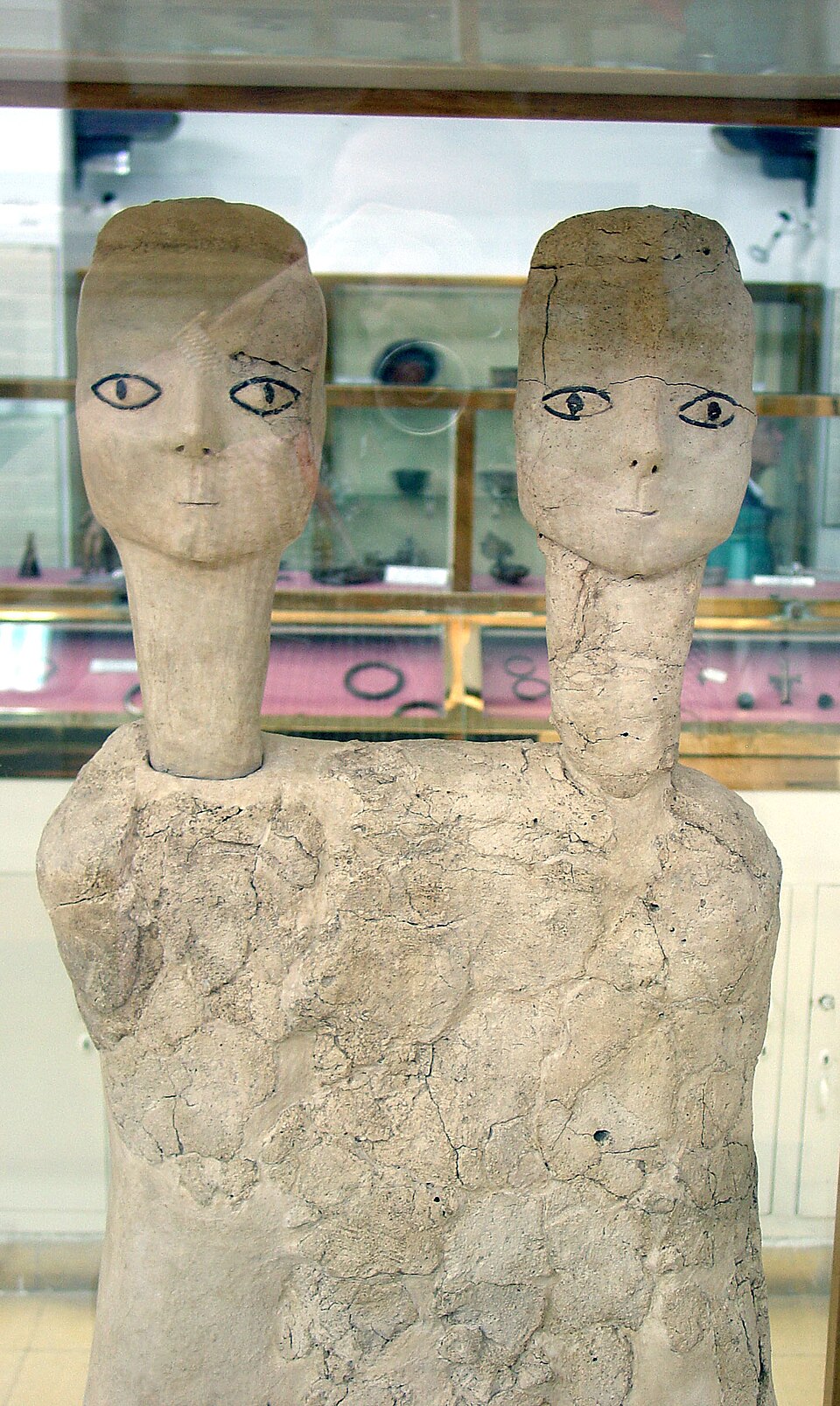
The post-Younger-Dryas world gave rise to what archaeologists call the Pre-Pottery Neolithic A (PPNA) and Pre-Pottery Neolithic B (PPNB) phases, dating from roughly 10,500 to 8,700 BP. During this period — named for the fact that pottery had not yet been invented, even as farming was emerging — sites across the Fertile Crescent show the earliest unambiguous evidence of plant domestication and the beginning of animal herding.1, 8 The PPNB, in particular, is remarkable for the scale and sophistication of its settlements. Ain Ghazal in Jordan, one of the largest PPNB sites known, may have housed several thousand people by 7,000 BP and contains extraordinary plaster statues — among the oldest large-scale human sculptures ever found — suggesting a rich ceremonial life alongside the practical demands of early farming.25

Göbekli Tepe and the ritual hypothesis
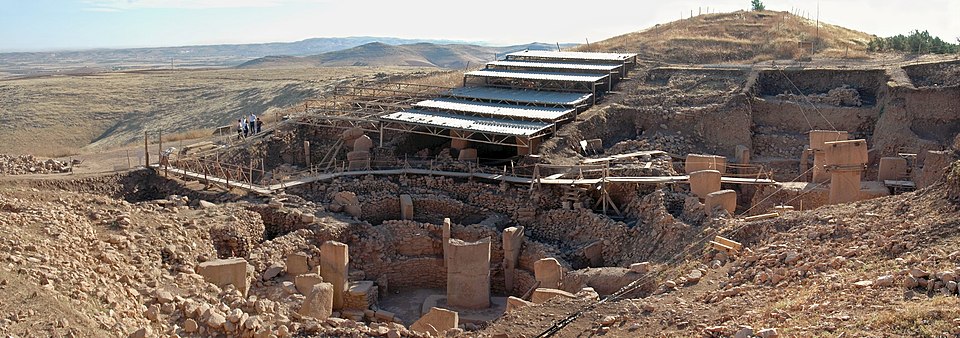

Perhaps no single site has done more to complicate the conventional narrative of agricultural origins than Göbekli Tepe, a hilltop sanctuary in southeastern Turkey excavated since the 1990s by the German archaeologist Klaus Schmidt. The site consists of a series of large circular enclosures whose walls are set with massive T-shaped limestone pillars — some standing more than five meters tall and weighing up to ten tonnes — elaborately carved with images of foxes, vultures, snakes, aurochs, and abstract symbols.5, 6 Radiocarbon dating of the oldest layers places their construction at approximately 11,600 BP, making Göbekli Tepe contemporaneous with the very end of the Natufian period and the very beginning of agriculture in the region — and possibly predating the appearance of domesticated cereals in the immediate vicinity by a millennium or more.6
The implications are significant. The construction of Göbekli Tepe required the sustained coordination of hundreds of workers over long periods — an organizational achievement that standard models assumed would require agriculture to support. Yet the people who built it appear to have been hunter-gatherers, or at most early experimenters with cultivation.5, 6 Schmidt and others proposed that the site's function as a regional ritual center may itself have created the demographic and logistical pressures that drove communities to intensify food production. In this view, the symbolic and ceremonial needs of society were not a consequence of agriculture but may have been among its causes — a striking inversion of the conventional sequence.25 While Göbekli Tepe remains incompletely excavated and interpreted, it has firmly established that the cognitive and social preconditions for large-scale organized labor preceded agriculture, rather than flowing from it.
The Fertile Crescent founder crops and animal domestication
The best-documented center of agricultural origin is the Fertile Crescent, the arc of productive land stretching from the Jordan Valley through the piedmont of the Taurus and Zagros mountains into northern Mesopotamia. It was here that what botanist Daniel Zohary identified as the "founder crops" of Old World agriculture were first brought under cultivation.7, 14 These eight founding crops — einkorn wheat (Triticum monococcum), emmer wheat (Triticum turgidum), barley (Hordeum vulgare), lentil (Lens culinaris), pea (Pisum sativum), bitter vetch (Vicia ervilia), chickpea (Cicer arietinum), and flax (Linum usitatissimum) — formed the dietary and agricultural foundation of early Near Eastern civilization.7, 14
Domestication in plant species is marked by a characteristic suite of morphological changes driven by unconscious and later deliberate human selection. Wild cereals disperse their seeds by shattering — the rachis, or seed head, breaks apart at maturity. Domesticated varieties carry a mutation that produces a tough, non-shattering rachis, holding seeds in place for human harvesting. The progressive shift from shattering to non-shattering rachis types is archaeobotanically detectable and dates the onset of einkorn wheat cultivation to the foothills of the Karacadag mountains of southeastern Turkey around 10,500 BP, with barley domesticated in the Jordan Valley at roughly similar times.14
Animal domestication followed a broadly parallel chronology. Sheep (Ovis aries) and goats (Capra hircus) were the first large mammals to be domesticated in the Near East, with genetic and zooarchaeological evidence pointing to origin events in the Zagros mountains of Iran and adjacent areas around 10,000 to 9,000 BP.13 Cattle (Bos taurus) were independently domesticated from wild aurochs (Bos primigenius) in the Near East and possibly separately in the Indian subcontinent by around 8,000 BP. Pigs (Sus scrofa) were domesticated in multiple locations, including the Near East and China, at broadly similar times.13 The domestication of large animals provided not only meat and hides but traction power, secondary products such as milk and wool, and a capacity to store and transport living calories — advantages that profoundly amplified the productive potential of early farming communities.8
Independent centers of agricultural origin
One of the most important findings of twentieth-century archaeology and archaeobotany is that agriculture was not a single invention that spread from a single source.
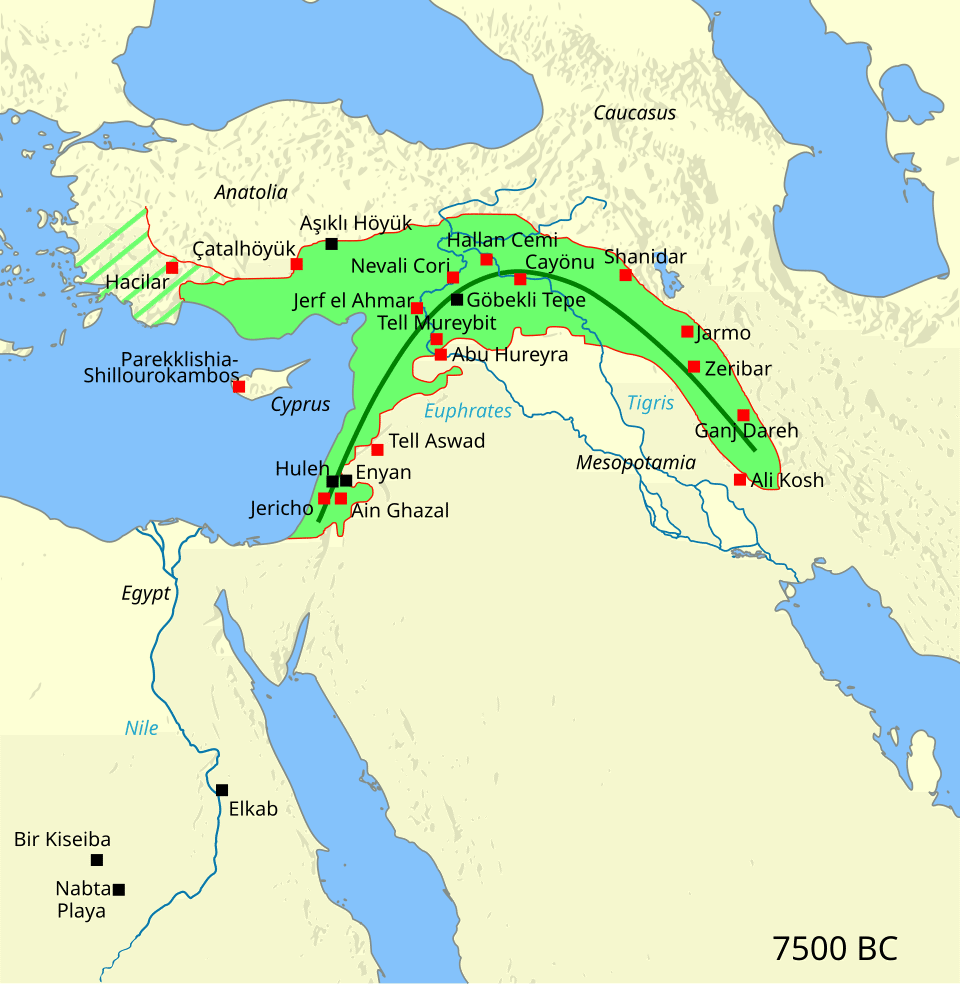

Instead, it arose independently in at least eight distinct regions of the world, each developing its own set of founder species suited to local ecological conditions.1 Instead, it arose independently in at least eight distinct regions of the world, each developing its own set of founder species suited to local ecological conditions.1 This independent invention in parallel underscores that, given the right climatic and demographic conditions at the end of the Pleistocene, the transition to food production was in some sense an almost inevitable development for human societies that had long possessed the cognitive capacity to manage and manipulate their environments.
In China, two geographically and ecologically distinct centers developed simultaneously. In the Yellow River basin of northern China, foxtail millet (Setaria italica) and broomcorn millet (Panicum miliaceum) were cultivated by at least 8,000 BP, with evidence from sites such as Jiahu suggesting even earlier experimentation.9 In the Yangtze River delta of southern China, rice (Oryza sativa) was domesticated independently, with cultivation apparent at sites such as Kuahuqiao and Hemudu by at least 7,000 BP.9 These two Chinese centers gave rise to agricultural traditions that would eventually support the largest continuous agrarian civilizations in human history.
In Mesoamerica, maize (Zea mays) was domesticated from the wild grass teosinte in the highland valleys of what is now Mexico by approximately 9,000 BP, representing one of the most dramatic morphological transformations in the history of plant domestication — teosinte ears are so radically different from maize cobs that the relationship between the two was not recognized by botanists until the twentieth century.10 Squash was cultivated in Mesoamerica and North America even earlier, perhaps by 10,000 BP, and common beans (Phaseolus vulgaris) followed. In the Andes and the coastal lowlands of South America, potato, quinoa, sweet potato, and various other crops were brought under cultivation, forming the agricultural basis of Andean civilizations.10
In sub-Saharan Africa, two distinct domestication processes unfolded. Sorghum (Sorghum bicolor) and pearl millet were cultivated in the Sahel belt and East Africa, and African rice (Oryza glaberrima) was independently domesticated in the upper Niger delta of West Africa, probably by around 3,000 BP — an entirely separate domestication event from Asian rice, based on a different wild progenitor.11 Finally, in New Guinea, taro, banana, and sugar cane were brought under cultivation in the highland valleys, with evidence from Kuk Swamp suggesting agricultural manipulation of wetlands as early as 10,000 BP — one of the earliest dates for cultivation anywhere in the world.12
Independent centers of agricultural origin1, 9, 10, 11, 12, 13, 14
| Region | Approx. date (BP) | Key crops | Key animals |
|---|---|---|---|
| Fertile Crescent (Near East) | 10,500–9,500 | Einkorn wheat, emmer, barley, lentil, pea | Sheep, goat, cattle, pig |
| Northern China (Yellow River) | 8,000–7,500 | Foxtail millet, broomcorn millet | Pig, dog |
| Southern China (Yangtze) | 7,500–7,000 | Rice (Oryza sativa) | Pig, water buffalo |
| Mesoamerica | 9,000–8,000 | Maize, squash, common bean, chili | Turkey, dog |
| South America (Andes) | 8,000–5,000 | Potato, quinoa, sweet potato, manioc | Llama, guinea pig |
| Sub-Saharan Africa (Sahel) | 5,000–4,000 | Sorghum, pearl millet | Cattle (independent) |
| West Africa | ~3,500 | African rice (Oryza glaberrima) | — |
| New Guinea (highlands) | 10,000–6,500 | Taro, banana, sugar cane, yam | Pig (introduced later) |
Why did agriculture arise? Theories and evidence
The question of why human societies that had subsisted successfully on wild resources for hundreds of thousands of years should begin investing the considerable labor demanded by cultivation and herding is among the most debated in all of prehistory. No single explanation commands universal acceptance, and it is likely that different factors weighted differently in different regions.
The climatic hypothesis, outlined above, emphasizes that the end of the Pleistocene created both new opportunities and new pressures. The rapid warming after the Younger Dryas expanded the range of productive wild grasses into new territories, making intensive harvesting increasingly rewarding.4 At the same time, the instability of climate during the late Pleistocene may have selected for risk-reduction strategies, including the management of food supplies. Population pressure hypotheses argue that growing human populations outstripped the carrying capacity of wild resources, forcing communities to intensify production — essentially working harder to extract more calories from the same landscape.15
An influential alternative, associated particularly with the French archaeologist Jacques Cauvin and supported by the evidence from Göbekli Tepe, emphasizes the role of ideology and social change. Cauvin argued that a "revolution of symbols" — a transformation in the way humans conceptualized their relationship to animals, plants, and supernatural forces — preceded and perhaps enabled the practical shift to farming.25 The extraordinary investment of labor and skill represented by Göbekli Tepe's carved pillars, built by people who were evidently not yet fully dependent on agriculture, suggests that the social and ritual demands of organized communal life may have been a motor for agricultural intensification rather than its product.5, 6
Most contemporary researchers favor a model in which climatic change, demographic growth, and social factors interacted in different proportions in each region, producing similar outcomes through different causal pathways. The near-simultaneous appearance of agriculture across multiple continents after the end of the last glacial maximum is itself suggestive of a global climatic trigger, even as the specific species domesticated and the precise social processes involved differed substantially from one center to another.1, 8
Demographic consequences
Agriculture transformed human demography in ways that are unambiguously visible in the archaeological and skeletal record. The most immediate effect was an increase in birth rates. Hunter-gatherer women, whose mobile lifestyle and high-caloric-expenditure subsistence required long intervals between births, typically spaced children three to four years apart. The sedentary lifestyle of farmers, combined with the availability of soft cereal porridges that could wean infants earlier, allowed birth intervals to shorten dramatically — in some populations to under two years.15, 22 The result was a rapid rise in population density.
Archaeologist Jean-Pierre Bocquet-Appel identified what he termed the "Neolithic demographic transition" in skeletal population data from hundreds of prehistoric burial sites across the globe. In cemetery after cemetery, the proportion of young individuals — a proxy for high birth rates — increases markedly at the transition to agriculture, consistent with a burst of population growth.15, 22 This demographic expansion was not uniformly smooth: it was accompanied by elevated mortality from newly emergent infectious diseases and periodic famine when harvests failed. Nevertheless, the net population growth driven by farming was ultimately enormous. It is estimated that global human population rose from perhaps 5 to 10 million at the dawn of agriculture to over 50 million by 5,000 BP — an increase of an order of magnitude in just a few thousand years.15
Health consequences and the skeletal record
The popular perception of agriculture as straightforwardly beneficial to human welfare is not supported by the bioarchaeological record. When researchers compare the skeletons of pre-agricultural foragers with those of early farmers living in the same regions, a consistent pattern emerges: farmers were shorter, had more dental caries, showed more evidence of nutritional stress during childhood, and displayed higher rates of infectious disease than their hunter-gatherer predecessors.16, 17
The reduction in average stature — on the order of several centimetres in many populations — reflects the nutritional consequences of dietary simplification. Hunter-gatherers ate a diverse diet of many dozens of species, providing a wide range of micro-nutrients. Early farmers subsisted heavily on one or two staple crops, producing caloric sufficiency but often chronic deficiencies in iron, zinc, vitamins, and essential amino acids.17 Enamel hypoplasias — horizontal grooves in tooth enamel formed during periods of nutritional stress or illness in childhood — are far more common in early agricultural populations than in preceding forager populations excavated from the same geographic areas.16
Dental caries represent perhaps the most striking health divergence. The fermentable carbohydrates in cereal-based diets provide exactly the substrate that cariogenic bacteria require. Hunter-gatherer populations typically show very low rates of cavities; early farming populations in the Near East, Europe, and the Americas show dramatically elevated rates. In some agricultural skeletal samples, the majority of adult individuals have multiple carious lesions.16
The disease burden of agriculture extended well beyond diet. The close, sedentary cohabitation of large numbers of people created ideal conditions for the person-to-person transmission of airborne and fecal-oral pathogens. Living alongside domesticated animals for the first time in evolutionary history also exposed human immune systems to a new range of zoonotic pathogens — microorganisms capable of crossing the species barrier from animal to human host.18 Measles, smallpox, influenza, and tuberculosis are all believed to have originated or amplified through human contact with domesticated cattle, pigs, and other livestock.18 Jared Diamond, among others, has argued that the immunological vulnerability of non-agricultural peoples to Old World crowd diseases — most lethally realized during European colonization of the Americas — was itself a product of millennia during which Old World farmers had gradually, and at great cost, built up partial immunity to the diseases that agriculture had created.19, 21
Social complexity, sedentism, and inequality
Agriculture did not merely change what people ate; it restructured the fundamental organization of human society. Sedentism — permanent year-round residence in one location — became possible and then necessary once communities had invested in fields, storage facilities, and domesticated herds. The attachment to place that sedentism created generated new social dynamics. Land, previously a resource available to all members of a mobile band, became a commodity that could be owned, inherited, and defended.1
The emergence of surplus storage — granaries holding wheat or maize — created the conditions for wealth differentiation for the first time in human prehistory. In mobile hunter-gatherer societies, the logistical demands of frequent movement act as a powerful leveling mechanism: property that cannot be carried is property that cannot be accumulated. Early farming communities were freed from this constraint, and the skeletal and archaeological record shows the results. Burial wealth — the quantity and quality of grave goods interred with an individual — becomes far more variable in Neolithic than in Mesolithic cemeteries, indicating that status differences were increasingly formalized and persistent across generations.20, 23
Ancient DNA analysis has added a powerful new dimension to these observations. A landmark 2022 study of a Neolithic monument cemetery in Wiltshire, England found that a single patrilineal family lineage was consistently buried in the most prestigious chamber over five generations, suggesting hereditary elite status at a remarkably early date in European prehistory.23 Broader ancient genomic studies of European Neolithic populations have shown that the spread of agriculture across Europe was accompanied by substantial genetic replacement of indigenous forager populations by Near Eastern farmers — indicating that the expansion of the agricultural lifestyle was driven not simply by cultural diffusion but by the demographic expansion of farming populations into territories previously held by hunter-gatherers.24
The surplus production enabled by agriculture also created the conditions for occupational specialization, craft production, long-distance exchange networks, and eventually writing, metallurgy, and urban life. The Neolithic revolution was not the end of a story but the beginning: the conditions it created made every subsequent development of complex civilization possible.1, 2
The spread of agriculture
Once established in its primary centers, agriculture spread outward through two processes that operated simultaneously and interacted: demic diffusion, in which farming populations expanded geographically, carrying their genes and practices into new territories; and cultural diffusion, in which indigenous hunter-gatherer populations adopted agricultural techniques from neighboring farmers without significant genetic admixture.24, 26 The relative importance of these two processes varied by region and time.
In Europe, ancient DNA evidence now makes clear that the spread of agriculture from Anatolia beginning around 8,000 BP was primarily a demic process: the first farmers who arrived in central and northern Europe were genetically distinct from the Mesolithic hunter-gatherers they encountered, and over subsequent millennia they largely replaced the forager populations, though with varying degrees of admixture in different regions.24 In sub-Saharan Africa, the spread of Bantu-speaking agricultural peoples from West Africa across the continent during the last three to four thousand years similarly involved a complex mixture of population replacement and cultural adoption. In other regions, such as parts of North America and the Pacific, agricultural practices spread primarily through cultural transmission among communities that remained largely indigenous in genetic composition.1
Rate of agricultural spread from the Fertile Crescent into Europe (km per century)24, 8
Environmental impact
The ecological consequences of the Neolithic revolution were profound and, in many respects, irreversible. Clearing land for fields and pasture destroyed forests at an unprecedented scale. Pollen records from lake sediments across Europe, the Near East, and China show sharp declines in tree pollen coinciding precisely with the arrival of farming in each region, replaced by the pollen of cereals and ruderal (disturbed-ground) weeds characteristic of agricultural landscapes.8 Soil erosion increased dramatically wherever slopes were cleared and tilled, leading to the silting of river systems and the degradation of soils over time.
The domestication of large herbivores introduced grazing pressure into ecosystems that had previously been shaped only by wild ungulates, with lasting effects on vegetation structure. The creation of irrigation systems in arid regions such as Mesopotamia altered hydrology over vast areas and eventually contributed to the soil salinization that degraded the agricultural productivity of some of the earliest farming lands on Earth.21 Some researchers have proposed that human agricultural activity during the Holocene — particularly the methane emissions from paddy rice cultivation and the carbon dioxide released by deforestation — measurably altered the global atmosphere thousands of years before the Industrial Revolution, a hypothesis known as the "early Anthropocene."21
The environmental transformation wrought by early agriculture was not merely destructive: it also created new ecosystems. The managed landscapes of early farmers — their fields, fallows, orchards, and pasturelands — supported distinctive communities of plants and animals adapted to human-modified environments. Commensals such as mice, rats, sparrows, and house sparrows colonized agricultural settlements and spread with them around the world. The domesticated plants and animals themselves became a form of biodiversity shaped by human selection, giving rise over millennia to the extraordinary diversity of agricultural breeds and varieties that constitute the foundation of the global food system today.13, 14
References
Göbekli Tepe – the Stone Age sanctuaries. New results of ongoing excavations with a special focus on sculptures and high reliefs
When the world’s population took off: the springboard of the Neolithic Demographic Transition
Stature and robusticity during the agricultural transition: evidence from the bioarchaeological record
The agricultural revolution as environmental catastrophe: implications for health and lifestyle in the Holocene
Ancient DNA reveals key stages in the formation of central European mitochondrial genetic diversity