Overview
- The Olmec civilization, centred in the tropical lowlands of Mexico's southern Gulf Coast (modern Veracruz and Tabasco), flourished from approximately 1500 to 400 BCE and is widely regarded as the earliest complex society in Mesoamerica, producing monumental architecture, sophisticated art, and long-distance trade networks that influenced all subsequent pre-Columbian cultures.
- San Lorenzo Tenochtitlán, the first major Olmec centre, supported an estimated 5,500 to 13,000 people by 1200 BCE and was the site where at least ten colossal basalt heads—portraits of rulers weighing up to 25 tonnes and transported over 60 kilometres from the Cerro Cintepec quarries—were carved using only stone tools.
- The Olmec developed what may be the earliest writing system in the Americas, as evidenced by the Cascajal Block (ca. 900 BCE) with its 62 distinct glyphs, and they likely originated the Mesoamerican Long Count calendar, the ritual ballgame, and the complex of religious symbols centred on jaguar transformation and maize deities that persisted for millennia.
The Olmec civilization was the earliest major complex society in Mesoamerica, flourishing in the tropical lowlands of Mexico's southern Gulf Coast — principally the modern states of Veracruz and Tabasco — from approximately 1500 to 400 BCE.1, 2 The Olmec produced the first monumental stone sculpture in the Americas, constructed massive earthen platforms and pyramidal mounds, established long-distance trade networks spanning hundreds of kilometres, and developed what appears to be the hemisphere's earliest writing system and calendar.1, 12, 13 Their distinctive artistic style — centred on the colossal basalt heads that have become icons of pre-Columbian culture — and their religious iconography, which emphasised jaguar transformation, maize symbolism, and cosmic dualism, profoundly influenced every subsequent Mesoamerican civilization, from the Zapotec and Maya to the Aztec.2, 14 Whether the Olmec should be understood as a "mother culture" from which later societies descended or as a "sister culture" that developed in parallel with contemporary neighbours remains one of the most vigorously debated questions in Mesoamerican archaeology, but there is broad consensus that Olmec society represents the earliest documented instance of political complexity, monumental art, and interregional exchange in the region.1, 16, 20
Geography and environment
The Olmec heartland, known to archaeologists as Olman ("land of rubber" in Nahuatl), occupies a broad, low-lying alluvial plain along the Gulf Coast of southern Mexico, stretching roughly 200 kilometres from the Papaloapan River basin in Veracruz eastward through the Tonalá River drainage in Tabasco.1, 2 The region receives between 2,000 and 3,500 millimetres of annual rainfall, making it one of the wettest zones in Mesoamerica, with a tropical climate characterised by hot, humid summers and mild winters.1 Seasonally inundated floodplains, gallery forests, mangrove estuaries, and meandering river systems dominate the landscape, creating an environment of extraordinary biological productivity that supported dense human settlement long before the appearance of Olmec civilisation.7
The Coatzacoalcos, Grijalva, and Tonalá rivers and their tributaries served as the primary arteries of transport, communication, and exchange, linking interior communities to coastal zones and ultimately to highland regions beyond the Gulf lowlands.1, 8 The rivers also deposited rich alluvial soils that supported intensive agriculture, while the surrounding wetlands and estuaries provided abundant fish, shellfish, turtles, and other aquatic resources that formed a critical component of the Olmec diet.6, 7 Crucially, the Gulf lowlands lacked several raw materials essential to Olmec culture — including obsidian, jade, serpentine, magnetite, and basalt for monumental sculpture — necessitating the long-distance trade networks that became a hallmark of Olmec society.8, 11
Chronology and major centres
The development of Olmec civilization is conventionally divided into three overlapping phases corresponding to the successive pre-eminence of three major centres: San Lorenzo, La Venta, and Tres Zapotes.1, 2
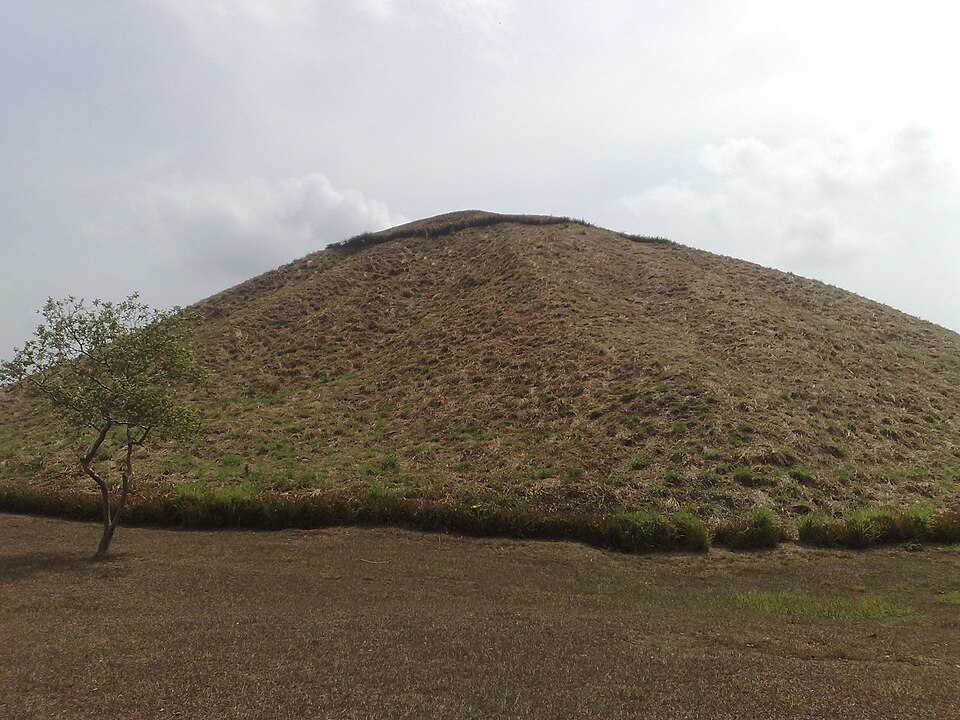

The earliest phase, centred at San Lorenzo Tenochtitlán in southern Veracruz, spans approximately 1500 to 900 BCE. The earliest phase, centred at San Lorenzo Tenochtitlán in southern Veracruz, spans approximately 1500 to 900 BCE. Radiocarbon dates from excavations led by Michael Coe and Richard Diehl, and later by Ann Cyphers, place the San Lorenzo phase — the period of peak monumental construction and sculptural production — between approximately 1200 and 900 BCE, making San Lorenzo the largest and most complex settlement in Mesoamerica during those centuries.3, 4, 5 The site's artificially modified plateau, rising some 50 metres above the surrounding floodplain, supported an estimated population of 5,500 in the ceremonial core and as many as 13,000 including the surrounding hinterland, with clear evidence of social stratification visible in the differential quality of residential architecture.3, 5
Around 900 BCE, San Lorenzo experienced a dramatic decline: many of its monumental sculptures were deliberately mutilated and buried, and the population dispersed.1, 3 The reasons for this collapse remain debated, with hypotheses ranging from internal political upheaval to environmental change caused by shifting river courses.1, 2 Pre-eminence then shifted to La Venta, located on an island in the coastal swamps of Tabasco, which served as the dominant Olmec centre from approximately 900 to 400 BCE.1, 2 La Venta's most striking feature is its Great Pyramid (Complex C), a conical earthen mound approximately 34 metres tall and 128 metres in diameter at the base, making it one of the largest structures in Mesoamerica at the time of its construction.2, 15 The site's elaborate mosaic pavements of serpentine blocks, massive buried offerings of jade and serpentine, and alignment of structures along a north-south axis suggest a highly planned ceremonial precinct governed by powerful rulers.1, 13
La Venta was abandoned around 400 BCE, and the centre of Gulf Coast cultural life shifted to Tres Zapotes, on the western margin of the Olmec heartland, which persisted as an important settlement into the Late and Terminal Formative periods (400 BCE–300 CE).1, 20 The culture of this transitional period, known as the Epi-Olmec, retained some Olmec artistic traditions while developing new ones, including the earliest securely dated Long Count inscription in Mesoamerica — Stela C at Tres Zapotes, bearing a date corresponding to 32 BCE.1, 14
Major Olmec centres and their approximate periods of dominance1, 2
| Centre | Location | Peak period | Notable features |
|---|---|---|---|
| San Lorenzo Tenochtitlán | Southern Veracruz | 1200–900 BCE | 10 colossal heads, Red Palace, drainage system |
| La Venta | Western Tabasco | 900–400 BCE | Great Pyramid (34 m), mosaic pavements, jade offerings |
| Tres Zapotes | Los Tuxtlas, Veracruz | 400 BCE–300 CE | Stela C (earliest Long Count date), 40+ stone monuments |
| Laguna de los Cerros | Southern Veracruz | 1200–400 BCE | 24 stone monuments, near basalt quarries |
Subsistence and economy
The Olmec economy rested on a diversified subsistence base that combined agriculture with the intensive exploitation of aquatic and forest resources.6, 7 Maize, beans, and squash — the classic Mesoamerican triad — were cultivated on the rich alluvial soils deposited by annual river flooding, and pollen evidence from lake cores in the Olmec heartland documents the presence of domesticated maize by at least 2500 BCE, well before the emergence of Olmec society.21 However, recent archaeological and palaeobotanical research has challenged the traditional assumption that maize agriculture was the primary engine of Olmec social complexity.6 Faunal assemblages from San Lorenzo and other Early Formative sites reveal that fish, turtle, and shellfish constituted a larger proportion of the diet than previously recognised, and that the floodplain and wetland environments of the Gulf lowlands supported dense populations through a combination of cultivation, aquatic harvesting, and forest management that does not fit neatly into conventional models of agricultural intensification.6, 7
Long-distance trade formed the other pillar of the Olmec economy, connecting the Gulf lowlands to resource-rich regions throughout Mesoamerica.8, 11 Obsidian, the volcanic glass essential for cutting tools and status objects, was imported from sources in the highlands of central Mexico and Guatemala, with neutron activation analysis identifying material from the Otumba, Paredón, and Guadalupe Victoria sources at San Lorenzo.8 Jade, serpentine, and other greenstone minerals — prized above all other materials by the Olmec for ritual objects, celts, and personal ornaments — were obtained from sources in the Motagua Valley of Guatemala and the Sierra de las Minas, over 500 kilometres from the Olmec heartland.11 Magnetite and ilmenite, used to produce the highly polished mirrors that are among the most technically accomplished Olmec artefacts, came from Oaxacan and Chiapan sources.1, 2 In return, the Olmec likely exported cacao, rubber, cotton, animal pelts, and feathers — perishable goods that leave little direct archaeological trace but are inferred from the ecological richness of the Gulf lowlands and from later ethnohistoric accounts of Gulf Coast trade goods.1
Colossal heads and monumental art
.jpg)
.jpg)
The colossal heads are the most iconic artefacts of Olmec civilization: seventeen are known, each carved from a single boulder of basalt into a naturalistic portrait of a helmeted individual, almost certainly a ruler.2, 10 Ten were found at San Lorenzo, four at La Venta, two at Tres Zapotes, and one at La Cobata.2 They range from 1.47 to 3.4 metres in height and weigh between 6 and 25.3 tonnes.10 The basalt was quarried from the volcanic flows of the Cerro Cintepec in the Tuxtla Mountains, located over 60 kilometres from San Lorenzo, and transported to the site by a combination of overland dragging and river rafting — an undertaking that required the mobilisation of substantial labour forces and sophisticated logistical planning.2, 9
Each head is individualised, with distinctive facial features, headdresses, and ear ornaments suggesting that they are portraits of specific rulers rather than generic representations of a deity or archetype.2, 10 Analysis of workshop debris at San Lorenzo by Kenneth Hirth and Ann Cyphers revealed that the heads were roughed out using direct percussion with stone hammers, then refined with secondary flaking and finished with abrasive polishing — a process that may have required months or years of continuous work by skilled artisans.9 Several of the San Lorenzo heads appear to have been re-carved from earlier throne monuments (sometimes called "altars"), suggesting that the transformation of a ruler's throne into his portrait may have served as a posthumous commemoration.2, 10
Beyond the colossal heads, Olmec sculptors produced an extraordinary range of monumental and portable art, including massive stone thrones with elaborate relief carving, stelae depicting costumed rulers, life-sized basalt figures, and exquisitely worked small-scale objects in jade, serpentine, and clay.1, 2 The jade and serpentine celts from the buried offerings at La Venta — some incised with supernatural imagery and arranged in cruciform patterns — are among the most technically accomplished lapidary works of the ancient Americas.11, 13 Olmec ceramic figurines, particularly the distinctive hollow "baby-face" figures with downturned mouths and puffy features, represent another hallmark of the tradition and have been found at sites across Mesoamerica, from Tlatilco in the Basin of Mexico to Honduras, attesting to the wide reach of Olmec cultural influence.1, 19
Religion and ideology
Olmec religious beliefs, reconstructed primarily from iconographic analysis of monumental and portable art, centred on a pantheon of supernatural beings associated with rain, maize, the earth, and the transformative power of the jaguar.1, 2 Early scholars interpreted Olmec religion as dominated by a single "jaguar god," but Peter David Joralemon's systematic iconographic study in the 1970s identified at least eight distinct supernatural entities, including a Maize God, a Rain Spirit, a Feathered Serpent, a Banded-Eye God, and the so-called Were-Jaguar, a composite human-feline being with a cleft head, snarling mouth, and flame-shaped eyebrows.2, 14 The were-jaguar motif, which appears on celts, masks, figurines, and monumental reliefs throughout the Olmec world, likely represents the ability of rulers and ritual specialists to transform into supernatural jaguars — a concept of shamanic metamorphosis that persisted in Mesoamerican religion for over two millennia.1, 2
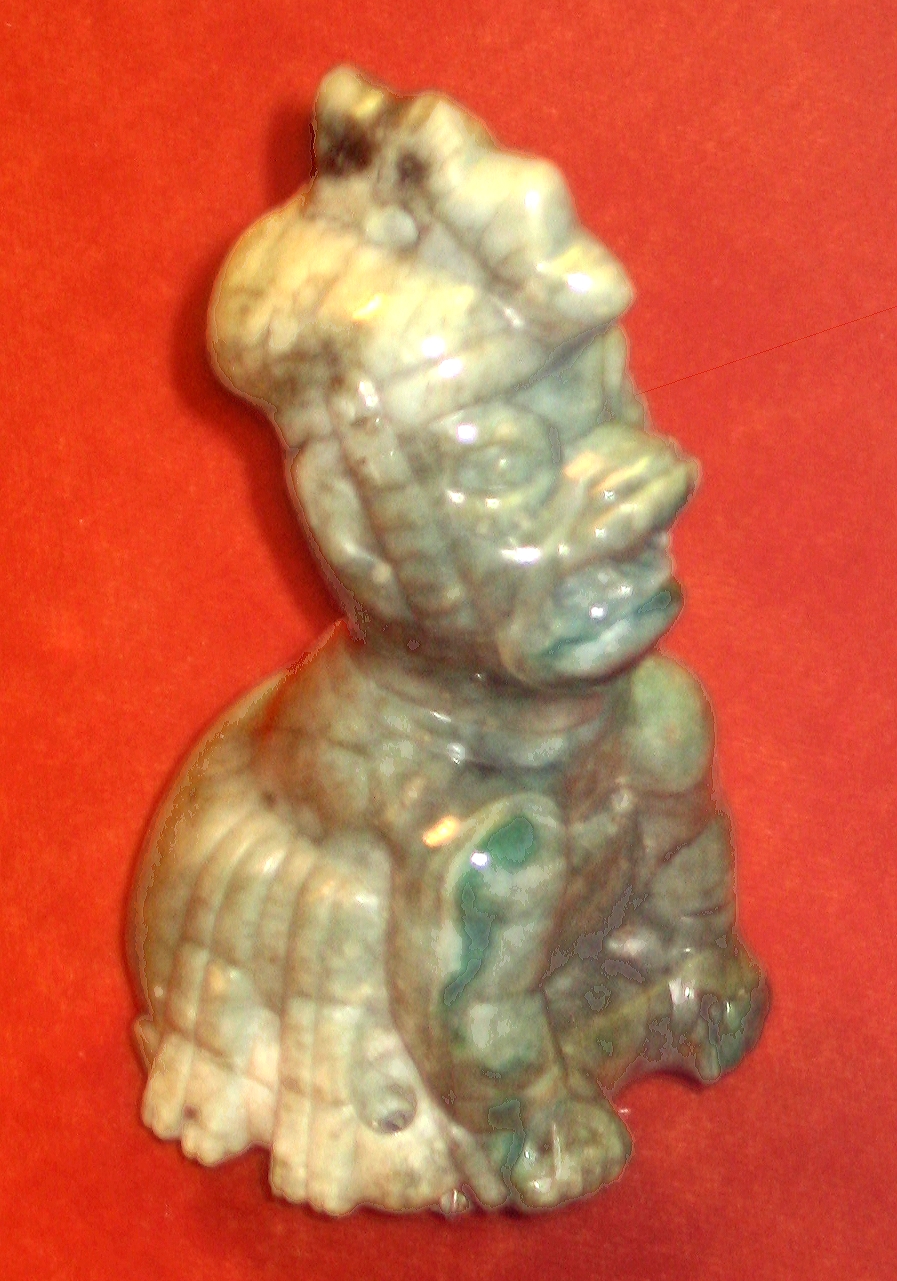

Rulers occupied the apex of Olmec religious life, serving as intermediaries between the human and supernatural worlds.1 The great stone thrones at San Lorenzo and La Venta depict seated rulers emerging from niches that represent the entrance to the earth or the underworld, often holding a rope connected to a captive figure on the side of the monument, iconographically asserting their dual role as cosmic mediators and political overlords.2, 10 The buried offerings at La Venta — which included massive deposits of serpentine blocks, jade celts, figurines, and mirrors interred in carefully constructed pits beneath the ceremonial precinct — suggest elaborate dedicatory rituals associated with the founding or renewal of sacred spaces.1, 13 Many of the religious symbols developed by the Olmec, including the feathered serpent, the world tree or axis mundi, and the quadripartite organisation of cosmic space, became foundational elements of later Mesoamerican religious systems, including those of the Maya and Aztec.14, 18
Writing and the calendar
The question of whether the Olmec possessed a true writing system has been debated for decades, but accumulating evidence suggests that they developed at least the precursors of Mesoamerican script.12, 20 The most dramatic find is the Cascajal Block, a tablet-sized slab of serpentine discovered near San Lorenzo in 1999 and published in 2006, bearing 62 carved glyphs representing 28 distinct signs arranged in apparent sequences.13 If the block's proposed date of approximately 900 BCE is correct, it represents the earliest known writing in the Americas, predating the Zapotec script by several centuries.13 However, the Cascajal signs bear no clear resemblance to any later Mesoamerican writing system, and some scholars have questioned whether the signs constitute true writing or a form of proto-writing.1, 20
Additional evidence for Olmec literacy comes from the San Andrés site in Tabasco, where a cylinder seal and associated greenstone plaque bearing glyph-like signs were recovered from deposits dated to approximately 650 BCE.12 Mary Pohl, Kevin Pope, and Christopher von Nagy interpreted these signs as an early form of writing that included calendrical notation, potentially representing the earliest evidence for the Mesoamerican calendar system.12 The later Epi-Olmec script, best known from the Tuxtla Statuette and Stela 1 at La Mojarra (both dating to the second century CE), employed a fully developed writing system with affixal glyphs and Long Count dates that appears closely related to, and possibly ancestral to, the Maya hieroglyphic script.1, 14 Together, these finds suggest a gradual evolution from Olmec symbolic notation through Epi-Olmec script to the fully developed writing systems of the Classic period.20
Social organisation and political structure
The scale of Olmec monumental construction, the labour requirements of basalt transport, and the evidence of marked residential differentiation at San Lorenzo indicate a hierarchically organised society governed by powerful rulers who commanded the allegiance and labour of thousands.1, 3, 5 Ann Cyphers's excavation of the Red Palace at San Lorenzo revealed an elite residential structure three times the size of any other contemporaneous building in Mesoamerica, with lavish interior furnishings and concentrations of high-value imported objects that attest to the wealth and status of its occupants.5, 9 Less elaborate residences, workshop areas, and modest domestic structures in the surrounding settlement suggest a stratified society comprising rulers, elites, specialised artisans, and commoner farmers and fishers.3, 5
The colossal heads and throne monuments strongly suggest that political authority was personal and dynastic: each head appears to represent a specific individual, and the thrones depict seated rulers in poses of authority, sometimes accompanied by subsidiary figures or captives.2, 10 Whether Olmec polities constituted kingdoms, chiefdoms, or some other form of political organisation remains debated, but the consensus view holds that the major centres — San Lorenzo, La Venta, and possibly Laguna de los Cerros — functioned as the capitals of small states or paramount chiefdoms that exercised authority over surrounding hinterland populations through a combination of economic control, religious prestige, and coercive power.1, 20 The interregional distribution of Olmec-style artefacts and iconography, however, need not imply direct political control; it may instead reflect the adoption of Olmec symbols and practices by aspiring elites in distant communities seeking to enhance their own prestige and legitimacy.16, 19
Interregional influence and the "mother culture" debate
One of the most enduring controversies in Mesoamerican archaeology concerns the nature and extent of Olmec influence on contemporary and later societies.16 The "mother culture" hypothesis, articulated most forcefully by Michael Coe, holds that the Olmec were the originators of Mesoamerican civilisation — that the calendar, writing, the ballgame, the ceremonial centre plan, and the fundamental religious iconography of later cultures all derived from Olmec prototypes.2, 3 Under this model, the widespread distribution of Olmec-style objects and symbols across Mesoamerica during the Early and Middle Formative periods reflects the cultural dominance of the Gulf Coast heartland and the diffusion of Olmec innovations outward to peripheral societies.1
The alternative "sister culture" model, championed by Kent Flannery and Joyce Marcus among others, argues that early complexity developed independently and more or less simultaneously in several Mesoamerican regions — including Oaxaca, the Basin of Mexico, the Pacific Coast of Chiapas and Guatemala, and the Gulf lowlands — and that the Olmec were one among several interacting peers rather than the sole source of cultural innovation.16, 17 Proponents of this view point to evidence of early social complexity at non-Olmec sites such as San José Mogote in Oaxaca and Paso de la Amada in Chiapas, where monumental architecture, craft specialisation, and prestige goods exchange predate or parallel developments at San Lorenzo.17
Current scholarship generally adopts a position between these extremes, acknowledging that the Olmec heartland was the earliest centre of truly monumental art and architecture in Mesoamerica while recognising that many of the cultural innovations traditionally attributed to the Olmec developed through processes of interaction and exchange among multiple early complex societies.1, 14, 20 What is not disputed is that Olmec-style objects, iconography, and symbols appeared across an enormous geographic range during the Early and Middle Formative — from the highlands of central Mexico to Honduras and El Salvador — and that this distribution reflects the existence of extensive networks of exchange, emulation, and shared ideology that laid the foundations for the cultural unity of Mesoamerica.14, 19
Relative density of Olmec-style artefacts by region1, 16
Decline and legacy
The decline of Olmec civilization was a protracted process rather than a sudden collapse.1, 20 San Lorenzo's fall around 900 BCE, marked by the deliberate destruction and burial of its monumental sculptures, may reflect internal political upheaval, succession conflicts, or environmental disruption caused by the shifting courses of the Coatzacoalcos River system.1, 3 La Venta's abandonment around 400 BCE coincided with a broader regional reorganisation in which trade networks appear to have redirected away from the Gulf lowlands, and environmental degradation or volcanic activity in the Tuxtla Mountains may have contributed to the centre's loss of viability.2, 20 The Epi-Olmec culture that persisted at Tres Zapotes and other sites into the first centuries CE retained elements of Olmec artistic and religious tradition while incorporating innovations — including the Long Count calendar and a fully developed writing system — that bridge the gap between the Olmec Formative and the Classic period civilisations of Mesoamerica.1, 14
The Olmec legacy is visible throughout Mesoamerican history.14, 15 The ceremonial centre plan of La Venta — with its axial alignment, stepped pyramids, open plazas, and buried dedicatory offerings — established the template for monumental architecture that would be elaborated at Teotihuacan, Monte Albán, and the great Maya cities of the Classic period.1, 18 Olmec religious iconography, including the feathered serpent, the rain deity, the maize god, and the concept of shamanic transformation, persisted in modified forms through three millennia of Mesoamerican cultural history, down to the Aztec Empire encountered by the Spanish in 1519.2, 14 The Olmec contribution to Mesoamerican civilisation is perhaps best understood not as the single origin point from which all else flowed, but as the earliest and most influential participant in a web of cultural interactions that collectively gave rise to one of the world's great traditions of complex society.1, 16, 20
References
Nonagricultural Cultivation and Social Complexity: The Olmec, Their Ancestors, and Mexico's Southern Gulf Coast Lowlands
Origin and Environmental Setting of Ancient Agriculture in the Lowlands of Mesoamerica