Overview
- Brown dwarfs are substellar objects with masses between approximately 13 and 80 Jupiter masses, too low to sustain the hydrogen fusion that powers main-sequence stars but massive enough to fuse deuterium in their cores during early evolution.
- The discovery of the first unambiguous brown dwarf, Gliese 229B, in 1995 confirmed decades of theoretical prediction and led to the establishment of three new spectral classes — L, T, and Y — extending the stellar classification system to temperatures as low as 250 kelvin, colder than any location on Earth's surface.
- Brown dwarfs occupy a critical position between giant planets and the lowest-mass stars, and their study illuminates fundamental questions about the minimum mass for star formation, atmospheric chemistry under extreme conditions, and the prevalence of substellar objects throughout the galaxy.
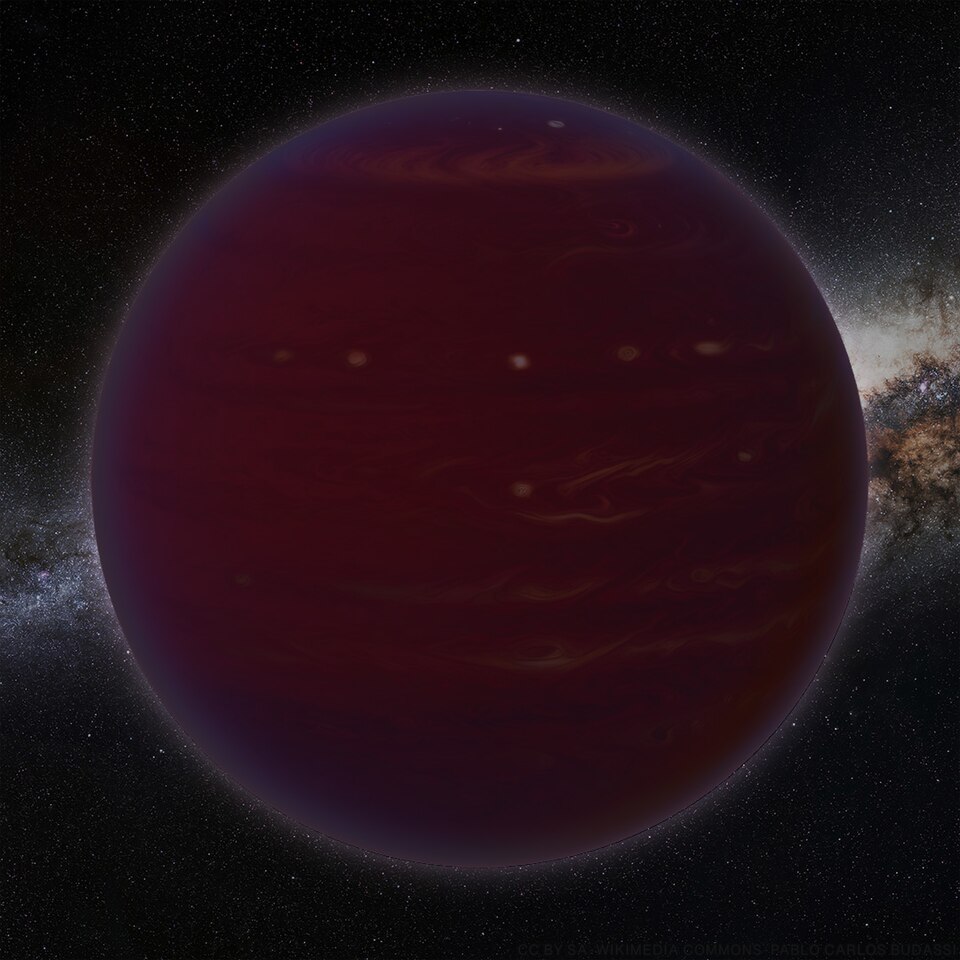
Brown dwarfs are substellar objects that occupy the mass range between the most massive gas giant planets and the least massive hydrogen-fusing stars. With masses roughly between 13 and 80 times that of Jupiter, they are too low in mass to sustain the stable hydrogen fusion that defines a main-sequence star, yet massive enough to undergo a brief phase of deuterium fusion in their interiors early in their evolution.4, 10 First predicted theoretically in the 1960s, brown dwarfs were not confirmed observationally until 1995, when two landmark discoveries — Teide 1 in the Pleiades and Gliese 229B orbiting a nearby red dwarf — demonstrated that nature produces objects straddling the boundary between planets and stars.2, 16 Since then, infrared sky surveys have revealed thousands of brown dwarfs throughout the solar neighbourhood, establishing them as a ubiquitous component of the galaxy and a critical testbed for theories of star formation, atmospheric physics, and the origin of planetary systems.

Discovery and observational history
The theoretical prediction of substellar objects dates to the early 1960s, when Shiv Kumar calculated that protostars below a critical mass would never reach core temperatures sufficient for sustained hydrogen fusion and would instead cool and fade indefinitely. The term "brown dwarf" was coined by Jill Tarter in 1975 to describe these hypothetical objects, which were expected to be extremely faint and therefore difficult to detect. For three decades, searches yielded only ambiguous candidates, as distinguishing a very low-mass star from a high-mass brown dwarf required precise measurements of luminosity and temperature that were beyond the capabilities of available instruments.4
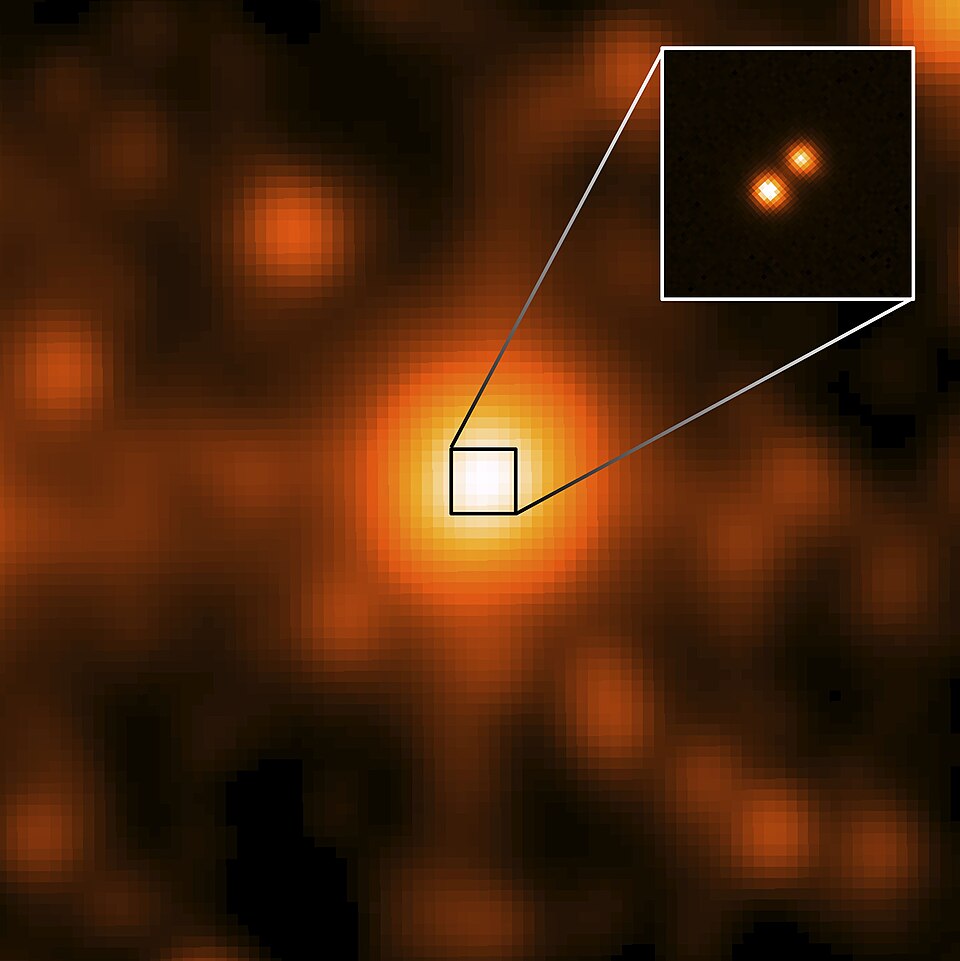
The first widely accepted brown dwarf discoveries arrived in 1995. Rebolo, Zapatero Osorio, and Martin identified Teide 1 in the Pleiades star cluster, an object whose luminosity and spectral features indicated a mass below the hydrogen-burning limit.16 Almost simultaneously, Nakajima and colleagues announced the detection of Gliese 229B, a faint companion to the nearby M-dwarf star Gliese 229, using adaptive optics at the Palomar Observatory.2 Spectroscopic observations by Oppenheimer and colleagues revealed strong methane absorption features in the near-infrared spectrum of Gliese 229B, a chemical signature never before seen in a stellar atmosphere and unmistakable evidence that the object's effective temperature was below approximately 1,000 kelvin — far cooler than any star.3 Gliese 229B remains one of the most thoroughly studied brown dwarfs and established the observational template for the field.
The pace of discovery accelerated dramatically with large-area infrared surveys. The Two Micron All-Sky Survey (2MASS), completed in 2001, detected hundreds of brown dwarfs by imaging the entire sky at near-infrared wavelengths where these cool objects emit the bulk of their radiation.12 NASA's Wide-field Infrared Survey Explorer (WISE), launched in 2009, extended the search to even longer wavelengths and cooler temperatures, uncovering the coldest brown dwarfs known, with effective temperatures approaching those of the giant planets in our own solar system.8, 9
Spectral classification: L, T, and Y dwarfs
The discovery of large numbers of brown dwarfs necessitated an extension of the traditional stellar spectral classification system. The Morgan-Keenan sequence — O, B, A, F, G, K, M — terminates at the M dwarfs, the coolest hydrogen-fusing stars, with effective temperatures around 2,000 to 3,800 kelvin. Brown dwarfs are cooler than this range, and their spectra are dominated by molecular absorption features that differ qualitatively from those of M stars. Three new spectral classes were introduced to accommodate them: L, T, and Y, in order of decreasing temperature.6, 7
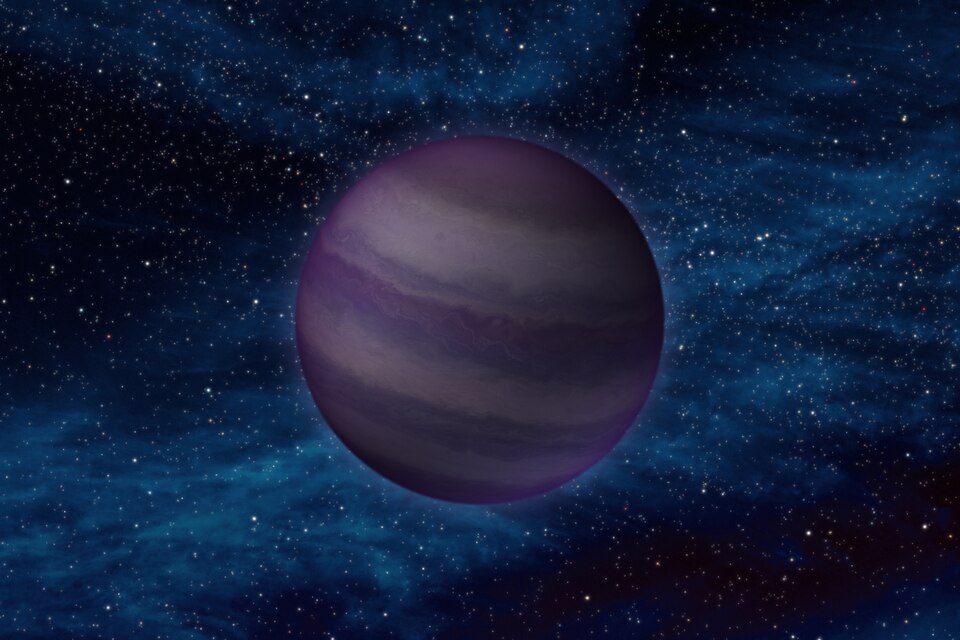

L dwarfs span effective temperatures of roughly 1,300 to 2,100 kelvin. Their spectra are characterised by the weakening of titanium oxide and vanadium oxide bands that dominate late-M dwarf spectra, replaced by hydrides (FeH, CrH) and neutral alkali metal lines (Na I, K I, Cs I) that broaden enormously under the high pressures of these dense atmospheres.6 The L class includes both the lowest-mass hydrogen-fusing stars and the highest-mass brown dwarfs, making spectral type alone insufficient to determine whether an individual L dwarf is stellar or substellar. T dwarfs, with effective temperatures of approximately 500 to 1,300 kelvin, display the strong methane absorption that first distinguished Gliese 229B, along with water vapour bands and a characteristic brightening in the near-infrared J band caused by the clearing of condensate clouds from the visible atmosphere.7 Y dwarfs, the coldest class, have effective temperatures below approximately 500 kelvin. The first Y dwarfs were identified by the WISE survey in 2011, with the coolest examples exhibiting ammonia absorption and effective temperatures as low as 250 kelvin — colder than any naturally occurring temperature on Earth's surface.8
Spectral types and approximate effective temperatures of substellar objects6, 7, 8
Interior structure and deuterium burning
The interior of a brown dwarf is qualitatively distinct from both a main-sequence star and a giant planet. Like low-mass stars, brown dwarfs form through the gravitational collapse of molecular cloud fragments and are initially fully convective, meaning energy is transported from the core to the surface primarily by bulk motion of material rather than by radiation.4, 14 However, because their core temperatures never reach the approximately 3 million kelvin required to initiate the proton-proton chain reaction that fuses ordinary hydrogen (protium), brown dwarfs cannot establish a stable equilibrium between gravitational contraction and nuclear energy generation. Instead, they contract and cool monotonically over time, growing progressively fainter and redder as they radiate away their gravitational and thermal energy.5, 14
Objects above approximately 13 Jupiter masses do reach sufficient core temperatures — roughly 500,000 kelvin — to fuse deuterium, a rare isotope of hydrogen with one proton and one neutron.10 Deuterium burning proceeds via the reaction ²H + ¹H → ³He + γ, releasing energy that temporarily slows the object's gravitational contraction. However, because the primordial deuterium abundance is only about 20 parts per million relative to hydrogen, this fuel is exhausted within roughly 10 to 100 million years depending on the object's mass, after which contraction and cooling resume.10 The deuterium-burning mass limit of approximately 13 Jupiter masses has been adopted by the International Astronomical Union as the working boundary between giant planets and brown dwarfs, though the physical significance of this threshold remains debated, as the formation mechanism — gravitational collapse of a cloud fragment versus accretion within a circumstellar disc — may be a more fundamental distinction.15 Above roughly 65 Jupiter masses, lithium fusion also occurs briefly in the core, providing an additional diagnostic: the presence or absence of lithium in a brown dwarf's spectrum can constrain its mass and age.4
Atmospheric chemistry and weather
The atmospheres of brown dwarfs are among the most chemically complex environments in astrophysics, bridging the regime of stellar atmospheres dominated by atoms and simple diatomic molecules and the regime of planetary atmospheres governed by condensate clouds and exotic chemistry. As a brown dwarf cools, the dominant molecular species in its atmosphere change in a predictable sequence governed by thermochemical equilibrium.11 At temperatures above approximately 2,000 kelvin, refractory oxides and hydrides (TiO, VO, FeH) dominate the optical spectrum, as in the latest M dwarfs. Below approximately 1,800 kelvin, these species condense into solid grains — forming clouds of silicate minerals, iron droplets, and corundum (Al₂O₃) — and are removed from the gas phase, producing the spectral transition from M to L type.6, 11
At still lower temperatures, carbon chemistry undergoes a critical shift. In warm atmospheres, carbon is predominantly locked in carbon monoxide (CO), but below roughly 1,300 kelvin, thermochemical equilibrium increasingly favours methane (CH₄), producing the strong methane absorption bands that define the T spectral class.7, 11 In the coldest Y dwarfs, ammonia (NH₃) becomes detectable as nitrogen shifts from N₂ to NH₃, and water ice clouds may form in the upper atmosphere, creating conditions remarkably similar to those in the atmospheres of Jupiter and Saturn.8
Photometric monitoring of brown dwarfs has revealed that many exhibit variability on timescales of hours, consistent with rotationally modulated weather patterns. Observations of the L/T transition object 2MASS J21392676+0220226 showed brightness variations of up to 26 percent in the J band over a single rotation period, interpreted as patchy cloud cover with substantial contrast between cloudy and cloud-free regions.18 These observations indicate that brown dwarf atmospheres are dynamic environments with large-scale meteorological phenomena analogous to — but far more extreme than — the banded cloud structures and storm systems observed on giant planets.
The bridge between planets and stars
Brown dwarfs occupy a pivotal position in the mass continuum from planets to stars, and their study bears directly on fundamental questions about the minimum mass for star formation and the maximum mass for planet formation. The Hertzsprung-Russell diagram, which plots stellar luminosity against temperature, traditionally terminates at the bottom of the main sequence with the lowest-mass M dwarfs at roughly 0.08 solar masses (approximately 80 Jupiter masses). Brown dwarfs extend this diagram downward and to the right, tracing cooling tracks that cross multiple spectral types over billions of years rather than occupying a fixed position as main-sequence stars do.5, 14

Surveys of star-forming regions and the solar neighbourhood indicate that the initial mass function — the distribution of masses at which objects form — extends smoothly from solar-type stars through the hydrogen-burning limit and into the brown dwarf regime, suggesting that brown dwarfs and low-mass stars form via the same mechanism of molecular cloud fragmentation and gravitational collapse.13, 17 The number of brown dwarfs per unit volume in the solar neighbourhood appears to be comparable to the number of main-sequence stars, making them one of the most numerous classes of objects in the galaxy, even though their extreme faintness renders them invisible to optical surveys.9, 13
At the low-mass end, the boundary between brown dwarfs and giant planets remains physically ambiguous. Free-floating objects with estimated masses below the deuterium-burning limit have been identified in young star-forming regions, raising the question of whether these are planets ejected from their birth systems or the lowest-mass products of cloud fragmentation.15 The overlap in mass, radius, and atmospheric composition between the coolest brown dwarfs and the most massive exoplanets underscores that the planet-star boundary is not a sharp physical division but a continuum shaped by formation history, composition, and environment.4, 15
Significance for astrophysics
Brown dwarfs serve as natural laboratories for testing theories of atmospheric physics, condensate cloud formation, and non-equilibrium chemistry under conditions that cannot be replicated on Earth. Because they lack the complicating effects of stellar irradiation that influence the atmospheres of close-in exoplanets, isolated brown dwarfs provide cleaner tests of atmospheric models, and the insights gained from studying them are directly transferable to the characterisation of giant exoplanet atmospheres with facilities such as the James Webb Space Telescope.4, 11 Their cooling behaviour also provides an independent chronometer: because a brown dwarf's luminosity and temperature decline predictably with age, measuring these properties can constrain the age of a brown dwarf and, by extension, the age of any stellar companion or cluster to which it belongs.14 As infrared survey capabilities continue to improve, the census of brown dwarfs in the solar neighbourhood and in star-forming regions will grow, sharpening our understanding of the substellar mass function and the processes that govern the formation of the smallest self-gravitating objects in the universe.9, 17
References
The Wide-field Infrared Survey Explorer (WISE): mission description and initial on-orbit performance