Overview
- The worldwide experimental program to detect dark matter particles employs three complementary strategies — direct detection of nuclear recoils from WIMP scattering, indirect detection of annihilation products in astrophysical observations, and collider production at the LHC — none of which has yet yielded a confirmed signal.
- Liquid noble gas detectors such as LUX-ZEPLIN, XENONnT, and PandaX-4T have pushed spin-independent WIMP-nucleon cross-section limits below 10<sup>-47</sup> cm<sup>2</sup>, approaching the neutrino fog where coherent neutrino-nucleus scattering will become an irreducible background.
- The persistent null results from WIMP searches have intensified interest in alternative candidates, particularly axions probed by the ADMX haloscope and sterile neutrinos sought through X-ray spectroscopy, broadening the experimental frontier beyond the traditional WIMP paradigm.
Dark matter constitutes approximately 85 percent of all matter in the universe and roughly 27 percent of the total energy density, yet it has never been directly detected in a laboratory.24 The evidence for its existence rests on gravitational effects observed across many scales — galaxy rotation curves, gravitational lensing, the cosmic microwave background, and the large-scale structure of the cosmos — but the fundamental nature of the dark matter particle, if it is indeed a particle, remains unknown. Since the mid-1980s, a worldwide experimental program has pursued three complementary strategies for identifying dark matter: direct detection of rare scattering events between dark matter particles and atomic nuclei in underground laboratories, indirect detection of the products of dark matter annihilation or decay using astrophysical telescopes, and production of dark matter particles in high-energy collisions at particle accelerators.1, 3 Despite extraordinary advances in sensitivity spanning many orders of magnitude, no confirmed detection has been achieved, a circumstance that has profoundly reshaped theoretical expectations about the identity of dark matter.
The three detection strategies
The theoretical framework for dark matter detection was established in two foundational papers in the mid-1980s. In 1985, Mark Goodman and Edward Witten demonstrated that if dark matter consisted of weakly interacting massive particles (WIMPs), these particles could in principle be detected through their coherent elastic scattering off atomic nuclei in a terrestrial detector, producing nuclear recoils with energies in the range of a few to a few tens of kiloelectronvolts.1 The following year, Andrzej Drukier, Katherine Freese, and David Spergel extended this analysis by incorporating the motion of the Earth through the Milky Way's dark matter halo, predicting that the scattering rate would exhibit an annual modulation of a few percent as the Earth's orbital velocity alternately adds to and subtracts from the Sun's velocity through the galaxy, with the maximum occurring around early June.2
These ideas gave rise to the three-pronged experimental strategy that has defined the field for four decades. Direct detection experiments seek the faint nuclear recoils produced when a dark matter particle scatters off a target nucleus in a shielded, ultra-low-background detector, typically operated deep underground to suppress cosmic ray backgrounds.1, 3 Indirect detection experiments search for the standard model particles — gamma rays, neutrinos, positrons, and antiprotons — that would be produced when dark matter particles annihilate or decay in regions of high dark matter density, such as the Galactic Centre, dwarf spheroidal galaxies, or the Sun.3, 14 Collider searches attempt to produce dark matter particles directly in high-energy proton-proton collisions at the Large Hadron Collider (LHC), identified through an imbalance in the event's transverse momentum — missing transverse energy — that would indicate the production of invisible, non-interacting particles.17 Each strategy probes a different aspect of dark matter's interaction with ordinary matter, and a signal in any one channel could in principle be confirmed by the others.
Direct detection experiments
Direct detection experiments are predicated on the assumption that the Milky Way is embedded in a halo of dark matter particles that continuously stream through Earth at velocities of approximately 220 kilometres per second relative to the galactic rest frame. A dark matter particle passing through a detector may scatter elastically off an atomic nucleus, depositing a small amount of kinetic energy as a nuclear recoil. The expected recoil energy is typically a few to a few tens of kiloelectronvolts for WIMP masses in the range of 10 to 1,000 GeV, and the expected interaction rate is extraordinarily small — well below one event per kilogram of detector material per day for the cross sections that remain experimentally viable.1, 2
The principal challenge of direct detection is distinguishing these rare nuclear recoil signals from the vastly more numerous background events produced by radioactive decays within the detector materials, the surrounding rock, and cosmic ray muons. To address this, experiments are located deep underground in facilities such as the Laboratori Nazionali del Gran Sasso in Italy, the Sanford Underground Research Facility in South Dakota, and the China Jinping Underground Laboratory. Multiple discrimination techniques are employed to distinguish nuclear recoils (which dark matter and neutrons produce) from electronic recoils (which gamma rays and beta particles produce).3, 9
Two broad classes of detector technology dominate the field. Liquid noble gas detectors, using xenon or argon as the target material, exploit the dual signals of scintillation light and ionisation charge produced by particle interactions in a two-phase (liquid-gas) time projection chamber. The ratio of the scintillation signal to the ionisation signal differs characteristically between nuclear and electronic recoils, providing powerful event-by-event discrimination. Xenon is particularly favoured because of its high atomic mass (which enhances the coherent scattering cross section for spin-independent interactions), the availability of multiple naturally occurring isotopes (enabling self-shielding through fiducial volume cuts), and the relative ease of purifying large volumes of the liquid to extremely low levels of radioactive contamination.9, 10 Cryogenic bolometers, such as those used in the SuperCDMS experiment, operate crystals of germanium or silicon at temperatures of approximately 15 millikelvin, measuring both the phonon (heat) signal and the ionisation charge produced by particle interactions. The simultaneous measurement of these two channels provides excellent discrimination between nuclear and electronic recoils, with particular sensitivity to low-mass dark matter particles below roughly 10 GeV, where liquid xenon detectors lose efficiency due to their higher energy thresholds.13
The liquid xenon programme
The most stringent limits on spin-independent WIMP-nucleon scattering have been set by a succession of liquid xenon experiments that have steadily increased in scale and sensitivity over two decades.

The XENON programme, based at the Gran Sasso laboratory, progressed from the 62-kilogram XENON100 detector to the 3.2-tonne XENON1T, which reported results in 2018 from an exposure of approximately one tonne-year. XENON1T found no significant excess of nuclear recoil events and placed an upper limit on the spin-independent WIMP-nucleon cross section of 4.1 × 10−47 cm2 at a WIMP mass of 30 GeV, the world's most sensitive result at the time.9 In 2020, XENON1T reported an unexpected excess of electronic recoil events at energies between 1 and 7 keV, which could be interpreted as a signal from solar axions, an anomalous neutrino magnetic moment, or an unmodelled tritium background; the statistical significance was approximately 3.5 standard deviations for the solar axion hypothesis.12 The upgraded XENONnT detector, with a sensitive liquid xenon mass of 5.9 tonnes, began operations in 2021 and reported its first nuclear recoil search results in 2023, finding no significant excess and setting an upper limit of 2.58 × 10−47 cm2 at a WIMP mass of 28 GeV. Notably, XENONnT did not reproduce the low-energy electronic recoil excess observed by its predecessor, supporting the hypothesis that the earlier signal was attributable to a trace tritium contamination.10
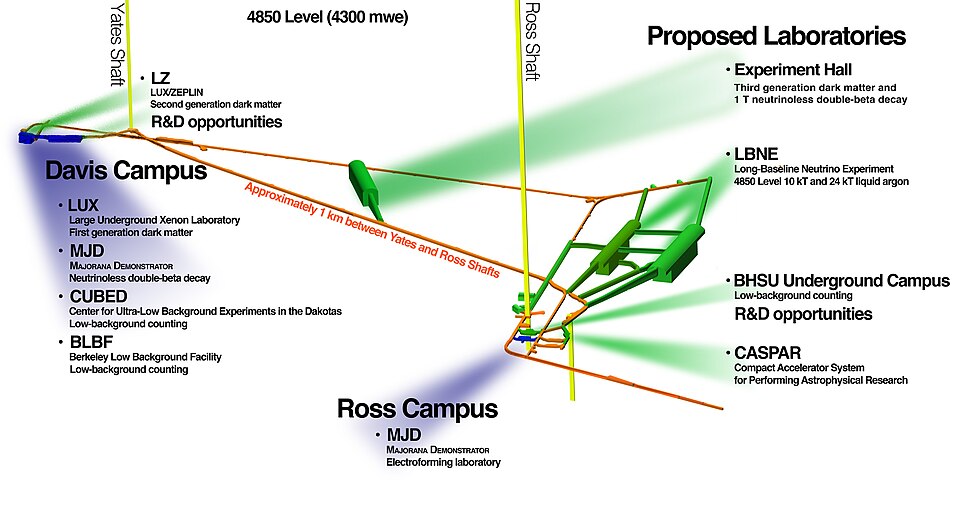
The LUX-ZEPLIN (LZ) experiment, a 10-tonne liquid xenon detector located at the Sanford Underground Research Facility, published its first results in 2023 from a 60-live-day exposure, setting competitive limits alongside XENONnT.7 In 2025, LZ reported results from a combined 4.2 tonne-year exposure — the largest dataset ever collected by a dark matter direct detection experiment. No evidence for WIMPs was found, and the experiment set world-leading exclusion limits above approximately 5 GeV, with the strongest constraint at approximately 1.1 × 10−47 cm2 near 40 GeV. The same analysis achieved the first statistically significant observation of boron-8 solar neutrinos via coherent elastic neutrino-nucleus scattering in a dark matter detector, a milestone that marks the beginning of the so-called neutrino fog era.8
The PandaX programme, based at the China Jinping Underground Laboratory, has independently confirmed these null results. PandaX-4T, operating 3.7 tonnes of liquid xenon, reported results from a 1.54 tonne-year exposure in 2025, finding no significant nuclear recoil excess and setting an upper limit of 1.6 × 10−47 cm2 at 40 GeV — the strongest constraint for WIMP masses above 100 GeV at the time of publication.11
Leading direct detection experiments and their sensitivity8, 10, 11, 13
| Experiment | Target | Location | Best σSI limit (cm2) | At WIMP mass |
|---|---|---|---|---|
| LUX-ZEPLIN (LZ) | Liquid Xe | Sanford, USA | ~1.1 × 10−47 | ~40 GeV |
| XENONnT | Liquid Xe | Gran Sasso, Italy | 2.58 × 10−47 | 28 GeV |
| PandaX-4T | Liquid Xe | Jinping, China | 1.6 × 10−47 | 40 GeV |
| XENON1T | Liquid Xe | Gran Sasso, Italy | 4.1 × 10−47 | 30 GeV |
| SuperCDMS Soudan | Ge / Si bolometer | Soudan, USA | 5.4 × 10−42 | 5 GeV |
The annual modulation controversy
The DAMA/LIBRA experiment at the Gran Sasso laboratory has reported an anomalous annual modulation signal for more than two decades, making it the most persistent and controversial claim in the history of dark matter direct detection. The experiment uses 250 kilograms of radiopure sodium iodide (NaI) scintillation crystals to search for a periodic variation in the low-energy event rate with the phase and period predicted by the annual modulation signature of WIMP scattering.4 The first statistically significant claim was reported by the original DAMA/NaI experiment in the late 1990s, and DAMA/LIBRA has continued to observe the modulation through successive upgrades. The combined dataset spanning more than twenty annual cycles yields a modulation amplitude with a statistical significance exceeding 12 standard deviations in the 1–6 keV energy window, with a period consistent with one year and a phase peaking in late May to early June, precisely as expected for a dark matter signal.4, 5
Despite the overwhelming statistical significance of the modulation itself, the DAMA/LIBRA result has not been accepted by the broader physics community, for several reasons. First, when interpreted as a WIMP signal, the implied WIMP-nucleon cross section falls in a region of parameter space that has been excluded by orders of magnitude by XENON1T, LZ, XENONnT, and PandaX-4T, which use different target materials (xenon rather than sodium iodide).7, 9, 10, 11 Second, and more decisively, independent experiments using the same sodium iodide target material have failed to reproduce the signal. The ANAIS-112 experiment, operating 112.5 kilograms of NaI crystals at the Canfranc Underground Laboratory in Spain since 2017, has accumulated three years of data and found results consistent with the absence of modulation, with an incompatibility with the DAMA/LIBRA signal at approximately 3 standard deviations.6 The COSINE-100 experiment in South Korea, also using NaI detectors, has independently reached similar null conclusions. A combined Bayesian analysis of the ANAIS-112 and COSINE-100 datasets, with a joint exposure of 485 kilogram-years, excludes the DAMA/LIBRA annual modulation claim at a significance of 4.1 standard deviations.25
The origin of the DAMA/LIBRA modulation remains under investigation. Proposed explanations include systematic effects related to the data analysis procedure, seasonal variations in muon flux or environmental conditions in the Gran Sasso laboratory, and potential unrecognised sources of background modulation. The collaboration has disputed these alternative explanations and continues to maintain that its signal is consistent with dark matter. However, the weight of external evidence from both xenon-based and sodium-iodide-based experiments now strongly disfavours a dark matter interpretation.6, 25
Indirect detection
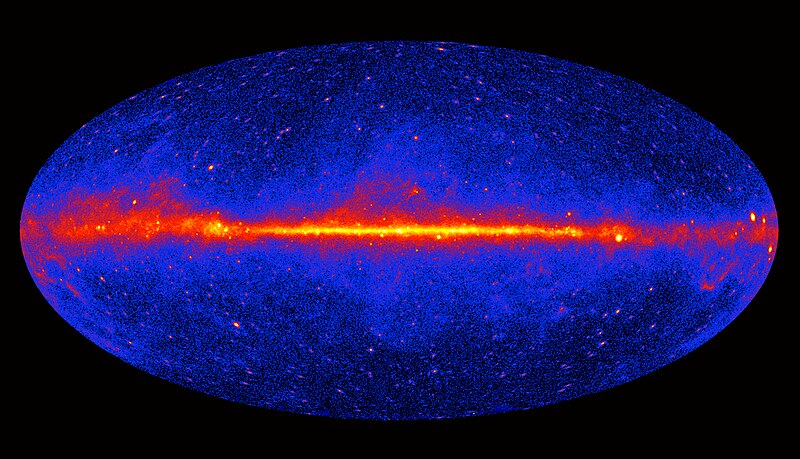
If dark matter particles are their own antiparticles, or if dark matter and anti-dark matter coexist in the halo, then pairs of dark matter particles may annihilate in regions of high density and produce standard model particles detectable by astrophysical observatories. Indirect detection experiments search for excesses of gamma rays, neutrinos, positrons, and antiprotons above the expected astrophysical backgrounds, exploiting the fact that dark matter annihilation rates scale as the square of the local density and are therefore highest in the densest regions of the dark matter distribution — the centres of galaxies, galaxy clusters, and the dark matter-dominated dwarf spheroidal satellite galaxies of the Milky Way.3, 14
.jpg)
The Fermi Large Area Telescope (Fermi-LAT), a space-based gamma-ray observatory operating since 2008, has provided the most sensitive gamma-ray searches for dark matter annihilation. An analysis of six years of Fermi-LAT data from 25 Milky Way dwarf spheroidal galaxies, selected because their dark matter content is inferred from stellar kinematics and they contain minimal astrophysical gamma-ray sources, found no statistically significant excess of gamma-ray emission. The resulting constraints on the dark matter annihilation cross section fell below the canonical thermal relic value of approximately 3 × 10⁻²⁶ cm3 s−1 for WIMP masses below roughly 100 GeV annihilating through quark and tau-lepton channels, placing the first astrophysical limits that directly constrain the simplest WIMP models.14
The IceCube Neutrino Observatory, a cubic-kilometre neutrino detector embedded in the Antarctic ice sheet at the South Pole, searches for high-energy neutrinos that would be produced by dark matter annihilation in the Galactic Centre and in the Sun (where dark matter particles could accumulate through gravitational capture). Searches targeting the Galactic Centre using the DeepCore low-energy extension have set competitive limits on the dark matter annihilation cross section for WIMP masses between 5 GeV and 1 TeV, though no significant excess over expected atmospheric neutrino backgrounds has been observed.15
The Alpha Magnetic Spectrometer (AMS-02), a particle physics experiment mounted on the International Space Station since 2011, has produced precision measurements of cosmic ray positron fluxes up to 1 TeV. The data reveal a significant positron excess above approximately 25 GeV relative to the expected spectrum from secondary production in cosmic ray collisions with the interstellar medium, with a sharp spectral dropoff above 284 GeV and a finite energy cutoff of the source term at approximately 810 GeV, established with a significance exceeding 4 standard deviations.16 While the spectral properties of this excess are broadly consistent with dark matter annihilation, they are also naturally explained by conventional astrophysical sources, most notably nearby pulsars and their associated pulsar wind nebulae, which are known to produce electron-positron pairs. Distinguishing between these interpretations remains an active area of research, and the positron excess alone cannot be taken as evidence for dark matter.16
Collider searches at the LHC
The third prong of the dark matter detection programme is the direct production of dark matter particles in high-energy collisions at the Large Hadron Collider at CERN. Because dark matter particles, by definition, do not interact with the electromagnetic or strong forces, they would escape a collider detector without leaving a visible signal.
Their production would therefore be inferred indirectly through an imbalance in the total transverse momentum of the visible particles in an event — a quantity known as missing transverse energy. The most sensitive search channel is the mono-jet signature, in which a pair of dark matter particles is produced in association with a single high-energy jet from initial-state radiation, yielding one energetic jet recoiling against a large missing transverse momentum.17
The ATLAS and CMS experiments at the LHC have performed extensive searches for dark matter in the mono-jet channel and in related signatures involving mono-photon, mono-Z, and mono-Higgs topologies, using the full Run 2 dataset of proton-proton collisions at a centre-of-mass energy of 13 TeV collected between 2015 and 2018. No statistically significant excesses above standard model backgrounds have been observed in any channel, and the results have been interpreted as exclusion limits on the masses of dark matter particles and their mediators within simplified model frameworks. For a spin-1 mediator coupling to quarks and dark matter, mediator masses up to approximately 2 TeV have been excluded for light dark matter particles, depending on the coupling strengths assumed.17
Collider searches and direct detection experiments probe complementary aspects of the dark matter interaction. Collider limits are strongest for low dark matter masses (below approximately 10 GeV), where direct detection experiments lose sensitivity due to the small nuclear recoil energies involved, while direct detection experiments provide stronger constraints at higher masses where the LHC production cross section falls. The combination of null results from both approaches has substantially narrowed the parameter space available to the simplest WIMP models, particularly those motivated by supersymmetry.17, 18
Null results and the status of WIMPs
The WIMP hypothesis has been the central organising paradigm of dark matter detection for nearly four decades, motivated by a remarkable theoretical coincidence known as the "WIMP miracle." A stable, electrically neutral particle with a mass in the range of roughly 10 GeV to a few TeV and an interaction strength characteristic of the weak nuclear force would naturally produce the observed cosmological abundance of dark matter through thermal freeze-out in the early universe.3, 18 Furthermore, such particles arise naturally in extensions of the standard model of particle physics, most notably in supersymmetric theories, where the lightest neutralino is a leading WIMP candidate.3
The persistent null results from direct detection, indirect detection, and collider experiments have progressively excluded the most natural regions of WIMP parameter space. Direct detection experiments have improved their sensitivity by more than six orders of magnitude since the first competitive limits were set in the 1990s, and the current generation of liquid xenon detectors has reached cross sections below 10−47 cm2, deep into territory where many canonical WIMP models predicted a signal.7, 8, 9 The LHC has found no evidence for supersymmetric particles at accessible energies, and the simplest supersymmetric models with light neutralinos have been largely excluded.17
These results do not definitively rule out WIMPs. The WIMP miracle remains a valid theoretical argument, and viable WIMP candidates exist in regions of parameter space — particularly at higher masses, lower cross sections, or with non-standard interaction types — that have not yet been fully explored. Spin-dependent interactions, inelastic scattering, and models with suppressed couplings to nucleons all remain consistent with current data.18 Nevertheless, the continued absence of a signal has prompted a significant broadening of the experimental programme to include dark matter candidates beyond the WIMP paradigm.
Improvement in spin-independent WIMP-nucleon cross-section limits over time7, 8, 9, 13
Axion searches
The axion is a hypothetical light boson originally proposed in the late 1970s to resolve the strong CP problem in quantum chromodynamics — the puzzle of why the strong nuclear force does not violate the combined symmetry of charge conjugation and parity (CP) to the degree allowed by the standard model. If axions exist with masses in the range of roughly 1 to 100 microelectronvolts and couple weakly to photons, they could constitute all of the dark matter in the universe, produced non-thermally through the vacuum realignment mechanism in the early universe.19
The primary experimental technique for axion dark matter detection is the haloscope, first proposed by Pierre Sikivie in 1983. A haloscope consists of a high-quality microwave cavity immersed in a strong magnetic field. If an axion from the galactic halo enters the cavity, the magnetic field can convert it into a microwave photon with a frequency determined by the axion mass, and this photon can be detected by an ultra-sensitive receiver. The Axion Dark Matter eXperiment (ADMX), located at the University of Washington, is the most sensitive haloscope in operation. In 2018, ADMX became the first experiment to reach sensitivity to the benchmark QCD axion models — the Kim-Shifman-Vainshtein-Zakharov (KSVZ) model — in the mass range around 2.7 microelectronvolts.19 In 2025, using a Josephson parametric amplifier cooled by a dilution refrigerator to achieve near quantum-limited noise temperatures, ADMX extended its sensitivity to the more weakly coupled Dine-Fischler-Srednicki-Zhitnitsky (DFSZ) axion model, excluding DFSZ axions with masses between 3.27 and 3.34 microelectronvolts at 90 percent confidence.20 This represented the first time any experiment achieved DFSZ-level sensitivity for the QCD axion.
Complementary approaches target axion masses below the range accessible to resonant cavities. The ABRACADABRA experiment, developed at MIT, uses a broadband toroidal magnet to search for the oscillating magnetic field that axion dark matter would induce through its coupling to photons. The 10-centimetre prototype set world-leading limits on the axion-photon coupling in the mass range of 0.31 to 8.3 nanoelectronvolts, well below the reach of ADMX.21 Together, ADMX and broadband experiments like ABRACADABRA are progressively covering the axion parameter space across many decades of mass, though vast regions remain unexplored.
Sterile neutrinos and other candidates
Sterile neutrinos are hypothetical neutral fermions that interact with ordinary matter only through their mixing with the three known active neutrino flavours. A sterile neutrino with a mass in the kiloelectronvolt range could be produced in the early universe through oscillations with active neutrinos and could constitute a viable warm dark matter candidate, with cosmological and astrophysical signatures distinct from those of cold dark matter WIMPs.22
The primary observational signature of sterile neutrino dark matter is a monochromatic X-ray line produced by the radiative decay of the sterile neutrino into an active neutrino and a photon, with the photon energy equal to half the sterile neutrino mass. In 2014, two independent groups reported the detection of an unidentified emission line at an energy of approximately 3.5 keV in X-ray spectra of the Andromeda galaxy and the Perseus galaxy cluster, using data from the XMM-Newton and Chandra X-ray observatories. If interpreted as sterile neutrino decay, the line would correspond to a sterile neutrino mass of approximately 7.1 keV.23 However, subsequent analyses have yielded contradictory results: some studies confirmed the line in additional targets while others, including analyses of deep blank-sky observations and dwarf spheroidal galaxies, found no evidence for it. The status of the 3.5 keV line remains contested, with the possibility that it arises from previously unrecognised atomic transitions in hot astrophysical plasmas rather than from dark matter decay.22, 23
Beyond WIMPs, axions, and sterile neutrinos, the theoretical landscape includes many additional dark matter candidates. Primordial black holes formed in the early universe could account for some or all of the dark matter, though observational constraints from gravitational microlensing, cosmic microwave background distortions, and gravitational wave observations have excluded most of the available mass range. Fuzzy dark matter, consisting of ultralight bosons with masses around 10−22 eV, would exhibit wavelike behaviour on galactic scales that could resolve certain tensions between cold dark matter simulations and observations of small-scale structure. Self-interacting dark matter, dark photons, and composite dark matter models each predict distinctive experimental signatures that are being pursued by a diverse portfolio of smaller-scale experiments.18, 22
The neutrino fog and future outlook
As direct detection experiments continue to increase in sensitivity, they are approaching a fundamental boundary known as the neutrino fog (formerly called the neutrino floor). At sufficiently low cross sections, coherent elastic neutrino-nucleus scattering from astrophysical neutrino sources — solar neutrinos, atmospheric neutrinos, and the diffuse supernova neutrino background — will produce nuclear recoil events that are spectroscopically indistinguishable from WIMP scattering on an event-by-event basis. This irreducible neutrino background does not represent an absolute barrier to dark matter detection, but it means that future experiments must collect significantly larger exposures, develop directional sensitivity to distinguish the isotropic dark matter signal from the directional neutrino background, or employ statistical techniques to separate the two populations.8
The LZ experiment's 2025 detection of boron-8 solar neutrinos via coherent scattering marked the first direct encounter with the neutrino fog in a dark matter detector, confirming that this background is now a practical reality rather than a distant theoretical concern.8 The next generation of experiments — including DARWIN/XLZD, a proposed 50-tonne liquid xenon observatory that would combine the efforts of the XENON, LZ, and DARWIN collaborations — aims to explore the WIMP parameter space down to the neutrino fog across a broad range of WIMP masses, effectively conducting the ultimate direct detection search for WIMPs with spin-independent interactions.10
The experimental programme has entered a pivotal era. Four decades of increasingly sensitive searches have not found the particles that the simplest theoretical models predicted, but neither have they exhausted the possibilities. The breadth of the current programme — spanning liquid xenon detectors in deep underground laboratories, axion haloscopes at microwave frequencies, X-ray telescopes in orbit, neutrino detectors in Antarctic ice, particle spectrometers on the International Space Station, and proton colliders at the energy frontier — reflects the recognition that the identity of dark matter remains genuinely unknown and that discovery may come from an unexpected direction.3, 18, 24 The null results to date have not diminished the case for dark matter, which rests on a convergence of independent astrophysical and cosmological evidence, but they have underscored the humbling possibility that nature's most abundant form of matter may interact with ordinary matter even more feebly than the weak nuclear force would suggest.
References
ANAIS–112 three years data: a sensitive model independent negative test of the DAMA/LIBRA dark matter signal
Dark matter search results from 4.2 tonne-years of exposure of the LUX-ZEPLIN (LZ) experiment
Low-mass dark matter search results with a 70 eV energy threshold from SuperCDMS Soudan
Searching for dark matter annihilation from Milky Way dwarf spheroidal galaxies with six years of Fermi-LAT data
ADMX axion dark matter bounds around 3.3 μeV with Dine-Fischler-Srednicki-Zhitnitsky discovery ability
An unidentified line in X-ray spectra of the Andromeda galaxy and Perseus galaxy cluster
Search for annual modulation in combined ANAIS-112 and COSINE-100 data using Bayesian model comparison