Overview
- A tidal disruption event (TDE) occurs when a star passes close enough to a supermassive black hole that the black hole’s tidal forces exceed the star’s self-gravity, tearing the star apart. Roughly half the stellar debris falls back onto the black hole, producing a luminous flare of ultraviolet and X-ray radiation that rises to peak brightness over weeks and fades over months to years.
- Theoretical predictions of tidal disruption were developed by Hills (1975) and Rees (1988) well before the first candidates were observed. The characteristic light curve follows a t−5/3 power-law decline and the peak luminosity can approach or exceed the Eddington limit, making TDEs visible across cosmological distances.
- TDEs provide a unique probe of otherwise dormant supermassive black holes in quiescent galaxies, allowing measurement of black hole masses and spin in systems that show no other signs of accretion activity. Some TDEs have launched powerful relativistic jets, connecting them to the physics of jet formation in active galactic nuclei.
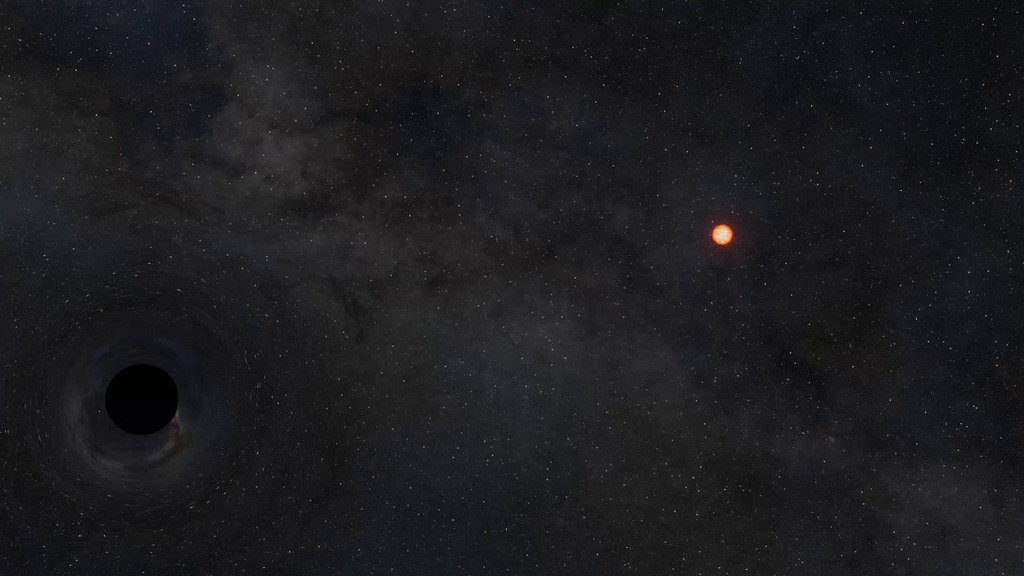
A tidal disruption event occurs when a star ventures close enough to a supermassive black hole that the differential gravitational pull across the star exceeds its own self-gravity, ripping it apart. The stellar debris stretches into an elongated stream, roughly half of which falls back toward the black hole and accretes onto it, producing a luminous flare of radiation that can outshine the entire host galaxy for weeks to months before fading on a timescale of months to years. Tidal disruption events occupy a unique niche in high-energy astrophysics: they reveal supermassive black holes that are otherwise invisible — dormant objects in quiescent galaxies that show no other evidence of accretion — and they provide laboratories for studying the physics of accretion, jet formation, and general relativity in a time-dependent, single-event setting that differs fundamentally from the steady-state conditions in active galactic nuclei.2, 12
.jpg)
Theoretical foundations
The concept of tidal disruption was first explored quantitatively by Jack Hills in 1975, who calculated the radius at which a star approaching a massive black hole would be torn apart — the tidal disruption radius. For a star of mass M* and radius R* approaching a black hole of mass MBH, the tidal radius is approximately rt ≈ R*(MBH/M*)1/3. For a solar-type star and a black hole of 106 solar masses, this works out to roughly 50 million kilometers — about a third of an astronomical unit. Hills recognized that the tidal disruption of stars could produce luminous flares and suggested it as a mechanism related to the activity of galactic nuclei.1
Martin Rees developed the theory further in an influential 1988 paper that established many of the predictions subsequently confirmed by observations. Rees argued that when a star on a parabolic orbit is disrupted, the debris spreads over a range of orbital energies. The most tightly bound material returns to pericenter first, and the subsequent fallback rate follows a characteristic t−5/3 power law as debris at progressively wider orbits returns over time. If the fallback rate exceeds the Eddington accretion rate, the resulting luminosity should approach or exceed the Eddington limit of the black hole. Subsequent theoretical work by Alexander and Kumar explored the thermal emission expected from the circularized debris, predicting soft X-ray luminosities and spectral characteristics that would become key observational diagnostics.6 Rees estimated that such events should occur at a rate of roughly 10−4 per galaxy per year in a typical galaxy — rare enough to be challenging to detect but common enough to be observable in large surveys.2
Carter and Luminet (1982) explored the hydrodynamics of tidal compression during close encounters, showing that a star passing deep within the tidal radius experiences not only tidal stretching along the orbital direction but also compression perpendicular to the orbital plane. In extreme cases this compression can trigger thermonuclear ignition, producing a “tidal detonation” rather than a simple disruption. Such deeply penetrating encounters are rare for main-sequence stars around supermassive black holes but may be more common for white dwarfs encountering intermediate-mass black holes.16
An important constraint arises from general relativity: for black holes more massive than roughly 108 solar masses, the tidal disruption radius falls inside the event horizon for a solar-type star. Such black holes swallow the star whole without producing a visible flare. This sets an upper limit on the black hole masses that can produce observable TDEs from main-sequence stars, though more extended giant stars can be disrupted by more massive black holes, and the spin of the black hole modifies the critical mass through frame-dragging effects on the innermost orbits.13, 2
Observational discovery
The first candidate tidal disruption events were identified in the 1990s as soft X-ray flares from the nuclei of otherwise quiescent galaxies, detected in the ROSAT All-Sky Survey. Komossa and Bade (1999) reported several galaxies that had brightened by factors of 100 to 1,000 in soft X-rays and then faded, with no prior or subsequent evidence of AGN activity. The X-ray spectra were very soft — blackbody temperatures of a few times 105 K — consistent with thermal emission from a compact accretion disk formed from stellar debris, and their light curves were broadly consistent with the predicted t−5/3 decline.10
Ultraviolet and optical surveys expanded the sample dramatically in the 2010s and 2020s. The Galaxy Evolution Explorer (GALEX) detected several TDE candidates in the ultraviolet, and Gezari and collaborators published a landmark 2012 study of a TDE caught in real time, in which a helium-rich stellar core was disrupted and accreted, producing a flare that peaked in the ultraviolet with a blackbody temperature of about 50,000 K. The absence of hydrogen lines in the spectrum suggested that the disrupted star had already lost its hydrogen envelope, possibly through prior binary interaction or a partial tidal stripping event.3
The All-Sky Automated Survey for Supernovae (ASAS-SN) discovered ASASSN-14li in late 2014, which became one of the most extensively studied TDEs to date. Detected in the optical, ultraviolet, X-ray, and radio bands, ASASSN-14li provided multi-wavelength coverage spanning the full spectral energy distribution from the radio jet to the thermal accretion disk. Its well-sampled light curve closely followed the theoretical t−5/3 decline, and the X-ray emission revealed a compact, rapidly varying source consistent with accretion near the innermost stable circular orbit of the black hole.9
Rates and demographics
The rate of tidal disruption events is governed by stellar dynamics in the galactic nucleus. Stars must be scattered onto orbits that bring them within the tidal radius, a process driven by two-body gravitational encounters in the dense stellar cusp surrounding the black hole. Theoretical calculations predict rates of roughly 10−4 to 10−5 per galaxy per year, with higher rates in galaxies with steeper stellar density profiles in their nuclei.2, 13
The advent of wide-field time-domain surveys has enabled the first empirical measurements of TDE rates. The Zwicky Transient Facility (ZTF) reported 17 TDEs from its first 18 months of operation, yielding a volumetric rate consistent with theoretical predictions. Van Velzen and collaborators used the growing ZTF sample to construct the first TDE luminosity function, finding a steep decline in number toward higher luminosities and a preference for TDEs to occur in post-starburst (E+A) galaxies — galaxies that experienced a burst of star formation within the past billion years and then quenched. The rate enhancement in post-starburst galaxies is roughly 30 to 100 times the rate in normal galaxies, suggesting that the stellar dynamics of recently disturbed nuclei funnel stars more efficiently into loss-cone orbits.4, 14
Observational samples now number well over 100 TDE candidates detected in optical, ultraviolet, X-ray, and infrared surveys. The classification of TDEs remains partly phenomenological: optically selected TDEs tend to show broader emission lines and lower blackbody temperatures (~104 K) than X-ray-selected TDEs (~105–106 K), and whether these represent physically distinct populations, different viewing angles, or different evolutionary phases of the same process is an active debate.4, 12
Probing dormant black holes
One of the most valuable aspects of tidal disruption events is their ability to reveal supermassive black holes in galaxies that show no other signs of accretion. Most supermassive black holes in the local universe are dormant: they are not actively accreting gas and produce no AGN emission. Their masses can be inferred from stellar kinematics or the M–σ relation only in nearby galaxies where individual stellar orbits can be resolved. TDEs provide an independent probe of black hole mass in these quiescent systems.5, 11
Mockler and collaborators (2019) developed methods for inferring black hole masses from TDE light curves by fitting the observed luminosity evolution to models of the debris fallback and accretion process. The peak luminosity, rise time, and decline rate all encode information about the black hole mass and the mass and structure of the disrupted star. Applied to the growing sample of well-observed TDEs, these methods have yielded black hole mass estimates in the range of 105.5 to 107.5 solar masses, consistent with the mass range for which tidal disruption of main-sequence stars is expected to produce observable flares.5
TDE demographics also constrain the low end of the supermassive black hole mass function — a regime that is difficult to probe by other means. Because lower-mass black holes have larger tidal disruption radii relative to their event horizons, they can disrupt a wider range of stellar types and produce more energetic flares relative to their Eddington luminosity. The rate and luminosity distribution of TDEs therefore contain information about the occupation fraction and mass distribution of black holes in low-mass galaxies, a key constraint on models of black hole seed formation and growth in the early universe.14, 13
Relativistic jets from tidal disruption
A small fraction of tidal disruption events produce powerful relativistic jets — collimated outflows of plasma moving at speeds close to the speed of light. The first and most spectacular example was Swift J1644+57, detected in March 2011 when the Swift satellite’s Burst Alert Telescope triggered on a hard X-ray source in the nucleus of a galaxy at redshift z ≈ 0.35. The X-ray luminosity exceeded 1047 erg/s, far above the Eddington limit for any plausible black hole mass, indicating that the emission was beamed toward the observer by a relativistic jet. Radio observations confirmed the presence of a decelerating, expanding jet, and the multi-wavelength light curve evolved consistently with a tidal disruption origin.7, 8
The rarity of jetted TDEs — only a handful have been identified out of the more than 100 known TDEs — poses a fundamental question: what determines whether a TDE launches a jet? The leading hypothesis is that jet production requires a rapidly spinning black hole, analogous to the Blandford–Znajek mechanism thought to power AGN jets, in which rotational energy is extracted from the black hole’s ergosphere through magnetic fields threading the event horizon. If this picture is correct, jetted TDEs may preferentially select for the most rapidly spinning black holes, offering a novel route to measuring black hole spin — one of the most elusive properties in black hole astrophysics. Alternative explanations invoke the geometry of the magnetic field in the debris stream or the viewing angle of the observer, and distinguishing between these scenarios requires a larger sample of well-observed jetted events.7, 15
Open questions and future prospects
Despite rapid observational progress, several fundamental aspects of tidal disruption physics remain poorly understood. The mechanism that converts gravitational energy from debris fallback into the observed optical and ultraviolet emission is debated: the classical picture of a thin accretion disk predicts emission predominantly in the extreme ultraviolet and soft X-rays, but many optically selected TDEs show peak emission at much lower temperatures than expected. Proposed explanations include reprocessing of the accretion luminosity by an optically thick envelope of debris surrounding the black hole, shocks produced during the circularization of the debris stream, and outflows driven by super-Eddington accretion rates.4, 12
The ongoing expansion of time-domain surveys — including the Vera C. Rubin Observatory’s Legacy Survey of Space and Time (LSST), expected to detect thousands of TDEs per year — will transform the field from the study of individual events to population-level science. Larger samples will enable precise measurements of TDE rates as functions of galaxy type, black hole mass, and redshift; systematic searches for partial disruptions and repeating TDEs in which a star survives its first encounter and returns for subsequent passages; and statistical constraints on black hole spin from the fraction of events that produce jets. Tidal disruption events have evolved from a theoretical curiosity into one of the most active frontiers of time-domain astrophysics, offering a direct window into the otherwise hidden population of dormant supermassive black holes.14, 13
References
Seventeen tidal disruption events from the first half of ZTF survey observations: Entering a new era of population studies
A relativistic jetted outburst from a massive black hole fed by a tidally disrupted star
A possible relativistic jetted outburst from a massive black hole fed by a tidally disrupted star
ROSAT All-Sky Survey observations of X-ray luminous galaxies: Tidal disruption events
Tidal disruption event demographics with the Zwicky Transient Facility: Volumetric rates, luminosity function, and implications for the local black hole mass function