Overview
- Active galactic nuclei (AGN) are compact, extraordinarily luminous regions at the centres of galaxies powered by accretion of matter onto supermassive black holes with masses ranging from millions to billions of solar masses, producing radiation across the entire electromagnetic spectrum from radio waves to gamma rays with luminosities up to 1048 erg s−1.
- The unified model of AGN, developed from Antonucci and Miller's 1985 spectropolarimetric observations of NGC 1068 and systematised by Urry and Padovani in 1995, explains the diverse observational classes—Seyfert 1 and 2 galaxies, quasars, blazars, and radio galaxies—as a single physical phenomenon viewed at different orientations relative to an obscuring dusty torus surrounding the central engine.
- AGN feedback, operating through radiative winds and relativistic jets, plays a decisive role in galaxy evolution by regulating star formation in massive galaxies, inflating cavities in the hot gas of galaxy clusters, and establishing the observed correlations between supermassive black hole mass and host galaxy properties such as stellar velocity dispersion.
Active galactic nuclei (AGN) are compact, extraordinarily luminous regions at the centres of certain galaxies, powered by the accretion of matter onto supermassive black holes with masses ranging from approximately 106 to 1010 solar masses.13, 17 The gravitational potential energy released as material spirals inward through an accretion disk generates radiation across the entire electromagnetic spectrum—from radio waves to gamma rays—with bolometric luminosities that can exceed 1048 erg s−1, outshining the combined light of hundreds of billions of stars in the host galaxy.2, 13 First recognised as a distinct class of objects through Carl Seyfert’s 1943 observations of galaxies with unusually bright, compact nuclei and broad emission lines, and dramatically expanded by Maarten Schmidt’s 1963 identification of the quasar 3C 273 at a cosmological redshift of 0.158, active galactic nuclei have become central to modern astrophysics.1, 2 They serve not only as laboratories for extreme physics—probing strong gravity, relativistic plasmas, and magnetic field dynamics near black holes—but also as engines of galaxy evolution, regulating star formation and shaping the properties of their host galaxies across cosmic time through powerful feedback mechanisms.11, 15
Discovery and historical development
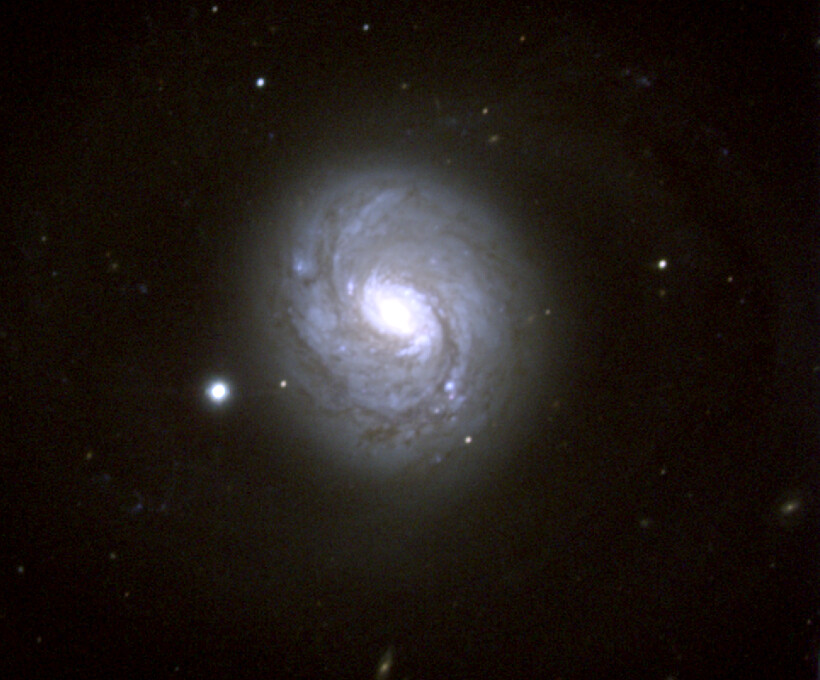
The study of active galactic nuclei has roots reaching back to the early twentieth century, though the true nature of these objects remained obscure for decades. In 1908, Edward Fath obtained a spectrum of NGC 1068 revealing strong emission lines, an unusual feature for what was then classified as a spiral nebula.1 In 1943, Carl Seyfert published the first systematic study of galaxies with exceptionally bright, star-like nuclei exhibiting emission lines broadened to widths of several thousand kilometres per second, including NGC 1068, NGC 4151, and NGC 7469.1 These objects, later known as Seyfert galaxies, represented the first recognised class of active galactic nuclei, though their physical nature remained unexplained for another two decades.1, 12
The field was transformed in 1963 when Maarten Schmidt at the California Institute of Technology identified the optical counterpart of the radio source 3C 273 as a star-like object with a redshift of z = 0.158, placing it at a distance of approximately 750 megaparsecs and implying an intrinsic luminosity roughly 100 times greater than that of an entire normal galaxy.2 Schmidt recognised the emission features in its spectrum as highly redshifted Balmer lines of hydrogen, a breakthrough that launched the era of quasar astronomy.2 Within months, dozens of similar quasi-stellar radio sources (quasars) were identified, and it quickly became apparent that the same phenomenon was being observed across a range of luminosities, from the relatively modest Seyfert galaxies in the local universe to the blindingly luminous quasars at cosmological distances.2, 13
The theoretical framework for understanding these objects crystallised in 1969, when Donald Lynden-Bell proposed that the enormous luminosities of quasars are powered by gravitational accretion onto supermassive black holes, with the energy source being the conversion of gravitational potential energy into radiation as material spirals inward through a hot accretion disk.3 This accretion paradigm, subsequently developed through the standard thin-disk model of Shakura and Sunyaev in 1973, remains the foundation of AGN physics.3, 6
The central engine
The power source of every active galactic nucleus is a supermassive black hole accreting matter from its surroundings.3, 13 The mass of the central black hole determines the maximum sustainable luminosity—the Eddington luminosity—at which the outward radiation pressure on infalling material balances the inward pull of gravity. For a black hole of mass M, the Eddington luminosity is approximately 1.3 × 1038 (M/M⊙) erg s−1, yielding values of 1044 to 1048 erg s−1 for the black hole masses observed in AGN.13, 17 Most AGN radiate at Eddington ratios (the ratio of bolometric luminosity to Eddington luminosity) between roughly 0.01 and 1, though super-Eddington accretion may occur in some systems, particularly at high redshift.14, 19
Matter reaching the vicinity of the black hole forms an accretion disk—a rotating, flattened structure in which viscous and magnetic stresses transport angular momentum outward, allowing material to spiral inward.6 The standard geometrically thin, optically thick disk model developed by Shakura and Sunyaev produces a characteristic thermal spectrum with a peak in the ultraviolet for supermassive black holes, known as the “big blue bump” in AGN spectral energy distributions.6, 13 At lower accretion rates, the disk transitions to a geometrically thick, optically thin, radiatively inefficient accretion flow (RIAF), which produces less luminous, harder emission dominated by inverse Compton scattering and synchrotron radiation.17 The radiative efficiency of accretion—the fraction of rest-mass energy converted to radiation—ranges from approximately 6 percent for a non-spinning (Schwarzschild) black hole to over 30 percent for a maximally spinning (Kerr) black hole, making accretion onto black holes the most efficient sustained energy source in the universe.6, 13
Surrounding the accretion disk at a distance of roughly 0.01 to 0.1 parsecs from the central black hole lies the broad-line region (BLR), composed of dense clouds of gas (electron densities of approximately 109 to 1011 cm−3) moving at velocities of thousands of kilometres per second under the gravitational influence of the black hole.12, 13 Photoionised by the intense ultraviolet and X-ray continuum from the accretion disk, these clouds produce the characteristic broad emission lines—Hα, Hβ, Mg II, C IV—that are a hallmark of Type 1 AGN.4, 12 At larger distances of tens to hundreds of parsecs, a more diffuse narrow-line region (NLR) produces narrower emission lines (velocity widths of a few hundred kilometres per second), visible in all AGN types because it lies outside the obscuring structure.12, 13
The unified model
One of the most influential ideas in AGN research is the unified model, which proposes that the apparently diverse zoo of AGN types—Seyfert 1 and Seyfert 2 galaxies, broad-line and narrow-line radio galaxies, quasars, and blazars—can be explained as a single class of objects viewed at different angles relative to an axisymmetric obscuring structure surrounding the central engine.4, 5, 12
.jpg)
The observational foundation for unification was laid in 1985, when Robert Antonucci and Joseph Miller obtained spectropolarimetric observations of the prototypical Seyfert 2 galaxy NGC 1068.4 In direct (unpolarised) light, NGC 1068 shows only narrow emission lines, lacking the broad lines characteristic of Seyfert 1 galaxies. However, in polarised light—scattered into the observer’s line of sight by electrons or dust above and below the obscuring structure—broad emission lines identical to those of Seyfert 1 galaxies were clearly detected.4 This demonstrated that NGC 1068 harbours a hidden Seyfert 1 nucleus, with the broad-line region being blocked from direct view by an intervening dusty torus of parsec-scale dimensions.4, 12
Megan Urry and Paolo Padovani extended this framework to radio-loud AGN in their influential 1995 review, proposing that powerful Fanaroff–Riley Type II (FR II) radio galaxies with narrow lines are the obscured counterparts of radio-loud quasars, while lower-luminosity FR I radio galaxies correspond to BL Lacertae objects viewed at large angles to the jet axis.5 When one of the relativistic jets points nearly directly at the observer, relativistic beaming amplifies the jet emission by orders of magnitude, producing the extreme variability, high polarisation, apparent superluminal motion, and dominant non-thermal continuum that define the blazar class.5, 13
Modern refinements of the unified model have revealed that the simple geometry of a static, donut-shaped torus is an oversimplification. Infrared interferometric observations and hydrodynamical simulations indicate that the obscuring structure is clumpy rather than smooth, dynamically supported by radiation pressure on dust, and may be better described as the inner extension of a turbulent, dusty wind launched from the outer accretion disk.12, 20 Orientation alone cannot explain all AGN diversity; intrinsic differences in accretion rate, black hole mass, black hole spin, and host galaxy properties also contribute to the observed phenomenology.12, 13
Observational classification
Active galactic nuclei are classified along two principal axes: radio loudness and the presence or absence of broad emission lines.5, 13 Radio-quiet AGN, which constitute approximately 85 to 90 percent of the population, lack powerful relativistic jets and include the Seyfert galaxies (at lower luminosities) and radio-quiet quasars (at higher luminosities).13, 17 Radio-loud AGN, comprising the remaining 10 to 15 percent, produce collimated jets extending from parsec to megaparsec scales and include radio galaxies, radio-loud quasars, and blazars.5, 13
Within the radio-quiet population, Type 1 AGN (Seyfert 1 galaxies and Type 1 quasars) display both broad and narrow emission lines, indicating an unobscured view of the central engine and the broad-line region.4, 12 Type 2 AGN (Seyfert 2 galaxies and Type 2 quasars) show only narrow emission lines, with the broad-line region hidden behind the obscuring torus.4, 12 Intermediate Seyfert types (1.2, 1.5, 1.8, 1.9) have been defined based on the relative strength of broad and narrow line components, reflecting varying degrees of obscuration or intrinsic differences in the broad-line region.12
Approximate fraction of AGN by observational class13, 17, 19
Additional AGN classes that do not fit neatly into the standard scheme include low-ionisation nuclear emission-line regions (LINERs), which are found in up to one-third of all nearby galaxies and may be powered by low-rate accretion flows rather than standard thin disks, and low-luminosity AGN that overlap with the regime of normal galactic nuclear activity.17 The boundary between an active and an inactive galactic nucleus is not sharp; it is defined observationally by the detection of non-stellar emission features that exceed what can be produced by stellar processes alone.13, 17
Relativistic jets
Approximately 10 to 15 percent of AGN launch collimated, bipolar outflows of relativistic plasma known as jets, which can extend from sub-parsec scales near the black hole to hundreds of kiloparsecs or even megaparsec distances into the intergalactic medium.5, 7 These jets carry enormous kinetic power—up to 1047 erg s−1 in the most powerful radio galaxies—and produce synchrotron radiation and inverse Compton emission across the electromagnetic spectrum.7, 11

The physical mechanism responsible for jet launching remains an active area of research, though two principal models have emerged. The Blandford–Znajek mechanism, proposed in 1977, extracts rotational energy from a spinning black hole via large-scale magnetic fields threading the event horizon, tapping the enormous reservoir of spin energy stored in the Kerr metric.7 The Blandford–Payne mechanism, proposed in 1982, launches magnetically driven winds from the surface of the accretion disk itself, which are subsequently collimated into a jet by magnetic hoop stresses.8 General-relativistic magnetohydrodynamic simulations suggest that both mechanisms contribute, with the Blandford–Znajek process dominating the high-energy spine of the jet and disk winds providing a broader sheath of lower-velocity material.7, 8
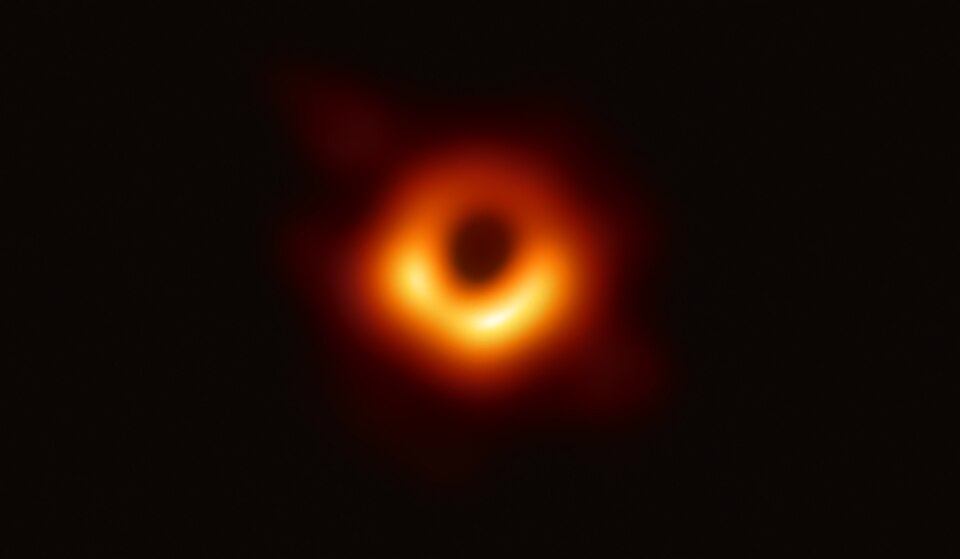
Jets in radio-loud AGN are classified morphologically by the Fanaroff–Riley scheme.5 FR I sources, with radio luminosities below approximately 1025 W Hz−1 at 178 MHz, display diffuse, decelerating jets that brighten toward the nucleus and form plumed, edge-darkened lobes.5 FR II sources, above this luminosity threshold, produce highly collimated jets terminating in compact, luminous hotspots where the jet impacts the intergalactic medium, inflating edge-brightened lobes that can span megaparsec scales.5, 11 The Event Horizon Telescope’s 2019 image of the supermassive black hole in the giant elliptical galaxy M87 revealed the shadow of the black hole and the base of the relativistic jet at horizon-scale resolution, providing direct visual evidence of the connection between the accretion flow and the jet launching region.16
AGN feedback and galaxy evolution
The energy output of active galactic nuclei has profound consequences for their host galaxies and the surrounding intergalactic medium, a phenomenon collectively known as AGN feedback.11, 15
.jpg)
.jpg)
Feedback operates in two principal modes. In the radiative or quasar mode, occurring when the AGN accretes near the Eddington limit, intense radiation drives powerful winds with velocities of thousands to tens of thousands of kilometres per second, sweeping gas out of the galaxy and suppressing star formation.11, 17 In the kinetic or radio mode, occurring at lower accretion rates, relativistic jets deposit mechanical energy into the surrounding hot gas, inflating buoyant cavities (observed as X-ray-dark “bubbles” in the intracluster medium of galaxy clusters) and preventing catastrophic cooling of the hot atmosphere that would otherwise fuel runaway star formation.11, 21
The importance of AGN feedback is underscored by the tight correlations observed between the masses of supermassive black holes and the large-scale properties of their host galaxies, despite the black hole’s gravitational sphere of influence being many orders of magnitude smaller than the galaxy itself.9, 10 The M–σ relation, discovered independently by Ferrarese and Merritt and by Gebhardt and collaborators in 2000, shows that black hole mass scales as approximately the fourth to fifth power of the stellar velocity dispersion of the host galaxy’s bulge.9, 10 This correlation implies that the growth of the black hole and the formation of the stellar bulge are linked through a self-regulating feedback loop: as the black hole grows by accretion, it eventually generates enough energy output to unbind or heat the surrounding gas, shutting off both its own fuel supply and star formation in the host galaxy.11, 15
Cosmological simulations of galaxy formation have demonstrated that AGN feedback is essential for reproducing the observed properties of massive galaxies. Without it, simulations predict galaxies that are far too massive, too blue, and too star-forming compared to observations.11, 21 AGN feedback is now understood as the primary mechanism responsible for quenching star formation in massive elliptical galaxies, maintaining them in the “red and dead” state observed in the local universe.11, 17
The AGN luminosity function and cosmic evolution
The space density and luminosity distribution of AGN have evolved dramatically over cosmic time.19 X-ray and optical surveys have mapped the AGN luminosity function—the number density of AGN as a function of luminosity and redshift—revealing that the overall AGN population peaked in activity between redshifts of approximately 1 and 3, when the universe was 2 to 6 billion years old, and has declined by roughly an order of magnitude to the present day.19, 17
A key finding is the phenomenon of AGN “downsizing” or “anti-hierarchical” evolution: the most luminous AGN (quasars powered by the most massive black holes) reached their peak space density at higher redshifts (z ≈ 2–3), while lower-luminosity AGN (Seyfert galaxies powered by less massive black holes) peaked later, at z ≈ 0.5–1.5.19 This pattern mirrors the downsizing observed in star formation and suggests that the most massive black holes completed their growth earlier in cosmic history.17, 19
Absorption-corrected X-ray surveys have revealed that the majority of AGN accretion in the universe is obscured: approximately 60 to 75 percent of all AGN are Type 2 objects whose central engines are hidden behind column densities of gas exceeding 1022 cm−2, and a significant fraction (roughly 20 to 30 percent of the total) are Compton-thick AGN with column densities above 1024 cm−2.19, 13 Accounting for this obscured population is essential for constructing a complete census of supermassive black hole growth and resolving the cosmic X-ray background, which is produced primarily by the integrated emission of AGN throughout cosmic history.19
AGN space density evolution with redshift19
AGN in the early universe
The discovery of luminous quasars at progressively higher redshifts has posed one of the most challenging problems in astrophysics: how supermassive black holes of 108 to 1010 solar masses assembled within the first billion years after the Big Bang.14 Quasars have been detected at redshifts beyond z = 7, when the universe was less than 800 million years old, implying that the black holes powering them must have grown rapidly from much smaller seeds through sustained accretion at or above the Eddington limit, through a series of mergers, or through some combination of both processes.14, 18
Several seed formation scenarios have been proposed.14 Light seeds (approximately 100 solar masses) may form from the remnants of the first generation of Population III stars, which are predicted to have been very massive. Heavy seeds (104 to 105 solar masses) may form through the direct collapse of primordial gas clouds in halos exposed to strong Lyman–Werner radiation that suppresses molecular hydrogen cooling, preventing fragmentation into stars.14 Intermediate pathways involve runaway stellar collisions in dense star clusters or the collapse of supermassive stars.14
The James Webb Space Telescope (JWST), launched in December 2021, has dramatically advanced the study of AGN in the early universe. JWST has identified AGN at redshifts previously inaccessible to observation, including a candidate at z ≈ 10.6—only approximately 440 million years after the Big Bang—detected through its X-ray emission by the Chandra X-ray Observatory with JWST providing the optical and infrared identification.18 JWST spectroscopy has also revealed a large population of faint, previously undetected AGN at z > 4, characterised by red colours and compact morphologies, which may represent an early phase of obscured black hole growth missed by earlier surveys.22 These discoveries are challenging existing models of black hole seed formation and early growth, suggesting that either seed masses are higher than predicted by light-seed models, or sustained super-Eddington accretion is more common than previously assumed.14, 18
Current frontiers and open questions
Despite more than six decades of study since the discovery of quasars, several fundamental questions about active galactic nuclei remain open.13, 20 The detailed physics of accretion at very low and very high Eddington ratios is still poorly understood; state transitions between radiatively efficient thin disks and radiatively inefficient flows may explain the observed dichotomy between high-excitation and low-excitation radio galaxies, but the triggering mechanisms for these transitions remain debated.12, 17 The physical origin of the radio-loud/radio-quiet divide—why only a minority of AGN produce powerful jets—is not fully resolved, though black hole spin is considered a leading candidate parameter.7, 13
The coupling between AGN output and the host galaxy’s interstellar medium, through which feedback operates, involves complex multiphase gas dynamics spanning many orders of magnitude in spatial scale, from the parsec-scale torus to the hundred-kiloparsec-scale circumgalactic medium.11, 21 Observational tests of feedback models require spatially resolved, multi-wavelength studies of AGN-driven outflows, and recent integral field spectroscopy surveys are beginning to map these outflows in detail across large samples.21 Determining the net impact of AGN feedback on star formation—whether it is primarily negative (suppressing star formation) or can also be positive (compressing gas and triggering new star formation)—remains an active area of investigation.11, 21
The next generation of observational facilities promises major advances. The Vera C. Rubin Observatory’s Legacy Survey of Space and Time (LSST) will discover millions of AGN through optical variability and colour selection, mapping the faint end of the luminosity function with unprecedented statistical power.13 The Square Kilometre Array (SKA) will survey the radio-AGN population to far greater depth and redshift than current instruments, probing jet activity across cosmic time.13 Continued JWST observations will push the census of AGN to the first few hundred million years after the Big Bang, directly testing seed formation models and illuminating the earliest phases of supermassive black hole growth.18, 22 Together, these facilities will transform AGN science from a field shaped by individual remarkable objects into a discipline of precision population statistics across cosmic history.13, 17
References
The image of the shadow of the supermassive black hole in the centre of the Galaxy M87
The AGN–galaxy connection: low-redshift benchmark and lessons for high-redshift studies
The cosmic evolution of the supermassive black hole X-ray luminosity function and the AGN space density
The unified era: an understanding journey from observations to the unified model of active galactic nuclei