Overview
- Convergent evolution occurs when unrelated lineages independently evolve similar traits in response to similar selective pressures—from camera eyes in vertebrates and cephalopods to echolocation in bats and toothed whales—demonstrating that evolution is channeled by physics, ecology, and shared genetic toolkits into a limited set of workable solutions.
- At the molecular level, convergence is often mediated by changes in the same genes: the prestin gene was independently altered in the same functional direction in echolocating bats and dolphins, and the PAX6 transcription factor controls eye development across animal phyla despite hundreds of millions of years of independent evolution.
- The pervasive pattern of convergence has reignited debate about evolutionary predictability: paleontologist Simon Conway Morris argues that life repeatedly finds the same adaptive solutions, implying that the appearance of intelligence-bearing organisms was very nearly inevitable, while Stephen Jay Gould had argued that replaying the tape of life would yield fundamentally different outcomes.
Convergent evolution is the process by which distantly related or entirely unrelated organisms independently evolve similar traits in response to similar environmental challenges or selective pressures. The wings of bats, birds, pterosaurs, and insects; the streamlined bodies of sharks, dolphins, and ichthyosaurs; the camera eyes of vertebrates and cephalopods; the echolocation systems of bats and toothed whales—none of these similarities are inherited from a common ancestor. They arose separately, each time the same physical problems of flight, hydrodynamics, vision, and acoustic navigation confronted lineages with the tools of heredity and variation. Convergence is among the most consequential patterns in evolutionary biology, revealing the constraints that channel the diversity of life and provoking fundamental questions about how predictable evolution is.1, 13 A detailed survey of individual cases is provided in convergent evolution examples.
Convergence, parallelism, homology, and analogy
Precise terminology is essential when discussing convergent evolution, because the field distinguishes among several related concepts that are easily conflated. Convergence refers to the independent origin of similar features in lineages that differ substantially in ancestry and starting form: the camera eye in a vertebrate and an octopus, for instance, arose from completely different photoreceptor architectures in their respective lineages. Parallelism refers to the independent evolution of similar features in closely related lineages that share a common developmental or genetic background, such as the repeated evolution of similar body patterns in closely related species of cichlid fish in African rift lakes. The distinction matters because parallel evolution may draw on the same ancestral genetic variation, while convergence implies a more independent discovery of the same solution.21
Separate from both of these is the contrast between homology and analogy. Homologous structures are those inherited from a common ancestor regardless of their current function—the wing of a bat, the flipper of a whale, the hand of a human, and the leg of a dog are all homologous forelimbs derived from the tetrapod limb of a common Devonian ancestor, even though they are used for flying, swimming, grasping, and walking respectively. Analogous structures, by contrast, serve similar functions but do not derive from a common ancestral structure: the wing of a bird and the wing of a fly are analogous, because they evolved independently in the vertebrate and insect lineages with no common winged ancestor. Convergent evolution is the process that produces analogous structures.1 It is worth noting that the molecular machinery underlying superficially analogous structures is often partially homologous—a subtlety that has been the source of great insight, discussed further below in the context of deep homology.20
The boundary between strict convergence and parallelism has become more nuanced in the genomics era. Studies comparing the genetic basis of convergent traits often reveal that similar phenotypes arise through changes in the same genes or even the same amino acid positions, blurring the distinction between independent invention and parallel change within a shared toolkit.15, 21 This finding has important theoretical implications: it suggests that the space of viable evolutionary solutions is smaller than naively expected, and that genetic constraints funnel independent lineages toward the same molecular changes.13
The camera eye: a paradigmatic convergence
The camera eye—with its cornea, adjustable lens, iris, and photoreceptor-bearing retina—has evolved independently at least twice in strikingly similar form: once in the vertebrate lineage and once in cephalopod mollusks (octopuses and squids). The vertebrate eye and the cephalopod eye are anatomically so similar in their gross organization that early naturalists considered them proof of a single creative plan. Yet they differ in one telling detail: in vertebrates, the photoreceptors of the retina point away from the incoming light (the wiring is "inverted"), whereas in cephalopods, the photoreceptors point toward the light (the retina is "everted"). This difference is precisely what one would predict from two independent constructions: vertebrate and cephalopod eyes converged on the same optical physics but retained their ancestrally different retinal architectures.8, 9
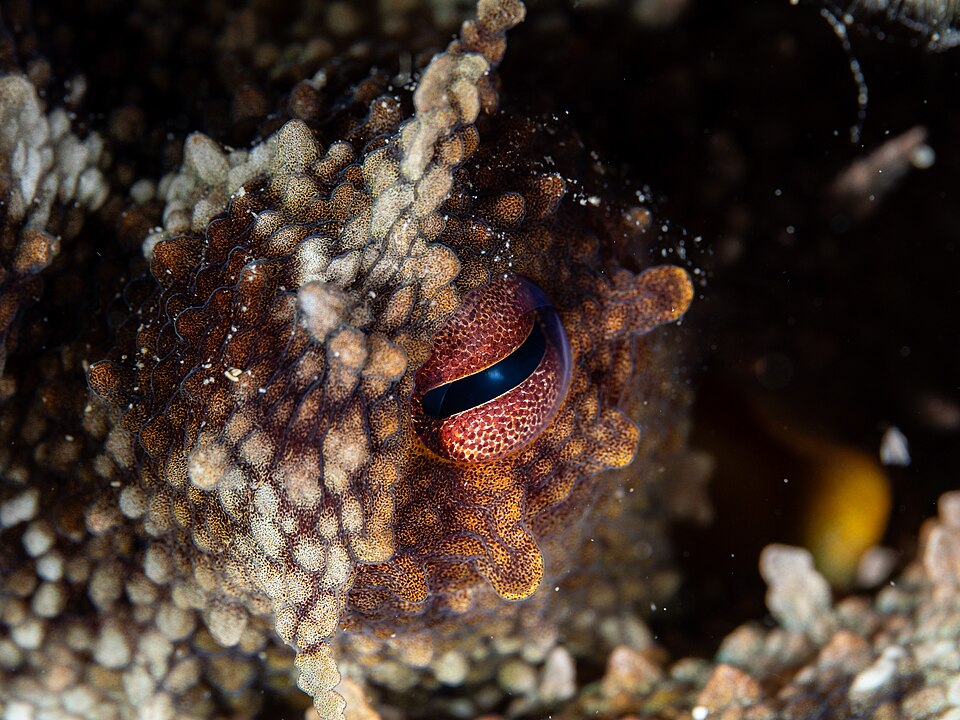

The camera eye is, in a sense, a convergence forced by optics. Forming a sharp image requires a lens with approximately the correct focal length, a pupil to regulate light intensity, and a mosaic of photoreceptors dense enough to resolve the image. These requirements impose physical constraints that drastically limit the range of workable designs. Biophysicist Michael Land and biologist Dan-Eric Nilsson, in their authoritative survey of animal eye evolution, documented at least ten distinct optical designs evolved across the animal kingdom, with camera-type optics having been independently achieved multiple times in vertebrates, cephalopods, polychaete worms, and jumping spiders.9 Ronald Fernald, reviewing the molecular biology of vertebrate eye development, noted that the same suite of crystallin proteins has been independently recruited into eye lenses in unrelated lineages, a convergence at the molecular as well as the morphological level.8
The genetic underpinning of this convergence is illuminating. In the 1990s, Walter Gehring and colleagues discovered that the Pax6 gene (eyeless in Drosophila) acts as a master regulatory transcription factor for eye development across the animal kingdom. They demonstrated that ectopic expression of the mouse Pax6 gene in a fly could induce the formation of functional, compound fly eyes on legs, antennae, and wings—morphologically fly-type eyes controlled by a mammalian gene.7 Gehring argued that this experiment reveals the existence of a deeply conserved "master gene" for eye development shared by all bilaterian animals, implying that the camera eye and the compound eye trace back to a common proto-eye controlled by Pax6 in their shared ancestor.6 The convergence of the camera eye form then represents an independent elaboration of this shared ancestral light-sensing system in two lineages that inherited the same regulatory toolkit.
The four independent origins of powered flight
Powered flight has evolved independently in four groups of animals: insects, pterosaurs, birds, and bats. Each origin required solving the same aerodynamic problems—generating lift, minimizing drag, and controlling attitude in three dimensions—but each group reached similar functional solutions through different anatomical routes. Insect wings are novel outgrowths of the thoracic exoskeleton, derived without obvious structural precedent from the body wall. Pterosaur wings were elongated membranes supported by a hypertrophied fourth finger. Bird wings are highly modified forelimbs in which the hand bones are reduced and fused and the remiges (flight feathers) provide both lift and propulsive surface. Bat wings are membranes stretched between elongated fingers of the hand, the forearm, and the body, a design closer to the pterosaur bauplan in function though completely independent in ancestry.22, 23
The convergence extends to the physiology required to sustain powered flight. Bats and birds both evolved a compact but highly efficient respiratory system capable of supporting the very high aerobic metabolic rates that sustained flapping flight demands. Both groups also independently evolved relatively large hearts with high cardiac output. These physiological convergences, like the morphological ones, arose because the energetic demands of powered flight impose physical constraints on any vertebrate body plan attempting to achieve it.22 In bats specifically, the wing membrane—the patagium—is supplied with a dense network of blood vessels and contains sensory receptors that adjust wing shape dynamically, an independent solution to the aerodynamic feedback problems also solved differently by bird feathers and pterosaur membranes.22, 23
The fossil record for bat evolution shows that early bats already possessed fully formed wings and were capable of flight. The extinct bat Onychonycteris finneyi from the Early Eocene (approximately 52 million years ago) had wings structurally capable of flight, but its cochlea suggests it may not yet have possessed high-frequency echolocation, indicating that flight preceded the full elaboration of bat-style sonar.23 This sequence implies that the two great innovations associated with bats—powered flight and echolocation—were themselves evolutionarily separable, each representing a distinct convergence with capabilities found in other lineages.
Echolocation and molecular convergence
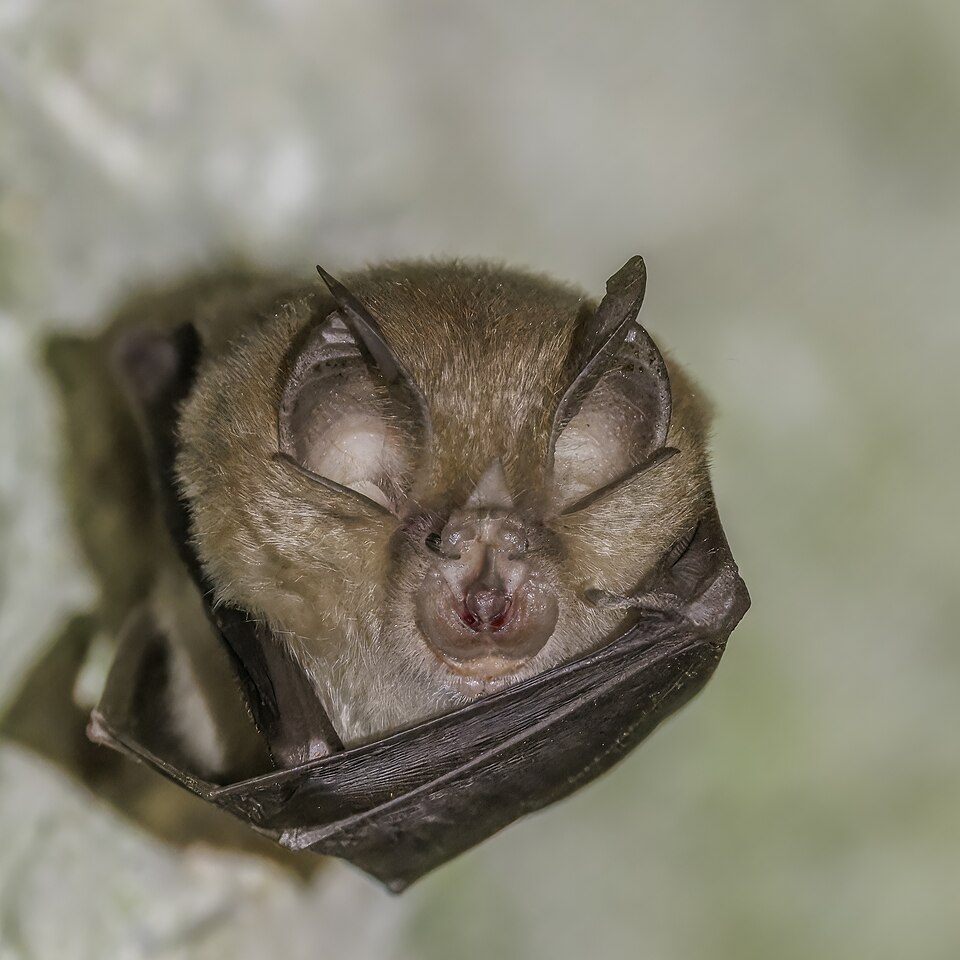
Among the most thoroughly studied examples of convergent evolution at the molecular level is the independent origin of high-frequency echolocation in bats and in toothed whales (dolphins, porpoises, and their relatives). Both groups evolved the capacity to emit high-frequency sound pulses and process returning echoes to build a spatial map of their surroundings in the dark or in murky water. The convergence is remarkable because bats and toothed whales diverged from a common ancestor approximately 90 million years ago—long before either group had evolved anything resembling echolocation—and the two systems are produced by entirely different anatomical structures: a laryngeal mechanism in bats and a nasal sac and melon system in odontocetes.4, 5
_Hrdovicka.jpg)
In 2010, Yang Liu and colleagues analyzed the gene encoding prestin, a motor protein in the outer hair cells of the cochlea that is essential for the amplification of high-frequency sounds. They found that the prestin gene has undergone parallel amino acid substitutions in echolocating bats and dolphins at positions critical for the protein's function at high frequencies, while non-echolocating mammals retain the ancestral amino acid states at those positions.5 This result demonstrated that molecular convergence at identifiable functional sites was driving the phenotypic convergence in hearing physiology—a direct link from shared selective pressure to shared genetic solution.
A larger-scale analysis by Joe Parker and colleagues, published in 2013, extended this finding dramatically. Comparing the genomic sequences of multiple echolocating bats and dolphins against non-echolocating mammals, Parker et al. identified 200 genomic segments that showed elevated rates of convergent sequence evolution in all echolocating lineages. These segments were significantly enriched for genes associated with hearing, hair cell function, and inner ear development. Strikingly, the number of convergently evolved genomic regions detected was far greater than would be expected by chance, indicating that molecular convergence in the echolocation pathway was pervasive rather than limited to a handful of genes.4 The study became a landmark in demonstrating that convergent phenotypes can be underpinned by convergent molecular evolution at a genome-wide scale.
Streamlined bodies: sharks, dolphins, and ichthyosaurs
One of the most visually striking convergences in the history of life is the similar body form of fast-swimming aquatic vertebrates.
_(Posidonia_Shale,_Lower_Jurassic;_Holzmaden_area,_Germany)_(35788640735).jpg)
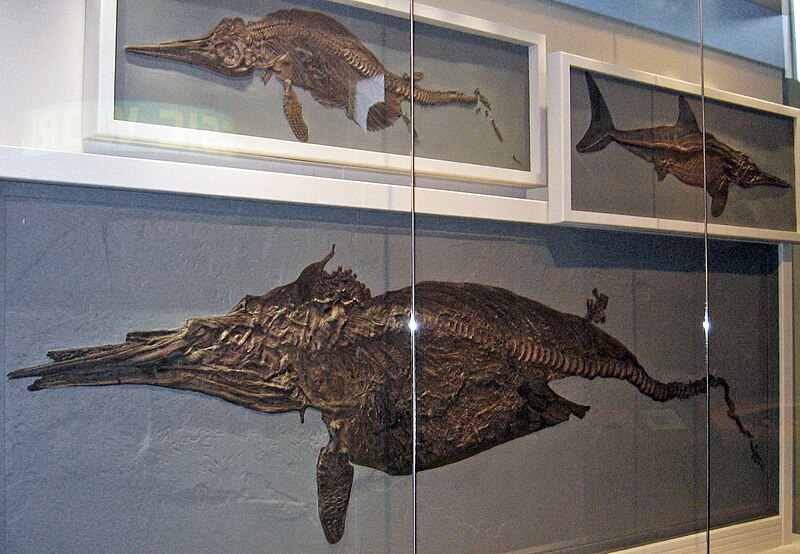
Sharks (cartilaginous fishes), dolphins and other cetaceans (mammals), and ichthyosaurs (extinct Mesozoic marine reptiles) each evolved a fusiform body plan: tapered at both ends, with a crescent-shaped tail generating thrust and stabilizing fins preventing yaw and roll. This shape minimizes hydrodynamic drag and is the optimal design for high-speed sustained swimming in water, and three entirely different vertebrate lineages converged upon it independently.3
A 2015 genomic study by Andrew Foote and colleagues compared the genomes of multiple cetacean species with those of other mammals and fishes, looking for genomic evidence of convergence. They found that the genomes of dolphins and killer whales had evolved convergently with the genomes of some fishes, particularly in genes associated with sensory systems and metabolism, consistent with the shared demands of a fully aquatic lifestyle.3 The study also found convergent changes in genes related to the reduction of hair, adaptations of muscle metabolism for diving, and changes in kidney function to handle a hyperosmotic marine environment—a suite of convergences that went far beyond the external body form to encompass the underlying physiology of the aquatic transition.3
The ichthyosaur case is especially informative because it is known entirely from fossils and can be traced through a detailed evolutionary sequence. Early ichthyosaurs from the Triassic had relatively generalized lizard-like proportions; by the mid-Mesozoic, advanced ichthyosaurs had achieved a body form strikingly convergent with modern dolphins, complete with a dorsal fin and crescent tail. This convergence with cetaceans is all the more remarkable because it occurred in a lineage that had been terrestrial in its immediate ancestors, requiring the independent reinvention of the full suite of adaptations for fast aquatic locomotion.9
Selected convergent trait pairs across unrelated lineages1, 3, 4, 9, 10, 18
| Trait | Lineage 1 | Lineage 2 | Lineage 3+ |
|---|---|---|---|
| Camera eye | Vertebrates | Cephalopod mollusks | Jumping spiders, annelid worms |
| Powered flight | Bats (Chiroptera) | Birds (Aves) | Pterosaurs; insects (multiple) |
| High-frequency echolocation | Echolocating bats | Toothed whales (Odontoceti) | Oilbirds, some cave swiftlets |
| Streamlined fusiform body | Sharks (Elasmobranchii) | Dolphins / cetaceans | Ichthyosaurs (extinct) |
| C4 photosynthesis | Grasses (Poaceae) | Sedges (Cyperaceae) | 60+ independent plant lineages |
| Electric organ for communication/detection | Weakly electric African fishes | Weakly electric South American fishes | 4+ additional independent origins |
| Antifreeze proteins | Antarctic notothenioid fishes | Arctic cod (Gadus morhua) | Herring, smelt, others |
| Marsupial-placental body form pairs | Thylacine (Thylacinidae) | Gray wolf (Canidae) | Multiple marsupial-placental pairs |
C4 photosynthesis: 60+ independent origins
One of the most dramatic demonstrations of convergence in biology is the repeated, independent evolution of C4 photosynthesis, a metabolic modification of the standard C3 carbon fixation pathway that dramatically increases photosynthetic efficiency in hot, dry, and high-light environments. The C4 pathway concentrates carbon dioxide around the primary carboxylating enzyme (RuBisCO) in a specialized layer of bundle sheath cells, suppressing the competing process of photorespiration and enabling higher rates of net carbon fixation under conditions that cripple C3 plants.10, 11
Rufus Sage and colleagues, compiling comprehensive surveys of C4 plant diversity, documented that this metabolic pathway has evolved independently at least 62 times across flowering plant families, including multiple independent origins within grasses, sedges, eudicots, and monocots.10 Each origin required the coordinated evolution of Kranz anatomy (a specialized leaf cell arrangement), differential gene expression between mesophyll and bundle sheath cells, and modifications to the biochemistry of carbon fixation. That this complex suite of changes was achieved independently dozens of times indicates that the genetic and developmental prerequisites for C4 evolution are widely present in flowering plants, and that the strong selective advantage conferred in appropriate environments is sufficient to repeatedly drive the transition.10, 12
The molecular genetics of C4 convergence is now well characterized. Several key C4 enzymes—PEPC (phosphoenolpyruvate carboxylase), PPDK (pyruvate orthophosphate dikinase), and NADP-ME (NADP-malic enzyme)—are recruited from existing C3 gene families already present in all flowering plants. Each independent C4 origin modifies the expression and kinetic properties of these existing enzymes rather than inventing new ones.12 This pattern, in which convergent phenotypes arise by repeated co-option of the same ancestral genetic toolkit, parallels the convergences seen in echolocation and eye development and suggests a broader principle: evolutionary convergence tends to exploit conserved genetic resources rather than create entirely novel solutions.
Further cases: antifreeze proteins, electric organs, and marsupials
Among the most biochemically precise convergences known are the antifreeze proteins (AFPs) evolved by polar fishes. Antarctic notothenioid fishes produce antifreeze glycoproteins (AFGPs) that bind to ice crystals and prevent them from growing, allowing the fish to survive in waters as cold as −1.9°C—below the freezing point of their blood without the antifreeze. Arctic cod (Gadus morhua) and several other Arctic fishes independently evolved functionally similar antifreeze glycoproteins. A landmark 1997 study by Liping Chen, Arthur DeVries, and Chi-Hing Cheng demonstrated through molecular analysis that the AFGP genes in notothenioids and in Arctic cod evolved from completely different ancestral genes by different mutational pathways, even though the resulting proteins perform the same function and have broadly similar molecular structure.16 Further work documented that antifreeze proteins in other fish lineages (winter flounder, herring, smelt) likewise arose independently, producing a diversity of convergent molecular solutions to the identical problem of ice crystal inhibition.17
Electric organs present another quantitatively impressive case of convergence. Weakly electric fishes—which generate and detect electric fields for communication, navigation, and prey detection—evolved independently in at least six vertebrate lineages: two groups in South America (gymnotiform fishes), two in Africa (mormyrid and gymnarchid fishes), and others in marine skates and the electric eel. Jason Gallant and colleagues published a genomic analysis in 2014 comparing the transcriptomes of independently electrogenic fishes and found that the same gene—the sodium channel gene Scn4a—was independently modified in the electric organ in multiple lineages, with convergent changes in the same protein domains responsible for electrocyte function.18 The finding that six independent origins of electric organs repeatedly recruited and modified the same ancestral ion channel gene is a striking example of molecular convergence constraining the path of phenotypic convergence.
At a broader morphological scale, the mammals of Australia and the Americas provide some of the most visually compelling convergences in vertebrate evolution. Marsupials and placental mammals diverged approximately 180 million years ago, yet numerous pairs of species from the two groups independently evolved strikingly similar body plans in response to similar ecological roles. The thylacine, or Tasmanian tiger (Thylacinus cynocephalus), was a marsupial carnivore whose skull, dentition, and body proportions so closely resembled those of a dog or wolf that early European observers misidentified it as a canid. Its convergence with the gray wolf includes not only external form but details of skull architecture: palate shape, jaw musculature geometry, and tooth proportions independently arrived at the same solutions for a cursorial predator catching and killing medium-sized prey.25 Genomic work has confirmed the deep divergence of marsupials and placentals while simultaneously documenting their shared regulatory landscapes—parallel expansions of similar gene families in both groups support the repeated realization of similar developmental programs.14
Deep homology and the shared genetic toolkit
The concept of deep homology, developed principally by Neil Shubin, Cliff Tabin, and Sean Carroll, offers a framework for understanding why convergent evolution is so common. Deep homology refers to the conservation of genetic regulatory networks across animal phyla—networks that were established in the common ancestors of major animal groups and have been repeatedly redeployed in independent lineages to build superficially similar structures.20 The Pax6 system for eye development, the Hox genes for body axis patterning (see evo-devo), the Distal-less gene for limb and appendage development: these ancient regulatory programs constrain what morphologies are developmentally accessible and channel independent lineages toward similar outcomes whenever similar ecological challenges are encountered.20
Shubin, Tabin, and Carroll reviewed deep homology across a range of cases in their influential 2009 Nature paper, arguing that convergence is often not truly independent in the strictest sense: it is the repeated use of conserved developmental toolkits in new contexts.20 The wings of birds and bats are homologous as forelimbs, but the redeployment of Hox gene patterning for wing development is homologous at the regulatory level too, even though the specific wing morphologies are not directly inherited. Similarly, the independently evolved electric organs of South American and African fishes both drew on the same Scn4a ion channel gene already present in muscle, because muscle is the tissue from which electric organs evolved in all lineages and Scn4a is the dominant sodium channel expressed in vertebrate muscle.18 Deep homology thus explains why convergent evolution so often finds the same molecular solution: the toolkit is shared, and the available raw material is the same across independent lineages.
This perspective also explains the parallel molecular convergences documented by Parker and colleagues in echolocating bats and dolphins.4 The cochlear hair cells of all mammals share the same developmental origin and the same molecular machinery—when strong selection for high-frequency hearing acts on this shared substrate, the same genes are likely to be modified because they are the same genes that control the relevant functional properties in all mammalian cochleae. The genetic architecture of the trait channels the evolutionary response to selection into predictable molecular paths.
Evolutionary predictability: Conway Morris versus Gould
The pervasiveness of convergent evolution has become central to a debate about whether evolution is predictable or contingent—whether, if the tape of life were replayed, something like the modern biosphere would inevitably emerge or whether radically different outcomes were equally possible. The two poles of this debate are associated principally with two paleontologists: Stephen Jay Gould and Simon Conway Morris, both of whom studied the Burgess Shale fauna of the middle Cambrian but drew opposite conclusions from it.
Gould, in his 1989 book Wonderful Life, argued that the Burgess Shale reveals a Cambrian fauna of extraordinary disparity—a range of body plans far exceeding that of modern animals, most of which were subsequently lost not because they were inferior but because of unpredictable contingency. He famously proposed the "tape of life" thought experiment: if evolution were rerun from the Cambrian, the outcome would be entirely different, because small, historically contingent events would cascade into wholly divergent lineages. In Gould's view, the appearance of intelligent, tool-using, language-using organisms like Homo sapiens was not only improbable but effectively unrepeatable—a fluke of history rather than a predictable consequence of physical law.2
Conway Morris took a directly contrary position. In Life's Solution (2003) and subsequently in The Runes of Evolution (2015), he documented the pervasiveness of convergence across the entire spectrum of life—from molecular convergences in proteins to the independent evolution of agriculture in ants, termites, and humans—to argue that the space of viable biological solutions is far smaller than Gould supposed.1, 24 If unrelated lineages repeatedly find the same solutions to the same problems, Conway Morris argues, then the evolutionary outcomes are in an important sense foreordained by the structure of the problem space: the laws of physics and chemistry, the constraints of developmental biology, and the ecological demands of life on Earth conspire to make certain adaptive peaks attractors that life will reliably reach, given sufficient time and opportunity.1 On this view, the evolution of complex sensory systems, sophisticated cognition, social behavior, and technology was highly probable—perhaps inevitable in a world with life.
The empirical evidence for pervasive convergence clearly supports Conway Morris's central observation that evolution repeatedly finds the same solutions. The 60-plus independent origins of C4 photosynthesis, the multiple independent origins of electric organs, echolocation, camera eyes, and powered flight are all consistent with the existence of a limited set of adaptive peaks that natural selection reliably locates. However, critics of Conway Morris's stronger predictability thesis note that the specific convergences documented are at the level of functional solutions to defined physical problems, not at the level of higher-level organizational novelties. The evolution of the vertebrate camera eye was repeatable in cephalopods, but the specific lineage that produced tetrapods, and among tetrapods the specific lineage that produced great apes, may still have been highly contingent in Gould's sense.2, 13
The debate also intersects with the molecular genetics of convergence. Stern's 2013 review noted that converging lineages more often reuse the same genes and even the same mutational changes than would be expected under a model of unconstrained evolutionary possibility.13 Arendt and Reznick, reviewing the genetics of parallel and convergent evolution, found that convergent phenotypes at the population level frequently arise through the same genetic mechanisms in independent populations, a result consistent with strong genetic constraint on available evolutionary pathways.21 This molecular-level channeling of evolutionary trajectories is precisely what Conway Morris's framework predicts: the shared genetic toolkit reduces the dimensionality of the evolutionary search space, making certain outcomes far more likely than chance would suggest.
Significance for evolutionary theory
Convergent evolution illuminates evolutionary theory from multiple directions. At the most basic level, it demonstrates that natural selection is powerful and consistent enough to find similar functional solutions independently across vastly different lineages and timescales. The repeated, independent origins of echolocation, C4 photosynthesis, and antifreeze proteins demonstrate that selection can reliably navigate to the same adaptive peaks when the same selective pressures are applied to lineages with the necessary genetic raw material.10, 4, 16 This pattern extends even to organisms facing the specific physiological challenges of high-altitude environments: independent studies of Andean and Himalayan birds have found convergent amino acid changes in hemoglobin subunits that improve oxygen binding efficiency at altitude, demonstrating that even highly specific molecular solutions are accessible to separate lineages under the same selective regime.19
At the mechanistic level, the genomic dissection of convergent traits has revealed that evolutionary convergence is more constrained than early observers supposed. Rather than inventing entirely new solutions, converging lineages tend to repeatedly modify the same ancestral genes and regulatory networks, because those are the molecular components that control the relevant developmental and physiological processes.13, 20 This channeling has a practical implication for evolutionary prediction: knowing the genetic architecture of a trait in one lineage provides information about how convergent evolution is likely to proceed in others. The study by Gallant and colleagues on electric fish, for example, demonstrated that the convergent modification of Scn4a in independently electrogenic fishes was not merely a coincidence but a predictable consequence of the gene's role in muscle electrophysiology.18
For the broader question of evolutionary predictability, the evidence from convergence strongly supports the conclusion that evolution is neither purely random nor rigidly deterministic. The laws of physics and the structure of biochemistry impose genuine constraints that make certain adaptive solutions overwhelmingly more likely than others, and the conservation of developmental genetic toolkits further channels evolutionary responses to similar selective pressures. Yet contingency is real: the specific timing, sequence, and details of evolutionary events depend on historical accidents that would differ in any replaying of the tape. The resolution may be that functional outcomes—the evolution of image-forming eyes, of acoustic location, of efficient carbon fixation—are highly repeatable, while the specific lineages, body plans, and molecular implementations that achieve them retain a degree of historical uniqueness.1, 2, 13
References
C4 photosynthesis: a unique Blend of modified biochemistry, anatomy, and ultrastructure
Origins of evolutionary convergence: natural selection, molecular constraints, or both?
Widespread cis-regulatory convergence between the extinct Tasmanian tiger and gray wolf
Antifreeze glycoproteins from notothenioid fish and Antarctic cod evolved by different molecular pathways
Parallel molecular evolution in pathways, genes, and sites in high-elevation hummingbirds revealed by comparative genomics
Convergence and parallelism reconsidered: what have we learned about the genetics of adaptation?