Overview
- The MacArthur-Wilson equilibrium theory proposes that species richness on islands is determined by a dynamic balance between the rate of immigration of new species from a mainland source pool and the rate of extinction of species already present on the island.
- The model generates two core predictions: islands closer to the mainland receive more immigrants and support more species (the distance effect), and larger islands have lower extinction rates and likewise support more species (the area effect).
- Although the theory's simplifying assumptions have been challenged by subsequent research incorporating speciation, habitat diversity, and non-equilibrium dynamics, its conceptual framework remains the foundational model in island biogeography and has been extended to habitat fragments, mountaintop isolates, and conservation biology.
In 1963, ecologist Robert H. MacArthur and entomologist Edward O. Wilson proposed a theoretical model to explain one of the most consistent patterns in ecology: the observation that larger islands harbour more species than smaller ones, and that remote islands harbour fewer species than those close to a mainland source.1 Their equilibrium theory of island biogeography recast these patterns not as static outcomes of history but as the result of a dynamic balance between two ongoing processes — the immigration of new species to the island and the extinction of species already resident there. Published first as a journal article in 1963 and then as a monograph in 1967, the theory provided the first quantitative, predictive framework for understanding species richness on islands, and it rapidly became one of the most influential ideas in ecology, biogeography, and conservation biology.1, 2
Historical context
Long before MacArthur and Wilson, naturalists had observed that islands differ systematically in their biological richness. Alfred Russel Wallace's expeditions through the Malay Archipelago in the 1850s and 1860s documented striking differences in species composition among islands of different sizes and distances from continental landmasses, and the species-area relationship — the empirical finding that species number increases with island area — had been quantified by Olaf Arrhenius as early as 1921 in the power-law form S = cAz, where S is the number of species, A is the island area, and c and z are fitted constants.5 The species-area relationship was well established empirically, but it lacked a mechanistic explanation. Why should area predict species number? And why, among islands of similar area, do remote islands consistently support fewer species than islands near a continent?9
Prior explanations were largely descriptive or invoked historical contingency — each island's biota was seen as a product of its unique geological and dispersal history. MacArthur and Wilson's insight was to propose that the number of species on an island is not a frozen historical accident but the outcome of a continuous dynamic process, one that could be modelled with simple rate equations and that generated testable, quantitative predictions.1, 2
The equilibrium model
The core of the MacArthur-Wilson theory is a graphical and mathematical model describing how the rate of immigration of new species to an island and the rate of extinction of species on the island vary as a function of the number of species currently present. The model begins with a mainland source pool of P species. At any given time, an island harbours S species. The immigration rate — the rate at which species not yet present on the island successfully colonise it — is highest when the island is empty (because every arriving species is new) and declines toward zero as S approaches P (because fewer and fewer mainland species remain unrepresented on the island). The extinction rate — the rate at which resident species are lost from the island — is zero when no species are present and increases as S increases, because more species on a small island means smaller population sizes, greater interspecific competition, and higher vulnerability to stochastic extinction.1, 2
When plotted on the same axes, with the number of species on the horizontal axis and rate on the vertical axis, the declining immigration curve and the rising extinction curve intersect at a point that defines the equilibrium species number, S*. At this point, the rate of arrival of new species exactly balances the rate of loss of resident species. The equilibrium is dynamic: species are continuously arriving and disappearing, and the composition of the island's biota changes over time even as the total species count fluctuates around S*. This concept of a dynamic, turnover-based equilibrium was the theory's most novel and provocative claim.1, 2
Mathematically, the simplest version of the model assumes linear immigration and extinction functions. If I is the maximum immigration rate (when the island is empty) and E is the maximum extinction rate (when the island is saturated at P species), then the immigration rate at species richness S is I(1 − S/P) and the extinction rate is E(S/P). Setting these equal and solving for the equilibrium yields S* = IP/(I + E). The equilibrium turnover rate — the number of species arriving (or going extinct) per unit time at equilibrium — is IE/(I + E).2 MacArthur and Wilson noted that the immigration and extinction curves need not be linear; concave or convex shapes are biologically plausible and shift the equilibrium and turnover rate accordingly, but the qualitative predictions of the model remain the same regardless of curve shape.2
The distance effect and the area effect
The model's explanatory power derives from how it accounts for variation in species richness among islands that differ in isolation and size. The distance effect operates through immigration: islands farther from the mainland source pool receive fewer propagules per unit time because dispersal probability declines with distance. In the graphical model, a distant island has a lower immigration curve than a near island. Because the extinction curve remains unchanged (it depends on island properties, not mainland proximity), the intersection shifts leftward, predicting a lower equilibrium species number on the distant island.1, 2 Empirical support for the distance effect comes from many archipelagos. In the Hawaiian Islands, for instance, the most remote major archipelago in the world, native species richness across many taxonomic groups is lower than that of comparably sized but less isolated Pacific islands, consistent with reduced immigration rates across nearly 4,000 kilometres of open ocean.6
The area effect operates through extinction: larger islands support larger population sizes, offer more diverse habitats, and buffer species against demographic and environmental stochasticity, resulting in lower per-species extinction rates. In the graphical model, a large island has a lower extinction curve than a small island, and because the immigration curve is unaffected (both islands are equidistant from the mainland), the intersection shifts rightward, predicting a higher equilibrium species number on the large island.1, 2 The species-area relationship — the power-law pattern S = cAz observed across island systems worldwide, with z values typically falling between 0.20 and 0.35 for oceanic islands — is explained in the equilibrium framework as a consequence of declining extinction rates on progressively larger islands.5, 9
The theory also predicts interaction effects between distance and area. A small, distant island has both a low immigration curve and a high extinction curve, yielding the lowest equilibrium species number. A large, near island has the reverse, yielding the highest. Furthermore, the model predicts that turnover rates will be highest on small, near islands (where both immigration and extinction are high) and lowest on large, distant islands (where both rates are low), a prediction that has proved difficult to test directly but has received some empirical support.2, 16
Predicted equilibrium species richness by island size and isolation1, 2
Experimental and empirical tests
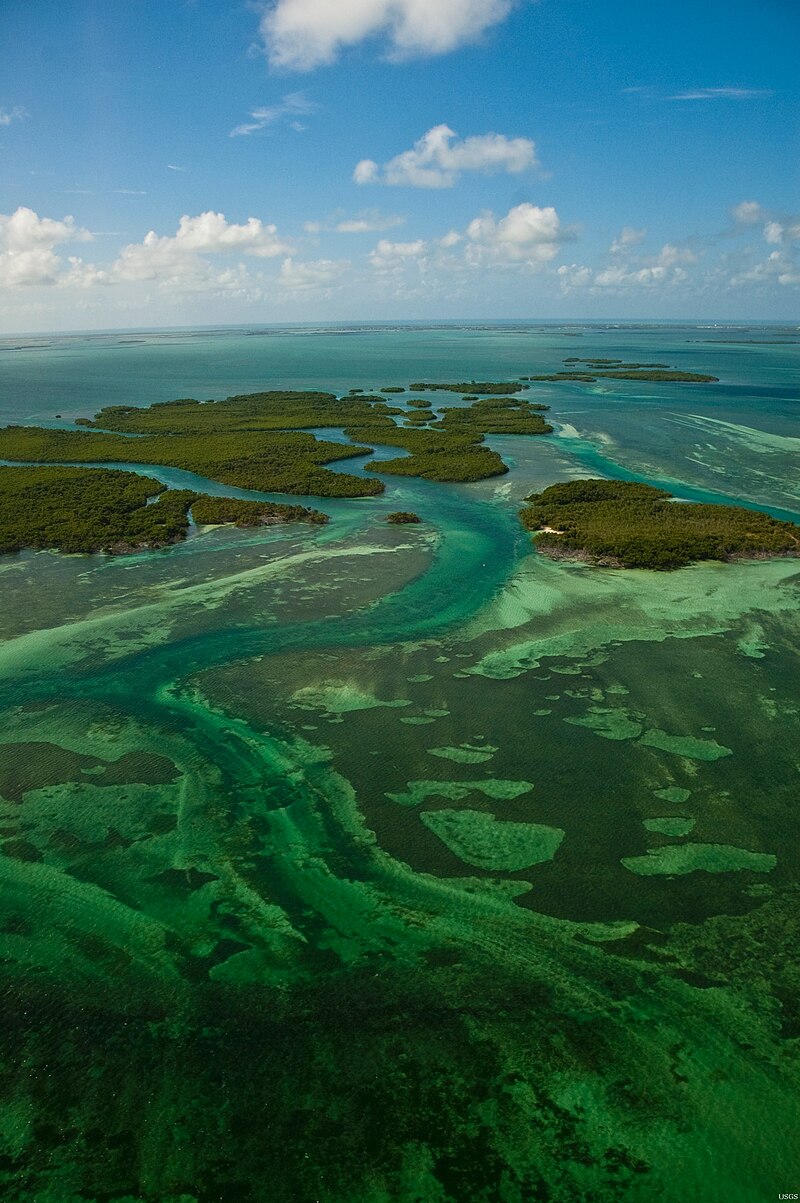
The most celebrated experimental test of the equilibrium theory was conducted by Daniel Simberloff, a doctoral student of Wilson's, in the Florida Keys in the late 1960s. Simberloff and Wilson selected several small mangrove islands in Florida Bay, carefully censused all arthropod species on each island, and then defaunated the islands by enclosing them in scaffolding and fumigating them with methyl bromide.
.jpg)
They subsequently monitored recolonization over the following months and years.3 The results were broadly consistent with the equilibrium theory: species numbers on the defaunated islands rose rapidly and approached pre-defaunation levels within approximately 200 days, though the species composition differed substantially from the original assemblage, confirming that a dynamic turnover process was operating rather than a deterministic reassembly of the identical community.3, 4
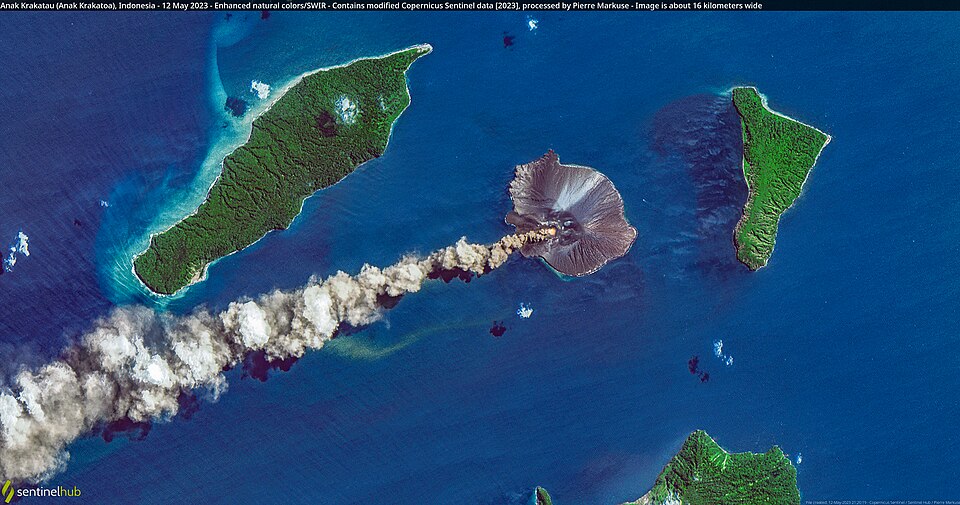
Crucially, the experiments also supported the distance prediction: the most isolated island among those studied recolonized more slowly and equilibrated at a somewhat lower species number than the nearer islands.4 The Simberloff-Wilson experiments became a landmark in ecology, not only for testing the theory but for demonstrating that large-scale ecological hypotheses could be subjected to experimental manipulation in the field. Subsequent natural experiments have provided additional support. The recolonization of Krakatau after its catastrophic 1883 eruption obliterated all life on the island has been tracked over more than a century, and the progressive increase in species richness, followed by an apparent levelling off, is broadly consistent with the approach to equilibrium predicted by the model.21
Biogeographic surveys across many archipelagos have confirmed the species-area and species-isolation patterns predicted by the theory. Studies of Caribbean land birds, Pacific island ants, and Canary Island plants, among many other systems, have documented the expected relationships between island area, distance from the mainland, and species richness.19 However, the predicted turnover rates have been more difficult to verify. Detecting true immigration and extinction events requires long-term monitoring, and apparent turnover can be inflated by pseudo-turnover — the failure to detect species that are actually present, or the recording of transient individuals that do not establish breeding populations.16
Assumptions and limitations
The MacArthur-Wilson model achieves its elegance through deliberate simplification, and its assumptions have been scrutinised extensively in the decades since its publication. The model treats all species as ecologically equivalent, assigning them identical immigration and extinction probabilities regardless of their life history, body size, trophic position, or competitive ability. In reality, dispersal ability varies enormously among taxa: wind-dispersed spores colonise remote islands far more readily than large-bodied mammals, and predators require established prey populations before they can persist.2, 16
The model also assumes that the mainland source pool is fixed and that immigration is the sole source of new species on an island. For remote oceanic islands such as the Hawaiian or Galapagos archipelagos, however, in situ speciation — the evolution of new species on the island itself — contributes substantially to species richness, particularly in lineages that undergo adaptive radiation. The original MacArthur-Wilson model does not incorporate speciation, a significant omission for islands where endemic species far outnumber recent immigrants.11, 16
The treatment of extinction as a simple increasing function of species number has also been questioned. Extinction rates depend not only on the number of species but on how resources are partitioned among them, whether interspecific competition is strong or weak, and whether the island offers heterogeneous habitats that can support ecological specialisation. The model does not account for habitat diversity, which empirical studies have shown to be at least as strong a predictor of species richness as area alone on many islands.9, 16 Lomolino and Weiser identified the small island effect, a pattern in which the species-area relationship breaks down on very small islands, where species richness appears to vary independently of area below a threshold island size, potentially because stochastic processes overwhelm the deterministic mechanisms assumed by the model.20
Finally, the equilibrium assumption itself does not hold universally. Many island biotas appear to be in a state of non-equilibrium, either because they have not had sufficient time to reach equilibrium (as on geologically young islands), because major disturbances have recently reset their species counts (as after volcanic eruptions or sea-level changes), or because ongoing environmental change continuously shifts the equilibrium point.11, 12
Refinements and extensions
Subsequent decades of research have produced several important extensions to the original theory. Lomolino's work on the species-area relationship emphasised that the slope of the relationship (the z exponent) varies systematically with spatial scale, taxonomic group, and island type, and that body size interacts with area in predictable ways: small-bodied species tend to dominate the biotas of small islands, while large-bodied species require minimum island areas below which they cannot maintain viable populations.8, 9
Ilkka Hanski's metapopulation theory, developed from the late 1980s onward, extended the equilibrium logic from oceanic islands to patches of habitat in fragmented landscapes. In a metapopulation framework, each habitat patch is analogous to an island, with local colonization and extinction rates determining the fraction of patches occupied at any given time. The equilibrium between colonization and extinction across a network of patches produces predictions closely paralleling the MacArthur-Wilson model, but with additional mechanisms including the rescue effect (immigration reducing local extinction risk by supplementing declining populations) and propagule rain (constant input of individuals from a large mainland population).9, 10
Whittaker, Triantis, and Ladle proposed the general dynamic model of oceanic island biogeography, which incorporates the geological life cycle of volcanic islands — emergence, growth, maturity, erosion, and submergence — into the equilibrium framework. In this model, the carrying capacity of an island for species changes over geological time as the island grows, reaches its maximum area and topographic complexity, and then erodes. Speciation, immigration, and extinction rates all respond to this changing template, producing a humped relationship between island age and species richness, with peak diversity occurring during the island's topographic maturity rather than at the end of its geological lifespan.11, 12
Neutral theory, advanced by Stephen Hubbell, offered a complementary perspective by building species richness predictions from the assumption that all individuals of all species are ecologically equivalent, with community dynamics driven entirely by stochastic birth, death, and dispersal. Rosindell, Hubbell, and Etienne showed that neutral models can reproduce the species-area relationship and other patterns predicted by island biogeography theory, while also providing estimates of speciation rates and dispersal limitation that the MacArthur-Wilson model does not address.17, 18
Applications to conservation
The equilibrium theory has had a profound influence on conservation biology, particularly in the design of nature reserves and the management of fragmented habitats.


Jared Diamond was among the first to apply the theory's logic to conservation practice, arguing in 1976 that habitat fragments function as ecological islands and that the species-area relationship predicts an "extinction debt" when large, continuous habitats are reduced to small, isolated remnants.15 The theory informed a major debate in the 1970s and 1980s over whether a single large reserve or several small reserves of equivalent total area would protect more species (the "SLOSS" debate), with the equilibrium model generally favouring the single large reserve because of its lower predicted extinction rate.15, 16
Empirical studies of habitat fragmentation have broadly supported the theory's prediction that species richness declines following the reduction and isolation of habitat. A global synthesis by Haddad and colleagues found that habitat fragmentation reduces species richness by 20 to 75 percent across a wide range of ecosystems and taxa, with the magnitude of loss depending on fragment size, degree of isolation, and time since fragmentation.13 Fragments that are connected by habitat corridors lose fewer species than fully isolated fragments, consistent with the equilibrium theory's emphasis on immigration rates as a determinant of species richness.13, 14
The concept of relaxation — the time-delayed loss of species from habitat fragments that have recently become isolated — derives directly from the equilibrium model. When a formerly continuous habitat is fragmented, each fragment initially contains more species than its new, smaller area can support at equilibrium. The fragment then "relaxes" toward a lower equilibrium species number through gradual local extinctions, a process that may take decades to centuries to complete. This extinction debt has important implications for conservation: habitat fragments that currently appear species-rich may in fact be on a trajectory toward significant biodiversity loss, and present-day species counts may overestimate the long-term carrying capacity of fragmented landscapes.14, 15
Legacy and ongoing significance
More than six decades after its initial publication, the MacArthur-Wilson equilibrium theory remains the conceptual foundation upon which island biogeography and much of conservation biogeography is built. Its genius lay not in the precision of its quantitative predictions, many of which have been refined or superseded, but in its shift of perspective: from viewing island biotas as static catalogues of species to understanding them as dynamic systems governed by ongoing ecological processes that can be modelled, predicted, and tested.16 The theory established the template for all subsequent quantitative models of species richness on islands, including the general dynamic model, neutral theory, and metapopulation models, each of which extends rather than replaces the original equilibrium framework.11, 17, 18
,_Indonesia_-_12_May_2023_(52891922902).jpg)
The theory also transformed the relationship between ecology and evolution by demonstrating that biogeographic patterns could be understood through simple, general processes rather than requiring detailed knowledge of every island's unique history. By providing a common quantitative language, it enabled the comparison of patterns across taxonomic groups, geographic regions, and spatial scales, and it catalysed the development of conservation biology as a discipline grounded in ecological theory rather than purely in natural history description.2, 15, 16 The Ricklefs and Bermingham synthesis of Caribbean biogeography, for example, showed how the interplay of immigration, extinction, and speciation across an entire archipelago could be analysed within a framework that traces its intellectual lineage directly to MacArthur and Wilson's 1963 model.19
References
Area, isolation, and the immigration of island biota: the case of the Hawaiian Islands