Overview
- MacArthur and Wilson's 1967 equilibrium theory proposed that species richness on islands reflects a dynamic balance between immigration and extinction, with immigration rates declining with distance from the mainland and extinction rates increasing as island area decreases — a framework experimentally validated by Simberloff's defaunation of Florida mangrove islands.
- Islands serve as natural laboratories for studying evolution in action, producing some of the most celebrated adaptive radiations in biology, including Darwin's finches, Hawaiian honeycreepers, Caribbean anoles, and Hawaiian Drosophila, while also driving predictable shifts in body size through the island rule.
- The application of island biogeography theory to habitat fragments on continents transformed conservation biology, inspiring the SLOSS debate over reserve design and providing the theoretical foundation for understanding how habitat loss and fragmentation drive species extinctions in the modern world.
Island biogeography is the study of the factors that determine species richness and composition on islands and other isolated habitats. The field was transformed in the 1960s by Robert MacArthur and Edward O. Wilson, whose equilibrium theory proposed that the number of species on any island reflects a dynamic balance between the rate at which new species arrive by immigration and the rate at which resident species go extinct.1, 2 This deceptively simple framework unified decades of observations about the distribution of life on islands and generated testable predictions that spurred one of the most celebrated experiments in ecology — the complete defaunation and recolonization of mangrove islands in the Florida Keys.3, 4 Beyond its explanatory power for oceanic islands, the theory has profoundly shaped conservation biology, providing the intellectual foundation for understanding how habitat fragmentation on continents drives the loss of species in the modern world.16, 17
Islands have long served as natural laboratories for evolutionary biology. The isolation, discrete boundaries, and simplified ecological communities of islands make them ideal systems for studying speciation, adaptive radiation, and extinction. Darwin's finches in the Galapagos, the honeycreepers of Hawaii, the anole lizards of the Caribbean, and the extraordinary Drosophila radiation of the Hawaiian archipelago all represent cases in which a single colonizing lineage diversified into dozens or hundreds of species, filling ecological niches that on continents are occupied by distantly related groups.7, 8, 9 At the same time, the very features that make islands engines of speciation — small area, limited resources, and naive biota — render their species acutely vulnerable to extinction, a fact underscored by the observation that approximately 90 percent of all bird extinctions since 1500 have occurred on islands.13, 14
The equilibrium theory of MacArthur and Wilson
Before MacArthur and Wilson, biogeographers had long recognized that larger islands harbour more species than smaller ones and that remote islands harbour fewer species than those close to a mainland source. What was lacking was a mechanistic explanation for these patterns. In a seminal 1963 paper and their landmark 1967 monograph The Theory of Island Biogeography, MacArthur and Wilson proposed that the number of species on an island is determined by the intersection of two rate curves: an immigration curve that decreases as the island accumulates species (because fewer potential colonists remain in the mainland pool) and an extinction curve that increases with species number (because more species mean smaller per-species population sizes and greater competitive pressure, both of which elevate extinction risk).1, 2 The point at which the immigration rate equals the extinction rate defines the equilibrium species richness of the island.
This framework yields two key qualitative predictions. First, because the immigration rate is higher for islands closer to the mainland (propagules have a shorter distance to cross), near islands should support more species at equilibrium than far islands. Second, because the extinction rate is higher on smaller islands (where populations are necessarily smaller and more prone to stochastic collapse), large islands should support more species than small islands of equal distance from the source.2 These predictions matched the empirical patterns already documented by naturalists from Darwin and Wallace onward, but the theory went further by predicting that species richness is dynamic — that even at equilibrium, individual species are continually going extinct and being replaced by new immigrants, so that the total number of species remains roughly constant while the identity of those species changes over time. This predicted turnover was one of the most novel and controversial aspects of the theory.1, 2, 18
The species-area relationship
The mathematical backbone of island biogeography is the species-area relationship, one of the oldest and most robust patterns in ecology. The relationship is typically expressed as a power function: S = cAz, where S is the number of species, A is the area of the island or habitat, c is a constant that varies among taxa and regions, and z is the exponent that describes how steeply species richness increases with area.5, 22 On a logarithmic plot, this power function produces a straight line with slope z.
Frank Preston's 1962 analysis of the lognormal distribution of species abundances provided a theoretical basis for the power function and suggested a canonical z-value of approximately 0.25 for isolated biotas such as oceanic islands.5 Empirical studies across a wide range of taxa and archipelagos have confirmed that z-values for true oceanic islands generally fall between 0.20 and 0.35, while z-values for habitat patches embedded in a continental landscape tend to be lower, typically between 0.12 and 0.18, because the surrounding matrix is less hostile than open ocean and permits some exchange of individuals among patches.20, 22 The species-area relationship has been called ecology's most general empirical law: it holds for organisms as diverse as plants, birds, mammals, insects, and microbes, across spatial scales ranging from tiny islets to entire continents.22
The mechanistic basis of the species-area relationship is multifactorial. Larger areas encompass more habitat types, providing niches for specialist species that cannot persist on small, uniform islands. Larger areas also support larger populations of each species, reducing the probability of stochastic extinction. MacArthur and Wilson's equilibrium model provides an additional dynamic explanation: larger islands intercept more immigrants (a passive sampling effect) and lose fewer species to extinction, yielding a higher equilibrium richness.2, 20
Experimental tests: the Florida mangrove islands
The most direct experimental test of the equilibrium theory was carried out by Daniel Simberloff and E. O. Wilson in the Florida Keys between 1966 and 1969. The experiment targeted small mangrove islands in Florida Bay, each consisting entirely of red mangrove trees (Rhizophora mangle) standing in shallow water. The terrestrial fauna of these islands was composed almost exclusively of arboreal arthropods, with each island typically supporting 20 to 50 species at any given time.3, 4
_-_Sarasota,_Florida_2023-01-23.jpg)
_-_Sarasota,_Florida_2023-01-23.jpg)
Simberloff and Wilson first conducted a thorough census of the arthropod species on each island, then eliminated the entire terrestrial fauna by enclosing the islands in scaffolding covered with fumigation tents and applying methyl bromide gas. After defaunation, they monitored recolonization at frequent intervals for approximately one year.4 The results provided striking support for the equilibrium model. Within roughly 250 days, most islands had returned to approximately the same number of species they had supported before fumigation, even though the specific identity of many species had changed — precisely the turnover predicted by the theory. Moreover, the nearest island to a source of colonists recovered fastest, and the most distant island recovered most slowly and to the lowest equilibrium richness, consistent with the predicted effect of isolation on immigration rates.3
The Simberloff-Wilson experiment remains one of the most celebrated manipulative experiments in the history of ecology. Its significance extends beyond the specific confirmation of the equilibrium model: it established the principle that large-scale, whole-ecosystem experiments are both feasible and scientifically illuminating, a precedent that inspired subsequent experimental work in community ecology and conservation biology.3, 18
Island radiations as natural laboratories
Islands are disproportionately important to evolutionary biology because of their role as theatres of adaptive radiation — the rapid diversification of a single ancestral lineage into multiple species that exploit different ecological niches. The combination of geographic isolation, ecological opportunity (many vacant niches), and the absence of competitors and predators that characterizes oceanic islands creates conditions uniquely conducive to evolutionary diversification.18
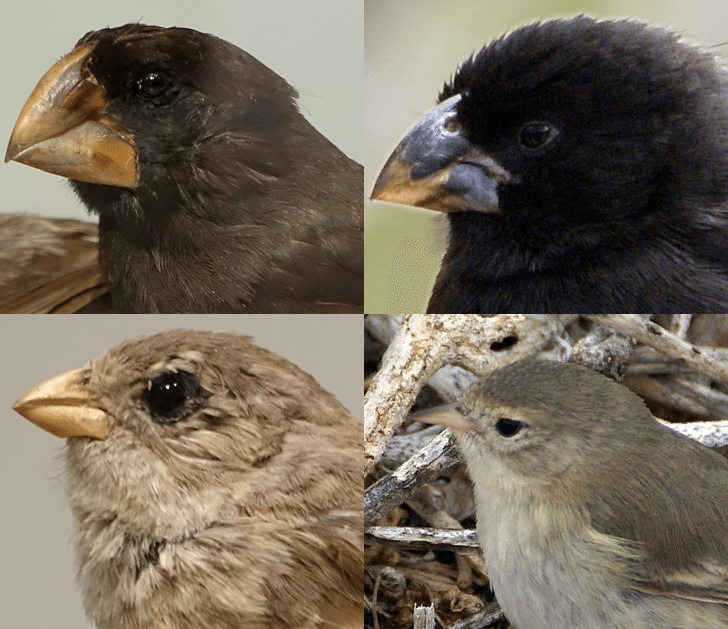

Darwin's finches on the Galapagos Islands remain the iconic example. Genome sequencing of all species has established that the radiation derives from a single colonization event approximately 1 to 2 million years ago and has produced at least 18 species that differ dramatically in beak size and shape, each adapted to a different diet ranging from seeds and insects to cactus flowers and the blood of other birds. A 240-kilobase haplotype encompassing the ALX1 gene, which encodes a transcription factor involved in craniofacial development, is strongly associated with the variation in beak shape that defines the radiation.7 Peter and Rosemary Grant's four decades of continuous fieldwork on the island of Daphne Major have documented natural selection acting on beak dimensions in real time, demonstrating measurable evolutionary change in response to drought-driven shifts in the seed supply.21
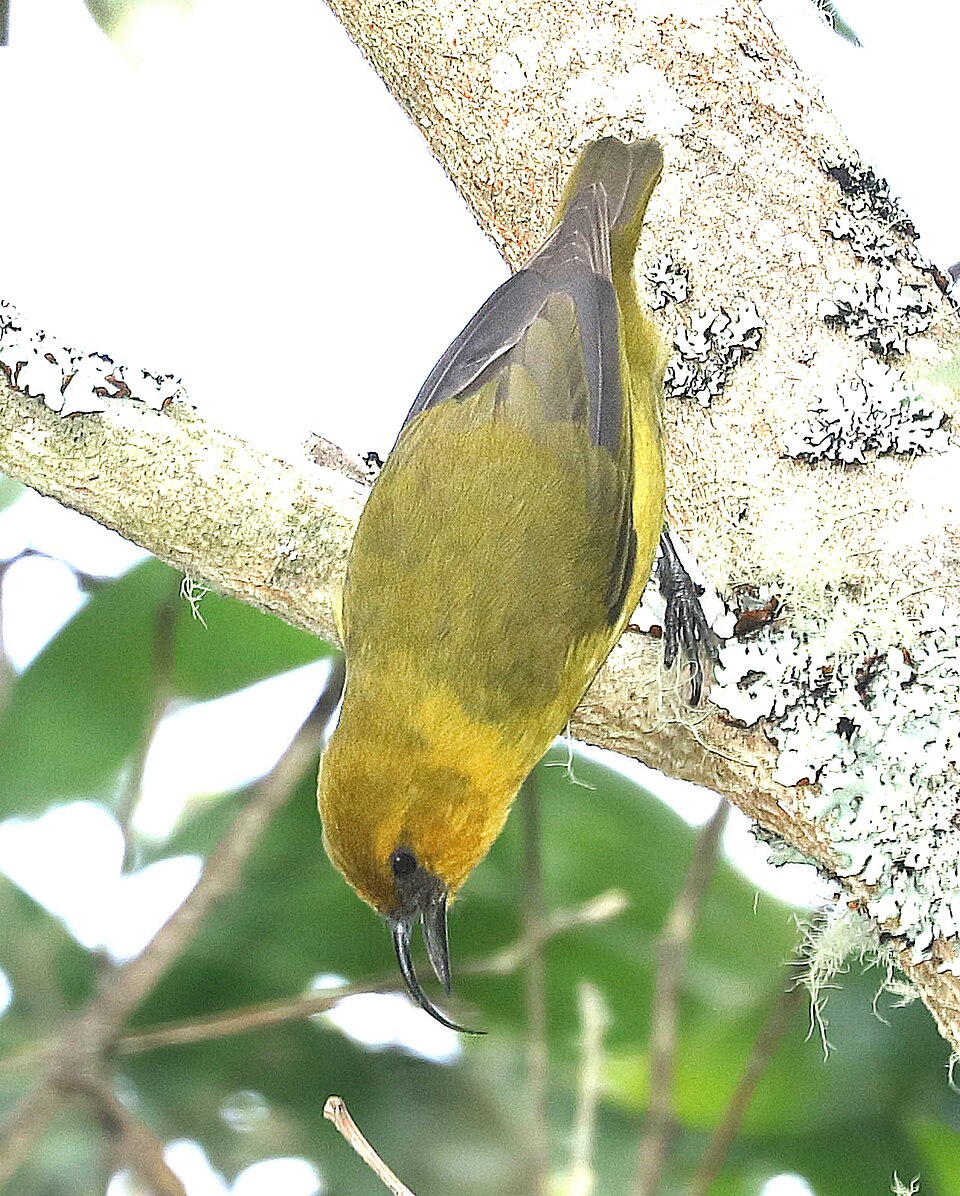
The Hawaiian honeycreepers (Drepanidinae) represent an even more spectacular radiation. Molecular phylogenetic analysis has established that a single cardueline finch ancestor, most closely related to Eurasian rosefinches, colonized the Hawaiian Islands roughly 5.7 million years ago, coinciding with the emergence of the oldest current high island, Kauai. From this single colonist lineage, at least 56 species evolved, exhibiting a range of bill morphologies that converge on those of warblers, woodpeckers, parrots, and nectar-feeding sunbirds found on continents — an astonishing degree of morphological diversification from a single founding species.8 Tragically, the honeycreepers also illustrate the extreme vulnerability of island radiations: at least 23 species are now extinct due to habitat loss, introduced predators, and avian malaria carried by introduced mosquitoes.24
The Caribbean anole lizards (Anolis) provide a rare example of replicated adaptive radiation. On each of the four largest islands of the Greater Antilles — Cuba, Hispaniola, Jamaica, and Puerto Rico — anoles have independently evolved the same set of ecological specialists, termed ecomorphs, each adapted to a specific structural microhabitat: crown-giant, trunk-crown, trunk, trunk-ground, twig, and grass-bush. Phylogenetic analysis has confirmed that the ecomorphs on different islands are not each other's closest relatives but instead evolved convergently on each island, making Caribbean anoles one of the most compelling natural experiments in convergent evolution.9
The Hawaiian Drosophila constitute what may be the single most species-rich adaptive radiation of any animal lineage on Earth. An estimated 1,000 species of drosophilid flies have evolved on the Hawaiian Islands from a single ancestral colonist approximately 25 million years ago, diversifying in host-plant use, courtship behaviour, and morphology. Among these, the picture-wing Drosophila exhibit elaborate wing patterns and complex mating rituals that have made them a model system for studying the role of sexual selection in speciation.18
Major island adaptive radiations7, 8, 9, 18
| Radiation | Archipelago | Species | Colonization age | Key adaptation |
|---|---|---|---|---|
| Darwin's finches | Galapagos | ~18 | ~1–2 Ma | Beak shape & diet |
| Hawaiian honeycreepers | Hawaii | ~56 | ~5.7 Ma | Bill morphology |
| Caribbean anoles | Greater Antilles | ~400 | ~40–50 Ma | Ecomorph (limb & toe pad) |
| Hawaiian Drosophila | Hawaii | ~1,000 | ~25 Ma | Host plant & courtship |
| Galapagos giant tortoises | Galapagos | ~15 | ~6–12 Ma | Shell shape & body size |
| Macaronesian Echium | Canary Islands | ~28 | ~5–20 Ma | Growth form (herb to tree) |
Ecological release and the taxon cycle
One of the forces that enables adaptive radiation on islands is ecological release — the expansion of a species' niche breadth when it colonizes an environment where competitors, predators, or parasites are absent or reduced. On species-poor islands, colonizing populations frequently exploit a wider range of habitats and food sources than their mainland counterparts, a phenomenon termed niche expansion. Island birds, for example, tend to occupy more habitat types and feed on a broader array of prey than the same or closely related species on continents, as documented for bird communities across the Lesser Antilles.18 Ecological release is often accompanied by density compensation, in which individual species achieve population densities on islands far exceeding those on the mainland, because the total resource base is divided among fewer competing species.18
In 1961, Wilson proposed the taxon cycle to describe a recurring biogeographic pattern he observed in the ant fauna of Melanesia. In the first phase of the cycle, a species adapted to marginal or disturbed habitats colonizes an island from a continental source, exploiting its capacity for long-distance dispersal. Once established, the species expands into interior habitats and, freed from the competitive pressures of the continental biota, begins to differentiate morphologically and ecologically. Over time, the island populations contract into montane or interior refugia as newer colonists invade the marginal habitats, and the differentiated island forms may eventually go extinct, completing the cycle.6 The taxon cycle represents an early synthesis of ecological and evolutionary dynamics on islands and foreshadowed the integration of speciation and extinction into later extensions of island biogeography theory.6, 19
Insular body size evolution
Among the most visually striking consequences of island life is the tendency for species to evolve body sizes that differ markedly from their mainland relatives. In 1964, the mammalogist J. Bristol Foster surveyed 116 insular mammal species and identified a systematic pattern: large-bodied mainland species tend to evolve smaller body sizes on islands (insular dwarfism), while small-bodied mainland species tend to evolve larger body sizes (insular gigantism).10 This pattern, subsequently formalized by Leigh Van Valen in 1973 as Foster's rule or the island rule, has been documented across mammals, birds, reptiles, and invertebrates, though its universality and underlying mechanisms remain debated.11
The causal explanations for the island rule invoke the ecological peculiarities of island environments. Insular dwarfism in large mammals is thought to result from reduced resource availability on islands of limited area, the absence of large predators (which relaxes selection for large defensive body size), and the intensified intraspecific competition that accompanies high population densities in the absence of competitors. Mediterranean dwarf elephants provide the most dramatic examples: multiple lineages of full-sized elephants independently evolved dwarfed forms on Mediterranean islands, with Palaeoloxodon falconeri of Sicily reaching a shoulder height of less than one metre — approximately 2 percent of the body mass of its mainland ancestor.11, 23 Insular gigantism in small mammals such as rodents may be driven by the release from predation and interspecific competition, allowing populations to reach sizes closer to an energetically optimal body mass for their ecological role.11
Mark Lomolino's comprehensive 2005 analysis confirmed the graded nature of the pattern — the shift from gigantism in small species to dwarfism in large species occurs along a continuous gradient rather than as a dichotomy — and proposed that insular body sizes tend to converge on a size that is optimal for a given body plan and ecological strategy, irrespective of whether the mainland ancestor was larger or smaller than that optimum.11 Recent work has further demonstrated that species with extreme insular body size shifts, whether dwarfed or gigantified, face disproportionately elevated extinction risk when humans arrive on islands, suggesting that the very evolutionary changes that adapt species to island life may predispose them to vulnerability.23
Insular body size change relative to mainland ancestors10, 11
Endemism and the vulnerability of island biota
Islands harbour a disproportionate share of the world's endemic species — species found nowhere else on Earth.
_Hakalau_Forest_National_Wildlife_Refuge,_Hawaii_co,_Hawaii_-08_male_(36977826146).jpg)
Although islands constitute less than 5 percent of the planet's land area, they support approximately 20 percent of all vascular plant species and 15 percent of all terrestrial vertebrate species. A global analysis by Kier and colleagues found that the endemism richness of islands exceeds that of mainland regions by a factor of approximately 9.5 for plants and 8.1 for vertebrates, making islands the most important repositories of unique biodiversity on the planet.12 The mechanisms generating high endemism on islands are straightforward: geographic isolation prevents gene flow with mainland populations, promoting allopatric speciation, while the long timescales available on persistent oceanic islands allow populations to diverge and accumulate unique adaptations.12, 18
This same isolation, however, renders island species acutely vulnerable to extinction. Of the approximately 140 bird species confirmed extinct since 1500, roughly 90 percent were island endemics — a staggering figure given that the majority of the world's bird species inhabit continents.14 The primary drivers of island bird extinction have been the introduction of mammalian predators, particularly rats, cats, and mongooses, which prey on eggs, chicks, and adults of species that evolved in the absence of such threats. A global analysis of 220 oceanic islands demonstrated that the probability of bird extinction on a given island is positively correlated with the number of exotic predatory mammal species established there after European colonization.13
Beyond predation, habitat destruction, disease (particularly avian malaria and avian pox transmitted by introduced mosquitoes in the Hawaiian Islands), and competition from invasive species have all contributed to the wave of island extinctions that continues to the present day.24 The vulnerability of island endemics is compounded by their characteristically small geographic ranges, low population sizes, and ecological naivety — having evolved without exposure to mammalian predators, many island birds exhibit little fear of novel threats, a trait that has earned some the colloquial label of "tame" or "fearless" species. The dodo of Mauritius, the moa of New Zealand, and the elephant bird of Madagascar are among the most famous casualties of this vulnerability.13, 24
Application to habitat fragmentation and conservation
Perhaps the most consequential legacy of island biogeography theory has been its application to habitat fragmentation on continents. As early as 1975, Jared Diamond recognized that a nature reserve surrounded by agricultural or urban land functionally resembles an island surrounded by ocean — both are isolated patches of suitable habitat in which the species-area relationship predicts that smaller patches will support fewer species.16 Diamond derived a set of geometric design principles for nature reserves inspired directly by MacArthur and Wilson's theory, the most prominent of which was that a single large reserve should conserve more species than several small reserves of equal total area, because the large reserve would have a lower extinction rate and could support larger, more viable populations.16
This recommendation immediately drew criticism. In 1976, Daniel Simberloff and Lawrence Abele argued that the application of island biogeography theory to reserve design was premature and that, under many biologically realistic conditions, several small reserves could actually harbour more total species than one large reserve, particularly when the small reserves are placed in different habitats or biogeographic regions and thus capture greater compositional diversity.15 The ensuing debate, known as the SLOSS debate (Single Large Or Several Small), dominated conservation biology throughout the late 1970s and 1980s and remains relevant to this day. The general consensus that emerged is that neither option is universally superior: the optimal strategy depends on the spatial distribution of habitats, the dispersal abilities of the target species, the configuration of the landscape, and the specific conservation objectives.15, 17
Subsequent research has demonstrated that habitat fragments differ from true oceanic islands in important ways that limit the direct applicability of classical island biogeography theory. Habitat fragments are subject to edge effects — altered microclimates, increased light penetration, and elevated rates of tree mortality near fragment boundaries — that degrade habitat quality and are not considered by the original theory. The surrounding matrix of modified land, far from being uniformly hostile like open ocean, varies in permeability: some species can move through agricultural land or secondary forest between fragments, while others cannot. Furthermore, fragmented landscapes are typically affected by additional anthropogenic stressors such as hunting, fire, logging, and pollution, which interact synergistically with fragmentation to accelerate species loss.17 These insights have led to the emergence of landscape ecology as a discipline that extends and supplements classical island biogeography with explicit consideration of matrix quality, corridor connectivity, edge dynamics, and the spatial configuration of habitat patches.17
Modern extensions of the theory
In the decades since its publication, the equilibrium theory of island biogeography has been extended, refined, and in some respects superseded by more comprehensive models that incorporate processes MacArthur and Wilson deliberately excluded from their original formulation. The most significant of these is speciation. The 1967 theory treated species richness as determined solely by immigration and extinction, setting aside the possibility that new species could originate on the island itself through in situ evolution. For small, close islands where immigration dominates, this simplification is reasonable, but for large, remote archipelagos such as Hawaii or the Galapagos, speciation is the primary source of species and cannot be ignored.18, 19
In 2008, Whittaker, Triantis, and Ladle proposed the general dynamic model (GDM) of oceanic island biogeography, which integrates the MacArthur-Wilson framework with island ontogeny — the geological life cycle of volcanic oceanic islands. The GDM recognizes that oceanic islands are born, grow, and eventually subside and erode, passing through a characteristic sequence of stages: emergence, growth in area and elevation, maturity, erosion, and eventual submergence. As the island progresses through these stages, its carrying capacity (the maximum number of species it can support) first increases and then decreases, and the rates of immigration, speciation, and extinction shift accordingly.19 The model predicts a humped relationship between island age and species richness, with diversity peaking during the mature phase when the island is large and topographically complex, then declining as the island erodes and shrinks. Empirical data from archipelagos such as the Canary Islands and the Hawaiian chain broadly support this prediction.19
Other modern extensions have incorporated neutral theory, which treats all individuals as ecologically equivalent and derives species richness from stochastic birth, death, immigration, and speciation events; metabolic theory, which links species richness to temperature and energy availability; and phylogenetic approaches that use molecular data to distinguish between immigration and in situ speciation as sources of island diversity.18 Collectively, these extensions have not displaced the MacArthur-Wilson equilibrium model so much as embedded it within a broader theoretical framework. The original theory's core insight — that island species richness is a dynamic equilibrium maintained by opposing rates of gain and loss — remains foundational, even as the field has expanded to encompass the evolutionary and geological processes that MacArthur and Wilson deliberately set aside in the interest of analytical clarity.2, 18
References
Multilocus resolution of phylogeny and timescale in the extant adaptive radiation of Hawaiian honeycreepers
A global assessment of endemism and species richness across island and mainland regions
Going or gone: defining 'Possibly Extinct' species to give a truer picture of recent extinctions
The island dilemma: lessons of modern biogeographic studies for the design of natural reserves
Theory meets reality: how habitat fragmentation research has transcended island biogeographic theory