Overview
- The extended evolutionary synthesis (EES) is a proposed expansion of the modern synthesis that adds developmental bias, inclusive inheritance, niche construction, and phenotypic plasticity to the standard list of evolutionary processes, while retaining natural selection, mutation, drift, and gene flow as foundational mechanisms.
- Formally articulated by Massimo Pigliucci and Gerd Müller in 2007 and consolidated at the 2008 Altenberg meeting and in the 2010 MIT Press volume Evolution: The Extended Synthesis, the EES treats organisms as active participants in evolution and emphasises reciprocal causation between developing phenotypes and their selective environments rather than gene-centred unidirectional causation.
- The framework remains contested: a 2014 Nature exchange and a 2017 Charlesworth, Barton and Charlesworth response in Proceedings of the Royal Society B argued that the modern synthesis already accommodates the phenomena cited by EES proponents, while a 2016–2019 Templeton-funded research programme led by Kevin Laland and Tobias Uller produced more than 200 papers testing EES-derived predictions across plants, animals, and microbes.
The extended evolutionary synthesis (EES) is a proposed expansion of the dominant twentieth-century framework of evolutionary biology — the modern synthesis — that incorporates developmental bias, inclusive inheritance, niche construction, and phenotypic plasticity as additional evolutionary processes alongside natural selection, mutation, recombination, genetic drift, and gene flow. Its proponents argue that the modern synthesis, codified between roughly 1918 and 1950 in the work of Ronald Fisher, Sewall Wright, J. B. S. Haldane, Theodosius Dobzhansky, Ernst Mayr, George Gaylord Simpson, and others, is gene-centred and unidirectional in its conception of causation, treating organisms as passive products of genetic variation filtered by external selection. The EES instead emphasises that developing phenotypes actively shape their own selective environments and that inheritance includes more than DNA sequence alone, so that any complete explanation of evolutionary change must invoke reciprocal causation between organisms and the conditions they encounter.1, 13
The framework was articulated as a programme by Massimo Pigliucci in a 2007 paper in Evolution and by Gerd B. Müller in a companion 2007 essay in Nature Reviews Genetics, was elaborated at a July 2008 meeting at the Konrad Lorenz Institute for Evolution and Cognition Research in Altenberg, Austria, and was consolidated in the 2010 MIT Press volume Evolution: The Extended Synthesis edited by Pigliucci and Müller.2, 4, 5 A 2015 paper in Proceedings of the Royal Society B by Kevin Laland, Tobias Uller, Marcus Feldman, Kim Sterelny, Müller, Armin Moczek, Eva Jablonka, and John Odling-Smee gave the EES its most systematic statement, listing predictions that distinguish it empirically from the modern synthesis.1 A 2016–2019 research programme funded by an $8 million grant from the John Templeton Foundation, headquartered at the University of St Andrews and Lund University, conducted twenty-two empirical projects to test EES-derived predictions in plants, animals, and microbes.21, 22 The framework remains contested. Critics including Gregory Wray, Hopi Hoekstra, Douglas Futuyma, Richard Lenski, Trudy Mackay, Dolph Schluter, and Joan Strassmann argued in Nature in 2014 that the modern synthesis already accommodates the phenomena the EES highlights, and Deborah Charlesworth, Nicholas Barton, and Brian Charlesworth argued in 2017 that no radical revision of the standard framework is required to explain adaptive variation.11, 12
Historical background and the modern synthesis
The modern synthesis, sometimes called the neo-Darwinian synthesis, was the integration of Darwinian natural selection with Mendelian genetics that took shape in the second quarter of the twentieth century. Its foundational works include Ronald Fisher's The Genetical Theory of Natural Selection (1930), Sewall Wright's papers on shifting-balance theory (1931 onward), J. B. S. Haldane's The Causes of Evolution (1932), Theodosius Dobzhansky's Genetics and the Origin of Species (1937), Ernst Mayr's Systematics and the Origin of Species (1942), and George Gaylord Simpson's Tempo and Mode in Evolution (1944). By 1950 these works had established a consensus framework in which evolution is understood as the change in allele frequencies in populations under the action of natural selection, mutation, recombination, genetic drift, and gene flow, and in which population genetics provides the formal mathematical scaffolding for the entire enterprise.2, 3
Pigliucci and others have noted that the modern synthesis, despite its name, did not in fact unify all of biology. It conspicuously omitted developmental biology, which remained largely separate from evolutionary genetics until the rise of evolutionary developmental biology in the 1980s and 1990s.3, 4 It was also gene-centred in a strong sense: the population-genetic formalism treats the gene as the principal unit of evolutionary bookkeeping, with the developing phenotype reduced to a transient instrument by which genes propagate themselves. Calls for a broader framework appeared sporadically throughout the second half of the twentieth century. In the 1950s the British developmental biologist Conrad Waddington argued that natural selection acts on epigenetic landscapes rather than on raw genotypes and introduced the concepts of canalization and genetic assimilation. In 1980 Stephen Jay Gould called for a hierarchical expansion of evolutionary theory in his essay "Is a new and general theory of evolution emerging?". By the early 2000s, separate research traditions in evolutionary developmental biology, niche construction, epigenetic inheritance, phenotypic plasticity, and evolvability had each accumulated enough material to support proposals for a more comprehensive framework.3, 4, 8
The phrase "extended evolutionary synthesis" was popularised by Pigliucci's 2007 Evolution paper, "Do we need an extended evolutionary synthesis?", and by Müller's companion 2007 Nature Reviews Genetics essay, "Evo–devo: extending the evolutionary synthesis".2, 4 The two authors then organised a workshop at the Konrad Lorenz Institute in Altenberg, Austria, in July 2008, attended by sixteen evolutionary biologists and philosophers of science. The Altenberg workshop and the resulting 2010 MIT Press volume, Evolution: The Extended Synthesis, brought together contributions from John Beatty, Werner Callebaut, Sergey Gavrilets, John Gerhart, Eva Jablonka, David Jablonski, Marc Kirschner, Marion Lamb, Alan Love, Stuart Newman, John Odling-Smee, Michael Purugganan, Eörs Szathmáry, Günter Wagner, David Sloan Wilson, and Gregory Wray, and constituted the field's first sustained collective statement.5
The modern synthesis and the EES compared
The 2015 Laland and colleagues paper in Proceedings of the Royal Society B presented the EES as differing from the modern synthesis not in its commitment to natural selection, mutation, drift, and gene flow but in its emphasis on additional evolutionary processes and in its reframing of causation between organisms and environments. The paper distinguished structural assumptions held by both frameworks (gradual evolution by selection on heritable variation) from assumptions where the two diverge (the locus and direction of variation, the nature of inheritance, and the role of organisms in shaping their selective environments).1 The contrast can be presented in tabular form, summarising the principal differences as articulated by Laland and colleagues, by Pigliucci and Müller, and by their critics.
Modern synthesis and extended evolutionary synthesis: structural contrasts1, 3, 5
| Feature | Modern synthesis | Extended evolutionary synthesis |
|---|---|---|
| Pre-eminent process | Natural selection on heritable genetic variation | Natural selection plus developmental bias, niche construction, plasticity, and inclusive inheritance |
| Source of variation | Random mutation; variation is undirected and isotropic | Mutation plus structured developmental bias and environment-induced variation |
| Inheritance | DNA sequence transmitted vertically through gametes | DNA plus epigenetic, parental, ecological, and cultural channels |
| Causal direction | Unidirectional: genes → phenotype → selection → allele change | Reciprocal: organisms shape selection environments that shape organisms |
| Role of organism | Passive vehicle for gene propagation | Active agent that constructs niches and biases inheritance |
| Genotype–phenotype map | Largely additive; selection acts as if on independent loci | Highly structured by development; some variants more accessible than others |
| Order of phenotypic and genetic change | Genetic change precedes and causes phenotypic change | Phenotypic change can precede genetic change via plasticity and accommodation |
| Pace of evolution | Generally gradual at the population level | Often rapid where plasticity, accommodation, and ecological inheritance interact |
| Convergent evolution | Driven primarily by similar selection pressures | Driven by selection plus shared developmental biases that channel variation |
| Unit of selection | Predominantly the gene; population the locus of change | Multilevel: genes, individuals, kin groups, demes, species |
The contrast in the table is one of emphasis rather than substitution. Laland and colleagues are explicit that the EES retains the core processes of the modern synthesis and adds further processes alongside them; they describe the EES not as a replacement but as a "shift in perspective" that elevates phenomena previously treated as secondary to a position of equal explanatory weight.1 Critics of the framework argue that this shift either repackages mechanisms already accommodated by the modern synthesis or overstates the empirical importance of the new processes for adaptive evolution.11, 12
Developmental bias and the structure of variation
The first of the four EES pillars is developmental bias: the observation that developmental processes do not generate phenotypic variation isotropically. Some variants are easy to produce, others are difficult or impossible, because the regulatory networks that build organisms channel mutation into particular morphological directions. The British developmental biologist Wallace Arthur, in his 2004 book Biased Embryos and Evolution, argued that biases in the ways that embryos can be altered are "just as important as natural selection in determining the directions that evolution has taken", and distinguished positive bias (developmental drive) from negative bias (developmental constraint).10
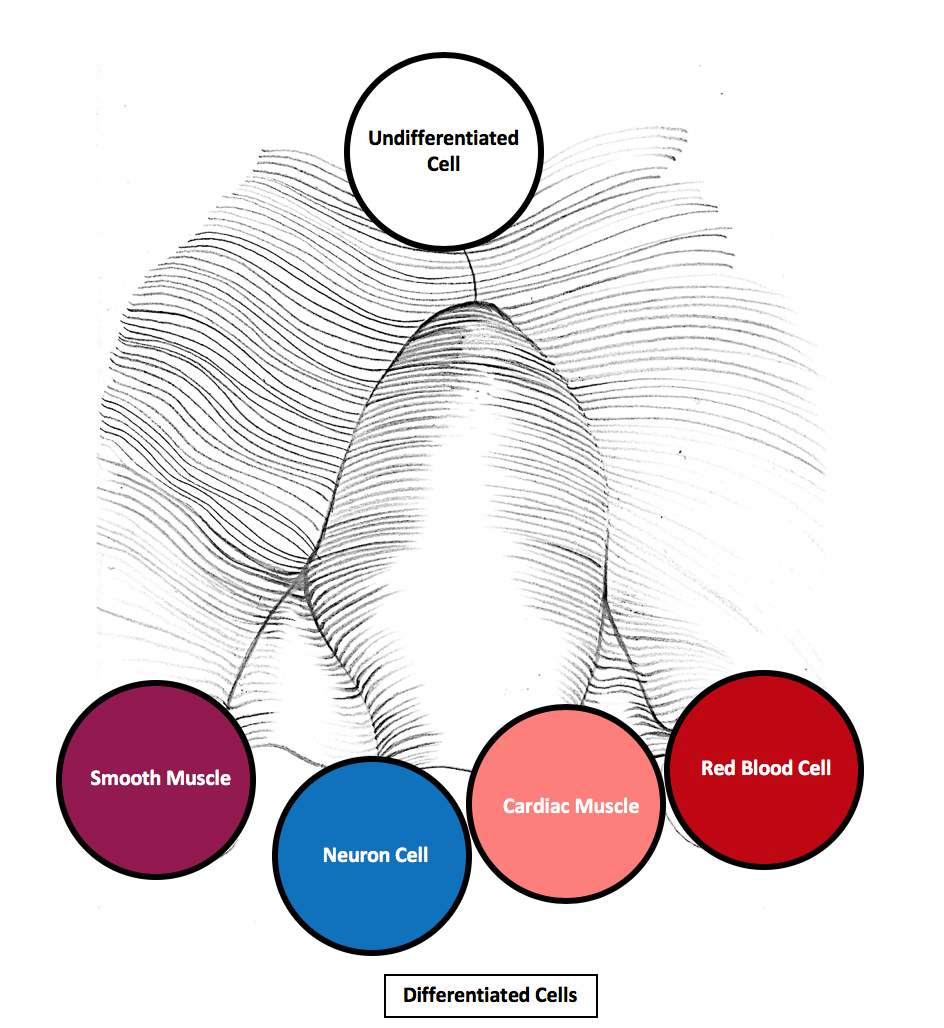

A 2018 review in Genetics by Tobias Uller, Armin Moczek, Richard Watson, Paul Brakefield, and Kevin Laland surveyed the empirical evidence for developmental bias and argued that gene regulatory networks impose structured probabilities on the phenotypic variation available to selection. Their review documented examples drawn from beetle horns, butterfly wing-pattern elements, vertebrate digit number, mammalian tooth morphology, and centipede segment counts, all of which exhibit non-uniform distributions of variation that the authors argue cannot be explained by external selection alone.18 Müller's 2007 essay made the related point that morphological novelties — the turtle shell, the insect wing, the tetrapod limb — are not gradual extensions of pre-existing structures but qualitatively new organisations of body parts whose origins require explanations grounded in developmental dynamics rather than only in selection.4
Critics respond that developmental bias is, in effect, mutation bias by another name and that population-genetic theory has long incorporated non-uniform mutation rates and pleiotropic constraints. Charlesworth and colleagues argued in 2017 that the existence of developmental constraints does not by itself overturn neo-Darwinism, since natural selection still acts on whatever variation development happens to produce, and that the empirical examples cited by EES proponents do not require any new theoretical machinery to interpret.12 The dispute is therefore partly about whether developmental bias deserves status as an evolutionary process in its own right or is better treated as a parameter constraining the inputs to selection.
Phenotypic plasticity and genetic accommodation
The second pillar is phenotypic plasticity: the capacity of a single genotype to produce different phenotypes in different environments. In the EES framework, plasticity is treated not as noise around an underlying genotype but as a primary source of evolutionary novelty. The locus classicus for this view is Mary Jane West-Eberhard's 2003 Oxford monograph Developmental Plasticity and Evolution, which proposed that environmentally induced phenotypic variants can become evolutionary innovations once they are stabilised by subsequent genetic change — a process West-Eberhard called genetic accommodation.8
In a 2005 colloquium paper in the Proceedings of the National Academy of Sciences, West-Eberhard summarised the framework with the formulation that "selection acts on phenotypes, not directly on genotypes or genes, so novel traits can originate by environmental induction as well as mutation, then undergo selection and genetic accommodation". She argued that "genes are probably more often followers than leaders in evolutionary change", because environmentally initiated variants are exposed to selection in a way that single mutations affecting one individual are not. The implication is that the order of events in many evolutionary trajectories is plasticity first, then selection, then genetic fixation, rather than mutation first, then selection.9
The 2015 Laland and colleagues paper formalised this as one of the empirical predictions distinguishing the EES from the modern synthesis: under the EES, phenotypic change should frequently precede the genetic changes that subsequently stabilise it, whereas under a strict gene-first view phenotypic change should typically lag behind genetic change.1 Empirical examples invoked include the developmental polyphenisms of locusts, the seasonal forms of butterflies, the dietary morphs of cichlid fish, and the rapid adaptation of three-spined sticklebacks to freshwater environments after the last glaciation. Critics including Charlesworth and colleagues respond that genetic accommodation, where it occurs, still depends on standing genetic variation and on conventional selection, and that no novel mechanism beyond the modern synthesis is required to describe it.12
Niche construction and ecological inheritance
The third pillar is niche construction: the process by which organisms modify their own selective environments through their metabolism, behaviour, and physical activities, thereby altering the selection pressures that act on themselves, their descendants, and other species. The framework was developed in detail by John Odling-Smee, Kevin Laland, and Marcus Feldman in their 2003 Princeton monograph Niche Construction: The Neglected Process in Evolution, the thirty-seventh volume in the Monographs in Population Biology series.7
.jpg)
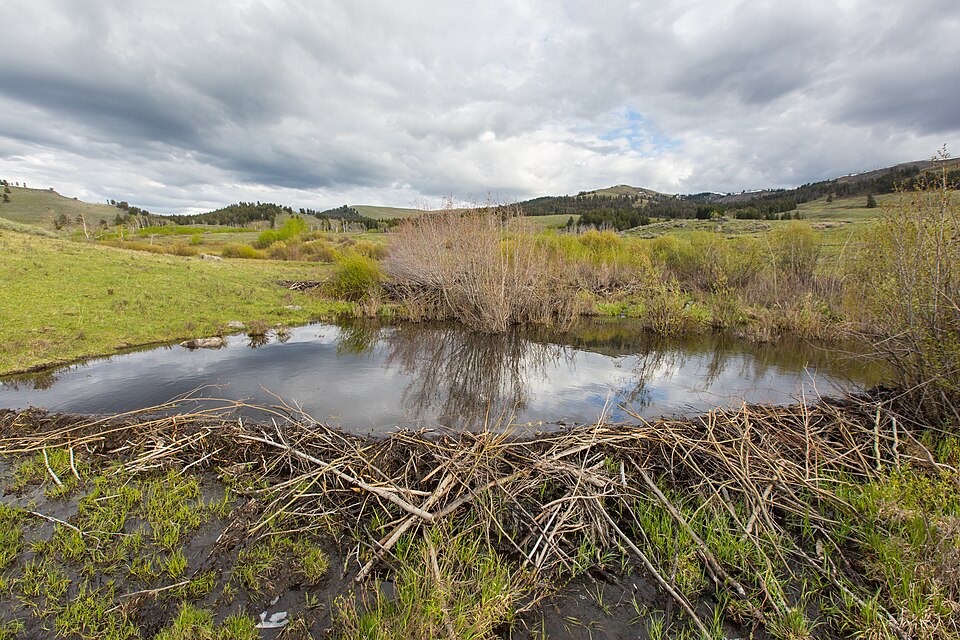
Odling-Smee, Laland, and Feldman argued that niche construction is an evolutionary process in its own right, conceptually distinct from natural selection, that operates by generating ecological inheritance: the transmission across generations of modified environments rather than (or in addition to) genes. A beaver born into a landscape its ancestors dammed inherits not only beaver alleles but a particular hydrological regime, a particular sediment profile, and a particular community of other species that the dam supports. Earthworms transform soil chemistry over generations and pass the modified soil to their descendants. Humans have built ecological inheritances that span entire continents. The 2003 monograph provides a population-genetic formalism in which niche construction enters as a separate causal channel alongside selection, with its own dynamics and its own contribution to evolutionary change.7, 14
The proponents argue that niche construction is most consequential where the modified environment persists across generations and where the modification reliably alters selection on the constructing species. Cultural niche construction in humans is the most striking case: agriculture, dairying, cooking, medicine, and institutional design have created selection pressures that have driven measurable genetic change in human populations. The well-documented spread of lactase persistence alleles in dairying populations of Europe, East Africa, and the Arabian peninsula, and the convergent expansion of the salivary amylase (AMY1) gene in starch-eating populations, are EES-favoured examples in which a culturally constructed niche generated selection that left a measurable genetic signature.15, 16
Critics, including Scott-Phillips, Laland, Shuker, Dickins, and West in a 2014 critical appraisal in Evolution, distinguish two readings of niche construction theory. On a "weak" reading, niche construction is a label for ecological feedback effects already accommodated by standard theory; on a "strong" reading, it claims that organism-driven environmental modification constitutes a separate evolutionary process that requires expanding the theoretical framework. The 2014 paper, although authored by EES proponents themselves, conceded that the strong claim is contested and that careful empirical work is needed to demonstrate when niche construction adds explanatory power beyond conventional models of habitat selection and frequency-dependent selection.19
Inclusive inheritance beyond the gene
The fourth pillar is inclusive inheritance: the claim that the modern synthesis is too narrow in identifying the gene as the sole or principal channel of intergenerational transmission. Eva Jablonka and Marion Lamb's 2005 book Evolution in Four Dimensions, revised in 2014, identifies four inheritance systems that contribute to evolutionary change — genetic, epigenetic, behavioural, and symbolic — and argues that all four can transmit variation across generations and all four can therefore in principle be subject to natural selection.6
The genetic dimension is the familiar transmission of DNA sequence. The epigenetic dimension covers heritable variation carried by chromatin modifications, DNA methylation patterns, small RNAs, and structural states of cellular components that can be transmitted through cell division and, in some species and contexts, through gametes to subsequent generations. A 2009 review by Jablonka and Gal Raz in the Quarterly Review of Biology catalogued more than 100 documented cases of transgenerational epigenetic inheritance across fungi, plants, and animals, including the well-studied Linaria peloric mutant in toadflax (a methylation difference at the Lcyc locus that produces radial rather than bilateral flowers and is stably inherited across generations) and methylation-based variation in rodent coat colour at the agouti viable yellow allele.17
The behavioural dimension includes the transmission of learned behaviours from parents to offspring through observation, imitation, and teaching, exemplified by song learning in birds, foraging traditions in chimpanzees and capuchins, and tool-use traditions in cetaceans. The symbolic dimension is unique to humans and operates through language, writing, and other systems of representation. Jablonka and Lamb argue that symbolic inheritance has played a major role in human evolution by enabling cumulative cultural change at rates and over distances unattainable by genetic transmission alone.6, 24
Inclusive inheritance is the most empirically contested of the EES pillars. Critics including Charlesworth and colleagues argue that the documented cases of transgenerational epigenetic inheritance in mammals are rare, that the epigenetic marks are typically erased during early embryonic development, and that the inheritance systems other than DNA sequence have not been shown to drive the long-term adaptive changes that the modern synthesis was built to explain.12 Defenders respond that the evidence is strongest in plants and microbes, where transgenerational epigenetic inheritance is now well documented, and that the dismissal of epigenetic inheritance in mammals on the grounds of reprogramming begs the question by assuming what needs to be shown.6, 17
Reciprocal causation and the structure of evolutionary explanation
Underlying the four pillars is a methodological commitment to reciprocal causation: the view that organisms and environments are mutually constitutive rather than arranged in a unidirectional cause-and-effect relation. In a widely cited 2011 paper in Science, Kevin Laland, Kim Sterelny, John Odling-Smee, William Hoppitt, and Tobias Uller revisited Ernst Mayr's classical 1961 distinction between proximate causes (the immediate physiological and developmental mechanisms by which a trait is produced) and ultimate causes (the evolutionary history that explains why the trait exists). Laland and colleagues argued that Mayr's dichotomy, although useful in its time, has become an obstacle to integrating development, niche construction, and inclusive inheritance into evolutionary explanation, because it forces feedback relations into a linear template that does not fit them.13
The reciprocal-causation view holds that an account of evolutionary change must include not only the action of selection on heritable variation but also an account of how the phenotypes that are subject to selection are constructed during development, and how the selective environments that act on those phenotypes are themselves modified by the activities of organisms past and present. Niche construction becomes a cause of evolution when the environment-altering activities of phenotypes during ontogeny accumulate as modified selection pressures that bear on subsequent generations. Developmental plasticity becomes a cause of evolution when the phenotypes induced by an environment are exposed to selection in that environment and are subsequently stabilised by genetic accommodation. Epigenetic inheritance becomes a cause of evolution when chromatin states transmitted across generations alter the phenotypes available for selection.1, 13
Critics have pushed back on the reciprocal-causation framing. Some have argued that Mayr's distinction can be updated rather than discarded, and that the appearance of "reciprocal" causation often reflects the operation of conventional causation on faster timescales (proximate) being nested within conventional causation on slower timescales (ultimate). Others have argued that the EES rhetoric overstates the novelty of the position, since population genetics already incorporates frequency-dependent selection, density-dependent selection, and habitat modification through long-standing models of ecological dynamics.12, 19
The 2014 Nature exchange and the 2017 Charlesworth response
The dispute between EES proponents and defenders of the standard framework reached its highest public visibility in October 2014, when Nature published a back-to-back exchange under the title "Does evolutionary theory need a rethink?". On one side, Kevin Laland, Tobias Uller, Marcus Feldman, Kim Sterelny, Gerd Müller, Armin Moczek, Eva Jablonka, and John Odling-Smee answered "Yes, urgently", arguing that the modern synthesis fails to accommodate developmental bias, plasticity, niche construction, and inclusive inheritance and that a broader framework is needed. On the other side, Gregory Wray, Hopi Hoekstra, Douglas Futuyma, Richard Lenski, Trudy Mackay, Dolph Schluter, and Joan Strassmann answered "No, all is well", arguing that the modern synthesis has continually absorbed new findings throughout its history and is fully capable of incorporating the phenomena the EES proponents cite.11
The 2014 exchange was followed in May 2017 by a substantive critique in Proceedings of the Royal Society B by Deborah Charlesworth, Nicholas Barton, and Brian Charlesworth titled "The sources of adaptive variation". The Charlesworth paper conceded that recent work in epigenetics, evolutionary developmental biology, and molecular biology had revealed phenomena unknown to the architects of the modern synthesis but argued that these phenomena are consistent with, rather than challenges to, neo-Darwinian theory. The paper specifically examined the empirical evidence for directed mutation and for the inheritance of acquired characters and concluded that careful genetic studies "have repeatedly shown that apparently puzzling results in a wide diversity of organisms involve processes consistent with neo-Darwinism" and "do not support important roles in adaptation for processes such as directed mutation or the inheritance of acquired characters". The authors concluded that natural selection acting on variants arising by random mutation remains the major cause of adaptive evolution and that no radical revision is required.12
A 2016 conference at the Royal Society in London titled "New trends in evolutionary biology", organised by Laland and colleagues, brought EES proponents and critics into direct dialogue. Eva Jablonka presented evidence for transgenerational epigenetic inheritance, Müller discussed developmental constraints on lizard digit reduction, Sonia Sultan demonstrated that genetically identical smartweed plants could produce strikingly different phenotypes depending on rearing environment, and Denis Noble argued for a less gene-centred view of cellular regulation. Douglas Futuyma defended the modern synthesis as a framework whose explanatory resources had been repeatedly underestimated, and David Shuker challenged Noble's bacterial example as an instance of straightforward neo-Darwinian evolution.22
The 2016–2019 research programme
In September 2016, a consortium of researchers in Europe and the United States received a grant of $8 million from the John Templeton Foundation, supplemented by additional contributions from participating institutions, to fund a three-year research programme titled "Putting the extended evolutionary synthesis to the test". The grant was administered jointly by the University of St Andrews, where Kevin Laland served as principal investigator, and Lund University, where Tobias Uller served as co-principal investigator. Participating institutions included Clark University, Indiana University, Stanford University, and the University of Southampton.21
The programme funded twenty-two empirical projects designed to test predictions distinctive of the EES against alternatives drawn from the modern synthesis. The projects covered systems ranging from microbial experimental evolution through plant developmental plasticity and animal niche construction to cultural transmission in primates and humans. The programme produced more than 200 peer-reviewed papers, a special issue of the Royal Society Interface Focus journal, and an edited volume on evolutionary causation. Its results were presented as evidence that EES-derived predictions are testable and frequently supported, although critics noted that many of the supportive findings could equally be described in modern-synthesis terms.21, 22
A 2020 historical and philosophical assessment by Jan Baedke, Alejandro Fabregas-Tejéda, and Antonio Vázquez-Faci in Studies in History and Philosophy of Biological and Biomedical Sciences analysed the rhetorical structure of the EES–modern synthesis dispute and argued that much of the disagreement turns on different conceptions of what counts as a "synthesis" and what counts as theoretical novelty rather than on disagreement about the underlying biology. The authors concluded that the EES is best understood as a research programme oriented toward integrating phenomena that the modern synthesis treats as peripheral, rather than as a wholesale replacement of established theory.23
Distinctive empirical predictions
The 2015 Laland and colleagues paper listed several predictions that, in the authors' view, distinguish the EES from the modern synthesis empirically rather than only conceptually. Under the EES, phenotypic change is predicted to precede genetic change in a substantial fraction of cases of rapid adaptation, with plasticity providing the initial response and genetic accommodation following. Under the modern synthesis, the typical sequence is genetic change first and phenotypic change second. The two frameworks therefore make different predictions about the temporal ordering of trait shifts in newly invaded environments.1
A second prediction concerns convergent evolution. Under the EES, repeated convergent outcomes in distantly related lineages should reflect not only similar selection pressures but shared developmental biases that channel variation in similar directions. The repeated origin of similar body plans in cave-dwelling fish (loss of pigmentation, loss of eyes, enhanced lateral line systems), the parallel evolution of carnivorous diets in marsupial and placental mammals, and the recurrent evolution of similar wing-pattern elements in butterflies are cited as examples in which developmental bias plausibly contributes to the patterns observed.1, 18
A third prediction concerns the role of niche construction in shaping selection. Under the EES, populations whose ancestors actively modified their environments are predicted to show signatures of selection driven by those modifications, with the cultural niche construction of human dairying (and its association with lactase persistence variants) and starch consumption (and its association with amylase copy-number expansion) presented as the strongest documented cases.14, 15, 16 A fourth prediction concerns inclusive inheritance: under the EES, parental and grandparental environments should leave heritable epigenetic signatures detectable in subsequent generations under controlled conditions, particularly in plants and microbes. A fifth concerns multilevel selection: under the EES, group-level and species-level selection pressures should be more readily detectable than under the strict gene-centred view, with the major evolutionary transitions providing the canonical examples.25
Critiques and rejoinders
Critics of the EES have raised several distinct objections. The first is the repackaging objection: that the phenomena cited by EES proponents (developmental constraints, plasticity, niche construction, epigenetic inheritance, multilevel selection) are not novel and are already accommodated within population-genetic theory and the modern synthesis broadly construed. Charlesworth, Barton, and Charlesworth's 2017 paper presents this view in its strongest form, arguing that the standard framework has long incorporated mutation bias, pleiotropy, frequency-dependent selection, habitat modification, and limited cases of non-genetic inheritance, and that the EES adds rhetoric rather than mechanism.12
The second is the scope objection: that even where the EES-favoured phenomena are real, they are not common enough or large enough in their effects to require restructuring the framework. Wray and colleagues in the 2014 Nature exchange argued that transgenerational epigenetic inheritance in animals is rare, that genetic accommodation has been documented in only a handful of natural systems, and that niche construction effects, where they occur, are absorbed into existing population-genetic models without difficulty.11
The third is the conceptual objection: that the reciprocal-causation framing collapses important distinctions between proximate and ultimate explanation, between correlation and causation, and between necessary and sufficient conditions, and that it risks substituting metaphor for analysis. This objection has been pressed in philosophy of biology and in commentary on the 2014 Nature exchange.12, 19
EES proponents have responded that the repackaging and scope objections concede too much: if the phenomena are real and can in principle be accommodated within the modern synthesis, then the question is whether the modern synthesis emphasises them appropriately. Laland and colleagues have argued that emphasis matters because it shapes which questions are asked, which experiments are designed, and which findings are noticed. They have also argued that the EES is best understood not as a competing theory of evolution but as a programme for re-weighting existing theory, with the empirical question being whether the re-weighting produces better predictions and more productive research.1, 20
Current status and outlook
By the late 2010s, the EES had attained a stable position in the broader evolutionary biology literature: not adopted as the consensus framework, but recognised as an organised research programme with its own institutional infrastructure, its own journals (the Wiley journal Evolution & Development, the Springer journal Biological Theory, and others), and its own community of investigators. The Templeton-funded research programme produced a substantial body of empirical work, and a 2018 review by Filippo Fabris in Theory in Biosciences argued that the EES had successfully integrated evolutionary developmental biology, niche construction, and inclusive inheritance into a coherent theoretical structure that was more comprehensive than the modern synthesis even if its empirical advantages remained to be demonstrated case by case.20
The dispute is not, on the whole, between scientists who reject natural selection and scientists who accept it. All parties accept that natural selection acting on heritable variation is a major (and probably the major) cause of adaptive evolution. The dispute is about whether the additional processes the EES emphasises are merely constraints on the inputs to selection, accommodated by parameter choices within standard models, or whether they are evolutionary processes in their own right that require an enriched theoretical framework. As the 2020 Baedke and colleagues paper observed, this is in part a question about scientific aesthetics and emphasis and in part a question about the empirical scope of competing predictions, and it is unlikely to be resolved by a single decisive experiment.23
What is no longer in serious dispute is that the phenomena the EES emphasises are real. Developmental bias is documented in beetle horns, butterfly wing patterns, and vertebrate digit number. Phenotypic plasticity and genetic accommodation have been observed in laboratory selection experiments and in natural populations of sticklebacks, cichlids, and butterflies. Niche construction has reshaped the selective environments of beavers, earthworms, corals, and humans. Transgenerational epigenetic inheritance is well documented in plants and fungi and is the subject of active investigation in animals. The remaining question, on which the EES and its critics continue to disagree, is how much these phenomena require the theoretical framework of evolutionary biology to be reorganised, and how much they can be accommodated as further illustrations of mechanisms the modern synthesis already contains.1, 12, 23
References
Evolution in Four Dimensions: Genetic, Epigenetic, Behavioral, and Symbolic Variation in the History of Life (revised edition)
Cause and effect in biology revisited: is Mayr's proximate-ultimate dichotomy still useful?
Transgenerational epigenetic inheritance: prevalence, mechanisms, and implications for the study of heredity and evolution
The emerging structure of the extended evolutionary synthesis: where does Evo-Devo fit in?